physiology of pregnancy and antenatal care

Reading File
Finding Sources
Finding Sources
general-purpose

You are a medical research assistant. Research the physiology of pregnancy and antenatal care from medical textbooks. Use the query_library_db and read_file tools to gather comprehensive information. Follow these steps: 1. First, search for relevant sections using these queries: Query A - Search headings for pregnancy physiology (broader): ```sql SELECT title, book_isbn, speciality, '/textbooks/' || block_file_path AS file_path, line_number, para_line_ranges, para_count FROM headings_fts WHERE headings_fts MATCH 'pregnancy physiology OR maternal changes' ORDER BY rank LIMIT 10 ``` Query B - Search paragraphs for antenatal care content: ```sql SELECT book_title, section_heading, '/textbooks/' || block_file_path AS file_path, line_start, line_end, snippet(paragraphs_fts, 0, '>>>', '<<<', '...', 40) as snippet FROM paragraphs_fts WHERE paragraphs_fts MATCH 'antenatal care AND pregnancy' ORDER BY rank LIMIT 10 ``` 2. Read the content from the key files already found: - /textbooks/9781260019933/9781260019933_block2.md at line 4413, read about 100 lines - /textbooks/9781260473940/9781260473940_block19.md at line 4489, read about 100 lines - /textbooks/9781975199074/9781975199074_block14.md at line 2535, read about 120 lines 3. Also search for specific topics: ```sql SELECT book_title, section_heading, '/textbooks/' || block_file_path AS file_path, line_start, line_end, snippet(paragraphs_fts, 0, '>>>', '<<<', '...', 40) as snippet FROM paragraphs_fts WHERE paragraphs_fts MATCH 'cardiovascular changes pregnancy' ORDER BY rank LIMIT 5 ``` ```sql SELECT book_title, section_heading, '/textbooks/' || block_file_path AS file_path, line_start, line_end, snippet(paragraphs_fts, 0, '>>>', '<<<', '...', 40) as snippet FROM paragraphs_fts WHERE paragraphs_fts MATCH 'antenatal visits booking prenatal' ORDER BY rank LIMIT 8 ``` 4. Read any additional relevant blocks found. 5. Return a comprehensive structured report covering: A. Physiological changes in pregnancy (cardiovascular, respiratory, renal, haematological, endocrine, GI, musculoskeletal) B. Antenatal care (booking visit, schedule of visits, investigations, screening, common complications to watch for) Include specific data (lab values, timeframes, percentages) and cite the source book titles. Include any image URLs found in the text.

Finding Sources
Finding Sources
Reading File
Reading File
Reading File
Finding Sources
Finding Sources
Finding Sources
Finding Sources
Finding Sources
Reading File
Reading File
Reading File
Reading File
Finding Sources
Finding Sources
Finding Sources
Reading File
Finding Sources
Finding Sources
Finding Sources
Reading File
Finding Sources
Reading File
Finding Sources
Finding Sources
Finding Sources
Reading File
Finding Sources
Finding Sources
Finding Sources
Reading File
Finding Sources
Finding Sources
Finding Sources
Finding Sources
Finding Sources
Reading File
Loading Image
Loading Image
Loading Image
Loading Image
Loading Image
Loading Image

Physiology of Pregnancy & Antenatal Care


PART A — PHYSIOLOGICAL CHANGES IN PREGNANCY

1. Cardiovascular System

Blood Volume
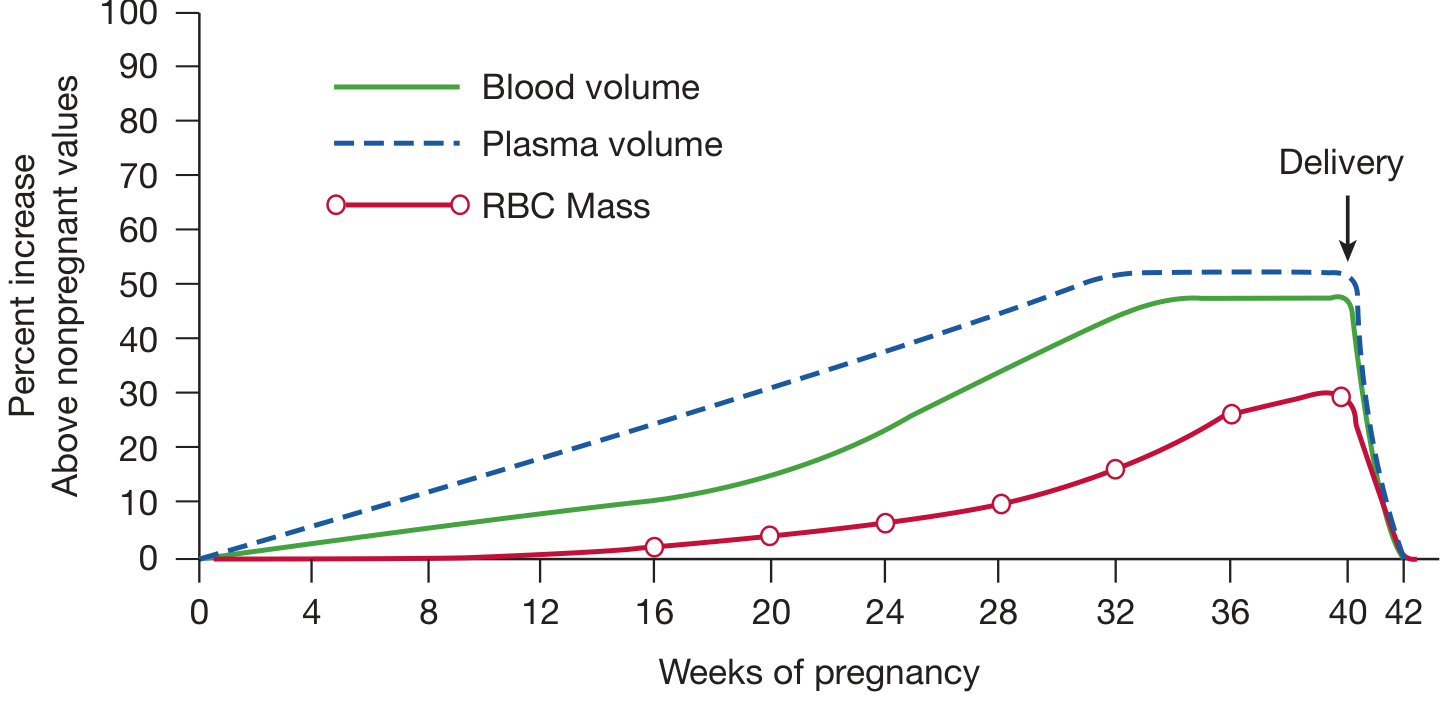
  • Plasma volume expands from 6–8 weeks, reaching ~4,700–5,200 mL at 32 weeks — a ~45% increase
  • RBC mass rises by only 20–30% (250–450 mL)
  • The disproportionate plasma expansion causes physiologic haemodilution → "physiologic anaemia of pregnancy" (haematocrit nadir in mid-third trimester)
Blood volume changes in pregnancy
Plasma volume rises ~50% while RBC mass rises ~30%. — Fishman's Pulmonary Diseases and Disorders
Cardiac Output (CO)
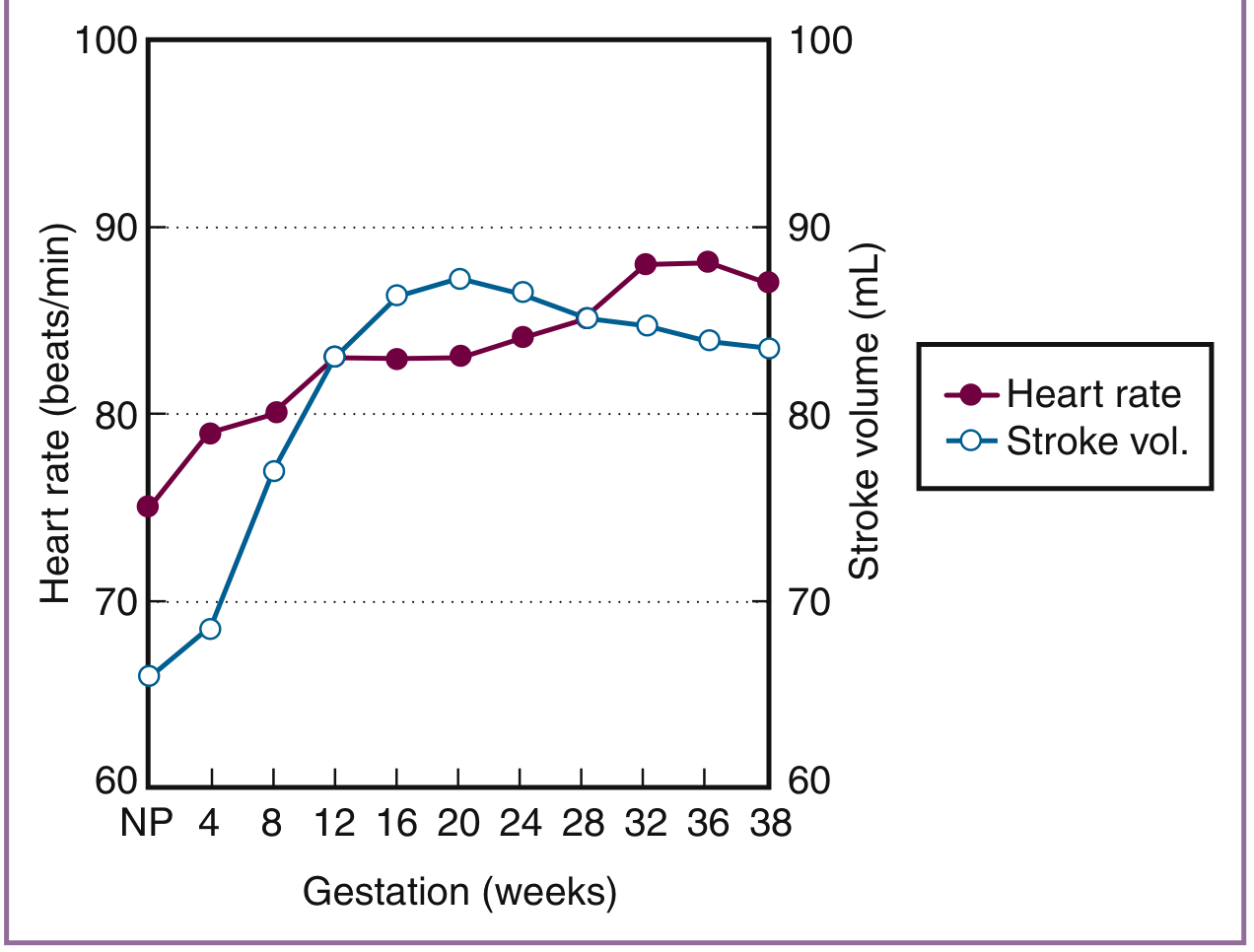
  • CO increases 30–50%, with half this increase occurring by just 8 weeks
  • Driven by ↑ stroke volume (peaks mid-T2, ~70–100 mL/beat) and ↑ heart rate (+10–20 bpm, peaking at 32 weeks)
ParameterNon-pregnantPregnant (36–38 wks)Change
Cardiac output (L/min)4.36.2+43%
Heart rate (bpm)7183+17%
SVR (dyne·s·cm⁻⁵)15301210−21%
PVR (dyne·s·cm⁻⁵)11978−34%
Colloid osmotic pressure (mm Hg)20.818.0−14%
— Creasy & Resnik's Maternal-Fetal Medicine
Heart rate and stroke volume across gestation
Stroke volume peaks early; heart rate continues rising toward term. — Creasy & Resnik's Maternal-Fetal Medicine
Blood Pressure & Vascular Resistance
  • Diastolic BP decreases 10–15 mm Hg, reaching a nadir at 24–32 weeks then rising toward term
  • SVR decreases from 5 weeks (progesterone, prostaglandins, nitric oxide)
  • Colloid osmotic pressure falls 10–15%, narrowing the COP-PCWP gradient → increased pulmonary oedema risk
Aortocaval Compression (Supine Hypotension)
  • Gravid uterus compresses IVC and aorta from 12–14 weeks
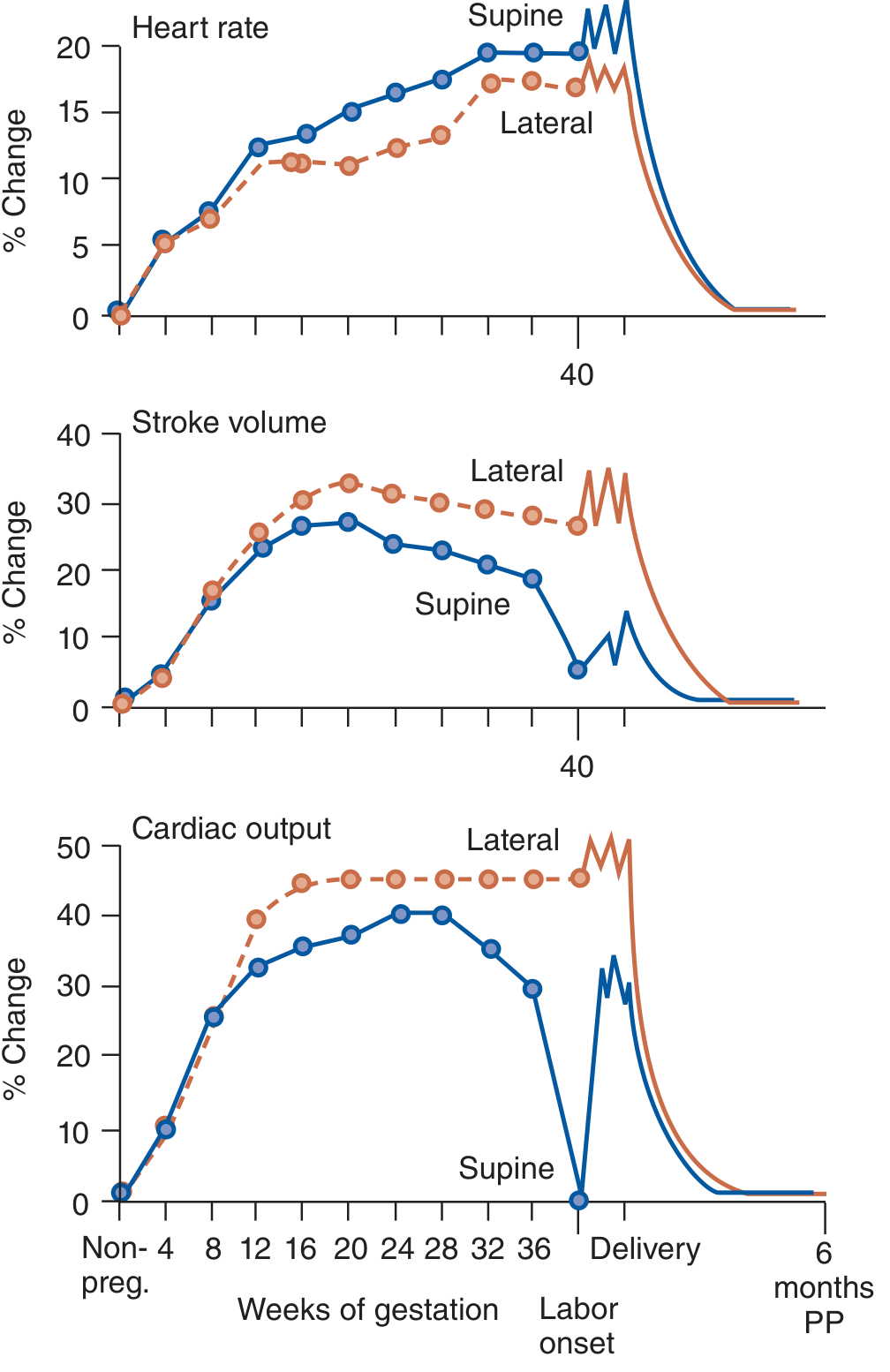
  • In the supine position at term, CO can fall 25–30%
  • ~8% of women develop symptomatic syndrome (↓BP, bradycardia, syncope, pallor)
  • Management: Left lateral tilt from ≥20 weeks
Cardiovascular changes by position
CO is dramatically reduced in the supine position near term. — Tintinalli's Emergency Medicine
Intrapartum Changes
  • Stage 1 labour: CO ↑ 12–31%; Stage 2: CO ↑ up to 49%
  • Each uterine contraction autotransfuses 300–500 mL blood
  • Immediately postpartum: CO rises ~47% (IVC decompression + autotransfusion)
Auscultation changes: Systolic murmurs in >95% (benign); loud S3 in up to 90%. Diastolic murmurs or systolic >grade 2/4 are pathological.

2. Respiratory System

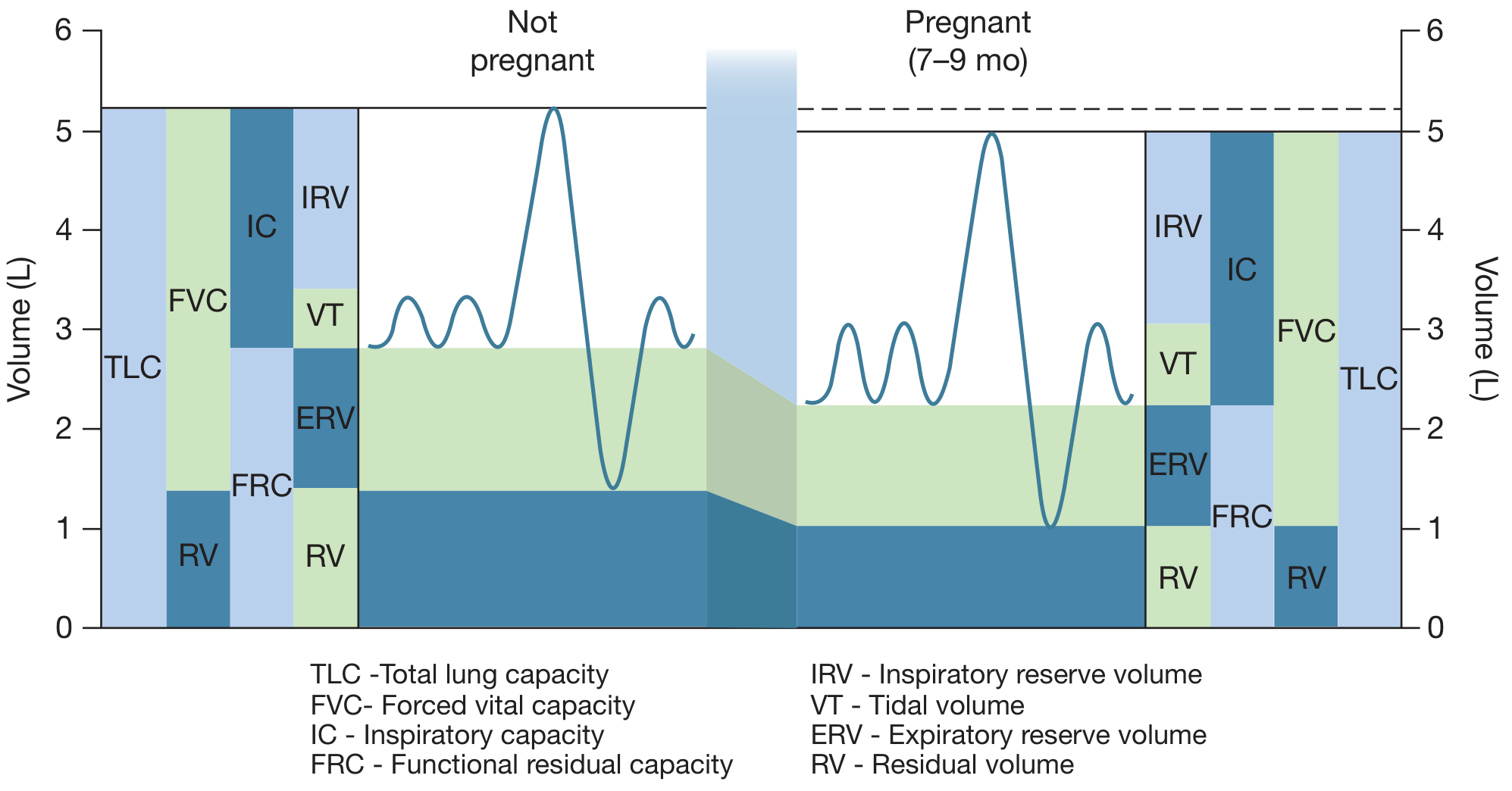
Lung volumes in pregnancy
FRC and RV decrease; tidal volume and IC increase. — Fishman's Pulmonary Diseases and Disorders
ParameterChange
Tidal volume+40–50% (450 → 600 mL)
Minute ventilation+50%
Respiratory rateNo change
FRC20–30% by term
Residual volume↓ 20%
PaCO₂↓ to 27–32 mm Hg (normal!)
PaO₂↑ to 100–105 mm Hg
HCO₃⁻↓ to 18–22 mEq/L (compensated respiratory alkalosis)
O₂ consumption↑ +20% above baseline
Key points:
  • Progesterone stimulates respiratory centres and increases CO₂ sensitivity
  • Diaphragm rises 4–5 cm; thoracic circumference widens
  • PaCO₂ of 27–32 mm Hg is normal — tachypnoea is not
  • Dyspnoea: present in 15% in T1, rising to 75% by T3
  • Maintain SpO₂ >95% and PaO₂ >70 mm Hg during illness

3. Renal System

  • Kidney length ↑ ~1 cm; renal volume ↑ ~30%
  • Hydronephrosis and hydroureter occur in >80% by midgestation (right > left); may persist 3–4 months postpartum
ParameterNonpregnantPregnant
GFRBaseline+50% by end of T1
Serum creatinine0.83 mg/dL0.7 / 0.6 / 0.5 mg/dL (T1/T2/T3)
BUN12 mg/dL~9–11 mg/dL
Uric acidNormal↓ 25% (nadir ~2–3 mg/dL at 24 wks)
Proteinuria (upper normal)<150 mg/24h<300 mg/24h
Serum creatinine >1.0 mg/dL in pregnancy warrants investigation. — Barash Clinical Anesthesia
  • Glucosuria is normal (impaired tubular reabsorption) — cannot reliably monitor diabetes with urine glucose
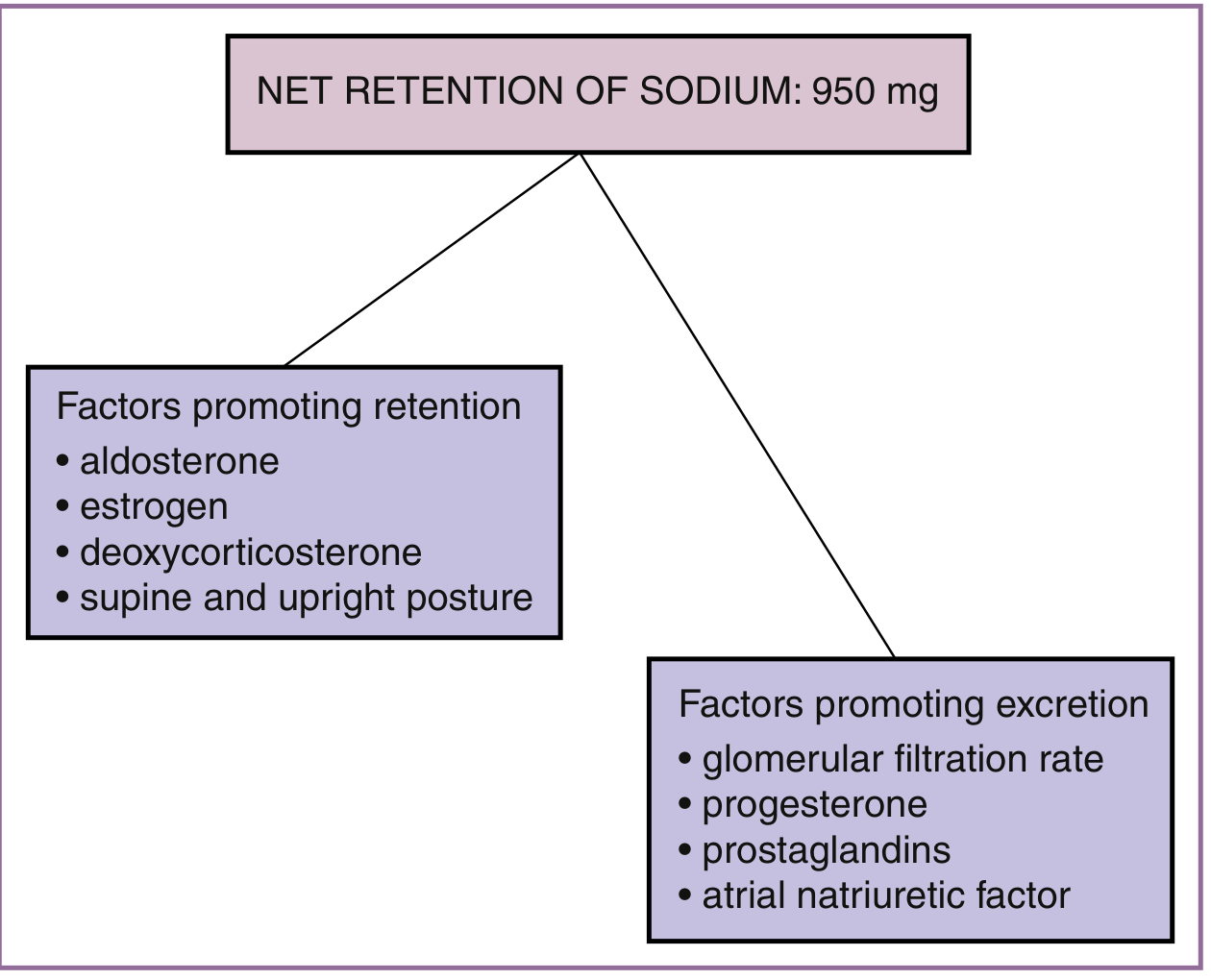
  • RAAS components all increase, peaking at 30–32 weeks; net Na⁺ retention ~950 mg total
Sodium homeostasis in pregnancy
Net sodium retention results from competing aldosterone/oestrogen vs progesterone/prostaglandin forces. — Creasy & Resnik's Maternal-Fetal Medicine

4. Haematological System

  • Plasma ↑ 45–50%; RBC ↑ 20–30% → physiologic anaemia
  • Total iron demand: ~1,000 mg (500 mg erythropoiesis + 300 mg to fetus + 200 mg daily losses)
  • WBC rises progressively: T1 up to 15,000; T2/T3 up to 16,000/mm³ (limits infection diagnosis)
Coagulation — Hypercoagulable State:
  • ↑ Fibrinogen, vWF, Factors II, V, VII, VIII, IX, X, XII
  • ↓ Protein S; ↓ APC response; ↑ PAI-1 and PAI-2 (↓ fibrinolysis)
  • Progressive venous stasis from IVC compression
  • Result: 5× increased VTE risk in pregnancy; >20× in the puerperiumSabiston Textbook of Surgery
  • Bleeding and clotting times remain unchanged despite all the above

5. Endocrine System

Thyroid (Harrison's Principles of Internal Medicine)
  1. Transient ↑ hCG in T1 → weak TSH-R stimulation → ↓ TSH (persists into mid-pregnancy)
  2. Oestrogen → ↑ TBG → elevated total T₃/T₄ (1.5×), but free T₄ may be normal or slightly elevated T1, then falling
  3. Increased iodide excretion → requires 250 µg/day iodine (WHO recommendation)
  4. Placental type III deiodinase increases thyroid hormone metabolism
  5. Women on levothyroxine require up to 45% dose increase
Always use trimester-specific reference ranges for thyroid tests in pregnancy. hCG-induced gestational hyperthyroidism does not require antithyroid drugs unless Graves' disease is confirmed.
Glucose/Insulin: Late pregnancy produces relative insulin resistance with compensatory ↑ insulin secretion. Poor control → macrosomia, shoulder dystocia, neonatal hypoglycaemia.

6. Gastrointestinal System

  • ↓ Lower oesophageal sphincter tone (progesterone effect)
  • ↑ Intragastric pressure from uterine displacement
  • Gastrin secreted by placenta → ↑ gastric acid, ↓ gastric pH
  • Gastric emptying: essentially normal outside labour; delayed during active labour and with opioids
  • Gastro-oesophageal reflux and aspiration risk significantly increased
  • Changes resolve 24–48 hours postpartum
All pregnant patients ≥20 weeks require aspiration prophylaxis (antacid ± ranitidine/metoclopramide) before any anaesthetic.

7. Musculoskeletal & Volume Homeostasis

  • Ligament laxity from relaxin and progesterone; ↑ fall and joint injury risk
  • Progressive lumbar lordosis (compensates for anterior centre-of-gravity shift)
  • Total body water ↑ by ~8–9 L
  • Plasma osmolality ↓ from ~289 to ~281 mOsm/kg; plasma Na⁺ ↓ from ~140 to ~137 mmol/L
  • Pseudocholinesterase activity ↓ maximally on 3rd postpartum day (20–33% below baseline) — alters succinylcholine sensitivity

PART B — ANTENATAL CARE

1. Visit Schedule

  • Low-risk primigravidae: at least 10 visits
  • Low-risk multiparae: at least 8 visits
  • T1/T2: every 5–6 weeks
  • After 30 weeks: increasing frequency
  • After 37 weeks: weekly
At every visit: Weight, BP, fundal height (from 16 wks), fetal heart rate, urinalysis (protein + glucose), movement/growth counselling.

2. Booking / First Visit

The most important single visit — ideally as soon as pregnancy is confirmed.
Investigations at booking:
TestIndication
Haemoglobin / haematocritAnaemia screening
ABO + Rh blood typeAll women
Antibody screenAll women
Syphilis (VDRL/RPR)All women
Rubella immunityAll women
Hepatitis B surface antigenAll women
HIV testingOffered to all
Urine cultureAsymptomatic bacteriuria
Cervical cytology (Pap smear)If overdue
GC/ChlamydiaAt-risk or all women
Dating ultrasoundIf LMP uncertain (best before 24 wks)
Naegele's Rule for EDD: LMP + 9 months + 7 days (or LMP − 3 months + 7 days)

3. Schedule of Investigations by Gestation

GestationActivity
10w2d–13w6dFirst trimester screen: nuchal translucency USS + PAPP-A + β-hCG
14–18 wksAFP / offer quad screen
16–18 wksQuad screen (best sensitivity): AFP + oestriol + β-hCG + inhibin A
18–20 wksTargeted fetal anatomy scan
24 wksFundal height; BP monitoring begins
24–28 wksHb/Hct; gestational diabetes screening (50g GCT or 75g OGTT); Rh testing
26–28 wksAnti-D immunoglobulin if Rh-negative
30 wksLeopold's manoeuvres; fetal presentation
35–37 wksRectocervical swab for Group B Streptococcus
36 wksRepeat GC/HIV in at-risk; repeat syphilis
41 wksCervical exam; Bishop score; induction discussion

4. Prenatal Screening

First Trimester Combined Screen (10w2d–13w6d):
  • Nuchal translucency USS + PAPP-A + β-hCG
  • ~85% sensitivity for Down syndrome, 4% false-positive rate
Second Trimester Quad Screen (optimal 16–18 wks):
ConditionAFPOestriolβ-hCGInhibin ASensitivity
Down syndrome (T21)77–79%
Trisomy 18↔/↓60%
Open NTD~90%
Invasive diagnosis (amniocentesis/CVS) indicated for: age ≥35, abnormal screen, family history, prior affected child, recurrent miscarriage.

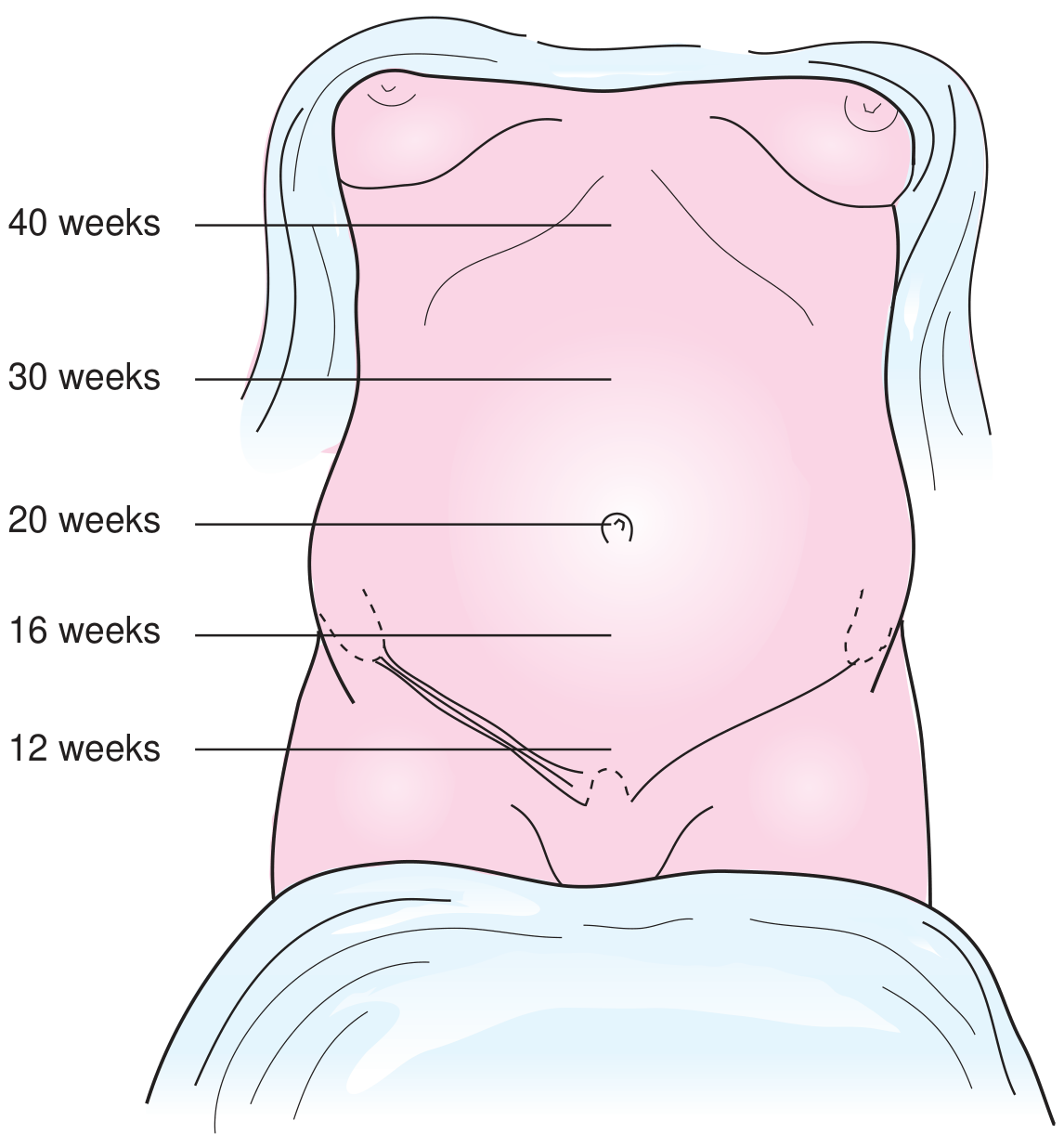
5. Fundal Height

Fundal height at various gestations
— Textbook of Family Medicine
GestationFundal Position
12 weeksJust above symphysis pubis
16 weeksHalfway, symphysis–umbilicus
20 weeksAt the umbilicus
20–40 wksFundal height (cm) ≈ gestational age (wks) ± 2 cm

6. Group B Streptococcus (GBS)

  • Leading cause of early-onset neonatal sepsis
  • Screen: rectocervical swab at 35–37 weeks
  • Positive → intrapartum IV antibiotics:
    • Penicillin G: 5 MU loading → 2.5 MU q4h until delivery
    • Ampicillin: 2g loading → 1g q4h (alternative)
    • Serious penicillin allergy: Vancomycin
  • Treat without cultures if: prior infant with GBS sepsis or GBS bacteriuria this pregnancy

7. Key Complications to Monitor

ComplicationKey Threshold / Notes
PreeclampsiaBP ≥140/90 after 20 wks + new proteinuria (>300 mg/24h); affects 5–7% of births
Gestational diabetesScreen at 24–28 wks; poor control → macrosomia, neonatal hypoglycaemia
VTE5× risk in pregnancy; >20× postpartum; screen risk factors
AnaemiaPhysiologic + iron deficiency; supplement iron throughout
Asymptomatic bacteriuria2–7%; causes pyelonephritis + preterm birth; treat if culture positive
Rh alloimmunisationAnti-D at 28 wks and after sensitising events in Rh-negative women
IUGR/SGASerial fundal heights; USS biometry; umbilical artery Dopplers
Thyroid dysfunctionTargeted TSH screening; adjust levothyroxine dose

8. Health Promotion (Every Visit)

  • Folic acid 400–800 µg/day — preconception through 12 weeks (neural tube defect prevention)
  • Iodine 250 µg/day throughout pregnancy
  • Avoid: smoking, alcohol, recreational drugs, teratogenic medications, hot tubs
  • Moderate-intensity exercise encouraged; avoid supine position from T2/T3
  • Immunisations: influenza (any trimester), Tdap (27–36 weeks)
  • Counsel on signs of preterm labour, when to present to hospital, infant car seat safety

Quick Reference Summary

SystemKey Change
Blood volume↑ 45% plasma; ↑ 20–30% RBC → physiologic anaemia
Cardiac output↑ 30–50%; HR +15–20 bpm
SVR/PVR↓ 21–34%; BP nadir at 24–32 wks
Respiratory↑ TV +40%; ↑ MV +50%; ↓ FRC −20%; PaCO₂ 27–32 mm Hg normal
Renal↑ GFR +50%; creatinine 0.5 mg/dL at term; glucosuria normal
CoagulationHypercoagulable; 5× VTE risk
WBCUp to 16,000 normal — limits infection diagnosis
Thyroid↓ TSH in T1; use trimester-specific ranges
GI↓ LES tone; aspiration risk ↑; delayed gastric emptying in labour
MusculoskeletalLigament laxity; +8–9 L total body water; lordosis

Sources: Creasy & Resnik's Maternal-Fetal Medicine · Tintinalli's Emergency Medicine · Fishman's Pulmonary Diseases and Disorders · Barash Clinical Anesthesia · Sabiston Textbook of Surgery · Harrison's Principles of Internal Medicine · Textbook of Family Medicine

physiology of labor and partogram and post partum period

Reading File
Finding Sources
Finding Sources
Finding Sources
general-purpose

You are a medical research assistant. Research the physiology of labor, the partogram/partograph, and the postpartum period from medical textbooks. Use query_library_db and read_file tools. ## Step 1 — Read these key files File A: /textbooks/9781260473797/9781260473797_block6.md - Read lines 2545–2580 (Physiology of Normal Labor section) - Then read lines 2570–2640 (Effect of Labor on Maternal Physiology) File B: /textbooks/9780323828499/9780323828499_block18.md - Read lines 1320–1450 (Postpartum Period from Creasy & Resnik) File C: /textbooks/9780323239905/9780323239905_block6.md - Read lines 885–930 (The Puerperium from Family Medicine) File D: /textbooks/9781264257560/9781264257560_block21.md - Read lines 980–1005 (Hemodynamics of Labor and Postpartum from Fuster's The Heart) ## Step 2 — Database searches for additional content Search A - Stages of labor: ```sql SELECT book_title, section_heading, '/textbooks/' || block_file_path AS file_path, line_start, line_end, snippet(paragraphs_fts, 0, '>>>', '<<<', '...', 40) as snippet FROM paragraphs_fts WHERE paragraphs_fts MATCH '"stages of labor" OR "first stage" AND "second stage" AND cervical dilation' ORDER BY rank LIMIT 8 ``` Search B - Partogram/partograph: ```sql SELECT book_title, section_heading, '/textbooks/' || block_file_path AS file_path, line_start, line_end, snippet(paragraphs_fts, 0, '>>>', '<<<', '...', 40) as snippet FROM paragraphs_fts WHERE paragraphs_fts MATCH 'partogram OR partograph' ORDER BY rank LIMIT 10 ``` Search C - Mechanisms of labor (cardinal movements): ```sql SELECT book_title, section_heading, '/textbooks/' || block_file_path AS file_path, line_start, line_end, snippet(paragraphs_fts, 0, '>>>', '<<<', '...', 40) as snippet FROM paragraphs_fts WHERE paragraphs_fts MATCH 'cardinal movements labor engagement flexion rotation extension' ORDER BY rank LIMIT 8 ``` Search D - Postpartum/puerperium changes: ```sql SELECT book_title, section_heading, '/textbooks/' || block_file_path AS file_path, line_start, line_end, snippet(paragraphs_fts, 0, '>>>', '<<<', '...', 40) as snippet FROM paragraphs_fts WHERE paragraphs_fts MATCH 'postpartum uterine involution lochia breastfeeding' ORDER BY rank LIMIT 8 ``` Search E - Uterine contractions and labor initiation: ```sql SELECT book_title, section_heading, '/textbooks/' || block_file_path AS file_path, line_start, line_end, snippet(paragraphs_fts, 0, '>>>', '<<<', '...', 40) as snippet FROM paragraphs_fts WHERE paragraphs_fts MATCH 'uterine contractions oxytocin prostaglandins labor initiation' ORDER BY rank LIMIT 8 ``` Search F - Headings for stages of labor: ```sql SELECT title, book_title, book_isbn, '/textbooks/' || block_file_path AS file_path, line_number, para_line_ranges, para_count FROM headings_fts WHERE headings_fts MATCH 'stages of labor OR normal labor delivery' ORDER BY rank LIMIT 10 ``` ## Step 3 — Read additional files found in Step 2 Read the most relevant files found, especially from obstetrics/gynecology books. Read at least 100 lines from each important section. ## Step 4 — Compile comprehensive report Return a full structured report covering: ### A. Physiology of Labor 1. Definition and onset of labor 2. Initiation of labor (hormonal and mechanical factors) 3. Uterine contractions — characteristics and regulation 4. Stages of labor (with durations, cervical dilation rates) 5. Cardinal movements of labor (7 movements with descriptions) 6. Maternal physiological changes during labor (cardiovascular, respiratory, metabolic, pain) ### B. The Partogram 1. Definition and purpose 2. Components of the WHO partogram (alert line, action line, cervicograph) 3. How to plot and interpret the partogram 4. Normal vs abnormal labor patterns 5. Active management of labor ### C. Postpartum Period (Puerperium) 1. Definition and phases 2. Uterine involution (timeline, subinvolution) 3. Lochia (types, timing, characteristics) 4. Cardiovascular/haematological changes 5. Breastfeeding and lactation 6. Psychological changes (baby blues, postpartum depression) 7. Resumption of ovulation and menstruation 8. Postpartum care (routine checks, contraception advice) Include specific numbers (cm/hour dilation rates, days for involution, lochia timings), cite book titles, and include any image URLs found in the text using markdown image syntax.

Reading File
Reading File
Reading File
Reading File
Finding Sources
Finding Sources
Finding Sources
Finding Sources
Finding Sources
Finding Sources
Reading File
Reading File
Reading File
Reading File
Reading File
Finding Sources
Finding Sources
Finding Sources
Finding Sources
Finding Sources
Finding Sources
Reading File
Reading File
Reading File
Reading File
Reading File
Finding Sources
Finding Sources
Finding Sources
Finding Sources
Reading File
Finding Sources
Finding Sources
Finding Sources
Reading File
Reading File
Finding Sources
Finding Sources
Reading File
Reading File
Reading File
Reading File
Reading File
Reading File
Reading File
Reading File
Reading File
Reading File
Reading File
Reading File
Reading File
Reading File
I now have comprehensive content from authoritative sources. Let me compile the full answer.

Physiology of Labor, Partogram & Postpartum Period


PART A — PHYSIOLOGY OF LABOR

1. Definition & Onset of Labor

Labor is defined as sufficient uterine contractions in frequency, intensity, and duration to produce cervical effacement and dilation. It commences on average at 40 ± 2 weeks from the last menstrual period. — Morgan & Mikhail's Clinical Anesthesiology
Prodromal events (2–4 weeks before true labor):
  • Lightening — presenting part settles into the pelvis; fundal height drops
  • Braxton Hicks contractions — irregular, variable frequency and intensity
  • Cervical effacement and softening
  • Bloody show — cervical mucous plug (often blood-tinged) is expelled 1 week to 1 hour before true labor in most women; most women go into labor within 3 days of bloody show
False labor vs. true labor:
  • False labor: irregular, short contractions that may actually assist cervical effacement
  • True labor begins when Braxton Hicks contractions become coordinated, increasing to 25–60 mm Hg intensity and 15–20 minutes apart initially — Morgan & Mikhail

2. Initiation of Labor — Mechanisms

The exact trigger remains incompletely understood. Key factors:
  • Uterine distension — stimulates myometrial sensitivity
  • ↑ Myometrial oxytocin receptors — circulating oxytocin levels do not necessarily rise, but receptor density rapidly increases
  • Prostaglandins (especially PGE₂ and PGF₂α) — synthesized by fetal membranes and decidua; central mediators of uterine contractility
  • Progesterone withdrawal (functional) — progesterone maintains uterine quiescence; its declining influence at term removes inhibition
  • Oestrogen rise — increases gap junctions between myometrial cells, promoting coordination of contractions

3. Uterine Contractions — Characteristics

  • Active labor: contractions every 2–3 minutes, lasting ~1 minute, intensity ~40 mm Hg
  • Adequate relaxation between contractions is critical — allows oxygenated blood into intervillous spaces and fetal compartment
  • Frequent contractions 1–2 min apart may indicate abruptio placentae
  • Monitoring: directly (intrauterine pressure catheter) or indirectly (tocodynamometer)

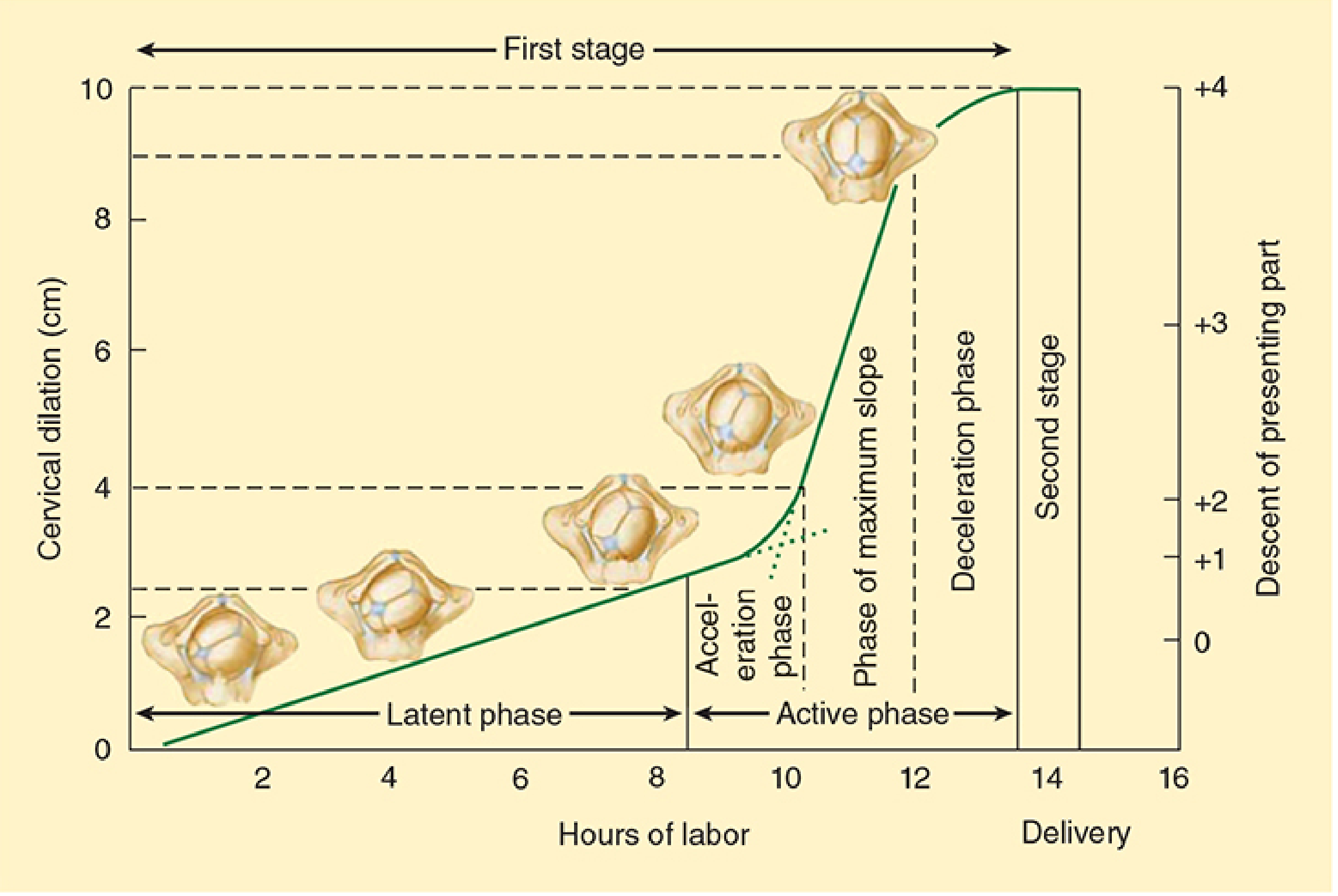
4. Stages of Labor

Normal labor curve — cervical dilation and fetal descent
The normal labor curve showing latent phase, active phase, and fetal descent. — Morgan & Mikhail's Clinical Anesthesiology
StageOnsetCompletion
First (latent + active phases)Onset of true laborComplete cervical dilation (10 cm)
SecondFull dilationDelivery of baby
ThirdDelivery of babyDelivery of placenta
Fourth (not universally counted)Delivery of placentaContracted uterus, ~1–2 hrs

First Stage

Latent phase:
  • Cervical effacement and dilation from 0 to ~4–5 cm
  • Rate typically ≤0.6 cm/hr
  • Normal duration: <20 hours (nullipara); <14 hours (multipara)
  • Contractions begin at 15–20 min apart
Active phase:
  • Begins ~4–5 cm dilation; cervix dilates to 10 cm
  • Contractions: 3–5 min apart
  • Minimum dilation rate: ≥1.2 cm/hr (nullipara); ≥1.5 cm/hr (multipara) — Friedman's criteria
  • Total first stage: 8–12 hours (nullipara); 5–8 hours (multipara)
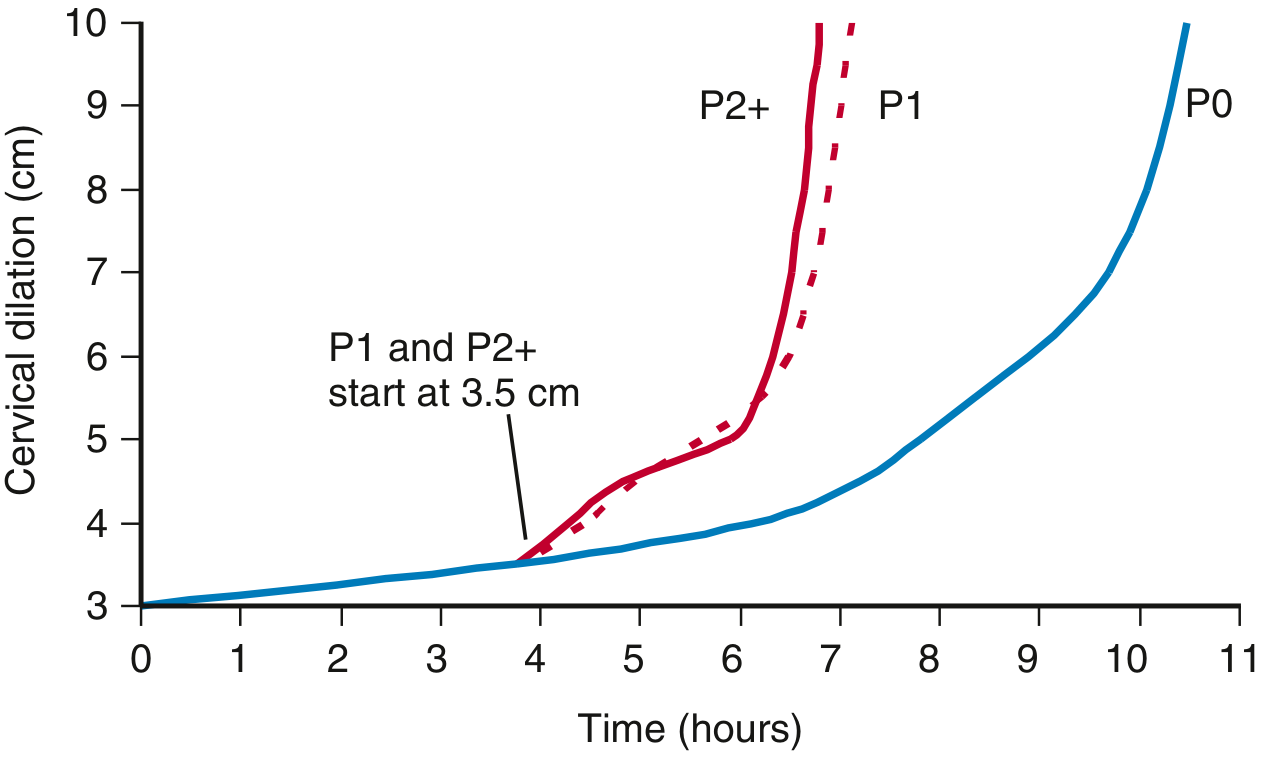
Zhang's updated labor duration data (National Collaborative Perinatal Project):
Cervical DilationParity 0 median (95th %)Parity 1Parity 2+
4 → 5 cm0.9 h (4.5 h)0.7 h (3.3 h)0.7 h (3.5 h)
5 → 6 cm0.6 h (2.6 h)0.4 h (1.6 h)0.4 h (1.6 h)
6 → 7 cm0.5 h (1.8 h)0.4 h (1.2 h)0.3 h (1.2 h)
7 → 8 cm0.4 h (1.4 h)0.3 h (0.8 h)0.3 h (0.7 h)
8 → 10 cm0.8 h0.5 h0.4 h
Total 4 → 10 cm3.7 h (16.7 h)2.4 h (13.8 h)2.2 h (14.2 h)
— Creasy & Resnik's Maternal-Fetal Medicine
Key insight: A 2-hour arrest cutoff is too short below 6 cm; a 4-hour limit is excessive after 6 cm. Modern practice adjusts thresholds by dilation.
Average labor curves by parity
P0 = nullipara, P1 = parity 1, P2+ = parity 2+. — Creasy & Resnik's Maternal-Fetal Medicine

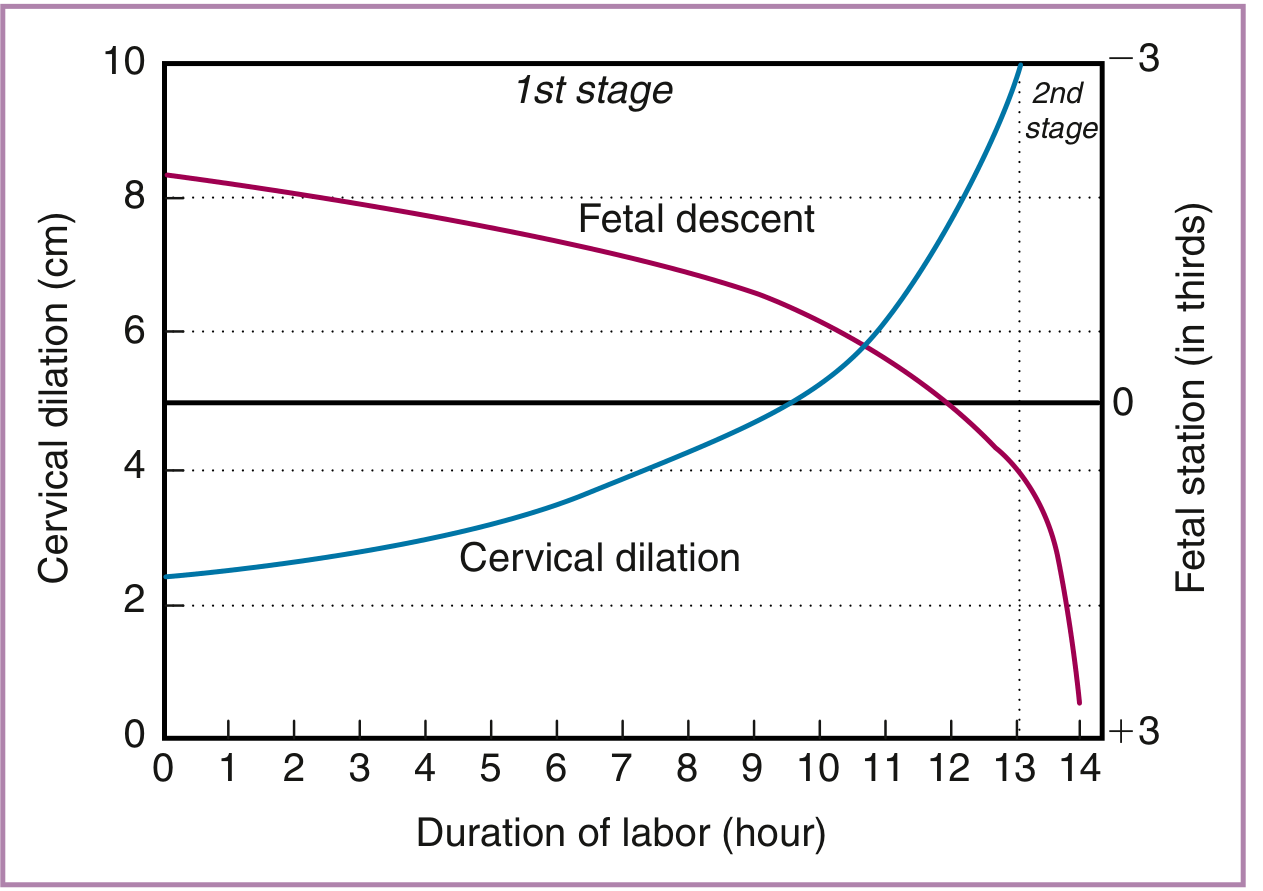
Second Stage

  • Full dilation → delivery of baby
  • Contractions: 1.5–2 min apart, lasting 1–1.5 min
  • Maternal bearing down greatly augments intrauterine pressure
  • Duration: 20 min (multipara) to 50 min (nullipara) average
  • Concern threshold (without epidural): >2 hours nullipara; >1 hour multipara
  • With epidural: >3 hours nullipara; >2 hours multipara — Textbook of Family Medicine
Cervical dilation and fetal descent — Zhang curve
Patterns of cervical dilation and fetal descent in nulliparas. — Creasy & Resnik's Maternal-Fetal Medicine

Third Stage

  • Delivery of baby → delivery of placenta
  • Typically 15–30 minutes
  • Active management: oxytocin administration before placental delivery reduces uterine atony and postpartum haemorrhage (PPH)

5. Cardinal Movements of Labor (Vertex Presentation)

The fetal head negotiates the curved birth canal through a sequence of 7 cardinal movements:
#MovementDescription
1EngagementBiparietal diameter passes through pelvic inlet; fetal head at or below ischial spines (station 0)
2DescentProgressive downward movement through the pelvis; continues throughout
3FlexionChin tucks to chest; reduces presenting diameter (suboccipitobregmatic ~9.5 cm vs. occipitofrontal ~11.5 cm); essential for negotiation
4Internal rotationOcciput rotates anteriorly from transverse to occiput anterior (OA) position to align with anteroposterior diameter of outlet
5ExtensionHead extends as it passes under the pubic symphysis; occiput, brow, face, and chin sequentially sweep over perineum
6External rotation (restitution)Head rotates back to align with fetal shoulders after delivery of head
7ExpulsionAnterior shoulder, posterior shoulder, then body delivered
— Roberts & Hedges' Clinical Procedures; Tintinalli's Emergency Medicine; Textbook of Family Medicine
Flexion is the most critical movement — it reduces the presenting diameter and allows easier descent.

6. Fetal Station

Descent of the presenting part is described relative to the ischial spines:
  • Station 0 = presenting part at level of ischial spines
  • −1, −2, −3 = above spines (cm)
  • +1, +2, +3 = below spines; +3 = crowning

7. Effect of Labor on Maternal Physiology

(Morgan & Mikhail's Clinical Anesthesiology)
SystemChange During Labor
RespiratoryMinute ventilation ↑ up to 300% during intense contractions; O₂ consumption ↑ additional 60% above T3 values; PaCO₂ may drop below 20 mm Hg with hyperventilation → transient maternal/fetal hypoxaemia between contractions; uterine blood flow ↓ with excessive hyperventilation
CardiovascularEach contraction autotransfuses 300–500 mL → CO ↑ 45% above T3 values; immediately postpartum: CO rises up to 80% above late T3 values (IVC decompression + uterine autotransfusion)
HaematologicalWBC may rise to 20,000/µL in first 24h postpartum (normal)
PainStage 1 pain: visceral, from uterine contractions + cervical dilation (T10–L1); Stage 2: somatic, from perineal/vaginal distension (S2–S4)
MetabolicHyperventilation + pain → respiratory alkalosis; severe cases can cause tetany

PART B — THE PARTOGRAM

1. Definition & Purpose

The partogram (partograph) is a graphical record of labor progress, maternal condition, and fetal well-being plotted over time. It was introduced by Friedman and popularised by Philpott & Castle, and subsequently adopted by the WHO.
A WHO multi-centre trial demonstrated that use of the partogram reduced:
  • Prolonged labors
  • Emergency caesarean deliveries
  • Use of oxytocin augmentation
A Norwegian cluster-RCT comparing WHO vs. Zhang-based partograms found both reduced caesarean rates compared to historical controls. — Creasy & Resnik's Maternal-Fetal Medicine

2. Components of the WHO Partogram

Section 1 — Fetal Condition:
  • Fetal heart rate (every 30 min; recorded as dots on graph, normal 110–160 bpm)
  • Membranes and amniotic fluid (I = intact; C = clear; M = meconium; B = blood)
  • Moulding (0 = bones separated; 1 = touching; 2 = overlapping but reducible; 3 = fixed overlap)
Section 2 — Progress of Labor (the Cervicograph):
  • Cervical dilation — plotted on the Y-axis (0–10 cm); time on X-axis
  • Fetal descent — plotted separately (station or fifths of head palpable abdominally)
  • Alert line — drawn from 4 cm at 1 cm/hr; represents the slowest acceptable active-phase progress
  • Action line — drawn 4 hours to the right of the alert line; crossing this line = indication for intervention (amniotomy, oxytocin augmentation, or operative delivery)
  • Uterine contractions: frequency and duration plotted per 10-minute window
Section 3 — Maternal Condition:
  • BP, pulse, temperature (hourly/4-hourly)
  • Urine: volume, protein, acetone
  • Drugs and IV fluids given
  • Oxytocin dose if used

3. Interpreting the Partogram

FindingInterpretation
Cervical dilation curve left of alert lineNormal labor progress
Curve between alert and action linesSlow progress — watchful waiting; consider amniotomy
Curve at or beyond action lineAbnormal labor — intervention required
Latent phase >20h (nullipara), >14h (multipara)Prolonged latent phase
Active phase dilation <1.2 cm/hr (nullipara) <1.5 cm/hr (multipara)Protracted active phase
Arrest of dilation for ≥2 hours in active phaseSecondary arrest — assess CPD, consider oxytocin/CS
Fetal descent <1 cm/hr (nullipara) <2 cm/hr (multipara) in 2nd stageProtracted descent

4. Dysfunctional Labor Patterns

PatternDefinitionManagement
Prolonged latent phase>20h nullipara; >14h multiparaRest (therapeutic morphine), observation, ± oxytocin; NOT an indication for CS
Protracted active phase<1.2 cm/hr (nullipara); <1.5 cm/hr (multipara)Oxytocin augmentation; assess CPD, malposition
Secondary arrestCessation of dilation ≥2h during active phaseAssess adequacy of contractions (IUPC); amniotomy; oxytocin; high association with CPD
Protracted descent<1 cm/hr (nullipara); <2 cm/hr (multipara)Assess CPD, macrosomia, pushing effort
Arrest of descentNo change in station for ≥1h (2nd stage)Oxytocin if contractions inadequate; operative delivery if CPD
— Textbook of Family Medicine; Creasy & Resnik's Maternal-Fetal Medicine

5. Active Management of Labor

Developed at the National Maternity Hospital, Dublin — applied to nulliparas with:
  • Singleton pregnancy
  • Vertex presentation
  • Regular contractions
Protocol:
  1. Diagnosis of labor = ≥1 of: bloody show, complete effacement, ruptured membranes
  2. Early amniotomy
  3. Oxytocin if dilation <1 cm/hr at 1h review — titrated to ≥7 contractions per 15 min
  4. Partogram used to time all interventions
Studies showed reduction in CS rate and prolonged labor. — Creasy & Resnik's Maternal-Fetal Medicine

PART C — POSTPARTUM PERIOD (PUERPERIUM)

1. Definition

The puerperium is the period during which the mother's altered anatomy, physiology, and biochemistry return to the non-pregnant state. It:
  • Begins at the third stage of labor (delivery of placenta)
  • Completes at approximately 6 weeks postpartum
— Textbook of Family Medicine

2. Uterine Involution

TimepointUterine Status
Immediately postpartumFundus at umbilicus, firm
24 hoursFundus at or just above umbilicus
5–7 daysFirm, non-tender; midway between symphysis and umbilicus
2 weeksNo longer palpable abdominally
6 weeksReturns to near pre-pregnancy size
Involution is driven by uterine contractions ("afterpains") which can be painful and may require analgesia. Breastfeeding stimulates oxytocin release → promotes involution and reduces bleeding.
Subinvolution — failure of normal involution; causes include retained placental fragments, infection (endometritis).

3. Lochia

TypeTimingAppearance
Lochia rubraDays 1–3 (to 4)Grossly bloody, red
Lochia serosaDays 4–10Pinkish-brown, serous; decreasing volume
Lochia albaDays 7–10 onwardsPale yellow-white; very low volume
Total lochia duration: ~4–6 weeks but highly variable. Persistent heavy bleeding suggests retained placenta or subinvolution.
— Textbook of Family Medicine

4. Cardiovascular & Haematological Changes

  • Pulse rate drops within the first 24 hours
  • WBC increases markedly — up to 20,000/µL in first 24h (normal physiologic response)
  • Diuresis occurs — urine output temporarily increases, reflecting mobilisation of accumulated extravascular fluid (the ~8–9 L water gained in pregnancy)
  • Haematocrit may be artificially elevated for a few days (diuresis reduces plasma volume before RBCs clear)
  • Cardiac output peaks immediately postpartum (up to 80% above late T3 values) due to IVC decompression and autotransfusion, then declines over 2–6 weeks
  • Greatest cardiac strain is immediately postpartum — relevant for women with cardiac disease
  • May contain protein and glucose in urine transiently

5. Breastfeeding & Lactation

  • Breastfeeding can be initiated immediately after delivery
  • Benefits: promotes uterine involution, reduces PPH, provides infant nutrition and immunity
  • Hormonal basis: high prolactin → milk production; suckling maintains prolactin; oestrogen and progesterone levels remain low during exclusive breastfeeding → amenorrhoea and ovulation suppression (lactational amenorrhoea method — ~98% contraceptive efficacy if fully breastfeeding, amenorrhoeic, <6 months postpartum)
  • Most medications are secreted in breast milk — avoid meperidine (pethidine) in breastfeeding mothers (long half-life metabolite accumulates in neonates)

6. Postpartum Psychological Changes

(Kaplan & Sadock's Comprehensive Textbook of Psychiatry)
ConditionTimingFeatures
Baby bluesDays 1–5, peaks day 3–4Tearfulness, mood lability, anxiety; self-limiting; no treatment required
Postpartum depression (PPD)Within 4 weeks to 1 year; peaks at 4–6 weeksPersistent low mood, anhedonia, poor bonding, sleep/appetite disturbance; prevalence ~10–15%; treat with CBT ± antidepressants
Postpartum psychosisWithin days to 2 weeksHallucinations, delusions, confusion, disorganised behaviour; rare (~1–2/1000); psychiatric emergency — admit
Risk factors for PPD: prior depression, lack of social support, stressful life events, SUD, intimate partner violence.

7. Resumption of Menstruation & Ovulation

  • Non-breastfeeding women: ovulation returns as early as 3–4 weeks postpartum; menstruation typically 6–8 weeks postpartum
  • Breastfeeding women: ovulation and menstruation suppressed during exclusive breastfeeding (lactational amenorrhoea); first ovulation may precede first menstrual period
  • Contraception should be discussed before or at the 6-week visit

8. Routine Postpartum Care

TaskTiming
Uterine massage; monitor for atony/PPHEvery 15 min × 1 hour after delivery
Oxytocin 10 IU IM or IV infusionImmediately after delivery (active management of 3rd stage)
Bladder care — encourage voidingPrevent overdistension; rapid diuresis when oxytocin discontinued
Episiotomy careSitz baths; analgesia as needed
Full ambulationAs soon as possible post-delivery
Check BP, temperature, pulse, lochiaRegularly in 24h; then at 6-week visit
6-week postnatal checkBP, weight, wound, emotional wellbeing, contraception counselling
Perineal laceration repair1st–2nd degree: local repair; 3rd–4th degree: formal repair in theatre

9. Postpartum Haemorrhage (PPH)

  • Primary PPH: ≥500 mL blood loss within 24h of delivery (≥1,000 mL for CS)
  • Secondary PPH: abnormal bleeding between 24h and 12 weeks postpartum
  • Causes (4 T's): Tone (uterine atony — most common, 80%), Trauma (lacerations, uterine rupture), Tissue (retained placenta), Thrombin (coagulopathy)
  • First-line management: uterotonic agents (oxytocin, ergometrine, misoprostol, carboprost)
  • If uterotonics fail after vaginal delivery: exploratory laparotomy — Textbook of Family Medicine

Quick Reference Summary

TopicKey Facts
True labor contractions25–60 mm Hg; initially 15–20 min apart
First stage duration8–12h (nullipara); 5–8h (multipara)
Active phase rate≥1.2 cm/hr nullipara; ≥1.5 cm/hr multipara
Second stage50 min average (nullipara); 20 min (multipara)
Cardinal movementsEngagement → descent → flexion → internal rotation → extension → external rotation → expulsion
Partogram alert line1 cm/hr from 4 cm
Partogram action line4 hours right of alert line
CO change in labor↑ 45% during contractions; ↑ up to 80% immediately postpartum
Lochia rubraDays 1–4 (bloody)
Lochia serosaDays 4–10 (pinkish-brown)
Lochia albaDay 7–10+ (pale yellow-white)
Uterine involutionNot palpable abdominally by 2 weeks
PPD timingPeaks 4–6 weeks; treat with CBT ± antidepressants
Menstruation resumes6–8 weeks (non-breastfeeding); delayed with exclusive breastfeeding

Sources: Morgan & Mikhail's Clinical Anesthesiology 7e · Creasy & Resnik's Maternal-Fetal Medicine · Textbook of Family Medicine 9e · Roberts & Hedges' Clinical Procedures · Tintinalli's Emergency Medicine · Kaplan & Sadock's Comprehensive Textbook of Psychiatry

incorrect presentation and fetal position

Your credits are exhausted. Your daily credits reset tomorrow, or you can purchase a top-up for more.
This is a shared conversation. Sign in to Orris to start your own chat.