
Cutaneous Marker of tb, hiv, syphilis
Reading File
Finding Sources
Finding Sources
Finding Sources
Reading File
Reading File
Reading File
Finding Sources
Reading File
Finding Sources
Reading File
Reading File
Reading File
Reading File
Reading File
Finding Sources
Reading File
Loading Image
Loading Image
Loading Image
I now have thorough information from the textbooks. Let me compile the comprehensive answer.
Cutaneous Markers of TB, HIV, and Syphilis
I. TUBERCULOSIS - Cutaneous Markers
Cutaneous TB affects fewer than 2% of TB patients even in endemic areas. The lesions are classified by the mechanism of skin involvement:
A. Exogenous Inoculation
1. Primary Inoculation TB (Tuberculous Chancre)
- Painless brown-red papule that develops into an indurated nodule or plaque, may ulcerate - appears 2-4 weeks after inoculation
- Prominent regional lymphadenopathy at 3-8 weeks (the "primary complex")
- Occurs mainly in children on the face or extremities
- Triggered by tattooing, medical injections, nose piercing, or trauma
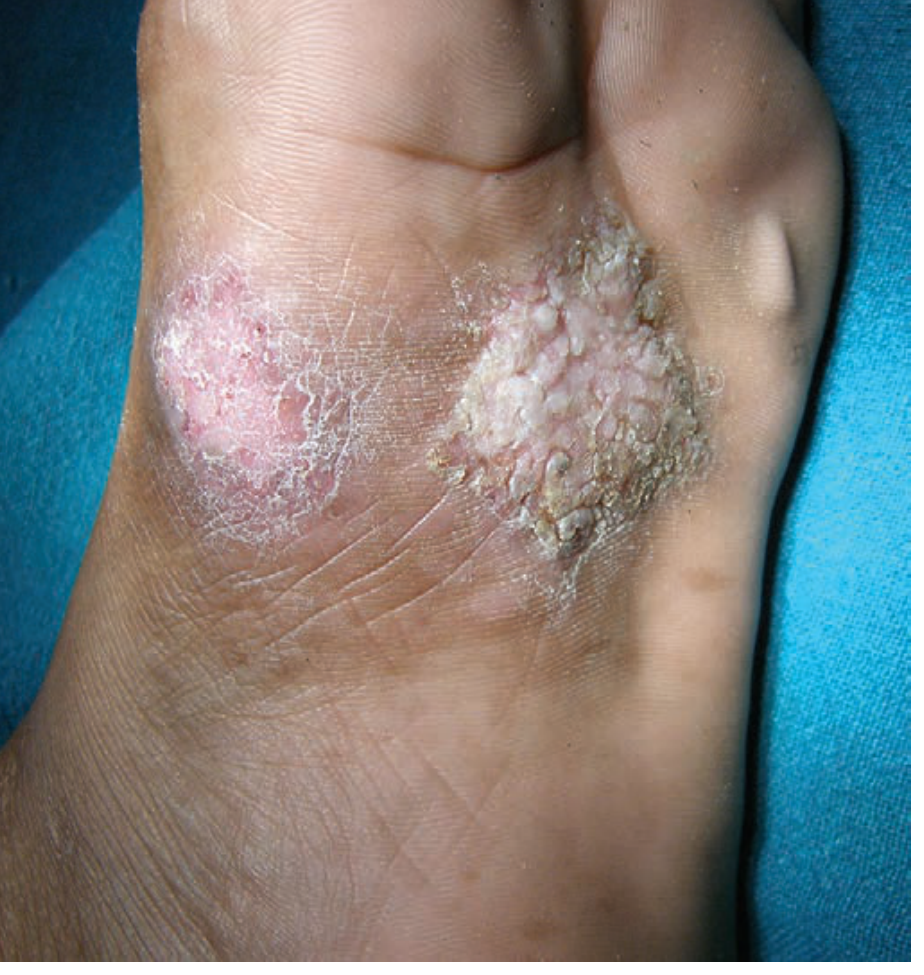
2. Tuberculosis Verrucosa Cutis
- Warty, hyperkeratotic verrucous papules and plaques
- Occurs on hands in adults; buttocks, knees, ankles in children
- Represents inoculation into a previously sensitized (immune) host
- Typically on the dominant hand (pathologist's/prosector's wart)
B. Endogenous Spread
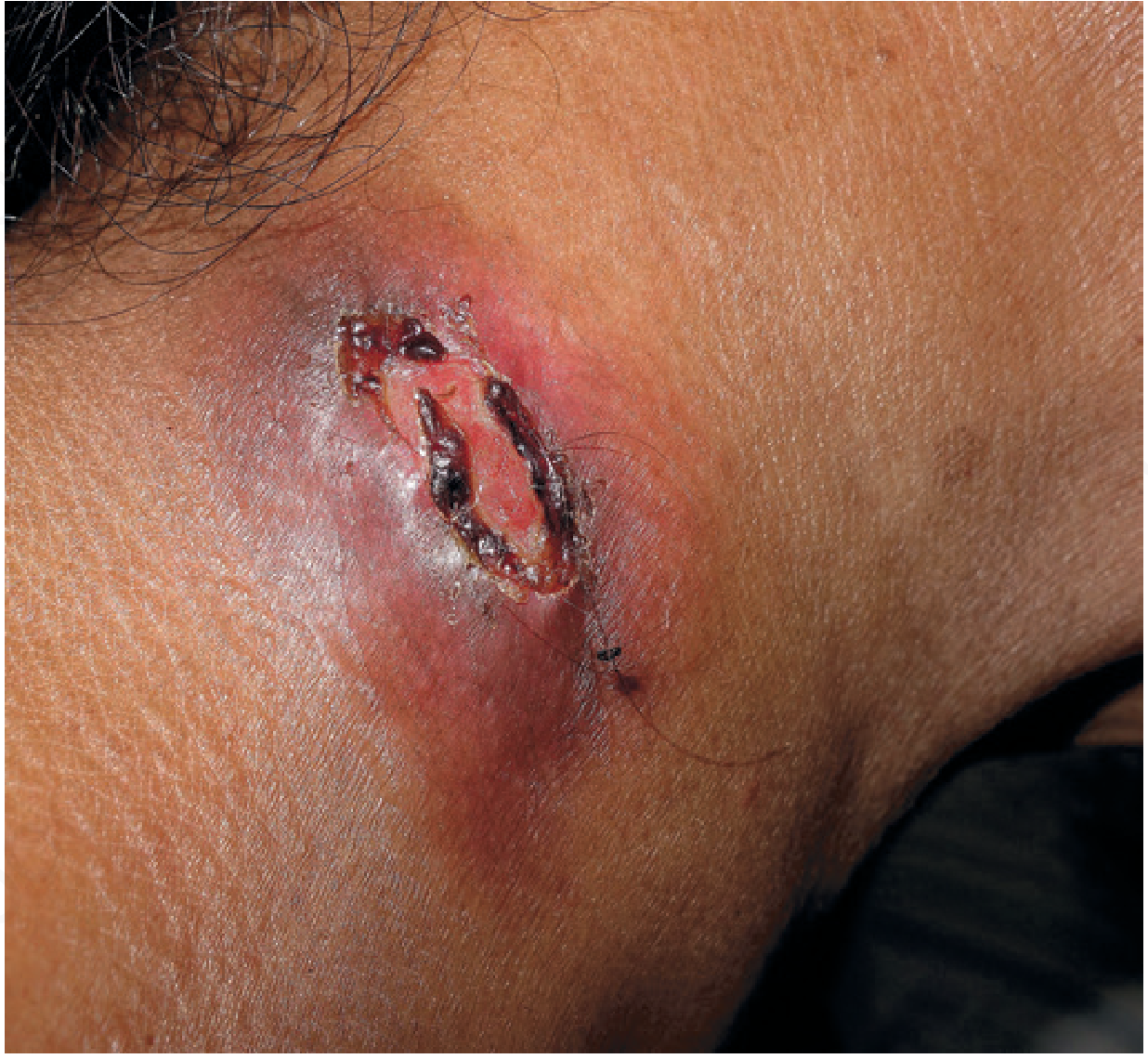
3. Scrofuloderma
- Most common form in developing countries
- Subcutaneous nodules over cervical lymph nodes (or bone/joints) that enlarge, suppurate, and ulcerate
- Draining sinuses with reddish granulation at the base
- Heals with characteristic cord-like scars - highly diagnostic
4. TB Cutis Orificialis (Periorificial TB)
- Painful ulcers at orifices (mouth, anus, vulva, perianal) in patients with advanced organ TB
- Lesions of poor host immunity - bacilli are numerous
C. Hematogenous Spread
5. Lupus Vulgaris
- Most common form of cutaneous TB in Europe
- Reddish-brown ("apple jelly") soft nodules coalescing into plaques, typically on the face (nose/cheek)
- Slow, progressive scarring; may develop squamous cell carcinoma in chronic lesions
- Hallmark histology: classic tubercles with caseation
6. Acute Miliary TB
- Widespread macules, papules, pustules, vesicles or purpura from hematogenous dissemination
- Seen in children, debilitated patients, and HIV patients
- Most frequently reported cutaneous form in HIV-infected patients
7. Tuberculous Gumma / Abscess / Cellulitis
- Cold subcutaneous abscesses that ulcerate, forming sinuses
- Associated with malnutrition and poor immunity
D. Tuberculids (Hypersensitivity Reactions - High Immunity)
8. Papulonecrotic Tuberculid
- Symmetric crops of 2-8 mm firm papules that become pustular or necrotic, then heal with varioliform (pox-like) scars
- Distributed on extensor extremities (elbows, knees), dorsal hands/feet, buttocks, glans penis
- Females affected 3:1; two-thirds of cases under age 30
9. Erythema Induratum (Bazin Disease)
- Lobular panniculitis presenting as tender, recurring nodules/plaques on the posterior lower calves
- Predominantly in women
- Lesions may ulcerate and heal with scarring
10. Lichen Scrofulosorum
- Tiny lichenoid papules, usually perifollicular, grouped on the trunk
- Mostly in children with TB lymphadenitis or bone TB
- Resolves with antituberculous therapy
II. HIV - Cutaneous Markers
Cutaneous manifestations vary with CD4 count and reflect the degree of immunosuppression.
A. Markers of Advanced HIV/AIDS (CD4 < 200 cells/μL)
1. Kaposi's Sarcoma (KS)
- AIDS-defining illness; caused by HHV-8
- Red-to-violaceous, brown, or pink macules/plaques/nodules
- Starts on lower extremities, face (nose tip), hard palate, or genitalia
- Lesions are typically non-tender; can involve lymph nodes and viscera
- May be the presenting manifestation of HIV
2. Oral Hairy Leukoplakia
- White, corrugated, hairy plaques on the lateral aspects of the tongue (cannot be scraped off)
- Caused by EBV; marker of significant immunosuppression
- Strongly associated with HIV - often the first clinical clue
3. Bacillary Angiomatosis
- Red-to-violaceous dome-shaped papules and nodules resembling cherry angiomas or pyogenic granulomas
- Caused by Bartonella henselae / B. quintana
- Occurs at CD4 <200 cells/μL; may mimic KS
4. Cutaneous Miliary Tuberculosis
- Widespread macules, papules, pustules in the context of HIV/AIDS
- Most common form of cutaneous TB in HIV patients
5. Giant Molluscum Contagiosum
- Multiple umbilicated papules >1 cm; widespread, involving atypical sites including the face
- In immunocompetent hosts, molluscum is small and self-limited; giant/numerous lesions signal AIDS
6. Crusted (Norwegian) Scabies
- Extensive hyperkeratotic gray-brown plaques involving atypical locations (scalp, palms, soles)
- Millions of mites (vs 10-15 in normal scabies); highly contagious
- Minimal or absent pruritus in AIDS patients
B. Markers of Well-Controlled/Earlier HIV
7. Seborrhoeic Dermatitis
- Severe, widespread, or recalcitrant seborrheic dermatitis is one of the most common early cutaneous markers of HIV
- Erythematous plaques with greasy yellow scale on nasolabial folds, scalp, eyebrows, and chest
8. Herpes Zoster (Shingles)
- Reactivation of VZV; dermatomal painful vesicular rash
- Multidermatomal or recurrent episodes in a young person suggest HIV
- Seen even with well-controlled HIV
9. Herpes Simplex (HSV)
- Chronic, large, perianal or oral HSV ulcers (>1 month duration) are AIDS-defining
- More severe presentations, atypical sites
10. Eosinophilic Folliculitis
- Intensely pruritic follicular papules and pustules on the trunk and face
- CD4 typically < 300 cells/μL; characteristic feature of HIV
11. HIV Exanthem (Acute Retroviral Syndrome)
- Maculopapular rash on trunk/face occurring 2-4 weeks after HIV infection
- Accompanies fever, lymphadenopathy, pharyngitis - the "mono-like" seroconversion illness
12. Pruritic Papular Eruption (PPE)
- Symmetrical pruritic papules on trunk and extremities
- One of the most common HIV-associated dermatoses in sub-Saharan Africa; marker of advanced disease
III. SYPHILIS - Cutaneous Markers (by Stage)
Primary Syphilis
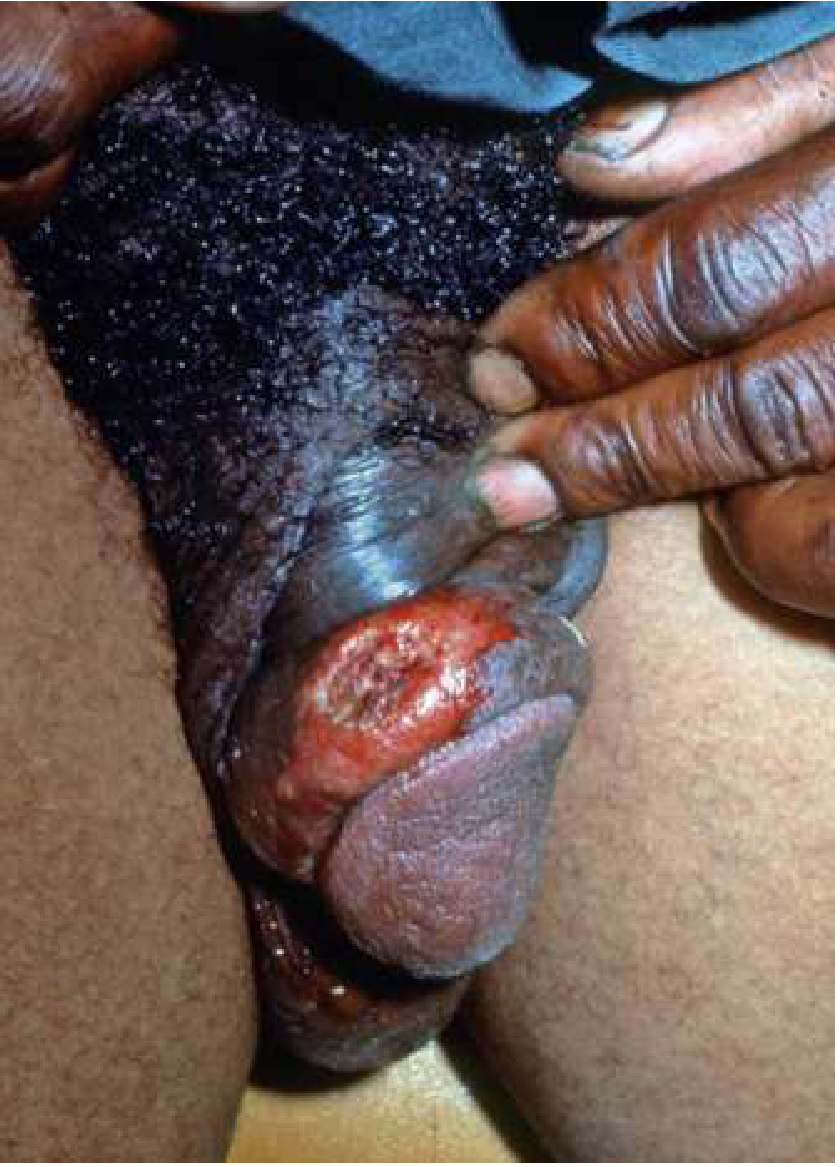
Chancre
- Painless, indurated, clean-based ulcer with raised rolled edges at the site of inoculation
- Appears 10-90 days (average 3 weeks) after exposure
- Single lesion in >90%; on genitalia, anal canal, lips, or fingers
- Accompanied by non-tender regional lymphadenopathy ("satellite bubo")
- Heals spontaneously in weeks even without treatment
- Darkfield microscopy of the chancre base is the gold standard
Secondary Syphilis (1-2 months after primary)
1. Maculopapular Rash
- Generalized, symmetric maculopapular rash
- Characteristically involves palms and soles (pathognomonic clue)
- Non-pruritic; salmon-pink to reddish-brown in color
2. Condyloma Lata
- Flat, moist, broad-based, warty papules in the genital/perianal area and intertriginous regions
- Highly infectious (spirochetes on darkfield); must be distinguished from HPV condylomata acuminata
- Condyloma lata = flat and moist; condylomata acuminata = cauliflower-like and dry
3. Mucous Patches
- Painless, grayish-white, shallow erosions on oral/genital mucosa ("snail track ulcers")
- Highly infectious
4. Alopecia ("Moth-eaten" Alopecia)
- Patchy, non-scarring hair loss - classically described as moth-eaten pattern
- Involves scalp, eyebrows, eyelashes, beard
5. Split Papules
- Papules at the angles of the mouth
6. Generalized Lymphadenopathy + Constitutional Symptoms
- Malaise, low-grade fever, sore throat accompany the skin lesions
Tertiary Syphilis (15-30 years later)
Gumma
- Soft, granulomatous nodules that can develop anywhere on skin, mucosa, or internal organs
- Central necrosis with "gummatous" material; can destroy tissue (bones, palate, nasal septum)
- Skin gummas ulcerate with a "punched-out" appearance
Congenital Syphilis (Cutaneous Features)
- Rhinitis ("snuffles") - first sign
- Vesiculobullous eruption (pemphigus syphiliticus), especially on palms and soles
- Maculopapular rash involving palms and soles
- Saddle nose, rhagades (perioral fissures), Hutchinson's teeth - late stigmata
Summary Table
| Disease | Lesion | Key Feature |
|---|---|---|
| TB | TB verrucosa cutis | Warty plaque on hands |
| TB | Lupus vulgaris | Apple jelly nodules, face |
| TB | Scrofuloderma | Suppurating nodule, neck, cord scars |
| TB | Miliary TB | Widespread papules/vesicles |
| TB | Papulonecrotic tuberculid | Necrotic papules, extensor surface, varioliform scars |
| TB | Erythema induratum | Tender nodules, posterior calves (women) |
| HIV | Kaposi's sarcoma | Violaceous plaques/nodules; HHV-8 |
| HIV | Oral hairy leukoplakia | Corrugated white plaques, lateral tongue |
| HIV | Giant molluscum | Umbilicated papules >1 cm, face |
| HIV | Crusted scabies | Hyperkeratotic plaques, scalp/palms/soles |
| HIV | Eosinophilic folliculitis | Pruritic follicular papules, trunk |
| Syphilis | Chancre (1°) | Painless indurated ulcer + bubo |
| Syphilis | Maculopapular rash (2°) | Palms and soles involvement |
| Syphilis | Condyloma lata (2°) | Flat moist perianal/genital papules |
| Syphilis | "Moth-eaten" alopecia (2°) | Patchy non-scarring hair loss |
| Syphilis | Gumma (3°) | Granulomatous ulcerating nodule |
Sources: Andrews' Diseases of the Skin (9780323547536), Andrews' Clinical Atlas (9780323790130), Fitzpatrick's Dermatology (9780071837781), Rosen's Emergency Medicine (9780323757898), Red Book 2021 (9781610025218)
This is a shared conversation. Sign in to Orris to start your own chat.