

explain egfr any significance
Reading File
Finding Sources
Finding Sources
Reading File
Reading File
Loading Image
Reading File
Here is a clear explanation of Mr. Yaladri's eGFR result and what it means:
eGFR (Estimated Glomerular Filtration Rate) — Explained
What is eGFR?
The eGFR is the best overall index of kidney function. It estimates how much blood your kidneys filter per minute, adjusted for body surface area (1.73 m²). It is calculated using the CKD-EPI equation, which factors in serum creatinine, age, and sex.
Normal GFR is approximately 130 mL/min/1.73 m² in men and 120 in women, gradually declining with age (~0.75 mL/min per year after age 40).
— Comprehensive Clinical Nephrology, 7th Edition
Mr. Yaladri's Result
| Parameter | Result | Reference |
|---|---|---|
| Creatinine | 1.2 mg/dL | 0.7–1.2 (upper limit) |
| eGFR | 74.3 mL/min/1.73 m² | ≥ 90 (normal) |
Significance of eGFR 74.3
His eGFR of 74.3 is below the normal threshold of ≥90, placing him in CKD Stage G2 by KDIGO classification:
| KDIGO Stage | eGFR Range | Meaning |
|---|---|---|
| G1 | ≥ 90 | Normal or high |
| G2 | 60–89 | Mildly decreased ← Mr. Yaladri |
| G3a | 45–59 | Mild to moderate decrease |
| G3b | 30–44 | Moderate to severe |
| G4 | 15–29 | Severely decreased |
| G5 | < 15 | Kidney failure |
At 47 years, an eGFR of 74.3 indicates mildly reduced kidney function, which is not yet CKD unless confirmed on a repeat test after 3 months (CKD requires abnormality to persist >3 months).
— Harrison's Principles of Internal Medicine 22E
Why Does It Matter?
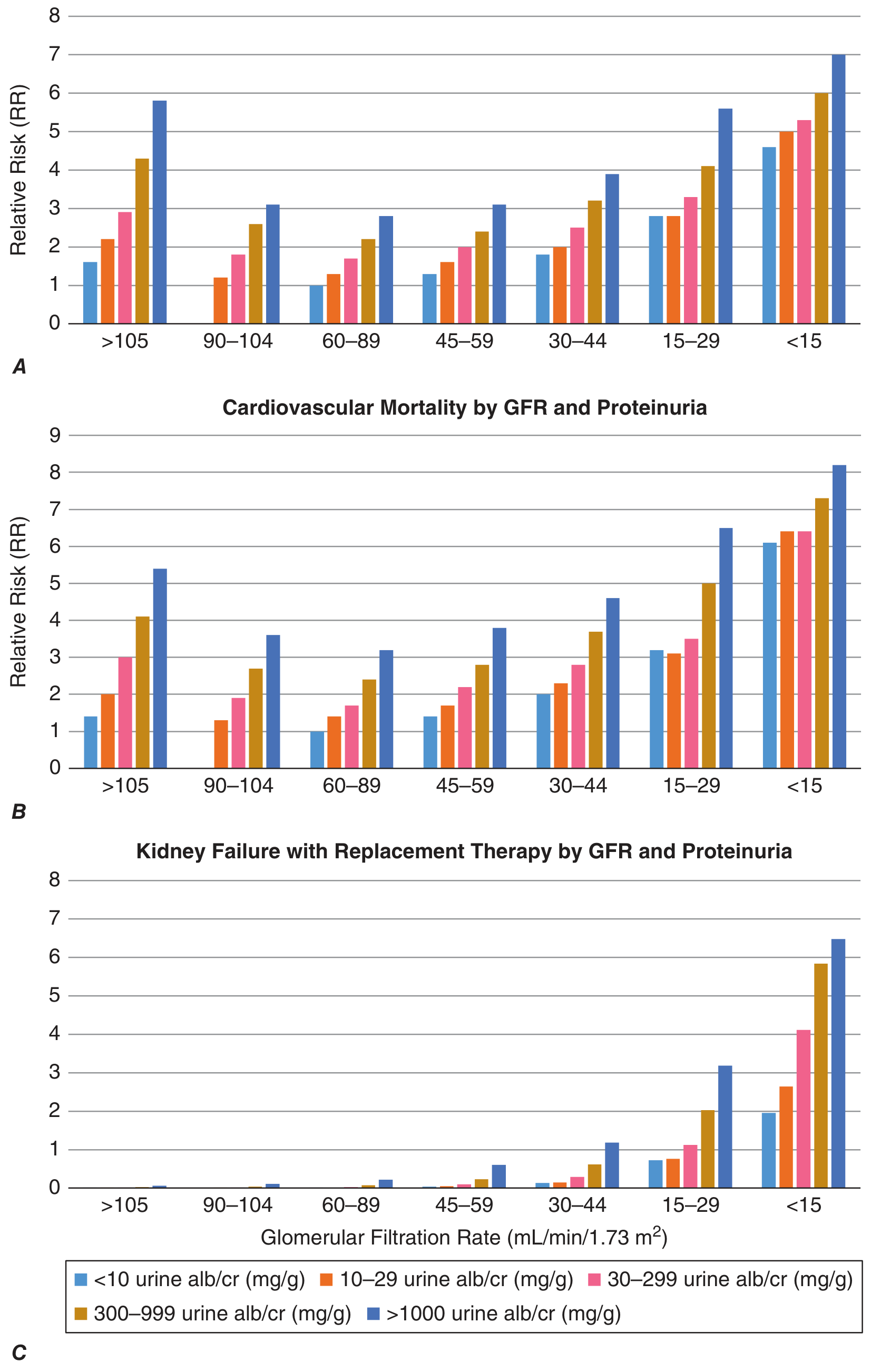
The KDIGO chart below shows that even mildly reduced GFR (60–89 range) is associated with a meaningfully higher relative risk for:
- All-cause mortality
- Cardiovascular mortality
- Progression to kidney failure
...especially when combined with proteinuria (albumin in urine).
What Should Be Done Next?
- Repeat the test in 3 months — a single low eGFR does not diagnose CKD; it needs to persist.
- Check urine albumin/creatinine ratio (UACR) — albuminuria is an independent risk factor and changes the stage/risk category.
- Rule out reversible causes — dehydration, NSAIDs, high-protein diet can temporarily lower eGFR.
- Monitor blood pressure — hypertension accelerates kidney decline.
- Avoid nephrotoxic drugs — certain painkillers, contrast agents, and herbal medications.
His creatinine of 1.2 is at the top of the reference range. The CKD-EPI equation correctly reveals that despite a "normal-looking" creatinine, there is already mild filtration impairment for his age and sex — which is exactly why eGFR is reported alongside creatinine.
Bottom line: eGFR 74.3 is a yellow flag — not an emergency, but a signal to monitor closely, retest, check for albumin in urine, and protect kidney health through lifestyle and BP control.
This is a shared conversation. Sign in to Orris to start your own chat.