
22 yrs patient have fingers paining skins and cut and having most irritating itching and his buttock have ringworm patches its also itching to hard and his penis have dotted part that itching to hard also
scabies finger web spaces skin burrows itching
tinea cruris ringworm groin fungal infection
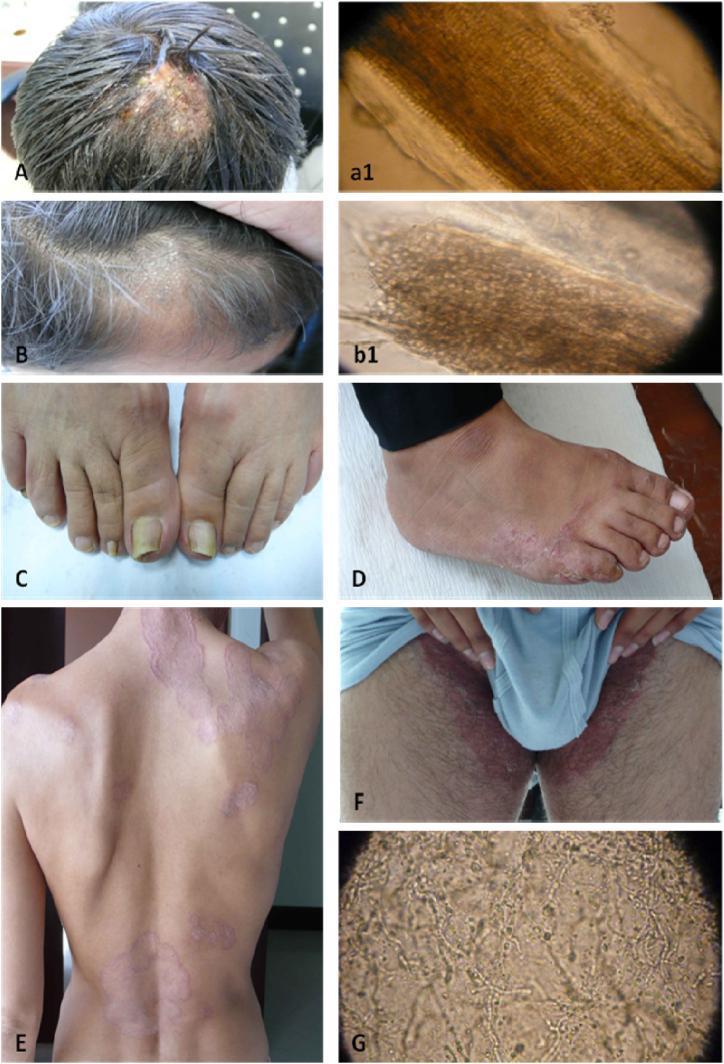
This composite educational image illustrates various clinical and microscopic manifestations of dermatophytosis. Panels A and B display Tinea Capitis: (A) demonstrates Endothrix infection with a visible patch of broken hair shafts and scalp inflammation, while (B) shows Ectothrix infection characterized by circular alopecia with fine gray scaling. Panels a1 and b1 provide corresponding microscopic views of hair shafts, illustrating fungal spores inside and outside the shaft, respectively. Panel C shows Tinea Unguium (onychomycosis) with yellowing and thickening of the toenails. Panel D illustrates Tinea Pedis (athlete's foot) presenting as erythematous scaling on the lateral foot and interdigital spaces. Panel E depicts Tinea Corporis (ringworm) on the back, showing classic annular, erythematous plaques with raised, scaly borders and central clearing. Panel F demonstrates Tinea Cruris (jock itch) with a confluent erythematous rash in the bilateral groin area. Finally, Panel G shows a high-power microscopic view of fungal hyphae and spores. This collection serves as a diagnostic reference for dermatological fungal infections across different anatomical regions.
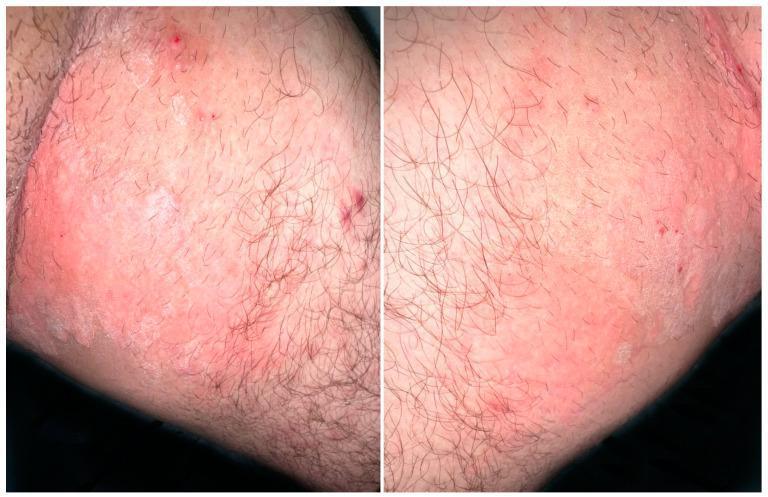
Clinical photograph of the upper inner thighs showing a pruritic erythemato-squamous dermatosis. The image displays thin, erythematous plaques characterized by a distinct arciform and annular morphology. The plaques feature prominent squamous (scaly) borders that appear slightly raised and peripheral, typical of a dermatophyte infection. Subtle secondary cutaneous findings include small, scattered punctate red lesions within the plaques, suggestive of excoriations from scratching. The distribution is bilateral and localized to the inguinal and femoral regions. These visual findings are clinically consistent with tinea cruris, a superficial fungal infection. Educational focus includes recognizing the characteristic annular 'ringworm' pattern, the squamous nature of the active border, and differentiating chronic inflammatory plaques from other common groin dermatoses.
Clinical Assessment: 22-Year-Old Male with Multiple Skin Complaints
Diagnosis 1: SCABIES (Most Likely Primary Diagnosis)
- Finger web itching with skin cuts/excoriations (the patient is scratching so hard he is breaking the skin)
- Penis with dotted/papular lesions + severe itching
- Buttock involvement (also a classic scabies site)
"Common sites of involvement include the finger webs, wrists, axillae, areolae, umbilicus, lower abdomen, waistband, and genitals. Men most frequently note the penile or scrotal pruritic lesions. Pruritic papules, secondary excoriations, and burrows (especially of finger or toe webs) are the classic findings. Red-brown papules and nodules may occur on the penis and scrotum."
- Tintinalli's Emergency Medicine, p. 1684
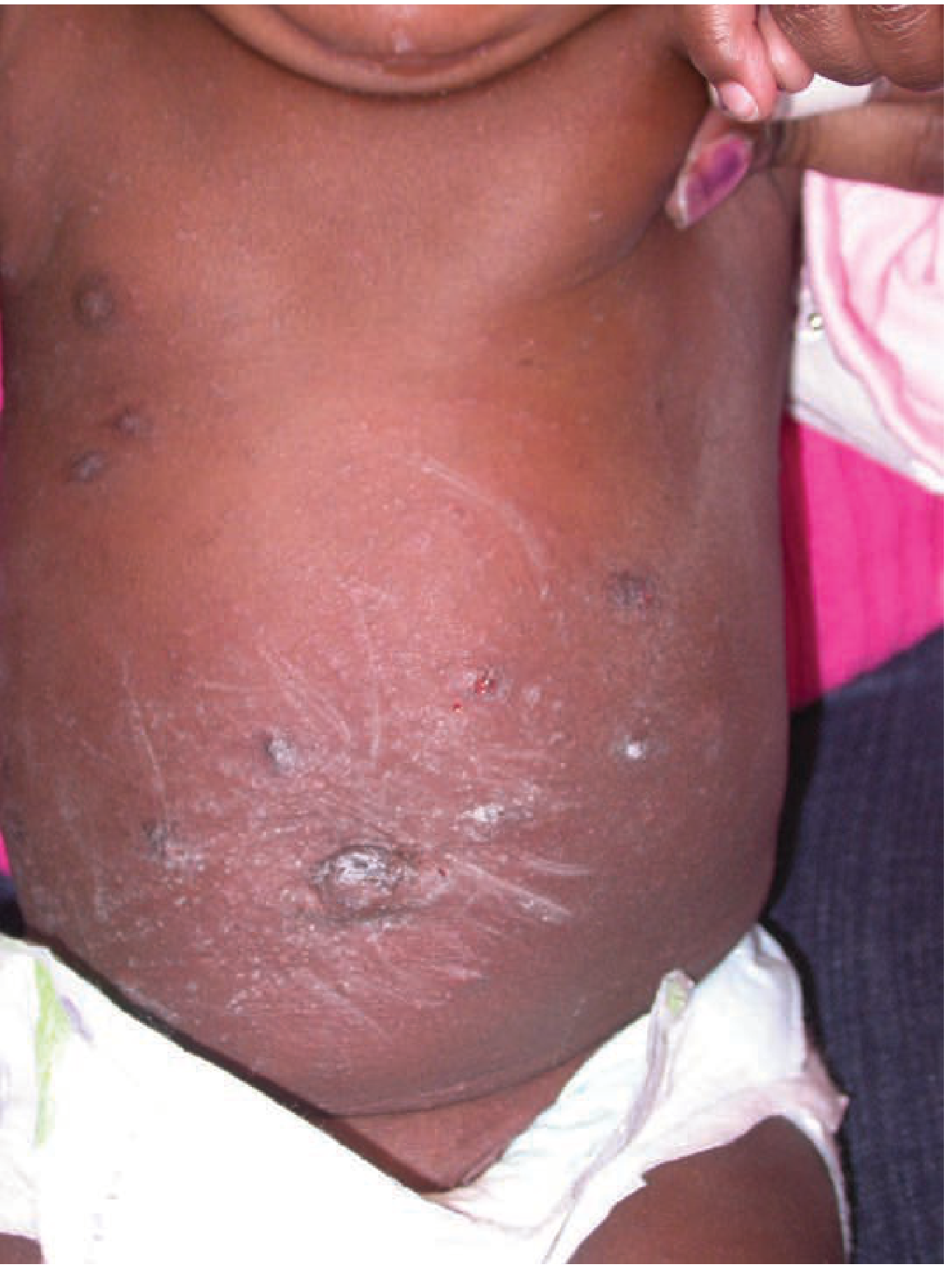
- Caused by the mite Sarcoptes scabiei, which burrows into the upper skin layer
- Itching is WORST at night (a key clue)
- Spread by skin-to-skin contact (sexual contact or household contact)
- Only 6-10 live mites may be present, yet itching is intense (it's an immune/allergic reaction to mite feces)
- The "cuts" on the fingers are likely scratch excoriations and burrow tracks
Diagnosis 2: TINEA CRURIS (Ringworm of Buttock/Groin)
- Presents as ring-shaped, scaly patches with an advancing raised border and central clearing
- Very itchy
- Common in young males, especially in hot/humid conditions or with sweating
Summary Table
| Site | Symptom | Likely Diagnosis |
|---|---|---|
| Finger webs / fingers | Intense itching, skin cuts, visible burrow tracks | Scabies |
| Penis | Dotted papules + severe itching | Scabies (genital papules) |
| Buttock | Ring-shaped itchy patches | Tinea cruris (ringworm) |
Treatment
For Scabies:
-
Permethrin 5% cream - Apply from neck to toes (including under nails, genitals, umbilicus). Leave on for 8-12 hours, then wash off. Repeat after 1 week. This is the first-line treatment.
- Tintinalli's Emergency Medicine, p. 1684
-
Alternative: Ivermectin 200 micrograms/kg as a single oral dose, repeated after 1 week.
-
Critical: All household members and close contacts must be treated at the same time, even if they have no symptoms.
-
Decontaminate clothing, bed linens, and towels - wash in hot water and machine dry. Items that cannot be washed should be sealed in a plastic bag for 10 days.
-
Itching may persist for several weeks after successful treatment - this is normal (reaction to dead mites). Use triamcinolone 0.1% cream or oral antihistamines (e.g., cetirizine) for relief.
For Tinea Cruris (Buttock Ringworm):
-
Topical antifungal - Clotrimazole 1% cream or miconazole, applied twice daily for 2-4 weeks
- Goldman-Cecil Medicine; Textbook of Family Medicine
-
Keep the area dry and clean; wear loose, breathable clothing.
-
If the infection has spread widely, an oral antifungal (terbinafine 250 mg for 2 weeks, or fluconazole) may be needed.
Important Notes
- See a doctor - this patient needs a clinical examination to confirm diagnosis. A skin scraping under mineral oil microscopy can confirm scabies mites/eggs/feces, and a KOH scrape can confirm tinea.
- Do NOT use steroid creams alone - they will temporarily reduce itching but worsen fungal infections and can mask scabies ("scabies incognito").
- Sexual partner(s) should also be evaluated and treated if scabies is confirmed, as it spreads easily through close contact.
- The combination of scabies + tinea is common because both thrive in conditions of warmth, moisture, and close contact.
Disclaimer: This information is for educational purposes. Please consult a qualified dermatologist or physician for a proper examination and prescription.
Doctor prescribed me topisal-3%, lobate gn, hexab emulsion, medrol 4mg, levocetirizine dihydrochloride tablet 5mg, rabicrol dsr, zv-vit
topisal 3% lobate GN hexab emulsion medrol 4mg rabicrol DSR ZV-vit India prescription uses
lobate GN cream composition uses hexab emulsion uses rabicrol DSR composition
hexab emulsion composition uses ZV-vit tablet composition India
Your Prescription Explained
1. 🧴 Topisal-3% Lotion
| Ingredient | What it does |
|---|---|
| Clobetasol 0.05% | Very strong steroid - reduces redness, swelling, itching |
| Salicylic Acid 3% | Keratolytic - removes dead/thick skin so the steroid penetrates better |
2. 🧴 Lobate GN Cream
| Ingredient | What it does |
|---|---|
| Clobetasol 0.05% | Steroid - reduces inflammation and itching |
| Neomycin 0.5% | Antibiotic - prevents/treats bacterial infection in scratched skin |
3. 🧴 Hexab Emulsion (100ml)
| Ingredient | What it does |
|---|---|
| Gamma Benzene Hexachloride (Lindane) | Anti-parasitic - kills scabies mites and lice |
| Cetrimide | Antiseptic - kills bacteria on skin surface |
Note: Lindane is used under medical supervision in India. It is reserved for cases where first-line treatments are unavailable or ineffective - Tintinalli's Emergency Medicine / Apollo Pharmacy
4. 💊 Medrol 4mg (Methylprednisolone)
5. 💊 Levocetirizine Dihydrochloride 5mg
6. 💊 Rabicrol DSR
| Ingredient | What it does |
|---|---|
| Rabeprazole | Proton pump inhibitor - reduces stomach acid |
| Domperidone | Prevents nausea, helps stomach empty faster |
7. 💊 ZV-Vit (Vitamin supplement)
Summary - How to Use Everything
| Medicine | When to use | How |
|---|---|---|
| Hexab Emulsion | Night (apply whole body) | Leave 8-12 hrs, wash off morning |
| Topisal-3% Lotion | As directed (1-2x daily) | Thin layer on ringworm/scaly patches |
| Lobate GN Cream | As directed (1-2x daily) | Thin layer on scratched/broken skin |
| Rabicrol DSR | Morning, 30 min before food | Empty stomach |
| Medrol 4mg | Morning with food | With breakfast |
| Levocetirizine 5mg | Night | At bedtime |
| ZV-Vit | As directed | Usually with food |
Important Reminders
- Wash all bedsheets, pillow covers, towels, and clothes in hot water on the same day you apply Hexab Emulsion
- All family members living with you should be checked/treated even if they have no symptoms - scabies spreads very easily
- Itching may continue for 2-3 weeks after treatment - this is normal, it is the body reacting to dead mites. The Levocetirizine will help.
- Do not scratch - it spreads infection and can cause wounds
- Do NOT apply Topisal or Lobate GN on genitals unless specifically told by your doctor - these are strong steroids
- Complete the full course of medicines even if you feel better early
This is an explanation of your doctor's prescription only. Follow your doctor's exact dosing instructions.