
Subarachnoid haaeenmorrge
Reading File
Finding Sources
Finding Sources
Searching PubMed
"subarachnoid hemorrhage"[MeSH Terms]
Searching the Web
subarachnoid haemorrhage symptoms emergency diagnosis treatment guideline NHS
Reading File
Reading File
Reading Web Page
https://www.nice.org.uk/guidance/ng228/chapter/Recommendatio…
Subarachnoid haemorrhage (SAH)
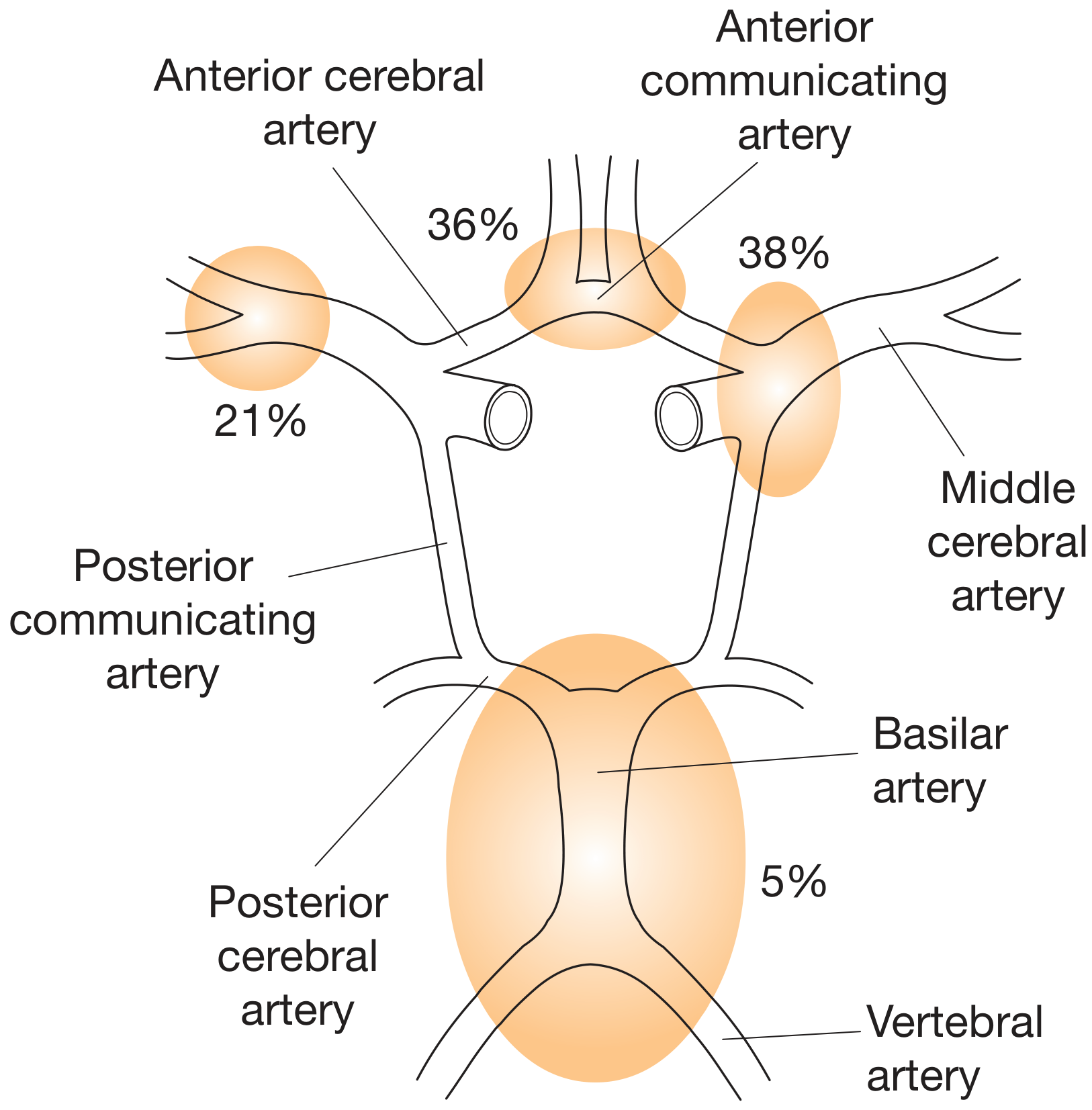
SAH is bleeding into the space between the brain and its covering membranes. It is a life-threatening form of stroke. A spontaneous SAH is most often due to rupture of a cerebral aneurysm, usually around the circle of Willis. - Bailey and Love's Short Practice of Surgery, p. 730.
Classic presentation
- Sudden, maximal-at-onset, severe "thunderclap" headache
- Neck pain or stiffness
- Nausea and vomiting
- Photophobia
- Collapse, reduced consciousness, seizures
- Sometimes focal deficits: weakness, facial droop, speech or visual problems
A sudden severe headache requires emergency assessment even if it improves. The NHS emergency advice advises calling emergency services rather than driving to hospital.
Causes and risk factors
- Ruptured berry (saccular) aneurysm, the commonest non-traumatic cause
- Arteriovenous malformation
- Head trauma
- Less commonly: arterial dissection, infection-related aneurysm, or drug-related vasculopathy
Risk factors include hypertension, smoking, cocaine use, family history, and some inherited disorders such as autosomal dominant polycystic kidney disease and Ehlers-Danlos syndrome. - Bailey and Love's Short Practice of Surgery, p. 730.
Diagnosis
- Urgent non-contrast CT head: demonstrates acute blood in the basal cisterns/sulci. CT is most sensitive soon after onset. - Grainger & Allison's Diagnostic Radiology, pp. 1457-1458.
- If CT is negative but suspicion remains:
- CT performed within 6 hours and formally reported negative: lumbar puncture is not routinely recommended.
- CT performed more than 6 hours after onset and negative: consider lumbar puncture after at least 12 hours to test for bilirubin/xanthochromia. See NICE diagnostic recommendations.
- CT angiography or catheter angiography identifies the aneurysm and guides treatment.
Management principles
- Admit urgently to a specialist neurosurgical/neurovascular centre.
- Stabilise airway, breathing, circulation; manage pain, nausea, blood pressure, and complications.
- Nimodipine is used in confirmed aneurysmal SAH to reduce delayed cerebral ischaemia from vasospasm. NICE recommends enteral nimodipine where appropriate.
- Secure the ruptured aneurysm early by:
- Endovascular coiling, or
- Neurosurgical clipping
- Monitor and treat rebleeding, hydrocephalus, seizures, vasospasm/delayed cerebral ischaemia, electrolyte abnormalities, and cardiac complications.
Important complications
- Early rebleeding, especially within the first 24 hours
- Cerebral vasospasm and delayed cerebral ischaemia, usually several days after the bleed
- Hydrocephalus
- Seizures
- Long-term cognitive, mood, fatigue, and neurological effects
If this refers to a real person with a sudden severe headache, collapse, seizure, confusion, or new weakness, seek emergency care now.
This is a shared conversation. Sign in to Orris to start your own chat.