I now have comprehensive content covering the full malaria topic. Let me compile the complete teaching module.# MALARIA - Complete Clinical Teaching Module
From Basics to ICU Management
Sources: Harrison's Principles of Internal Medicine 22E (2025) | Robbins & Kumar Basic Pathology | Rosen's Emergency Medicine 9E | WHO Guidelines for Malaria 2024/2025 | CDC Clinical Guidance 2024
"Humanity has but three great enemies: Fever, famine, and war; of these by far the greatest, by far the most terrible, is fever."
— William Osler, 1896 (writing about malaria)
PART 1 - THE BASICS: ETIOLOGY & EPIDEMIOLOGY
The Five Species That Infect Humans
| Species | Fever Pattern | RBC Preference | Special Feature | Severity |
|---|
| P. falciparum | Tertian (48h) - often irregular | Any age RBC | Cytoadherence (PfEMP1), rosetting, no hypnozoites | MOST DEADLY |
| P. vivax | Tertian (48h) | Young RBCs (reticulocytes) | Has hypnozoites → RELAPSE | Moderate |
| P. ovale | Tertian (48h) | Young RBCs | Has hypnozoites → RELAPSE; Schüffner's dots | Mild |
| P. malariae | Quartan (72h) | Older RBCs | RECRUDESCENCE (not relapse); nephrotic syndrome | Mild-Moderate |
| P. knowlesi | 24h cycle | - | Zoonosis (macaque monkey); Southeast Asia | Can be severe |
Epidemiology (2022 - Harrison's 22E / WHO World Malaria Report 2023):
- Estimated 249 million cases in 85 endemic countries
- 608,000 deaths (~1,660 deaths every single day)
- Africa bears ~95% of deaths - mostly children under 5
- Democratic Republic of Congo + Nigeria = 43% of global deaths
- ~88% of cases are community-onset (within 48h of hospitalization)
Transmission routes (remember: not just mosquitoes!):
- Primary: Bite of female Anopheles mosquito (dusk to dawn biting)
- Blood transfusion (transfusion malaria)
- Needle-sharing (IV drug users)
- Congenital / transplacental (mother → fetus)
- Organ transplantation
- "Airport malaria" (imported infected mosquito)
PART 2 - LIFE CYCLE (The Foundation of Everything)
The Complete Life Cycle
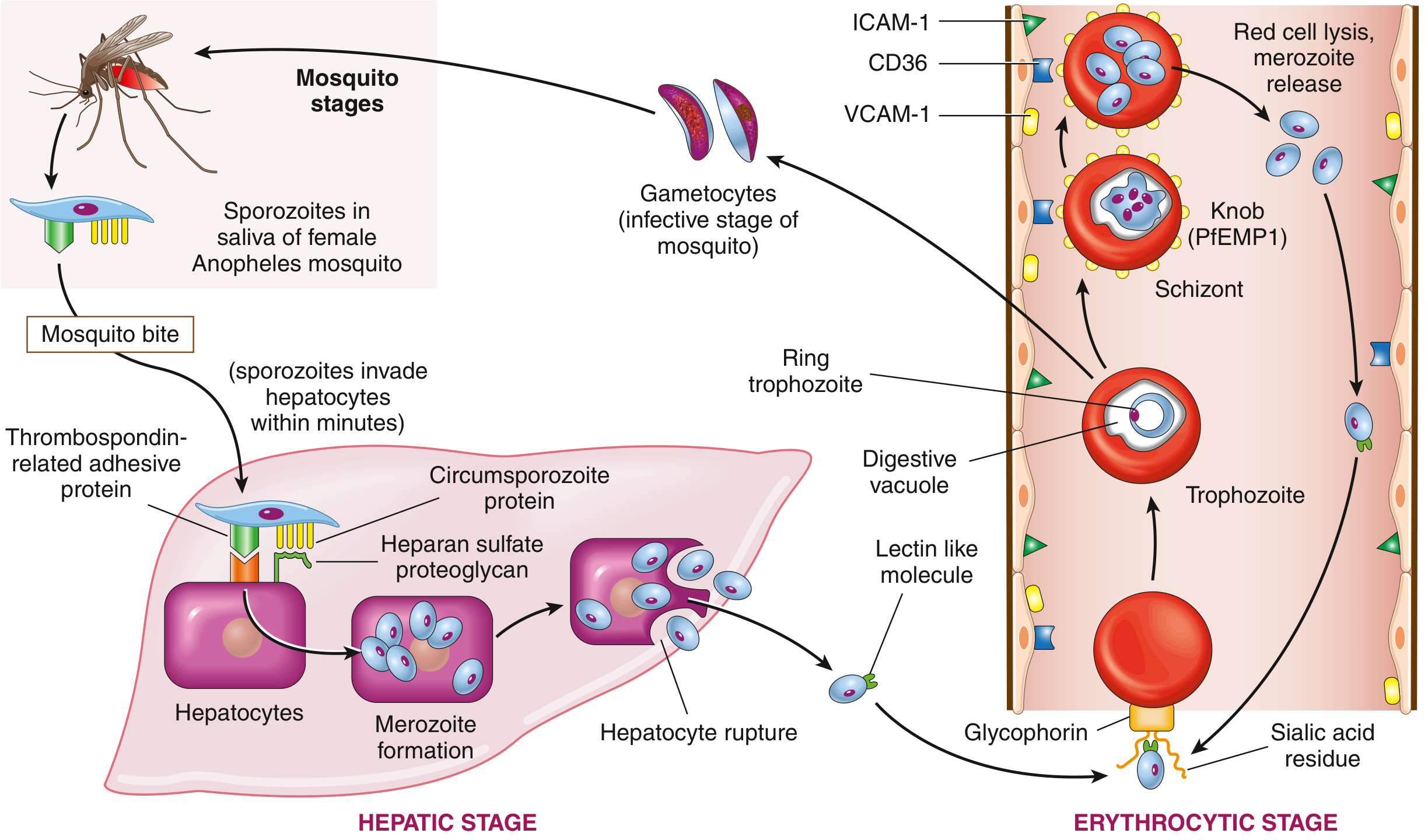
Life cycle of P. falciparum - Robbins & Kumar Basic Pathology. The hepatic (exoerythrocytic) stage and erythrocytic stage are shown, including the key adhesion molecules PfEMP1, ICAM-1, CD36, and VCAM-1.
MOSQUITO STAGE (Sexual Cycle - in Anopheles mosquito)
    Female Anopheles bites infected human → ingests gametocytes
    Gametocytes → zygote → ookinete → oocyst → sporozoites
    Sporozoites migrate to salivary glands
           ↓ (mosquito bites human)

HUMAN STAGE 1: HEPATIC (Exoerythrocytic / Pre-erythrocytic)
    Sporozoites → bloodstream → liver (within minutes)
    Surface proteins (thrombospondin-related adhesive protein +
    circumsporozoite protein) bind hepatocyte proteoglycans
    1 sporozoite → 10,000 to >30,000 merozoites (amplification!)
    Incubation: P. falciparum 5.5 days | P. vivax 8 days |
                P. ovale 9 days | P. malariae 15 days

    ★ P. vivax & P. ovale → some parasites become HYPNOZOITES
      (dormant in liver) → cause RELAPSE months to years later

    Hepatocytes rupture → merozoites released into bloodstream
           ↓

HUMAN STAGE 2: ERYTHROCYTIC (Asexual Cycle - in RBCs)
    Merozoite binds RBC via lectin-like molecule + glycophorin/
    sialic acid residue
    Merozoite enters RBC in "digestive vacuole"
    Ring form → Trophozoite → Schizont

    P. falciparum schizonts express PfEMP1 (knobs on RBC surface)
    PfEMP1 binds ICAM-1, VCAM-1, CD36 on endothelium
    → CYTOADHERENCE → sequestration in capillaries → ORGAN DAMAGE

    Schizont ruptures → releases 6-20 new merozoites (every 48h)
    Synchronized rupture → FEVER PAROXYSM

    Some trophozoites → GAMETOCYTES (restart cycle if mosquito bites)
Mnemonic for the Life Cycle: "Some Monkeys Have Erythrocytic Games"
- Sporozoites (inoculated)
- Merozoites (from liver)
- Hypnozoites (dormant - vivax/ovale only)
- Erythrocytic cycle (RBC invasion)
- Gametocytes (sexual forms - infect mosquito)
PART 3 - PATHOPHYSIOLOGY (WHY Patients Get Sick)
How P. falciparum Kills - Six Mechanisms
1. CYTOADHERENCE
   PfEMP1 knobs → bind ICAM-1/VCAM-1/CD36 on endothelium
   → Parasitized RBCs clog capillaries (especially brain, gut, kidney)
   → CEREBRAL MALARIA (most feared complication)
   → Tissue hypoxia + ischemia

2. ROSETTING
   Infected RBCs bind uninfected RBCs → "rosettes"
   → Worsens microvascular obstruction

3. HEMOLYSIS
   RBC lysis every 48h → Anemia
   Hemoglobin release → Hemoglobinuria ("blackwater fever")
   Jaundice from hemolysis

4. CYTOKINE STORM
   TNF-α, IL-1, IL-6, IL-10 released during schizont rupture
   → Fever, rigors, headache, myalgia
   → Hypoglycemia (TNF-α stimulates insulin release + parasite
     consumes glucose)
   → Pulmonary edema (capillary leak)

5. IMMUNOPATHOLOGY
   Malarial antigen → immune complex formation
   P. malariae → quartan nephrotic syndrome (membranoproliferative GN)

6. METABOLIC ACIDOSIS
   Lactate accumulation (cytoadherence blocks flow)
   Parasite glycolysis consumes glucose → hypoglycemia
   Quinine/quinidine → further hypoglycemia (stimulates insulin)
PART 4 - CLINICAL FEATURES
The Classic Malaria Paroxysm (Synchronized schizogony)
Cold Stage (15-60 min)
    Sudden chills, rigors, teeth chattering, gooseflesh
    Temperature RISING
         ↓
Hot Stage (2-6 hours)
    High fever (39-41°C), headache, myalgia, nausea, vomiting
    Flushed, dry skin
         ↓
Sweating Stage (2-4 hours)
    Profuse diaphoresis, temperature falls dramatically
    Patient feels exhausted but better
Fever Periodicity by Species
| Species | Cycle | Fever Pattern | Clinical Name |
|---|
| P. falciparum | 48h | Tertian (Day 1, 3, 5...) | Malignant tertian malaria |
| P. vivax | 48h | Tertian | Benign tertian malaria |
| P. ovale | 48h | Tertian | Ovale tertian malaria |
| P. malariae | 72h | Quartan (Day 1, 4, 7...) | Quartan malaria |
| P. knowlesi | 24h | Daily (quotidian) | Knowlesi malaria |
Clinical pearl: In early P. falciparum infection, fever is often CONTINUOUS or IRREGULAR (not cyclical) because schizogony is not yet synchronized. Never rule out malaria because the fever "doesn't fit the pattern."
Symptoms by System
| System | Features |
|---|
| Constitutional | Fever, chills, rigors, sweats, headache, myalgia, arthralgia, fatigue, malaise |
| GI | Nausea, vomiting, diarrhea (especially in children), abdominal pain, hepatomegaly, splenomegaly |
| Hematological | Anemia, thrombocytopenia (almost universal in falciparum malaria) |
| CNS | Headache (universal); in cerebral malaria: confusion, seizures, coma |
| Renal | Oliguria, hemoglobinuria (blackwater fever) |
| Respiratory | Cough, tachypnea; acute pulmonary edema in severe disease |
PART 5 - SEVERE MALARIA (The Emergency)
WHO Criteria for Severe Falciparum Malaria
Mnemonic: "CAPS RHAHHH" (10 criteria)
| Criterion | Definition | Notes |
|---|
| Cerebral malaria | Unarousable coma (GCS <11; Blantyre <3 in children) | Most dangerous; 15-20% mortality even with treatment |
| Anemia | Hematocrit <15%, Hb <5 g/dL | Most common complication in children |
| Pulmonary edema / ARDS | Non-cardiogenic; PaO₂/FiO₂ <300 | High mortality (>80%) |
| Spontaneous bleeding / DIC | Coagulopathy, petechiae, mucosal bleeding | |
| Renal failure | Cr >3 mg/dL or <400 mL urine/24h | More common in adults |
| Hypoglycemia | Blood glucose <2.2 mmol/L (<40 mg/dL) | Especially in children + pregnant women + quinine-treated patients |
| Acidosis | Arterial pH <7.25 or bicarbonate <15 mmol/L | Lactic acidosis from tissue hypoxia |
| Hyperlactatemia | Lactate >5 mmol/L | |
| Hyperparasitemia | >5% RBCs parasitized (or >500,000/µL) | Especially in non-immune travelers |
| Hemoglobinuria | "Blackwater fever" = massive hemolysis | |
| Impaired consciousness | Any reduction in GCS | Even if not full coma |
| Prostration | Cannot sit unsupported | |
| Convulsions | >2 in 24h | |
| Circulatory shock | SBP <90 (adults) | |
| Jaundice | Bilirubin >3 mg/dL + other vital organ dysfunction | |
Relative Incidence of Complications (Harrison's 22E)
| Complication | Non-pregnant Adults | Pregnant Women | Children |
|---|
| Anemia | + | ++ | +++ |
| Convulsions | + | + | +++ |
| Hypoglycemia | + | +++ | +++ |
| Jaundice | +++ | +++ | + |
| Renal failure | +++ | +++ | + |
| Pulmonary edema | ++ | +++ | + |
Key: + = infrequent, ++ = frequent, +++ = very frequent
Cerebral Malaria in Detail:
- Seen almost exclusively with P. falciparum
- Mechanism: cytoadherence of parasitized RBCs in cerebral capillaries → microvascular obstruction + blood-brain barrier disruption + neuroinflammation
- Features: unarousable coma, symmetric UMN signs, retinal hemorrhages (Malarial retinopathy - PATHOGNOMONIC for cerebral malaria)
- Up to 10% of survivors have permanent neurological sequelae
- In children: hypoglycemia, seizures, and brainstem herniation are immediate threats
PART 6 - DIAGNOSIS
Diagnostic Modalities
| Method | Details | Sensitivity | Advantages | Disadvantages |
|---|
| Thick Blood Film (Gold Standard) | Giemsa-stained; count parasites per 200 WBCs; 3 slides over 36h if first negative | 0.001% parasitemia | Most sensitive; species ID; inexpensive | Needs experience; time-consuming |
| Thin Blood Film | Fixed smear; count per 1000 RBCs; assess stage of parasites | 0.05% parasitemia | Rapid species ID; prognostic info in severe malaria | Less sensitive |
| RDT (Rapid Diagnostic Test) | Detects HRP-2 (P. falciparum), LDH, aldolase | 85-95% (falciparum) | Fast (15 min); no microscope needed; field use | Cannot quantify parasitemia; false negatives in low parasitemia; HRP2 deletion variants |
| PCR | Detects parasite DNA | >99% | Confirms species; detects mixed infections; drug resistance genes | Expensive; slow; not for acute management |
| Quantitative Buffy Coat (QBC) | Fluorescence microscopy with acridine orange | High | Rapid | Equipment required; no species differentiation |
Blood Film Findings by Species (Microscopy Pearls)
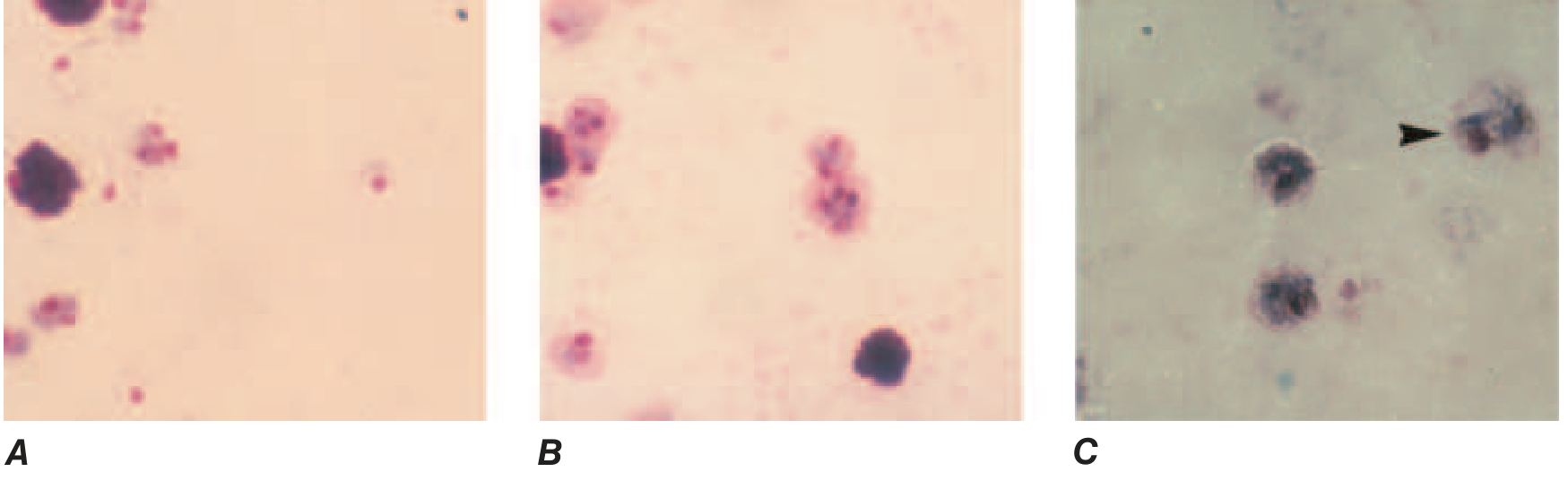
P. ovale thick blood film - A. Trophozoites B. Schizonts C. Gametocytes. (WHO Bench Aids for Diagnosis of Malaria)
| Species | RBC Size | RBC Inclusions | Parasite Features |
|---|
| P. falciparum | Normal or smaller | Maurer's clefts; multiple ring forms per RBC; "appliqué/accolé" (ring at periphery) | Delicate rings; banana-shaped gametocytes (PATHOGNOMONIC) |
| P. vivax | ENLARGED | Schüffner's dots | Ameboid trophozoites; large schizonts (12-24 merozoites) |
| P. ovale | ENLARGED + oval + fimbriated | Schüffner's dots | Compact trophozoites |
| P. malariae | Normal or smaller | Ziemann's dots | "Band form" trophozoites (PATHOGNOMONIC); rosette schizonts (8 merozoites) |
| P. knowlesi | Normal or smaller | None | Similar to P. malariae band forms |
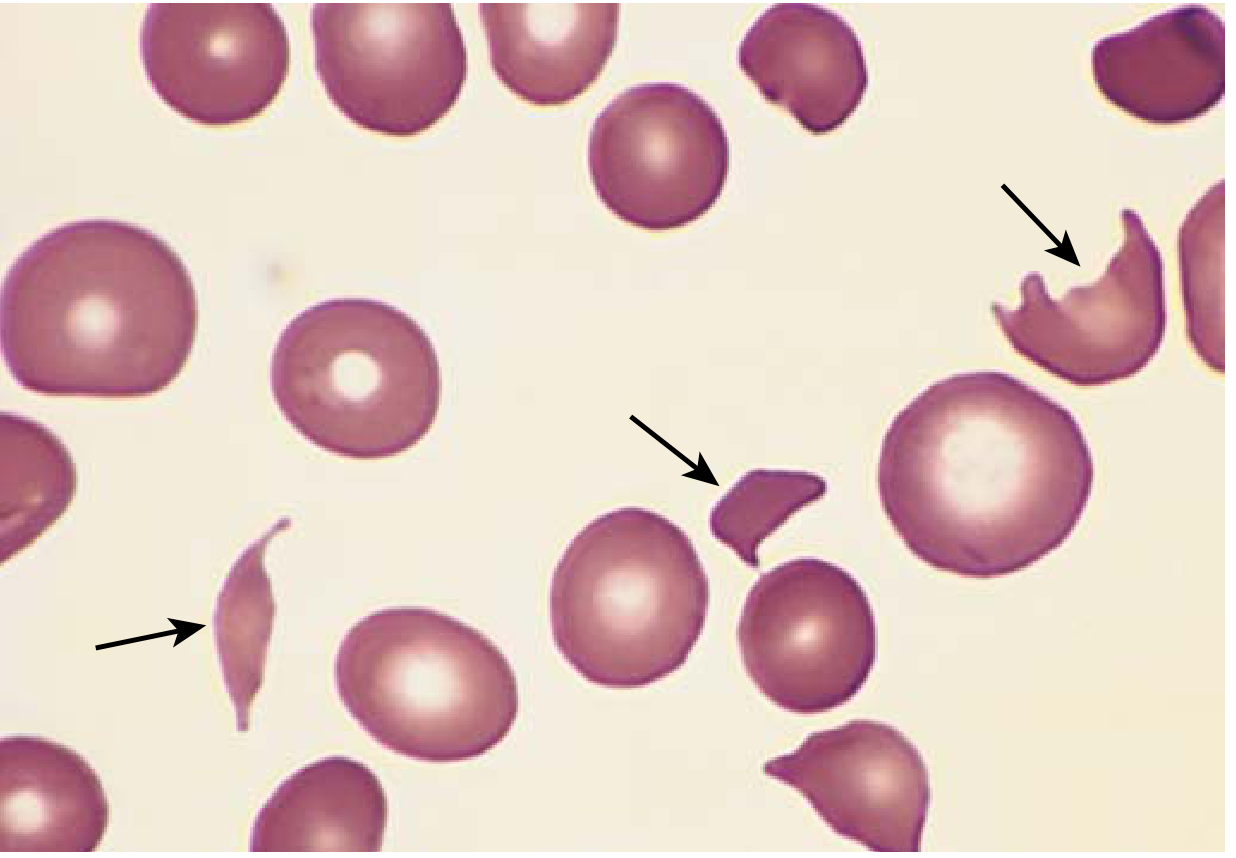
Microangiopathic Hemolytic Anemia on PBS
Fragmented RBCs (schistocytes, arrows) - seen in malaria-associated hemolytic complications. Robbins & Kumar Basic Pathology.
Investigations to Order
MANDATORY IN ALL SUSPECTED MALARIA:
  □ Blood films ×3 (thick + thin, Giemsa stained)
  □ RDT (HRP2/pLDH)
  □ CBC with differential
  □ Blood glucose (STAT - check immediately in severe cases)
  □ Renal function (creatinine, BUN, electrolytes)
  □ LFTs + bilirubin (total, direct, indirect)
  □ Blood cultures (rule out concurrent bacteremia)

IN SUSPECTED SEVERE MALARIA (ADD):
  □ ABG / VBG (lactate, pH, bicarbonate)
  □ Coagulation profile (PT, aPTT, fibrinogen, D-dimer) - DIC screen
  □ Serum lactate
  □ Blood glucose Q1-2h (hypoglycemia monitoring)
  □ Chest X-ray (ARDS screening)
  □ ECG (QTc prolongation if using quinine/quinidine)
  □ Urine dipstick + microscopy (hemoglobinuria)
  □ Fundoscopy (malarial retinopathy in cerebral malaria)
  □ Lumbar puncture (if meningism - exclude bacterial meningitis)
PART 7 - TREATMENT PROTOCOLS
The Decision Algorithm
Suspected Malaria (Fever + History of Travel/Endemic Area)
           ↓
Confirm with Blood Film + RDT
           ↓
    ┌──────────────────┐
    │                  │
Uncomplicated        Severe Malaria
  Malaria            (Any WHO criterion)
    │                  │
    ↓                  ↓
Species?           EMERGENCY PROTOCOL
    │              (See Part 8 - ICU)
    ├── P. falciparum → ACT (first-line)
    ├── P. vivax/ovale → CQ + Primaquine
    ├── P. malariae → Chloroquine alone
    └── P. knowlesi → ACT or CQ if sensitive
UNCOMPLICATED FALCIPARUM MALARIA - ACT (WHO 2024/2025)
First-line: Artemisinin-Based Combination Therapy (ACT)
| ACT Regimen | Dose (Adult) | Duration | Notes |
|---|
| Artemether-Lumefantrine (AL) | 4 tabs BD (80/480 mg) Days 1-3 | 3 days | Take with fatty food (enhances absorption); preferred in sub-Saharan Africa |
| Artesunate-Amodiaquine | 200/540 mg OD | 3 days | Africa-preferred; avoid in G6PD deficiency |
| Artesunate-Mefloquine | 200 mg AS + 440 mg MQ OD | 3 days | Southeast Asia; neuropsychiatric side effects with MQ |
| Dihydroartemisinin-Piperaquine (DHA-PPQ) | 40/320 mg OD | 3 days | Excellent efficacy; avoid if QTc prolonged |
| Artesunate-Sulfadoxine/Pyrimethamine (AS+SP) | 200 mg AS OD + SP single dose | 3 days | Only in areas where SP still effective |
| Atovaquone-Proguanil | 1000/400 mg OD | 3 days | For travelers; expensive; avoid in renal failure |
Why combinations? Artemisinin components have a very short half-life (~1 hour). They rapidly reduce parasite biomass (>99.9% reduction in 48h), but the partner drug eliminates residual parasites and prevents resistance. Never use artemisinin monotherapy.
Gametocytocidal dose (SSC/WHO 2024):
Add single-dose primaquine 0.25 mg base/kg to all falciparum treatments in low-transmission areas to prevent onward transmission. This is safe even in G6PD deficiency at this dose.
UNCOMPLICATED P. VIVAX / P. OVALE MALARIA
STEP 1 - Kill blood-stage parasites:
- Chloroquine 25 mg base/kg over 3 days:
- Day 1: 10 mg/kg, Day 2: 10 mg/kg, Day 3: 5 mg/kg
- OR ACT where chloroquine resistance exists (parts of Southeast Asia, Oceania)
STEP 2 - Kill hypnozoites (prevent relapse) - RADICAL CURE:
| Drug | Dose | Duration | Precaution |
|---|
| Primaquine | 0.25-0.5 mg base/kg/day | 14 days | Test for G6PD first! Causes hemolysis in G6PD deficiency |
| Tafenoquine (Krintafel) | 300 mg single dose | 1 day | FDA-approved 2018 for ages ≥16y; G6PD testing mandatory (semi-quantitative); contraindicated in G6PD deficiency and pregnancy |
Critical: If G6PD status unknown or deficient, you can still give chloroquine for blood-stage disease, but DELAY primaquine until G6PD testing. Weekly low-dose primaquine (0.75 mg/kg/week × 8 weeks) is an alternative in mild G6PD deficiency under supervision.
P. MALARIAE TREATMENT
- Chloroquine alone (same dosing as vivax) - no radical cure needed (no hypnozoites)
- Rare recrudescences managed by retreatment
DRUG RESISTANCE MAP (Important for Boards & Practice)
| Drug | Resistance Pattern |
|---|
| Chloroquine | P. falciparum: resistant in almost ALL endemic areas (except Central America west of Panama Canal, Haiti, Dominican Republic, parts of Middle East) |
| Sulfadoxine-Pyrimethamine | Widespread resistance in Southeast Asia and Africa |
| Mefloquine | Resistance along Thailand-Cambodia-Myanmar border |
| Artemisinin partial resistance | Emerging in Southeast Asia (Cambodia, Thailand, Vietnam, Myanmar, India); now detected in East Africa (Uganda, Rwanda) - major concern per 2024 reports |
PART 8 - SEVERE MALARIA: ICU PROTOCOL
Severe Malaria = MEDICAL EMERGENCY - Call ICU Immediately
IMMEDIATE ACTIONS (0-15 minutes):
  □ Establish IV access (2 large-bore IVs)
  □ Check blood glucose STAT → treat hypoglycemia immediately
  □ Blood films + RDT STAT
  □ Start ARTESUNATE IV (do not wait for films if clinical suspicion high)
  □ Oxygen supplementation
  □ Foley catheter (hourly urine output)
  □ Connect to cardiac monitor + SpO₂
  □ NGT if unconscious (prevents aspiration + drug delivery)
Parenteral Artesunate - Drug of Choice for Severe Malaria (WHO 2024)
ARTESUNATE IV (Preferred - FDA approved, WHO first-line):
  Adults and children ≥20 kg:
    Loading: 2.4 mg/kg IV at 0h, 12h, 24h
    Then: 2.4 mg/kg IV daily until oral therapy possible

  Children <20 kg:
    3 mg/kg per dose (same timing)

  Route: IV (preferred) or IM if IV not possible
  Given in: 5-10% dextrose (to prevent hypoglycemia)

IF ARTESUNATE UNAVAILABLE:
  Artemether 3.2 mg/kg IM stat → 1.6 mg/kg IM daily
  (Note: erratic absorption, inferior to artesunate)

LAST RESORT:
  Quinine dihydrochloride: 20 mg/kg IV over 4h (loading), then
  10 mg/kg over 2-8h q8h
  ★ Risk: QTc prolongation, hypoglycemia
  ★ Must give with glucose infusion (10% dextrose)
  ★ ECG monitoring mandatory
  ★ Do NOT give loading dose if patient received quinine in last 24h

ARTEMISININ RESISTANCE AREA:
  Give BOTH artesunate + quinine together at full doses
Switch to oral ACT as soon as patient can swallow and tolerate oral medication (usually 24-48h). Complete a full 3-day oral ACT course.
ICU Management Checklist
HEMODYNAMIC GOALS:
  □ MAP ≥65 mmHg (isotonic fluids cautiously - risk of pulmonary edema)
  □ CAUTION: Aggressive fluid resuscitation → precipitates pulmonary edema
    (reduced plasma oncotic pressure in severe anemia + increased
    vascular permeability)
  □ Vasopressors (norepinephrine) if fluid-unresponsive shock

CEREBRAL MALARIA:
  □ Nurse head-end of bed 30° elevation
  □ Maintain airway - intubate if GCS ≤8 (unable to protect airway)
  □ Treat seizures with IV diazepam 0.15 mg/kg or IV lorazepam
  □ Avoid phenobarbitone prophylaxis (shown to increase mortality
    in African children despite stopping seizures)
  □ Monitor ICP if facilities available
  □ ✗ NO high-dose steroids (PROVEN HARMFUL in cerebral malaria -
    increases coma duration and GI bleeding)
  □ ✗ NO heparin, NO dextran, NO anti-TNF-α (all ineffective)

HYPOGLYCEMIA:
  □ Check glucose Q1-2h continuously
  □ Give 50% dextrose 1 mL/kg IV if glucose <40 mg/dL, then
    continuous 10% dextrose infusion
  □ Double risk with quinine therapy (stimulates insulin release)
  □ Highest risk: pregnant women + children + quinine-treated patients

ANEMIA:
  □ Hb <7 g/dL in adults (or Hb <5 g/dL) → transfuse packed RBCs
  □ In children: Hb <5 g/dL (with signs of impaired consciousness,
    respiratory distress, hyperparasitemia) → transfuse
  □ Transfuse slowly (risk of fluid overload in severe anemia)
  □ Use fresh blood where possible

ACUTE KIDNEY INJURY:
  □ Maintain MAP ≥65
  □ Avoid nephrotoxins (aminoglycosides, NSAIDs, IV contrast)
  □ Monitor creatinine and urine output Q1h
  □ Hemodialysis / peritoneal dialysis if renal failure
    (dialysis reduces mortality from 75% to <50%)
  □ Furosemide NOT routinely recommended (no mortality benefit)

PULMONARY EDEMA / ARDS:
  □ Sit patient upright, oxygen
  □ Intubate early if SpO₂ <90%
  □ Lung-protective ventilation: Vt 6 mL/kg IBW, plateau P <30
  □ Prone positioning if PaO₂/FiO₂ <150
  □ Strict fluid balance (negative where possible in ARDS)

COAGULOPATHY / DIC:
  □ Correct with FFP (4 units), cryoprecipitate (fibrinogen <1.5 g/L)
  □ Platelet transfusion if <50,000/µL + active bleeding
  □ ✗ Heparin NOT recommended in malarial DIC

MONITORING PARAMETERS:
  □ Glucose Q1-2h
  □ Parasitemia Q12-24h until <1%
  □ Hb + Hematocrit Q6-12h
  □ Renal function daily
  □ ECG Q8h if on quinine (QTc monitoring)
  □ Urine output hourly
  □ GCS/neurological assessment Q1-2h
  □ Temperature + vital signs Q1h
PART 9 - MONITORING PARAMETERS (Summary Table)
| Parameter | Target / Normal | Frequency | Action if Abnormal |
|---|
| Blood glucose | 70-140 mg/dL | Q1-2h | 50% dextrose + 10% dextrose infusion |
| Parasitemia | Target <1%, then negative | Q12-24h until <1% | Change to artesunate + quinine if no response in 48h (resistance) |
| Hemoglobin | >7 g/dL (adults), >5 g/dL (children) | Q6-12h | Transfuse packed RBCs |
| Urine output | ≥0.5 mL/kg/h | Q1h | Optimize MAP, consider dialysis if anuric |
| Creatinine | <1.2 mg/dL | Daily | Avoid nephrotoxins, consider dialysis |
| Lactate | <2 mmol/L | Q4-6h until normal | Optimize perfusion, treat anemia |
| QTc | <450 ms (men), <470 ms (women) | Q8h if on quinine | If >25% prolongation → stop/reduce quinine, use artesunate |
| GCS | 15 (or baseline) | Q1-2h | Intubate if ≤8; exclude hypoglycemia, seizures |
| Temperature | <38.5°C | Q1h | Antipyretics (paracetamol); cool sponging |
| SpO₂ | ≥94% | Continuous | Escalate O₂, consider intubation |
PART 10 - ELECTROLYTE MANAGEMENT IN MALARIA
| Electrolyte | Common Problem | Cause | Management |
|---|
| Glucose | Hypoglycemia (most critical) | Parasite glucose consumption + quinine-induced insulin release + impaired gluconeogenesis | 50% dextrose IV + 10% dextrose infusion; Q1-2h monitoring |
| Sodium | Hyponatremia | SIADH, excessive hypotonic fluids | Fluid restriction; hypertonic saline if symptomatic |
| Potassium | Hypokalemia (with quinine) / Hyperkalemia (with AKI) | Quinine causes renal K+ loss; AKI impairs excretion | Replace K+ cautiously; avoid in AKI; monitor ECG |
| Bicarbonate | Low (metabolic acidosis) | Lactic acidosis from tissue hypoxia and anaerobic metabolism | Treat underlying disease; NaHCO₃ only if pH <7.1 |
| Calcium | Hypocalcemia | Albumin loss, cytokine effects | IV calcium gluconate if symptomatic |
| Phosphate | Hypophosphatemia | Glucose administration | Replace if <1 mg/dL or symptomatic |
| Lactate | Elevated (>2 mmol/L) | Microvascular obstruction, hypoxia | Treat malaria, optimize perfusion |
PART 11 - COMPLICATIONS
Early Complications
| Complication | Mechanism | Clinical Feature | Management |
|---|
| Cerebral malaria | Cytoadherence + neuroinflammation | Coma, seizures, posturing | Artesunate IV, airway protection, anti-seizure drugs |
| Severe anemia | Hemolysis + dyserythropoiesis + RBC sequestration | Hb <5 g/dL, pallor, cardiac failure | Blood transfusion, treat malaria |
| Blackwater fever | Massive intravascular hemolysis | Hemoglobinuria (dark urine), AKI | Artesunate (NOT quinine if quinine-induced), IV fluids, dialysis |
| Acute pulmonary edema | Capillary leak + fluid overload | Dyspnea, hypoxia, bilateral infiltrates | Diuretics, oxygen, ventilation |
| Hypoglycemia | Parasite glucose consumption + quinine | Altered sensorium, sweating, seizures | 50% dextrose IV immediately |
| Acute Kidney Injury | Hemoglobinuria + cytoadherence in renal capillaries | Oliguria, rising creatinine | MAP optimization, dialysis |
| DIC | Widespread endothelial activation | Bleeding, petechiae, ↑PT/↑D-dimer | FFP, platelets, cryoprecipitate |
| Shock | Relative hypovolemia + vasodilation + myocardial depression | Hypotension, tachycardia | Fluids cautiously, vasopressors |
| Hyperpyrexia | Cytokine release | Temp >40°C | Paracetamol + cooling measures |
Late Complications
| Complication | Notes |
|---|
| Post-malaria neurological syndrome | Rare; ataxia, psychosis weeks after P. falciparum recovery |
| Quartan nephropathy | P. malariae → immune complex deposition → membranoproliferative GN → nephrotic syndrome (especially children in Africa) |
| Tropical splenomegaly syndrome (Hyperreactive Malarial Splenomegaly - HMS) | Massive splenomegaly, high IgM, elevated malaria antibodies; treated with long-term malaria prophylaxis |
| Splenic rupture | Spontaneous or post-trauma; life-threatening; associated with P. vivax |
| Relapse | P. vivax and P. ovale from hypnozoites; can occur months-years later |
| Recrudescence | P. malariae; parasites persist at sub-patent levels; reappear after months-years |
| Post-malaria anemia | Chronic hemolysis + suppressed erythropoiesis |
PART 12 - MALARIA IN SPECIAL POPULATIONS
Malaria in Pregnancy
- Falciparum malaria is MUCH more dangerous in pregnancy
- Fetal loss, premature labor, low birth weight (~170g reduction), maternal death
- P. vivax also reduces birth weight (~110g)
- Placental malaria: parasites accumulate in placental microcirculation (often asymptomatic in endemic areas)
Treatment in Pregnancy:
| Trimester | Treatment |
|---|
| 1st Trimester | Quinine + Clindamycin × 7 days (ACTs not first-line due to limited embryotoxicity data) |
| 2nd and 3rd Trimester | ACT is SAFE and preferred (artemether-lumefantrine or artesunate-amodiaquine) |
| Severe malaria (ANY trimester) | IV Artesunate - benefits outweigh risks; do NOT use quinine alone |
| Radical cure | Primaquine CONTRAINDICATED in pregnancy; defer anti-relapse until after delivery + breastfeeding |
Malaria in Children
- Children under 5 = highest mortality group worldwide
- Cerebral malaria, severe anemia, convulsions, and hypoglycemia are most common
- Rapid neurological deterioration - reassess Q1-2h
- Dose artesunate 3 mg/kg (not 2.4 mg/kg) in children <20 kg
- Pre-referral rectal artesunate suppository: 10 mg/kg single dose → given in community before transport to hospital
PART 13 - PROTOCOLS BY SETTING
OPD Protocol
Patient: Fever + travel history to endemic area (or resident in endemic area)

STEP 1: SCREEN (5 min)
  - Vital signs: Temp, HR, BP, RR, SpO₂
  - Any danger signs? (Altered consciousness? Seizures? Vomiting everything?
    Unable to sit? Jaundice? Dark urine? Breathing difficulty?)

If NO danger signs → Proceed with outpatient workup
If ANY danger sign → URGENT referral to hospital IMMEDIATELY

STEP 2: INVESTIGATIONS
  □ Blood film (thick + thin, Giemsa)
  □ RDT if film unavailable
  □ Blood glucose (STAT - before any treatment)
  □ CBC

STEP 3: TREAT UNCOMPLICATED MALARIA
  □ Artemether-lumefantrine (AL) × 3 days (with food)
  □ Paracetamol (NOT aspirin in children - Reye's syndrome risk)
  □ Oral rehydration (plenty of fluids)
  □ For P. vivax/ovale: Add primaquine after G6PD test

STEP 4: SAFETY NETTING
  □ Return immediately if: unable to keep tablets down,
    worsening fever, confusion, dark urine, difficulty breathing
  □ Review in 24-48h
  □ Follow-up blood film on Day 3 and Day 28 (treatment response + cure)

⚠️ NEVER send home if ANY WHO severe malaria criteria present
⚠️ Do NOT give oral treatment if vomiting (→ admit for IV artesunate)
Ward Protocol
Admitted patient with confirmed/suspected malaria

ON ADMISSION:
  □ Vital signs Q4h
  □ Blood glucose Q4-6h
  □ Twice-daily clinical reassessment
  □ Parasitemia check on Days 2 and 3

UNCOMPLICATED MALARIA ON WARD:
  □ Oral ACT (AL, DHA-PPQ, or ASMQ per local protocol)
  □ Monitor for treatment failure (parasitemia not falling by 75%
    at 48h → consider resistance/non-compliance)
  □ Regular blood glucose monitoring if vomiting or on quinine
  □ Observe for at least 24h before discharge in non-immune patients

ESCALATION CRITERIA (Ward → ICU):
  □ GCS drops below 14
  □ Seizure
  □ Unable to swallow oral medication (→ IV artesunate)
  □ Hypoglycemia (<40 mg/dL)
  □ Oliguria (<0.5 mL/kg/h for 2h)
  □ SpO₂ <94% despite O₂
  □ Parasitemia increasing at 48h despite treatment
  □ Development of any WHO severe malaria criterion
Emergency Protocol (ED)
Patient in ED with suspected severe malaria

TIME ZERO:
  □ IV access × 2
  □ Blood glucose STAT → treat immediately if low
  □ Blood films × 2 sites + RDT
  □ Full blood work (CBC, renal, LFTs, coag, ABG, lactate, blood cultures)
  □ O₂ supplementation (target SpO₂ ≥94%)
  □ ECG

WITHIN 30 MINUTES:
  □ Artesunate IV 2.4 mg/kg (or 3 mg/kg if child <20 kg)
  □ 10% dextrose infusion running (prevents hypoglycemia)
  □ Foley catheter (hourly UO)

WITHIN 1 HOUR:
  □ Reassess GCS, vitals, glucose
  □ If cerebral malaria → arrange ICU transfer
  □ If unable to protect airway (GCS ≤8) → RSI + intubation
  □ Treat seizures (IV diazepam)
  □ If blood glucose <40 mg/dL → 50% dextrose 1 mL/kg IV bolus
  □ Blood transfusion if Hb <7 g/dL (adults) or <5 g/dL (children)

ADMIT ALL FALCIPARUM MALARIA:
  Uncomplicated → Ward
  Any severe criterion → ICU
PART 14 - PREVENTION
Personal Protection (Individual Level)
| Measure | Details |
|---|
| Insect repellent | DEET 20-50% on exposed skin; Picaridin; IR3535 |
| Bed nets | Insecticide-treated nets (ITNs/LLINs - long-lasting) at night; avoid dusk/dawn outdoors |
| Protective clothing | Long sleeves + pants after sunset; permethrin-treated clothing |
| Indoor residual spraying (IRS) | WHO-approved insecticides on walls/ceilings; updated 2025 guidelines include chlorfenapyr and isocycloseram |
Chemoprophylaxis (Travelers + High-Risk Individuals)
| Drug | Regimen | Best For | Side Effects |
|---|
| Atovaquone-Proguanil (Malarone) | 1 tab daily; start 1-2 days before, continue 7 days after | All regions; multidrug-resistant areas | GI upset; expensive; avoid in renal failure |
| Doxycycline | 100 mg daily; start 1-2 days before, continue 4 weeks after | All regions; cheap | Photosensitivity, esophagitis; contraindicated in pregnancy + children <8y |
| Mefloquine | 250 mg weekly; start ≥2 weeks before, continue 4 weeks after | Sub-Saharan Africa | Neuropsychiatric effects; avoid in epilepsy, psychiatric history |
| Chloroquine | 500 mg weekly | Only CQ-sensitive areas (very few) | Retinopathy (long-term), GI upset |
| Primaquine | 30 mg base daily | Terminal prophylaxis P. vivax/ovale; some uses as primary prophylaxis | Must test G6PD first |
Intermittent Preventive Treatment (IPT) - Public Health
| Program | Target Group | Drug |
|---|
| IPTp (in pregnancy) | All pregnant women in moderate/high transmission Africa | Sulfadoxine-pyrimethamine from 2nd trimester, each ANC visit |
| IPTi (in infants) | Infants via EPI contact | SP at routine vaccination visits |
| SMC (Seasonal Malaria Chemoprevention) | Children <5 in Sahel during transmission season | ASAQ or SP+AQ monthly |
Vaccines (New and Emerging)
| Vaccine | Status | Efficacy | Notes |
|---|
| RTS,S/AS01 (Mosquirix) | WHO recommended 2021; rolling out in Africa | ~30-56% reduction in clinical malaria in children | P. falciparum pre-erythrocytic; 4-dose schedule |
| R21/Matrix-M | WHO approved 2023 | ~75-77% in seasonal settings | Serum Institute of India + University of Oxford |
PART 15 - GUIDELINES & SOURCES
| Guideline | Year | Key Points |
|---|
| WHO Guidelines for Malaria | 2025 (updated continuously) | Comprehensive treatment, prevention, prophylaxis recommendations; latest version includes tafenoquine, R21 vaccine, new insecticides |
| WHO World Malaria Report | 2023 | 249 million cases, 608,000 deaths in 2022 |
| CDC Clinical Guidance: Malaria Diagnosis & Treatment in the US | June 2024 | US-specific treatment algorithms; includes tafenoquine recommendations |
| Surviving Sepsis Campaign (for co-management of septic malaria) | 2026 | See sepsis module for severe malaria with septic physiology |
| Harrison's Internal Medicine 22E | 2025 | Chapter 231: comprehensive evidence-based malaria management |
PART 16 - CLINICAL PEARLS & EXAM PREPARATION
High-Yield MBBS Exam Points
- Most dangerous species: P. falciparum (cytoadherence via PfEMP1)
- Relapse species: P. vivax and P. ovale (hypnozoites in liver)
- Recrudescence: P. malariae (sub-patent persistence, no hypnozoites)
- Banana-shaped gametocytes: PATHOGNOMONIC for P. falciparum
- Band-form trophozoites: PATHOGNOMONIC for P. malariae
- Schüffner's dots + enlarged RBCs: P. vivax and P. ovale
- Drug of choice - Uncomplicated falciparum: ACT (Artemether-Lumefantrine)
- Drug of choice - Severe malaria: IV Artesunate (not quinine - 35% lower mortality)
- Drug contraindicated in G6PD deficiency: Primaquine (+ tafenoquine)
- Blackwater fever: Massive hemolysis + hemoglobinuria; switch from quinine to artesunate
- Steroid in cerebral malaria: CONTRAINDICATED (proven harmful)
- Hypoglycemia in malaria: Three groups at risk: children, pregnant women, quinine-treated patients
- Quartan nephrotic syndrome: P. malariae in children
- Most common complication in children: Severe anemia
- Mosquito: Only female Anopheles, bites between dusk and dawn
Common Student Mistakes
| Mistake | Correct Teaching |
|---|
| "Malaria always causes cyclical fever" | Early P. falciparum fever is continuous/irregular; do NOT rule out malaria for this reason |
| "Primaquine is safe in everyone" | MUST test G6PD first - causes severe hemolysis in G6PD deficiency |
| Starting treatment before blood films | Take films AND blood glucose BEFORE treatment, but do not delay more than 30 min for severe malaria |
| Giving steroids for cerebral malaria | Absolutely contraindicated - increases mortality and GI bleeding |
| Aggressive IV fluids in severe malaria | Risk of non-cardiogenic pulmonary edema; fluids with great caution |
| Using quinine as first choice for severe malaria | Artesunate IV is first-line (35% mortality reduction vs. quinine) |
| Discharging P. vivax patient without radical cure | Always add primaquine (after G6PD testing) to prevent relapse |
| Using aspirin for fever in children | Paracetamol only; aspirin → Reye's syndrome |
| Missing malaria in a returning traveler | ALWAYS include malaria in DDx of fever in anyone from endemic area, even if prophylaxis taken |
Frequently Asked Viva Questions
Q1: What is the mechanism of cerebral malaria?
P. falciparum-infected RBCs express PfEMP1 on knob-like surface projections. PfEMP1 binds ICAM-1, VCAM-1, and CD36 on cerebral endothelium (cytoadherence), causing microvascular obstruction. Combined with rosetting (infected + uninfected RBC clumping), this causes tissue hypoxia, blood-brain barrier disruption, and neuronal injury. Neuroinflammation via TNF-α and other cytokines amplifies the damage.
Q2: Why does P. vivax cause relapse but not P. falciparum?
P. vivax (and P. ovale) sporozoites can develop into dormant hypnozoites in hepatocytes during the liver stage. These are not killed by chloroquine or ACTs (which only act on blood-stage parasites). Hypnozoites reactivate weeks to years later, causing relapse. P. falciparum does NOT form hypnozoites, so it cannot relapse - it can only recrudesce if blood-stage parasites persist.
Q3: How does quinine cause hypoglycemia?
Quinine stimulates pancreatic beta cells to release insulin (quinidine does this even more potently). Combined with the parasite's own high glucose consumption and impaired hepatic gluconeogenesis in severe malaria, this creates life-threatening hypoglycemia. This is why all quinine infusions must be given in 5-10% dextrose and glucose monitored Q1-2h.
Q4: Why is artemisinin always given as combination therapy?
Artemisinin compounds have an extremely short half-life (~1 hour). They rapidly reduce parasite biomass (by >99.9% within 48h through generation of free radicals that damage parasite membranes and proteins). But because they are cleared so quickly, residual parasites would survive and re-grow. The partner drug (lumefantrine, piperaquine, mefloquine, etc.) has a longer half-life and eliminates these remaining parasites, thereby preventing resistance and ensuring complete cure.
Q5: What is blackwater fever?
Massive intravascular hemolysis in falciparum malaria causing hemoglobinuria - the urine turns dark red to black (hence "blackwater"). Previously thought to be quinine-triggered, it can occur with any antimalarial. Can lead to AKI from hemoglobin toxicity to renal tubules. Management: switch from quinine to artesunate, IV fluids, monitor renal function, dialysis if AKI develops.
PART 17 - CASE-BASED LEARNING
CASE 1 - OPD Scenario
A 28-year-old student returns from a 3-week trip to sub-Saharan Africa. He presents to your OPD with 3 days of high fever (up to 40°C), chills, severe headache, and vomiting. He admits he stopped taking his doxycycline prophylaxis after the first week. He is alert, slightly jaundiced, temp 39.2°C, HR 108, BP 106/72, SpO₂ 98% on room air, no neck stiffness.
Questions for you:
- What is your top diagnosis and what features support it?
- What investigations do you order in what priority?
- His RDT comes back positive for P. falciparum. His blood glucose is 94 mg/dL, Hb 10.2 g/dL, platelets 82,000/µL, creatinine 1.1 mg/dL. Does he have uncomplicated or severe malaria?
- What is your treatment plan?
- What follow-up instructions do you give?
CASE 2 - Ward Scenario
A 35-year-old woman with P. vivax malaria confirmed on blood film was admitted and started on chloroquine Day 1. On Day 3, the ward nurse calls you: she is now confused, febrile at 38.9°C, HR 122, BP 88/54, and is vomiting. Her repeat blood glucose is 32 mg/dL.
Questions for you:
- What has happened? List at least 3 problems.
- What is your immediate bedside action (next 2 minutes)?
- Should you continue chloroquine? If not, what do you switch to?
- What are the indications for ICU transfer here?
- She is 12 weeks pregnant. Does this change your management?
CASE 3 - ICU Scenario
A 10-year-old boy is brought to your ICU from a village in a malaria-endemic district. He has been unconscious for 6 hours. Blantyre Coma Scale = 2. He is febrile (40.1°C), HR 148/min, BP 80/55, RR 36/min, SpO₂ 88% on room air. Blood film: P. falciparum, parasitemia 8%. Blood glucose: 28 mg/dL. Hb: 4.2 g/dL. He is having generalized convulsions.
Questions for you:
- List all the criteria for severe malaria present in this child.
- You have artesunate and quinine available. What do you choose and why?
- His convulsions continue for 3 minutes. What drug and dose do you give?
- What blood product and how much do you order?
- His father asks: "Should we give him the steroid injection we brought from the pharmacy?" How do you respond and why?
PART 18 - VISUAL SUMMARY MIND MAP
                          M A L A R I A
                               │
     ┌─────────────────────────┼──────────────────────────┐
     │                         │                          │
  AGENT                  DIAGNOSIS                  MANAGEMENT
  5 species              ─────────                  ──────────
  P. falciparum          Blood film (GS)            Uncomplicated:
  (worst - PfEMP1)       Thick + Thin                 ACT × 3 days
  P. vivax               RDT (HRP2/LDH)             Vivax/Ovale:
  (hypnozoites)          PCR (species ID)              CQ + Primaquine
  P. ovale               qSOFA/SOFA if               Severe:
  (hypnozoites)          septic features               Artesunate IV
  P. malariae                │                         NOT quinine
  (recrudescence)      INVESTIGATIONS                NOT steroids
  P. knowlesi           Glucose STAT ←─────────────────────┐
     │                  CBC, RFT, LFT                       │
  CYCLE                 ABG, Coag                    ICU MANAGEMENT
  Sporozoite            ECG if quinine                MAP ≥65 mmHg
  → Liver (5-15d)                                    Glucose Q1-2h
  → Merozoites              COMPLICATIONS             Parasitemia Q12h
  → RBC → Fever        ─────────────────             Transfuse if Hb<7
  → Gametocytes        Cerebral malaria              Dialysis for AKI
                       Severe anemia                 Ventilate for ARDS
  PREVENTION           Blackwater fever
  ITNs (LLIN)          Hypoglycemia                  SPECIAL GROUPS
  IRS                  AKI, DIC, ARDS               Pregnancy: ACT safe
  Prophylaxis          Pulmonary edema               (2nd+3rd trimester)
  (ATQ-PG,Doxy,MQ)     Quartan nephropathy           Children <20kg:
  Vaccines:              (P. malariae)               3 mg/kg artesunate
  RTS,S & R21           HMS (vivax)                  G6PD: NO primaquine
SAFETY DISCLAIMER
For Educational Use Only. All treatment doses, drug selections, and clinical decisions described in this module are for learning purposes. Real patient management must be performed by a qualified, licensed physician with full knowledge of the patient's clinical status, local drug availability, antimalarial resistance patterns, and institutional protocols. Always verify drug doses against current formularies and WHO/national guidelines before prescribing. Drug choices and doses must be adjusted for patient weight, age, pregnancy status, G6PD status, renal function, and local resistance patterns.
---That's your complete malaria module. Here's what's been covered:
18 Sections including:
- Complete life cycle with annotated diagram (Robbins Pathology)
- All 5 species compared in a single table with distinguishing blood film features
- Pathophysiology - exactly WHY each complication occurs (PfEMP1, cytoadherence, rosetting, cytokine storm)
- WHO severe malaria criteria with the "CAPS RHAHHH" mnemonic
- Complete treatment tables - ACT regimens, severe malaria artesunate dosing, special populations
- Full ICU protocol with hourly monitoring parameters
- OPD → Ward → ED → ICU protocols
- WHO 2025 guidelines + CDC 2024 guidelines incorporated
- 3 Case-based scenarios (OPD, Ward, ICU) with questions for you to reason through
Ready to test your knowledge? Reply with your answers to any of the three cases - I'll give you detailed feedback and guide your clinical reasoning. Or tell me which part you want to go deeper on:
- Mechanisms of drug action (how artemisinin works, why chloroquine fails)
- Malaria and G6PD deficiency in detail
- Blackwater fever management
- Antimalarial resistance - current crisis
- Malaria vs. other tropical fevers (differential diagnosis)
- Prescription writing for a specific scenario