
Histopathology of fungus and it's types in cats in photos under microscope
Reading File
Now let me search for fungal histopathology in cats in parallel across headings and paragraphs.
Finding Sources
Finding Sources
Finding Sources
Searching Images
fungal histopathology cats microscopy
The library is human-medicine focused, but the Fitzpatrick's table has a histopathology row for fungal mycoses. Let me read that section and also search for images of the specific feline fungal pathogens.
Reading File
Searching Images
Cryptococcus histopathology microscopy cat feline
Finding Sources
I have the full histopathology table from Fitzpatrick's and a comprehensive image search result. Let me now fetch the most relevant microscopy images — Cryptococcus (most common in cats), and the coccidioidomycosis spherule image, plus the Fitzpatrick's table which showed all fungal types including dermatophytes, Sporothrix, etc.
Loading Image
Loading Image
Loading Image
Searching Images
Aspergillus Sporothrix Dermatophyte Histoplasma fungal infection histopathology microscopy PAS GMS stain
I now have comprehensive information to deliver a thorough, well-illustrated response. Let me synthesize everything.
Fungal Infections in Cats — Histopathology & Types Under the Microscope
Cats are susceptible to a range of fungal infections. Below is a systematic breakdown of the major types, their microscopic/histopathological features, staining characteristics, and representative photomicrographs.
Special Stains Used in Fungal Histopathology
| Stain | What it Highlights |
|---|---|
| H&E | General tissue architecture; fungi may be visible but poorly defined |
| PAS (Periodic Acid–Schiff) | Fungal cell walls stain magenta/red |
| GMS (Gomori Methenamine Silver) | Fungal walls stain black — most sensitive stain |
| Mucicarmine | Cryptococcus capsule stains red (unique) |
| India Ink | Cryptococcus capsule seen as halo (wet prep) |
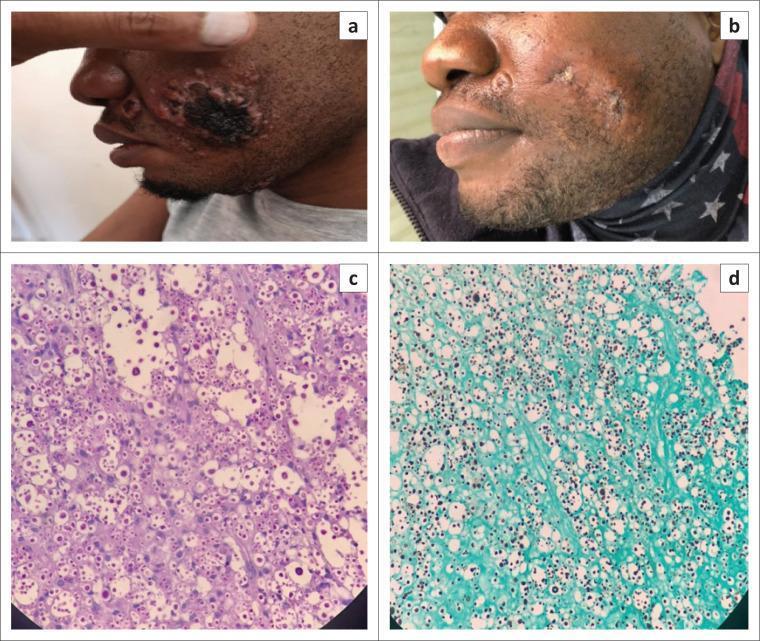
1. Cryptococcosis (Cryptococcus neoformans / C. gattii)
Most common systemic fungal infection in cats. Often affects nasal passages, CNS, skin, and eyes.
Histopathology:
- Thick polysaccharide capsule creates a clear "halo" around each yeast cell — the defining feature
- Yeast cells: 5–20 µm, round, narrow-based budding
- Tissue reaction varies from minimal (gelatinous/mucoid response) with few inflammatory cells, to granulomatous with epithelioid macrophages and multinucleated giant cells
- "Soap-bubble" lesions in CNS tissue due to capsule accumulation
- GMS: black-staining yeast; Mucicarmine: capsule stains bright red; PAS: yeast walls magenta
2. Sporotrichosis (Sporothrix schenckii)
Cats (especially in Brazil) are a major reservoir and source of human transmission via scratches.
Histopathology:
- Mixed granulomatous + suppurative reaction
- Neutrophilic microabscesses surrounded by granulomatous inflammation (epithelioid macrophages, giant cells, lymphocytes)
- Organisms: 3–5 µm cigar-shaped or oval yeast cells — sparse in most hosts, but abundant in cats (unlike dogs/humans)
- Pathognomonic: asteroid body — eosinophilic Splendore-Hoeppli material surrounding the yeast
- PAS/GMS needed to identify sparse organisms; in cats, direct smear often sufficient due to heavy fungal burden
— Fitzpatrick's Dermatology, p. 2995
3. Dermatophytosis (Microsporum canis, M. gypseum, Trichophyton spp.)
M. canis is the most common cause of ringworm in cats.
Histopathology:
- Hyphae and arthroconidia within/surrounding hair shafts (ectothrix or endothrix pattern)
- Perifollicular lymphoplasmacytic infiltrate; in severe cases (kerion): suppurative folliculitis and furunculosis
- Organisms: 2–4 µm chains of spores; septate hyphae in stratum corneum
- PAS/GMS highlights hyphae and spores surrounding hair shafts
- Feline favus (M. canis): arthroconidia form "sheaths" around hairs (ectothrix)
4. Aspergillosis (Aspergillus fumigatus, A. niger)
Primarily sino-nasal or disseminated in immunocompromised cats.
Histopathology:
- Septate hyphae, 3–6 µm wide, with dichotomous (Y-shaped) branching at 45° — hallmark feature
- Angioinvasion: hyphae penetrate vessel walls → thrombosis, hemorrhagic infarction
- Acute angle branching distinguishes from Mucor (90° branching)
- Conidiophores with fruiting heads (vesicles + phialides) may be seen in cavitary lesions
- GMS reveals black septate hyphae; H&E shows parallel walls
5. Histoplasmosis (Histoplasma capsulatum)
Rare in cats; when present, usually disseminated (lung, liver, spleen, intestine, bone marrow).
Histopathology:
- Intracellular small yeasts (2–4 µm) packed within macrophages/histiocytes
- Pyogranulomatous inflammation with epithelioid macrophages, multinucleated giant cells
- In disseminated disease: macrophage-laden sinusoids in liver and spleen
- Organisms may be mistaken for Leishmania; distinguished by GMS/PAS positivity and absence of kinetoplast
- GMS: tiny black yeasts in clusters within macrophages
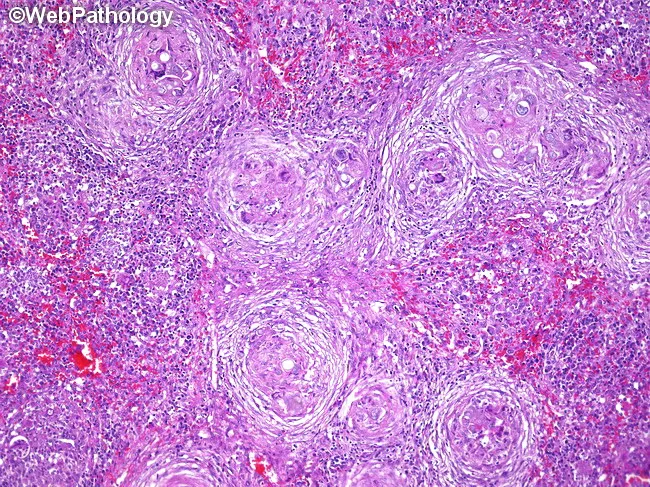
6. Coccidioidomycosis (Coccidioides immitis / C. posadasii)
Rare in cats; endemic in arid southwestern USA, Mexico, Central/South America.
Histopathology:
- Large spherules (20–200 µm), thick-walled, filled with endospores (2–5 µm) — pathognomonic
- When spherules rupture, released endospores trigger intense suppurative reaction
- Granulomatous inflammation: epithelioid macrophages, Langhans giant cells, lymphocytes
- PAS: endospores stain pink; GMS: spherule walls stain black; H&E: spherules visible as large round structures
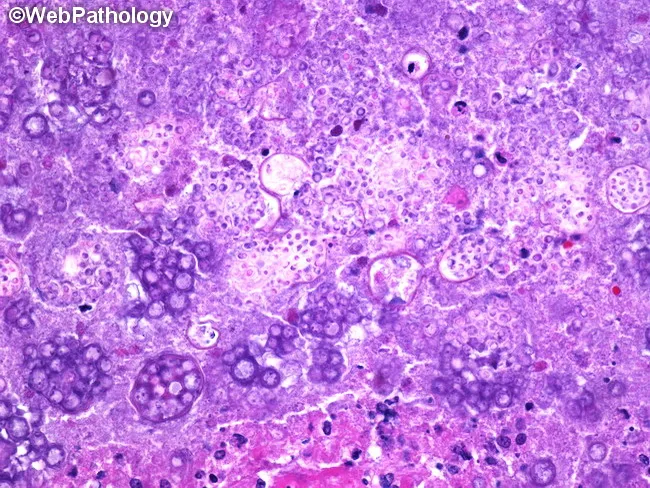
7. Blastomycosis (Blastomyces dermatitidis)
Rare in cats; sporadic in endemic North American river valleys.
Histopathology:
- Large round yeasts (8–15 µm) with thick, refractile double-contour wall
- Broad-based budding — single bud, wide attachment point (key distinguishing feature from Cryptococcus's narrow base)
- Pyogranulomatous reaction: neutrophilic abscesses surrounded by granulomatous tissue
- GMS: thick-walled yeasts with broad base clearly visible
8. Mycetoma / Phaeohyphomycosis (Pigmented Molds)
Caused by dematiaceous (melanin-producing) fungi (Alternaria, Curvularia, Exophiala, etc.).
Histopathology:
- Brown-pigmented hyphae in tissue — visible on H&E due to melanin content
- Suppurative granulomatous reaction with chronic fibrosis
- Eumycetoma: fungal grains (compact colonies) within purulent abscesses
- Fontana-Masson stain highlights melanin pigment
Summary Table
| Fungus | Microscopic Form in Tissue | Size | Key Histologic Pattern | Best Stain |
|---|---|---|---|---|
| Cryptococcus | Encapsulated yeast, narrow-based budding | 5–20 µm | Mucoid/gelatinous, minimal inflammation | Mucicarmine, GMS |
| Sporothrix | Cigar-shaped yeast; asteroid body | 3–5 µm | Mixed granulomatous + suppurative | PAS, GMS |
| Microsporum/Trichophyton | Ectothrix hyphae + arthroconidia on hair | 2–4 µm | Folliculitis, furunculosis | PAS, GMS |
| Aspergillus | Septate hyphae, 45° branching | 3–6 µm wide | Angioinvasive, necrosis | GMS |
| Histoplasma | Small intracellular yeast in macrophages | 2–4 µm | Pyogranulomatous, macrophage-packed | GMS, PAS |
| Coccidioides | Spherules with endospores | 20–200 µm | Granulomatous, spherule rupture | GMS, PAS |
| Blastomyces | Broad-based budding yeast | 8–15 µm | Pyogranulomatous | GMS |
| Dematiaceous molds | Brown septate hyphae | Variable | Suppurative granuloma + fibrosis | H&E (melanin) |
Key clinical notes for cats specifically:
- Cats with sporotrichosis have an extremely high organism burden — making cytology from exudates highly diagnostic and making them a zoonotic risk to veterinarians and owners
- Cryptococcosis has a predilection for the nasal planum and CNS in cats; the mucinous capsule suppresses host immunity
- M. canis dermatophytosis is the most common feline skin fungal infection overall
- Immunosuppression (FIV, FeLV, corticosteroids) predisposes to disseminated infections
— Fitzpatrick's Dermatology, p. 2995; Medical Microbiology 9e
This is a shared conversation. Sign in to Orris to start your own chat.