
Otomycosis treatment
I'll read the medical library skill first, then search for otomycosis treatment content in parallel.
Reading File
Now I'll run parallel searches across the medical library and PubMed simultaneously.
Finding Sources
Finding Sources
Searching PubMed
otomycosis treatment antifungal
Excellent results. Now I'll read the most relevant textbook sections in parallel - the Scott-Brown's detailed otomycosis section and Cummings acidifying agents section, plus get the abstract of the 2026 systematic review.
Reading File
Reading File
Reading File
Reading Article
PMID: 41373129
Let me get the rest of the Cummings section on topical antifungals and the management section from Scott-Brown's Vol 1.
Reading File
Reading File
Loading Image
I have comprehensive data from multiple authoritative sources. Let me now compile the full answer.
Otomycosis Treatment
Otomycosis (fungal otitis externa) accounts for approximately 9-10% of all otitis externa cases. Aspergillus species (80-90%, especially A. niger) and Candida (10-20%) are the dominant pathogens.
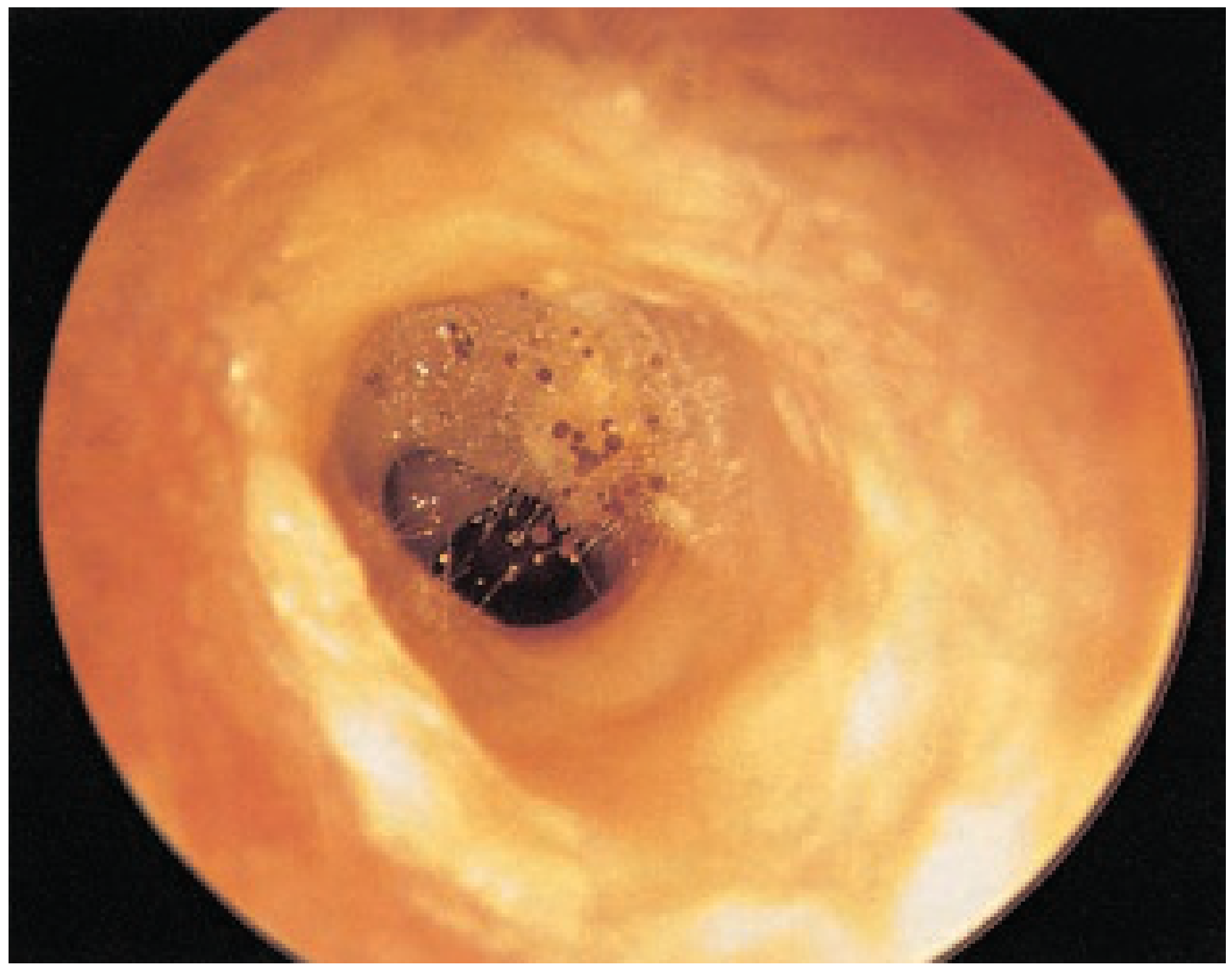
Otomycosis with Aspergillus niger (Scott-Brown's Otorhinolaryngology)
1. Core Treatment Principles
Treatment rests on three pillars:
- Elimination of predisposing factors - stop prolonged topical antibiotics, address hearing aid use, treat immunosuppression
- Thorough aural toilet - meticulous suction debridement and removal of fungal debris is the single most important step
- Antifungal agents - topical first-line in most cases
2. Topical Antifungal Agents
Specific Antifungals (first-line)
| Agent | Notes |
|---|---|
| Clotrimazole 1% (cream or solution) | Most widely used azole; efficacy 95-100%; single application after debridement gives ~96% symptom-free rate; low recurrence (<3%); broad-spectrum coverage with MIC <0.1 µg/mL for >94% of isolates |
| Miconazole 2% | Effective topically; adding acidifying drops (acetic acid 3% + alcohol 97%) does not significantly improve outcome |
| Ketoconazole | Better efficacy and lower recurrence vs cresylate and aluminum acetate |
| Econazole | Used topically; included in otomycosis protocols |
| Nystatin (polyene) | Broadest in-vitro spectrum; available as suspension, cream, or powder (no dedicated otic preparation); damages fungal membrane permeability |
| Ciclopirox olamine 0.77% | Equal efficacy to boric acid; better tolerated; no ototoxicity in animal models |
| Terbinafine 1% | In-vitro activity comparable to clotrimazole, miconazole, nystatin |
| Tolnaftate | Effective in vitro against all 59 fungal species tested (MIC <1 µg/mL) |
Non-Specific / Acidifying Agents
- Aluminum acetate (Burow solution) - >80% effective in mild cases
- Acetic acid + propylene glycol + hydrocortisone 1% (VoSol HC) - acidifying; good for mild disease
- Boric acid solution - comparable efficacy to ciclopirox but causes significantly more discomfort
- Acetic acid (Domeboro Otic)
Note: Acidifying agents work well for mild uncomplicated cases, especially combined with debridement. They do not add benefit when combined with miconazole.
3. Topical Antiseptics (Second-line / Refractory)
| Agent | Notes |
|---|---|
| Gentian violet | Useful in refractory cases; avoid with perforated tympanic membrane (ototoxic in animal studies) |
| Silver nitrate gel 1% | Single application cured 92% of ears with refractory otomycosis within 1 week |
| Cresylate 25% | >80% effective; caution - shown ototoxic in some models |
| Mercurochrome | Found more effective than clotrimazole or miconazole in one trial |
4. Ototoxicity Considerations
This is clinically important, especially with tympanic membrane perforation or mastoid cavities:
- Safe (no ototoxicity): Clotrimazole, miconazole, tolnaftate, nystatin, ciclopirox
- Ototoxic - AVOID with perforation: Gentian violet, cresylate, acetic acid/propylene glycol preparations
- Conflicting data: Terbinafine
- Cummings Otolaryngology, p. 3825
5. Flumethasone + Clioquinol Drops
A combined antifungal-steroid preparation (flumethasone with clioquinol) is commonly used to expedite recovery alongside aural toilet - cited as a standard topical option in Scott-Brown's guidelines.
6. Resistant / Refractory Otomycosis
- Exclude fungal infection at remote sites ("foot and ear" dermatophytid/id reaction)
- If id reaction confirmed: immunotherapy with TOE (Trichophyton, Oidiomycetes, Epidermophyton) extracts and dust mite antigen
- Silver nitrate gel 1% is highly effective for refractory cases
7. Invasive / Malignant Fungal Otitis Externa
This is a medical emergency, particularly in diabetics and immunocompromised patients (84% of cases have immunocompromise; 44% have cranial nerve palsy):
- Amphotericin B - traditional systemic antifungal of choice
- Voriconazole - increasingly preferred due to tolerability and efficacy, especially for Aspergillus
- Aggressive systemic therapy is mandatory; skull base osteomyelitis carries high mortality
8. Latest Evidence (2026 Systematic Review & Meta-analysis)
A 2026 systematic review and meta-analysis (Hussain et al., Otology & Neurotology; 15 RCTs, 2,309 patients) found:
- Overall eradication rate across all topical therapies: 73.6%
- Eradication range: 29-98% depending on agent and protocol
- Clotrimazole is the most commonly studied and used agent
- Adverse effects were generally mild (otalgia, pruritus, burning)
- No consensus yet on a single superior agent; future unified-protocol trials are needed
Summary Algorithm
Otomycosis confirmed
        ↓
Aural toilet + debridement (mandatory)
        ↓
Topical antifungal (first-line): Clotrimazole 1% cream/solution
        ↓
No response?
   ├── Check: tympanic membrane intact? → avoid ototoxic agents
   ├── Switch or add: ketoconazole, miconazole, nystatin
   ├── Refractory: silver nitrate 1% gel (single application)
   └── Immunocompromised + invasive signs?
              → Systemic voriconazole or amphotericin B
Sources:
- Scott-Brown's Otorhinolaryngology Head & Neck Surgery, Vol 1, p. 256
- Scott-Brown's Otorhinolaryngology Head & Neck Surgery, Vol 2, p. 1000
- Cummings Otolaryngology Head and Neck Surgery, pp. 3792-3825
- Hussain S et al. Management of Otomycosis: A Systematic Review and Meta-analysis. Otol Neurotol, 2026 (PMID: 41373129)
This is a shared conversation. Sign in to Orris to start your own chat.