

Is it broken? Need to do anything? Please interprete
Reading File
I'll search for information on distal radius fractures and their X-ray findings to help interpret this image.
search_medical_image
distal radius fracture wrist X-ray Colles fracture lateral view
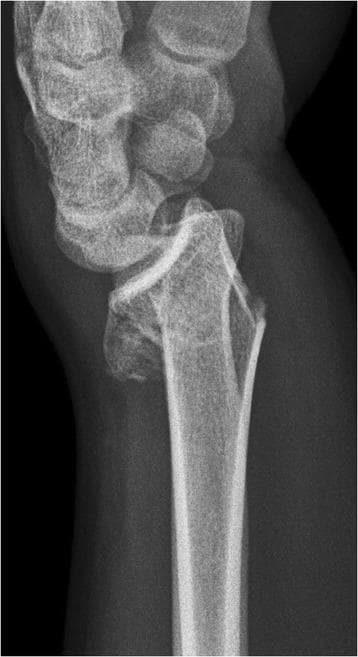
Hugging Face pmc clinical VQA raw
Page 0
search_medical_text
distal radius fracture elderly osteoporosis management classification
Management of Distal Radius Fractures
Page 11
GradeResponse
GradeResponse
search_medical_text
distal radius fracture dorsal angulation displacement treatment conservative cast surgery
Bailey and Love's Short Practice of Surgery 28th Edition
Page 455
GradeResponse
Here is a detailed interpretation of these X-rays:
X-Ray Interpretation — Left Wrist (Najira Mallick, 70F, dated 25.03.2026)
What the X-ray Shows
Two views are present:
- Left (PA/frontal view): Wrist and hand from the front
- Right (Lateral view, marked "L"): Side view of the wrist — this is the most informative view
Is It Broken? Yes.
The lateral view shows clear features of a distal radius fracture, most consistent with a Colles' fracture — the most common fracture pattern in elderly women:
| Finding | What It Means |
|---|---|
| Fracture line through the distal radial metaphysis | The lower end of the radius (forearm bone near the wrist) is broken |
| Dorsal displacement of the distal fragment | The broken piece has shifted backward (toward the back of the hand) |
| Dorsal angulation | The fragment is tilted, producing the classic "dinner-fork" deformity |
| Possible metaphyseal comminution (crushed bone) | Suggests the bone was osteoporotic and compressed on impact |
The frontal view also shows likely disruption of the normal carpal alignment at the wrist.
Why This Happens at 70
This is a fragility fracture — in elderly women, osteoporosis (bone thinning) makes the distal radius extremely vulnerable to fracture from a low-energy fall, typically landing on an outstretched hand. (Management of Distal Radius Fractures, p. 11)
What Needs to Be Done
This requires urgent orthopedic evaluation. Based on the visible displacement and angulation:
-
Closed reduction + cast (plaster/splint):
- If the fracture can be realigned manually, it may be held in a below-elbow cast for ~4–6 weeks
- Elderly patients with low functional demand are often managed this way
-
Surgery (volar locking plate fixation):
- Required if the fracture is unstable, significantly angulated, or involves the joint surface
- The lateral view here shows features that may indicate surgical instability (Bailey & Love's Surgery, p. 455)
-
Bone density investigation:
- At 70 years old with a fragility fracture, osteoporosis workup and treatment (calcium, Vitamin D, bisphosphonates) should be initiated
⚠️ Important
This interpretation is based on visual analysis of a photograph of the X-ray — not a direct high-resolution digital read. The patient must see an orthopedic surgeon as soon as possible for formal assessment, reduction if needed, and a management plan. Do not leave this untreated — untreated displaced distal radius fractures in the elderly can lead to permanent wrist deformity, chronic pain, and loss of hand function.
This is a shared conversation. Sign in to Orris to start your own chat.