
Tell me about epidermis
Reading File
Finding Sources
Finding Sources
Reading File
Reading File
Reading File
Reading File
Loading Image
Loading Image
Reading File
Loading Image
Reading File
I now have comprehensive information. Let me compile the full answer.
The Epidermis
The epidermis is the outermost layer of the skin - a stratified squamous keratinized epithelium of ectodermal origin. It rests on the dermis below and forms the body's primary interface with the external world.
Overview
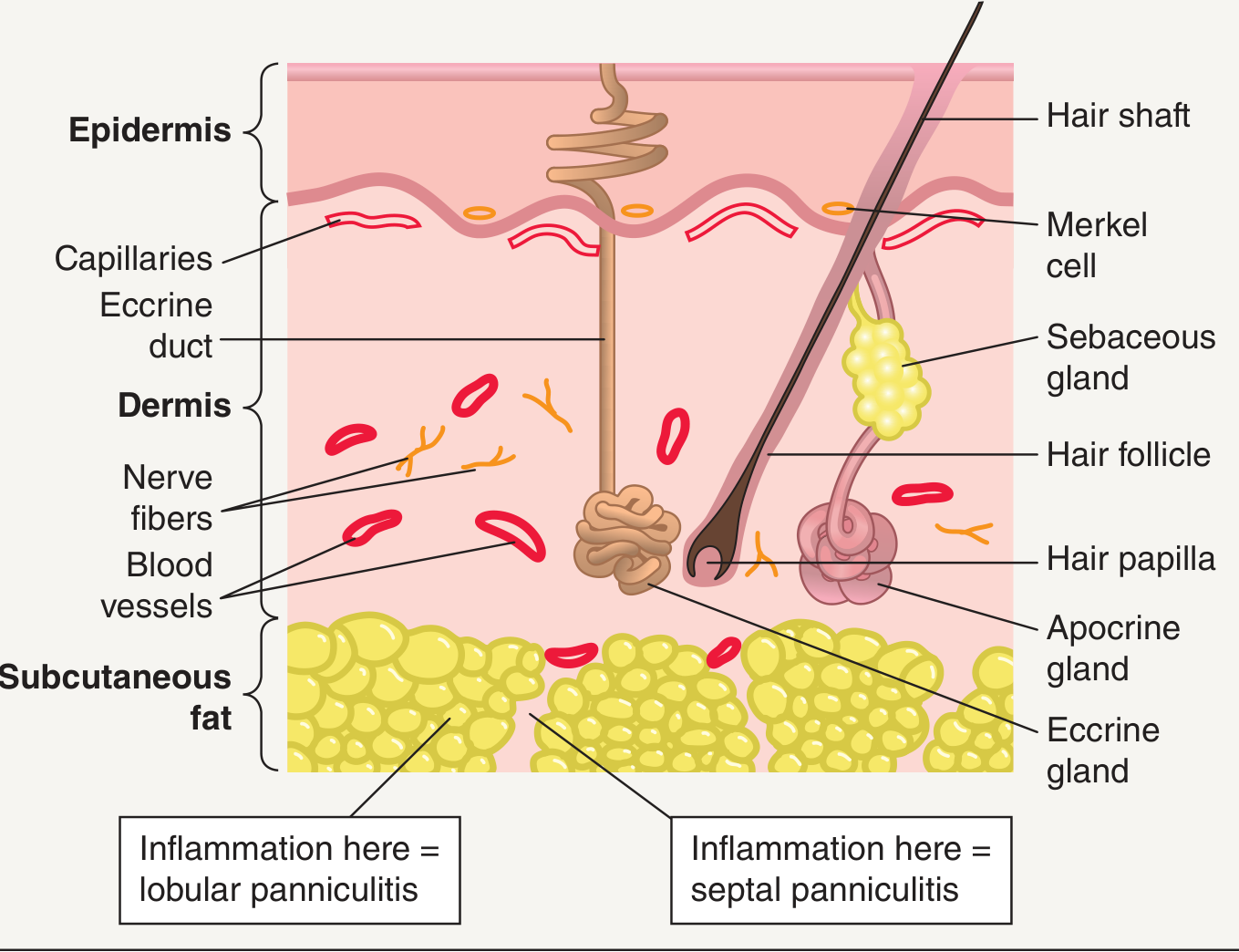
The skin is divided into three major layers: epidermis (barrier), dermis (structural support), and subcutaneous fat. The epidermis alone accounts for about 50 microns average thickness in most body sites. It contains no blood vessels - all nutrients reach it by diffusion from the dermis. - Dermatology 2-Volume Set 5e, p. 56
Skin cross-section - epidermis in context:
Thick vs. Thin Skin
| Feature | Thin Skin | Thick Skin |
|---|---|---|
| Location | Most of the body | Palms, soles |
| Epidermal depth | 75-150 µm | 400-600 µm |
| Layers | 4 | 5 (has stratum lucidum) |
| Hair follicles | Present | Absent |
- Junqueira's Basic Histology, p. 902
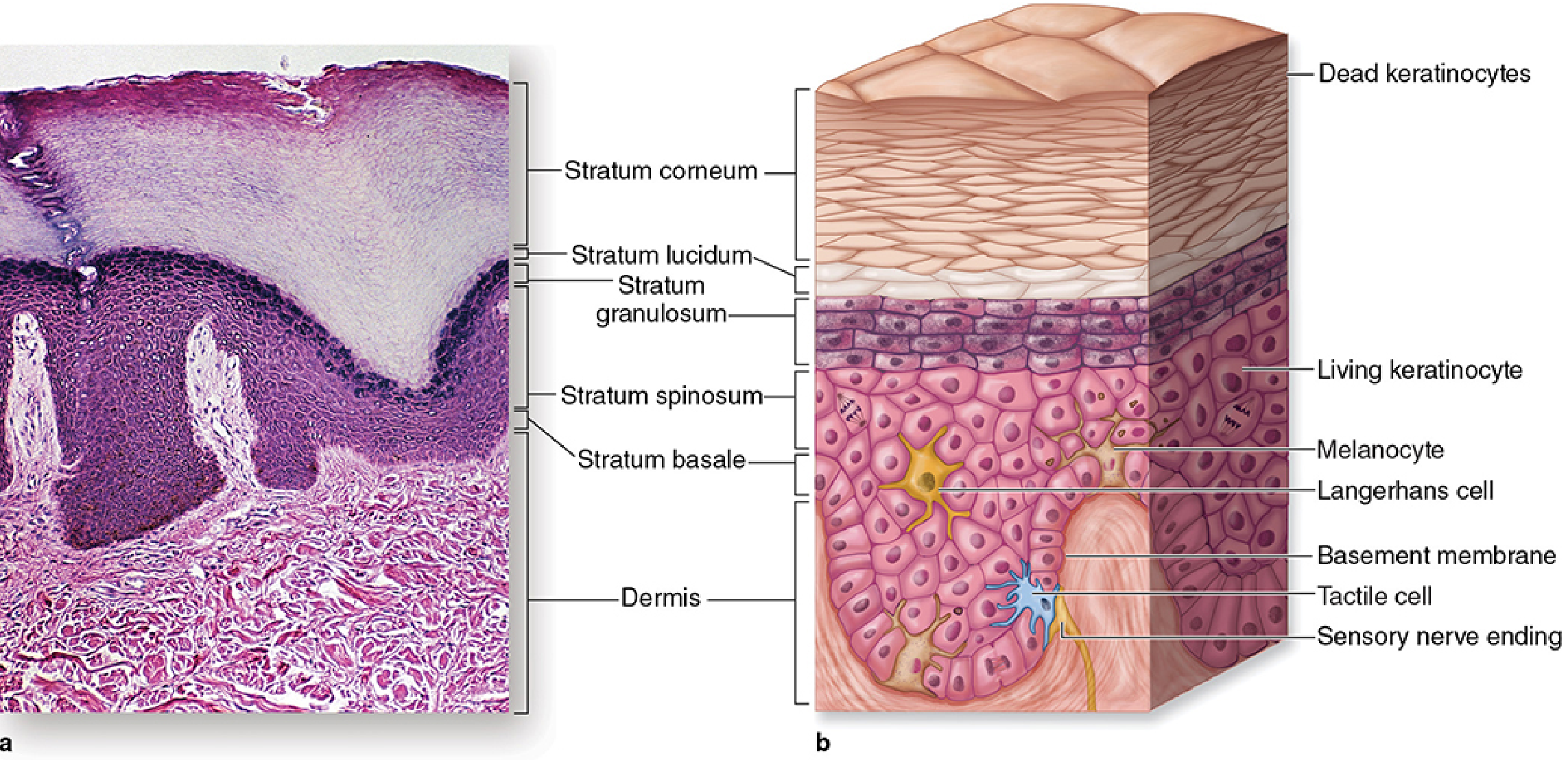
Layers of the Epidermis (from deep to superficial)
H&E micrograph and diagram of thick skin epidermis layers:
1. Stratum Basale (Basal Layer)
- A single layer of basophilic cuboidal or columnar cells sitting on the basement membrane
- Contains the stem cell pool for keratinocytes; intense mitotic activity occurs here
- Cells are attached to the basal lamina via hemidesmosomes and to each other via desmosomes
- Also contains melanocytes (approximately 1 per 10 basal cells) and Merkel cells
- Keratin intermediate filaments (~10 nm diameter) begin forming here
- Junqueira's Basic Histology, p. 903
2. Stratum Spinosum (Spinous/Prickle Cell Layer)
- A thick layer of polyhedral cells above the basal layer; some cells near the basal layer still divide
- Cells actively synthesize keratins; keratin filaments bundle into tonofibrils
- Tonofibrils terminate at the abundant desmosomes holding cells together
- The "spines" or prickles seen microscopically are desmosome-associated cytoplasmic extensions
- Thicker in areas subject to friction (palms, soles)
- Junqueira's Basic Histology, p. 903
3. Stratum Granulosum (Granular Layer)
- 3-5 layers of flattened cells undergoing terminal differentiation (keratinization)
- Cytoplasm fills with keratohyaline granules - dense masses of filaggrin and proteins that cross-link keratin filaments into tight bundles
- Lamellar granules (Golgi-derived) undergo exocytosis here, secreting a lipid-rich material around cells - this creates the water-impermeable barrier of the epidermis
- Cells begin to lose their nuclei
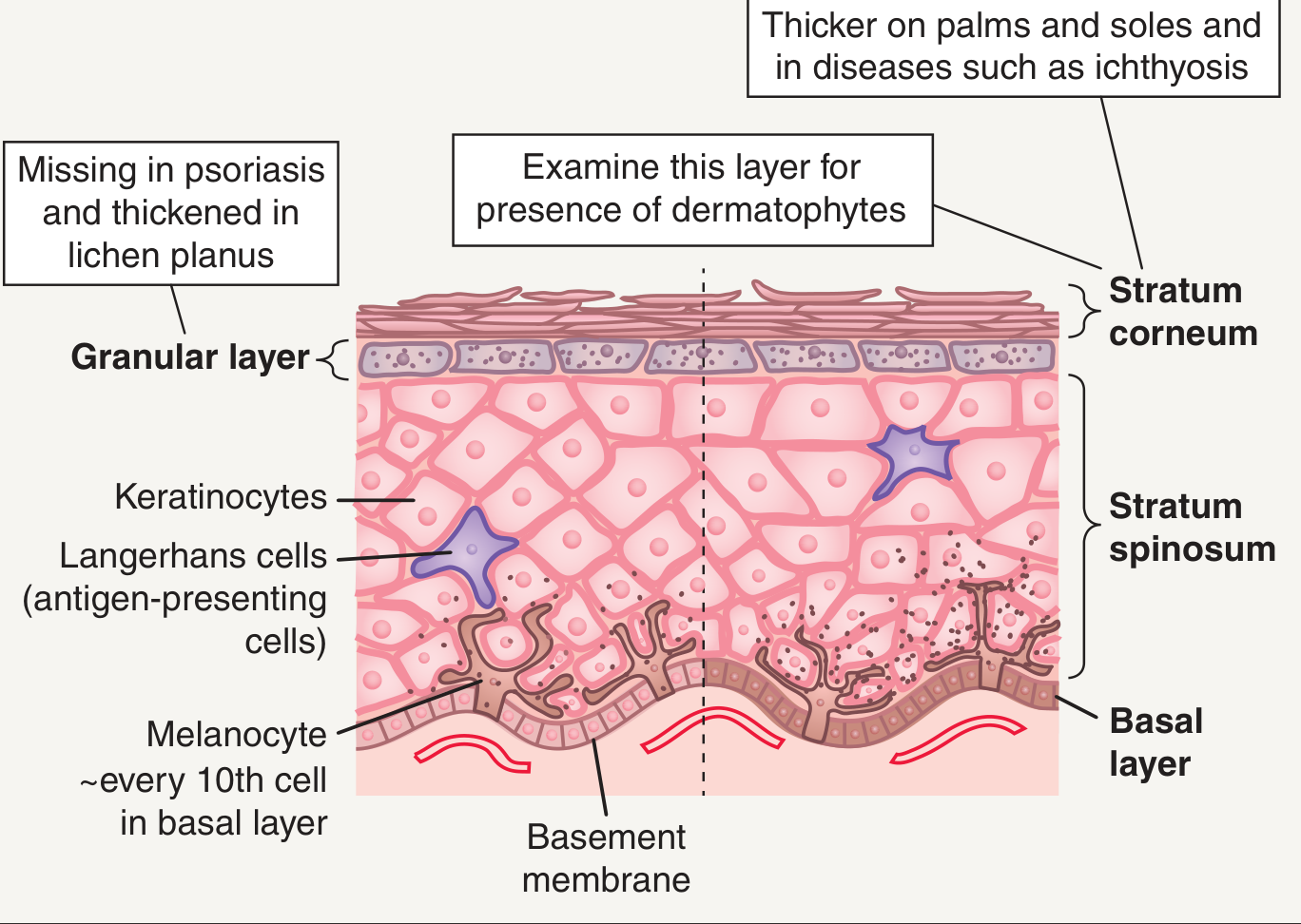
- Clinical note: This layer is missing in psoriasis and thickened in lichen planus
- Junqueira's Basic Histology, p. 904-905
4. Stratum Lucidum (Clear Layer) - thick skin only
- A thin, optically refractile sheet of flattened acidophilic keratinocytes
- Present only in palmar and plantar (thick) skin
- Nuclei and organelles have disappeared; cytoplasm is almost entirely packed keratin filaments
- Junqueira's Basic Histology, p. 906
5. Stratum Corneum (Horny Layer)
- The outermost layer; a semipermeable, laminated aggregate of fully differentiated (keratinized) dead squamous cells called corneocytes
- Acts as the primary physiologic barrier against chemical penetration, microbial invasion, and excessive water loss or uptake
- Under normal conditions, keratinocytes take ~2 weeks to transit through the nucleated compartment and another ~2 weeks through the stratum corneum
- Clinical note: Examine this layer for dermatophytes; thicker on palms/soles and in ichthyosis
- Dermatology 2-Volume Set 5e, p. 56
Schematic of epidermis layers with clinical annotations:
Resident Cell Populations
The epidermis harbors four major resident populations: - Dermatology 2-Volume Set 5e, p. 56
Keratinocytes (majority)
- Epithelial cells originating from stem cells in the basal layer
- As they migrate upward they progressively differentiate, accumulating more and more keratin
- Surface density ~50,000 nucleated cells/mm²
- Respond to injury or inflammation by significantly increasing proliferation rate
Melanocytes
- Found in the basal layer (~1 in every 10 cells)
- Produce melanin pigment within organelles called melanosomes
- Melanosomes are transferred to nearby keratinocytes, where they position above the nucleus - protecting DNA from UV radiation
- Skin color is primarily determined by the number and size of melanosomes, not by the number of melanocytes
Langerhans Cells
- Dendritic antigen-presenting cells found mainly in the stratum spinosum
- Metabolize complex antigens into immunogenic peptides
- After activation, they migrate from the epidermis to regional lymph nodes to drive immune responses
- Express CD1a and S100 (used in immunohistochemistry)
Merkel Cells
- Found in the basal layer, especially in fingertips, lips, and hair follicles
- Contain neuroendocrine peptides and are associated with sensory nerve endings
- Act as mechanoreceptors (tactile cells)
- May not be apparent in routine H&E sections
Functions of the Epidermis
| Function | Mechanism |
|---|---|
| Physical barrier | Stratum corneum - resists friction, chemicals, microbes |
| Water permeability barrier | Lipids secreted by lamellar granules in stratum granulosum |
| UV protection | Melanin in keratinocytes shields nuclear DNA |
| Immune surveillance | Langerhans cells present antigens; resident lymphocytes patrol |
| Sensory | Merkel cells for light touch; free nerve endings for pain/temperature |
| Vitamin D synthesis | UV light acts on precursors in keratinocytes to produce vitamin D3 |
- Junqueira's Basic Histology, p. 901
Epidermal Turnover
The epidermis renews itself approximately every 15-30 days, depending on age, body region, and health status. This rapid turnover makes keratinocytes a major source of skin cancers - most arise from the basal or spinous layers, producing basal cell carcinomas and squamous cell carcinomas respectively. - Junqueira's Basic Histology, p. 903
Dermal-Epidermal Junction
Projections called dermal papillae interdigitate with invaginating epidermal ridges (rete pegs) to strengthen adhesion between the two layers. This junction is the site of pathology in conditions such as blistering diseases (pemphigoid attacks hemidesmosomes here). - Junqueira's Basic Histology, p. 900
This is a shared conversation. Sign in to Orris to start your own chat.