
I would like to know about plasma exchange filter in fresenius dialysis
Reading File
Finding Sources
Finding Sources
Reading File
Reading File
Loading Image
Reading File
Here is a comprehensive overview of the plasma exchange filter as used in Fresenius (membrane filtration) dialysis systems, drawn from authoritative nephrology textbooks.
Plasma Exchange Filter in Fresenius Dialysis
What Is It?
The plasma exchange (plasmapheresis) filter — used on Fresenius and similar dialysis platforms — is the core component of membrane filtration-based therapeutic plasma exchange (TPE). It is a hollow-fiber filter similar in construction to a standard hemodialysis filter, but with critically different membrane pore characteristics.
Hollow-Fiber Membrane Plasma Filter — Structure & Mechanics
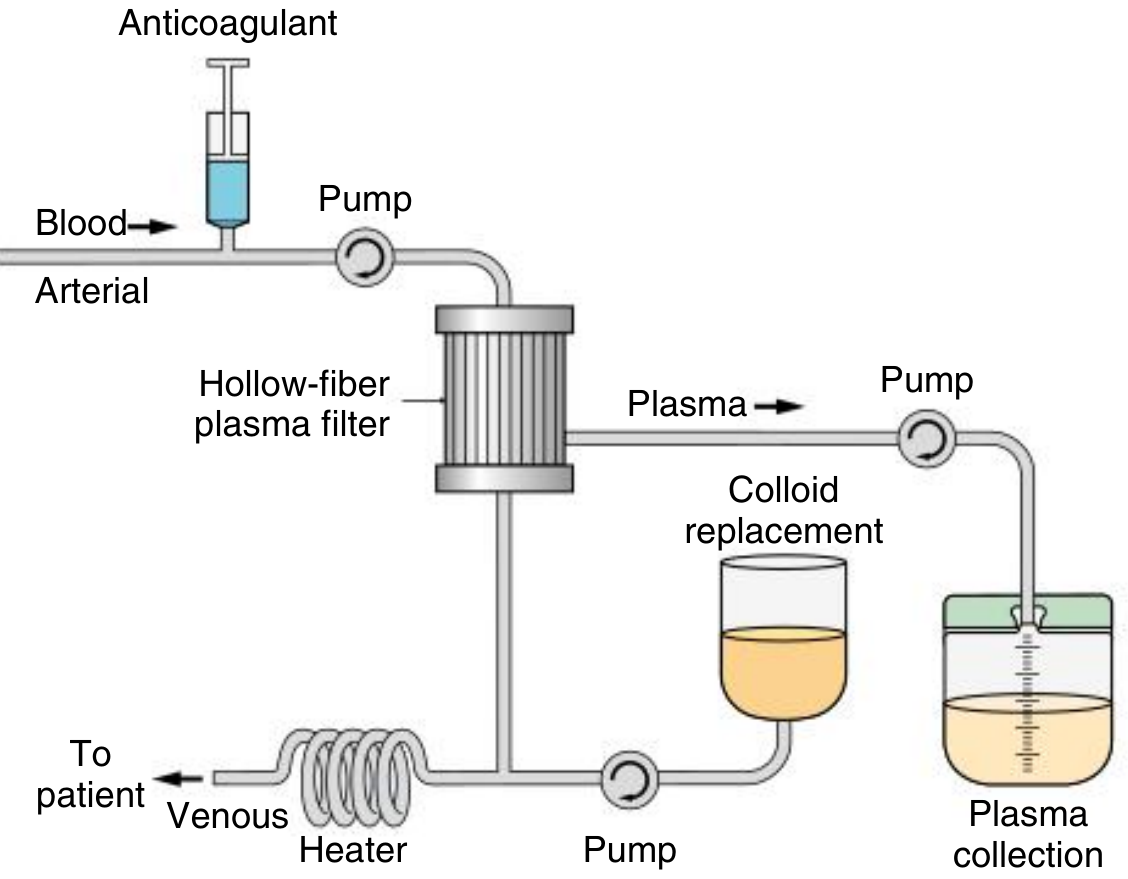
Fig. 104.1B — Hollow-fiber membrane plasma filtration circuit (Comprehensive Clinical Nephrology, 7th Ed.)
Key structural features:
- Composed of many hollow-fiber tubes made of biocompatible synthetic membrane material
- Pore size: 0.2–0.6 μm in diameter — much larger than standard hemodialysis membranes
- Hollow fibers are arranged in parallel within the filter housing
How it works:
- Blood is pumped through the lumen of the hollow fibers
- The large pores allow plasma (proteins + plasma water) to pass through the membrane into the outer compartment
- Cellular elements (red blood cells, white blood cells, platelets) are retained within the hollow fiber lumen
- Separated plasma is drained off (discarded or processed)
- Cells are returned to the patient via the venous line along with replacement fluid
— Brenner and Rector's The Kidney, p. 2839; Comprehensive Clinical Nephrology, 7th Ed., p. 1349
Operating Parameters (on Fresenius / standard dialysis equipment)
| Parameter | Value |
|---|---|
| Blood flow rate | 100 (±20) mL/min |
| Optimal transmembrane pressure (TMP) | < 70 mmHg |
| Plasma removal rate | 30–50 mL/min |
| Replacement fluid infusion | Adjusted to maintain intravascular volume |
This technique can be performed using conventional or continuous hemodialysis equipment (such as Fresenius machines), making it a practical option in nephrology units already equipped for dialysis.
— Brenner and Rector's The Kidney, p. 2839
Advantages of Membrane Filtration (vs. Centrifugal Method)
- Can be run on standard hemodialysis/CRRT platforms (e.g., Fresenius 5008, multiFiltrate)
- No need for specialized apheresis equipment
- Can be combined with conventional hemodialysis when both dialysis and plasma exchange are needed simultaneously
- Both centrifugation and membrane filtration are considered safe and efficient TPE techniques; the main differences are cost and operator expertise
Potential Disadvantages
- Complement and leukocyte activation by the artificial membrane
- Requires a central venous catheter to achieve adequate blood flow rates (peripheral access typically insufficient)
- Slightly higher adverse event rate compared to centrifugation-based TPE
Variations: Double-Filtration Plasmapheresis (DFPP / Cascade Filtration)
A more advanced technique using the Fresenius platform:
- A primary filter (pore size ~0.2–0.6 μm) separates plasma from cells — same as standard TPE
- A secondary plasma filter (pore size 0.01–0.03 μm) then filters the separated plasma again
- High-molecular-weight proteins (e.g., IgG, IgM, fibrinogen, immune complexes) are discarded
- Albumin and lower-MW proteins are returned to the patient, significantly reducing the need for replacement fluids
- A variant called cryofiltration exposes the filtrate to 4°C to precipitate cryoproteins
— Comprehensive Clinical Nephrology, 7th Ed., p. 1349–1350; Brenner and Rector's The Kidney, p. 2839
Replacement Fluids Used
| Situation | Recommended Replacement |
|---|---|
| Standard plasma exchange | Human albumin solution 4–5% |
| Thrombotic microangiopathies (TMA/TTP) | Fresh frozen plasma (FFP) — total exchange |
| High bleeding risk (e.g., post-biopsy, active hemorrhage) | Partial FFP late in the session |
| Fibrinogen < 1.25–1.5 g/L or prolonged PT | Add FFP |
FFP is associated with more serious complications (hypotension, anaphylaxis, citrate-induced paresthesia, urticaria) than albumin.
Complications
- Citrate-induced hypocalcemia (perioral tingling, tetany)
- Transient hypotension (19% of adverse events)
- Urticaria (13%)
- Nausea (8%)
- Paresthesias (27% — mostly citrate-related)
- Severe events are rare: ~0.4% of procedures
- Risk of transfusion-transmitted infections with plasma products
— Comprehensive Clinical Nephrology, 7th Ed., p. 1350
Summary: The Fresenius plasma exchange filter is a hollow-fiber membrane device with large pores (0.2–0.6 μm) that separates plasma from blood cells. It integrates seamlessly with standard Fresenius dialysis machines, operates at low blood flow and low transmembrane pressure, and forms the basis of both standard single-pass TPE and more advanced cascade filtration (DFPP) techniques.
This is a shared conversation. Sign in to Orris to start your own chat.