
Adrenaline it's mechanism how to use indications contraindications and dose in easy way
Reading File
Searching sources...
Finding Sources
Searching Images
adrenaline epinephrine mechanism of action adrenergic receptors diagram
Finding Sources
Finding Sources
Reading File
Reading File
Reading File
Loading Image
Reading File
Loading Image
Loading Image
I now have comprehensive information from authoritative anesthesia and emergency medicine textbooks. Here is a clear, easy-to-understand guide to adrenaline (epinephrine):
Adrenaline (Epinephrine) - Complete Easy Guide
What Is It?
Adrenaline is a naturally occurring catecholamine (a "fight-or-flight" hormone) produced by the adrenal medulla. As a drug, it works by activating adrenergic receptors throughout the body.
Mechanism of Action (How It Works)
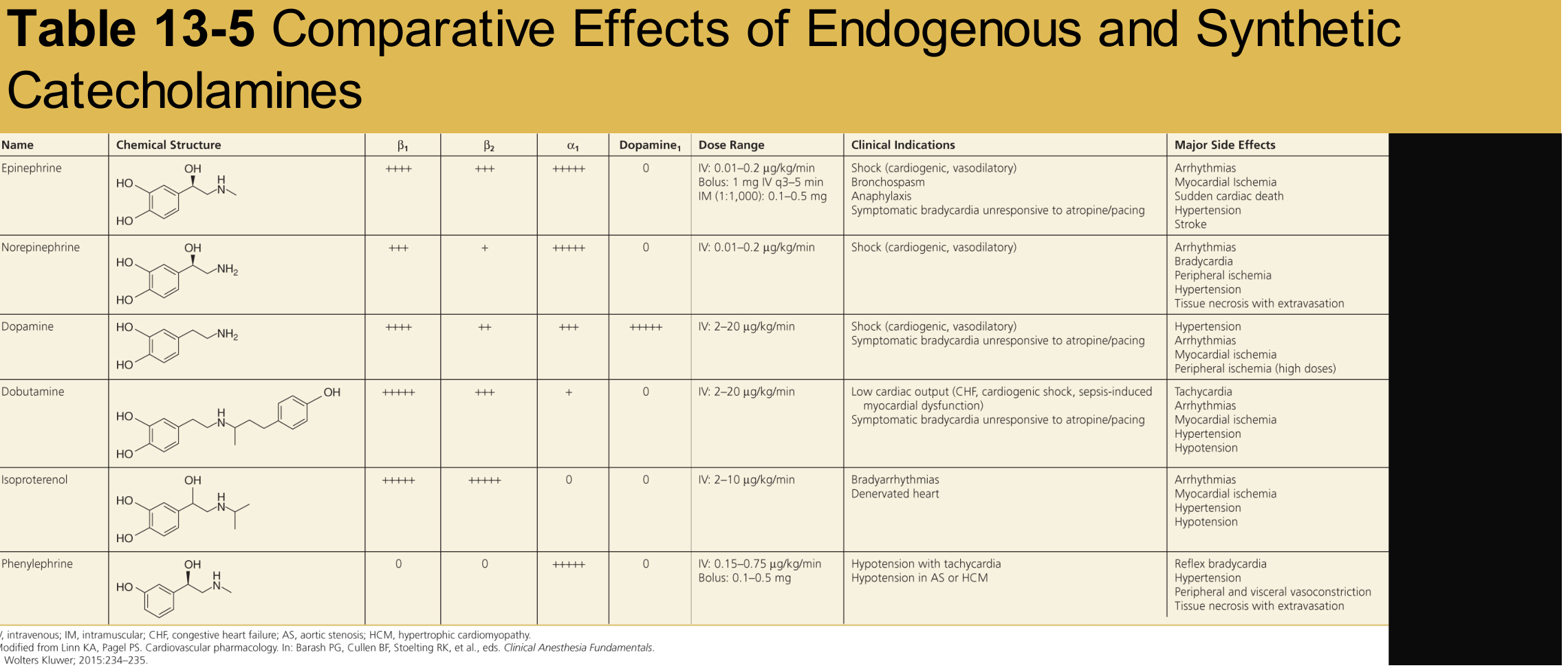
Adrenaline is a non-selective adrenergic agonist - it stimulates BOTH alpha and beta receptors:
| Receptor | Location | Effect |
|---|---|---|
| α1 | Blood vessels (skin, gut, kidney) | Vasoconstriction - raises blood pressure |
| β1 | Heart | ↑ Heart rate, ↑ force of contraction (positive chronotropy & inotropy) |
| β2 | Lungs, skeletal muscle vessels | Bronchodilation, vasodilation |
Simple analogy: Think of adrenaline as pressing the emergency "gas pedal" of your body - it makes the heart pump harder, opens up the airways, and redirects blood to vital organs.
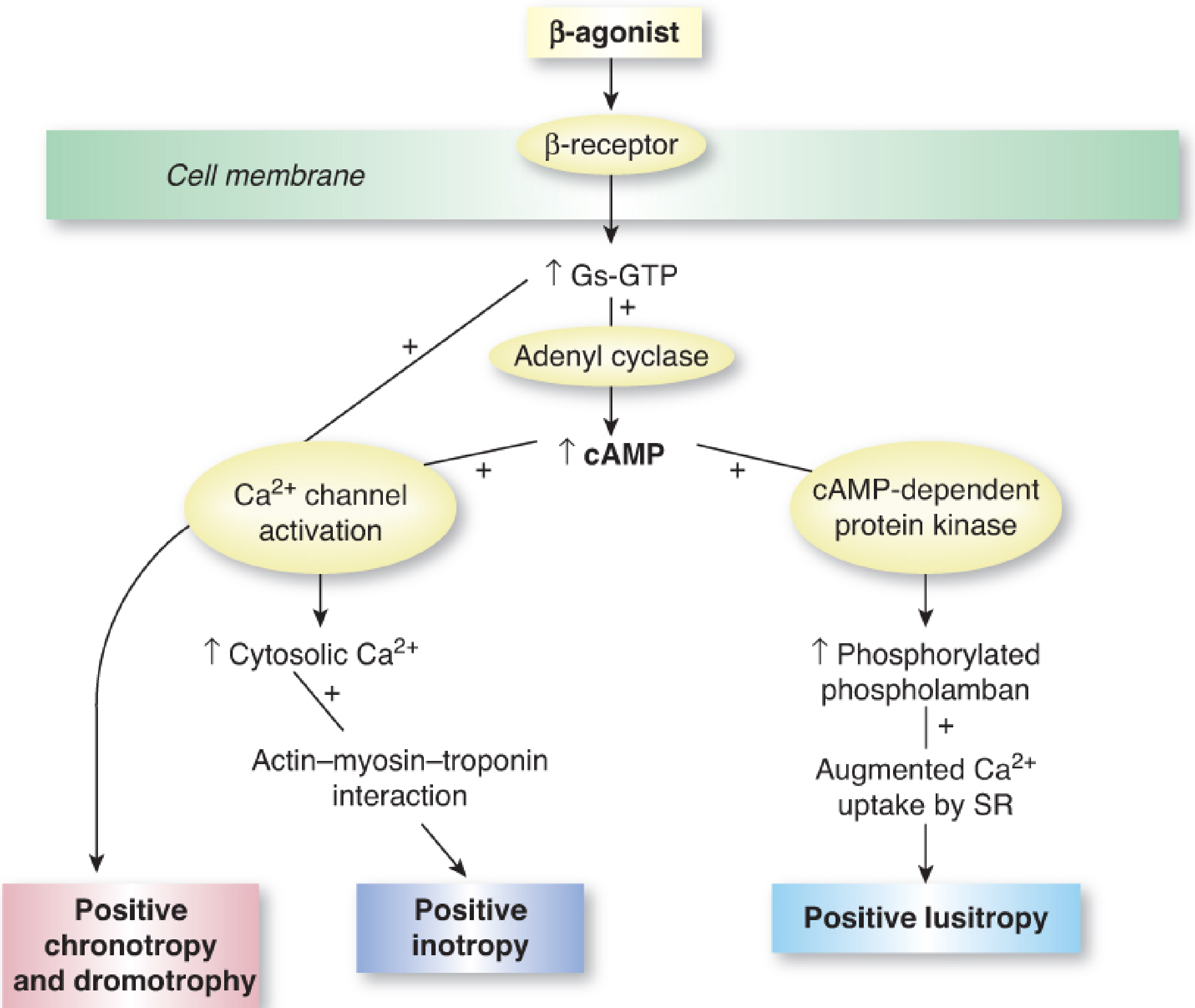
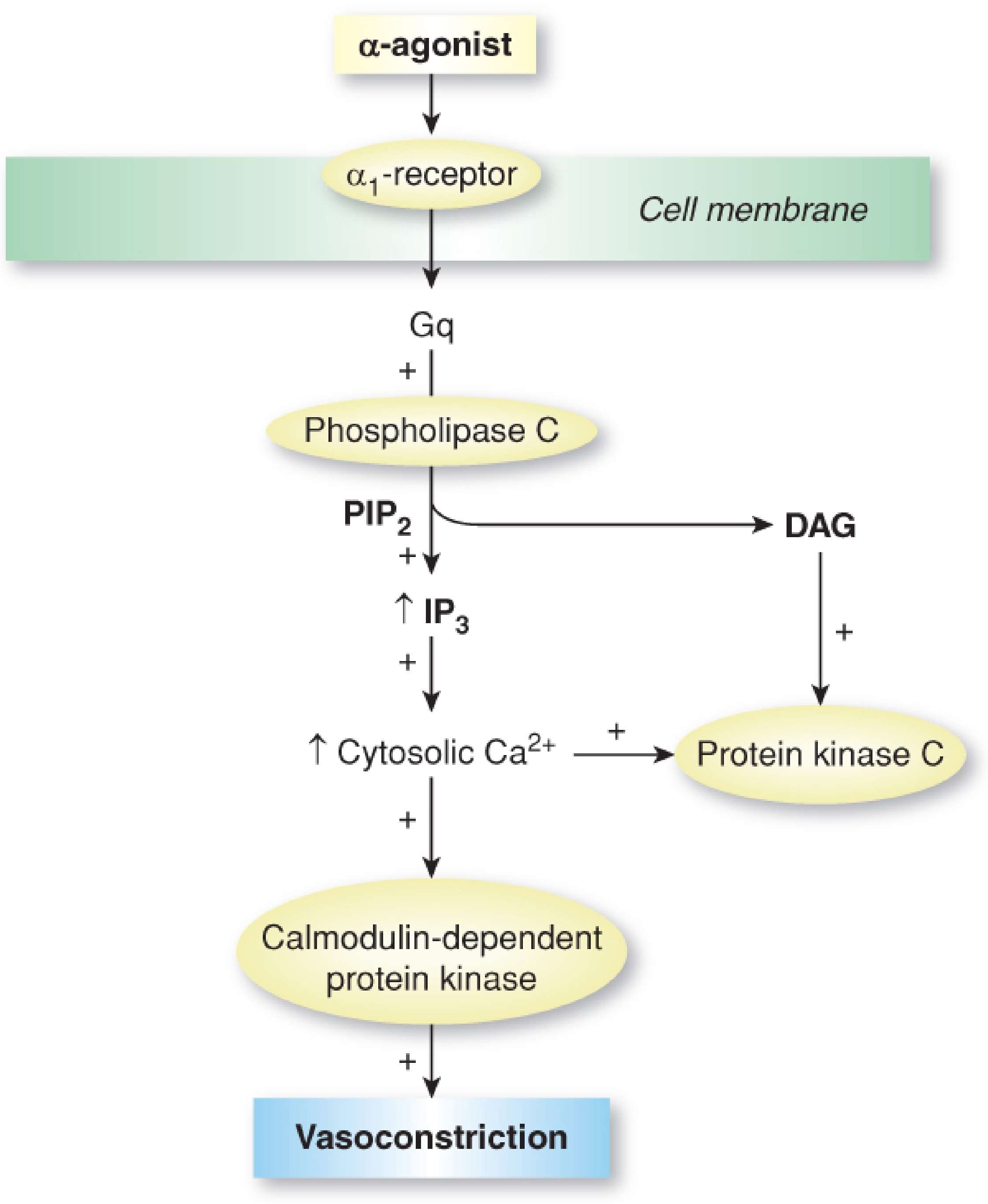
The Two Key Pathways (from textbook diagrams):
β-receptor pathway (heart):
β-agonist → β-receptor → Gs-GTP → Adenylyl cyclase → ↑cAMP → Ca²⁺ channel activation → Positive inotropy + chronotropy
α1-receptor pathway (blood vessels):
α-agonist → α1-receptor → Gq → Phospholipase C → ↑IP₃ + DAG → ↑Ca²⁺ → Vasoconstriction
Dose-Dependent Effects (Very Important!)
| Dose | Dominant Effect |
|---|---|
| Low dose (<0.02 mcg/kg/min) | β2 dominates - vasodilation, slight ↓BP |
| High dose (>0.1 mcg/kg/min) | α1 dominates - vasoconstriction, ↑BP |
Indications (When to Use)
1. Anaphylaxis (FIRST-LINE, most important!)
The single most important use. No other drug replaces it.
- Treats bronchospasm (via β2)
- Reverses hypotension (via α1)
- Reduces mucosal edema
2. Cardiac Arrest (ACLS Protocol)
- Used in asystole, pulseless electrical activity (PEA), and pulseless VT/VF
- Works mainly via α1: raises coronary perfusion pressure and cerebral perfusion pressure during CPR
- Early use is especially important in non-shockable rhythms (asystole/PEA)
3. Bronchospasm / Severe Asthma
- Racemic epinephrine via nebulizer for croup (laryngeal edema)
- Reduces airway mucosal swelling
4. As a Vasoconstrictor (Adjunct to Local Anesthetics)
- Added to lidocaine for dental, ENT, plastic surgery, and orthopedic procedures
- Slows local anesthetic absorption → prolongs duration, reduces systemic toxicity, reduces bleeding
5. Symptomatic Bradycardia
- Used when unresponsive to atropine or pacing
6. Septic Shock / Cardiogenic Shock
- As a vasopressor/inotrope infusion
Doses at a Glance
| Indication | Route | Dose |
|---|---|---|
| Anaphylaxis | IM (thigh) | 0.3-0.5 mg (1:1,000 solution) |
| Cardiac arrest | IV bolus | 1 mg (1:10,000) every 3-5 min |
| Vasopressor infusion | IV infusion | 0.01-0.2 mcg/kg/min |
| With local anesthetic | Local infiltration | 1:100,000 to 1:200,000 concentration |
| Croup (nebulized) | Inhaled | 0.5 mL/kg of 1:1,000 (max 5 mL) |
Remember the 1:1,000 vs 1:10,000 rule:
- 1:1,000 = 1 mg/mL → used for IM injection (anaphylaxis)
- 1:10,000 = 0.1 mg/mL → used for IV bolus (cardiac arrest)
Contraindications
There are no absolute contraindications in life-threatening emergencies (anaphylaxis/cardiac arrest). However, relative contraindications for elective use include:
| Condition | Reason |
|---|---|
| Hypertension | Can cause dangerous BP spike |
| Tachyarrhythmias | Pro-arrhythmic (β1 stimulation) |
| Ischemic heart disease / Angina | Increases myocardial oxygen demand |
| Hyperthyroidism | Exaggerated response |
| Pheochromocytoma | Risk of hypertensive crisis |
| β-blocker use | Unopposed α1 stimulation → severe hypertension |
| Extremity/digit/penis/nose (with local anesthetic) | Vasoconstriction can cause ischemic necrosis |
| Cocaine/halogenated anesthetics | Risk of severe arrhythmias |
Key Side Effects to Watch For
- Arrhythmias (most feared)
- Myocardial ischemia
- Hypertension / Stroke
- Pulmonary hypertension (increases pulmonary arterial pressure)
- Renal ischemia (intense renal vasoconstriction at high doses)
- Anxiety, tremor, headache
Quick Memory Summary
"ABCS" of Adrenaline:
- Anaphylaxis (IM, first-line)
- Bradycardia / Bronchospasm
- Cardiac arrest (IV, 1 mg every 3-5 min)
- Shock (vasopressor infusion)
Sources: - Barash, Cullen & Stoelting's Clinical Anesthesia, 9e, pp. 959-960 | - Miller's Anesthesia, 10e | - Tintinalli's Emergency Medicine
Adrenaline it's mechanism how to use indications contraindications and dose in easy way and how much to dilute
I have all the information needed from the previous research session. Let me give you a complete, easy guide including the dilution details.
💉 Adrenaline (Epinephrine) - Complete Easy Guide
🔬 What Is It?
Adrenaline is your body's natural "fight-or-flight" hormone, made by the adrenal glands. As a drug, it is the most powerful emergency medicine we have.
⚙️ Mechanism of Action (How It Works)
It stimulates 3 types of receptors:
| Receptor | Where | What It Does |
|---|---|---|
| α1 | Blood vessels (skin, gut, kidney) | Vasoconstriction → ↑ Blood Pressure |
| β1 | Heart | ↑ Heart rate + ↑ Force of pumping |
| β2 | Lungs, skeletal muscle vessels | Opens airways (bronchodilation) |
Two Key Pathways:
β-receptor (Heart):
β-agonist → β-receptor → ↑cAMP → Ca²⁺ influx → ↑ Heart rate & Contraction
α1-receptor (Blood vessels):
α-agonist → α1-receptor → ↑IP₃/DAG → ↑Ca²⁺ → Vasoconstriction
Dose-Dependent Effect (KEY CONCEPT):
| Dose | Which Receptor Wins | Net Effect |
|---|---|---|
| Low (<0.02 mcg/kg/min) | β2 dominates | Vasodilation, slight ↓ BP |
| High (>0.1 mcg/kg/min) | α1 dominates | Vasoconstriction, ↑ BP |
💊 Indications (When to Use)
| Priority | Indication | Key Action |
|---|---|---|
| 🔴 #1 | Anaphylaxis | Reverses bronchospasm + hypotension + edema |
| 🔴 #2 | Cardiac Arrest (Asystole, PEA, VF/VT) | Raises coronary & cerebral perfusion |
| 🟠 #3 | Severe Bronchospasm / Croup | Opens airways via β2 |
| 🟠 #4 | Septic/Cardiogenic Shock | Vasopressor + inotrope infusion |
| 🟡 #5 | With Local Anesthetics | Prolongs effect, reduces bleeding |
| 🟡 #6 | Bradycardia unresponsive to atropine | Increases heart rate |
📐 Doses + HOW TO DILUTE (Practical Guide)
Understanding the Concentrations First:
| Concentration | What It Means | Used For |
|---|---|---|
| 1:1,000 | = 1 mg per 1 mL | IM injection (anaphylaxis, subcutaneous) |
| 1:10,000 | = 0.1 mg per mL | IV bolus (cardiac arrest) |
| 1:100,000 | = 0.01 mg per mL | With local anesthetics |
| 1:200,000 | = 0.005 mg per mL | With local anesthetics (dental/ENT) |
🔴 ANAPHYLAXIS
- Route: IM into the outer thigh (anterolateral)
- Dose: 0.3-0.5 mg in adults | 0.01 mg/kg in children (max 0.5 mg)
- Dilution: Use 1:1,000 solution (1 mg/mL) - NO dilution needed for IM
- Draw up 0.3-0.5 mL from the 1 mg/mL vial → inject directly IM
- Can repeat every 5-15 minutes if needed
🔴 CARDIAC ARREST (IV Bolus)
- Dose: 1 mg IV every 3-5 minutes
- How to dilute from 1:1,000 vial:
- Take 1 mL of 1:1,000 (= 1 mg)
- Add 9 mL of Normal Saline (0.9% NaCl)
- = 10 mL of 1:10,000 solution (0.1 mg/mL)
- Give the entire 10 mL as the IV bolus
- If you already have a 1:10,000 pre-filled syringe, give 10 mL directly
Memory trick: 1 + 9 = 10 → 1 mg in 10 mL = 1:10,000
🟠 IV INFUSION (Shock / ICU)
- Dose: 0.01 to 0.2 mcg/kg/min (titrate to effect)
- How to prepare (standard mix):
| Mix | How |
|---|---|
| 1 mg in 100 mL NS | = 10 mcg/mL (dilute solution) |
| 4 mg in 250 mL NS | = 16 mcg/mL (standard ICU bag) |
| 8 mg in 250 mL NS | = 32 mcg/mL (concentrated) |
- Always use an infusion pump - never free-flow
- Use a central line ideally (peripheral OK short-term for emergencies)
🟠 CROUP (Nebulized)
- Dose: 0.5 mL/kg of 1:1,000 solution (max 5 mL)
- How to give: Add to nebulizer cup with 2-3 mL Normal Saline
- Use the 1:1,000 vial directly - no further dilution needed before adding to nebulizer
🟡 WITH LOCAL ANESTHETICS (Surgery/Dental)
- Standard concentration: 1:100,000 (1 mcg per 0.1 mL)
- How to dilute from 1:1,000 vial:
- Take 0.1 mL of 1:1,000 (= 0.1 mg = 100 mcg)
- Add to 10 mL of local anesthetic (e.g., lidocaine)
- = 1:100,000 final concentration
- For dental: pre-mixed 1:100,000 or 1:80,000 cartridges are standard
Quick Dilution Cheat Sheet
STARTING VIAL: 1 mg/mL (1:1,000)
│
├── IM Anaphylaxis → NO dilution → give 0.3-0.5 mL
│
├── IV Cardiac Arrest → + 9 mL NS = 10 mL (1:10,000) → give ALL 10 mL
│
├── IV Infusion → + 99 mL NS = 100 mL (10 mcg/mL) → pump
│
└── With local anesthetic → 0.1 mL + 10 mL LA = 1:100,000
❌ Contraindications
In life-threatening emergencies (anaphylaxis/arrest): NO absolute contraindications - always give it!
For elective/relative situations:
| Condition | Why Avoid |
|---|---|
| Severe hypertension | Dangerous BP rise |
| Tachyarrhythmias | Makes arrhythmia worse |
| Ischemic heart disease | ↑ myocardial oxygen demand |
| Patient on β-blockers | Unopposed α1 → severe hypertension |
| Pheochromocytoma | Hypertensive crisis |
| Hyperthyroidism | Exaggerated response |
| Fingers, toes, nose, ear, penis | Vasoconstriction → ischemic necrosis (when combined with local anesthetic) |
⚠️ Key Side Effects
- Arrhythmias (most feared)
- Hypertension / Stroke
- Myocardial ischemia
- Pulmonary hypertension
- Renal ischemia (high doses)
- Tremor, anxiety, headache, pallor
🧠 Easy Memory Summary
"ABCDE" of Adrenaline Uses:
- A - Anaphylaxis (IM, 0.3-0.5 mg, 1:1,000)
- B - Bronchospasm/Bradycardia
- C - Cardiac arrest (IV, 1 mg, every 3-5 min)
- D - Drip for shock (infusion, 0.01-0.2 mcg/kg/min)
- E - Extend local anesthetics (1:100,000)
Sources: Barash, Cullen & Stoelting's Clinical Anesthesia, 9e | Miller's Anesthesia, 10e | Tintinalli's Emergency Medicine
Nitroglycerin it's mechanism indications how to give how much to dilute contraindications dose
Reading File
Searching sources...
Finding Sources
Finding Sources
Reading File
Reading File
Reading File
Reading File
Reading File
Finding Sources
Finding Sources
Finding Sources
Reading File
Reading File
Loading Image
Loading Image
I have everything needed. Here is a complete, easy guide:
💊 Nitroglycerin (GTN) - Complete Easy Guide
🔬 What Is It?
Nitroglycerin (also called GTN - GlycerolTriNitrate) is an organic nitrate vasodilator. It is one of the oldest and most reliable heart drugs in medicine. It works by relaxing blood vessel walls.
⚙️ Mechanism of Action (How It Works)
The pathway is simple and direct:
Nitroglycerin → converted to Nitric Oxide (NO) → activates Guanylate Cyclase → ↑ cGMP → Dephosphorylation of myosin light chain → Vascular smooth muscle RELAXATION → Vasodilation

What Does This Relaxation Actually Do?
| Effect | How | Benefit |
|---|---|---|
| Venodilation (main effect) | Dilates large veins → blood pools in veins | ↓ Preload → ↓ Heart work → ↓ O₂ demand |
| Coronary vasodilation | Opens coronary arteries + collaterals | ↑ Blood supply to heart |
| Mild arteriolar dilation (higher doses) | ↓ Systemic vascular resistance | ↓ Afterload → ↓ BP |
| Subendocardial perfusion | Redirects flow to ischemic inner heart | Protects most vulnerable area |
Simple analogy: NTG acts like loosening a tight belt (veins) so the heart doesn't have to pump so hard, AND opens up the pipes (coronary arteries) that supply the heart.
✅ Indications (When to Use)
| Indication | Why It Works |
|---|---|
| 🔴 Acute Angina (chest pain) | ↓ preload + coronary vasodilation |
| 🔴 ACS - Unstable Angina / NSTEMI | Relieves ischemia, reduces O₂ demand |
| 🔴 Acute Pulmonary Edema | Rapid venodilation → offloads the heart |
| 🟠 Hypertensive Emergency | Potent vasodilation → lowers BP quickly |
| 🟠 Heart Failure with fluid overload | Reduces preload and afterload |
| 🟠 Coronary Vasospasm (Prinzmetal angina) | Directly relieves spasm |
| 🟡 Angina Prophylaxis | Before exertion (patch or oral) |
| 🟡 Esophageal spasm | Smooth muscle relaxation |
| 🟡 Anal fissure | Rectal ointment form to relieve sphincter spasm |
❌ Contraindications (When NOT to Use)
| Contraindication | Reason |
|---|---|
| Hypotension (SBP < 90 mmHg) | Will cause dangerous BP drop |
| Right Ventricular (RV) Infarction | RV depends on preload - NTG removes it → profound shock |
| Inferior wall STEMI (suspected RV involvement) | Always rule out RV infarct first! |
| Hypovolemia / Shock | Same reason - NTG worsens it |
| Phosphodiesterase-5 inhibitors (sildenafil/Viagra, tadalafil/Cialis) taken within 24-48 hrs | Combined effect causes severe, life-threatening hypotension |
| Guanylate cyclase stimulators (riociguat) | Same mechanism, additive hypotension |
| Raised Intracranial Pressure (ICP) | Vasodilation increases cerebral blood volume → worsens ICP |
| Cerebral hemorrhage / Traumatic brain injury | Worsens bleeding risk |
| Glaucoma | Increases intraocular pressure |
| Severe anemia | Methemoglobin formation worsens O₂ carrying capacity |
| Hypertrophic Obstructive Cardiomyopathy (HOCM) | Reducing preload worsens outflow obstruction |
Most important to remember: "Have you taken Viagra recently?" ALWAYS ask before giving NTG!
💉 Routes, Doses, and HOW TO DILUTE
Available Forms:
| Form | Concentration |
|---|---|
| IV concentrate | 5 mg/mL (10 mL vial = 50 mg total) |
| Pre-diluted IV bags | 100 mcg/mL, 200 mcg/mL, 400 mcg/mL in 250 mL D5W |
| Sublingual tablet | 0.3 mg, 0.4 mg, 0.6 mg |
| Sublingual spray | 0.4 mg per spray |
| Topical ointment | 2% (Nitro-Bid) |
| Transdermal patch | 0.1 to 0.8 mg/hr |
| Sustained-release oral caps | 2.5, 6.5, 9 mg |
🔴 ACUTE ANGINA - Sublingual (Most Common Use)
- Dose: 0.3-0.4 mg sublingual tablet OR 1-2 sprays under tongue
- Repeat: Every 5 minutes, up to 3 doses in 15 minutes
- No dilution needed - ready to use
- If no relief after 3 doses → suspect ACS, start IV NTG
🔴 IV INFUSION - Acute ACS / Pulmonary Edema / Hypertensive Emergency
Starting dose: 5-10 mcg/min IV infusion
Titrate: Increase by 5-10 mcg/min every 3-5 minutes until symptom relief
- If normotensive: aim for ≤10% reduction in MAP
- If hypertensive: aim for 20-30% reduction in MAP
- Max dose: 200 mcg/min (for hypertension) | up to 400 mcg/min (for acute angina)
Pediatric dose: Start 0.25-0.5 mcg/kg/min → usual 1-5 mcg/kg/min → max 20 mcg/kg/min
How to Dilute for IV Infusion (Step-by-Step):
Target concentration: 100 mcg/mL (standard, easy to calculate)
| Step | Action |
|---|---|
| 1 | Take 1 vial of NTG 5 mg/mL (10 mL = 50 mg) |
| 2 | Add to 450 mL D5W or Normal Saline |
| 3 | Total volume = 500 mL containing 50 mg |
| 4 | Concentration = 50 mg / 500 mL = 0.1 mg/mL = 100 mcg/mL |
To run at 10 mcg/min → set pump to 6 mL/hr To run at 20 mcg/min → set pump to 12 mL/hr Formula: Rate (mL/hr) = Dose (mcg/min) × 60 / Concentration (mcg/mL)
Alternative standard mixes:
| Mix | Concentration |
|---|---|
| 25 mg in 250 mL D5W | 100 mcg/mL |
| 50 mg in 250 mL D5W | 200 mcg/mL |
| 100 mg in 250 mL D5W | 400 mcg/mL |
Important: Use glass bottles or polypropylene tubing - NTG adsorbs (sticks) to standard PVC plastic tubing, which reduces the actual dose delivered!
🟡 TOPICAL OINTMENT (2% Nitro-Bid)
- Dose in inches (1 inch = approximately 15 mg)
- Start: 0.5 to 1 inch applied to skin (chest, upper arm, or back)
- Increase to up to 2 inches if needed
- Apply every 6-8 hours with a 10-12 hour nitrate-free period overnight
🟡 TRANSDERMAL PATCH (Nitro-Dur)
- Start: 0.2-0.4 mg/hr patch
- Titrate to 0.4-0.8 mg/hr
- Apply for 12 hours, remove for 12 hours (to prevent tolerance)
🟡 ANGINA PROPHYLAXIS (before exertion)
- Sublingual: 0.3-0.4 mg, 5-10 minutes before activity
- Spray: 1-2 sprays, 5-10 minutes before activity
⚠️ Side Effects
| Side Effect | Why |
|---|---|
| Headache (most common, ~80%) | Vasodilation of cerebral vessels |
| Hypotension | Venodilation → reduced preload |
| Reflex tachycardia | Baroreceptor response to ↓ BP |
| Flushing | Vasodilation in skin |
| Dizziness / Syncope | Postural hypotension |
| Methemoglobinemia (rare, high doses) | Nitrite metabolite oxidizes hemoglobin |
| Tolerance | Develops within 24-48 hours of continuous use |
Treating methemoglobinemia: IV Methylene blue 1-2 mg/kg over 5 minutes
🔄 Tolerance - The Nitrate-Free Interval
Tolerance develops quickly with continuous use. The blood vessels become "used to" NTG and stop responding.
Solution: Give a 10-12 hour nitrate-free period every day (usually at night when demand is low).
Exception: Variant angina (Prinzmetal) worsens in the morning - so these patients should have their nitrate-free period in the late afternoon instead.
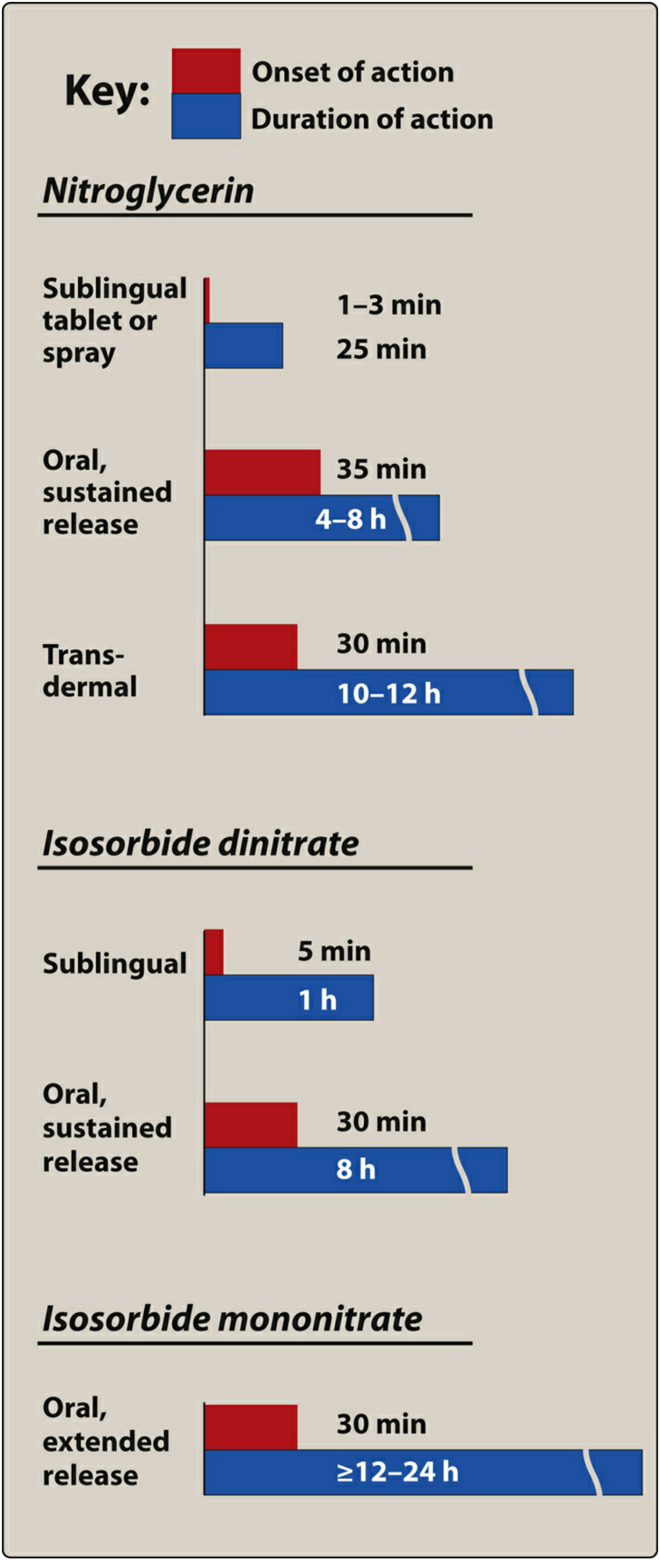
⏱️ Onset vs Duration (All Forms)
🧠 Quick Memory Summary
"NTG = No Tension/pressure in the veins and arteries"VEINS (preload) > Arteries (afterload) - remember this dominance!"AVOID if: V-RICH"
- Viagra / Sildenafil (within 24-48 hrs)
- RV infarction
- ICP raised
- Cardiac shock / hypotension
- Hypovolemia
Quick Dilution Card
NTG VIAL: 5 mg/mL (50 mg in 10 mL)
│
├── SUBLINGUAL → NO dilution → 0.4 mg tablet or spray, q5min x 3
│
├── IV 100 mcg/mL → 50 mg + 450 mL D5W = 500 mL
│    Start: 5-10 mcg/min → Rate: 3-6 mL/hr
│    Max: 200-400 mcg/min
│
└── OINTMENT → Apply 0.5-2 inches to skin, no dilution
     Use POLYETHYLENE/GLASS tubing (NOT PVC!)
Sources: Morgan & Mikhail's Clinical Anesthesiology, 7e | Lippincott Illustrated Reviews: Pharmacology | Harriet Lane Handbook, 23e | Rosen's Emergency Medicine | Barash's Clinical Anesthesia, 9e
This is a shared conversation. Sign in to Orris to start your own chat.