Tell me obs and gynac instruments and drugs for table viva of MBBS exams

Reading File
Finding Sources
Finding Sources
Finding Sources
Finding Sources
Finding Sources
Finding Sources
Searching the Web

MBBS OBG table viva instruments gynecology obstetrics list exam

Reading File
Reading Web Page

https://en.wikipedia.org/wiki/Instruments_used_in_obstetrics…

Reading File
Reading File
Searching the Web

OBG drugs table viva MBBS obstetrics gynecology oxytocin tocolytics misoprostol ergometrine exam questions

I now have comprehensive data to compile a thorough table viva answer. Let me compose the full response covering all major instruments and drugs used in OBG for MBBS exam.

OBG Instruments & Drugs - Table Viva (MBBS)

This is a structured guide for the OBG table viva covering all major instruments and drugs you are likely to encounter, with key viva points for each.

PART 1: INSTRUMENTS


A. EXAMINATION / DIAGNOSTIC INSTRUMENTS

InstrumentKey Viva Points
Sim's SpeculumDuck-bill shaped, 2 blades (anterior + posterior), patient in Sim's (left lateral) position. Used to retract posterior vaginal wall. Indications: examination of vaginal wall, P/V examination, D&C, copper-T insertion, colpotomy
Cusco's (Bivalve) SpeculumSelf-retaining, 2 blades, patient in lithotomy. Best for visualizing cervix. Indications: Pap smear, cervical biopsy, IUCD insertion/removal, colposcopy
Sim's Anterior Vaginal Wall RetractorUsed alongside Sim's speculum to retract the anterior vaginal wall. L-shaped with a handle
Uterine Sound (Simpson's)Graduated, malleable, silver/stainless steel. Used to measure uterine cavity length (normal: 6-8 cm). Also detects direction, patency, and position of uterus
Pinard's Fetoscope (Fetal Stethoscope)Funnel-shaped monaural stethoscope. Placed on maternal abdomen to auscultate fetal heart sounds. Now largely replaced by Doppler

B. CERVICAL / UTERINE OPERATIVE INSTRUMENTS

InstrumentKey Viva Points
Hegar's DilatorSet of curved metallic rods, sizes 1-20 (each size = 1 mm diameter). Used for cervical dilatation before D&C, hysteroscopy, MTP. Serial dilatation done
Hawkin-Ambler's DilatorHas a holder, causes fewer injuries than Hegar's. Better than Hegar's - preferred in some centers
Teale's Vulsellum Forceps"2 by 3" teeth (better grip). Used to grasp cervix - anterior lip for D&C, posterior lip for colpotomy/colpocentesis. Also for biopsies, cauterization, amputation
Jarcho's TenaculumSingle tooth, deeper bite, more secure but more traumatic. Used for traction on cervix
Sponge Holding Forceps (Ring Forceps)Circular rings at end, ratchet lock. Uses: (1) swabbing with betadine pre-op (2) hemostasis by pressure (3) blunt dissection (4) clean uterus cavity in cesarean (5) encerclage (6) hold cut edges of uterus
Haywood Smith's Ovum ForcepsLike ring forceps but NO ratchet lock. Cupped blades. Used to evacuate products of conception (POC) in surgical MTP or incomplete abortion
Blake's Uterine Curette (Sharp Curette)Sharp-edged spoon for D&C. Used in endometrial sampling, MTP, incomplete abortion evacuation
Randall's Endometrial Biopsy CuretteFlexible, used for outpatient endometrial biopsy without anesthesia
Karman's CannulaFlexible plastic, used with syringe for manual vacuum aspiration (MVA) in MTP up to 8-12 weeks

C. DELIVERY INSTRUMENTS

InstrumentKey Viva Points
Anderson's (Long Curved) Obstetric ForcepsTwo separate blades (English lock). Cephalic + pelvic curves. Parts: handle, shank, lock, blade (heel, shank, toe). Used for assisted vaginal delivery (AVD)
Wrigley's ForcepsShort blades, used for outlet forceps delivery and in C-section when head impacted
Kjelland's ForcepsMinimal pelvic curve, sliding lock. Used for face presentation (mento-anterior), deep transverse arrest, rotation. Now rarely used
Neville-Barnes ForcepsWith axis traction handle. For low/mid-cavity forceps with axis traction
Ventouse (Vacuum Extractor)Metal (Malmstrom) or silastic cup applied to fetal head. Suction up to 0.8 kg/cm² built over 2-8 min. Scalp swelling = Chignon. Contraindicated: preterm (<34 weeks), face presentation, fetal bleeding disorders
Episiotomy ScissorsAngled scissors for mediolateral or midline episiotomy. Mediolateral preferred in India (less risk of 3rd/4th degree tear)

D. DESTRUCTIVE OBSTETRIC INSTRUMENTS (for obstructed labor in developing countries)

InstrumentKey Viva Points
Oldham's PerforatorFor perforation of fetal skull (craniotomy) in hydrocephalus or obstructed labor
CranioclastCrushes fetal head after perforation
Jardine's Decapitation Hook with KnifeFor decapitation in neglected shoulder presentation
Hook with CrochetFor evisceration and extraction

E. CONTRACEPTION / GYNECOLOGY INSTRUMENTS

InstrumentKey Viva Points
Copper-T (IUCD)Copper ions toxic to sperm. Effective for 5-10 years (Cu 380A = 10 years). Inserted in first 48 hours postpartum or 4-6 weeks postpartum. Contraindications: Wilson's disease, heavy periods, pelvic infection, copper allergy
IUCD Removing HookUsed to retrieve displaced/embedded IUCD
Hodge PessaryHard rubber, introduced vaginally. Uses: correct retroversion of uterus, reduce prolapse, stress urinary incontinence
Ring PessaryFor uterine/vault prolapse reduction, used in elderly unfit patients
ColposcopeBinocular magnifying instrument. Used to examine cervix after abnormal Pap smear. Acetic acid + Lugol's iodine applied to identify abnormal areas (CIN, carcinoma)
Bonney's Myomectomy ClampApplied on uterine isthmus to reduce blood loss during myomectomy
Veress NeedleFirst step in laparoscopy - used to create pneumoperitoneum (CO₂ insufflation)
Trocar and CannulaAfter pneumoperitoneum; trocar creates puncture, cannula allows passage of laparoscope/instruments

F. MONITORING INSTRUMENTS

InstrumentKey Viva Points
Cardiotocograph (CTG)Records fetal heart rate + uterine contractions simultaneously. Interprets: baseline FHR (normal 110-160 bpm), variability, accelerations, decelerations. Used in active labor
Fetal Scalp ElectrodeFor direct fetal ECG monitoring after membrane rupture in labor

PART 2: DRUGS


A. OXYTOCICS (Drugs that Stimulate Uterine Contractions)

DrugMechanismUsesDose / Key Points
OxytocinBinds oxytocin receptor (IP₃ pathway), also weak ADH effect(1) Induction/augmentation of labor (2) Active management of 3rd stage (3) PPH prevention/treatmentIV infusion 2-5 mU/min; IM 10 IU after delivery. ADR: water intoxication (hyponatremia), hypotension
Ergometrine (Ergonovine)Ergot alkaloid, direct smooth muscle contraction (prolonged tonic contraction)(1) 3rd stage (2) PPH treatment0.2 mg IM/IV. NOT in hypertension (causes severe vasoconstriction). Combined with oxytocin = Syntometrine
CarbetocinLong-acting oxytocin analogueSingle-dose PPH prevention at C-section100 mcg IV single dose
Misoprostol (PGE₁)Prostaglandin E₁ analogue, binds EP receptors(1) Cervical ripening (2) Induction of labor (IUFD) (3) MTP with mifepristone (4) PPH600 mcg sublingual/800 mcg rectal for PPH; 25-50 mcg PV for induction. Oral/sublingual/rectal/PV routes
Dinoprostone (PGE₂)Prostaglandin E₂(1) Cervical ripening (2) Induction at termCervical gel 0.5 mg, vaginal insert 10 mg. ADR: fever, GI disturbance
Carboprost (PGF₂α, 15-methyl PGF₂α)Prostaglandin F₂α analogue, uterotonicRefractory PPH (atonic)250 mcg IM q15-90 min, max 8 doses. Contraindicated in asthma
Tranexamic AcidAntifibrinolytic (inhibits plasminogen activation)PPH treatment/prevention1 g IV over 10 min, repeat after 30 min if needed (WOMAN trial). Best within 3 hours of birth

B. TOCOLYTICS (Drugs that Inhibit Uterine Contractions)

Used to suppress preterm labor (<37 weeks), buy time for steroids/transfer.
DrugMechanismNotes
NifedipineCalcium channel blockerFirst-line tocolytic. Also lowers BP, useful in hypertension. Oral/sublingual
AtosibanOxytocin receptor antagonistAlternative when nifedipine contraindicated. Fewer maternal side effects. IV infusion
Salbutamol / Terbutalineβ₂ agonistUsed IV/SC. ADR: tachycardia, pulmonary edema, hyperglycemia - monitor carefully
IndomethacinPG synthesis inhibitor (COX inhibitor)Used <32 weeks only. Risk of premature closure of ductus arteriosus, oligohydramnios
Magnesium SulphateNMDA antagonist, reduces Ca²⁺ entryTocolytic + Neuroprotection of preterm neonate + Eclampsia seizure prophylaxis/treatment. Therapeutic level: 4-7 mEq/L. Toxicity: loss of reflexes → respiratory arrest. Antidote: Calcium gluconate

C. ANTIHYPERTENSIVES IN PREGNANCY

DrugNotes
MethyldopaDrug of choice for chronic HTN in pregnancy. Central α₂ agonist
LabetalolFor acute severe HTN in pregnancy/eclampsia. IV 20-80 mg bolus or infusion
NifedipineFor acute severe HTN (oral). Also tocolytic
HydralazineIV for acute severe HTN. Vasodilator. Risk of maternal hypotension
Magnesium SulphateAnticonvulsant of choice for eclampsia (Pritchard or Zuspan regimen). NOT antihypertensive
Avoid: ACE inhibitors, ARBs, spironolactone (teratogenic), atenolol, thiazides.

D. DRUGS FOR LABOR INDUCTION / CERVICAL RIPENING

DrugRouteNotes
Dinoprostone (PGE₂)PV gel/insertGold standard for cervical ripening; requires fetal monitoring
Misoprostol (PGE₁)PV/sublingual/oralOff-label but widely used; cheap; multiple routes
OxytocinIV infusionAfter cervix is ripe (Bishop score ≥6)
MifepristoneOralProgesterone antagonist; used with misoprostol for MTP / IUFD induction

E. DRUGS FOR NAUSEA/VOMITING IN PREGNANCY (Hyperemesis Gravidarum)

DrugNotes
Pyridoxine (Vit B₆)First-line with doxylamine. Safe
MetoclopramideDopamine antagonist; commonly used
Ondansetron5-HT₃ antagonist; used for refractory cases. Avoid in 1st trimester if possible
PromethazineAntihistamine; effective
Doxylamine + PyridoxineFirst-line combination (Diclegis/Bonjesta)

F. DRUGS IN PREECLAMPSIA / ECLAMPSIA

DrugRole
Magnesium SulphateSeizure prophylaxis (preeclampsia) + treatment (eclampsia). Pritchard regimen: 4g IV loading + 10g IM, then 5g IM q4h. Zuspan: 4g IV + 1-2g/hr infusion
Labetalol / Hydralazine / NifedipineAcute BP control when systolic >160 or diastolic >110
Dexamethasone / BetamethasoneFetal lung maturation if preterm delivery anticipated (24-34 weeks)

G. DRUGS FOR PPH MANAGEMENT (in order)

The mnemonic "4 T's" - Tone (atony, 80%), Trauma, Tissue (retained), Thrombin (coagulopathy):
Uterotonics for atonic PPH:
  1. Oxytocin 10 IU IM (first-line, active management)
  2. Ergometrine 0.2 mg IM (not in hypertension)
  3. Syntometrine (oxytocin + ergometrine)
  4. Carboprost 250 mcg IM (not in asthma)
  5. Misoprostol 800 mcg rectal/sublingual
  6. Tranexamic acid 1 g IV (antifibrinolytic, within 3 hours)

H. MISCELLANEOUS IMPORTANT OBG DRUGS

DrugUse
Clomiphene CitrateOvulation induction (estrogen receptor antagonist at hypothalamus → ↑GnRH → ↑FSH/LH). Risk: ovarian hyperstimulation, multiple pregnancy
Progesterone (vaginal/IM)Threatened abortion, luteal phase support in IVF, cervical length <25 mm (17-OH progesterone reduces preterm)
Folic Acid 5 mgPericonceptional (1 month before + first trimester) to prevent neural tube defects
Betamethasone / DexamethasoneAntenatal corticosteroids (ACS) for fetal lung maturity; 24-34+6 weeks; 2 doses IM 12-24h apart
Iron + Folic AcidRoutine antenatal supplement; 100 mg elemental iron + 500 mcg folic acid
MethotrexateMedical management of ectopic pregnancy (unruptured, <3.5 cm, β-hCG <5000). Folic acid antagonist
DanazolAndrogen, used in endometriosis (less preferred now - side effects).
GnRH agonists (Leuprolide)Down-regulate HPO axis; used in endometriosis, fibroids (pre-op), IVF down-regulation
LetrozoleAromatase inhibitor; preferred over clomiphene for ovulation induction in PCOS
Terbutaline / Salbutamolβ₂ agonist; tocolytic; also intrauterine resuscitation in acute fetal compromise

Quick Revision Summary

OXYTOCICS mnemonic - "OECD-MT": Oxytocin, Ergometrine, Carbetocin, Dinoprostone/Carboprost, Misoprostol, Tranexamic acid
TOCOLYTICS mnemonic - "NAIMS": Nifedipine, Atosiban, Indomethacin, Magnesium sulphate, Salbutamol
PPH drugs order: Oxytocin → Ergometrine → Syntometrine → Carboprost → Misoprostol → Tranexamic acid → B-Lynch suture → Hysterectomy
Instruments by procedure:
  • D&C: Sim's speculum, Vulsellum, Hegar's dilators, uterine sound, sharp curette
  • MTP: Add Karman's cannula / Haywood Smith's forceps
  • Forceps delivery: Anderson's / Wrigley's / Kjelland's
  • Laparoscopy: Veress needle, trocar, cannula, telescope
  • Eclampsia: No instruments - Magnesium sulphate IV

Sources: Berek & Novak's Gynecology; Creasy & Resnik's Maternal-Fetal Medicine; Wikipedia OBG instruments; PrepLadder OBG instruments

Please give me instrument with clinical images

Finding Sources
Searching the Web

OBG gynecology obstetric instruments clinical images Cusco Sims speculum Hegar dilator forceps site:wikipedia.org OR site:commons.wikimedia.org

Finding Sources
Searching the Web

Sims speculum Cusco speculum Hegar dilator Vulsellum uterine sound obstetric forceps ventouse clinical photo medical instruments

Finding Sources
Loading Image
Loading Image
Loading Image
Reading File
Reading File
Reading File
Loading Image
Reading File
Searching the Web

obstetric forceps vacuum extractor ventouse Hegar dilator uterine curette vulsellum clinical photo gynecology instruments labeled diagram

Loading Image
Loading Image
Loading Image
Loading Image
Reading File
Loading Image
Here is the complete illustrated OBG instruments guide for your table viva. Images are embedded where available; Wikipedia/Wikimedia links open directly as clinical reference photos.

OBG Instruments with Clinical Images - Table Viva (MBBS)


1. Cusco's Bivalve Self-Retaining Speculum

Cusco's Speculum
Description: Two-bladed, duck-bill shaped, self-retaining (no assistant needed). Patient in dorsal lithotomy position.
Uses:
  • Visualize cervix and vaginal fornices (routine P/V exam)
  • Pap smear / cervical cytology
  • Detect APH local cause (polyp, ectopy, Ca cervix)
  • Detect PROM (liquor leaking from os)
  • Colposcopy, cervical biopsy, IUCD insertion/removal
Key viva point: Self-retaining = no assistant required. 2 blades open anteroposteriorly.

2. Sim's Double-Bladed Posterior Vaginal Speculum

Sims' Speculum
Description: Two unequal blades (narrow for nulliparous, wide for parous), not self-retaining - held by assistant. Patient in Sim's (left lateral) position.
Uses:
  • Retract posterior vaginal wall for surgical procedures
  • Inspect cervix/vagina for injury after delivery
  • Clean vagina post-delivery
  • D&C, D&E, repair of perineal tears
  • Exclude local APH cause
Key viva point: NOT self-retaining, needs assistant to hold. Sims' position = left lateral decubitus.

3. Hegar's Cervical Dilators

Hegar Dilators
Description: Set of graduated, curved, metallic, blunt-ended rods. Sizes 1-20 (each number = diameter in mm). Used in pairs (double-ended, each end a consecutive size).
Uses:
  • Cervical dilatation before D&C, D&E
  • Suction evacuation (MTP)
  • Hysteroscopy
  • Primary dysmenorrhea (cervical stenosis)
  • Fothergill's operation (Manchester repair)
Key viva point: Serial dilatation done - start small, go up gradually. Can cause uterine perforation if force used. Hawkin-Ambler's dilator is better (has a holder, fewer injuries).

4. Teale's Vulsellum Forceps

Vulsellum Forceps
Description: Long scissors-like forceps with multiple teeth (2 × 3 teeth) at tip. Has a ratchet lock.
Uses:
  • Grasp anterior cervical lip for D&C, suction evacuation
  • Grasp posterior cervical lip for colpotomy, colpocentesis (access to POD)
  • Hold cervix for cervical biopsy, amputation, electrocautery, cryocautery
  • Encerclage (though ring forceps preferred)
Key viva point: "2 × 3" teeth = better grip but more trauma. Allis forceps used instead in obstetrics (less traumatic to soft vascular cervix).

5. Simpson's Uterine Sound

Uterine Sound
Description: Thin, malleable, graduated silver/stainless steel probe with a rounded tip. Markings at 1 cm intervals.
Uses:
  • Measure length of uterine cavity (normal 6-8 cm)
  • Determine position of uterus (anteverted vs retroverted)
  • Check patency of internal os
  • Before IUCD insertion to determine cavity size/direction
Key viva point: Normal uterine cavity = 6-8 cm (up to 10 cm in multiparous). Can cause uterine perforation if excess force used.

6. Sponge Holding Forceps (Ring Forceps)

Sponge Forceps
Description: Circular rings at tip (fenestrated ovoid ends), ratchet lock, long handles.
Uses:
  1. Swabbing with betadine/antiseptic solution pre-op (abdomen, vulva, vagina)
  2. Apply pressure for hemostasis
  3. Blunt dissection
  4. Clean uterine cavity after C-section delivery
  5. Examine cervix for tears after delivery
  6. Hold cervix for encerclage
  7. Remove cervical polyps
Key viva point: Has a ratchet lock. Distinguished from Haywood Smith's ovum forceps by the lock.

7. Haywood Smith's Ovum Forceps

Description: Identical appearance to ring forceps but has NO ratchet lock. Blades are cupped/concave.
Uses:
  • Evacuate products of conception (POC) in surgical MTP
  • Evacuation of incomplete/missed abortion (RPOC)
  • Gentle grasping to avoid crushing tissue
Key viva point: NO lock = key distinguishing feature from sponge holding forceps.

8. Blake's Sharp Uterine Curette

Uterine Curette
Description: Thin handle with a spoon-shaped sharp loop at end. Various sizes.
Uses:
  • Endometrial curettage (D&C)
  • MTP evacuation
  • Incomplete abortion (RPOC)
  • Endometrial sampling for abnormal uterine bleeding
  • Hydatidiform mole evacuation
Key viva point: Sharp curette used in D&C. Flushing curette is BLUNT - used in D&E to flush uterine cavity. Randall's/Pipelle = flexible, outpatient endometrial biopsy without anesthesia.

9. Obstetric Forceps (Anderson's / Long Curved)

Obstetric Forceps
Description: Two separate crossing blades. Each blade has: blade (tip, fenestrated body) - shank - lock - handle. Two curves: cephalic curve (fits baby's head) + pelvic curve (fits birth canal).
Types:
ForcepsFeatureUse
Anderson's (Long curved)Standard, English lockLow/outlet forceps delivery
Wrigley'sShort bladesOutlet forceps, C-section (impacted head)
Kjelland'sMinimal pelvic curve, sliding lockRotation (deep transverse arrest, face presentation)
Neville-BarnesAxis traction deviceLow/mid forceps with axis traction
ACOG Classification:
  • Outlet: Scalp visible at introitus, rotation ≤45°
  • Low: Station +2 or below
  • Mid: Engaged but above +2 station
Key viva point: "Never apply forceps to an unengaged head." Complications: maternal lacerations, neonatal facial nerve palsy, cephalhematoma, subgaleal hemorrhage.

10. Ventouse / Vacuum Extractor

Vacuum Extractor
Description: Suction cup (metal Malmstrom or silastic/plastic) connected to vacuum pump via tube. Applied to fetal scalp. Suction built to 0.8 kg/cm² (80 kPa) over 2-8 minutes.
Scalp swelling formed = CHIGNON (caput succedaneum-like, disappears within 24-48 hrs)
Advantages over forceps: Less maternal trauma, less anesthesia needed, easier to learn, self-detaches if excessive traction.
Contraindications:
  • Preterm (<34 weeks) - fragile fetal skull
  • Face presentation
  • Fetal bleeding disorders (thrombocytopenia, hemophilia)
  • After fetal blood sampling
  • Unengaged head
Key viva point: Sequential use (vacuum then forceps) dramatically increases intracranial hemorrhage risk (7.4× vs spontaneous) - avoid.

11. Episiotomy Scissors

Episiotomy Scissors
Description: Angled/bent scissors. One blunt-tipped blade (placed in vagina), one sharp blade outside.
Types:
  • Mediolateral episiotomy - preferred in India (45° angle from midline) - less risk of 3rd/4th degree tear
  • Midline/median - easier to repair, heals better, but higher risk of extension to anal sphincter
Key viva point: Timing: cut at crowning, at peak of contraction. Routine episiotomy no longer recommended - only selective.

12. Doyen's Retractor

Description: Curved, wide, flat blade with a handle. Bladder retractor.
Uses:
  • Retract abdominal wall and bladder during LSCS (Lower Segment Cesarean Section)
  • Essential for exposure of the lower uterine segment
  • Protect bladder from injury
Key viva point: Placed after reflecting the bladder flap in LSCS. Two Doyen's used - one for bladder, one for upper flap.

13. Green-Armytage Hemostatic Forceps

Description: Long, straight, hemostatic forceps with transverse serrations.
Uses (specifically for LSCS):
  • Applied to the 4 angles and cut edges of uterine incision during C-section
  • Prevent blood loss from uterine sinuses
  • Hold flaps for suturing
Key viva point: "4 Green-Armytage forceps are used in LSCS" - 2 for cut edges, 1 for each angle.

14. Pinard's Fetoscope

Pinard Stethoscope
Description: Trumpet/cone-shaped monaural stethoscope. Wooden or metal. Wide end on maternal abdomen, narrow end to examiner's ear.
Use: Auscultate fetal heart sounds. Normal FHR = 110-160 bpm.
Key viva point: Primitive, now replaced by Doppler. Still used in resource-limited settings. Cannot detect FHR variability (only rate). Doppler preferred from 12 weeks, Pinard from 28 weeks.

15. Laparoscopic Instruments (from Berek & Novak's Gynecology)

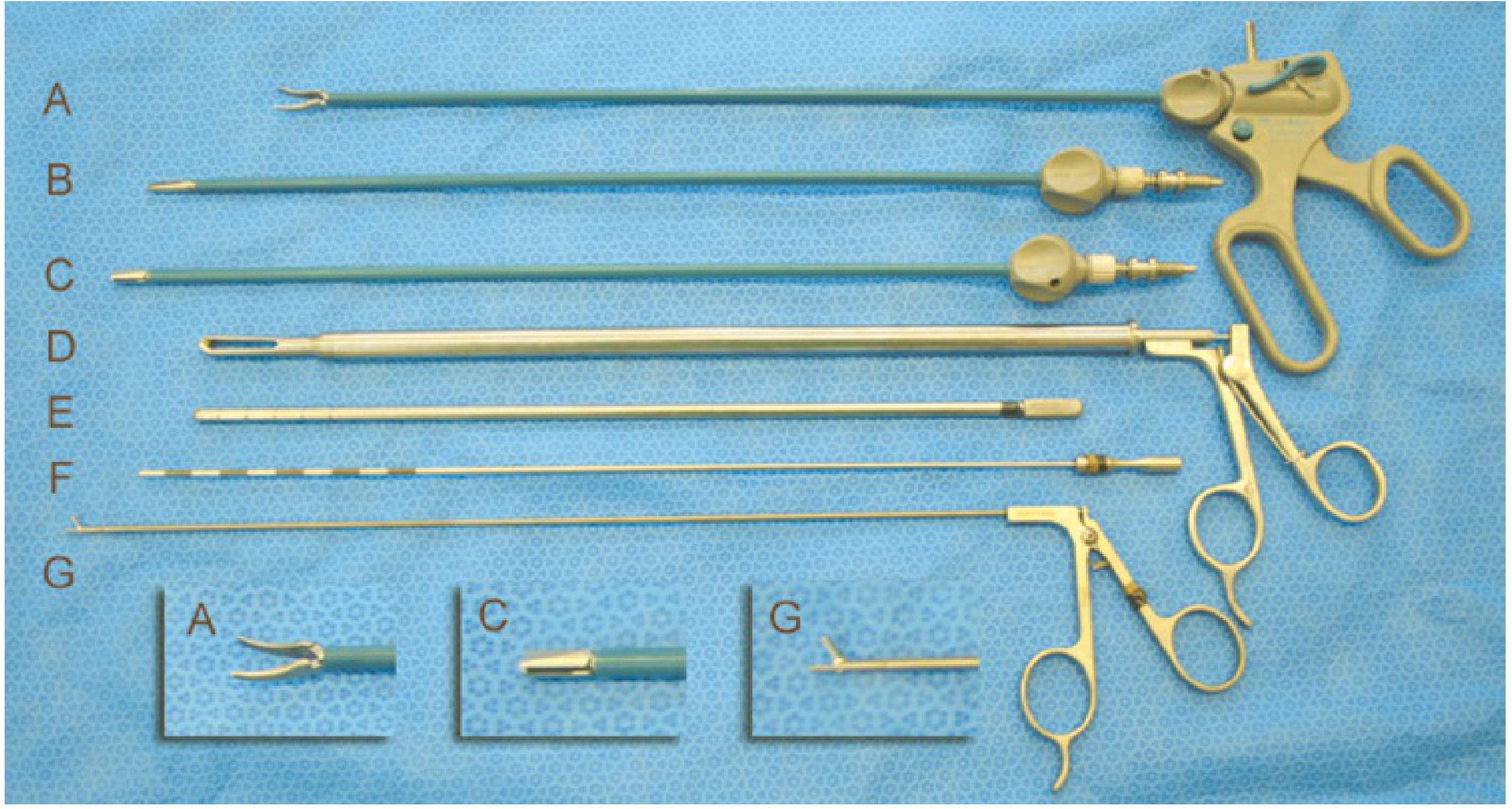
The following images are from the Berek & Novak's Gynecology textbook, showing actual surgical instruments used in gynecologic laparoscopy:
Laparoscopic Grasping Forceps Set (A-G):
Laparoscopic instruments for grasping and manipulating tissue - Maryland graspers, claw graspers, probes
Laparoscopic instruments: A = Maryland graspers (5 mm curved tip), B & C = alternate tips for same handle, D = 10 mm claw grasper, E & F = 5 mm and 2 mm manipulating probes, G = 2 mm grasping forceps - Berek & Novak's Gynecology
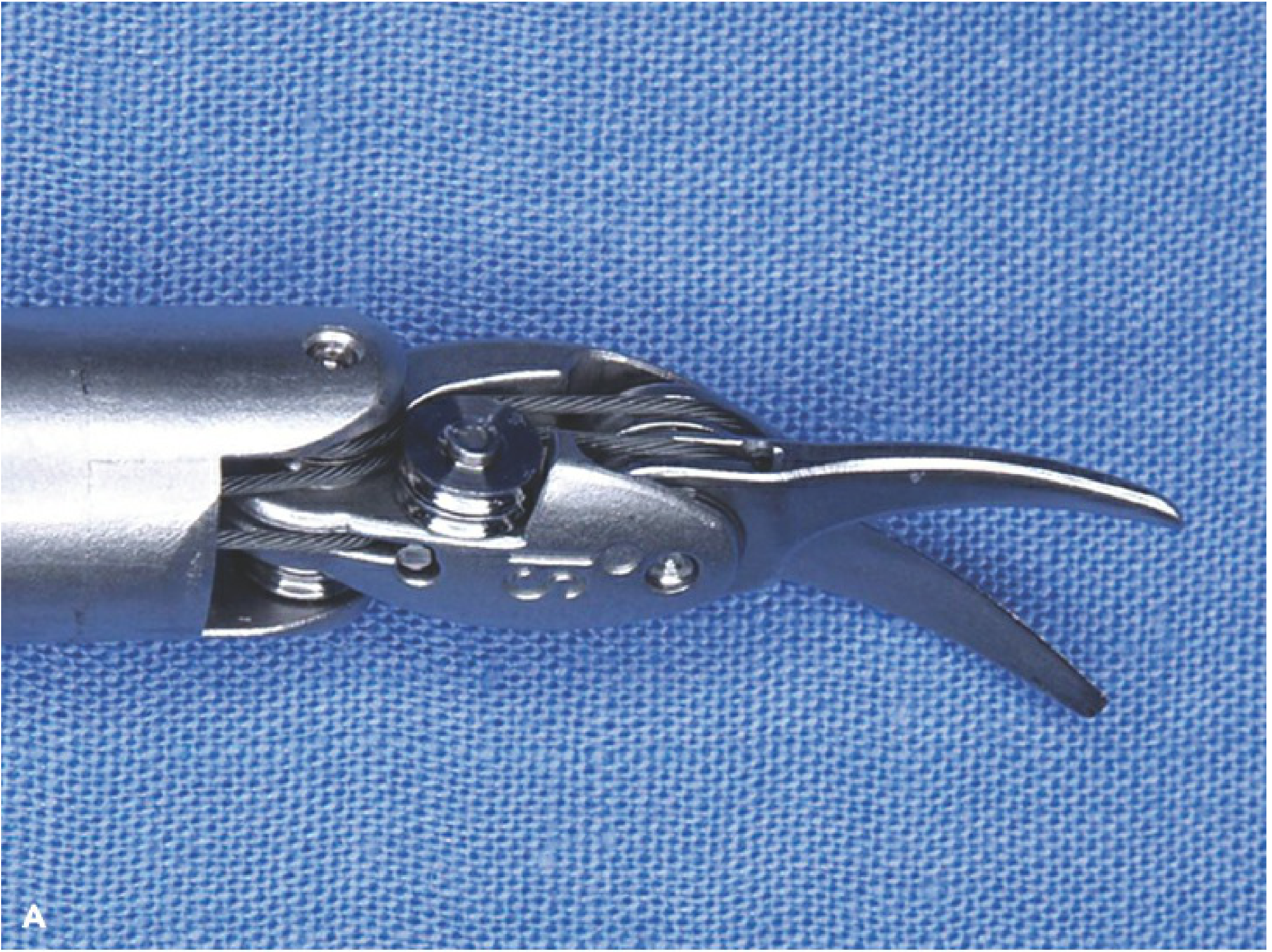
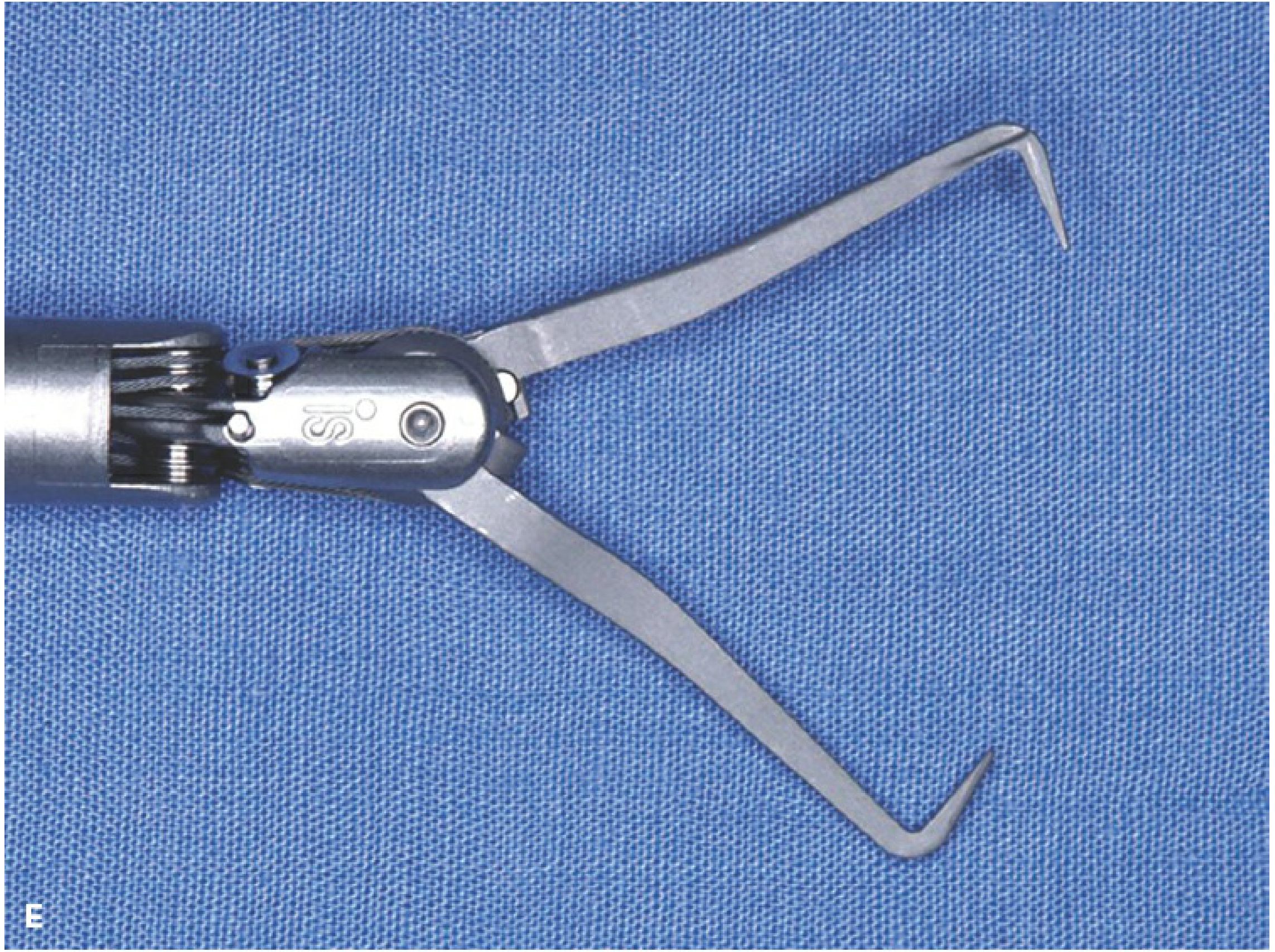
Robotic EndoWrist Instruments (used in Robotic/Da Vinci gynecologic surgery):
Robotic scissors - curved tip with articulation, used for dissection in robotic gynecologic surgery
Robotic articulated scissors (curved tip, 7 degrees of freedom) - Berek & Novak's Gynecology
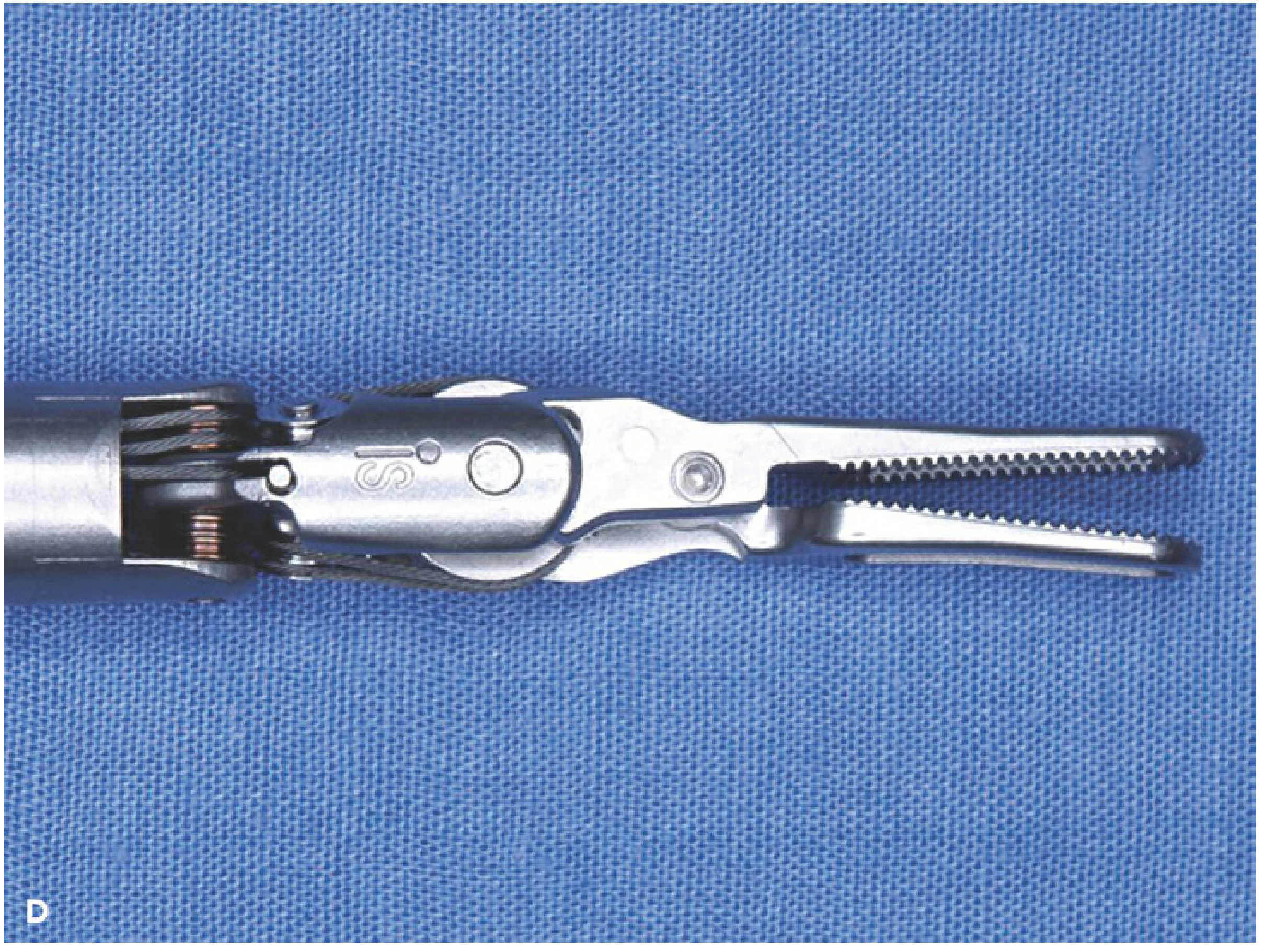
Robotic needle driver / tissue grasper with serrated jaws used for suturing in robotic gynecology
Robotic needle driver with serrated jaws - used for suturing in robotic hysterectomy/myomectomy - Berek & Novak's Gynecology
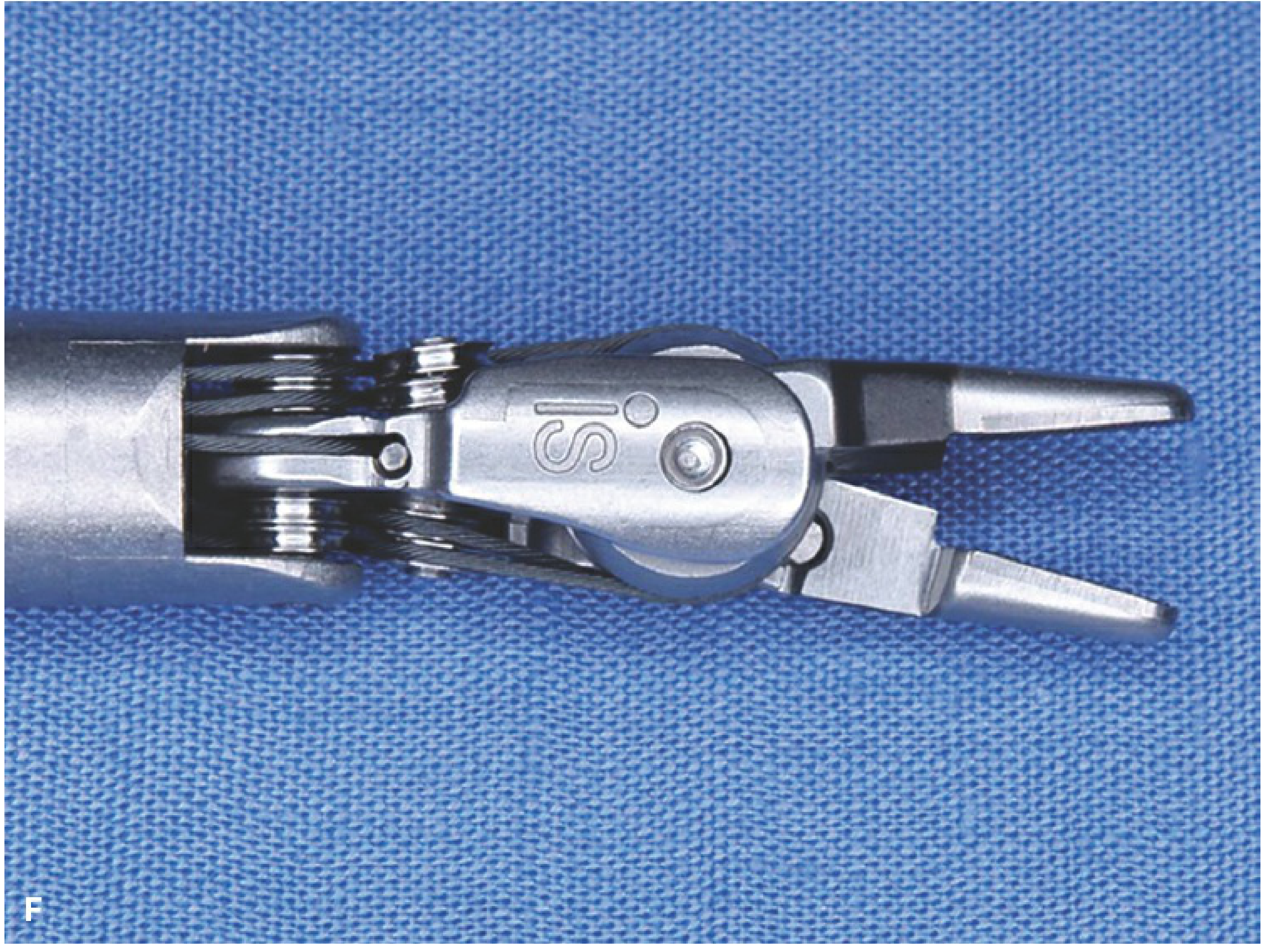
Robotic bipolar grasping forceps with articulated wrist - used for hemostasis and tissue manipulation
Robotic bipolar grasping forceps - tissue manipulation and hemostasis - Berek & Novak's Gynecology
Robotic tenaculum-type curved forceps with hooked jaws for tissue retraction in laparoscopic gynecology
Robotic curved/hooked grasper - used for uterine retraction in laparoscopic procedures - Berek & Novak's Gynecology

16. Hodge Pessary

Description: Hard rubber, elongated oval shape with notches. Placed in vagina.
Uses:
  • Correct retroverted uterus (retroversion)
  • Manage uterovaginal prolapse (temporary)
  • Stress urinary incontinence
Key viva point: Ring pessary preferred for prolapse in elderly unfit patients. Pessaries need regular removal and cleaning (every 3-6 months).

17. IUCD - Copper-T 380A

Copper T IUCD
Description: T-shaped device with copper wire wound around vertical arm and copper sleeves on horizontal arms.
How it works: Copper ions are spermicidal + alter endometrial environment. Also inhibits fertilization.
Effectiveness: >99%, lasts 10 years (Cu-T 380A). Can also be used as emergency contraception within 5 days.
Contraindications: Wilson's disease, heavy/irregular bleeding, copper allergy, pelvic infection (PID), distorted uterine cavity, unexplained vaginal bleeding.
Key viva point: Insertion timing: during menstruation OR first 48 hrs postpartum OR 4-6 weeks postpartum (interval). String should be felt on vaginal examination.

Quick Reference: "Instrument → Procedure" Table

ProcedureKey Instruments
D&CSim's speculum + Vulsellum + Uterine sound + Hegar's dilators + Sharp curette
Surgical MTP / Incomplete abortionAbove + Haywood Smith's ovum forceps + Karman's cannula
Pap smear / Cervical examCusco's speculum + Ayre's spatula/cytobrush
IUCD insertionCusco's speculum + Uterine sound + IUCD inserter
LSCSDoyen's retractor + Green-Armytage forceps + Bonney clamps
Forceps deliveryAnderson's / Wrigley's forceps
Vacuum deliveryVentouse cup + vacuum pump
EpisiotomyEpisiotomy scissors
LaparoscopyVeress needle + Trocar + Cannula + Telescope/laparoscope
Fetal monitoringCTG machine, Pinard's fetoscope

Note: Some Wikipedia instrument image URLs may not render if Wikimedia restricts direct embedding. In that case, right-click the links above and open in a new tab to view the clinical photos. The textbook CDN images (cdn.orris.care) are fully rendered above.
This is a shared conversation. Sign in to Orris to start your own chat.