
dies aspirin work as anti platelet
Aspirin works as an antiplatelet by irreversibly inhibiting the enzyme COX-1 (cyclooxygenase-1) in platelets. This blocks the production of thromboxane A2 (TXA2), a potent promoter of platelet aggregation and vasoconstriction. Since platelets lack a nucleus, they cannot regenerate COX-1, so the effect lasts the platelet's entire lifespan (~7-10 days). This makes aspirin a long-acting antiplatelet even at low doses (75-100 mg/day).
Searching sources...
Reading File
Searching the Web
aspirin antiplatelet mechanism COX-1 thromboxane A2
Finding Sources
Searching Images
aspirin antiplatelet mechanism COX-1 thromboxane A2 platelet aggregation
Reading File
Reading File
Loading Image
Yes, aspirin absolutely does work as an antiplatelet agent. Here is a detailed breakdown from authoritative medical textbooks:
How Aspirin Works as an Antiplatelet
The Pathway (Step by Step)
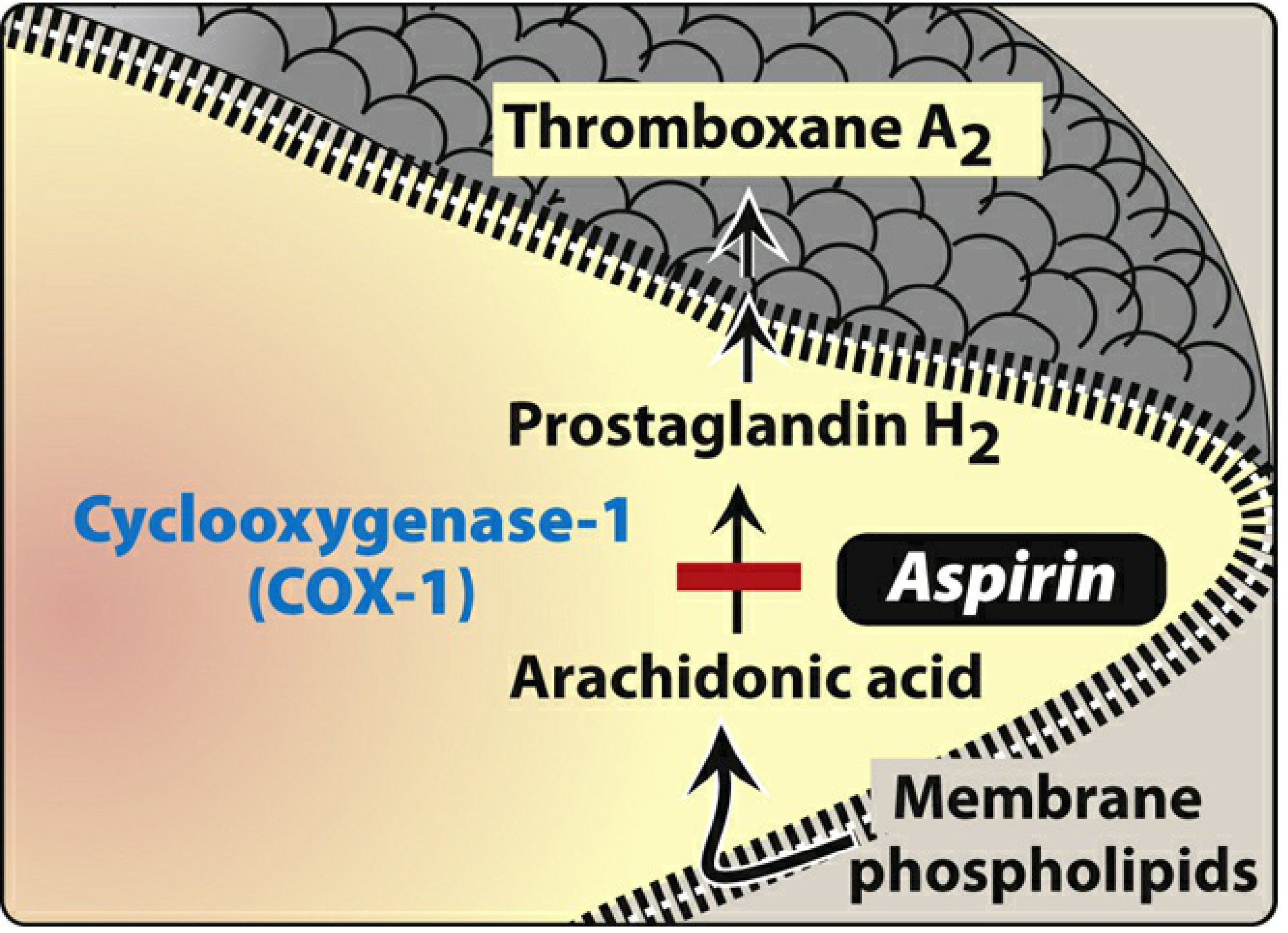
When platelets are stimulated (by thrombin, collagen, or ADP), their membrane phospholipases are activated. This releases arachidonic acid from membrane phospholipids. The enzyme COX-1 (cyclooxygenase-1) then converts arachidonic acid into Prostaglandin H2, which is further metabolized to Thromboxane A2 (TXA2). TXA2 is a potent:
- Promoter of platelet aggregation
- Vasoconstrictor
Aspirin's Mechanism
Aspirin irreversibly acetylates a serine residue on the active site of COX-1 (Ser-529 in COX-1). This creates steric hindrance that permanently blocks arachidonic acid from binding. The result:
- No TXA2 synthesis
- The balance shifts toward prostacyclin (PGI2), which is an antiaggregatory and vasodilatory mediator produced by endothelial cells
- Platelet aggregation is suppressed
"Aspirin inhibits thromboxane A2 synthesis by acetylation of a serine residue on the active site of COX-1, thereby irreversibly inactivating the enzyme...This shifts the balance of chemical mediators to favor the antiaggregatory effects of prostacyclin." - Lippincott Illustrated Reviews: Pharmacology
Why the Effect is Permanent (for that platelet)
Because platelets have no nucleus, they cannot synthesize new COX-1 protein. So once aspirin acetylates it, the antiplatelet effect lasts the entire lifespan of the platelet (~7-10 days). This is unique to aspirin - no other antiplatelet agent irreversibly inhibits platelet function through this mechanism.
Key Clinical Points
| Feature | Detail |
|---|---|
| Dose for antiplatelet effect | 75-100 mg/day (low dose); initial loading: at least 160 mg |
| Duration of effect | 7-10 days (platelet lifespan) |
| Onset | Rapid - inhibition occurs within ~1 hour |
| COX-2 inhibition | Only at high doses (~1 g/day); at these doses, aspirin also suppresses prostacyclin in endothelial cells, which may reduce net antithrombotic benefit |
| Limitations | Only blocks TXA2-mediated aggregation; does NOT block aggregation via ADP, thrombin, or other pathways |
Clinical Indications (from Harrison's 2025)
- Secondary prevention of MI, stroke, and peripheral artery disease - aspirin produces a ~25% reduction in cardiovascular death, MI, or stroke vs. placebo
- Acute coronary syndrome (ACS) management
- Post-stent / post-CABG antiplatelet therapy (often combined with a P2Y12 inhibitor like clopidogrel)
- Primary prevention: No longer routinely recommended; benefits are outweighed by GI/intracerebral bleeding risk unless cardiovascular risk is >1%/year over 10 years
Important: Aspirin Resistance
Some patients show reduced response to aspirin. This can be assessed in the lab by measuring thromboxane metabolites (e.g., serum TXB2 or urinary 11-dehydro-TXB2). Causes include genetic polymorphisms in COX-1, drug interactions (e.g., ibuprofen taken before aspirin can block its access to COX-1), and non-compliance. - Henry's Clinical Diagnosis and Management by Laboratory Methods
Sources: Lippincott Illustrated Reviews: Pharmacology (p. 439-441) | Harrison's Principles of Internal Medicine 22E (2025), Ch. 123 | Braunwald's Heart Disease | Rosen's Emergency Medicine
why we give antiplatelet drug to patient
Antiplatelet drugs are given to prevent unwanted blood clot (thrombus) formation inside blood vessels. They are used in conditions where platelets aggregate abnormally and block arteries - such as heart attacks, strokes, and after stent placement. The core goal is to reduce the risk of arterial thrombosis while preserving enough hemostasis to stop normal bleeding.
Searching sources...
Finding Sources
Searching the Web
clinical indications for antiplatelet therapy guidelines 2024
Finding Sources
Finding Sources
Reading File
Reading File
Finding Sources
Finding Sources
Reading File
Loading Image
Here is a thorough answer from authoritative medical textbooks:
Why We Give Antiplatelet Drugs to Patients
The fundamental reason is to prevent arterial thrombosis - blood clots that form when platelets pile up at the site of damaged or diseased blood vessels and block blood flow. This is the driving cause of heart attacks, strokes, and limb ischemia.
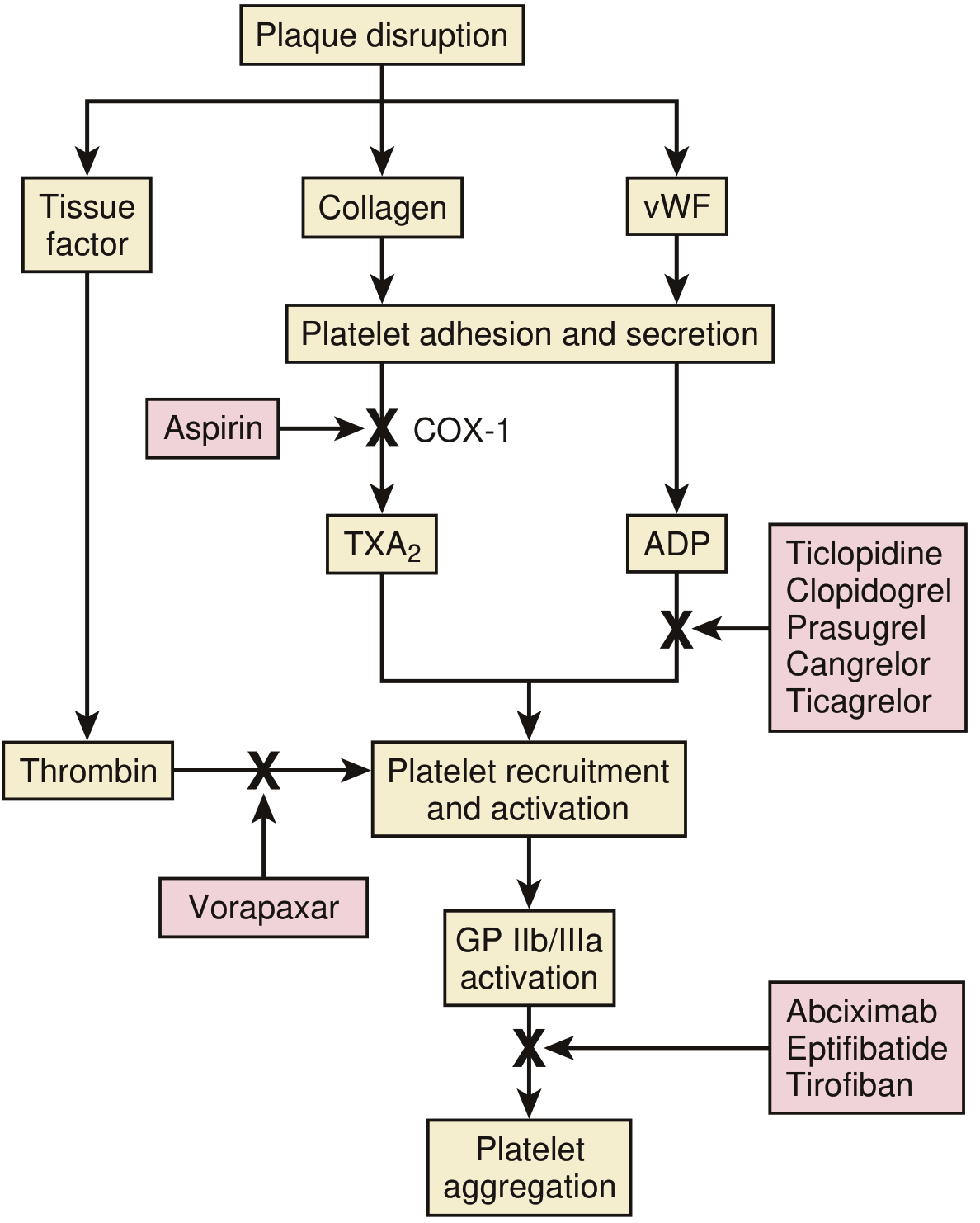
The diagram below shows where different antiplatelet drugs act in the platelet aggregation cascade:
Main Clinical Indications
1. Acute Coronary Syndrome (ACS) - Heart Attack / Unstable Angina
This is the most time-critical indication. A ruptured coronary plaque triggers massive platelet activation and clot formation in the coronary artery.
- Aspirin alone reduces mortality by ~23% in acute MI without fibrinolysis, and by ~42% when combined with fibrinolytic therapy
- In unstable angina, antiplatelet therapy dramatically reduces progression to full infarction
- Standard of care: Aspirin + a P2Y12 inhibitor (dual antiplatelet therapy - DAPT), e.g., aspirin + clopidogrel, or aspirin + ticagrelor/prasugrel
2. After PCI (Stent Placement)
When a stent is placed in a coronary artery, the bare metal or drug-eluting stent surface can trigger platelet aggregation and in-stent thrombosis.
- DAPT is mandatory after stent placement (usually aspirin + clopidogrel/ticagrelor for 1-12 months, depending on stent type and bleeding risk)
- Prevents stent thrombosis, which can be catastrophic and cause sudden death
3. Secondary Prevention - Patients with Known Cardiovascular Disease
Patients who have already had a:
- Myocardial infarction
- Ischemic stroke or TIA
- Peripheral artery disease (PAD)
- Coronary artery disease (CAD)
...are at high risk of a repeat event. Long-term aspirin therapy produces ~20% reduction in risk of cardiovascular death, MI, or stroke in these patients. - Braunwald's Heart Disease
4. Ischemic Stroke and TIA
- After an ischemic stroke or TIA, antiplatelet therapy (aspirin, or aspirin + dipyridamole, or clopidogrel) is started to prevent a second stroke
- Note: antiplatelet drugs are NOT used for cardioembolic stroke (caused by AF) - anticoagulants are used there instead
5. Peripheral Artery Disease (PAD)
- Patients with symptomatic PAD receive single antiplatelet therapy (aspirin or clopidogrel) to prevent MACE (major adverse cardiovascular events)
- After endovascular intervention for PAD, DAPT is used for 1-6 months per 2024 ACC/AHA PAD guidelines
6. Primary Prevention (Controversial)
- Historically, aspirin was given to prevent a first heart attack in high-risk individuals
- Current guidelines no longer recommend routine aspirin for primary prevention because bleeding risks (GI hemorrhage, intracerebral bleeding) outweigh benefits for most people
- Only considered if baseline cardiovascular risk is ≥1% per year (≥10% over 10 years) and bleeding risk is low
Summary Table
| Indication | Goal | Drug(s) Used |
|---|---|---|
| Acute MI / ACS | Stop ongoing clot formation | Aspirin + P2Y12 inhibitor (DAPT) |
| Post-PCI / stent | Prevent in-stent thrombosis | DAPT for 1-12 months |
| Secondary prevention (MI/stroke/PAD) | Prevent recurrence | Aspirin or clopidogrel (long-term) |
| Ischemic stroke / TIA | Prevent second stroke | Aspirin ± dipyridamole, or clopidogrel |
| PAD | Prevent MACE | Aspirin or clopidogrel |
| High-risk primary prevention | Prevent first event (selected cases only) | Low-dose aspirin (75-100 mg) |
Important: When NOT to Use Antiplatelet Drugs
- Active bleeding or high bleeding risk
- Hemorrhagic stroke (makes it worse)
- Aortic dissection (aspirin is contraindicated)
- Suspected peptic ulcer without PPI cover
- When anticoagulation is needed instead (e.g., atrial fibrillation - use warfarin/DOAC, not antiplatelet)
Sources: Rosen's Emergency Medicine | Braunwald's Heart Disease | Goldman-Cecil Medicine | 2024 ACC/AHA PAD Guidelines | 2025 ACC/AHA ACS Guidelines
This is a shared conversation. Sign in to Orris to start your own chat.