
how to study a physiology of abdominal organs from a chapter based on digestion
Reading File
Finding Sources
Finding Sources
Finding Sources
Finding Sources
Finding Sources
Finding Sources
Now I have a clear map. Let me read the key digestion block from Guyton and Hall (block8) and Medical Physiology (block10 and block11 for digestion/absorption/liver).
Reading File
Reading File
Reading File
Reading File
Reading File
Reading File
Reading File
Reading File
Reading File
Reading File
I now have comprehensive content from both Guyton & Hall and Medical Physiology. Let me fetch a key diagram to include in the answer.
Loading Image
I now have everything needed to write a comprehensive, structured guide. Here it is:
Physiology of Abdominal Organs — Digestion Chapter Study Guide
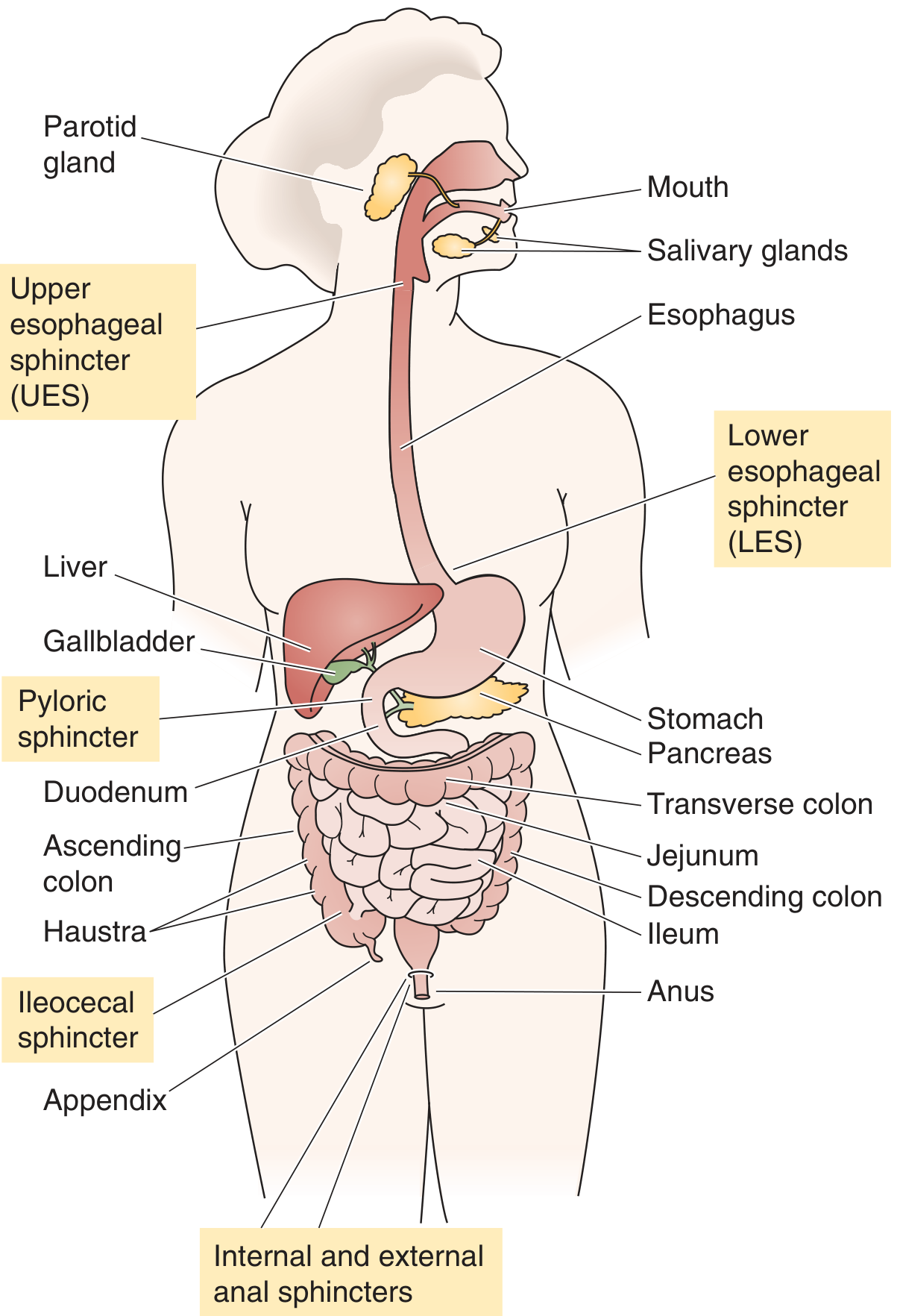
How to Approach This Chapter
A digestion chapter covers five abdominal organs with distinct but coordinated roles: stomach, small intestine, large intestine, liver/gallbladder, and pancreas. Study them in this logical sequence:
1. Start With the Control Framework (Before Any Organ)
Before diving into individual organs, understand what controls all of them. Three layers govern every GI process:
| Layer | Mechanism | Example |
|---|---|---|
| Neural | Enteric Nervous System (ENS) — myenteric plexus (motility) + submucosal plexus (secretion) | Peristalsis triggered by wall stretch |
| Hormonal | GI hormones released into blood | Gastrin → HCl secretion; CCK → pancreatic enzymes |
| Paracrine | Local cell-to-cell signaling | Histamine → parietal cells |
The ENS acts semi-autonomously. The vagus nerve (parasympathetic) amplifies secretion and motility; sympathetic input inhibits them. Key neurotransmitters: ACh (excitatory motor/secretory), VIP and NO (inhibitory motor). — Medical Physiology, pp. 1278–1279
2. Stomach — The Acid Factory
Two functional roles: mechanical grinding (mixing waves, pyloric pump) and chemical digestion (HCl + pepsin).
Gastric Secretion — learn the cells first:
- Parietal cells → HCl + intrinsic factor
- Chief (peptic) cells → pepsinogen (activated to pepsin by acid)
- G cells (antrum) → gastrin
- D cells → somatostatin (inhibitory)
- Mucous neck cells → mucus + HCO₃⁻ (protective barrier)
Three Phases of Gastric Secretion — a high-yield concept:
- Cephalic phase (~30% of total): smell/taste/thought of food → vagal stimulation via dorsal motor nucleus
- Gastric phase (~60%): food distends stomach → vagovagal reflex + local enteric reflex + gastrin release
- Intestinal phase (~10%): chyme in duodenum releases small amounts of gastrin
— Guyton & Hall, p. 804
Gastric Emptying Control — equally important:
- Stomach wall stretch → accelerates emptying (pyloric pump)
- Duodenal feedback inhibits emptying via enterogastric reflex (triggered by acidity, osmolality, fat/protein breakdown products, distension)
- Hormones: CCK, secretin, GIP slow emptying
- Mnemonic: FADE — Fat, Acid, Distension, Excess osmolality in duodenum → all inhibit gastric emptying
— Guyton & Hall, pp. 11–21
3. Small Intestine — The Absorption Powerhouse
Motor patterns — two types:
- Segmentation (churning): nonpropulsive circular muscle contractions; mixes chyme with enzymes, reduces the unstirred water layer, enhances absorption. Dominant in the fed state.
- Peristalsis (propulsion): progressive wave — upstream circular muscle contracts + longitudinal relaxes; downstream circular relaxes + longitudinal contracts.
- Migrating Motor Complex (MMC): occurs in the fasting state every 90–120 min; sweeps bacteria and debris toward colon. Hormone: motilin. Four phases (quiescence → increasing activity → peak → decline).
— Medical Physiology, pp. 1285–1286
Digestion in the lumen — substrate by substrate:
| Substrate | Where starts | Enzymes | Final products absorbed |
|---|---|---|---|
| Carbohydrates | Mouth (salivary amylase) | Pancreatic amylase → brush-border disaccharidases | Monosaccharides (glucose, fructose, galactose) |
| Proteins | Stomach (pepsin) | Pancreatic: trypsin, chymotrypsin, elastase, carboxypeptidases → brush-border dipeptidases | Amino acids + dipeptides/tripeptides |
| Lipids | Mouth (lingual lipase) | Gastric lipase, pancreatic lipase + colipase, bile salts (emulsification) | Monoglycerides + fatty acids → micelles → absorbed |
Brush-border enzymes complete digestion — this is called membrane digestion. — Medical Physiology, p. 1276
Fluid load perspective: Dietary intake ≈ 1.5–2.5 L/day, but the small intestine receives 8–9 L/day (includes salivary, gastric, biliary, pancreatic, and intestinal secretions). Nearly all is reabsorbed.
Ileocecal valve: prevents backflow; controlled by gastroileal reflex (meal → intensifies ileal peristalsis → opens valve) and cecal distension (reflex closes valve). — Guyton & Hall, pp. 116–119
4. Pancreas — The Enzyme Arsenal
Study pancreatic secretion in two compartments:
- Acinar cells → digestive enzymes (secreted as zymogens — trypsinogen, chymotrypsinogen, proelastase, procarboxypeptidases, pancreatic lipase, amylase)
- Stimulus: CCK (released by fat + protein in duodenum)
- Ductal cells → large volume of HCO₃⁻-rich fluid
- Stimulus: Secretin (released by acid in duodenum)
Key protection mechanism: Enzymes are secreted as inactive zymogens. Enterokinase (brush border) activates trypsinogen → trypsin, which then activates all others. Pancreatic juice HCO₃⁻ neutralizes gastric acid, creating the alkaline pH needed for enzyme function.
5. Liver & Gallbladder — Bile and Metabolism
Bile is the key product for digestion:
- Components: bile salts (conjugated cholesterol), bilirubin, phospholipids, cholesterol, HCO₃⁻
- Function: emulsification of fat → micelle formation → fat absorption
- Enterohepatic circulation: bile salts absorbed in terminal ileum → portal vein → liver → re-secreted into bile (~95% recycled)
Bilirubin metabolism (classic exam topic):
- Heme → bilirubin (unconjugated, lipophilic, albumin-bound) → liver uptake → conjugation with glucuronic acid → secreted in bile → gut bacteria convert to urobilinogen → stercobilin (feces, brown color) or urobilin (urine, yellow color)
— Medical Physiology, pp. 1409–1410
Gallbladder: stores and concentrates bile. CCK (from fat/protein in duodenum) → contracts gallbladder + relaxes sphincter of Oddi → bile enters duodenum.
6. Large Intestine — Absorption and Reservoir
Four functions:
- Absorption of water and electrolytes (converts ~1500 mL liquid chyme → ~100–200 g solid feces)
- Reservoir function (haustra, internal/external anal sphincters)
- Propulsion via haustral shuttling and mass movements (1–3×/day)
- Microbiome activity — fermentation of undigested fiber
Motility pattern: haustrations mix content slowly; mass peristalsis (gastrocolic reflex, triggered by eating) propels content toward rectum.
Study Strategy: Organ-by-Organ Workflow
For each organ, answer these 5 questions:
- What does it receive? (input substrate/fluid)
- What does it secrete? (enzymes, hormones, fluids)
- What controls its secretion? (neural/hormonal stimuli)
- How does it move content? (motor activity)
- What gets absorbed here?
This framework prevents rote memorization and builds mechanistic understanding.
Key Hormones to Master
| Hormone | Source | Stimulus | Main Action |
|---|---|---|---|
| Gastrin | G cells (antrum) | Protein, distension, vagus | ↑ HCl, ↑ pepsinogen |
| Secretin | S cells (duodenum) | Acid in duodenum | ↑ HCO₃⁻ from pancreas/bile ducts; ↓ gastrin |
| CCK | I cells (duodenum/jejunum) | Fat + protein in duodenum | ↑ Pancreatic enzymes, ↑ bile release, ↓ gastric emptying |
| GIP | K cells (duodenum/jejunum) | Fat + glucose | ↓ Gastric secretion; ↑ insulin release |
| Motilin | Mo cells (duodenum) | Fasting | Initiates MMC (phase 3) |
| Somatostatin | D cells (throughout GI) | Acid, fat | Inhibits all GI secretion |
Sources
- Guyton and Hall Textbook of Medical Physiology, pp. 792–895 (Block 8 — GI motility, secretion, digestion)
- Medical Physiology (Boron & Boulpaep), pp. 1275–1543 (Blocks 10–11 — Digestion, absorption, liver)
This is a shared conversation. Sign in to Orris to start your own chat.