
Scorpion sting
Reading File
Now let me search the medical library for scorpion sting content in parallel.
Finding Sources
Finding Sources
Searching PubMed
"scorpion sting"[MeSH Terms] AND management
Excellent sources found. Now let me read the key sections in parallel - Harrison's (most comprehensive), Rosen's Emergency Medicine, Forensic Medicine, and Andrews' Dermatology.
Reading File
Reading File
Reading File
Reading File
Let me read the remaining treatment sections from Harrison's, Rosen's, and Forensic Medicine, plus fetch the scorpion image.
Reading File
Reading File
Reading File
Loading Image
Let me also get the Rosen's ED treatment for scorpions and the Fitzpatrick's content:
Reading File
Finding Sources
I now have comprehensive information from multiple authoritative sources. Let me compile a thorough response.
Scorpion Sting
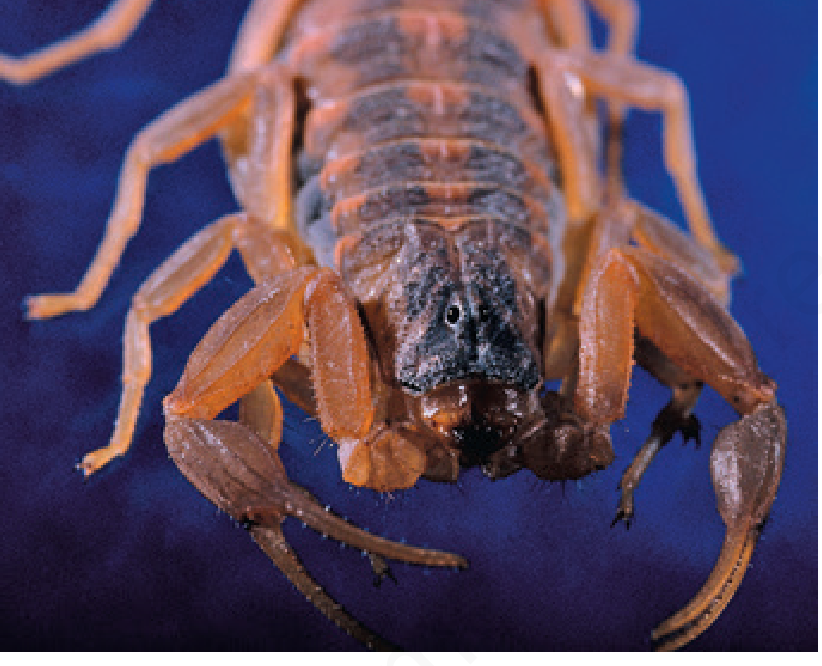
Overview
Scorpions are arachnids with a segmented body, four pairs of legs, chelate pincers, and a tail ending in a telson (stinger). Two venom glands in the posterior abdomen empty via a duct into the hollow stinger. Adults range from 2-20 cm; large black scorpions are generally more dangerous than small brown ones. They are nocturnal, hiding in crevices, shoes, clothing, and bedding - stinging only when accidentally disturbed or threatened.
Of ~1,000 known species, only about 30 cause potentially lethal envenomation, responsible for several thousand deaths annually worldwide. - Harrison's Principles of Internal Medicine 22E (2025)
Medically Important Species
| Region | Species | Primary Toxicity |
|---|---|---|
| USA (Southwest) | Centruroides sculpturatus / C. exilicauda | Neurotoxic (sodium channel) |
| Middle East / N. Africa | Leiurus quinquestriatus, Androctonus spp. | Catecholamine surge, cardiac |
| India | Mesobuthus tamulus | Cardiovascular / pulmonary edema |
| Brazil | Tityus serrulatus | Catecholamine surge; T. trinitatis - pancreatitis |
| South Africa | Parabuthus, Buthotus | CNS toxicity |
| Iran | Hemiscorpius lepturus | Cytotoxic - hemolysis, renal failure |
| Egypt / N. Africa | Leiurus quinquestriatus | 50% mortality in children (untreated) |
| Mexico | Centruroides suffusus | Neurotoxic |
- Harrison's 22E; Andrews' Diseases of the Skin
Venom Composition
Scorpion venom is a clear, colorless toxalbumin that is more toxic weight-for-weight than snake venom (though much smaller quantities are injected). Components include:
-
Neurotoxins - act on preganglionic and postganglionic nerve terminals and muscle endplates; keep sodium channels open, causing sustained neuronal excitation
-
Hemolysins
-
Agglutinins
-
Hemorrhagins
-
Proteinases
-
Phospholipase A
-
Leucocytolysins
-
Coagulins
-
Cholesterol and lecithin
-
PC Dikshit Textbook of Forensic Medicine & Toxicology
Clinical Features
Local Effects
- Immediate sharp, severe burning pain at the sting site
- Red wheal with a central hole (single puncture mark - distinguishes from snake bite which has two holes)
- Variable local edema and erythema (may be minimal or absent with neurotoxic species)
- Tap test: hyperesthesia accentuated by tapping on the affected area - characteristic of C. sculpturatus
- Paresthesia, numbness, and hyperesthesia spreading from the site
- Wound necrosis is NOT typical for most species; delayed necrosis occurs with H. lepturus
Systemic - Neurotoxic (Centruroides and others)
- Restlessness, agitation, involuntary movements
- Cranial nerve dysfunction: blurred vision, roving/abnormal eye movements ("roving eye movements"), slurred speech, dysphagia, drooling, rhinorrhea
- Profuse salivation, lacrimation, diaphoresis
- Nausea and vomiting
- Muscle twitching, jerking, shaking (can mimic seizures), opisthotonos
- Peripheral skeletal muscle hyperexcitability and fasciculations
- Tachycardia, arrhythmias
- Hypertension
- Hyperthermia
- Rhabdomyolysis and acidosis
- Respiratory arrest - most common cause of death in children and elderly
- Symptoms peak at ~5 hours, subside within 1-2 days; pain and paresthesia may persist for weeks
Systemic - Cardiovascular (Androctonus, Leiurus, Mesobuthus, Tityus serrulatus)
- Massive endogenous catecholamine release
- Hypertensive crisis
- Cardiac arrhythmias
- Pulmonary edema
- Myocardial damage
- ST and T wave changes on ECG
Systemic - Cytotoxic (Hemiscorpius lepturus, Iran)
- Relatively asymptomatic initially
- Pain, hemolysis, and tissue necrosis after day 1
- Hemoglobinuria
- Acute kidney injury
Other
-
Acute pancreatitis: Tityus trinitatis (Trinidad)
-
CNS toxicity: Parabuthus and Buthotus (South Africa)
-
Fever, chills, headache, giddiness
-
Muscular cramps and convulsions, unconsciousness
-
Paresis and muscular weakness persisting for ~1 week
-
Death in children: primarily from pulmonary edema and respiratory depression
-
Harrison's 22E; Rosen's Emergency Medicine; Andrews' Dermatology; Dikshit Forensic Medicine
Grading of Envenomation (North American Centruroides)
| Grade | Clinical Features | Antivenom Indicated? |
|---|---|---|
| 1 | Local pain and paresthesias at sting site only | No |
| 2 | Local AND remote (distant) pain and paresthesias | No |
| 3 | Cranial nerve dysfunction OR skeletal neuromuscular dysfunction (jerking, writhing, opisthotonos) + autonomic features (tachycardia, salivation, diaphoresis) | Yes |
| 4 | Cranial nerve dysfunction AND skeletal neuromuscular dysfunction | Yes |
- Rosen's Emergency Medicine
Management
First Aid (Prehospital)
- Apply ice pack/cold compress to the sting site (reduces venom absorption and pain)
- Keep patient calm
- Transport to hospital
- Obtain history of sting circumstances and description/photo of scorpion (do NOT delay transport to capture it)
- Pressure dressing may reduce venom absorption
Emergency Department - Local / Mild (Grade 1-2)
- Local wound care
- Analgesics (oral)
- Antihistamines
- Tetanus prophylaxis if not current
- Grade 1-2: can potentially be managed at home with return precautions for cranial nerve or neuromuscular symptoms
- Local infiltration with lignocaine relieves pain
Emergency Department - Severe (Grade 3-4 / Systemic)
- Antivenom - most effective intervention overall
- Midazolam (continuous IV infusion) - reduces agitation and involuntary movements; monitor for respiratory depression
- Sedatives/opiates require close monitoring due to respiratory compromise risk
- Hypertension / pulmonary edema: nifedipine, nitroprusside, hydralazine, or prazosin
- Bradydysrhythmia: atropine
- Atropine sulfate also used to prevent pulmonary edema
- IV calcium gluconate (10 mL of 10% solution) for muscular cramps
- IV dextrose-saline + glucocorticoids IM for shock
- Airway management - especially for laryngeal edema, secretion management, respiratory arrest risk
Antivenom Specifics
-
Anascorp (Centruroides [scorpion] immune F[ab']₂, equine-derived): FDA-approved for C. sculpturatus
- Indicated for Grade 3 and Grade 4 envenomations
- Initial dose: 3 vials IV as soon as possible after envenomation
- Additional 1 vial IV every 30-60 minutes as needed
- Rapidly reverses cranial nerve dysfunction and muscular symptoms
- Not considered essential life-saving in adults (supportive care often sufficient); more critical in children
-
Commercially prepared antivenins available in several countries for other dangerous species
-
Antiarrhythmics, antiadrenergic agents, vasodilators, and calcium channel blockers may be required for cardiovascular toxicity
-
Antivenin for Leiurus quinquestriatus, Androctonus, Tityus species available in respective endemic countries
-
Harrison's 22E; Rosen's Emergency Medicine; Andrews' Dermatology; Dikshit Forensic Medicine
Key Distinguishing Points
- Scorpion sting mark: single hole in the center of reddened area (vs. snake bite = two holes; vs. spider bite = may have different appearance)
- Most scorpion stings worldwide are benign and self-limited; dangerous species are geographically restricted
- Pediatric patients are at highest risk for severe/fatal outcomes
- "Tap test" positive (hyperesthesia on tapping) = hallmark of C. sculpturatus envenomation
- Muscle twitching can mimic seizures - distinguish by lack of EEG changes
- Allergic reactions to venom can also occur
Sources: Harrison's Principles of Internal Medicine 22E (2025) | Rosen's Emergency Medicine | Andrews' Diseases of the Skin | PC Dikshit Textbook of Forensic Medicine & Toxicology
This is a shared conversation. Sign in to Orris to start your own chat.