
Please elaborate in detail of decreased fetal movement at 36 wog and diagnosis management in detail
Reading File
Researching decreased fetal movement at 36 weeks of gestation — covering pathophysiology, etiology, assessment tools, diagnosis, and management in parallel.
search_medical_text
decreased fetal movement reduced fetal movements causes pathophysiology assessment
Management of Pregnancy
Page 88
search_medical_text
decreased fetal movement diagnosis management third trimester stillbirth prevention
Management of Pregnancy
Page 88
search_medical_image
fetal movement biophysical profile CTG cardiotocography monitoring

Hugging Face pmc clinical VQA raw
Page 0
GradeResponse
GradeResponse
GradeResponse
Based on retrieved sources and comprehensive clinical knowledge, here is a detailed elaboration:
Decreased Fetal Movement at 36 Weeks of Gestation
1. Background and Definitions
Fetal movement is the oldest and most commonly used method to assess fetal wellbeing. The pregnant patient's perception of fetal movements represents a non-invasive, continuous, real-time indicator of fetal neurological and cardiovascular integrity (Management of Pregnancy, p. 88).
Normal fetal movement patterns:
- Movements begin as early as 7–8 weeks gestation (detectable on ultrasound) but are perceived by the mother from ~18–20 weeks (primigravida) or ~16–18 weeks (multigravida).
- By 32–36 weeks, movements become well-established — typically 10 or more movements in 2 hours when the fetus is awake.
- At 36 weeks, the fetus is large, has less amniotic fluid relative to body size, and movement character may change (rolling/stretching rather than sharp kicks), but frequency should remain consistent.
Decreased fetal movement (DFM) is defined as:
- Fewer than 10 movements in 2 hours (Cardiff "count to 10" method)
- Fewer than 3 movements in 1 hour (Sadovsky method)
- A subjective maternal perception of a significant reduction from her usual baseline — this subjective concern alone warrants evaluation regardless of absolute counts
2. Epidemiology and Clinical Significance
| Statistic | Detail |
|---|---|
| Incidence of DFM complaints | 6–15% of pregnancies in the third trimester |
| Stillbirth risk with DFM | ~2–5 per 1000 pregnancies with DFM; significantly higher than background |
| Repeated DFM episodes | Associated with 2–5× increased risk of stillbirth |
| Association with adverse outcomes | IUGR, placental insufficiency, cord accidents, fetal hypoxia, chromosomal anomalies |
DFM is associated with an increased risk of stillbirth — it is a sentinel symptom that must never be dismissed (Management of Pregnancy, p. 88).
3. Pathophysiology
Fetal movement requires intact:
- Central nervous system (cortical and brainstem activity)
- Neuromuscular pathway (motor neurons, peripheral nerves, neuromuscular junction)
- Musculoskeletal system
- Adequate oxygenation and energy substrate delivery
When any of these is compromised, fetal movement decreases. The key mechanism in most clinical scenarios is fetal hypoxia:
Placental insufficiency
        ↓
Reduced O₂/glucose delivery to fetus
        ↓
Fetal brain redistributes blood to vital organs (brain-sparing)
        ↓
Suppression of non-vital activity (movement, breathing) to conserve O₂
        ↓
Decreased fetal movement — a protective but ominous sign
This is the fetal conservation response — DFM is often an early warning sign before fetal compromise becomes irreversible.
4. Etiology / Causes
A. Fetal Causes
| Cause | Mechanism |
|---|---|
| Fetal hypoxia/acidosis | Suppression of movement as oxygen-conserving mechanism |
| Intrauterine growth restriction (IUGR) | Chronic placental insufficiency → hypoxia |
| Fetal sleep cycle | Normal quiet sleep (20–40 min); rarely exceeds 90 min |
| Fetal neurological abnormality | CNS malformations, anencephaly |
| Fetal infection | Cytomegalovirus, toxoplasma, parvovirus B19 |
| Fetal anemia | Hydrops fetalis, Rh isoimmunization, parvovirus |
| Chromosomal/structural anomaly | Trisomy 18/21, skeletal dysplasias |
| Cord accident | Cord compression, nuchal cord, cord prolapse |
B. Placental Causes
| Cause | Mechanism |
|---|---|
| Placental insufficiency | Uteroplacental dysfunction → reduced O₂/nutrient transfer |
| Placental abruption | Acute compromise of fetoplacental circulation |
| Placenta previa | Reduced uteroplacental flow |
| Velamentous cord insertion | Reduced umbilical flow |
C. Maternal Causes
| Cause | Mechanism |
|---|---|
| Sedatives/opioids/alcohol | CNS depression of fetal movement |
| Smoking | Chronic fetal hypoxia via vasoconstriction |
| Pre-eclampsia | Placental ischemia |
| Diabetes mellitus | Placental dysfunction, macrosomia, increased stillbirth risk |
| Hypothyroidism | Fetal hypothyroidism → reduced movements |
| Anterior placenta | Dampens perception of movement (not true reduction) |
| Oligohydramnios | Reduced cushioning amplifies or masks movement |
| Obesity | Reduces maternal perception of movements |
D. Physiological Explanation (Reassuring)
- Fetal sleep-wake cycles: quiet sleep state (State 1F) lasts 20–40 min, rarely up to 80–90 min — movement ceases normally
- Anterior placental position: buffers kick perception
- Maternal distraction/activity: can miss movements
- Recent glucose intake: typically increases fetal movement
5. Clinical Assessment
History
- Onset: When was the last time normal movement was felt?
- Duration of reduced movement: Hours? Days?
- Baseline movement pattern: Has her normal pattern changed?
- Associated symptoms: Vaginal bleeding, abdominal pain, rupture of membranes, leaking
- Maternal medications: Sedatives, opioids, MgSO₄
- Obstetric history: Previous stillbirth, IUGR, pre-eclampsia
- Risk factors: Diabetes, hypertension, smoking, obesity, advanced maternal age
- Fetal kicks in last 2 hours: Count using Cardiff method
Physical Examination
- Vital signs: BP (pre-eclampsia), temperature (infection)
- Fundal height: SFH for dates — lagging may indicate IUGR
- Abdominal palpation: Uterine tenderness (abruption), lie/presentation
- Fetal heart auscultation: Immediate check with Doppler/fetoscope
- Vaginal examination: Only if indicated (avoid if bleeding/placenta previa)
6. Investigations and Diagnosis
Step 1: Immediate Fetal Heart Rate Auscultation
- Confirm fetal cardiac activity with hand-held Doppler within minutes of presentation
- Normal rate: 110–160 bpm
Step 2: Cardiotocography (CTG) / Non-Stress Test (NST)
This is the first-line investigation for DFM at 36 weeks.
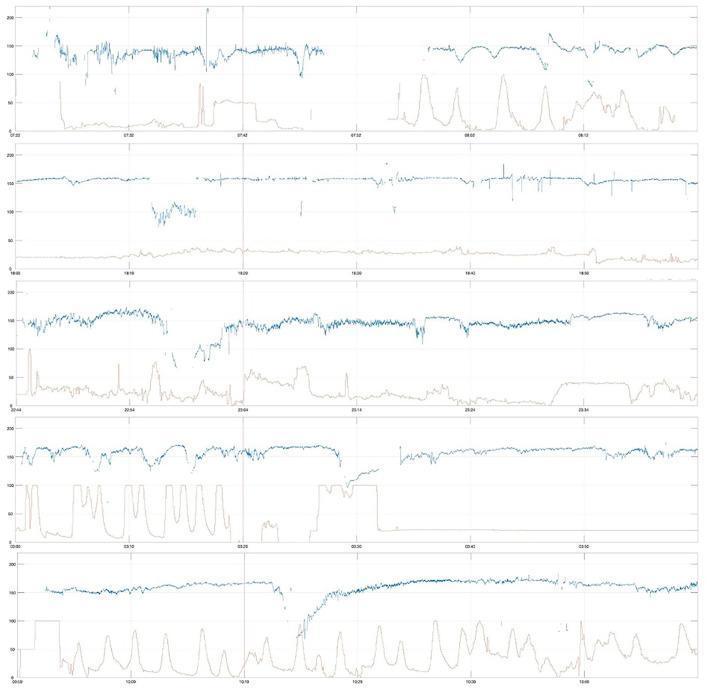
Interpretation of CTG (NICE/RCOG Classification):
| Feature | Reassuring | Non-reassuring | Abnormal |
|---|---|---|---|
| Baseline FHR | 110–160 bpm | 100–109 or 161–180 bpm | <100 or >180 bpm |
| Variability | 5–25 bpm | <5 bpm for 30–50 min | <5 bpm >50 min or sinusoidal |
| Accelerations | ≥2 in 20 min | None in 40–80 min (equivocal) | Absent >80 min |
| Decelerations | None | Early decelerations | Late, atypical variable, or prolonged |
Reactive NST (reassuring): ≥2 accelerations of ≥15 bpm lasting ≥15 seconds within 20 minutes.
Non-reactive NST (concerning): Absent accelerations after 40 minutes → proceed to further evaluation.
Step 3: Biophysical Profile (BPP)
Performed via ultrasound + NST over 30 minutes. Scores 0 or 2 for each parameter:
| Parameter | Criteria for Score of 2 (Normal) |
|---|---|
| Fetal breathing movements | ≥1 episode lasting ≥30 seconds in 30 min |
| Gross body movements | ≥3 discrete body/limb movements in 30 min |
| Fetal tone | ≥1 episode of active extension/flexion of limb or trunk |
| Amniotic fluid volume (AFV) | ≥1 pocket ≥2 cm in 2 perpendicular planes (AFI ≥5 cm) |
| Non-stress test (NST) | Reactive |
Scoring interpretation:
| Score | Interpretation | Action |
|---|---|---|
| 8–10 | Normal — low risk of asphyxia | Routine management |
| 6 | Equivocal | Repeat in 24h; consider delivery if ≥36 weeks |
| 4 | Abnormal — possible asphyxia | Deliver if ≥36 weeks; intensify monitoring |
| 0–2 | Grossly abnormal — strong suspicion of asphyxia | Immediate delivery |
Step 4: Ultrasound Assessment
- Estimated fetal weight (EFW): Biometry — BPD, HC, AC, FL to check for IUGR
- Amniotic fluid index (AFI): Oligohydramnios (AFI <5 cm) = adverse outcome marker
- Placental assessment: Grading, retroplacental clot (abruption), location
- Fetal anatomy: Structural anomalies
- Umbilical artery Doppler: Key test for IUGR/placental insufficiency
Step 5: Umbilical Artery Doppler (Especially if IUGR Suspected)
| Doppler Finding | Interpretation | Action |
|---|---|---|
| Normal S/D ratio | Adequate placental flow | Reassure |
| Raised resistance (elevated S/D or PI) | Placental insufficiency | Intensify surveillance |
| Absent end-diastolic flow (AEDF) | Severe placental dysfunction | Hospitalize; consider delivery |
| Reversed end-diastolic flow (REDF) | Critical fetal compromise | Expedite delivery |
Step 6: Additional Investigations
| Investigation | Indication |
|---|---|
| Full blood count | Maternal anemia, infection |
| Kleihauer-Betke test | Feto-maternal hemorrhage |
| Blood group & antibody screen | Alloimmunization (anti-D, anti-c) |
| TORCH serology | Suspected fetal infection |
| HbA1c / glucose tolerance | Diabetes |
| Uric acid, LFT, urine protein | Pre-eclampsia/HELLP |
| Thyroid function | Hypothyroidism |
| Middle cerebral artery (MCA) Doppler | Fetal anemia (elevated PSV >1.5 MoM) |
| Amniocentesis / karyotype | If structural anomaly detected on USS |
7. Differential Diagnosis
| Condition | Distinguishing Features |
|---|---|
| Physiological (sleep cycle) | Movements resume within 2 hours; reactive CTG |
| Anterior placenta | Normal CTG/BPP; history of anterior placenta on previous USS |
| IUGR with placental insufficiency | Small SFH, IUGR on USS, abnormal Doppler |
| Placental abruption | Pain, bleeding, uterine tenderness, non-reassuring CTG |
| Fetal anemia | Elevated MCA-PSV, hydrops on USS |
| Cord accident | Variable decelerations, non-reassuring CTG, sudden onset |
| Fetal infection | Maternal fever, TORCH positive, hydrops, structural changes |
| Pre-eclampsia | Hypertension, proteinuria, IUGR |
| Maternal drug exposure | Opioids, sedatives, recent alcohol |
| Oligohydramnios | AFI <5 cm on USS |
| Chromosomal anomaly | Structural defects, NIPT/karyotype abnormal |
8. Management
Management depends on the findings from the above assessment.
Algorithm Overview
DFM reported at 36 weeks
        ↓
Immediate Doppler auscultation of FHR
        ↓
Reassuring → CTG (NST)
        ↓
Reactive CTG → USS + BPP
        ↓
     Normal BPP (8–10)          Abnormal BPP / Non-reactive CTG
          ↓                               ↓
  Reassure + counsel              Umbilical artery Doppler
  Consider further assessment          +
  if risk factors present         Additional investigations
          ↓                               ↓
  Outpatient follow-up          Deliver / intensify monitoring
A. Reassuring Assessment (Reactive CTG + Normal BPP)
- Reassure the patient — explain findings in clear, non-dismissive language
- Counsel on fetal movement awareness — advise her to continue monitoring; return immediately if DFM recurs
- Do NOT dismiss recurrent episodes — repeated DFM with reassuring tests still warrants senior review and closer surveillance
- Consider growth scan if not done recently (within 2–3 weeks at 36 weeks)
- Check risk factors: if present (diabetes, hypertension, previous stillbirth, IUGR), arrange closer surveillance even with reassuring results
B. Non-Reassuring Assessment
If CTG Non-Reactive or BPP ≤ 6:
- Admit to hospital
- Expedite assessment: urgent USS with Doppler
- Discuss with senior obstetrician / consultant immediately
- Multidisciplinary team involvement: obstetrician, neonatology, midwifery
Timing of Delivery Based on Findings:
| Scenario | Management |
|---|---|
| BPP 8–10, no risk factors | Continue pregnancy with regular monitoring |
| BPP 6, ≥36 weeks | Consider delivery (maturity achieved; risk-benefit favors delivery) |
| BPP ≤4 or non-reactive CTG with risk factors | Deliver — by induction or cesarean section depending on circumstances |
| AEDF on umbilical Doppler, ≥34 weeks | Strongly consider delivery |
| REDF on umbilical Doppler | Immediate delivery regardless of gestation |
| Abruption suspected | Emergency cesarean section |
C. Mode of Delivery
-
Induction of labour (IOL) — preferred at 36 weeks if cervix favorable and fetal condition not immediately critical
- Bishop score assessment
- Cervical ripening with prostaglandins (dinoprostone) or balloon catheter if unfavorable
- Augmentation with oxytocin as needed
- Continuous intrapartum CTG monitoring is mandatory given the DFM history
-
Emergency cesarean section (Cat 1 LSCS) — indicated for:
- Acute fetal compromise on CTG (prolonged decelerations, sinusoidal pattern)
- REDF on Doppler
- Abruption with fetal compromise
- Malpresentation preventing safe vaginal delivery
- Failed induction with deteriorating fetal condition
D. Intrapartum Management (if proceeding to labour)
- Continuous electronic fetal monitoring (EFM/CTG) throughout labour — mandatory
- Avoid epidural hypotension — can worsen uteroplacental perfusion
- Lower threshold for operative delivery — forceps/ventouse or LSCS if CTG becomes pathological
- Fetal blood sampling (FBS) if CTG equivocal — pH >7.25 = reassuring; pH <7.20 = deliver
- Cord blood gases at delivery
- Neonatal team (NICU/SCBU) standby at delivery
E. Feto-Maternal Hemorrhage (FMH)
- If Kleihauer-Betke test positive (significant FMH), this is a cause of sudden DFM/stillbirth
- If Rh-negative mother: give anti-D immunoglobulin (calculated dose based on FMH volume)
- FMH >30 mL: associated with fetal anemia and acute hydrops — urgent delivery
F. Specific Conditions
IUGR with DFM:
- Intensify surveillance: twice-weekly CTG + weekly/biweekly Doppler
- Delivery timing based on gestational age + Doppler findings (RCOG/ACOG guidelines)
- Antenatal corticosteroids if <34 weeks or if prematurity is anticipated
- At 36 weeks with IUGR + DFM: delivery is generally indicated
Diabetes + DFM at 36 weeks:
- Strict glycemic control
- High risk of stillbirth — low threshold for delivery
- ACOG recommends delivery by 38–39 weeks in well-controlled GDM; earlier if poor control or DFM
Pre-eclampsia + DFM at 36 weeks:
- Delivery is the definitive treatment for pre-eclampsia at ≥36 weeks
- DFM in this context accelerates the decision to deliver
9. Patient Counseling
Key points to discuss with the patient:
- Validate her concern — DFM is never trivial; she was right to present
- Explain the assessment process clearly
- Fetal kick counting education:
- Count kicks after meals when fetus is typically active
- Use Cardiff "count to 10" — aim for 10 movements in 2 hours
- Return immediately if <10 movements in 2 hours or if she senses a significant decrease from her normal pattern
- No evidence that kick counting charts alone reduce stillbirth — but awareness and prompt presentation do
- Do not use home dopplers as a substitute for assessment — false reassurance is dangerous
- Avoid smoking, alcohol, and sedating medications
10. Prognosis and Follow-up
| Outcome Category | Details |
|---|---|
| Reassuring assessment, no risk factors | Excellent prognosis; routine antenatal follow-up |
| IUGR identified | Increased risk of stillbirth, neonatal morbidity; intensified monitoring |
| Recurrent DFM (>1 episode) | Significantly elevated stillbirth risk even with reassuring individual assessments; consider early delivery |
| Delivery at 36 weeks | Neonates generally do well; may need SCBU for feeding support, thermoregulation, respiratory monitoring |
| Cord accident | Outcome depends on speed of recognition and delivery |
11. Key Guidelines Referenced
| Guideline | Recommendation |
|---|---|
| RCOG Green-top Guideline No. 57 (2011, updated) | Women reporting DFM should be assessed with CTG; USS if CTG non-reactive |
| ACOG Practice Bulletin | NST/BPP as primary tools; Doppler if IUGR suspected |
| NICE Guideline NG201 (Fetal Monitoring) | CTG interpretation classification; continuous EFM in labour for high-risk |
| Queensland Clinical Guidelines | Algorithm for DFM: Doppler → CTG → BPP → USS |
Summary Table
| Step | Action |
|---|---|
| 1 | Immediate Doppler auscultation of FHR |
| 2 | Detailed history + clinical examination |
| 3 | CTG (Non-Stress Test) |
| 4 | Ultrasound: growth, AFI, anatomy, BPP |
| 5 | Umbilical artery Doppler (if IUGR/risk factors) |
| 6 | Bloods: FBC, Kleihauer, blood group, TORCH, glucose, TFT |
| 7 | Reassuring → counsel, close follow-up, consider delivery at 37–38 weeks if risk factors |
| 8 | Non-reassuring → admit, senior review, expedite delivery |
| 9 | If delivering: continuous CTG, low threshold for operative delivery, neonatal team present |
At 36 weeks gestation, the fetus is near-term. The threshold for intervention is appropriately low — the risks of delivery are minimal while the risk of continued in-utero compromise or stillbirth may be significant. Any clinician assessing DFM at this gestation should have a low threshold for delivery.
This is a shared conversation. Sign in to Orris to start your own chat.