Now I have comprehensive content. Let me compile the full answer.
Local Anaesthetics: Complete Reference
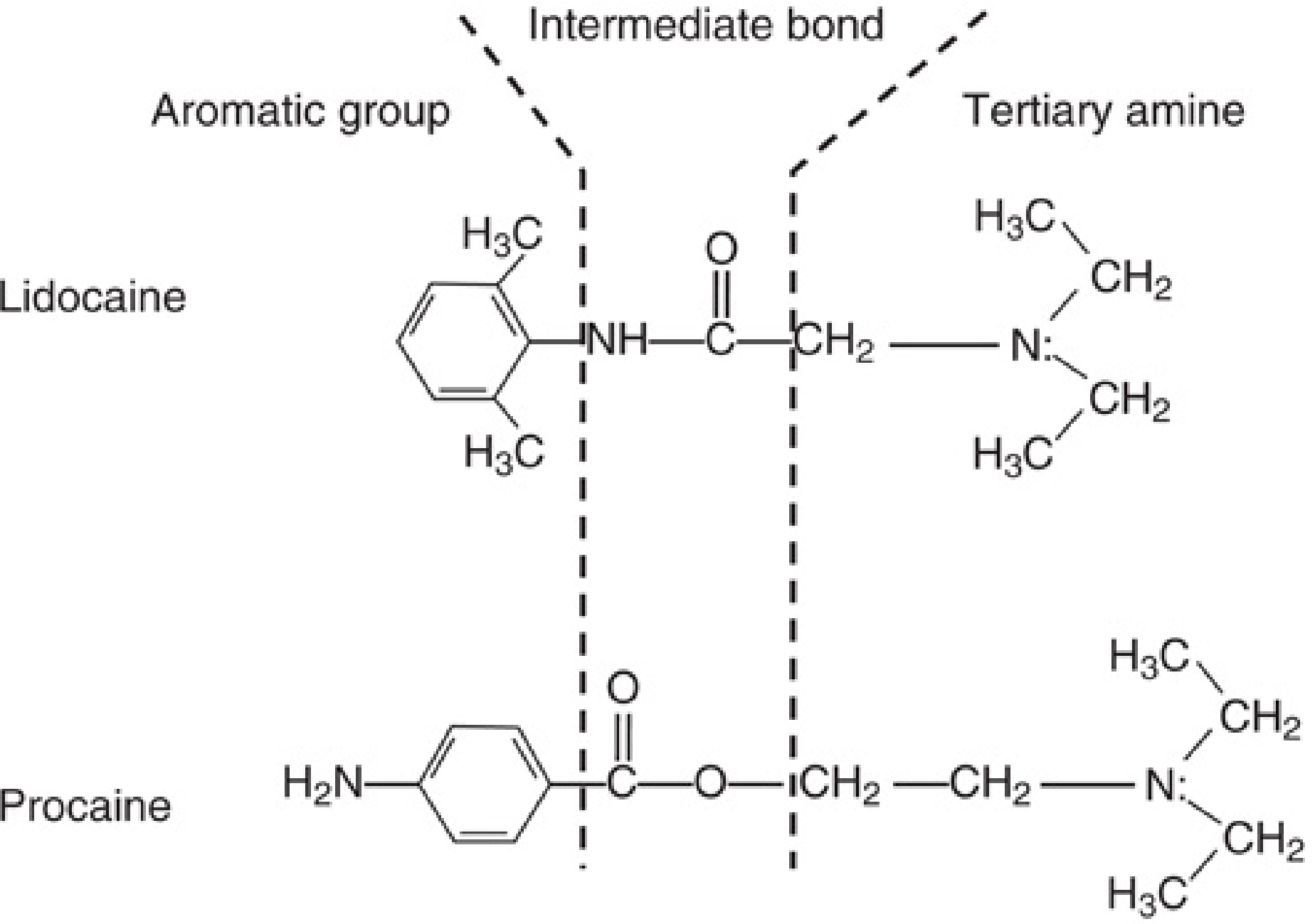
Fig. 25.1 from Miller's Anesthesia, 10e - The two structural prototypes: lidocaine (aminoamide) and procaine (aminoester)
1. CHEMICAL STRUCTURE
All local anaesthetics share a common three-part scaffold:
| Component | Role |
|---|
| Aromatic ring (benzene derivative) | Lipophilic end - membrane penetration |
| Intermediate chain | Either ester (-C-O-) or amide (-NHC-) linkage - determines class |
| Tertiary amine | Hydrophilic end - partially protonated at physiological pH |
Classification by intermediate linkage
Aminoesters (hydrolysed by plasma pseudocholinesterase):
- Cocaine, Procaine, Chloroprocaine, Tetracaine, Benzocaine
Aminoamides (metabolised in liver by CYP enzymes):
- Lidocaine, Bupivacaine, Ropivacaine, Levobupivacaine, Mepivacaine, Prilocaine, Articaine
Memory trick: Amides have two "i"s in their names (lIdocaIne, bupIvacaIne, ropIvacaIne, etc.)
2. PHYSIOLOGY OF NERVE CONDUCTION
Voltage-Gated Sodium Channel Structure
The Na+ channel alpha-subunit has four homologous domains (D-I to D-IV), each with six transmembrane helices (S1-S6). Key functional regions:
- S4 segments - voltage sensors (positively charged amino acids every third position); move outward on depolarisation to open the channel
- S5-S6 loop (P region) - forms the ion selectivity filter and narrow pore
- D-III to D-IV intracellular loop - the fast inactivation gate (contains the IFM triplet: isoleucine-phenylalanine-methionine)
Channel States
- Resting (closed) - at negative resting membrane potential
- Open (activated) - on depolarisation; Na+ floods in
- Inactivated (fast-inactivated) - a few milliseconds after opening; gate closes; cannot reopen until membrane repolarises
Nerve Fibre Classification (relevant to differential blockade)
| Fibre Type | Diameter | Myelination | Function | Sensitivity to LA |
|---|
| Aα | 12-20 µm | Heavy | Motor, proprioception | Least sensitive |
| Aβ | 5-12 µm | Heavy | Touch, pressure | Moderate |
| Aγ | 3-6 µm | Heavy | Muscle spindle efferent | Moderate |
| Aδ | 1-4 µm | Thin | Sharp pain, temp | Very sensitive |
| B | <3 µm | Light | Pre-ganglionic autonomic | Sensitive |
| C | 0.3-1.3 µm | None | Dull/aching pain, warmth | Most sensitive (but see below) |
3. MECHANISM OF ACTION
Local anaesthetics block voltage-gated Na+ channels, preventing the generation and propagation of action potentials. The binding site is within the inner vestibule of the Na+ channel, contributed by S6 segments of domains I, III, and IV.
Two Pathways of Access
- Hydrophilic pathway - the charged (protonated, BH+) form enters the channel through the open intracellular gate
- Hydrophobic pathway - the uncharged (free base, B) form partitions into and through the lipid membrane to access the receptor from within
pH and the Importance of pKa
Local anaesthetics are weak bases. In solution, they exist in equilibrium:
BH+ (charged, protonated) ⇌ B (uncharged free base) + H+
- uncharged form (B) - crosses the nerve membrane (lipid-soluble), gets access to the channel interior
- charged form (BH+) - is the active form that binds the Na+ channel receptor
At lower pH (e.g., infected/inflamed tissue), equilibrium shifts toward BH+, which cannot penetrate the membrane. This is why local anaesthetics are less effective in infected tissues.
At higher pKa, more drug is in the charged form at body pH → slower onset (less free base to penetrate membrane).
Use-Dependent (Phasic) Block
Binding affinity is higher for the open and inactivated states than for the resting closed state. Rapidly firing neurons (high-frequency stimulation) are more susceptible to blockade - this is the basis of use-dependent blockade. This is clinically relevant in cardiac tissue - the heart at high rates is more sensitive.
Differential Blockade
The classic "size principle" holds partially true - smaller fibres tend to be blocked first. The actual clinical order of block:
- Autonomic (B fibres) - first
- Cold/temperature (Aδ and C)
- Warmth
- Sharp pain (Aδ)
- Touch/pressure (Aβ)
- Deep pressure
- Motor function (Aα) - last
However, Aδ fibres (myelinated, sharp pain) are blocked before C fibres (unmyelinated, dull pain) at many concentrations - the size rule does not always hold. C fibres also contain fast and slow subtypes with different susceptibility. The minimum blocking concentration (Cm) differs for each fibre type.
Critical Length Concept
Even if drug concentration at each node is subthreshold, the impulse can be extinguished if enough successive nodes of Ranvier are exposed ("decremental conduction"). Blocking 3 consecutive nodes prevents impulse propagation. This is why volume of local anaesthetic matters as much as concentration.
4. PHYSICOCHEMICAL PROPERTIES & THEIR CLINICAL RELEVANCE
| Property | Clinical Effect |
|---|
| pKa | Lower pKa → more free base at pH 7.4 → faster onset (e.g., lidocaine pKa 7.9 vs chloroprocaine pKa 9.1) |
| Lipid solubility | Higher lipophilicity → greater potency, longer duration (e.g., bupivacaine > lidocaine) |
| Protein binding | Higher protein binding → longer duration (bupivacaine 95%, lidocaine 65%) |
| Vasodilator activity | Most LAs vasodilate (except cocaine) → vasoconstrictor often added to slow absorption |
5. INDIVIDUAL DRUG PROFILES
AMINOAMIDES
Lidocaine (Lignocaine)
- Class: Aminoamide (aminoethylamide)
- pKa: 7.9 | Protein binding: 65% | Lipid solubility: Intermediate
- Onset: Fast | Duration: Intermediate (1-2 hours; up to 3-4 hrs with epinephrine)
- Max dose: 3 mg/kg plain; 7 mg/kg with epinephrine
- Metabolism: Hepatic CYP enzymes → monoethylglycine xylidide (MEGX) and glycine xylidide - both retain some LA activity; ~75% eventually excreted as 4-hydroxy-2,6-dimethylaniline
Key points:
- Prototypical amide local anaesthetic
- Produces faster, more intense, longer-lasting anaesthesia than equal concentrations of procaine
- Also used as Class Ib antiarrhythmic (IV for ventricular arrhythmias)
- Available as patch (postherpetic neuralgia), EMLA (50:50 with prilocaine for topical use), gel, spray, solution
- Epidural: should be used with epinephrine as plain lidocaine does not consistently provide surgical anaesthesia
- Spinal: used for short procedures (T4 block with ~100 mg)
- Toxicity progression with increasing dose: drowsiness → tinnitus → dysgeusia → dizziness → twitching → seizures → coma → respiratory arrest → cardiovascular depression
Bupivacaine
- Class: Aminoamide (butyl piperidine group)
- pKa: 8.1 | Protein binding: 95% | Lipid solubility: High
- Onset: Slow | Duration: Long (3-10 hours)
- Max dose: 2 mg/kg plain; 3 mg/kg with epinephrine (NEVER 0.75% in obstetrics)
- Metabolism: Hepatic CYP3A4 → pipecolylxylidine → glucuronidated and excreted
Key points:
- Long-acting workhorse for regional anaesthesia and epidural analgesia in labour
- Tends to produce more sensory than motor block at lower concentrations - ideal for labour epidurals (0.0625-0.1%)
- Absorbed more slowly than lidocaine but plasma levels fall more slowly after stopping an infusion
- Cardiotoxicity - the major concern: causes severe ventricular arrhythmias and myocardial depression after intravascular injection. Mechanism: bupivacaine blocks cardiac Na+ channels rapidly during systole but dissociates very slowly during diastole (unlike lidocaine which dissociates quickly). Block is therefore cumulative at physiological heart rates. Some cardiac toxicity may be centrally mediated (injection into medulla produces arrhythmias)
- Cardiotoxicity worsened by acidosis, hypercapnia, and hypoxaemia
- 0.75% concentration contraindicated in obstetrics (FDA warning) due to cardiac arrest risk
- Liposomal bupivacaine (Exparel) - FDA-approved; provides extended release, but clinical superiority over standard bupivacaine not yet conclusively established
- Spinal: used for intermediate-to-long procedures (T4 block with ~20 mg)
Ropivacaine
- Class: Aminoamide (S-enantiomer, propyl group)
- pKa: 8.1 | Protein binding: 94% | Lipid solubility: Intermediate (less than bupivacaine)
- Onset: Similar to bupivacaine | Duration: Long
- Max dose: 3 mg/kg
Key points:
- Pure S-enantiomer - the S-form is less cardiotoxic than the racemate
- Intrinsically less lipid-soluble than bupivacaine → less potent but with a better safety profile
- Produces profound sensory block with less motor blockade than bupivacaine at equivalent concentrations - preferred for labour epidurals and postoperative infusions when motor sparing is desired
- Less cardiotoxic and CNS-toxic than bupivacaine
- Causes vasoconstriction (unlike most other LAs) → may reduce the need for epinephrine
Levobupivacaine
- Class: Aminoamide (S-enantiomer of bupivacaine)
- Essentially bupivacaine but as pure S-(-) enantiomer
- Less cardiotoxic and less CNS-toxic than racemic bupivacaine
- Similar clinical profile to ropivacaine - considered safer alternative to bupivacaine
- Available in UK and Europe; not separately approved in the US
Mepivacaine
- Class: Aminoamide
- pKa: 7.6 | Protein binding: 75% | Duration: Intermediate
- Max dose: 5 mg/kg plain; 7 mg/kg with epinephrine
Key points:
- Intermediate duration; slightly faster onset than lidocaine
- Does NOT cause vasodilation (unlike lidocaine) → can be used without epinephrine for dental anaesthesia
- Epinephrine prolongs its block minimally compared to lidocaine
- Not suitable for epidural or spinal in obstetrics - neonates poorly metabolise it (long half-life in neonates)
- Used frequently in dental practice
Prilocaine
- Class: Aminoamide
- pKa: 7.9 | Protein binding: 55% | Duration: Intermediate
- Max dose: 6 mg/kg plain; 8.5 mg/kg with epinephrine (HIGHEST safe dose among amides)
Key points:
- Lowest systemic toxicity among the amide LAs (high Vd, rapid tissue metabolism)
- Component of EMLA cream (2.5% lidocaine + 2.5% prilocaine) for topical anaesthesia prior to venipuncture, skin grafts, genital procedures
- Unique toxicity: Methaemoglobinaemia - prilocaine is metabolised to orthotoluidine, which oxidises haemoglobin to methaemoglobin (Fe3+). This becomes clinically significant at doses >600 mg. Treat with IV methylene blue 1-2 mg/kg
- Contraindicated in conditions with pre-existing methaemoglobinaemia, G6PD deficiency
- Not used for spinal anaesthesia (associated with transient neurological symptoms)
Articaine (Carticaine)
- Class: Aminoamide with a thiophene ring (instead of benzene) - structurally unique; also contains an ester group metabolised by plasma esterases
- Duration: Intermediate
- Max dose: 7 mg/kg
Key points:
- The only amide that is also partially hydrolysed by plasma esterases (through its ester side chain) → shorter half-life
- Extremely popular in dentistry - penetrates bone better than lidocaine
- Available as 4% solution with 1:100,000 or 1:200,000 epinephrine
- Highest concentration of any dental LA (4%)
- May have a slightly higher risk of paraesthesia/nerve injury when used for inferior alveolar nerve blocks
AMINOESTERS
Procaine (Novocaine)
- Class: Aminoester (the original LA)
- pKa: 9.1 | Protein binding: Low | Duration: Short
- Metabolism: Plasma pseudocholinesterase → PABA (para-aminobenzoic acid)
- Max dose: 14 mg/kg plain; 14 mg/kg with epinephrine
Key points:
- Historical significance - first synthetic LA (1905)
- Short acting, slow onset, low potency - largely replaced by lidocaine
- PABA metabolite is responsible for allergic reactions to ester LAs
- Still used for spinal anaesthesia in some countries
- Vasodilatory; patients sensitive to ester LAs (PABA allergy) should receive amide LAs instead
- Patients with pseudocholinesterase deficiency cannot metabolise esters efficiently → prolonged action and toxicity
Chloroprocaine
- Class: Aminoester
- pKa: 9.1 | Duration: Very short (30-60 min)
- Fastest onset of all LAs due to very rapid hydrolysis generating large concentration gradient
- Used primarily for epidural anaesthesia when short duration is desired (e.g., outpatient procedures)
- Historically: associated with neurotoxicity in spinal use (contained sodium bisulphite preservative) - newer preservative-free formulations are safe for intrathecal use
- Can inhibit subsequent epidural opiate analgesia (antagonises opioid binding)
Tetracaine (Amethocaine)
- Class: Aminoester
- pKa: 8.5 | Protein binding: High | Duration: Long (2-5 hours)
- Significantly more potent and toxic than procaine
Key points:
- Used for spinal anaesthesia for long procedures (T4 block with ~12 mg); epinephrine greatly prolongs its effect
- Topical anaesthesia - eye drops (ophthalmic), throat/airway
- AMETOP gel (4% tetracaine) - topical skin anaesthetic for venipuncture in children (UK); faster onset than EMLA but cannot be used near eyes
- Highly cardiotoxic systemically - not suitable for nerve blocks
Cocaine
- Class: Aminoester (naturally occurring - unique)
- Unique properties: The ONLY local anaesthetic that is also a vasoconstrictor (blocks norepinephrine reuptake transporter, NET)
- The ONLY LA that causes mydriasis and sensitises tissues to catecholamines
- Used as 4-10% topical solution for ENT procedures (nose and throat) - combines anaesthesia + vasoconstriction + shrinking of mucosa
- Schedule II controlled substance
- Euphoria due to inhibition of dopamine reuptake in CNS
- Systemic toxicity: HTN, tachycardia, coronary vasospasm, ventricular arrhythmias, stroke
- NOT suitable for injection (only topical use in current medicine)
Benzocaine
- Class: Aminoester
- Very low water solubility - does not form a salt at physiological pH → exists mainly as uncharged base
- Used exclusively for topical anaesthesia (gels, sprays, lozenges, otic drops)
- Can cause methaemoglobinaemia with excessive use of sprays (particularly 20% benzocaine spray) - especially in patients with G6PD deficiency
6. ADDITIVES TO LOCAL ANAESTHETICS
| Additive | Mechanism | Effect |
|---|
| Epinephrine (1:200,000) | Alpha-1 vasoconstriction → ↓ vascular absorption | ↑ depth, duration, max safe dose; marker for IV injection (causes tachycardia) |
| Clonidine/Dexmedetomidine | Alpha-2 agonism ± Ih channel effects | Prolongs block by ~2 hours; sedation, hypotension side effects |
| Dexamethasone | Anti-inflammatory; may alter K+ channel activity | Prolongs peripheral nerve block by 50-100% |
| Sodium bicarbonate | ↑ pH → more free base form | Faster onset (alkalinisation); may precipitate bupivacaine |
| Opioids (fentanyl, morphine) | Mu-receptor agonism at dorsal horn | Synergistic analgesia (especially epidural/spinal) |
| Hyaluronidase | Breaks down connective tissue | Wider spread of LA (used in ophthalmic blocks) |
7. PHARMACOKINETICS
Systemic Absorption (rate from highest to lowest)
Intercostal > Caudal > Epidural > Brachial Plexus > Sciatic/Femoral > Subcutaneous
The vascularity of the injection site determines the rate. Higher plasma peak = more risk of systemic toxicity.
Distribution
- LAs bind extensively to plasma proteins (particularly alpha-1-acid glycoprotein, AGP)
- AGP is an acute-phase reactant - elevated in post-surgical, post-MI, and inflammatory states → more protein-bound drug → less free drug available for toxicity (protective)
- Crosses blood-brain barrier and placenta
Metabolism
- Esters: Rapid hydrolysis by plasma pseudocholinesterase (and liver esterases) → PABA (allergenic metabolite)
- Amides: Hepatic CYP metabolism (lidocaine: CYP1A2, CYP3A4; bupivacaine: CYP3A4)
- Patients with severe hepatic disease or reduced hepatic blood flow (heart failure, beta-blockers): reduced clearance of amides → risk of accumulation
8. LOCAL ANAESTHETIC SYSTEMIC TOXICITY (LAST)
Causes
- Inadvertent intravascular injection (most common)
- Excessive total dose absorbed from injection site
- Impaired clearance
Clinical Presentation (dose-dependent, CNS before CVS usually)
CNS signs (early, with lower plasma levels):
- Circumoral/tongue numbness
- Tinnitus, dysgeusia (metallic taste)
- Dizziness, visual disturbances
- Agitation, confusion
- Twitching, tremors → Tonic-clonic seizures
- CNS depression, respiratory arrest
CVS signs (typically at higher levels, but bupivacaine can cause CV collapse before CNS signs):
- Hypertension and tachycardia (early, due to sympathomimetic effect)
- PR prolongation, QRS widening
- Severe bradycardia, heart block
- Ventricular fibrillation / pulseless VT
- Cardiovascular collapse
Key point: Bupivacaine can cause CV collapse with minimal CNS warning. Ropivacaine/levobupivacaine are safer in this regard.
Treatment of LAST (ASRA Guidelines)
- Stop injecting LA immediately
- Call for help; get lipid emulsion
- Airway management - 100% O2; intubation if needed; avoid hypercapnia/acidosis (worsens toxicity by increasing free drug fraction and decreasing protein binding)
- Seizures: Benzodiazepines preferred; propofol and thiopental acceptable but use with caution (may worsen cardiovascular depression); avoid succinylcholine (masks seizures without treating them)
- Cardiac arrest: ACLS; adrenaline in small doses (1 mcg/kg); avoid vasopressin; avoid calcium channel blockers, beta-blockers
- Intravenous Lipid Emulsion (20% Intralipid):
- Bolus: 1.5 mL/kg over 1 minute
- Infusion: 0.25 mL/kg/min; continue for at least 10 minutes after cardiovascular stability achieved
- Max: ~10 mL/kg
- Mechanism: "lipid sink" - creates a separate lipid phase in blood that sequesters lipid-soluble LA molecules away from tissues
- Cardiopulmonary bypass if refractory (centre should be notified early)
9. OTHER TOXICITIES
Neural Toxicity
- Transient Neurological Symptoms (TNS): Backache + pain radiating to buttocks/legs within 24 hours of spinal anaesthesia, resolving within days. Most common with intrathecal lidocaine (5-30% incidence), especially in the lithotomy position. Also seen with chloroprocaine, mepivacaine. Rare with bupivacaine, ropivacaine, levobupivacaine, prilocaine.
- Cauda Equina Syndrome: Permanent neurological deficit after continuous spinal with hyperbaric 5% lidocaine in microcatheters (now withdrawn). Due to pooling of hyperbaric LA around sacral roots.
Allergic Reactions
- True allergy is rare and almost exclusively caused by ester LAs (due to PABA metabolite)
- Amide LA allergy is extremely rare - reactions more often due to preservatives (methylparaben, a PABA derivative)
- Cross-reactivity between esters and amides does NOT occur clinically
- Patients allergic to esters can safely receive amides
Specific Drug Toxicities
| Drug | Unique Toxicity |
|---|
| Prilocaine | Methaemoglobinaemia (>600 mg dose) |
| Benzocaine | Methaemoglobinaemia (topical overuse) |
| Bupivacaine | Severe/refractory cardiotoxicity |
| Cocaine | Sympathomimetic effects, addiction potential |
| Chloroprocaine (old formulations) | Neurotoxicity (now largely avoided with preservative-free preparations) |
10. QUICK COMPARISON TABLE
| Drug | Class | Onset | Duration | Max Dose | Key Feature |
|---|
| Lidocaine | Amide | Fast | Intermediate | 3/7 mg/kg | Prototype; antiarrhythmic |
| Bupivacaine | Amide | Slow | Long | 2/3 mg/kg | Cardiotoxic; sensory > motor |
| Ropivacaine | Amide | Moderate | Long | 3 mg/kg | Safer than bupivacaine; vasoconstricts |
| Levobupivacaine | Amide | Moderate | Long | 2/3 mg/kg | S-enantiomer; safer |
| Mepivacaine | Amide | Fast | Intermediate | 5/7 mg/kg | No vasodilation; dental |
| Prilocaine | Amide | Moderate | Intermediate | 6/8.5 mg/kg | EMLA; methaemoglobinaemia |
| Articaine | Amide+Ester | Fast | Intermediate | 7 mg/kg | Dentistry; bone penetration |
| Procaine | Ester | Slow | Short | 14 mg/kg | Historical; PABA allergy |
| Chloroprocaine | Ester | Very fast | Very short | 11/14 mg/kg | Epidural outpatient |
| Tetracaine | Ester | Moderate | Long | 1.5 mg/kg | Spinal; topical eye/throat |
| Cocaine | Ester | Fast | Moderate | Topical only | Vasoconstriction; ENT only |
| Benzocaine | Ester | Fast | Short | Topical only | MetHb with overuse |
Sources: Miller's Anesthesia 10e, Goodman & Gilman's Pharmacological Basis of Therapeutics 14e, Barash Clinical Anesthesia 9e, Morgan & Mikhail Clinical Anesthesiology 7e, Katzung Basic & Clinical Pharmacology 16e.