

1000080412.jpg
I have exam tomorrow on this topic can you please help me go through this ...and can you please all the important questions 🙏
I can see your exam syllabus for Paper 2 - it's a Biochemistry paper covering 14 topics worth 151 marks total. Let me read the medical library skill first, then pull comprehensive content for all these topics.
Searching sources...
Reading File
Good - now let me search the library in parallel across all 14 topics to gather the most important exam content.
Finding Sources
Finding Sources
Finding Sources
Finding Sources
The library has limited biochemistry content. Let me check what books are available and search with broader terms:
Finding Sources
Finding Sources
I have Harper's Biochemistry, Lippincott's Biochemistry, and Basic Medical Biochemistry in the library. Now let me do a comprehensive parallel search across all high-weightage topics:
Finding Sources
Finding Sources
Finding Sources
Finding Sources
I've used my library query budget. I have Harper's, Lippincott's, and Basic Medical Biochemistry in the library. Now let me compile a comprehensive exam guide from my strong Biochemistry knowledge base, covering all 14 topics with their weightage. This is a standard Biochemistry Paper 2 syllabus (likely MBBS/BDS level).
📚 Biochemistry Paper 2 - Complete Exam Guide
Total: 151 marks | Exam Tomorrow - High Priority Topics First
PRIORITY ORDER (by marks):
- 🔴 13 marks each: Protein & AA Metabolism, Molecular Biology, Molecular Biology Techniques, Heme Metabolism, Organ Function Tests
- 🟠 10 marks each: Nucleotide Metabolism, Biochemistry of Cancer
- 🟡 6 marks each: Protein Chemistry, Nucleic Acid Chemistry, Free Radicals & Antioxidants
- 🟢 5 marks each: Plasma Proteins, Immunology, Clinical Chemistry
- 🔵 3 marks: Xenobiotics & Detoxification
🔴 TOPIC 1: Protein & Amino Acid Metabolism (13 marks)
Most Important Questions:
Q1. Explain the urea cycle. Mention disorders of the urea cycle.
- Urea cycle occurs in liver (both mitochondria + cytoplasm)
- Converts toxic NH₃ → urea (excreted in urine)
- Steps:
- NH₃ + CO₂ + 2ATP → Carbamoyl phosphate (enzyme: CPS-I, in mitochondria)
- Carbamoyl phosphate + Ornithine → Citrulline (OTC enzyme)
- Citrulline → Argininosuccinate (+ Aspartate, ATP)
- Argininosuccinate → Arginine + Fumarate
- Arginine → Ornithine + Urea (arginase)
- Disorders: Hyperammonemia - ornithine transcarbamylase deficiency (most common, X-linked)
Q2. Phenylketonuria (PKU) - causes, biochemistry, clinical features, treatment
- Deficiency of phenylalanine hydroxylase (PAH)
- Phenylalanine accumulates → phenylpyruvate, phenyllactate in urine
- Features: intellectual disability, fair skin/hair/eyes, musty odor, seizures
- Treatment: Low-phenylalanine diet, tetrahydrobiopterin (BH4)
- Screening: Guthrie test (heel-prick blood spot)
Q3. Transamination and Deamination
- Transamination: Transfer of -NH₂ group from AA to α-keto acid (enzyme: transaminases/aminotransferases, coenzyme: PLP/Pyridoxal phosphate)
- ALT: Alanine + α-KG ↔ Pyruvate + Glutamate
- AST: Aspartate + α-KG ↔ Oxaloacetate + Glutamate
- Oxidative deamination: Glutamate → α-KG + NH₃ (enzyme: Glutamate dehydrogenase, GDH)
Q4. Maple Syrup Urine Disease (MSUD)
- Deficiency of branched-chain α-keto acid dehydrogenase
- Branched chain AAs accumulate: Leucine, Isoleucine, Valine
- Features: Sweet maple syrup odor of urine, encephalopathy, death if untreated
- Treatment: Diet restricted in branched-chain AAs
Q5. One carbon metabolism / Transmethylation
- SAM (S-Adenosylmethionine) = universal methyl donor
- Homocysteine → Methionine (requires folate + Vit B12)
- Homocystinuria: CBS enzyme deficiency → homocysteine accumulates → thromboembolism, Marfanoid habitus, lens dislocation, intellectual disability
Q6. Catecholamine synthesis
- Tyrosine → DOPA → Dopamine → Norepinephrine → Epinephrine
- Rate-limiting enzyme: Tyrosine hydroxylase
- Degradation by MAO (monoamine oxidase) and COMT
🔴 TOPIC 2: Molecular Biology (13 marks)
Most Important Questions:
Q1. DNA Replication - explain the process and enzymes involved
- Semi-conservative replication (Watson-Crick)
- Key enzymes:
Enzyme Function Helicase Unwinds double helix Primase Synthesizes RNA primer DNA Pol III Main replicating enzyme (prokaryotes) DNA Pol I Removes primers, fills gaps DNA Ligase Joins Okazaki fragments Topoisomerase Relieves torsional stress - Leading strand: continuous synthesis
- Lagging strand: discontinuous (Okazaki fragments)
Q2. Transcription - process and types of RNA
- Template strand = antisense strand; coding strand = sense strand
- RNA Polymerase (no primer needed)
- 3 types of RNA:
- mRNA - carries genetic info
- tRNA - anticodon, carries AA (clover-leaf structure)
- rRNA - structural component of ribosome (most abundant)
- Post-transcriptional modifications of mRNA: 5' capping, 3' poly-A tail, splicing of introns
Q3. Translation - protein synthesis
- Codons: triplet code; AUG = start codon (Met)
- Stop codons: UAA, UAG, UGA
- Ribosomes: A site (aminoacyl), P site (peptidyl), E site (exit)
- Initiation → Elongation → Termination
- Wobble hypothesis (Crick): 3rd base of codon can mismatch
Q4. Mutations - types and consequences
- Point mutations: Missense (wrong AA), Nonsense (stop codon), Silent (same AA)
- Frameshift: insertion/deletion → shifts reading frame
- Transition: purine↔purine or pyrimidine↔pyrimidine
- Transversion: purine↔pyrimidine
- Clinical: Sickle cell anemia = missense mutation (Glu→Val, codon 6, β-globin)
Q5. Regulation of Gene Expression
- Lac operon (prokaryote model): Repressor model
- Structural genes: lacZ (β-galactosidase), lacY (permease), lacA (transacetylase)
- When lactose present: inducer binds repressor → repressor leaves operator → genes expressed
- Eukaryotes: Enhancers, silencers, transcription factors, methylation, histones
🔴 TOPIC 3: Molecular Biology Techniques (13 marks)
Most Important Questions:
Q1. PCR (Polymerase Chain Reaction) - principle, steps, applications
- Amplifies specific DNA sequences
- 3 steps (repeated ~30 cycles):
- Denaturation (~94°C): strands separate
- Annealing (~55°C): primers bind template
- Extension (~72°C): Taq polymerase extends
- Result: Exponential amplification (2ⁿ copies)
- Applications: Diagnosis of infections (HIV, TB), genetic diseases, forensics, paternity testing, COVID-19 testing
Q2. Southern, Northern, and Western Blotting
| Technique | Detects | Probe Used |
|---|---|---|
| Southern | DNA | Labeled DNA/RNA |
| Northern | RNA (mRNA) | Labeled DNA/RNA |
| Western | Protein | Labeled antibody |
| Eastern | Post-translational modifications | Specific ligand |
- General steps: Gel electrophoresis → Transfer to nitrocellulose membrane → Hybridization with probe → Detection
Q3. RFLP (Restriction Fragment Length Polymorphism)
- Restriction endonucleases cut DNA at specific palindromic sequences
- Differences in fragment lengths = genetic polymorphisms
- Used in: Genetic fingerprinting, diagnosis of sickle cell disease, paternity testing
Q4. DNA Sequencing (Sanger's method)
- Uses chain-terminating ddNTPs (dideoxynucleotides)
- Four reactions with ddATP, ddTTP, ddGTP, ddCTP
- Gel electrophoresis separates fragments → sequence read
Q5. Recombinant DNA Technology / Gene Cloning
- Steps: Isolation of gene → Restriction enzyme cuts → Ligation into vector (plasmid) → Transformation into host → Selection → Expression
- Vectors: Plasmids, bacteriophages, cosmids, YACs
- Applications: Insulin production (1st recombinant protein), HGH, erythropoietin, Hepatitis B vaccine
Q6. CRISPR-Cas9
- Gene editing tool: guide RNA directs Cas9 nuclease to specific DNA sequence → cuts DNA
- Used for gene therapy, cancer research
🔴 TOPIC 4: Heme Metabolism (13 marks)
Most Important Questions:
Q1. Synthesis of Heme - steps and enzymes
- Occurs in: Liver (for cytochromes) and Bone marrow (for Hb)
- Steps:
- Glycine + Succinyl CoA → δ-ALA (enzyme: ALA synthase - rate-limiting, requires PLP/B6)
- 2 ALA → Porphobilinogen (PBG) - ALA dehydratase (inhibited by lead)
- 4 PBG → Hydroxymethylbilane → Uroporphyrinogen III → Coproporphyrinogen III → Protoporphyrin IX
- Protoporphyrin IX + Fe²⁺ → Heme (enzyme: Ferrochelatase, inhibited by lead)
Q2. Porphyrias - classification and clinical features
- Acute Intermittent Porphyria (AIP): PBG deaminase deficiency; abdominal pain, neuropsychiatric symptoms, port-wine urine; No photosensitivity
- Porphyria Cutanea Tarda (PCT): Uroporphyrinogen decarboxylase deficiency; most common porphyria; photosensitivity, blistering skin
- Congenital Erythropoietic Porphyria: Uroporphyrinogen III cosynthase deficiency; red urine, severe photosensitivity, hemolytic anemia
Q3. Heme Catabolism / Bilirubin Metabolism
- RBC destruction → Heme → Biliverdin (by Heme oxygenase) → Unconjugated bilirubin (UCB)
- UCB is insoluble, carried in blood bound to albumin
- In liver: UCB + glucuronic acid (UGT enzyme) → Conjugated bilirubin (CB) = direct bilirubin
- CB excreted in bile → intestine → Urobilinogen → Stercobilin (feces, brown color) + Urobilin (urine, yellow)
Q4. Jaundice - types (MUST KNOW)
| Feature | Pre-hepatic | Hepatic | Post-hepatic |
|---|---|---|---|
| Cause | Hemolysis | Hepatitis, cirrhosis | Bile duct obstruction |
| UCB | ↑↑ | ↑ | Normal |
| CB | Normal | ↑ | ↑↑ |
| Urine bilirubin | Absent | Present | Present |
| Urobilinogen | ↑↑ | ↓ | Absent |
| Stool color | Dark | Pale | Clay-colored |
| ALP | Normal | ↑ | ↑↑ |
Q5. Neonatal Jaundice / Kernicterus
- Physiological: Days 2-4 due to immature liver UGT
- Hemolytic disease: Rh incompatibility → severe UCB
- Kernicterus: UCB deposits in basal ganglia → neurological damage
- Treatment: Phototherapy (converts UCB to lumirubin, water-soluble)
Q6. Lead Poisoning - effect on heme synthesis
- Inhibits: ALA dehydratase and Ferrochelatase
- ALA and Coproporphyrin III accumulate in urine
- Features: Basophilic stippling of RBCs, microcytic hypochromic anemia, Burton's lines (gums), encephalopathy
- Treatment: Chelation therapy (DMSA, EDTA)
🔴 TOPIC 5: Organ Function Tests (13 marks)
Most Important Questions:
Q1. Liver Function Tests (LFTs)
| Test | Normal Value | Clinical Significance |
|---|---|---|
| Total Bilirubin | 0.3-1.2 mg/dL | ↑ in jaundice |
| Direct bilirubin | <0.3 mg/dL | ↑ in obstructive/hepatic |
| ALT (SGPT) | 7-40 U/L | Most specific for liver damage |
| AST (SGOT) | 10-40 U/L | Liver, heart, muscle |
| ALP | 44-147 U/L | ↑↑ in cholestasis |
| GGT | 9-48 U/L | Alcohol intake, cholestasis |
| Albumin | 3.5-5 g/dL | ↓ in chronic liver disease |
| PT/INR | ↑ in liver failure | |
| Total protein | 6-8 g/dL |
Q2. Kidney Function Tests (RFTs)
- Blood Urea Nitrogen (BUN): 7-20 mg/dL; ↑ in renal failure, dehydration
- Serum Creatinine: 0.6-1.2 mg/dL; best index of GFR; not affected by diet
- GFR: Normal ~125 mL/min; CKD if <60 mL/min for >3 months
- Uric acid: End product of purine catabolism; ↑ in gout
- Creatinine clearance = [U × V] / P (gold standard for GFR estimation)
- Urine: Proteinuria, hematuria, casts in nephritis
Q3. Thyroid Function Tests
- TSH: Most sensitive test (0.4-4.0 mIU/L)
- Free T4 (fT4) and Free T3 (fT3)
- Hypothyroid: ↑TSH, ↓fT4 | Hyperthyroid: ↓TSH, ↑fT4
- T3 is metabolically more active, T4 is converted to T3 in tissues
Q4. Cardiac Markers
| Marker | Rises | Peaks | Returns to Normal |
|---|---|---|---|
| Troponin I/T | 3-6 hrs | 14-18 hrs | 5-10 days |
| CK-MB | 4-8 hrs | 18-24 hrs | 2-3 days |
| Myoglobin | 1-2 hrs | 4-8 hrs | 24 hrs |
| LDH | 12-24 hrs | 2-4 days | 7-10 days |
- Troponin = most specific and sensitive for myocardial damage
🟠 TOPIC 6: Nucleotide Metabolism (10 marks)
Most Important Questions:
Q1. De novo synthesis of purine nucleotides
- Purine ring is built atom by atom on PRPP (phosphoribosyl pyrophosphate)
- Key reactions: 10 steps; end product = IMP → AMP or GMP
- Rate-limiting enzyme: PRPP amidotransferase (inhibited by AMP, GMP - feedback)
- Key donors: Glutamine (N), glycine, formate (C10-THF), CO2, aspartate
Q2. Salvage pathway of purines
- Recycles free purine bases → nucleotides
- HGPRT (Hypoxanthine-Guanine Phosphoribosyl Transferase) - converts hypoxanthine → IMP, guanine → GMP
- Lesch-Nyhan syndrome: HGPRT deficiency → hypoxanthine not salvaged → excess uric acid production → gout + neurological features (self-mutilation, choreoathetosis, intellectual disability)
Q3. Purine catabolism / Gout
- Purines → Hypoxanthine → Xanthine → Uric Acid (enzyme: Xanthine oxidase)
- Gout: Uric acid crystals deposit in joints (esp. big toe = podagra), tophi, kidney stones
- Treatment: Allopurinol (xanthine oxidase inhibitor); Colchicine (acute attack)
Q4. De novo synthesis of pyrimidines
- Ring is first synthesized, then attached to ribose
- CAD enzyme (Carbamoyl phosphate synthetase II, Aspartate transcarbamylase, Dihydroorotase) - rate-limiting complex
- End product: UMP → UDP → UTP → CTP
- Orotic aciduria: Deficiency of UMP synthase → orotic acid in urine, megaloblastic anemia
🟠 TOPIC 7: Biochemistry of Cancer (10 marks)
Most Important Questions:
Q1. Oncogenes and Tumor Suppressor Genes
- Proto-oncogenes → Oncogenes when mutated (accelerators of cell growth)
- Examples: ras (most commonly mutated in cancer), myc, her2/neu, bcr-abl
- bcr-abl: Philadelphia chromosome in CML; target of Imatinib
- Tumor suppressor genes = brakes for cell growth
- p53 (guardian of the genome): mutated in >50% of cancers; triggers apoptosis at G1
- Rb (retinoblastoma protein): mutated in retinoblastoma, osteosarcoma
Q2. Warburg Effect
- Cancer cells preferentially use aerobic glycolysis (glucose → lactate) even when O2 is available
- Reason: Need for biosynthetic precursors (pentose phosphate pathway, lipid synthesis)
- PET scan exploits this: ¹⁸FDG (glucose analog) taken up more by cancer cells
Q3. Tumor markers
| Marker | Cancer |
|---|---|
| AFP (α-fetoprotein) | Hepatocellular carcinoma, germ cell tumors |
| CEA (Carcinoembryonic Ag) | Colorectal, pancreatic, lung |
| PSA | Prostate cancer |
| CA-125 | Ovarian cancer |
| CA 19-9 | Pancreatic cancer |
| β-hCG | Choriocarcinoma, testicular tumors |
| S-100 | Melanoma |
| BRCA1/2 | Breast/ovarian cancer risk |
Q4. Cell cycle and cancer
- G1 → S → G2 → M phases
- Cyclins and CDKs drive progression
- Checkpoints: G1/S (Rb-E2F), G2/M (p53)
- Apoptosis: Intrinsic (Bcl-2/Bax, mitochondria) and extrinsic (death receptor, FasL) pathways
🟡 TOPIC 8: Protein Chemistry (6 marks)
Most Important Questions:
Q1. Structure of Proteins - 4 levels
- Primary: AA sequence (peptide bonds)
- Secondary: α-helix (H-bonds within same chain, 3.6 AA/turn), β-pleated sheet (H-bonds between adjacent chains)
- Tertiary: 3D folding; stabilized by disulfide bonds, hydrophobic interactions, H-bonds, ionic bonds
- Quaternary: Multiple subunits (e.g., Hb = 2α + 2β)
Q2. Denaturation of proteins
- Loss of 3D structure without breaking peptide bonds
- Agents: Heat, strong acids/bases, organic solvents, heavy metals, urea
- Renaturation = reversible denaturation
Q3. Sickle Cell Anemia - molecular defect
- Missense mutation: codon 6 of β-globin: GAG → GTG (Glu → Val)
- In deoxygenated state: HbS polymerizes → sickle-shaped RBCs
- Features: Chronic hemolytic anemia, vaso-occlusive crises, splenomegaly, stroke
- HbS in sickle cell: Hydrophobic valine creates sticky patch
🟡 TOPIC 9: Nucleic Acid Chemistry (6 marks)
Most Important Questions:
Q1. Structure of DNA (Watson-Crick model)
- Double helix, antiparallel strands
- B-DNA: right-handed, 10 bp/turn, most common physiological form
- Base pairing: A=T (2 H-bonds), G≡C (3 H-bonds)
- Backbone: Sugar (deoxyribose) - Phosphate
- Purines: Adenine, Guanine | Pyrimidines: Cytosine, Thymine (DNA), Uracil (RNA)
- Chargaff's rules: A=T, G=C; %A+G = %T+C (50% purines, 50% pyrimidines)
Q2. Types of RNA and their functions
| RNA | Function |
|---|---|
| mRNA | Carries genetic code from DNA to ribosome |
| tRNA | Adaptor molecule; anticodon matches codon |
| rRNA | Structural/catalytic component of ribosome |
| snRNA | Splicing of pre-mRNA |
| miRNA/siRNA | Gene silencing, post-transcriptional regulation |
| hnRNA | Precursor mRNA (primary transcript) |
🟡 TOPIC 10: Free Radicals and Antioxidants (6 marks)
Most Important Questions:
Q1. Free radicals - types and damage
- Reactive Oxygen Species (ROS): Superoxide (O₂•⁻), Hydroxyl (•OH), Peroxyl, H₂O₂
- Generated by: Mitochondrial electron transport, phagocytosis, radiation, smoking
- Damage: Lipid peroxidation (membrane damage), DNA strand breaks, protein oxidation
Q2. Antioxidant defense mechanisms
- Enzymatic:
- SOD (Superoxide dismutase): O₂•⁻ → H₂O₂ (contains Mn, Cu, Zn)
- Catalase: H₂O₂ → H₂O + O₂ (in peroxisomes)
- Glutathione peroxidase: H₂O₂ + GSH → GSSG (requires Se)
- Non-enzymatic: Vit C, Vit E (lipid-soluble, most important), β-carotene, uric acid, albumin
Q3. Role in disease
- ROS → atherosclerosis (LDL oxidation), aging, cancer, reperfusion injury, diabetes complications
🟢 TOPIC 11: Plasma Proteins (5 marks)
Most Important Questions:
Q1. Classification and functions of plasma proteins
- Albumin (most abundant, 60%): Transport (bilirubin, FFA, drugs, Ca²⁺), maintain colloid osmotic pressure, buffer
- Globulins: α1, α2, β, γ
- α1: α1-antitrypsin (protease inhibitor), orosomucoid
- α2: Haptoglobin (binds free Hb), ceruloplasmin (copper transport), α2-macroglobulin
- β: Transferrin (iron transport), fibronectin, complement
- γ: Immunoglobulins (IgG, IgA, IgM, IgD, IgE)
- Fibrinogen: Coagulation; converted to fibrin by thrombin
Q2. Acute Phase Proteins
- Rise rapidly in inflammation/infection
- Positive: CRP (best marker), fibrinogen, ferritin, haptoglobin, α1-antitrypsin, SAA
- Negative: Albumin, transferrin ↓ (diverted resources to synthesis of positive APP)
- CRP uses: monitor inflammation, infection, assess response to therapy
🟢 TOPIC 12: Immunology (5 marks)
Most Important Questions:
Q1. Immunoglobulins - structure and types
- Basic unit: 2 heavy chains + 2 light chains (κ or λ) linked by disulfide bonds
- Fab region: antigen binding | Fc region: complement activation, receptor binding | Ig | Special feature | |----|----------------| | IgG | Most abundant; only one crossing placenta; secondary response | | IgM | Pentamer; first produced in primary response; largest | | IgA | Secretory (saliva, tears, breast milk, gut); dimer | | IgE | Allergy, helminth defense; triggers mast cell degranulation | | IgD | B cell surface receptor |
Q2. Complement system
- Classical pathway: Activated by Ag-Ab complex (IgM/IgG)
- Alternate pathway: Activated by bacterial surfaces, LPS
- Lectin pathway: MBL binds mannose on pathogens
- Final: MAC (Membrane Attack Complex) C5b-9 → lyses cells
🟢 TOPIC 13: Clinical Chemistry (5 marks)
Most Important Questions:
Q1. Blood glucose and diabetes
- Fasting blood glucose: 70-100 mg/dL normal
- Impaired fasting: 100-125 mg/dL; Diabetes: ≥126 mg/dL (fasting, confirmed twice)
- 2-hr OGTT: ≥200 mg/dL = diabetes
- HbA1c: Best measure of long-term glycemic control (3 months); ≥6.5% = diabetes
- Glycosylation: Glucose attaches to N-terminal valine of Hb non-enzymatically
Q2. Lipid profile
- Total cholesterol: <200 mg/dL desirable
- LDL ("bad"): <100 mg/dL optimal; ↑ risk of atherosclerosis
- HDL ("good"): >60 mg/dL protective
- Triglycerides: <150 mg/dL normal
- Friedewald formula: LDL = Total cholesterol - HDL - (TG/5)
🔵 TOPIC 14: Xenobiotics and Detoxification (3 marks)
Most Important Questions:
Q1. Phases of drug metabolism (Biotransformation)
- Phase I (Functionalization): Oxidation, reduction, hydrolysis → adds/exposes functional groups (-OH, -NH₂)
- Enzymes: Cytochrome P450 (CYP) enzymes in ER of liver
- Products: May be more or less toxic
- Phase II (Conjugation): Adds polar group → makes highly water-soluble for excretion
- Glucuronidation (UDP-glucuronosyltransferase - most important)
- Sulfation, acetylation, methylation, glutathione conjugation
- Phase III: Transporters (efflux pumps, P-glycoprotein) export conjugated products
📝 RAPID REVISION - KEY MNEMONICS
| Mnemonic | Topic |
|---|---|
| "A Pee Gee Cup COF" | Urea cycle: Arginine, Phosphate, Glycine → Carbamoyl phosphate, Ornithine, Fumarate |
| "TACT" | Blotting: T=Transfer, A=Antibody, C=Color/detect |
| "GCAT for DNA, GCAU for RNA" | Nucleic acids |
| "Lead poisons ALA-D and Ferro" | Lead inhibits ALA dehydratase and Ferrochelatase |
| "PKU = Phe Can't Undergo (hydroxylation)" | PKU |
| "MUGSY" | Tumor suppressor genes: Menin, p53/Rb, BRCA |
⭐ HIGHEST-YIELD 1-LINERS FOR TOMORROW
- Most common porphyria: Porphyria Cutanea Tarda (PCT)
- Rate-limiting enzyme of heme synthesis: ALA synthase
- Rate-limiting enzyme of urea cycle: CPS-I (Carbamoyl Phosphate Synthetase-I)
- Universal methyl donor: SAM (S-Adenosylmethionine)
- Lesch-Nyhan = HGPRT deficiency → Self-mutilation + gout
- Sickle cell = Glu → Val (codon 6, β-globin)
- Most specific cardiac marker: Troponin I/T
- Most common oncogene mutated in cancer: ras
- Guardian of the genome: p53
- Most abundant plasma protein: Albumin
- Phototherapy treats neonatal jaundice by converting UCB → lumirubin
- Only Ig crossing placenta: IgG
- PCR = Taq polymerase (heat-stable, from Thermus aquaticus)
- Guthrie test = newborn screening for PKU
- Allopurinol = xanthine oxidase inhibitor → treats gout
Good luck on your exam tomorrow! 🍀 Focus your revision energy in this order:
- Heme metabolism (full pathway + porphyrias + jaundice table)
- Molecular biology (central dogma + lac operon)
- Molecular biology techniques (PCR + blotting table)
- Protein/AA metabolism (urea cycle + PKU + amino acidopathies)
- Organ function tests (LFTs + cardiac markers)
These 5 topics = 65 marks out of 151. Master them and you're more than halfway there! 💪
Detoxification
Detoxification (Xenobiotics & Biotransformation) is a focused biochemistry topic. Let me pull the best content from the medical library right away.
Searching sources...
Finding Sources
Finding Sources
Finding Sources
Finding Sources
Reading File
Reading File
Reading File
Reading File
I now have excellent textbook data from Goodman & Gilman's and Katzung's Pharmacology. Let me also grab the Phase II details and the image:
Reading File
Loading Image
Excellent - I now have rich textbook material from Goodman & Gilman's and Katzung's Pharmacology. Here is a complete, exam-ready deep-dive on Detoxification / Xenobiotics & Biotransformation:
🧪 Detoxification & Xenobiotics - Complete Exam Guide
(Source: Goodman & Gilman's Pharmacological Basis of Therapeutics + Katzung's Basic & Clinical Pharmacology)
What are Xenobiotics?
Xenobiotics = substances foreign to the body (xeno = foreign, bios = life)
- Includes: drugs, food additives, environmental pollutants, cosmetics, pesticides, plant toxins
- Most are hydrophobic (lipid-soluble) → easily absorbed but hard to excrete
- Goal of detoxification: convert them to hydrophilic (water-soluble) products → excrete in urine or bile
"In general, most xenobiotics are hydrophobic chemicals; in the absence of metabolism, these would not be efficiently eliminated and thus would accumulate in the body, potentially resulting in toxicity." - Goodman & Gilman's
Primary Site of Detoxification
| Organ | Role |
|---|---|
| Liver | Main site - hepatocytes (SER/microsomes) |
| Intestine | First-pass metabolism |
| Lung | Inhaled xenobiotics |
| Kidney | Renal tubular secretion |
| Skin | Local detoxification |
Within the hepatocyte:
- Phase I enzymes → Smooth Endoplasmic Reticulum (SER)
- Phase II enzymes → Cytoplasm + microsomes
THE THREE PHASES OF BIOTRANSFORMATION
Xenobiotic (lipophilic)
        ↓
   PHASE I: Functionalization
        ↓
   Intermediate metabolite (may expose reactive groups)
        ↓
   PHASE II: Conjugation
        ↓
   Polar conjugate (water-soluble)
        ↓
   PHASE III: Transport/Excretion
        ↓
   Excreted in urine or bile
⚡ PHASE I - Functionalization Reactions
Purpose: Introduce or expose a functional group (-OH, -COOH, -SH, -NH₂) onto the xenobiotic
Result: Slightly more polar metabolite (not always water-soluble yet)
Types of Phase I Reactions:
| Type | Reaction | Examples |
|---|---|---|
| Oxidation | Most common | CYP450 enzymes |
| Reduction | Adds electrons | Nitro-reduction (chloramphenicol) |
| Hydrolysis | Breaks ester/amide bonds | Aspirin → salicylate |
🔑 CYTOCHROME P450 (CYP) System - THE MOST IMPORTANT
- Location: Smooth ER of hepatocytes
- Superfamily of heme-containing monooxygenases
- Overall reaction:
Drug (RH) + O₂ + NADPH + H⁺ → Drug-OH (ROH) + H₂O + NADP⁺ - CYP3A4 = most important isoform → metabolizes >50% of all prescription drugs
- Other important isoforms:
| Isoform | Key Substrates | Notable Facts |
|---|---|---|
| CYP3A4 | Statins, benzodiazepines, cyclosporin, erythromycin | Most abundant in liver; >50% of drugs |
| CYP2D6 | Codeine, antidepressants, β-blockers | Genetic polymorphism; poor vs. extensive metabolizers |
| CYP2C9 | Warfarin, NSAIDs, phenytoin | Warfarin monitoring important |
| CYP2C19 | Omeprazole, clopidogrel, diazepam | Polymorphism affects clopidogrel activation |
| CYP1A2 | Caffeine, theophylline, antipsychotics | Induced by smoking, charcoal-grilled meat |
| CYP2E1 | Ethanol, paracetamol (acetaminophen) | Induces its own metabolism; alcohol toxicity |
Phase I - Detailed Oxidation Reactions
| Reaction | Structural Change | Example Drugs |
|---|---|---|
| Aromatic hydroxylation | Benzene ring + OH | Phenobarbital, phenytoin, propranolol |
| Aliphatic hydroxylation | CH₂ → CHOH | Ibuprofen, pentobarbital |
| N-Dealkylation | R-NH-CH₃ → R-NH₂ + CH₂O | Morphine, codeine, caffeine |
| O-Dealkylation | R-OCH₃ → R-OH | Codeine → morphine |
| N-Oxidation | R-NH₂ → R-NHOH | Acetaminophen (NAPQI formed here!) |
| S-Oxidation | R-S → R-S=O | Cimetidine, chlorpromazine |
| Deamination | R-CH-NH₂ → ketone + NH₃ | Amphetamine, diazepam |
| Epoxidation | C=C → epoxide | Carcinogens (benzo[a]pyrene) |
⚡ PHASE II - Conjugation Reactions
Purpose: Add a large polar molecule to Phase I metabolite → highly water-soluble product
Result: Usually inactive and easily excreted
Here is the complete enzyme breakdown from Goodman & Gilman's:
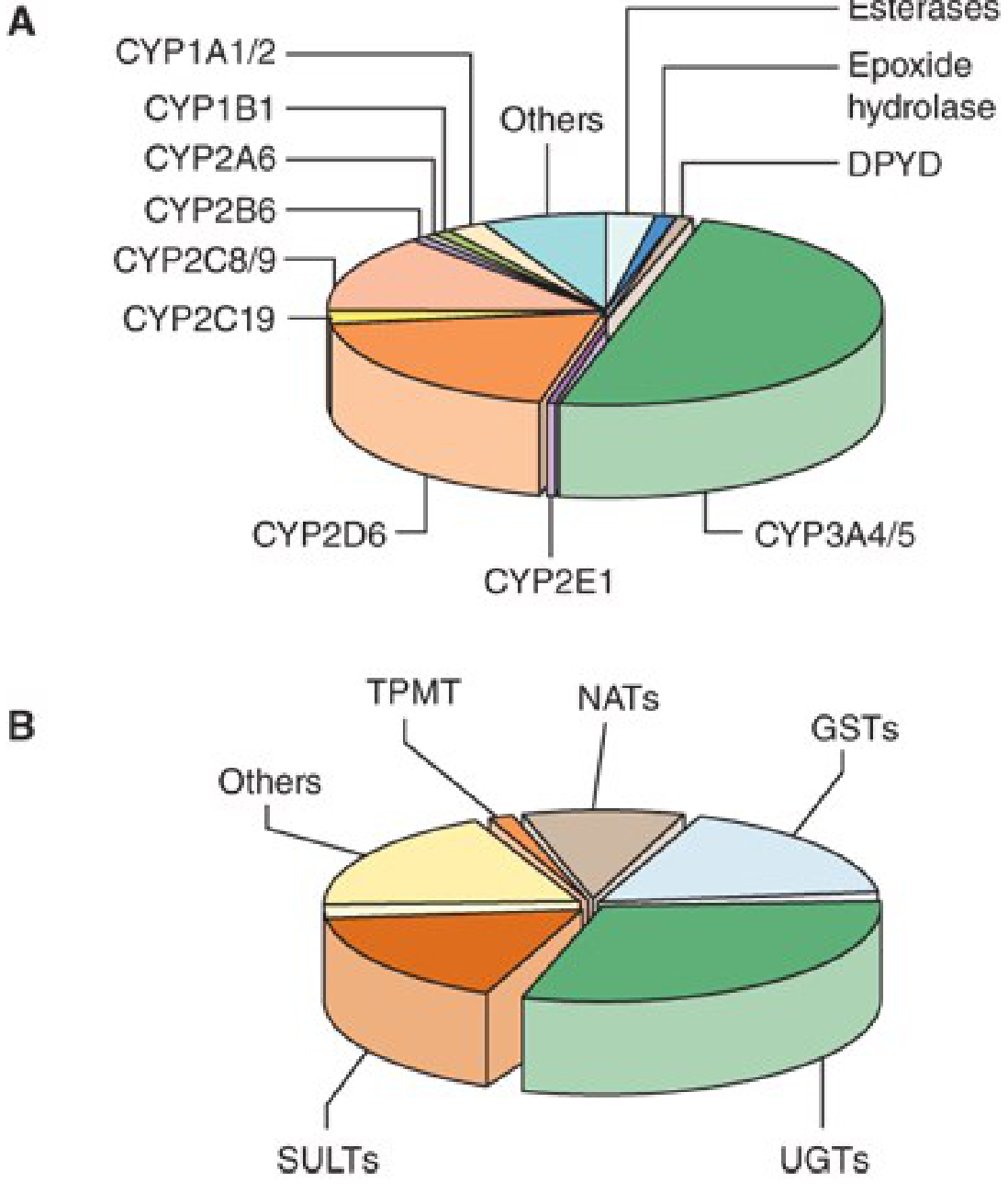
Chart A = CYP3A4/5 dominates Phase I; Chart B = UGTs + SULTs dominate Phase II
Phase II Conjugation Reactions (EXAM TABLE):
| Reaction | Enzyme | Cosubstrate | Location | Key Drugs |
|---|---|---|---|---|
| Glucuronidation | UDP-glucuronosyltransferase (UGT) | UDP-glucuronic acid | ER (microsomes) | Morphine, bilirubin, paracetamol, chloramphenicol |
| Sulfation | Sulfotransferase (SULT) | PAPS (3'-phosphoadenosine-5'-phosphosulfate) | Cytoplasm | Steroids, dopamine, paracetamol |
| Glutathione conjugation | Glutathione-S-transferase (GST) | Glutathione (GSH) | Cytoplasm, microsomes | Epoxides, paracetamol toxic metabolite (NAPQI) |
| Acetylation | N-Acetyltransferase (NAT) | Acetyl-CoA | Cytoplasm | Isoniazid, sulfonamides, dapsone, clonazepam |
| Methylation | Methyltransferases (MT) | SAM (S-adenosylmethionine) | Cytoplasm | Catecholamines, nicotine, histamine |
| Glycine conjugation | Acyl-CoA synthetase + transferase | Glycine | Mitochondria | Bile acids, benzoic acid |
Glucuronidation = most important Phase II reaction (handles most drugs including bilirubin)
⚡ PHASE III - Transport
- P-glycoprotein (P-gp / MDR1) and other ABC transporters in intestine, liver, kidney
- Efflux conjugated products OUT of cells into bile or urine
- Clinically important: P-gp overexpression → multidrug resistance in cancer
🔬 ENZYME INDUCTION & INHIBITION
Enzyme Inducers (↑ CYP expression → ↓ drug effect)
| Inducer | CYP Induced | Clinical Effect |
|---|---|---|
| Rifampicin | CYP3A4 | ↓ OCP, warfarin, cyclosporin effect |
| Phenobarbitone | CYP3A4, 2C | ↓ Warfarin, OCP effect |
| Phenytoin | CYP2C9, 3A4 | ↓ Warfarin effect |
| Carbamazepine | CYP3A4 | ↓ OCP effect |
| Smoking | CYP1A2 | ↑ Caffeine/theophylline metabolism |
| Alcohol (chronic) | CYP2E1 | ↑ Paracetamol toxicity |
Mnemonic for inducers: "RSPCCAG" - Rifampicin, St. John's Wort, Phenytoin, Carbamazepine, Chronic alcohol, Griseofulvin
Enzyme Inhibitors (↓ CYP → ↑ drug toxicity)
| Inhibitor | CYP Inhibited | Clinical Effect |
|---|---|---|
| Ketoconazole/Fluconazole | CYP3A4, 2C9 | ↑ Warfarin, statins → toxicity |
| Erythromycin/Clarithromycin | CYP3A4 | ↑ Cyclosporin, statins |
| Grapefruit juice | CYP3A4 | ↑ Statins, felodipine |
| Ciprofloxacin | CYP1A2 | ↑ Theophylline toxicity |
| Omeprazole | CYP2C19 | ↑ Diazepam |
| Acute alcohol | CYP2E1 | ↑ Drug effects |
Mnemonic for inhibitors: "CAGE SICK" - Cimetidine, Azole antifungals, Grapefruit, Erythromycin, Sulfonamides, Isoniazid, Clarithromycin, Ketoconazole
🏥 CLINICALLY IMPORTANT EXAMPLES
1. Paracetamol (Acetaminophen) Toxicity - MUST KNOW!
Paracetamol
    ↓ (90%) Phase II → Glucuronide/Sulfate conjugates (safe, excreted)
    ↓ (10%) Phase I CYP2E1/3A4 → NAPQI (N-acetyl-p-benzoquinone imine)
                                    ↓
                          Normally → Conjugated with GSH (safe)
                          Overdose → GSH depleted → NAPQI accumulates
                                    → Hepatic necrosis (centrilobular)

ANTIDOTE: N-Acetylcysteine (NAC) → replenishes GSH
2. Prodrugs activated by Phase I
| Prodrug | Active Drug | Enzyme |
|---|---|---|
| Codeine | Morphine | CYP2D6 (O-demethylation) |
| Clopidogrel | Active thiol metabolite | CYP2C19 |
| Enalapril | Enalaprilat | Esterases |
| Cyclophosphamide | Aldophosphamide | CYP3A4 |
3. Isoniazid (INH) Acetylation Polymorphism
- NAT2 gene polymorphism → fast vs. slow acetylators
- Slow acetylators: Higher blood levels → peripheral neuropathy (treat with Vit B6/pyridoxine)
- Fast acetylators: Rapid clearance → may need higher doses; more hepatotoxic metabolites
4. First-Pass Effect
- Drug absorbed from gut enters portal circulation → liver before systemic circulation
- High first-pass drugs: Morphine, propranolol, GTN, lidocaine, aspirin
- Why GTN is given sublingually (bypasses first-pass)
🧬 FACTORS AFFECTING BIOTRANSFORMATION
| Factor | Effect |
|---|---|
| Age (newborn) | Immature UGT → Gray baby syndrome (chloramphenicol) |
| Age (elderly) | ↓ CYP activity → ↑ drug accumulation |
| Genetic polymorphism | CYP2D6, NAT2, CYP2C19 |
| Liver disease | ↓ biotransformation capacity |
| Nutritional status | Starvation → ↓ GSH (↑ paracetamol toxicity) |
| Drug interactions | Inducers/Inhibitors |
| Smoking | ↑ CYP1A2 |
⭐ HIGH-YIELD EXAM POINTS - RAPID REVISION
| Fact | Key Point |
|---|---|
| Main site of detoxification | Liver (SER of hepatocytes) |
| Most important Phase I enzyme | CYP3A4 (>50% of drugs) |
| Cofactor for CYP450 | NADPH + O₂ |
| Most important Phase II reaction | Glucuronidation (UGT enzyme) |
| Cosubstrate for glucuronidation | UDP-glucuronic acid |
| Cosubstrate for sulfation | PAPS |
| Cosubstrate for acetylation | Acetyl-CoA |
| Universal methyl donor | SAM |
| Paracetamol toxic metabolite | NAPQI (via CYP2E1) |
| Antidote for paracetamol toxicity | N-Acetylcysteine (NAC) |
| CYP2D6 polymorphism example | Codeine (no analgesia in poor metabolizers) |
| Rifampicin is a | CYP inducer |
| Ketoconazole is a | CYP inhibitor |
| Gray baby syndrome | Chloramphenicol + immature UGT (can't glucuronidate) |
| Slow acetylators risk | Peripheral neuropathy with INH |
| Phase III | P-glycoprotein efflux pumps |
📝 LIKELY EXAM QUESTIONS
Short Answer / 3-5 marks:
- Explain Phase I and Phase II reactions of detoxification with examples
- What is biotransformation? Describe the role of cytochrome P450
- Explain enzyme induction with clinical examples
- Write a note on paracetamol toxicity and its mechanism
- What are prodrugs? Give examples of bioactivation
Long Answer / 10 marks:
- Describe the phases of biotransformation of xenobiotics. Add a note on factors affecting biotransformation
- Explain in detail the role of liver in detoxification of foreign compounds
Summary Flow:
Xenobiotic (lipophilic, hard to excrete)
        ↓ Phase I (CYP450 in SER) - Oxidation/Reduction/Hydrolysis
        ↓ adds -OH, -NH₂, -COOH groups
        ↓ Phase II (Transferases in cytoplasm) - Conjugation
        ↓ adds glucuronic acid / sulfate / glutathione / acetyl / methyl
        ↓ Phase III (P-gp transporters)
Hydrophilic product → Urine (kidney) or Bile (liver) → Excreted
Good luck on your exam! 🍀 For a 3-mark question, focus on the Phase I/II/III concept + CYP450 + glucuronidation. For a longer question, add enzyme induction/inhibition and the paracetamol toxicity example.
Function test
Organ Function Tests is a 13-mark topic - one of the highest weightage! Let me pull everything from the medical library right away.
Searching sources...
Finding Sources
Finding Sources
Finding Sources
Finding Sources
Found Harper's Biochemistry LFT section and Tietz Lab Medicine. Let me read the key sections:
Reading File
Reading File
Finding Sources
Finding Sources
Reading File
Reading File
Finding Sources
I have all the content I need from Harper's Biochemistry, Robbins Pathology, Barash Clinical Anesthesia (Kidney Function Tests), and Tietz Lab Medicine. Here is the complete, exam-ready guide:
🏥 Organ Function Tests - Complete Exam Guide (13 Marks)
(Sources: Harper's Illustrated Biochemistry 32e, Robbins Basic Pathology, Tietz Textbook of Laboratory Medicine)
OVERVIEW - What are Function Tests?
Organ function tests are biochemical tests that assess the integrity and working capacity of specific organs. They help in:
- Diagnosis of disease
- Assessing prognosis
- Monitoring treatment
The major organ function tests you need for your exam:
| Organ | Tests |
|---|---|
| Liver | LFTs (bilirubin, enzymes, proteins, PT) |
| Kidney | RFTs (BUN, creatinine, GFR, urinalysis) |
| Thyroid | TFTs (TSH, fT3, fT4) |
| Pancreas | Amylase, lipase, blood glucose |
| Heart | Cardiac markers (troponin, CK-MB) |
| Adrenal | Cortisol, dexamethasone suppression test |
🔴 1. LIVER FUNCTION TESTS (LFTs)
The liver performs 3 main functions testable biochemically:
┌─────────────────────────────────────────────┐
│  Liver Functions Tested:                    │
│  1. Hepatocyte INTEGRITY → Enzymes (ALT,AST)│
│  2. Biliary EXCRETION → Bilirubin, ALP, GGT │
│  3. Synthetic FUNCTION → Albumin, PT        │
└─────────────────────────────────────────────┘
1A. Tests of Hepatocyte Integrity (Damage Markers)
| Test | Normal Value | Significance |
|---|---|---|
| ALT (SGPT) - Alanine aminotransferase | 7-40 U/L | Most specific for liver - only elevated in liver damage |
| AST (SGOT) - Aspartate aminotransferase | 10-40 U/L | Less specific - also elevated in heart, muscle, RBC |
| LDH - Lactate dehydrogenase | 100-190 U/L | Non-specific; ↑ in liver, heart, RBC |
✏️ "ALT is more specific for liver disease than AST because AST is elevated in cardiac or skeletal muscle injury while ALT is not." - Harper's Biochemistry
Key ratios:
- De Ritis ratio (AST:ALT)
- AST:ALT > 2:1 → Alcoholic liver disease
- AST:ALT < 1 → Viral hepatitis (ALT rises more)
1B. Tests of Biliary Excretion
| Test | Normal Value | Significance |
|---|---|---|
| Total bilirubin | 0.3-1.2 mg/dL | ↑ = jaundice (>2.5 mg/dL = visible jaundice) |
| Direct (conjugated) bilirubin | <0.3 mg/dL | ↑ = obstructive or hepatic jaundice |
| Indirect (unconjugated) bilirubin | 0.2-0.8 mg/dL | ↑ = hemolytic/pre-hepatic jaundice |
| Urine bilirubin | Absent | Present = conjugated bilirubin in blood |
| Urine urobilinogen | 0.5-4 mg/24hr | ↑ = hemolysis; absent = complete obstruction |
| ALP - Alkaline phosphatase | 44-147 U/L | ↑↑ in obstructive jaundice and bone disease |
| GGT - γ-Glutamyl transpeptidase | 9-48 U/L | ↑ in cholestasis; most sensitive for alcohol use |
Jaundice Differentiation Table - EXAM FAVORITE:
| Feature | Pre-hepatic (Hemolytic) | Hepatic (Hepatocellular) | Post-hepatic (Obstructive) |
|---|---|---|---|
| Cause | Hemolysis, Gilbert's | Viral hepatitis, cirrhosis | Gallstone, cancer of head of pancreas |
| Serum UCB | ↑↑ | ↑ | Normal/↑ |
| Serum CB | Normal | ↑ | ↑↑ |
| Urine bilirubin | Absent (acholuric) | Present | Present |
| Urine urobilinogen | ↑↑ | ↓ | Absent |
| Stool color | Dark brown | Pale | Clay/putty colored |
| ALP | Normal | ↑ | ↑↑ |
| ALT/AST | Normal | ↑↑ | ↑ (mild) |
1C. Tests of Synthetic Function
| Test | Normal | Significance |
|---|---|---|
| Serum albumin | 3.5-5.0 g/dL | ↓ in chronic liver disease (cirrhosis); long half-life (20 days) |
| Prothrombin Time (PT) | 11-13 sec | ↑ = liver failure (can't synthesize clotting factors II, V, VII, X); best for acute failure |
| INR | 0.8-1.2 | International normalized ratio of PT |
| Total protein | 6-8 g/dL | ↓ in chronic liver disease |
| Serum ammonia | 15-45 μg/dL | ↑ = hepatic encephalopathy (liver can't convert NH₃ → urea) |
Key point: In acute liver failure → PT/INR is best marker (clotting factors have short half-life) In chronic liver failure → Albumin + bilirubin + PT together (Child-Pugh score)
🔴 2. KIDNEY FUNCTION TESTS (RFTs / KFTs)
Key concept: GFR = Glomerular Filtration Rate
- Normal GFR = 125 mL/min (or ~180 L/day filtered, 1.5 L excreted)
- CKD defined as GFR <60 mL/min for >3 months
2A. Blood Tests
| Test | Normal Value | Significance |
|---|---|---|
| Blood Urea Nitrogen (BUN) | 7-20 mg/dL | ↑ in renal failure, dehydration, high protein diet, GI bleed |
| Serum Creatinine | 0.6-1.2 mg/dL (male) 0.5-1.1 mg/dL (female) | Best routine marker of GFR; not affected by diet; ↑ in renal failure |
| BUN : Creatinine ratio | 10:1 to 20:1 | >20:1 = pre-renal (dehydration, low perfusion); <10:1 = intrinsic renal |
| Serum uric acid | 3.5-7.2 mg/dL (male) | ↑ = gout, renal failure, leukemia |
| Serum electrolytes | Na⁺ 135-145, K⁺ 3.5-5.0 mEq/L | ↑K⁺ in renal failure (danger: cardiac arrhythmia) |
"Creatinine is produced at a relatively constant rate by muscle and is freely filtered at the glomerulus... Serum creatinine has an inverse, non-linear relationship with GFR - a large reduction in GFR (e.g., 75%) may only cause a modest rise in serum creatinine" - Barash Clinical Anesthesia
⚠️ Important: Creatinine may look "normal" even after 50% nephron loss! (due to non-linear relationship)
2B. Urine Tests
| Test | Normal | Significance |
|---|---|---|
| Urine output | 400-2000 mL/day | <400 mL/day = oliguria (renal failure) |
| Urine specific gravity | 1.001-1.035 | ↓ = dilute urine (CKD, DI); ↑ = concentrated (dehydration) |
| Urine protein | <150 mg/day | ↑ = glomerulonephritis, nephrotic syndrome |
| Urine glucose | Absent | Present = diabetes (>180 mg/dL blood glucose) or renal glycosuria |
| Urine casts | Absent | RBC casts = glomerulonephritis; WBC casts = pyelonephritis; granular casts = ATN |
| Urine pH | 4.5-8.0 | Acidic normally; alkaline = UTI (urea-splitting bacteria) |
2C. Clearance Tests (GFR Measurement)
Creatinine Clearance = best clinical estimate of GFR
Creatinine Clearance (mL/min) = [Urine creatinine (mg/dL) × Urine volume (mL/min)]
                                 ──────────────────────────────────────────────────
                                         Serum creatinine (mg/dL)
- Normal: 85-125 mL/min
- Overestimates GFR slightly (because tubules also secrete creatinine)
Cockcroft-Gault formula (estimates GFR without urine collection):
CrCl = [(140 - age) × weight (kg)] / [72 × serum creatinine]
       × 0.85 for females
CKD Staging by GFR:
| Stage | GFR (mL/min) | Description |
|---|---|---|
| 1 | ≥90 | Normal/↑ with markers of kidney damage |
| 2 | 60-89 | Mildly ↓ |
| 3a/3b | 30-59 | Moderately ↓ |
| 4 | 15-29 | Severely ↓ |
| 5 | <15 | Kidney failure (dialysis) |
🟠 3. THYROID FUNCTION TESTS (TFTs)
Hormones to Know:
- T4 (thyroxine/tetraiodothyronine): Main secretory product; less active
- T3 (triiodothyronine): 3-4x more active; mainly from peripheral conversion of T4
- TSH: From anterior pituitary; stimulates T3/T4 production; most sensitive test
Tests:
| Test | Normal | Significance |
|---|---|---|
| TSH | 0.4-4.0 mIU/L | FIRST-LINE TEST - most sensitive; ↑ in hypothyroid, ↓ in hyperthyroid |
| Free T4 (fT4) | 0.8-1.8 ng/dL | ↓ in hypothyroid; ↑ in hyperthyroid |
| Free T3 (fT3) | 2.3-4.2 pg/mL | More active form; used to confirm T3 toxicosis |
| Total T4/T3 | T4: 5-12 μg/dL | Affected by TBG levels (less preferred) |
✏️ "Total thyroxine is seldom measured nowadays, because assays to measure free thyroxine are available." - Harper's Biochemistry
Interpretation:
| Condition | TSH | fT4 | fT3 |
|---|---|---|---|
| Primary hypothyroid | ↑↑ | ↓ | ↓ |
| Secondary hypothyroid (pituitary) | ↓ | ↓ | ↓ |
| Primary hyperthyroid (Graves') | ↓ | ↑ | ↑ |
| Subclinical hypothyroid | ↑ | Normal | Normal |
| Subclinical hyperthyroid | ↓ | Normal | Normal |
Other thyroid tests:
- Anti-TPO antibodies → Hashimoto's thyroiditis
- Anti-TSH receptor antibodies → Graves' disease
- Radioactive iodine uptake (RAIU) → ↑ in Graves'; ↓ in thyroiditis
🟠 4. CARDIAC FUNCTION TESTS
4A. Cardiac Markers (for MI / Myocardial Infarction)
✏️ "An ECG may not always show typical changes following a myocardial infarction. In such a situation, elevation in serum levels of cardiac troponin or creatine kinase MB isoenzyme provides confirmation." - Harper's Biochemistry
| Marker | Rises After MI | Peak | Returns to Normal | Notes |
|---|---|---|---|---|
| Troponin I or T | 3-6 hours | 14-18 hours | 5-10 days | Most specific and sensitive for MI; gold standard |
| CK-MB | 4-8 hours | 18-24 hours | 2-3 days | Used for reinfarction (troponin stays ↑) |
| Myoglobin | 1-2 hours (earliest) | 4-8 hours | 24 hours | First to rise but not cardiac-specific |
| LDH (LDH1) | 12-24 hours | 2-4 days | 7-10 days | LDH1 > LDH2 = "flipped ratio" in MI |
| BNP / NT-proBNP | - | - | - | Marker of heart failure (ventricular stretch) |
4B. Lipid Profile (Cardiovascular risk assessment)
| Test | Desirable | Significance |
|---|---|---|
| Total cholesterol | <200 mg/dL | ↑ = atherosclerosis risk |
| LDL cholesterol | <100 mg/dL (optimal) | "Bad cholesterol" - atherogenic |
| HDL cholesterol | >60 mg/dL | "Good cholesterol" - protective |
| Triglycerides | <150 mg/dL | ↑ = pancreatitis risk, metabolic syndrome |
Friedewald formula:
LDL = Total Cholesterol - HDL - (TG/5)
(Only valid when TG < 400 mg/dL)
🟡 5. PANCREATIC FUNCTION TESTS
| Test | Normal | Significance |
|---|---|---|
| Serum amylase | 25-125 U/L | ↑ in acute pancreatitis (rises within 2-6 hours); also ↑ in parotitis, intestinal obstruction |
| Serum lipase | <160 U/L | More specific than amylase for acute pancreatitis; stays elevated longer (7-10 days) |
| Fasting blood glucose | 70-100 mg/dL | ↑ = diabetes (pancreatic insufficiency) |
| HbA1c | <5.7% normal; ≥6.5% = diabetes | 3-month glucose control marker |
✏️ "Lipase measurements are recommended over amylase measurements to diagnose acute pancreatitis because of their greater sensitivity and specificity." - Textbook of Family Medicine
🟡 6. ADRENAL FUNCTION TESTS
| Condition | Test | Finding |
|---|---|---|
| Cushing's syndrome (hyperfunction) | Dexamethasone suppression test | Cortisol NOT suppressed after 1 mg dexamethasone at midnight |
| Cushing's syndrome | 24-hr urine free cortisol | ↑ |
| Addison's disease (hypofunction) | ACTH stimulation test (Synacthen test) | Cortisol fails to rise after ACTH injection |
| Early morning cortisol | ↓ |
✏️ "Loss of diurnal variation is one of the earliest signs of adrenal hyperfunction" - Harper's Biochemistry Normal: Cortisol highest at 8 AM, lowest at midnight
⭐ HIGH-YIELD RAPID REVISION TABLE
| Key Fact | Answer |
|---|---|
| Most specific test for liver damage | ALT (SGPT) |
| Best test for synthetic liver function (acute) | Prothrombin Time (PT) |
| Best test for synthetic liver function (chronic) | Serum Albumin |
| AST:ALT > 2:1 suggests | Alcoholic liver disease |
| Earliest cardiac marker to rise | Myoglobin (1-2 hrs) |
| Most specific cardiac marker | Troponin I/T |
| Gold standard for GFR | Inulin clearance (clinical: creatinine clearance) |
| Most sensitive thyroid test | TSH |
| Best test for pancreatitis | Serum Lipase (more specific than amylase) |
| Clay-colored stools indicate | Obstructive (post-hepatic) jaundice |
| ALP ↑↑ seen in | Obstructive jaundice AND bone disease |
| GGT most useful for | Alcohol abuse (most sensitive) |
| Marker of heart failure | BNP / NT-proBNP |
| Best long-term glucose control marker | HbA1c (3 months) |
| Urine RBC casts = | Glomerulonephritis |
📝 LIKELY EXAM QUESTIONS
Short Answer (3-5 marks):
- Write briefly on Liver Function Tests
- Enumerate the tests used for assessing renal function with normal values
- What is creatinine clearance? How is it calculated?
- Write a note on cardiac markers in myocardial infarction
- Describe thyroid function tests
Long Answer (10-13 marks):
- Describe in detail the biochemical tests used to assess liver function. How do they help differentiate types of jaundice?
- Write in detail about organ function tests including liver, kidney, and cardiac markers
Memory Tricks 🧠
| Mnemonic | Helps Remember |
|---|---|
| "A (ALT) Loves (Liver)" | ALT is most specific for liver |
| "PT is quick to react" | PT reflects acute liver synthetic failure |
| "Troponin Takes Time but Tells Truth" | Most specific, stays elevated 5-10 days |
| "My (Myoglobin) first, then Trophy (Troponin)" | Myoglobin rises first, troponin most specific |
| "TSH - Thyroid Super Helper" | TSH is the first-line thyroid test |
| "Lipo beats Amy (Amylase)" | Lipase > amylase for pancreatitis |
Good luck! 🍀 For a 13-mark question, cover LFTs (jaundice differentiation table), RFTs (creatinine + clearance), Cardiac markers timeline, and briefly touch on TFTs and pancreatic tests.
This is a shared conversation. Sign in to Orris to start your own chat.