
What is general therapy mentioned its types and clinical application
Reading File
Now let me search the medical library for "gene therapy" - given the context, this is likely about gene therapy rather than "general therapy."
Asking for Preferences
Could you clarify what you mean by 'general therapy'? Are you asking about:
Gene therapy it is. Let me search the medical library and web simultaneously.
Quick answer: Gene therapy involves introducing, altering, or replacing genetic material within a person's cells to treat or prevent disease. The main types include gene replacement (adding a functional gene copy), gene silencing (suppressing an overactive or harmful gene), gene editing (using tools like CRISPR-Cas9 to correct mutations), and cell-based gene therapy (modifying cells ex vivo before reinfusing them). Clinical applications include inherited disorders like hemophilia, sickle cell disease, and retinal dystrophies, as well as certain cancers (CAR-T cell therapy) and rare monogenic diseases.
Searching sources...
Finding Sources
Searching the Web
gene therapy types clinical applications 2025
Searching PubMed
"gene therapy"[MeSH Terms] AND "clinical application"
Good - I have strong library hits. Let me now read the key textbook sections in parallel.
Reading File
Reading File
Reading File
Reading File
Let me now read more from the Thompson & Thompson genetics textbook which has the most detailed gene therapy section, and also search for the vectors/delivery methods section.
Reading File
Reading File
Finding Sources
Let me read more of the Emery's genetics textbook for delivery methods and also read the detailed types section from Thompson & Thompson.
Reading File
Reading File
Reading File
Reading File
I now have excellent content. Let me also fetch the key diagram image from the Thompson & Thompson textbook to include in my answer.
Loading Image
Loading Image
I now have comprehensive textbook material and excellent diagrams. Let me compose the full detailed answer.
Gene Therapy: Definition, Types, and Clinical Applications
Definition
Gene therapy is the introduction of a biologically active gene (or other nucleic acid) into a cell to achieve a therapeutic benefit. The UK Gene Therapy Advisory Committee defines it as "the deliberate introduction of genetic material into human somatic cells for therapeutic, prophylactic, or diagnostic purposes."
This includes techniques such as:
- Delivery of synthetic or recombinant nucleic acids via vectors
- Genetically modified stem cells
- Antisense techniques (gene silencing, gene correction)
- RNA interference (RNAi)
- Genetic vaccines
- Oncolytic viruses
Thompson & Thompson Genetics and Genomics in Medicine, 9th ed., p. 328; Emery's Elements of Medical Genetics and Genomics, p. 229
Key Prerequisites Before Gene Therapy Can Be Applied
Before using gene therapy for any inherited disorder, the following conditions must be met:
- The identity of the affected gene must be known
- A functional cDNA clone of the gene must be available
- An appropriate vector must exist
- The pathophysiologic mechanism must be understood well enough to predict benefit
- A favorable risk-to-benefit ratio compared with other treatments
- Appropriate regulatory components for gene expression
- A suitable long-lived target cell (e.g., T cells, neurons, myocytes, hepatocytes)
- Strong preclinical evidence of efficacy and safety from cell/animal models
- Regulatory approval from an IRB and national agency (e.g., FDA)
Types of Gene Therapy
1. Based on Target Cell Type
A. Somatic Gene Therapy
- Targets specific somatic cells (lung, skin, blood, liver, eye, muscle, brain)
- Genetic changes are not heritable - they do not pass to future generations
- This is the only currently accepted form of gene therapy in humans
- All approved therapies worldwide are somatic
B. Germline Gene Therapy
- Would target egg or sperm cells (reproductive cells)
- Changes would be inherited by future generations
- Could theoretically eliminate heritable conditions like Huntington disease
- No country currently permits germline gene therapy due to ethical, legal, and safety concerns
2. Based on Delivery Strategy (Transfer Route)
These two diagrams from authoritative textbooks illustrate the approaches:
Figure 1 - Viral vector gene delivery:
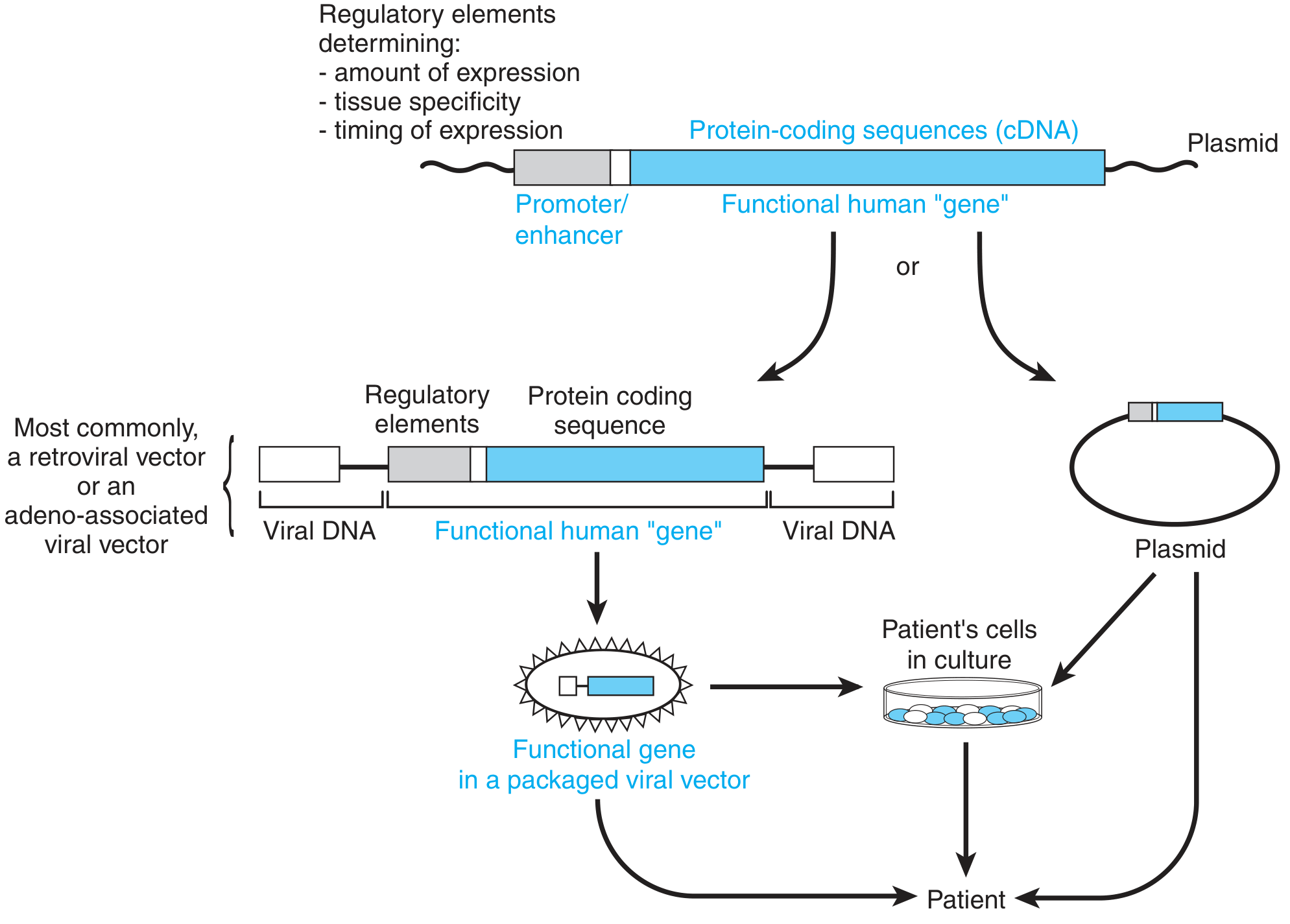
Figure 2 - In vivo vs. Ex vivo gene therapy:
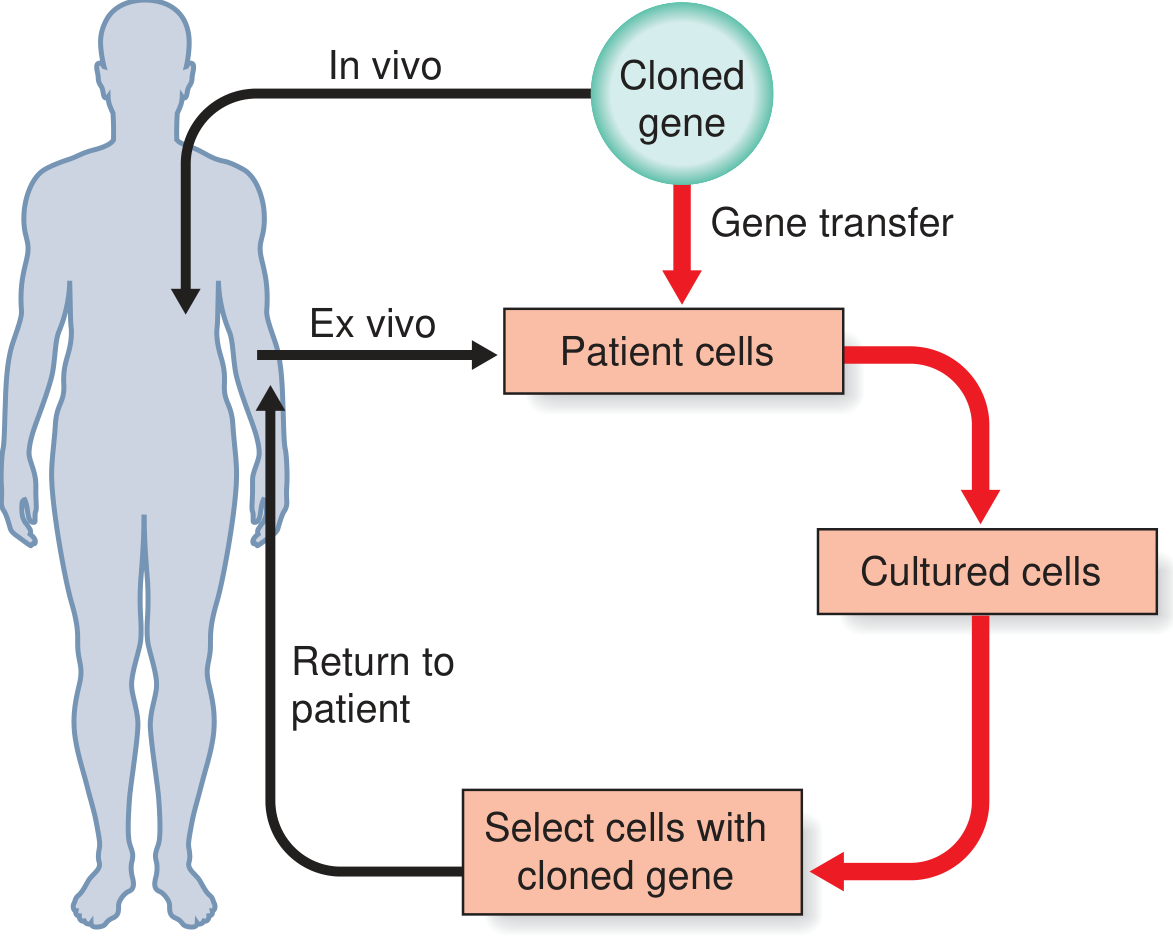
A. Ex Vivo Gene Therapy
- Cells are removed from the patient, genetically modified in culture, then reinfused
- Best suited to disorders where relevant cells can be harvested and replaced (e.g., hematopoietic stem cells, T cells, fibroblasts)
- Examples: bone marrow HSC modification for SCID, sickle cell disease, ADA deficiency
- Lower systemic immune risk because modification happens outside the body
B. In Vivo Gene Therapy
- The therapeutic gene (in a vector) is injected directly into the patient's tissue or bloodstream
- Simpler logistically; used when cells cannot be cultured or harvested
- Examples: IV injection of AAV for SMA (Zolgensma), subretinal injection for RPE65 retinal dystrophy (Luxturna), intramuscular injection for LPL deficiency
- More complex immune challenges
3. Based on Molecular Mechanism (What the Gene Does)
| Type | Mechanism | Examples |
|---|---|---|
| Gene replacement / addition | Add a functional copy of a defective gene (loss-of-function disorders) | ADA-SCID, SMA, hemophilia, LCA |
| Gene silencing | Suppress/degrade overactive or dominant-negative mutant gene products (siRNA, antisense) | Dominant osteogenesis imperfecta; TTR amyloidosis |
| Gene editing | Precisely correct a mutation in its native genomic context (CRISPR-Cas9, base editing, prime editing) | Sickle cell disease (HbF induction), CPS1 deficiency |
| Suicide gene therapy | Introduce a gene into tumor cells that converts a prodrug into a cytotoxin | Certain brain tumors |
| Immunomodulatory gene therapy | Engineer immune cells (CAR-T, TCR-T) to recognize and kill tumors | B-cell ALL, multiple myeloma, diffuse LBCL |
4. Based on Vector Type
A. Viral Vectors (most efficient)
| Vector | Key Properties | Uses |
|---|---|---|
| Retroviral vectors | Integrate into host genome; require dividing cells; accommodate up to 8 kb DNA; can cause insertional mutagenesis | X-SCID, ADA-SCID (older trials) |
| Lentiviral vectors (subtype of retrovirus) | Integrate into non-dividing cells (neurons, HSCs); derived from HIV backbone; safer SIN (self-inactivating) versions | ADA-SCID, beta-thalassemia, X-linked adrenoleukodystrophy, CAR-T manufacturing |
| Adeno-associated viral (AAV) vectors | Persist as episomes (non-integrating) in long-lived cells; low immunogenicity; stable long-term expression; various serotypes (tissue-specific) | SMA (Zolgensma), hemophilia B, retinal dystrophy (Luxturna), Parkinson disease trials |
| Adenoviral vectors | Large payload capacity; do NOT integrate; transient expression; higher immunogenicity | Cancer gene therapy, vaccines |
B. Non-Viral Vectors
- Liposomes / lipid nanoparticles (LNPs): Used for CFTR gene therapy (cystic fibrosis via nasal spray), mRNA-based therapies; lower immune risk
- Naked DNA / plasmids: Lowest efficiency but simplest
- Electroporation: Physical method used ex vivo for CAR-T cell manufacturing
- Modified mRNA (modRNA): Pseudouridine-modified mRNA that evades innate immune sensing (Toll-like receptors 7/8); explored for cardiac regeneration after MI
The ideal vector is safe, easily manufactured, efficiently delivered, and achieves life-long expression. No single vector satisfies all requirements for all diseases. - Thompson & Thompson, p. 330
Clinical Applications
Approved / Late-Stage Therapies
| Disease | Defect | Vector & Route | Outcome |
|---|---|---|---|
| Spinal muscular atrophy (SMA) - Zolgensma | SMN1 gene deletion | AAV, IV | Marked improvement in respiratory and motor strength in >1800 patients; FDA-approved |
| Leber congenital amaurosis / RPE65 retinal dystrophy - Luxturna | RPE65 mutations | AAV, subretinal injection | FDA-approved; vision improvement in ages 12 months-65 years |
| X-linked SCID | IL2RG (gamma chain) | Retroviral/lentiviral SIN vector, autologous HSCs | Clinical improvement in ~27/32 patients |
| ADA-SCID | Adenosine deaminase | Retroviral/lentiviral, HSCs | 29/40 patients off enzyme replacement therapy; some cured |
| X-linked adrenoleukodystrophy | ABCD1 | Lentiviral, autologous HSCs | Arrest of cerebral demyelination in 17/19 boys |
| Hemophilia B | Factor IX (F9) | AAV, single IV injection | Stable Factor IX expression 1-7% of normal up to 3 years; >20 patients stopped prophylaxis |
| Beta-thalassemia / sickle cell disease | Beta-globin mutations | Lentiviral, ex vivo HSC modification; or CRISPR to induce HbF | Reduced hemolysis; resolution of vaso-occlusive crises; CRISPR-based HbF induction with sustained effect at 1+ year |
| LPL deficiency - Alipogene tiparvovec | LPL gene | AAV, IM injections | First approved gene therapy in EU/US (2012) |
| Cancer (CAR-T) | B-cell malignancies | Lentiviral/retroviral ex vivo T-cell engineering | FDA-approved for ALL, DLBCL, multiple myeloma |
Thompson & Thompson Genetics and Genomics in Medicine, 9th ed., Table 14.4, p. 328; Emery's Elements of Medical Genetics and Genomics, p. 229-230
Diseases Under Active Clinical Investigation
- Cystic fibrosis (CFTR mutations) - liposome-mediated lung delivery
- Duchenne muscular dystrophy (dystrophin mutations)
- Parkinson disease - lentiviral delivery of dopamine-producing enzymes (early trials show improved movement)
- Huntington disease - gene silencing approaches
- Cardiac failure / myocardial infarction - modRNA-based cardiac regeneration (preclinical stage, delivery challenges remain)
- Familial hypercholesterolemia (LDL receptor)
- Phenylketonuria (phenylalanine hydroxylase)
- Solid tumors (suicide genes, oncolytic viruses, next-gen CAR-T)
- HIV/AIDS - anti-viral gene strategies
Ethical Considerations
- Somatic vs. germline distinction is the central ethical debate
- Germline therapy could eliminate heritable disease from families but risks unknown multigenerational effects and "designer baby" concerns
- Concerns about equal access (therapies like Zolgensma cost >$2 million per dose)
- What counts as "therapy" vs. "enhancement" (height, intelligence)
- Currently: somatic-only therapy is permitted worldwide; germline gene editing in embryos remains banned after the controversial 2018 He Jiankui CRISPR baby case
Summary Table
| Category | Types |
|---|---|
| Target cell | Somatic (approved), Germline (banned) |
| Delivery route | Ex vivo, In vivo |
| Molecular mechanism | Gene replacement, Gene silencing (RNAi/antisense), Gene editing (CRISPR), CAR-T/immunotherapy, Suicide genes |
| Vector | Viral (retrovirus, lentivirus, AAV, adenovirus) vs. Non-viral (LNPs, plasmids, electroporation, modRNA) |
Key FDA-approved products (2025): Zolgensma (SMA), Luxturna (retinal dystrophy), multiple CAR-T products (Kymriah, Yescarta, Carvykti), Elevidys (Duchenne MD), Casgevy (sickle cell/beta-thalassemia - first CRISPR therapy, approved 2023).
As of 2025, there are over 4,400 therapies in the global cell and gene therapy pipeline, with 1,905 active clinical trials and $5 billion invested in H1 2025 alone, reflecting the rapid maturation of this field.
This is a shared conversation. Sign in to Orris to start your own chat.