
ASTHMA ..BRIEF HARRISON AND TINTINALY.. RECENT GUIDLINE
Reading File
Now let me search Harrison's, Tintinalli's, and recent guidelines simultaneously.
Finding Sources
Searching PubMed
"asthma" AND "guidelines"
Searching the Web
GINA 2025 asthma guidelines summary
I need to find Harrison's and Tintinalli's specifically. Let me search the DB and read key blocks in parallel.
Finding Sources
Reading Web Page
https://ginasthma.org/wp-content/uploads/2025/11/GINA-Summar…
Found both books. Now let me search Harrison's 22E and Tintinalli's asthma sections in parallel.
Finding Sources
Finding Sources
Now let me read the key Harrison's and Tintinalli's asthma sections in parallel.
Reading File
Reading File
I have rich content from both books and GINA 2025. Let me read the Harrison's treatment/management section and Tintinalli's acute management section.
Reading File
Reading File
Excellent content gathered. Now I have enough from Harrison's 22E, Tintinalli's, and GINA 2025 to deliver a comprehensive answer. Let me compile the full response.
Loading Image
Now I have everything needed. Let me compile the full, structured response.
ASTHMA - Brief Harrison's 22E, Tintinalli's & GINA 2025
DEFINITION
Asthma is a chronic inflammatory disorder of the airways characterized by increased airway responsiveness to multiple stimuli, producing recurrent episodes of wheezing, breathlessness, chest tightness, and cough - especially nocturnal or early morning. Airflow obstruction is usually reversible.
- Harrison's Principles of Internal Medicine 22E, 2025
- Tintinalli's Emergency Medicine, Ch. 69
PATHOPHYSIOLOGY
Harrison's 22E
- Airway hyperresponsiveness - hallmark; airways narrow excessively to stimuli that don't affect normal individuals
- Three overlapping processes:
- Bronchoconstriction - smooth muscle contraction (early phase)
- Airway wall edema and inflammation - eosinophils, lymphocytes, mast cells, macrophages, dendritic cells; mediated by IgE, Th2 cytokines (IL-4, IL-5, IL-13), and innate lymphoid cells (ILC2)
- Airway remodeling - subepithelial fibrosis, smooth muscle hypertrophy, mucous gland hyperplasia; leads to fixed airflow limitation over time
- Inflammation affects all bronchial structures but not the parenchyma
- Two endotypes: Type 2 (T2-high) - eosinophilic, IgE-mediated; non-Type 2 - neutrophilic, obesity-related
Tintinalli's
- Hallmark: reduction in airway diameter from smooth muscle contraction + vascular congestion + wall edema + thick secretions
- Acute allergic bronchoconstriction = IgE-dependent mast cell mediator release (histamine, leukotrienes, tryptase, prostaglandins)
- Asthma is a continuum: acute bronchospasm → airway inflammation → permanent airway remodeling
- Viral infections most common acute trigger (40-80% in adults, 80% in children)
RISK FACTORS & TRIGGERS
| Risk Factors (Development) | Acute Triggers |
|---|---|
| Allergen exposure (atopic) | Allergens |
| Occupational exposure | Irritants / cold air |
| Air pollution | Viral URIs |
| Viral/Mycoplasma infections | Exercise |
| Tobacco smoke | ASA/NSAIDs/β-blockers |
| Obesity | Air pollution |
| Fungi (ABPA) | Emotional stress |
| Genetic susceptibility | GERD |
Harrison's 22E, Tables 298-1 and 298-2
DIAGNOSIS
Clinical Features
- Recurrent wheeze, dyspnea, chest tightness, cough (especially nocturnal/morning)
- Symptoms variable, episodic, often triggered
Spirometry (Objective Confirmation)
- Bronchodilator response: post-BD FEV1 or FVC increase ≥200 mL AND ≥12% (GINA 2025)
- FEV1/FVC ratio reduced (<0.70 or below LLN)
- PEF variability >10% (or >20% with BDR test)
GINA 2025 - New Diagnostic Flowchart
- 4 typical symptoms + evidence of variable expiratory airflow limitation = asthma
- If spirometry negative but typical symptoms: FeNO >50 ppb (adults/adolescents) or blood eosinophils above reference range can support diagnosis
- FeNO and blood eosinophils do not rule out asthma if normal
Asthma Mimickers (Tintinalli's - must exclude)
- Acute heart failure ("cardiac asthma")
- Upper airway obstruction / vocal cord dysfunction
- Pulmonary embolism
- Foreign body aspiration
- Endobronchial tumors
- Interstitial lung disease
SEVERITY CLASSIFICATION (Harrison's 22E)
| Category | Daytime Sx | Nocturnal Sx | FEV1 % Predicted | FEV1/FVC |
|---|---|---|---|---|
| Intermittent | ≤2 days/wk | ≤2×/month | ≥80% | Normal |
| Mild Persistent | >2 days/wk | 3-4×/month | ≥80% | Normal |
| Moderate Persistent | Daily | >1×/week | 60-80% | Reduced 5% |
| Severe Persistent | Throughout day | Often 7×/week | <60% | Reduced >5% |
CHRONIC MANAGEMENT - Harrison's 22E
Medications
1. Reliever (rescue) medications
- Short-acting β2-agonists (SABA) - albuterol/salbutamol: activate β2-receptors → cAMP → smooth muscle relaxation; onset 5-15 min; primary rescue agent
- Regular SABA use alone risks tachyphylaxis and increased airway reactivity
2. Controller (maintenance) medications
- Inhaled corticosteroids (ICS): most effective anti-inflammatory; reduce eosinophil infiltration, cytokine production; first-line controller. Systemic effects rare at low-to-medium doses.
- Long-acting β2-agonists (LABA): salmeterol, formoterol; NEVER use as monotherapy - always with ICS (risk of fatal outcomes when used alone)
- Leukotriene receptor antagonists (LTRA): montelukast; useful add-on, especially aspirin-exacerbated asthma and allergic rhinitis comorbidity
- Long-acting muscarinic antagonists (LAMA): tiotropium; add-on at Step 4-5
- Anti-IgE (omalizumab): for allergic, severe, uncontrolled asthma with elevated IgE
- Anti-IL-5/IL-4Rα biologics: mepolizumab, benralizumab (anti-IL-5), dupilumab (anti-IL-4Rα) - for severe eosinophilic/T2-high asthma
- Theophylline: weak bronchodilator + mild anti-inflammatory; narrow therapeutic window; now third-line
CHRONIC MANAGEMENT - GINA 2025 STEPWISE APPROACH
GINA 2025 maintains two tracks with 5 steps (Adults/Adolescents ≥12 years):
TRACK 1 (PREFERRED) - ICS-formoterol as both controller and reliever
| Step | Controller | Reliever |
|---|---|---|
| Step 1 | None (or as-needed low-dose ICS-formoterol) | Low-dose ICS-formoterol as needed |
| Step 2 | Low-dose ICS-formoterol daily (or ICS alone) | Low-dose ICS-formoterol as needed |
| Step 3 | Low-dose ICS-formoterol daily | Low-dose ICS-formoterol as needed |
| Step 4 | Medium-dose ICS-formoterol daily | Low-dose ICS-formoterol as needed |
| Step 5 | Medium-high ICS-LABA + LAMA ± add-on biologic | As needed |
TRACK 2 (Alternative) - ICS controller + SABA reliever
| Step | Controller | Reliever |
|---|---|---|
| Step 1 | None or low-dose ICS (taken with each SABA dose) | SABA |
| Step 2 | Daily low-dose ICS | SABA |
| Step 3 | Low-dose ICS-LABA | SABA |
| Step 4 | Medium-dose ICS-LABA | SABA |
| Step 5 | High-dose ICS-LABA + LAMA ± biologic | SABA |
Key GINA 2025 Updates
- ICS-formoterol as reliever (Track 1) reduces exacerbation risk vs. SABA reliever
- FeNO + blood eosinophil assessment now incorporated into treatment decisions as Type 2 biomarkers
- New figure on population-level vs. patient-level treatment decisions
- Risk factors for severe exacerbation: updated data
- Step down when well-controlled for 2-3 months; choose appropriate time (no infection, not pregnant, not travelling)
- LAMA add-on at Step 5 before biologics
Step 5 - Severe Asthma (GINA 2025)
- Refer for expert assessment + phenotype evaluation
- Add LAMA to ICS-LABA
- If sputum or blood eosinophilia - consider:
- Anti-IL-5: mepolizumab, benralizumab
- Anti-IL-4Rα: dupilumab
- Anti-IgE: omalizumab (if allergic)
- Anti-TSLP: tezepelumab (broad; works across phenotypes)
- High-dose ICS adds risk of adrenal suppression
ACUTE EXACERBATION MANAGEMENT - TINTINALLI'S (ED)
Goal: Rapid reversal of airflow obstruction via repeated/continuous inhaled β2-agonists, oxygen, and systemic anti-inflammation
Severity Assessment (ED)
| Severity | FEV1/PEFR | Features |
|---|---|---|
| Mild-Moderate | ≥40% predicted | Responds to initial SABA |
| Severe | <40% predicted | Accessory muscle use, chest retraction |
| Impending arrest | Silent chest, cyanosis, altered consciousness | Immediate intubation |
ED Drug Dosages (Tintinalli's Table 69-5)
Inhaled β2-agonists:
- Albuterol nebulizer: 2.5-5 mg q20 min × 3 doses, then as needed (or continuous 10-15 mg/hr)
- Albuterol MDI: 4-8 puffs q20 min × 3 doses via spacer
- Levalbuterol: half the dose of albuterol
Anticholinergic:
- Ipratropium bromide nebulizer: 0.5 mg q20 min × 3 doses (add to SABA in severe)
Systemic corticosteroids:
- Prednisone/methylprednisolone: 40-80 mg/day orally or IV
- Dexamethasone: 8-10 mg single dose (evidence supports as alternative)
Magnesium sulfate (adjunct - severe): 2 g IV over 20 min - bronchodilator, effective in severe exacerbation
Heliox: helium-oxygen mixture; reduces turbulent flow, useful in severe airway obstruction
Epinephrine SC: 0.3-0.5 mg (1:1000) - if severe/anaphylaxis-related, no response to inhaled agents
ED Treatment Algorithm
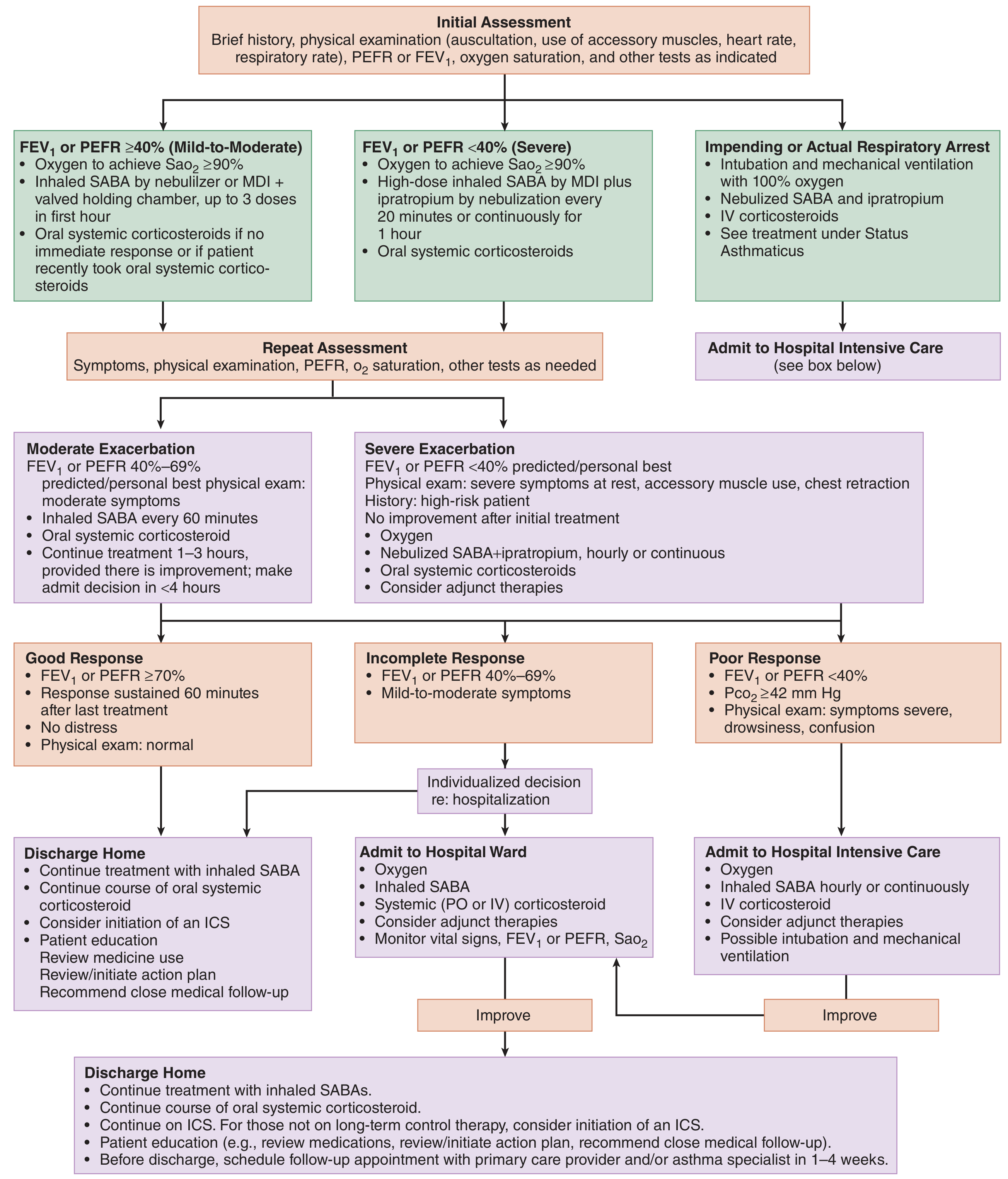
FIGURE 69-1. Management of asthma exacerbations: ED and hospital-based care. - Tintinalli's Emergency Medicine
Discharge Criteria (Good Response)
- FEV1 or PEFR ≥70%
- Response sustained 60 min after last treatment
- No distress; physical exam normal
- Discharge with: SABA + oral corticosteroid course + initiate/continue ICS + written action plan + follow-up in 1-4 weeks
Admit to ICU if:
- FEV1/PEFR <40% after treatment
- PCO2 ≥42 mmHg (impending respiratory failure - CO2 should be low in early asthma)
- Severe symptoms, drowsiness, confusion
- Possible intubation + mechanical ventilation
STATUS ASTHMATICUS / NEAR-FATAL ASTHMA
- Defined as acute severe asthma not responding to initial aggressive bronchodilator therapy
- IV methylprednisolone + continuous nebulization
- IV magnesium sulfate 2 g
- IV ketamine (1-2 mg/kg) for intubation - provides bronchodilation (preferred induction agent)
- Heliox, IV β2-agonists (terbutaline)
- If intubated: permissive hypercapnia, low respiratory rate (10-14/min), long expiratory time to avoid dynamic hyperinflation (auto-PEEP); avoid barotrauma
HIGH-RISK ASTHMA PATIENTS (Harrison's 22E)
- Prior intubation or ICU admission for asthma
- ≥2 hospitalizations or ≥3 ED visits/year
- Using >2 canisters SABA/month
- Low socioeconomic status, illicit drug use
- Difficult-to-perceive symptoms
ASTHMA-COPD OVERLAP (ACO) - Harrison's 22E
- Features of both asthma and COPD; older patients, smokers with asthma or asthmatics who develop fixed obstruction
- Treat underlying component; LABA/LAMA combinations useful
- ICS should be included when eosinophilia present
KEY COMORBIDITIES TO TREAT
- Allergic rhinitis - treat with intranasal corticosteroids; improves asthma control
- GERD - treat aggressively
- Obesity - weight loss improves asthma control
- Obstructive sleep apnea - CPAP beneficial
- Anxiety/depression - screen and manage
GINA 2025 - KEY NEW CHANGES SUMMARY
| What Changed | 2025 Update |
|---|---|
| Diagnosis | New flowchart; FeNO + blood eosinophil as supporting tests |
| Type 2 biomarkers | Blood eosinophil + FeNO used to guide step-up and biologic selection |
| Risk factors for exacerbation | Updated data incorporated |
| Treatment tracks | Track 1/2 maintained; ICS-formoterol preferred across all steps |
| Step 5 biologics | Tezepelumab (anti-TSLP) added; clearer phenotype-guided selection |
| Stepping down | Clear guidance: 2-3 months control before step-down |
| Extreme weather | New section on climate/weather impact on asthma |
| Children <5 years | Updated diagnosis and treatment section |
Source references:
- GINA 2025 Full Summary Guide
- Harrison's Principles of Internal Medicine 22E (2025), Chapter 298
- Tintinalli's Emergency Medicine, Chapter 69
This is a shared conversation. Sign in to Orris to start your own chat.