
Female genital tuberculosis in detail for 3rdy ye obgyn postgraduate university exam
Reading File
Now let me search the medical library for female genital tuberculosis content in parallel.
Finding Sources
Finding Sources
Searching PubMed
"female genital tuberculosis"[MeSH Terms]
Good - I found relevant sources. Now let me read the dedicated gynecology content from Berek & Novak's and Harrison's in parallel.
Finding Sources
Finding Sources
Reading File
Finding Sources
Reading File
Reading File
Finding Sources
Good. Now let me get the Berek & Novak Gynecology content on TB and search for more specific FGTB content.
Finding Sources
Finding Sources
Reading File
Reading File
Finding Sources
Reading File
Reading File
Searching Images
tuberculous endometritis granuloma histology endometrium
I now have comprehensive content from multiple authoritative textbooks. Let me compile a detailed, exam-focused answer on Female Genital Tuberculosis (FGTB).
Female Genital Tuberculosis (FGTB)
Definition
Female Genital Tuberculosis (FGTB) is a chronic, specific granulomatous infection of the female genital tract caused by Mycobacterium tuberculosis (occasionally M. bovis). It is almost always secondary to a primary focus elsewhere, most commonly the lungs.
Epidemiology
- Predominantly affects women in reproductive age (20-40 years), though it can occur in postmenopausal women (important differentiator from non-tuberculous salpingitis)
- Prevalence is high in developing countries, particularly India, Southeast Asia, sub-Saharan Africa, and parts of Latin America
- Accounts for 10-15% of female infertility in India and other endemic regions
- One of the most common causes of Asherman syndrome in developing countries
- Often clinically silent ("the silent disease") - discovered incidentally during infertility workup
- Genital TB is found in 5-10% of all TB cases in women in endemic areas
Routes of Spread (Pathogenesis)
FGTB is almost always secondary - a primary genital focus is extremely rare.
| Route | Frequency | Details |
|---|---|---|
| Hematogenous | Most common | From primary pulmonary TB; bacilli seed the fallopian tubes during bacteremic phase |
| Lymphatic | Less common | From adjacent retroperitoneal lymph nodes |
| Direct extension | Rare | From adjacent bowel or peritoneal TB |
| Sexual transmission | Very rare | From male partner with genitourinary TB |
Sites of Involvement (in order of frequency)
| Rank | Site | Frequency |
|---|---|---|
| 1st | Fallopian tubes | 90-100% |
| 2nd | Endometrium | 50-60% |
| 3rd | Ovaries | 20-30% |
| 4th | Cervix | 5-15% |
| 5th | Vagina/Vulva | <1% (rare) |
The fallopian tube is almost invariably involved and is typically the primary site. Endometrial involvement is almost always secondary to tubal disease (drainage of infected secretions).
Pathology
Fallopian Tubes (most important)
Gross:
- Bilateral involvement is characteristic (vs. unilateral in pyogenic PID)
- Tubes may appear thickened, nodular, or show "tobacco-pouch" deformity (fimbrial end occluded)
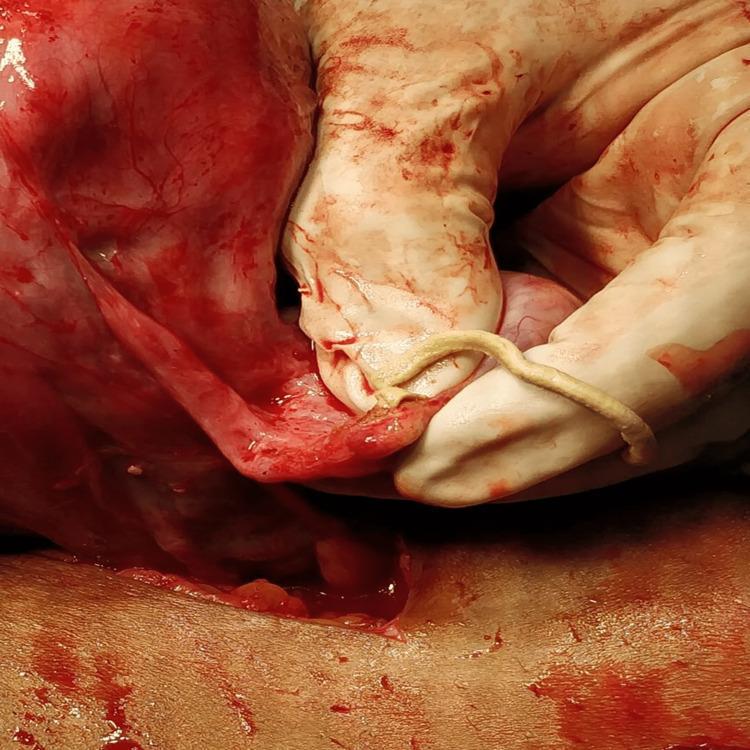
- Classic finding: caseous material extruding from tube (cheesy/pasty appearance intraoperatively)
- Tubes may form a conglomerate mass with ovaries - "frozen pelvis"
- Hydrosalpinx or pyosalpinx formation
- Peritubal adhesions, which distort tubal anatomy and cause obstruction
Microscopy:
- Caseating or non-caseating granulomata with Langhans giant cells, epithelioid cells, and lymphocytic cuffing
- Caseation necrosis at centre
- Obliteration of tubal lumen by fibrosis - permanent infertility
Endometrium
- Involvement is cyclical - TB foci may be shed during menstruation and regenerate from cornual region (bacilli persist in the cornua)
- Caseating granulomata with Langhans giant cells in the stroma
- Chronic endometritis with plasma cell infiltration
- In advanced disease: calcification, fibrosis, adhesions (Asherman syndrome)
- Endometrial biopsy shows tuberculous granulomas - the diagnostic gold standard for FGTB
(From Robbins & Kumar Basic Pathology: "Tuberculosis causes granulomatous endometritis, often associated with tuberculous salpingitis and peritonitis." - Robbins & Kumar Basic Pathology, p. 543)
Ovaries
- Less common due to intact ovarian capsule
- Peri-oophoritis (surface involvement) more common than true oophoritis
- Caseous material may fill the ovary - "cold abscess"
- Can present as an adnexal mass mimicking ovarian malignancy
Cervix
- Granulomatous cervicitis
- May mimic carcinoma clinically (cervical ulcer, friable tissue, bleeding)
- Diagnosis by biopsy
Peritoneum
- Associated peritoneal TB leads to "icing-sugar" appearance (white tubercles over bowel loops and peritoneum)
- Ascites may be present (exudative)
Clinical Features
FGTB is notoriously silent in early stages. The classic triad of presentations is:
1. Infertility (Most Common Presentation)
- Primary infertility in ~45-50% of cases
- Due to tubal obstruction, endometrial destruction, Asherman syndrome, poor endometrial receptivity
- Often the only presenting complaint - discovered during infertility workup
- Prognosis for fertility is very poor even after treatment
2. Menstrual Disturbances
- Oligomenorrhea - most common menstrual disturbance
- Amenorrhea - in advanced cases (Asherman syndrome)
- Menorrhagia (less common)
- Hypomenorrhea
- Note: Unlike non-TB PID which affects younger women, FGTB can cause postmenopausal bleeding
3. Chronic Pelvic Pain / Lower Abdominal Pain
- Dull, chronic, dragging pain
- Dysmenorrhea
- Dyspareunia
Other Features
- Abnormal vaginal discharge (rare)
- Constitutional symptoms (fever, weight loss, night sweats) - usually absent or mild in genital TB
- Adnexal mass (in ~25% of cases) - may mimic ovarian malignancy
- Ascites if peritoneal involvement
(From Harrison's Principles of Internal Medicine 22E: "Unlike nontuberculous salpingitis, genital tuberculosis often occurs in older women, many of whom are postmenopausal. Presenting symptoms include abnormal vaginal bleeding, pain (including dysmenorrhea), and infertility. About one-quarter of these women have had adnexal masses.")
Diagnosis
A high index of suspicion is essential given the insidious presentation.
History
- Infertility in a young woman from endemic area
- Past history of TB or contact with TB patient
- BCG vaccination history (doesn't exclude TB)
- Failure of response to conventional PID treatment
Investigations
1. Endometrial Biopsy (Most Important Diagnostic Test)
- Performed in premenstrual phase (day 21-23) for maximum diagnostic yield
- Best specimen for culture (Harrison's)
- Histopathology shows caseating granulomata with Langhans giant cells
- Yield: ~60-70%
2. Culture for M. tuberculosis (Gold Standard)
- From endometrial biopsy, menstrual blood, or peritoneal fluid
- Lowenstein-Jensen medium
- Takes 6-8 weeks (long turnaround)
- Sensitivity ~50-80%
3. Hysterosalpingography (HSG)
Classic features of FGTB on HSG:
- Bilateral tubal block (especially cornual)
- "Golf club" or "tobacco pipe" appearance of tubes
- Beaded or irregular tubes
- Rigid, straight, non-peristaltic tubes
- "Lead pipe" appearance
- Intrauterine synechiae (filling defects)
- Small, irregular, contracted uterine cavity
- Calcification in tubes or lymph nodes on plain X-ray
HSG findings in FGTB are pathognomonic and should not be dismissed as simple tubal factor infertility.
4. Diagnostic Laparoscopy
- Reveals characteristic findings:
- Bilateral tubal disease with adhesions
- "Icing sugar" tubercles on pelvic peritoneum
- Caseous material from tubes
- Frozen pelvis
- Allows peritoneal biopsy and fluid sampling for culture
- Considered the most definitive investigation for pelvic TB
5. PCR (Polymerase Chain Reaction)
- Rapid (24-48 hours)
- High sensitivity and specificity
- Can be performed on endometrial aspirate, menstrual blood, or peritoneal fluid
- Increasingly used as first-line test in endemic areas
- False positives are a concern
6. Other Tests
- ESR - elevated, non-specific
- Mantoux test - useful if strongly positive; negative doesn't exclude (anergic in immunocompromised)
- IGRA (Interferon-Gamma Release Assay) - QuantiFERON-TB Gold - more specific than Mantoux
- Chest X-ray - may show old/active pulmonary TB
- Ultrasonography - shows adnexal masses, hydrosalpinx, ascites, calcifications
- Ascitic fluid analysis - exudative, ADA (adenosine deaminase) elevated >40 U/L is highly suggestive
Berek & Novak Note:
"If tuberculosis or schistosomiasis is suspected, endometrial cultures should be performed." - Berek & Novak's Gynecology
Complications
| Complication | Mechanism |
|---|---|
| Infertility (primary > secondary) | Tubal occlusion, endometrial destruction |
| Asherman Syndrome | Endometrial adhesions from TB destruction of basalis layer |
| Ectopic Pregnancy | Partial tubal obstruction with luminal narrowing |
| Pelvic Abscess / "Cold Abscess" | Caseous material in tubes or ovaries |
| Frozen Pelvis | Extensive pelvic adhesions |
| Bowel Obstruction | Peritoneal TB, adhesions |
| Fistula Formation | Tubo-peritoneal, vesico-uterine (rare) |
| Malignant Transformation | Extremely rare; chronic granulomatous inflammation |
(From Berek & Novak: "Patients with genital tuberculosis have a very poor prognosis [for fertility].")
Treatment
Anti-Tubercular Therapy (ATT) - Same as Pulmonary TB
Regimen (RNTCP/WHO guidelines):
- Intensive Phase (2 months): Isoniazid (H) + Rifampicin (R) + Pyrazinamide (Z) + Ethambutol (E) - 2HRZE
- Continuation Phase (4 months): Isoniazid (H) + Rifampicin (R) - 4HR
- Total duration: 6 months (some experts recommend 9-12 months for FGTB due to poor drug penetration in fibrotic/caseous tissue)
Drug Doses:
| Drug | Daily Dose |
|---|---|
| Isoniazid | 5 mg/kg (max 300 mg) |
| Rifampicin | 10 mg/kg (max 600 mg) |
| Pyrazinamide | 25 mg/kg |
| Ethambutol | 15 mg/kg |
Important Points About ATT in FGTB
- Medical treatment resolves active infection but does NOT restore tubal anatomy or endometrial function destroyed by fibrosis
- Infertility due to structural damage is NOT reversed by ATT
- Treatment should begin before definitive culture confirmation if clinical suspicion is high
- Bailey & Love notes that ATT is "less effective in genital tuberculosis than in urinary tuberculosis" - surgical intervention may be needed if no resolution in 2 months
Surgical Treatment (Role is Limited)
- Indicated for:
- Pelvic abscess not responding to ATT
- Persistent adnexal mass after 2 months ATT
- Fistula
- Frozen pelvis with bowel complications
- Surgery: Total abdominal hysterectomy with bilateral salpingo-oophorectomy (TAH-BSO)
- Preceded by at least 2-4 weeks of ATT (reduce bacterial load, prevent dissemination)
- Hysteroscopic lysis of intrauterine adhesions (Asherman) - poor prognosis in TB-related cases
Assisted Reproduction (IVF)
- IVF-ET may be considered after completing ATT
- However, pregnancy rates are very poor (5-15% clinical pregnancy rate) due to:
- Endometrial fibrosis and poor receptivity
- Tubal factor
- Surrogacy may be the only option in severe endometrial destruction
- A 2023 systematic review (PMID 37758670) confirmed that ATT improves pregnancy outcomes in infertile women with genital TB, but absolute pregnancy rates remain low.
Important Differentials
| Feature | FGTB | Pyogenic PID |
|---|---|---|
| Age | Older women, can be postmenopausal | Young, sexually active |
| Onset | Insidious, chronic | Acute |
| Bilateral | Always | Usually |
| Systemic symptoms | Absent/mild | Fever, leukocytosis |
| Infertility | Very common | Variable |
| Response to antibiotics | No (needs ATT) | Yes |
| Laparoscopy | Tubercles, caseous material | Purulent exudate |
| Endometrial biopsy | Granulomata | Plasma cells, neutrophils |
Key Exam Points (High-Yield Summary)
- Most common site: Fallopian tubes (90-100%) - almost always bilateral
- Most common presentation: Infertility (especially primary infertility in endemic areas)
- Best diagnostic test: Endometrial biopsy (premenstrual phase) + culture
- Gold standard for diagnosis: Culture on Lowenstein-Jensen medium (but takes 6-8 weeks)
- Rapid diagnostic test: PCR on endometrial aspirate
- Classic HSG finding: Bilateral cornual block, beaded tubes, "golf club" deformity, intrauterine synechiae
- Definitive investigation: Diagnostic laparoscopy with biopsy
- Treatment: 6-month ATT (2HRZE + 4HR) - same as pulmonary TB
- Prognosis for fertility: Very poor despite ATT
- Endometrium in FGTB: Granulomata shed during menstruation, regenerate from cornua; basalis destruction leads to Asherman syndrome
- FGTB vs non-TB PID: FGTB is chronic, insidious, older women, bilateral, doesn't respond to antibiotics, causes granulomata on biopsy
- Asherman syndrome + TB: FGTB is the most common cause of Asherman syndrome in developing countries (Berek & Novak)
- Ovarian TB: Presents as adnexal mass - must always include FGTB in differential of adnexal mass in young woman from endemic area (mimics ovarian cancer)
- Peritoneal TB signs: "Icing sugar" tubercles, exudative ascites with high ADA
Recent Evidence
- PMID 38358181 - 2024 systematic review on ovarian tuberculosis: Fine-needle aspiration cytology (FNAC) and PCR are valuable diagnostic tools for ovarian TB presenting as adnexal mass
- PMID 37758670 - 2023 systematic review: ATT improves pregnancy outcomes in infertile women with FGTB, but pregnancy rates remain low overall
Sources: Harrison's Principles of Internal Medicine 22E | Berek & Novak's Gynecology | Robbins & Kumar Basic Pathology | Robbins, Cotran & Kumar Pathologic Basis of Disease | Bailey & Love's Short Practice of Surgery 28th Ed.
This is a shared conversation. Sign in to Orris to start your own chat.