
Hii , I want to make s report and want it to be published , on subject Pathophysiology, which topic should I select and why . So that I can be successfully able to make a report which will publish. I am currently studying in Volgograd university Russia
What is your current year/stage of study and area of interest? · Which broad area of pathophysiology interests you most? · What kind of publication are you aiming for?
best pathophysiology topics for medical student research publication 2024 2025
pathophysiology review medical students
hot topics pathophysiology research publishable 2025 inflammation metabolic cardiovascular
How to Choose a Publishable Pathophysiology Topic
Why Topic Selection Matters
- Whether journals will find it relevant and timely
- Whether you can realistically gather evidence with student-level resources
- Whether you can add something new (a fresh angle, updated synthesis, or local population data)
Top Recommended Topics for 2025-2026 (with reasoning)
1. Chronic Inflammation and Cardiovascular Disease
2. Gut Microbiome Dysbiosis and Metabolic Syndrome
3. Pathophysiology of Type 2 Diabetes and Insulin Resistance
- Mitochondrial dysfunction in beta cells
- Lipotoxicity and glucotoxicity
- The role of GLP-1 receptor agonists (Ozempic era)
4. Oxidative Stress and Organ Damage (Kidney/Liver)
5. Neuroinflammation in Depression and Anxiety
6. Immunosenescence and Age-Related Disease
Where to Publish as a Student
| Journal | Type | Indexed | Notes |
|---|---|---|---|
| MDPI Pathophysiology | Open Access | Scopus, PubMed, Q1 | Directly relevant, publishes Russian authors, ~27-day first decision |
| Cureus | Open Access | PubMed, Scopus | Very student-friendly, accepts review articles |
| Frontiers in Physiology | Open Access | PubMed, Scopus | High visibility, accepts student reviews |
| IJMS (Int. J. Mol. Sciences) | Open Access | Scopus | Good for mechanistic/molecular reviews |
| Kazan Medical Journal | Russian journal | Russian index | No APC, accepts Russian student authors |
| Volgograd Medical Research | Local/Russian | Local | Your home institution - easiest entry point |
My Top Recommendation for You
- Both are timely - there are fresh 2025 landmark papers to cite, which makes your review relevant
- Russia has one of the highest cardiovascular mortality rates in the world, giving your paper a natural local-population angle that editors value
- These topics do not require a laboratory - you can write a strong narrative or scoping review using PubMed literature alone
- MDPI's Pathophysiology journal (Scopus/PubMed indexed, Q1) actively publishes reviews from Eastern European researchers and has fast turnaround
Practical Steps to Get Published
- Choose a narrow sub-question, not a broad topic. Example: instead of "pathophysiology of heart failure," write "role of NLRP3 inflammasome activation in ischemic heart failure"
- Write a narrative or scoping review - original research requires a lab, but review articles only need library access
- Use PubMed + Google Scholar - search for your topic and find 40-60 recent papers (2020-2026) to cite
- Ask your pathophysiology professor to be a co-author/supervisor - this dramatically improves acceptance chances
- Submit to MDPI Pathophysiology first - it is Scopus/PubMed indexed, has a fast peer review (about 4 weeks), and explicitly welcomes international student authors
I don't know from where to start , how to write , where to find content which is relevant
Complete Beginner's Guide: Writing Your First Publishable Pathophysiology Report
STEP 1 - Pick ONE Narrow Topic (Don't be broad)
STEP 2 - Understand What Type of Paper You're Writing
- You read 30-50 published research papers on your topic
- You summarize, organize, and explain what the science says
- You write it in your own words with proper citations
- You do NOT need a laboratory or experiments
STEP 3 - Where to Find Relevant Content (Free Sources)
Best Free Databases:
| Source | Link | What You Get |
|---|---|---|
| PubMed | pubmed.ncbi.nlm.nih.gov | All medical research papers, free abstracts, many free full texts |
| Google Scholar | scholar.google.com | Broad search, finds PDFs freely available online |
| Sci-Hub | sci-hub.se | Access to full papers (widely used by students globally) |
| PubMed Central (PMC) | pmc.ncbi.nlm.nih.gov | Free full-text articles only |
| Semantic Scholar | semanticscholar.org | Free, good for finding related papers |
| ResearchGate | researchgate.net | Many authors share their papers free here |
How to Search on PubMed (Practical Example):
- Type:
oxidative stress AND beta cell AND type 2 diabetes - Filter by: Publication date: 2020-2026, Article type: Review
- Read the abstracts first - only download full papers that are directly useful
STEP 4 - Organize Before You Write
| Paper | Author + Year | Main Finding | Which Section It Belongs To |
|---|---|---|---|
| Paper 1 | Smith 2022 | ROS causes beta cell apoptosis | Mechanism section |
| Paper 2 | Kumar 2023 | Antioxidants reduce inflammation | Treatment section |
STEP 5 - Standard Structure of a Review Article
1. Title
- Specific and descriptive
- Example: "Oxidative Stress and Pancreatic Beta-Cell Dysfunction in Type 2 Diabetes Mellitus: A Narrative Review"
2. Abstract (250-300 words)
- Background (1-2 sentences): Why is this topic important?
- Objective: What does your review cover?
- Methods: Where did you search? (PubMed, Google Scholar, 2015-2025)
- Results/Findings: What did the literature show?
- Conclusion: What is the key takeaway?
3. Introduction (400-600 words)
- Define the disease/condition
- State the global burden (how many people affected, deaths, economic cost)
- Explain why the pathophysiology matters
- State the aim of your review (last paragraph)
4. Body Sections (this is the main content - 2000-4000 words total)
- 4.1 What is oxidative stress? (basic definition)
- 4.2 Sources of ROS in diabetes
- 4.3 How ROS damages pancreatic beta cells
- 4.4 Downstream effects: insulin secretion failure
- 4.5 Connection to complications (neuropathy, nephropathy)
- 4.6 Therapeutic implications (antioxidants, current treatments)
5. Conclusion (200-300 words)
- Summarize the key mechanisms you reviewed
- Mention what is still unknown (gaps in research)
- State the clinical importance
6. References
- Use Vancouver style (numbered citations) - standard for medical journals
- Aim for 40-60 references, mostly from 2015-2026
- Use a free tool like Zotero (zotero.org) to manage references automatically
STEP 6 - How to Actually Write (Practical Tips)
- Day 1-3: Collect papers, make your table
- Day 4: Write the Introduction
- Day 5-8: Write each body sub-section (one per day)
- Day 9: Write Conclusion and Abstract
- Day 10-12: Edit, check references, format
- Write in simple, clear English - don't try to sound "smart"
- Each paragraph = one idea. Start with a topic sentence, then support with citations
- After writing, read it aloud - if it sounds confusing, rewrite it
- Use Grammarly (free version) for grammar correction
- Use DeepL if you need help translating ideas from Russian to English
STEP 7 - Ask Your Professor to Co-Author
- Professors add credibility - journals accept papers from supervised students much more readily
- They will help you improve the quality
- They know which journals to submit to
- Volgograd State Medical University has an active research department - use it
STEP 8 - Where to Submit
- Cureus (cureus.com) - Free to publish, PubMed indexed, very beginner-friendly, accepts student review articles
- MDPI Pathophysiology - Scopus/PubMed Q1, but has an Article Processing Charge (~1000 EUR - ask your university if they cover it)
- Frontiers in Physiology - prestigious, but also has APC
- Russian/CIS journals - Many indexed Russian journals accept student papers with no APC (ask your professor which ones Volgograd university recommends)
Quick Summary Checklist
- Choose one narrow topic
- Search PubMed for 40-50 recent papers
- Organize papers in a table
- Write section by section (not all at once)
- Follow the standard structure: Title, Abstract, Introduction, Body, Conclusion, References
- Use Zotero for references
- Ask your professor to co-supervise
- Submit to Cureus first
But if I am writing what is already written in previous papers , what's the point
"What's the Point If It's Already Written?"
The Short Answer
- New papers come out every week - someone needs to synthesize them
- A busy doctor cannot read 500 papers - they read 1 good review
- Old reviews become outdated - a 2019 review needs a 2025 update
- Different populations need different perspectives
But Here's What Actually Makes YOUR Paper Different
1. Time Angle - "Updated Review"
2. Population Angle - "Russian/Eastern European Context"
- The highest cardiovascular mortality rate in Europe
- Specific dietary patterns (high salt, alcohol, animal fat)
- Specific environmental exposures (cold climate, industrial cities like Volgograd)
- Genetic polymorphisms more common in Slavic populations
3. Gap Angle - "What We Still Don't Know"
- "Further studies are needed..."
- "The exact mechanism remains unclear..."
- "No studies have examined this in..."
4. Comparison Angle - "Putting Two Things Together"
- "Gut microbiome dysbiosis AND neuroinflammation in depression" - combining two separate literatures
- "Sleep deprivation AND insulin resistance" - two topics rarely reviewed together
- "COVID-19 long-term effects AND autonomic nervous system dysfunction"
5. Mechanism Focus Angle - "Going Deeper on One Pathway"
The Real Mindset Shift
A textbook chapter on cardiovascular disease exists. Yet thousands of review papers on cardiovascular disease get published every year. Why? Because each one asks a slightly different question, covers a different time period, focuses on a different angle, or serves a different audience.
Practical Recommendation for You
- It directly addresses the Russian population (almost no English-language reviews do this)
- It combines inflammation pathophysiology with epidemiology of Russia
- It is relevant to your local professors who will want to co-author it
- Russian and Eastern European journals will immediately see its value
- Even international journals value geographic diversity in research
Chronic inflammation and cardiovascular diseases I selected , but you said narrow topic , its broad right
Think of It Like a Funnel
BROAD
    |
    ▼
Chronic Inflammation + Cardiovascular Disease
    |
    ▼
Which cardiovascular disease specifically?
    |
    ▼
Which part of the inflammatory process?
    |
    ▼
Which specific mechanism or molecule?
    |
    ▼
NARROW = Your paper
Step 1 - Pick ONE Cardiovascular Disease
| Option | Notes |
|---|---|
| Atherosclerosis | Most studied, richest literature |
| Hypertension | Very relevant to Russia (high prevalence) |
| Heart failure | Growing field, lots of recent papers |
| Myocardial infarction | Classic topic, well understood |
| Atrial fibrillation | Newer inflammatory angle, less reviewed |
Step 2 - Pick ONE Inflammatory Mechanism
| Option | Notes |
|---|---|
| NLRP3 inflammasome activation | Very hot right now, 2022-2026 papers abundant |
| Role of IL-6 and TNF-alpha | Classic cytokines, well documented |
| Macrophage polarization (M1/M2) | Modern angle, increasingly published |
| Endothelial dysfunction | Bridge between inflammation and vessels |
| Oxidative stress + inflammation | Powerful combo, easy to find literature |
| hsCRP as a biomarker | Clinical angle, practical relevance |
Step 3 - Combine Them = Your Narrow Title
"Role of NLRP3 Inflammasome in the Pathogenesis of Atherosclerosis: A Narrative Review"
"Endothelial Dysfunction as a Mediator of Chronic Inflammation in Hypertension: Mechanisms and Clinical Implications"
"The Role of IL-6 and hsCRP in the Pathophysiology of Acute Myocardial Infarction: An Updated Review"
"Macrophage Polarization and Plaque Vulnerability in Atherosclerosis: Pathophysiological Mechanisms"
My Top Pick for You
The Rule to Remember
One disease + One mechanism + One angle = A publishable review
Okay hypertension I chose , but before reading articles and research papers I should have knowledge about the topic and related topics to understand what is written in research papers
Foundation Knowledge: Hypertension + Chronic Inflammation
PART 1 - What is Blood Pressure and How is it Controlled?
The Basic Formula (memorize this)
Blood Pressure (BP) = Cardiac Output (CO) × Total Peripheral Resistance (TPR)
- Cardiac Output = how much blood the heart pumps per minute
- Total Peripheral Resistance = how much the blood vessels resist blood flow (narrower vessels = higher resistance)
PART 2 - The 4 Main Systems That Control BP
1. The RAAS (Renin-Angiotensin-Aldosterone System)
Low BP detected by kidney
        ↓
Kidney releases RENIN
        ↓
Renin converts Angiotensinogen → Angiotensin I
        ↓
ACE (in lungs) converts Angiotensin I → Angiotensin II
        ↓
Angiotensin II does 3 things:
  1. Constricts blood vessels (raises TPR → raises BP)
  2. Stimulates Aldosterone release from adrenal gland
  3. Aldosterone causes kidneys to retain sodium + water
        ↓
Blood volume increases → BP increases
2. The Sympathetic Nervous System (SNS)
- Releases norepinephrine and epinephrine
- Causes vasoconstriction (raises TPR)
- Increases heart rate and cardiac output
- Also activates the RAAS
- In hypertension: SNS is chronically overactive, especially in obese patients
3. The Kidney - Pressure Natriuresis
- Kidneys control long-term BP by controlling how much sodium and water are kept in the body
- More sodium retained = more blood volume = higher BP
- The famous Guyton hypothesis: the kidney is ultimately the master regulator of long-term BP
- In hypertension: kidneys require higher pressure to excrete the same amount of sodium ("pressure-natriuresis curve shifts right")
4. The Endothelium (Blood Vessel Lining)
- Healthy endothelium produces Nitric Oxide (NO) which relaxes vessels (vasodilation)
- In hypertension: endothelium is damaged, produces less NO, vessels stay constricted
- This is called Endothelial Dysfunction - the bridge between hypertension and inflammation
PART 3 - Primary vs Secondary Hypertension
| Type | Frequency | Cause |
|---|---|---|
| Primary (Essential) | >90% of cases | No single cause; multifactorial (obesity, salt, genetics, SNS, RAAS) |
| Secondary | <10% of cases | Known cause: renal artery stenosis, aldosteronism, pheochromocytoma, thyroid disease |
PART 4 - The Inflammation Connection (Your Paper's Core)
Risk factors (obesity, salt, stress, smoking)
        ↓
RAAS overactivation + SNS overactivation
        ↓
Angiotensin II acts on blood vessel walls
        ↓
Endothelial cells activated → produce pro-inflammatory molecules
(ICAM-1, VCAM-1, E-selectin)
        ↓
Monocytes recruited from blood → enter vessel wall → become Macrophages
        ↓
Macrophages release cytokines: IL-6, TNF-α, IL-1β
        ↓
Oxidative stress increases (ROS = Reactive Oxygen Species)
        ↓
Nitric Oxide destroyed by ROS → endothelial dysfunction worsens
        ↓
Vascular stiffness + remodeling → sustained high BP
        ↓
More inflammation → vicious cycle
| Molecule | Role | Type |
|---|---|---|
| Angiotensin II | Master driver of inflammation in HTN | Hormone |
| IL-6 | Pro-inflammatory cytokine, elevated in HTN | Cytokine |
| TNF-alpha | Promotes vascular inflammation | Cytokine |
| IL-1beta | Activates NLRP3 inflammasome | Cytokine |
| hsCRP | Biomarker of inflammation, elevated in HTN | Biomarker |
| Nitric Oxide (NO) | Anti-inflammatory vasodilator, reduced in HTN | Signaling molecule |
| ROS | Destroys NO, worsens endothelial damage | Oxidant |
| ICAM-1, VCAM-1 | Adhesion molecules, recruit immune cells to vessel wall | Adhesion molecule |
| NF-kB | Master inflammatory transcription factor activated by Ang II | Transcription factor |
PART 5 - What Happens to Organs (Target Organ Damage)
| Organ | Damage | Clinical Result |
|---|---|---|
| Heart | Left ventricular hypertrophy, fibrosis | Heart failure, arrhythmia |
| Brain | Arteriolosclerosis, lacunar infarcts | Stroke, vascular dementia |
| Kidneys | Nephrosclerosis, glomerular damage | Chronic kidney disease |
| Eyes | Hypertensive retinopathy | Vision loss |
| Arteries | Atherosclerosis acceleration | MI, peripheral artery disease |
PART 6 - Key Terms You Will See in Research Papers
| Term | Meaning |
|---|---|
| Atherosclerosis | Buildup of plaque in artery walls |
| Arteriolosclerosis | Thickening/hardening of small arteries |
| Vascular remodeling | Structural changes in vessel walls due to chronic pressure |
| Inflammasome | Protein complex that triggers inflammation (NLRP3 is the most studied in HTN) |
| Oxidative stress | Imbalance between ROS production and antioxidant defenses |
| Endothelial dysfunction | Impaired endothelium - reduced NO, increased permeability |
| Pressure-natriuresis | The kidney's mechanism to excrete sodium when BP is high |
| Left ventricular hypertrophy (LVH) | Heart muscle thickens due to working against high pressure |
| Microalbuminuria | Small amounts of albumin in urine - early sign of kidney damage in HTN |
Your Study Order Before Reading Papers
- BP regulation basics - CO, TPR, autoregulation (your physiology textbook)
- RAAS system - renin, angiotensin II, aldosterone (pharmacology textbook)
- Endothelial biology - NO production, dysfunction (pathophysiology textbook)
- Inflammation basics - cytokines, NF-kB, macrophage activation (pathology - Robbins)
- Then start reading research papers on "Angiotensin II and vascular inflammation"
I want to read in detail , I have robin
Your Robbins Reading Guide: Hypertension + Inflammation
CHAPTER READING ORDER (Robbins & Kumar Basic Pathology)
STEP 1 - Read Chapter 2: Inflammation (Read This First)
"Vasodilation is one of the earliest reactions of acute inflammation... The most important chemical mediator of vasodilation is histamine."
"Increased vascular permeability - the principal mechanism is contraction of endothelial cells, which creates interendothelial openings. It is elicited by histamine, bradykinin, leukotrienes."
- Acute vs chronic inflammation - what is the difference?
- Chemical mediators: histamine, bradykinin, prostaglandins, leukotrienes, cytokines
- What are neutrophils and macrophages doing during inflammation?
- What is the difference between an exudate and a transudate?
- NF-kB: the master "on switch" for inflammation genes
STEP 2 - Read Chapter 8 (Vascular Disease section): Hypertension
"Sustained diastolic pressures greater than 80 mm Hg or sustained systolic pressures in excess of 120 mm Hg are associated with an increased risk for atherosclerosis... over 40% of individuals in the general population are hypertensive."
"Without appropriate treatment, about half of patients with hypertension die of ischemic heart disease or congestive heart failure, and another third succumb to stroke."
| Type | Frequency |
|---|---|
| Primary (Essential) Hypertension | 90-95% of all cases |
| Secondary Hypertension | 5-10% of cases |
"Primary hypertension results from the interplay of genetic polymorphisms and environmental factors, which synergize to increase blood volume and/or peripheral resistance."
- Reduced renal sodium excretion:
"Decreased sodium excretion causes an obligatory increase in fluid volume and increased cardiac output, thereby elevating blood pressure. At the new higher blood pressure, the kidneys excrete additional sodium - a new steady state is achieved, but at the expense of an elevated blood pressure." - This is called resetting of pressure-natriuresis
- Increased vascular resistance:
"Increased vascular resistance may stem from vasoconstriction or structural changes in vessel walls. Chronic vasoconstriction may result in permanent thickening of the walls of affected vessels."
"Susceptibility genes probably include those that influence renal sodium resorption, production of endogenous pressors, and smooth muscle cell (SMC) growth. Polymorphisms in the renin-angiotensin system contribute to differences in BP regulation seen in different populations."
"Stress, obesity, smoking, physical inactivity, high levels of salt consumption... Evidence linking dietary sodium intake with hypertension is particularly strong."
STEP 3 - The RAAS Diagram from Robbins (Memorize This)
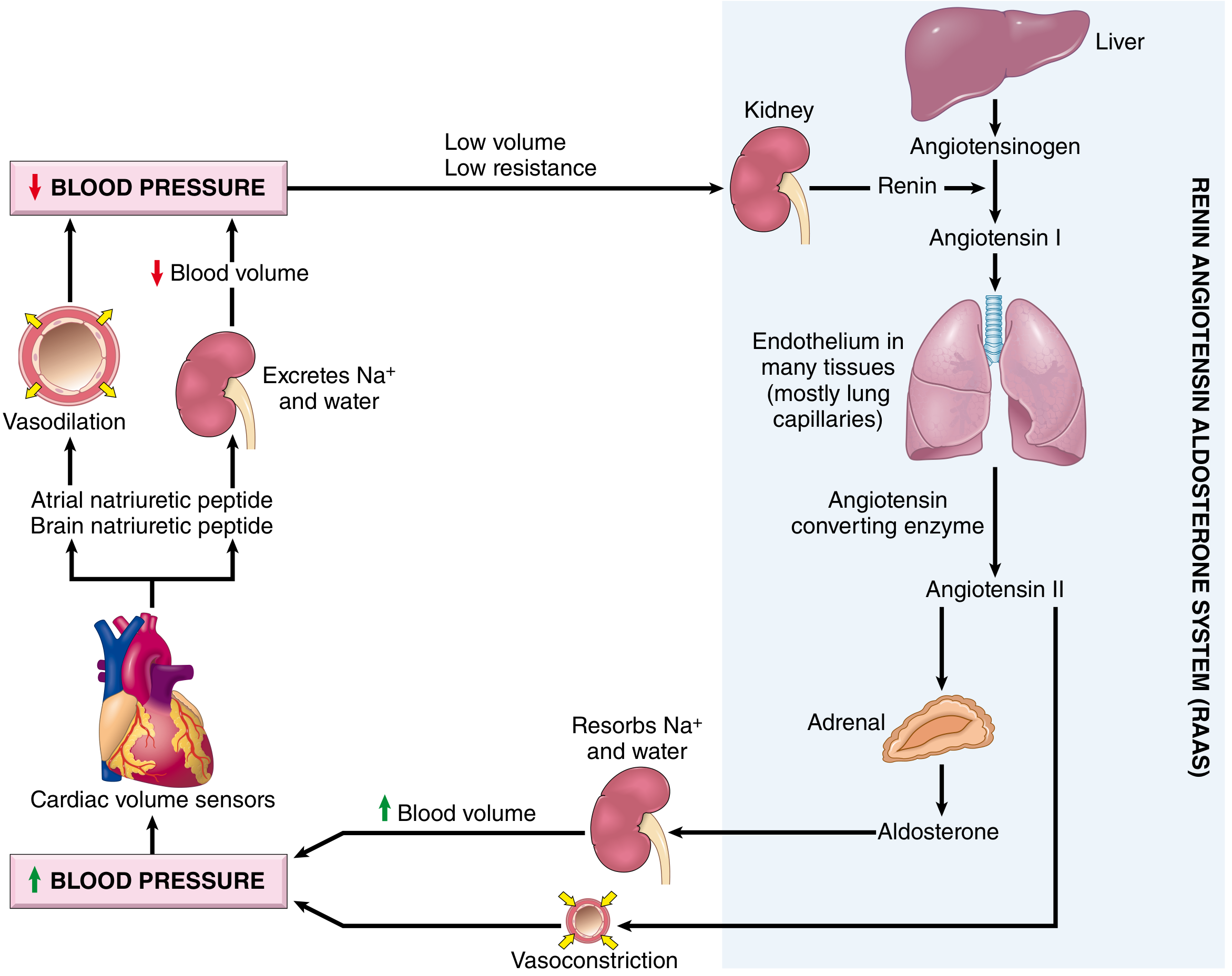
- Low BP → Kidney releases Renin
- Liver makes Angiotensinogen
- Renin converts Angiotensinogen → Angiotensin I
- Lung endothelium (via ACE) converts Angiotensin I → Angiotensin II
- Angiotensin II → Adrenal gland → releases Aldosterone
- Aldosterone → Kidney resorbs Na+ and water → blood volume rises → BP rises
- Angiotensin II also directly causes vasoconstriction
- When BP rises: heart releases ANP/BNP → kidney excretes Na+ → BP comes down (counter-regulatory)
STEP 4 - Vascular Pathology in Hypertension (Robbins Chapter 8)
"Marked by thickening of arteriolar walls, with deposition of homogeneous, pink hyaline material and loss of underlying structural detail, and luminal narrowing. Stems from leakage of plasma components across injured endothelial cells into vessel walls and increased ECM production by SMCs in response to chronic hemodynamic stress."
"Vessels exhibit 'onion skin,' concentric, laminated thickening of arteriolar walls and luminal narrowing. In severe hypertension, these changes are accompanied by fibrinoid necrosis."
STEP 5 - Atherosclerosis Section (Chapter 8, just after Hypertension)
"Atherosclerosis is best viewed as the vascular response to endothelial injury."
"Vascular injury leading to EC loss or dysfunction stimulates SMC growth, ECM synthesis, and thickening of the vascular wall."
"This response occurs with any form of vascular damage or dysfunction, including infection, inflammation, immune injury, physical trauma (e.g., from hypertension), or toxic exposure (e.g. oxidized lipids or cigarette smoke)."
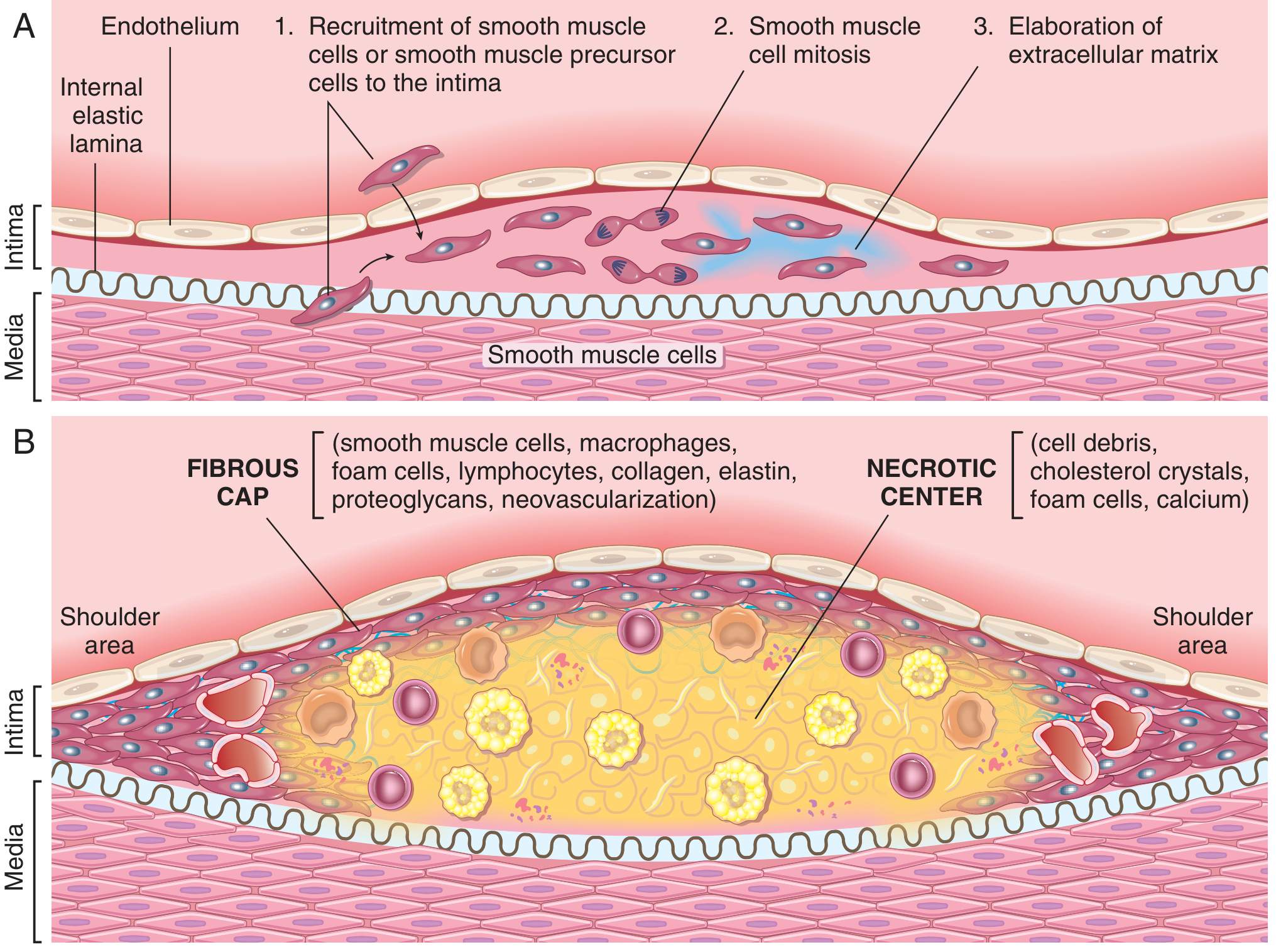
- Top diagram (A): When endothelium is injured by hypertension, smooth muscle cells migrate from the media into the intima, divide, and produce extracellular matrix - forming a thickened wall
- Bottom diagram (B): With persistent injury (as in chronic hypertension + hyperlipidemia), a full atherosclerotic plaque develops with:
- Fibrous cap - smooth muscle cells, macrophages, foam cells, lymphocytes, collagen
- Necrotic center - cell debris, cholesterol crystals, foam cells, calcium
"Essential hypertension represents 90-95% of cases and is a complex, multifactorial disorder involving both environmental influences and genetic variants that influence sodium resorption, aldosterone pathways, and the renin-angiotensin-aldosterone system."
Your Exact Reading Plan in Robbins
| Day | What to Read | Chapter in Robbins Basic Pathology |
|---|---|---|
| Day 1 | Acute Inflammation - mediators, vascular changes | Chapter 2, first 30 pages |
| Day 2 | Chronic Inflammation - macrophages, cytokines, NF-kB | Chapter 2, second half |
| Day 3 | RAAS diagram + Hypertension epidemiology + pathogenesis | Chapter 8, Hypertension section |
| Day 4 | Vascular pathology in HTN (arteriolosclerosis) | Chapter 8, Morphology subsection |
| Day 5 | Atherosclerosis - endothelial injury, plaque formation | Chapter 8, Atherosclerosis section |
| Day 6 | Ischemic Heart Disease (consequence of HTN + atherosclerosis) | Chapter 9, Cardiac Pathology |
| Day 7 | Review everything, draw your own flow diagram | - |
After Robbins - What to Read Next
- Pharmacology (any textbook) - just the RAAS drugs section: ACE inhibitors, ARBs, beta-blockers, calcium channel blockers. Understanding the drugs reinforces the mechanisms.
- Then start PubMed - search "endothelial dysfunction hypertension inflammation" and you will now recognize every term in those papers.
If I read ch 2 and 8And RAAS , will I understand everything?
What Ch 2 + Ch 8 + RAAS WILL Give You ✅
| Topic | Coverage After Reading |
|---|---|
| What inflammation is | ✅ Complete |
| Chemical mediators (histamine, cytokines, IL-6, TNF-α) | ✅ Complete |
| Macrophage and neutrophil roles | ✅ Complete |
| How hypertension is classified | ✅ Complete |
| RAAS mechanism | ✅ Complete |
| How sodium retention raises BP | ✅ Complete |
| Arteriolosclerosis (vessel wall damage) | ✅ Complete |
| Atherosclerotic plaque formation | ✅ Complete |
| Target organ damage (heart, kidney, brain) | ✅ Partial |
What Will STILL Be Unclear ❌ - And Where to Fill the Gap
Gap 1 - Endothelial Biology (Most Important Gap)
- How does a healthy endothelium produce Nitric Oxide (NO)?
- What enzyme makes NO? (eNOS - endothelial Nitric Oxide Synthase)
- How does Angiotensin II specifically destroy NO production?
- What is oxidative stress doing at the molecular level inside the endothelial cell?
Read the "Normal Vascular Wall" section in Robbins Ch 8 - it comes just BEFORE the Hypertension section. It explains endothelial cell biology in 3-4 pages. This is essential for your paper.
Gap 2 - Oxidative Stress Mechanism
- What exactly is ROS?
- How is it produced in a blood vessel?
- Why does ROS destroy NO?
- What is NADPH oxidase and why is it activated by Angiotensin II?
Read any Biochemistry textbook - just the chapter on "Free Radicals and Antioxidants." It is 10-15 pages and explains everything. Alternatively, one good review paper on PubMed titled something like "Oxidative stress in hypertension" will cover this in 2-3 pages.
Gap 3 - Specific Inflammatory Cytokines and Their Pathways
- How exactly does Angiotensin II activate NF-kB?
- Which specific cytokines (IL-6, IL-17, IL-1β) are elevated in hypertension and why?
- What is the NLRP3 inflammasome? (Very common in current research papers)
- What is the difference between M1 and M2 macrophage polarization?
This is exactly where research papers come in. After reading Robbins, search PubMed for:
- "Angiotensin II NF-kB inflammation review"
- "NLRP3 inflammasome hypertension" One good review paper will teach you these molecular details better than any textbook.
Gap 4 - Sympathetic Nervous System Role
Your Physiology textbook (you likely have Guyton & Hall or a Russian equivalent) - read the chapter on Neural Control of Blood Pressure. Just 1 chapter, about 20 pages.
Gap 5 - Clinical Biomarkers
This comes naturally as you read research papers. You do not need a textbook for this.
The Honest Complete Picture
After Ch 2 + Ch 8 + RAAS:
You will understand ~65% of what research papers say.

Add "Normal Vascular Wall" section (Ch 8, before HTN):
→ Goes up to ~75%

Add Biochemistry: Free Radicals chapter:
→ Goes up to ~82%

Add Physiology: Neural BP control chapter:
→ Goes up to ~88%

Read 2-3 review papers on PubMed:
→ Goes up to ~95%

The remaining 5% = highly specialized molecular
details that even senior researchers look up.
Nobody knows everything.
Practical Advice
- Read Ch 2 + Ch 8 + RAAS first (your foundation - do this now)
- Start reading ONE easy review paper on PubMed on your topic
- When you hit a term you don't understand, go back to the textbook or biochemistry chapter to fill that specific gap
- Return to the paper

There are no such chapter in my book 😭
Your Book vs What I Told You - Direct Translation
| What I Said | Your Book (Robbins & Cotran) |
|---|---|
| Ch 2 - Inflammation | Ch 3 - Inflammation and Repair, page 64 ✅ (you even drew an arrow on it!) |
| Ch 8 - Vascular Disease (Hypertension + Atherosclerosis) | Ch 11 - Blood Vessels, page 441 ✅ |
| Ch 9 - Cardiac Pathology | Ch 12 - The Heart, page 479 ✅ |
| Kidney damage from HTN | Ch 20 - The Kidney, page 813 ✅ |
| Endocrine / RAAS (Aldosterone) | Ch 24 - The Endocrine System, page 970 ✅ |
Your Exact Reading Plan (with your page numbers)
Phase 1 - Foundation (Do This First)
| Chapter | Pages | What You Learn |
|---|---|---|
| Ch 3 - Inflammation and Repair | p. 64 | Mediators, cytokines, macrophages, chronic inflammation - the language of all research papers |
| Ch 4 - Hemodynamic Disorders | p. 100 | Edema, congestion, thrombosis, shock - directly related to HTN complications |
Phase 2 - Your Core Topic
| Chapter | Pages | What You Learn |
|---|---|---|
| Ch 11 - Blood Vessels | p. 441 | Hypertension, RAAS, arteriolosclerosis, atherosclerosis, endothelial dysfunction - THIS IS YOUR MAIN CHAPTER |
| Ch 12 - The Heart | p. 479 | What hypertension does to the heart - LVH, heart failure, ischemic heart disease |
Phase 3 - Target Organ Damage (for your paper's clinical section)
| Chapter | Pages | What You Learn |
|---|---|---|
| Ch 20 - The Kidney | p. 813 | Hypertensive nephrosclerosis, how HTN destroys kidney |
| Ch 28 - Central Nervous System | p. 1129 | Hypertensive brain damage, stroke, cerebral hemorrhage |
The Best News
- Normal vascular wall and endothelium
- Hypertension (epidemiology, pathogenesis, RAAS, vascular lesions)
- Atherosclerosis (endothelial injury, plaque formation, foam cells)
- Aneurysms and other vessel diseases
One More Thing
- More molecular detail on Angiotensin II
- More on endothelial dysfunction
- More on the inflammatory cascade in atherosclerosis