
What does a herpes rash on face look like
Reading File
Now let me search the medical library and web simultaneously for herpes facial rash information and images.
Finding Sources
Searching the Web
herpes rash on face appearance symptoms photos clinical description
Finding Sources
Loading Image
Loading Image
Reading File
Loading Image
Now let me fetch the textbook images of herpes simplex on the face:
Loading Image
Reading File
Loading Image
Loading Image
I now have enough information for a thorough, well-illustrated answer. Here's what herpes rashes on the face look like:
Herpes Rash on the Face
There are two main types of herpes that cause facial rashes: Herpes Simplex Virus type 1 (HSV-1) and Herpes Zoster (shingles/VZV). They look quite different.
HSV-1 (Oral / Facial Herpes)
HSV-1 is the most common cause of herpes on the face, and the rash appears in a predictable sequence:
Stages of an Outbreak

| Stage | What it looks like |
|---|---|
| 1. Prodrome | Tingling, burning, or itching at the site - no visible lesion yet |
| 2. Red bumps | Small red spots or papules appear on an inflamed base |
| 3. Blisters (vesicles) | Bumps fill with clear fluid and cluster together, often described as "grouped vesicles on an erythematous base" |
| 4. Ulceration | Blisters rupture, ooze, and become shallow, painful sores |
| 5. Crusting/healing | Sores dry out, crust over, and resolve - typically within 10 days |
Where on the Face?
- Lips / lip margin - the most classic location, called "herpes labialis" or "cold sores" / "fever blisters"
- Around the mouth and chin
- Nose
- Occasionally the cheek
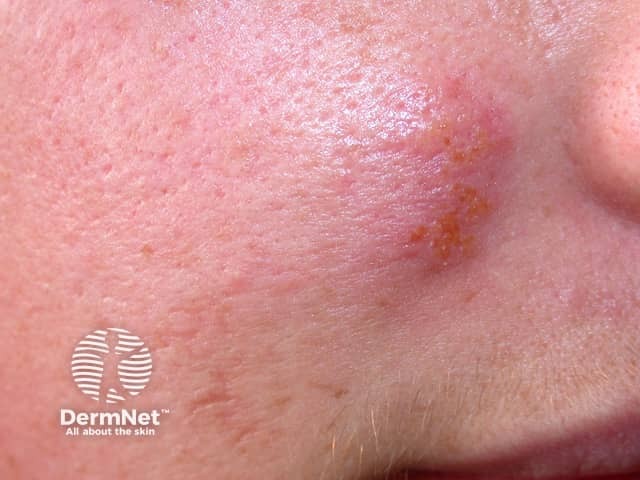
Primary (First-Time) Infection
Primary infection is often more severe. The classic presentation is herpetic gingivostomatitis - widespread inflamed, crusting sores on the lips and inside the mouth, accompanied by fever and feeling unwell. This is most common in children.
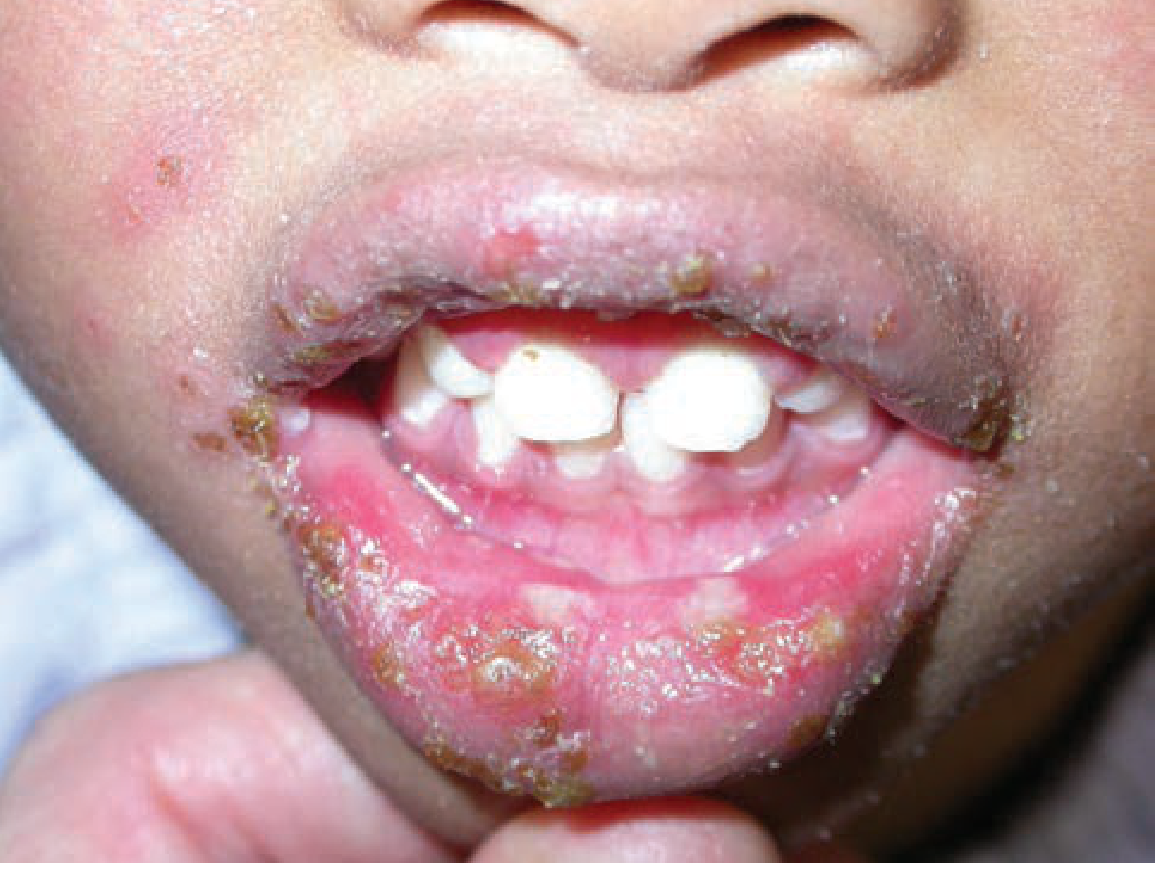
Herpes Zoster (Shingles) on the Face
Shingles on the face is caused by reactivation of the varicella-zoster virus and looks quite different from HSV-1:
- Follows a dermatomal pattern - stays strictly on one side of the face (unilateral), often tracking along the forehead, around one eye, or along the jaw
- Starts as a painful, red rash that progresses to clusters of vesicles and pustules on an erythematous (red) base
- Accompanied by significant pain, burning, or sensitivity before and during the rash - often described as the worst feature
- When it involves the ophthalmic branch of the trigeminal nerve (forehead and around the eye), it can threaten vision and is a medical emergency
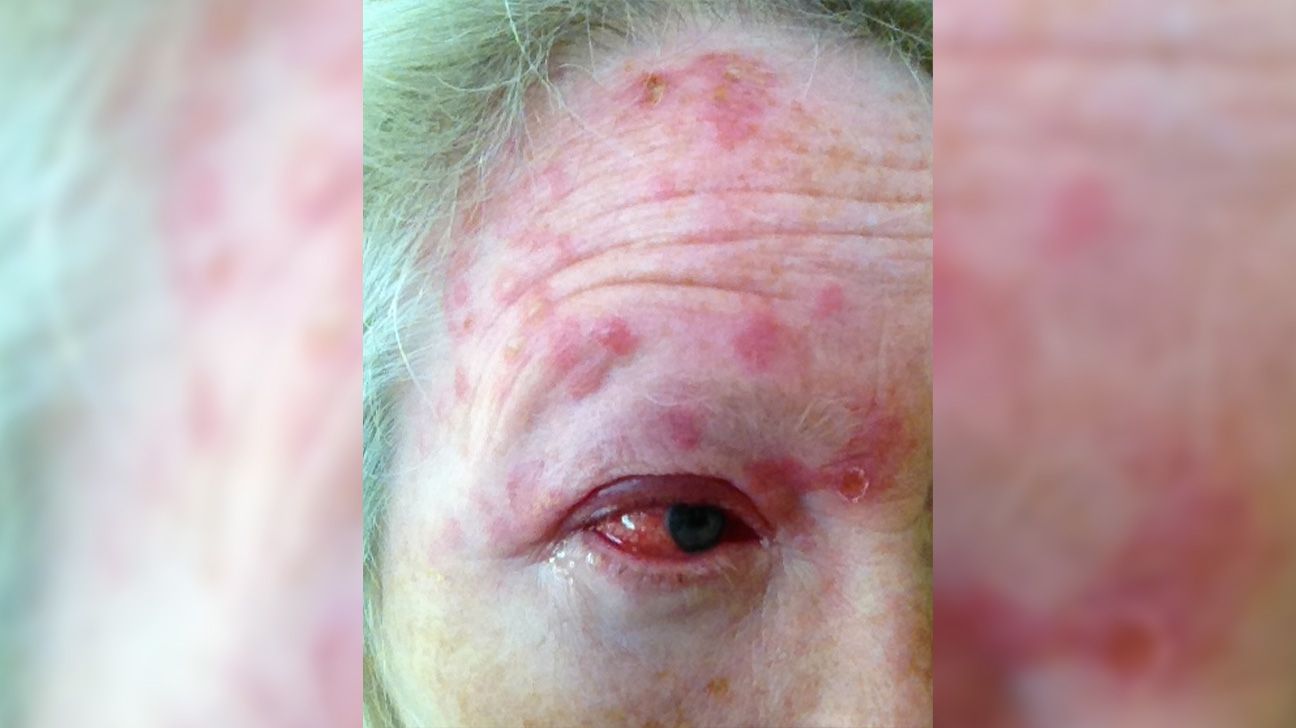
The diagram below shows which parts of the face the trigeminal nerve branches cover - this tells you where shingles can appear:
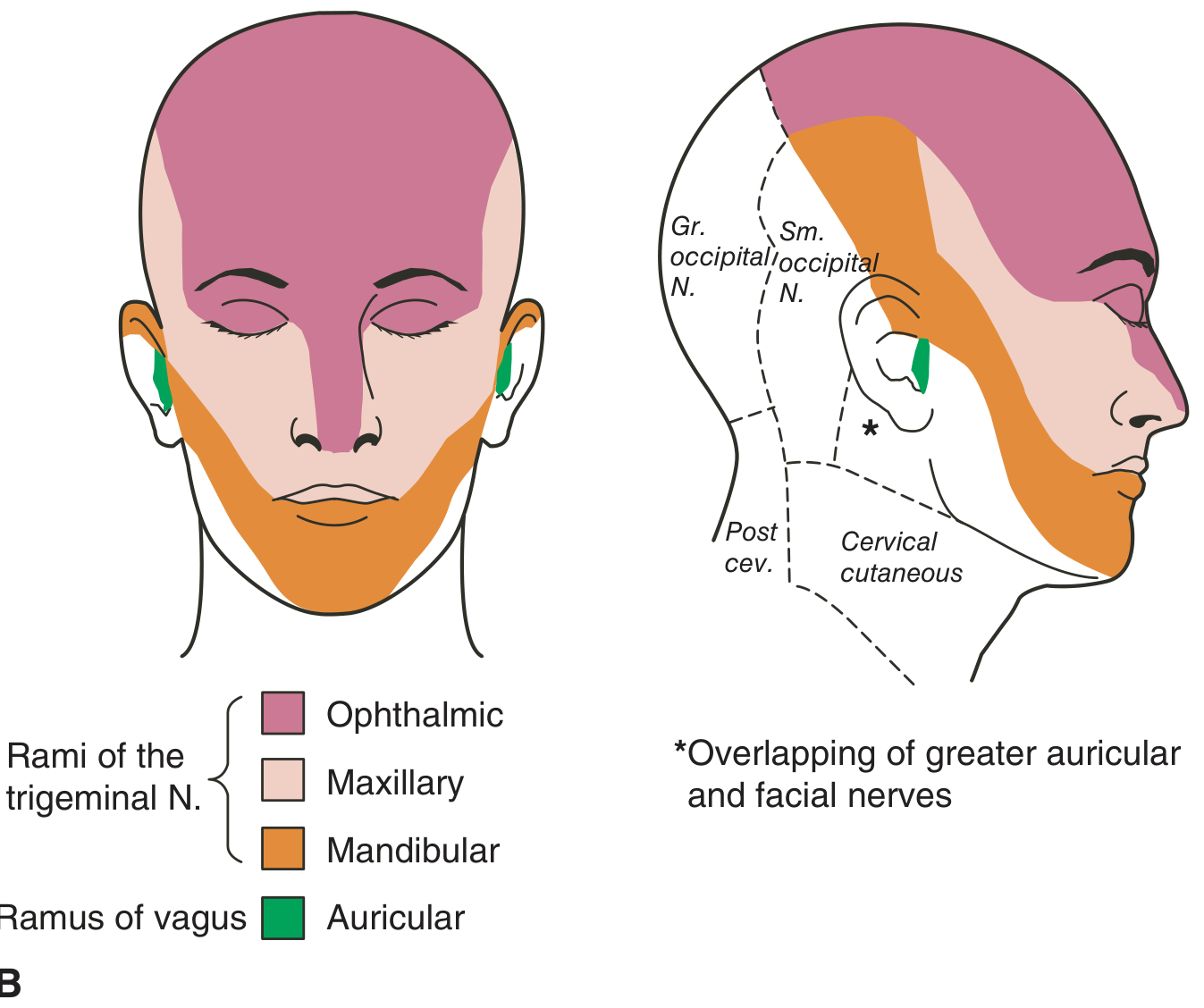
Key Differences at a Glance
| Feature | HSV-1 (cold sore) | Herpes Zoster (shingles) |
|---|---|---|
| Location | Lips, around mouth | One side of face/forehead/eye |
| Pattern | Localized cluster | Dermatomal strip, unilateral |
| Pain | Mild-moderate | Often severe, burning |
| Blisters | Grouped on red base | Clustered vesicles + pustules |
| Systemic symptoms | Mild or none (recurrences) | Often fever, malaise, fatigue |
| Who gets it | Anyone, very common | Usually adults >50, immunocompromised |
When to See a Doctor Urgently
- Rash near or around the eye (risk of vision loss from zoster ophthalmicus)
- Signs of spreading infection (expanding redness, warmth, swelling)
- Rash in someone who is immunocompromised
- Rash in a newborn or infant
- Severe pain, high fever, or confusion
Treatment with antivirals (acyclovir, valacyclovir) is most effective when started within 72 hours of rash onset for shingles, or within 24 hours for HSV-1 primary outbreaks. - Tintinalli's Emergency Medicine, p. 1672
Disclaimer: A visual guide is helpful, but any painful or blistering facial rash should be evaluated by a healthcare provider for accurate diagnosis and treatment.
This is a shared conversation. Sign in to Orris to start your own chat.