
Psoriasis and its management through all pathy
Reading File
Now let me search the medical library and web simultaneously for comprehensive psoriasis management across all systems of medicine.
Finding Sources
Searching the Web
psoriasis management Ayurveda homeopathy Unani naturopathy 2025
Searching PubMed
psoriasis treatment management
Excellent. Now let me read the main Fitzpatrick's psoriasis section and Andrews' dermatology section in parallel, plus get herbal medicine details:
Reading File
Reading File
Reading File
Now let me read the treatment/management section from Andrews' and get more from Fitzpatrick's management sections:
Reading File
Reading File
Let me now look for the treatment section in Andrews' and the Family Medicine book, plus get specific treatment content:
Reading File
Reading File
Reading File
Finding Sources
Now let me read the Fitzpatrick's treatment section and the Andrews' treatment section:
Reading File
Reading File
Reading File
Reading File
Reading File
I now have comprehensive textbook material. Let me fetch some key clinical images and compile the full response:
Loading Image
Loading Image
Loading Image
I now have comprehensive textbook content from Fitzpatrick's, Andrews', and Family Medicine sources, plus web research on alternative systems. Let me compile the full comprehensive response.
Psoriasis - Comprehensive Management Across All Systems of Medicine
1. OVERVIEW AND DEFINITION
Psoriasis is a common, chronic, recurrent, immune-mediated inflammatory disease of the skin characterized by circumscribed, erythematous, dry, scaling plaques of various sizes, usually covered by silvery-white lamellar (micaceous) scales. Lesions are symmetrically distributed with predilection for the scalp, nails, extensor surfaces of the limbs, umbilical region, and sacrum.
Epidemiology:
- Affects 1-2% of the population worldwide
- Two peak age ranges: 16-22 years and 57-60 years
- Genetic: 50% risk if both parents affected; ~16% if one parent affected
- Strong HLA-Cw6 association in early-onset disease
2. CLINICAL TYPES
| Type | Features |
|---|---|
| Plaque (Psoriasis Vulgaris) | 80-90% of cases; well-demarcated, erythematous plaques with silvery scales |
| Guttate | Small drop-like lesions; follows streptococcal throat infection |
| Inverse | Affects folds/flexures; moist, erythematous without typical scale |
| Pustular | Localized (palmoplantar) or generalized (von Zumbusch); superficial pustules |
| Erythrodermic | Generalized erythema and exfoliation; medical emergency |
| Nail | Pitting, onycholysis, oil spots, subungual hyperkeratosis |
| Scalp | Thick scale on scalp; may extend beyond hairline |
| Psoriatic Arthritis | Seronegative inflammatory arthritis; hands, feet, knees |
| Napkin Psoriasis | Diaper area in infants 2-8 months |
Guttate psoriasis (small water-drop lesions after streptococcal infection):
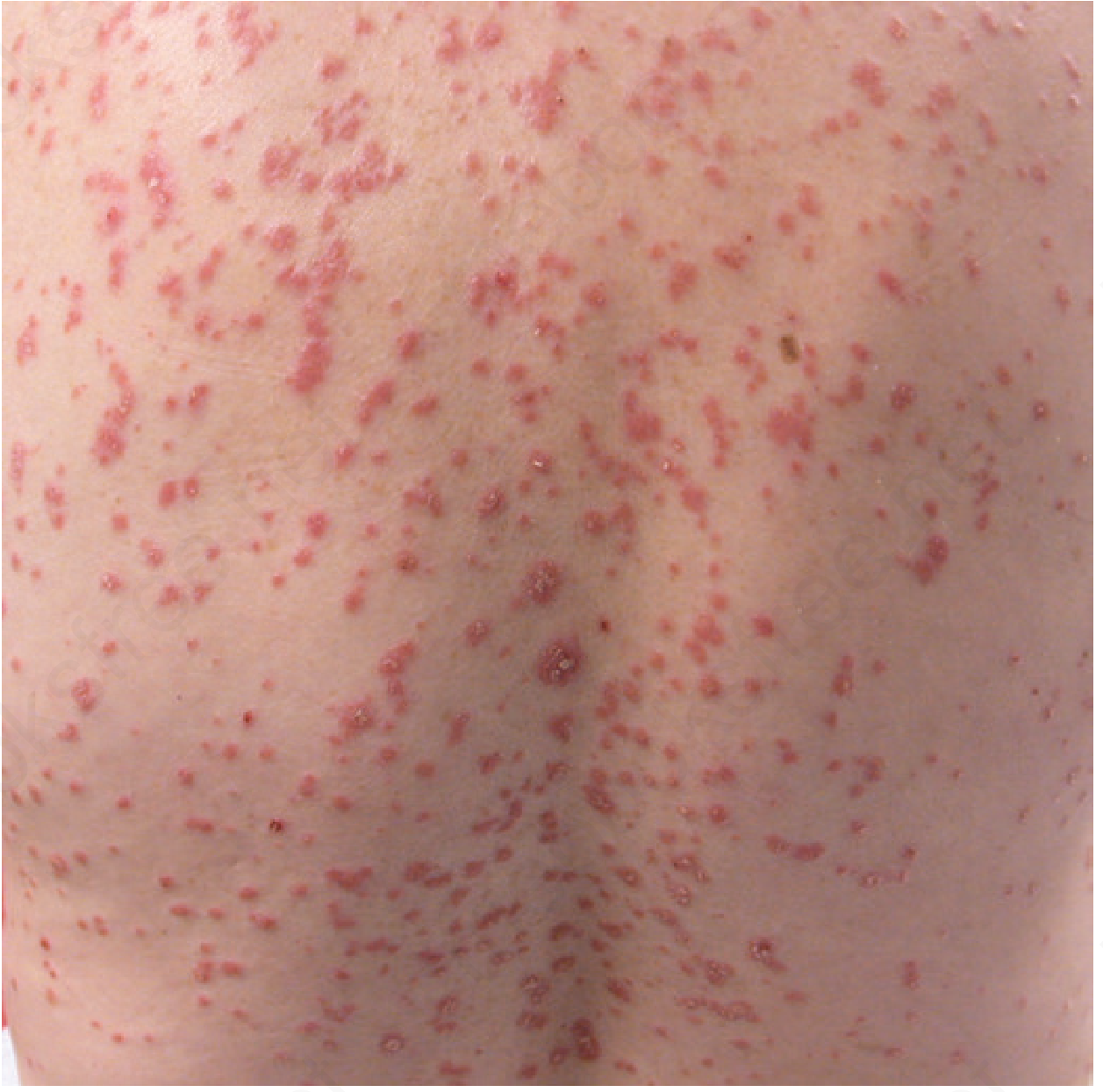
Guttate psoriasis - Andrews' Diseases of the Skin
Classic plaque psoriasis (well-defined erythematous plaques with silvery scale):
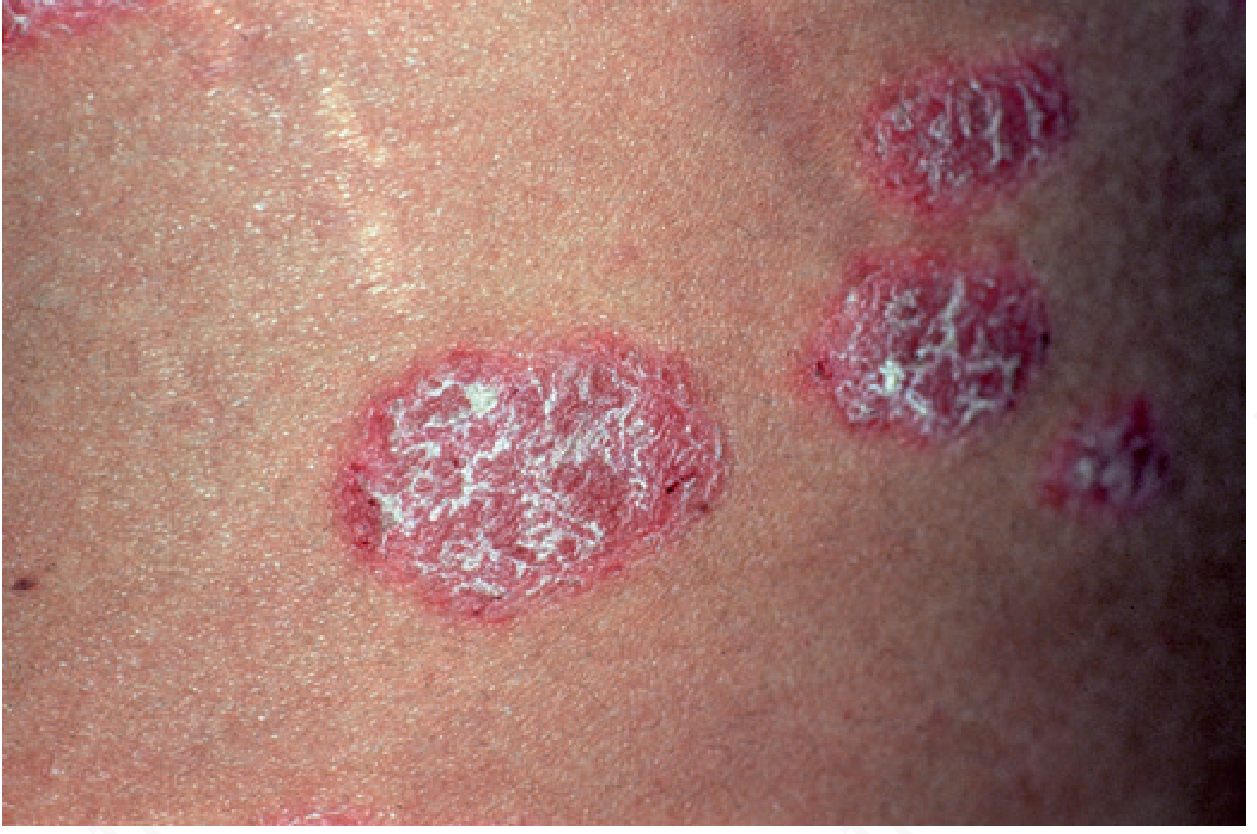
Psoriasis plaques - Andrews' Diseases of the Skin
3. PATHOGENESIS (KEY MECHANISMS)
The current understanding centers on the IL-23/IL-17 axis and T-cell-mediated inflammation:
- Dendritic cells produce IL-23, which drives Th17 cell differentiation
- Th17 cells produce IL-17, promoting neutrophil-predominant inflammation and keratinocyte activation
- TNF-alpha augments IL-17's effects on keratinocytes and is coproduced by dermal DCs
- Keratinocytes show markedly reduced basal cell transit times, abnormal differentiation, and increased production of antimicrobial peptides and inflammatory mediators
- Koebner phenomenon (isomorphic response): psoriatic lesions appear at sites of trivial skin trauma
- Auspitz sign: pinpoint bleeding on scale removal (dilated capillary loops reaching just under the epidermis - "squirting papillae")
4. CLINICAL SIGNS
- Auspitz sign: bleeding points when scale is removed
- Koebner phenomenon: lesions at sites of trauma
- Grattage sign: candle-grease scale on scraping
- Scales: micaceous, looser peripherally, adherent centrally
- Nail changes: random pitting (proximal matrix), oil spots (distal matrix), onycholysis, subungual hyperkeratosis
5. MANAGEMENT - ALLOPATHY (CONVENTIONAL MEDICINE)
Management is based on extent and severity (using PASI - Psoriasis Area Severity Index, BSA, DLQI scores).
A. TOPICAL THERAPY (Mild/Localized Disease)
1. Corticosteroids
- Most frequently prescribed therapy for localized psoriasis
- Class I (ultra-potent, e.g., clobetasol) for 2-week courses; 68-89% of patients achieve clear improvement
- Weekend pulse therapy to reduce local side effects (atrophy, striae, telangiectasia)
- Low-to-medium potency for face and intertriginous areas
- Intralesional triamcinolone acetonide (2.5-10 mg/mL) for refractory plaques and nail psoriasis
- AVOID systemic steroids - withdrawal can precipitate life-threatening generalized pustular psoriasis
2. Vitamin D Analogues
- Calcipotriene (calcipotriol): Comparable efficacy to clobetasol; inhibits keratinocyte proliferation and promotes differentiation
- Combination calcipotriene + corticosteroid has increased efficacy and fewer side effects (SOR: A evidence)
3. Retinoids
- Tazarotene: RAR-specific retinoid; modulates keratinocyte differentiation and suppresses inflammation; often combined with topical corticosteroid to reduce irritation
4. Coal Tar
- Crude coal tar, liquor carbonis detergens (LCD), tar bath oils, shampoos; anti-inflammatory and antiproliferative
- Less cosmetically acceptable but effective for scalp and body; basis of Goeckerman technique
5. Anthralin (Dithranol)
- Short-contact anthralin treatment (SCAT): applied 15-30 minutes then washed off
- Mechanism: suppresses neutrophil superoxide generation, inhibits IL-6, IL-8, TNF-alpha in monocytes
6. Calcineurin Inhibitors
- Tacrolimus 0.1% ointment and pimecrolimus: especially for thin lesions on face and intertriginous areas (inverse psoriasis); avoids steroid atrophy (SOR: B evidence)
7. Keratolytics
- Salicylic acid: keratolytic in shampoos, creams, gels; promotes absorption of other agents; risk of salicylate toxicity with widespread use
8. New Topical Agents (2025)
- Roflumilast (Zoryve) 0.3% cream: PDE4 inhibitor; approved for plaque psoriasis ages 6+; 72% PASI 50, 40% PASI 75 at 8 weeks in DERMIS-1/-2 trials
- Propylene glycol-free, suitable for sensitive patients
B. PHOTOTHERAPY (Moderate/Widespread Disease)
1. Narrowband UVB (NB-UVB)
- Peak emission 311 nm; most commonly used; cost-effective
- Effective even for moderate-to-severe disease; better safety profile than PUVA
- Clearing at wavelengths 296-313 nm; maintenance therapy prolongs remission
2. Broadband UVB
- Used less frequently; doses titrated to MED (minimal erythema dose)
3. PUVA (Psoralen + UVA)
- 8-methoxypsoralen (8-MOP) taken orally 2 hours before high-intensity UVA, twice weekly
- Most patients clear in 20-25 treatments; very effective even for severe psoriasis
- Risks: cataracts (protective eyewear mandatory), squamous cell carcinoma (dose-related), melanoma risk, photoaging
- Alternatives: bath PUVA (psoralen dissolved in bathwater)
4. Goeckerman Technique
- 2-5% tar applied to skin + tar bath + UVB exposure; patients clear in ~18 days average
- 75% remain disease-free for extended periods; effective even in biologic-refractory patients
5. Ingram Technique
- Coal tar bath + UV + anthralin paste daily; effective regimen
6. Excimer Laser (308 nm)
- Targeted UVB for localized plaques; fewer total treatments needed
C. SYSTEMIC THERAPY (Moderate-to-Severe Disease)
1. Methotrexate (MTX)
- Gold standard systemic agent; folic acid antagonist
- Indications: erythrodermic psoriasis, psoriatic arthritis, acute pustular psoriasis (von Zumbusch), widespread BSA involvement
- Dose: 5-30 mg/week (oral or SC); three divided doses 12 hours apart or single weekly dose
- Folic acid supplementation reduces side effects (nausea, mucositis)
- Pre-treatment: LFTs, renal function, hepatitis serology, HIV, TB test, CBC
- Monitoring: weekly CBC and monthly LFTs initially; liver biopsy controversial but considered in psoriasis
2. Cyclosporine
- Calcineurin inhibitor; rapid onset of action (weeks)
- Not suitable for sustained long-term therapy (nephrotoxicity, hypertension)
- Useful for rapid control of severe flares
3. Acitretin (Oral Retinoid)
- Systemic retinoid for widespread, palmoplantar, or pustular psoriasis
- Not effective as monotherapy for plaque psoriasis but excellent for pustular and erythrodermic types
- Combined with phototherapy (Re-PUVA); requires 3 years of contraception post-treatment in women
4. Apremilast (Otezla)
- Oral PDE4 inhibitor; approved for all types of psoriasis (mild-severe); now also pediatric indication (age 6+, >20 kg)
- No laboratory monitoring required; useful as add-on or when biologics are contraindicated
- Can be combined with other systemics due to unique MOA
5. JAK Inhibitors
- Tofacitinib, deucravacitinib: effective for plaque and nail psoriasis
- Side effects: dose-dependent decreases in RBC, transient neutropenia; monitor CBC
D. BIOLOGIC THERAPY (Moderate-to-Severe Refractory Disease)
Biologics target specific cytokine pathways in the IL-23/Th17 axis:
| Drug | Target | Class | Route |
|---|---|---|---|
| Etanercept | TNF-alpha | TNF-inhibitor | SC |
| Adalimumab | TNF-alpha | TNF-inhibitor | SC |
| Infliximab | TNF-alpha | TNF-inhibitor | IV |
| Ustekinumab | IL-12/23 (p40) | IL-12/23 inhibitor | SC |
| Secukinumab | IL-17A | IL-17 inhibitor | SC |
| Ixekizumab | IL-17A | IL-17 inhibitor | SC |
| Brodalumab | IL-17RA receptor | IL-17 receptor blocker | SC |
| Guselkumab | IL-23 (p19) | IL-23 inhibitor | SC |
| Risankizumab | IL-23 (p19) | IL-23 inhibitor | SC |
| Tildrakizumab | IL-23 (p19) | IL-23 inhibitor | SC |
Key points on biologics:
- Produce "dramatic responses at dramatic expense"
- IL-17 and IL-23 inhibitors currently show the highest PASI 90/100 response rates
- TNF inhibitors are preferred when psoriatic arthritis co-exists
- Screen for TB, hepatitis B, and latent infections before starting
- Monitor for opportunistic infections, demyelinating disease (TNF-i)
- Contraindicated in active serious infections, uncontrolled CHF, active TB
E. COMBINATION THERAPY
- Methotrexate + infliximab: reduces neutralizing antibody formation
- Re-PUVA (acitretin + PUVA): reduces total UVA dose needed
- Biologic + topical agents: to minimize systemic dose
- Methotrexate + acitretin: for severe generalized pustular psoriasis
F. TREATMENT OF SPECIAL SITUATIONS
| Situation | Treatment |
|---|---|
| Nail psoriasis | Intralesional triamcinolone, topical retinoids, systemic agents, tofacitinib |
| Scalp psoriasis | Topical steroids (propylene glycol/foam base), coal tar shampoos, calcipotriol |
| Inverse psoriasis | Low-potency steroids, tacrolimus, pimecrolimus |
| Psoriatic arthritis | TNF-i biologics (first-line biologic); MTX; NSAIDs for mild disease |
| Erythrodermic psoriasis | Hospitalization; MTX or cyclosporine; biologics in refractory cases |
| Pustular psoriasis (generalized) | Acitretin; MTX; cyclosporine; infliximab |
| Pregnancy (pustular/impetigo herpetiformis) | Prednisone 1 mg/kg/day; delivery if unresponsive |
| HIV-associated psoriasis | Antiretroviral therapy (first-line for moderate-severe); topicals for mild; acitretin; caution with biologics |
| Guttate psoriasis | Antistrep therapy (dicloxacillin + rifampicin 600 mg/day); NB-UVB |
6. AYURVEDA (TRADITIONAL INDIAN MEDICINE)
Psoriasis is correlated with Kushtha Vikara (skin disorders), specifically resembling Eka-kushtha or Kitibha (subtypes of Mahakushtha). It is viewed as caused by vitiation of Vata and Kapha doshas, along with impurities of blood (Rakta dhatu).
Ayurvedic Principles of Management:
Shodhana Chikitsa (Purification therapies):
- Panchakarma: Vamana (emesis), Virechana (purgation), Basti (enema), Raktamokshana (bloodletting)
- Raktamokshana (leech therapy / Jalaukavacharana): local application of leeches to affected areas; reduces local inflammation and systemic humoral imbalance
Shamana Chikitsa (Palliative therapies):
- Turmeric (Haridra / Curcuma longa): topical paste and oral; anti-inflammatory via curcumin
- Neem (Azadirachta indica): Nimba - antipruritic, antimicrobial; internal and topical
- Guduchi (Tinospora cordifolia): immunomodulator
- Khadira (Acacia catechu): blood purifier; used in skin diseases
- Wrightia tinctoria (Darsana): used in Daivya oil preparation; shown anti-psoriatic activity
- Indukantha Ghrita, Mahatiktaka Ghrita: classical formulations for skin diseases
Diet (Pathya):
- Avoid incompatible foods (Viruddha ahara), excessive salty/sour/heavy foods
- Favor bitter, astringent tastes; light, easily digestible foods
- Avoid seafood, curd, alcohol, and dairy in excess
A 2025 PMC case report demonstrates safe and effective management of erythrodermic psoriasis through Ayurvedic protocols with marked clinical improvement and no adverse effects.
7. UNANI MEDICINE
In Unani system, psoriasis is understood as a disorder of Sue-e-Mizaj (temperamental abnormality) and Akhlat (humoral imbalance), particularly excess of Balgham (phlegm) and Sauda (black bile).
Unani Treatment Approaches:
- Taleeq (Leech Therapy): two leeches applied over affected sites twice weekly for ~10 sittings; a 2025 case report showed significant reduction in PASI and DLQI scores after 35 days, with improved quality of life and no adverse effects
- Zimad (Topical paste): anti-inflammatory herbal pastes applied locally
- Dalk (Massage): medicated oil massage
- Hammam (medicated steam bath): detoxification and skin penetration of medicaments
- Idrar-e-bol (diuretics) and Mushil (laxatives): humoral purification
- Herbal formulations: Sumbul, Barg-e-Neem, Chaksu, Suranjan, and other herbs with anti-inflammatory/immunomodulatory action
The Unani approach emphasizes detoxification and humoral correction without significant adverse events, particularly for patients unresponsive to conventional therapy.
8. HOMEOPATHY
Homeopathy addresses psoriasis as a systemic constitutional disorder, with focus on the miasmatic background (predominantly Psoric miasm but also sycotic/syphilitic overlap).
Commonly Used Constitutional Remedies:
| Remedy | Key Indication |
|---|---|
| Arsenicum album | Burning plaques worse at night; anxious, restless patient; thin, white scales |
| Sulphur | Hot, burning, red, scaly lesions; worse with heat, bathing, wool |
| Graphites | Thick, moist, crusty plaques; cracks in folds; constipated patients |
| Petroleum | Deep cracks, dry skin; worse in winter; rough, thickened skin |
| Lycopodium | Dry, scaly eruptions; right-sided; GI complaints, flatulence |
| Psorinum | Dirty, unhealthy skin; intensely itchy; worse cold |
| Sepia | Isolated patches; worse before menses |
| Mezereum | Intense itching with crust formation; burning with cold applications |
| Kali arsenicosum | Marked scaling; heart disease co-existing |
| Radium bromide | Itching all over with desire to scratch |
Management approach: Individual constitutional case-taking with attention to mental, emotional, and physical generals; potency selection based on sensitivity; regular follow-up to assess direction of cure.
A 2025 integrative case study (NDNR) demonstrated resolution of severe psoriasis through homeopathic constitutional treatment combined with gut health optimization and stress management, suggesting homeopathy may act as a modulator of systemic inflammation and immune balance.
9. NATUROPATHY
Naturopathy views psoriasis as a result of accumulated toxins (accumulation of incompletely metabolized metabolites), poor elimination, and gut dysbiosis.
Naturopathic Approaches:
Dietary Interventions (Evidence-based):
- A 2025 systematic review (PMID 39987781) found Mediterranean diet, calorie restriction, and gluten-free diet (in gluten-sensitive patients) reduce PASI scores
- Anti-inflammatory diet: omega-3 fatty acids (fish oil), polyphenol-rich fruits and vegetables
- Elimination of: alcohol, processed foods, high-glycemic foods, red meat
Hydrotherapy:
- Warm/cold alternating water therapy to stimulate circulation
- Dead Sea salt baths (balneotherapy): reduces scaling and inflammation; supports remission
- Spa/climatotherapy at Dead Sea or sulphur springs
Fasting and Detoxification:
- Short supervised fasts may reduce inflammatory load
- Colonic irrigation (with caution)
Supplementation:
- Omega-3 fatty acids (EPA/DHA): reduce leukotriene B4 levels; anti-inflammatory
- Vitamin D3: deficiency linked to psoriasis severity
- Zinc: reduces inflammation; supports skin healing
- Probiotics: gut microbiome modulation; reduces systemic inflammation
- Aloe vera gel: topical soothing and anti-inflammatory
Mind-Body:
- Meditation, yoga, pranayama: stress is a major trigger; reduces cortisol-driven immune dysregulation
- Mindfulness-based stress reduction (MBSR): shown in clinical studies to reduce subjective psoriasis severity
10. HERBAL MEDICINE (Evidence Summary)
A 2025 systematic review of herbal medicine for psoriasis (PMID 40210174) identified the following herbs with supporting evidence:
| Herb | Active Component | Action |
|---|---|---|
| Mahonia aquifolium (Oregon grape) | Berberine | Inhibits keratinocyte proliferation |
| Curcuma longa (Turmeric) | Curcumin | Anti-inflammatory, IL-17/TNF inhibition |
| Indigo naturalis | Indirubin | Used in Taiwan traditional medicine; PASI reduction in RCTs |
| Aloe vera | Acemannan | Topical anti-inflammatory; comparable to hydrocortisone 1% |
| Capsaicin | Capsaicin | Depletes substance P; reduces itch and scaling |
| Silymarin (Milk thistle) | Silymarin | Antioxidant; hepatoprotective (useful with MTX) |
11. LIFESTYLE AND TRIGGER AVOIDANCE (ALL SYSTEMS)
- Avoid triggers: streptococcal infections (treat promptly), stress, smoking, alcohol, NSAIDs, beta-blockers, lithium, antimalarials, systemic steroid withdrawal
- Moisturizers: regular emollient use reduces flares and improves QOL
- Sun exposure: moderate sunlight often beneficial (except severe erythrodermic cases)
- Weight management: obesity worsens psoriasis; weight loss improves biologic response
- Smoking cessation: strongly associated with psoriasis severity
- Stress management: yoga, meditation, psychotherapy
12. INTEGRATIVE APPROACH - TREATMENT ALGORITHM
MILD (PASI < 10, BSA < 10%)
├── Topical corticosteroids (Class I-III)
├── Calcipotriol ± corticosteroid combination
├── Tazarotene / Roflumilast
└── Adjunct: Ayurvedic topicals, moisturizers, naturopathy diet

MODERATE (PASI 10-20, BSA 10-30%)
├── NB-UVB phototherapy
├── PUVA (for palmoplantar or thick plaques)
├── Apremilast (oral, no labs needed)
└── Adjunct: Panchakarma, herbal supplements, dietary changes

SEVERE (PASI > 20, BSA > 30%, or affecting QOL significantly)
├── Methotrexate (standard; with folic acid)
├── Cyclosporine (rapid response needed)
├── Acitretin (pustular/erythrodermic)
├── Biologics: TNF-i → IL-23 inhibitors → IL-17 inhibitors
├── JAK inhibitors (tofacitinib, deucravacitinib)
└── Integrative: stress reduction, Mediterranean diet, omega-3s

SPECIAL:
├── Psoriatic arthritis → TNF-i biologics (first-line biologic)
├── HIV → ART first; avoid biologics or use with extreme caution
└── Pregnancy → Topicals, NB-UVB, prednisone (impetigo herpetiformis)
13. KEY RECENT EVIDENCE (2024-2025)
- [PMID 39987781] (2025): Mediterranean diet and calorie restriction have the strongest dietary evidence for psoriasis improvement
- [PMID 40210174] (2025): Indigo naturalis, Mahonia aquifolium, and aloe vera show best herbal evidence
- [PMID 39080843] (2024): Systemic review on guttate psoriasis - antibiotics for strep-triggered cases, NB-UVB effective
- [PMID 40856907] (2025): Biologics (especially IL-17 and IL-23 inhibitors) are most effective for erythrodermic psoriasis
- Latest 2025 conventional options: Roflumilast 0.3% topical, expanded apremilast indications (all severities, pediatric 6+), deucravacitinib (TYK2 inhibitor) showing excellent PASI 75/90 without immunosuppression
Sources: Andrews' Diseases of the Skin (Clinical Dermatology), Fitzpatrick's Dermatology (Volumes 1-2), Textbook of Family Medicine 9e; supplemented by PubMed systematic reviews (2024-2025) and current web research on alternative systems.
This is a shared conversation. Sign in to Orris to start your own chat.