

IMG-20260726-WA0005.jpg
A 24 year old female came with complaints of painful swelling and tendernsee around vagina given in above picture from 4- 5 days . How to manage this case and treatment
analyse_media
Now let me consult the medical library and search for relevant clinical information simultaneously.
Reading File
Searching the Web
condyloma acuminata vulvar management treatment guidelines 2024
Finding Sources
Finding Sources
Reading File
Finding Sources
Reading File
Reading File
Now let me fetch the clinical image from the textbook for illustration, and also get the image showing condyloma acuminata for comparison:
Loading Image
I now have all the information needed to give a comprehensive clinical answer.
Clinical Assessment: Condyloma Acuminata (Genital Warts) - Most Likely Diagnosis
Image Analysis: The circled lesion shows a raised, fleshy, pink, exophytic (outward-growing) papillary mass with a lobulated/granular surface located at the inner labium minus near the vaginal vestibule. Combined with the history of painful swelling and tenderness over 4-5 days in a 24-year-old sexually active female, the most likely diagnosis is Condyloma Acuminata (Genital Warts) due to Human Papillomavirus (HPV).
For reference, here is a textbook image of perianal condyloma acuminata showing the typical cauliflower-like morphology:
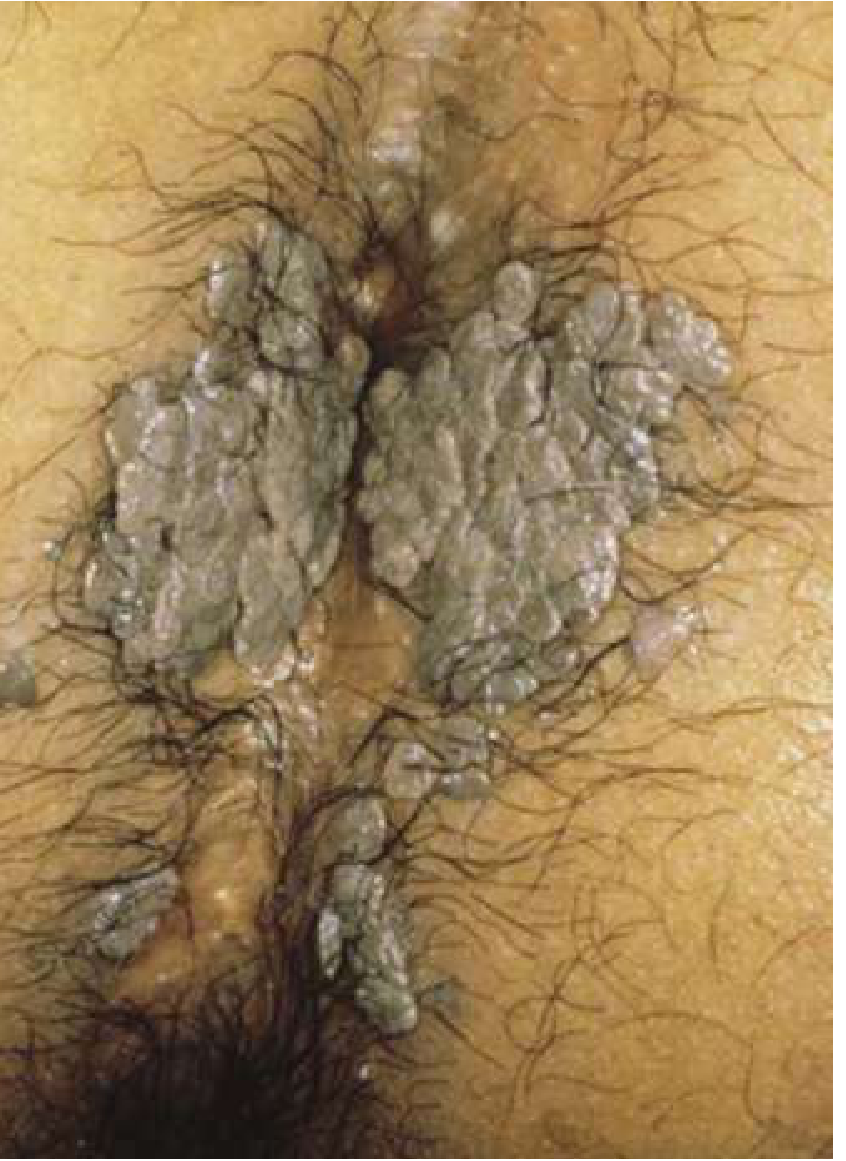
Fig. 84.9 - Rosen's Emergency Medicine: Perianal condyloma acuminata
Differential Diagnosis
| Condition | Features that support/refute |
|---|---|
| Condyloma Acuminata (HPV 6/11) | Fleshy exophytic papillary lesion, sexually active young woman, lobulated surface |
| Vestibular Papillomatosis | Usually symmetric, small smooth projections, painless - less likely given painful course |
| Condyloma Lata (Syphilis 2°) | Moist flat lesions; rule out with VDRL/RPR + darkfield microscopy |
| Hymenal remnants/skin tags | Usually asymptomatic, no growth |
| Vulvar intraepithelial neoplasia | Should be excluded by biopsy if treatment-resistant |
Work-up Before Treatment
- Confirm diagnosis clinically - visual inspection is usually sufficient
- STI screen: VDRL/RPR (to rule out condyloma lata of secondary syphilis), HIV, Hepatitis B/C, Gonorrhea/Chlamydia NAAT
- Pap smear / colposcopy referral - HPV 16/18 co-infection risk for cervical dysplasia
- Biopsy - indicated if: treatment-resistant, pigmented/ulcerated lesion, immunocompromised patient, or features atypical for condyloma
- Pregnancy test - important before selecting treatment agents (podophyllin/podofilox are teratogenic)
Management and Treatment
Immediate Symptomatic Relief
- Sitz baths (warm water soaks) 2-3 times daily for pain and local irritation
- Analgesics: Paracetamol 500-1000 mg TDS or Ibuprofen 400 mg TDS (with food) for pain
- Topical lidocaine 2% gel for local analgesia if pain is significant
- Keep area clean and dry; avoid tight clothing
Treatment Options (Evidence-Based)
The goal of treatment is removal of visible warts. No treatment eradicates HPV; recurrence rates are significant with all modalities. - Rosen's Emergency Medicine, p. 1386
A. Patient-Applied (Home) Therapies
| Agent | Regimen | Notes |
|---|---|---|
| Imiquimod 5% cream | Apply 3x/week at bedtime for up to 16 weeks; wash off after 6-10 hrs | Preferred for keratinized/external skin; immunomodulator; avoid in pregnancy |
| Podofilox (Podophyllotoxin) 0.5% solution/gel | Apply BID for 3 days, rest 4 days; up to 4 cycles | Effective for small solitary lesions; contraindicated in pregnancy |
| Sinecatechins 15% ointment (green tea extract) | Apply TID for up to 16 weeks | Avoid in immunocompromised; not for internal use |
B. Provider-Administered Therapies (Preferred for Clinic Setting)
| Agent | Notes |
|---|---|
| Cryotherapy (liquid nitrogen/cryoprobe) | First-line provider option; as effective as TCA; repeat every 1-2 weeks |
| Trichloroacetic Acid (TCA) 80-90% | Apply carefully by provider to individual warts; neutralize with sodium bicarbonate; repeat weekly; safe in pregnancy |
| Podophyllin resin 10-25% | Wash off in 1-4 hrs; avoid in pregnancy; apply with caution to avoid normal skin |
| Surgical excision | For large/pedunculated lesions, treatment failures; provides immediate clearance |
| Electrosurgery | At least as effective as cryotherapy and more effective than podophyllin |
| CO2 Laser | For extensive lesions or those unresponsive to other treatments |
Preferred approach for this patient: Given she is a 24-year-old presenting in clinic with a localized lesion, cryotherapy or TCA 80-90% applied in-office is practical and effective. If small and accessible for self-treatment, podofilox or imiquimod can be prescribed.
- Textbook of Family Medicine 9e, p. 1960-1967
- Rosen's Emergency Medicine, p. 1385-1386
Special Considerations
- Screen and treat partner: HPV is sexually transmitted; partner should also be examined
- Counsel on condom use: Reduces (but does not eliminate) transmission risk
- HPV Vaccination: The 9-valent HPV vaccine (Gardasil-9) is approved up to age 45. Even if already exposed, vaccination may protect against other HPV types not yet acquired
- Cervical screening: Regular Pap smears are essential given HPV exposure
- Recurrence is common - warn the patient; HPV can remain latent and lesions may reappear even after successful treatment
Red Flags Requiring Urgent Referral/Biopsy
- Rapidly enlarging or ulcerated lesions
- Pigmented or verrucous lesions with atypical features
- Failure to respond to 3 treatment cycles
- Immunocompromised status
- Suspicion of malignancy
Summary Management Algorithm
Confirm diagnosis (visual ± biopsy if uncertain)
    ↓
Rule out syphilis (VDRL), HIV, other STIs
    ↓
Symptomatic relief (sitz baths, NSAIDs, topical lidocaine)
    ↓
Treatment choice:
  - Clinic: Cryotherapy or TCA 80-90% (preferred)
  - Home: Imiquimod 5% cream or Podofilox 0.5%
    ↓
Follow-up in 2-4 weeks; repeat treatment if needed
    ↓
Refer for colposcopy + Pap smear
HPV vaccine counseling
Partner notification
This is a shared conversation. Sign in to Orris to start your own chat.