
I always have an itchy and running nose, and because of that I will be having continuous tear. Sometimes I think it is because of the blockage of the industrial and it’s been a month. I used Citerzien tablets , not continuously at regularly, but have use at least half a dozen of tablets in the previous month and today I used sinarest tablet Why is it happening to me? Is a common goal or an allergy? What tablet award medicine is possibly Helps me. I am an Indian currently living in Almaty # Kazakhstan.
Reading File
Based on your symptoms - itchy nose, runny nose, continuous tearing (watery eyes), and possible nasal blockage lasting a month - this sounds very much like allergic rhinitis rather than a common cold. Colds typically resolve in 7-10 days; a month-long history strongly points to allergy.
Searching sources...
Finding Sources
Finding Sources
Searching the Web
allergic rhinitis treatment guidelines 2025 antihistamine nasal spray India
Reading File
Finding Sources
Finding Sources
Loading Image
Finding Sources
Now I have everything needed for a thorough, well-sourced answer. Here it is:
Your Symptoms: Almost Certainly Allergic Rhinitis
Your symptoms - itchy/runny nose, watery eyes (tearing), and nasal blockage persisting for a full month - are the classic hallmark triad of allergic rhinitis (AR). A common cold resolves within 7-10 days. The fact that yours has lasted a month essentially rules out a simple viral cold.
Why You Have Watery Eyes (the "tear" connection)
You mentioned thinking it might be a blockage of the "industrial" - you likely mean the nasolacrimal duct (the tiny channel draining tears from the eye into the nose). This is a good instinct. In allergic rhinitis, inflammation of the nasal lining can partially block this duct, causing tears to overflow. Additionally, the same allergens that inflame the nose often directly inflame the eye lining (conjunctiva), causing allergic conjunctivitis - itching, watering, and a gritty sensation in the eyes. This combination is called "rhinoconjunctivitis" and is extremely common in allergy sufferers.
Is It a Cold or an Allergy? Key Differences
| Feature | Common Cold | Allergic Rhinitis |
|---|---|---|
| Duration | 5-10 days | Weeks to months |
| Itching (nose/eyes) | Rare | Very common |
| Sneezing | Occasional | Frequent, in bouts |
| Watery eyes | Uncommon | Very common |
| Nasal discharge | Thick, yellow/green | Clear, watery |
| Fever | Possible | No |
| Pattern | Improves over days | Persists/recurs |
Your profile - itchy nose + runny nose + tearing + 1 month duration fits allergic rhinitis perfectly.
About Kazakhstan / Almaty - What You Might Be Allergic To
Almaty sits in a valley surrounded by steppes and mountains. Common local allergens include:
- Grass and weed pollen (steppe grasses, mugwort/Artemisia - a major allergen in Central Asia)
- Tree pollen (spring - birch, poplar)
- House dust mites (year-round, indoor)
- Mold spores (especially in older Soviet-era buildings)
If your symptoms are worse outdoors or at certain times of day (morning), pollen is likely. If worse indoors, dust mites or mold are more likely.
About the Tablets You've Been Taking
Cetirizine (what you called "Citerzien") - This is a good antihistamine. However, you said you've taken it irregularly ("at least half a dozen over a month"). This is the problem. Antihistamines for allergic rhinitis only work while they're in your system. Taking one tablet every few days gives you partial, inconsistent relief. They need to be taken daily and regularly for sustained control.
Sinarest - This is a combination tablet containing an antihistamine (chlorpheniramine) + a decongestant (phenylephrine) + paracetamol. It is a 1st-generation antihistamine product that causes drowsiness and is less ideal for daily long-term use.
The Correct Treatment Plan (Step-by-Step)
The diagram below from Harrison's Principles of Internal Medicine (22nd Ed., 2025) shows the management algorithm:
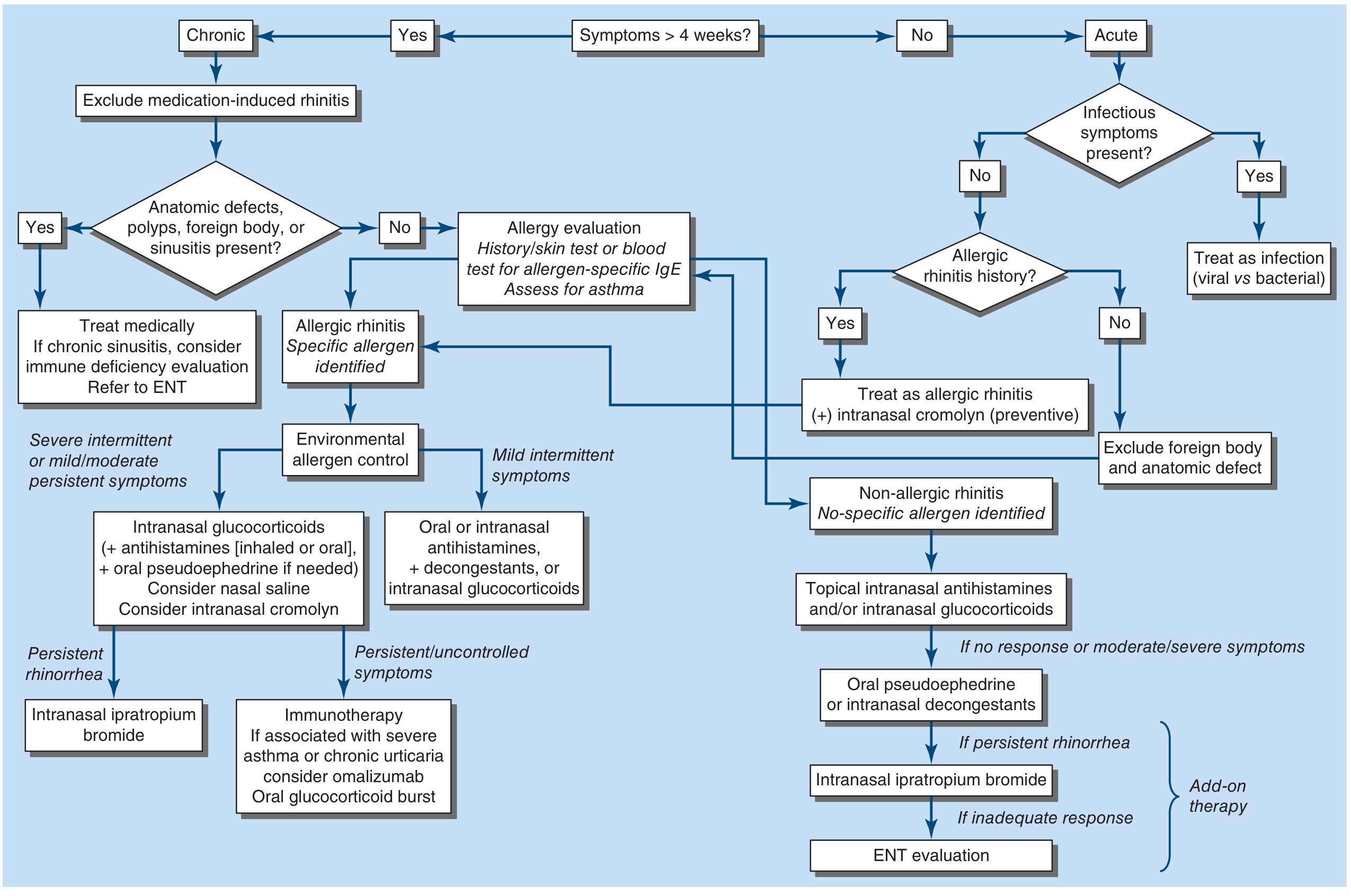
Since your symptoms have been present for over 4 weeks, you are in the chronic/persistent category. Here is what the evidence recommends:
Step 1 - Switch to a Better Daily Antihistamine (Available in Kazakhstan/India)
Use a 2nd-generation (non-sedating) antihistamine taken once daily, every day - not just when you feel bad:
| Drug | Brand names in India/Kazakhstan | Dosing |
|---|---|---|
| Fexofenadine 120-180 mg | Allegra, Fexova | Once daily |
| Levocetirizine 5 mg | Levocet, Xyzal | Once daily (evening) |
| Loratadine 10 mg | Claritin, Lorfast | Once daily |
| Cetirizine 10 mg | Zyrtec, Cetzine | Once daily - continue this, but daily |
Fexofenadine and loratadine cause the least drowsiness. Levocetirizine is slightly more effective but can cause mild sedation in some people. All are widely available over-the-counter in India and in pharmacies across Kazakhstan.
Per Harrison's Principles of Internal Medicine, 22E: "Mild symptoms of allergic rhinitis are treated with oral antihistamines, intranasal antihistamines, intranasal corticosteroids, or intranasal cromolyn."
Step 2 - Add a Nasal Steroid Spray (Most Effective Treatment)
If daily antihistamines alone don't fully control symptoms within 1-2 weeks, the most effective treatment is an intranasal corticosteroid spray. Per Cummings Otolaryngology: "The most effective combination for the treatment of allergic rhinitis is an intranasal steroid with an intranasal antihistamine."
Available options in India/Kazakhstan:
- Mometasone furoate nasal spray (Nasonex, Mometasol) - 2 sprays each nostril once daily
- Fluticasone propionate nasal spray (Flixonase, Nasoflo) - 2 sprays each nostril once daily
- Budesonide nasal spray (Budecort Nasal) - available OTC in India
These are very safe - they act locally in the nose and very little is absorbed into the bloodstream. You can use them for months. They take 3-7 days to reach full effect, so don't expect instant relief.
Step 3 - For Your Watery Eyes
- Antihistamine eye drops (olopatadine/Patanol, ketotifen/Zaditen) - 1-2 drops in each eye twice daily
- Cold compresses on closed eyes also help
- Avoid rubbing your eyes - it worsens the allergic reaction
Step 4 - Saline Nasal Rinse
A simple saline nasal rinse (like Nasoclear or just mixing salt + water in a neti pot) twice daily washes out allergens and reduces congestion. Very effective and completely safe.
Practical Summary for You Right Now
- Stop taking Sinarest daily - it's for short-term use only
- Start cetirizine 10 mg (or fexofenadine 120 mg) every single morning - don't skip days
- Go to a pharmacy in Almaty and ask for a mometasone or fluticasone nasal spray - use it daily
- Add antihistamine eye drops if the tearing bothers you
- See a doctor for a skin-prick allergy test or blood IgE test to identify exactly what you're allergic to - this helps with long-term management
When to See a Doctor Urgently
- Symptoms on only one side of the nose (asymmetric)
- Blood in nasal discharge
- Severe facial pain or swelling
- No improvement after 3-4 weeks of proper treatment
- Fever or thick colored mucus (suggests infection, not allergy)
Bottom line: This is almost certainly allergic rhinitis - a very manageable condition. The key mistake you've been making is taking antihistamines inconsistently. Take them every day, add a nasal steroid spray, and you should feel significantly better within 1-2 weeks.
Sources: Harrison's Principles of Internal Medicine 22E (2025); Cummings Otolaryngology Head and Neck Surgery; Textbook of Family Medicine 9e; Expert Panel Consensus for AR in India, Pulm Ther 2025
This is a shared conversation. Sign in to Orris to start your own chat.