
Ackerman tumor from Scott and brown textbook
I'll read the medical library skill first, then search for Ackerman tumor content.
Reading File
Now let me search for Ackerman tumor in the library database and do a web search in parallel.
Finding Sources
Finding Sources
Searching the Web
Ackerman tumor verrucous carcinoma Scott Brown textbook otolaryngology
The Dermatology textbook has Ackerman tumor under "Verrucous Carcinoma." The user asked about Scott and Brown's textbook specifically - let me check what books are in the library and also read the verrucous carcinoma section from the Dermatology book.
Finding Sources
Reading File
The library doesn't have Scott & Brown's textbook directly. The Dermatology textbook has the Ackerman tumor section. Let me read more of it and also check if there's an ENT/otolaryngology book in the library.
Reading File
Finding Sources
Finding Sources
Scott-Brown's textbook IS in the library. Let me search it directly for Ackerman tumor / verrucous carcinoma.
Finding Sources
Finding Sources
Finding Sources
Excellent! Found the dedicated Scott-Brown's section on Ackermann's tumor with a clinical image. Let me read the full section and fetch the image.
Reading File
Reading File
I now have the full Scott-Brown's content on Ackermann's tumor. Let me also fetch the clinical image of Ackermann's tumor (Figure 63.12) that was referenced.
Loading Image
Loading Image
I now have all the material needed from Scott-Brown's textbook to give a thorough answer. Here is the full content:
Ackermann's Tumour (Verrucous Carcinoma) - Scott-Brown's Otorhinolaryngology Head & Neck Surgery
Definition & Basic Concept
Ackermann's tumour is a slow-growing variant of squamous cell carcinoma (SCC) that does not metastasize. It is also known as verrucous carcinoma (VC). It presents a diagnostic and treatment challenge for both the histopathologist and the otolaryngologist.
Synonyms / Aliases
- Verrucous carcinoma (VC)
- Oral florid papillomatosis
- Ackerman tumor / Ackermann's tumour
Macroscopic Appearance
- Macroscopically, it may be hard to distinguish from laryngeal hyperkeratosis
- It has a typical exophytic appearance (Figure 63.12 from Scott-Brown's, shown below)
- Clinically it is a warty, exophytic lesion that arises from a broad base
- Shows superficial spreading growth but can be deeply destructive, extending into muscle, cartilage, or bone
Figure 63.12 - Ackermann's tumour (verrucous carcinoma) - laryngoscopic view:
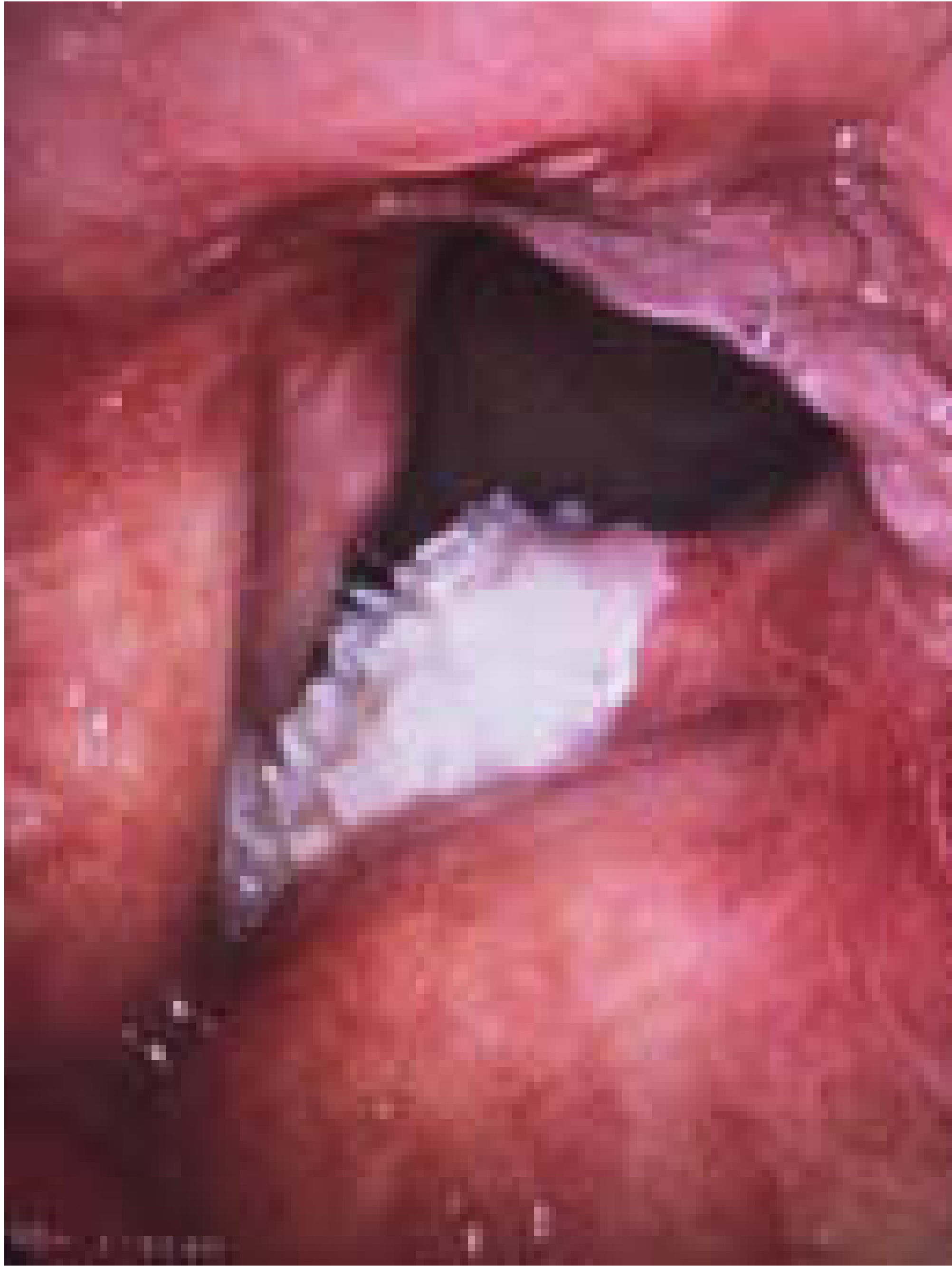
Laryngoscopic view showing the white exophytic warty mass on the vocal folds, characteristic of Ackermann's tumour.
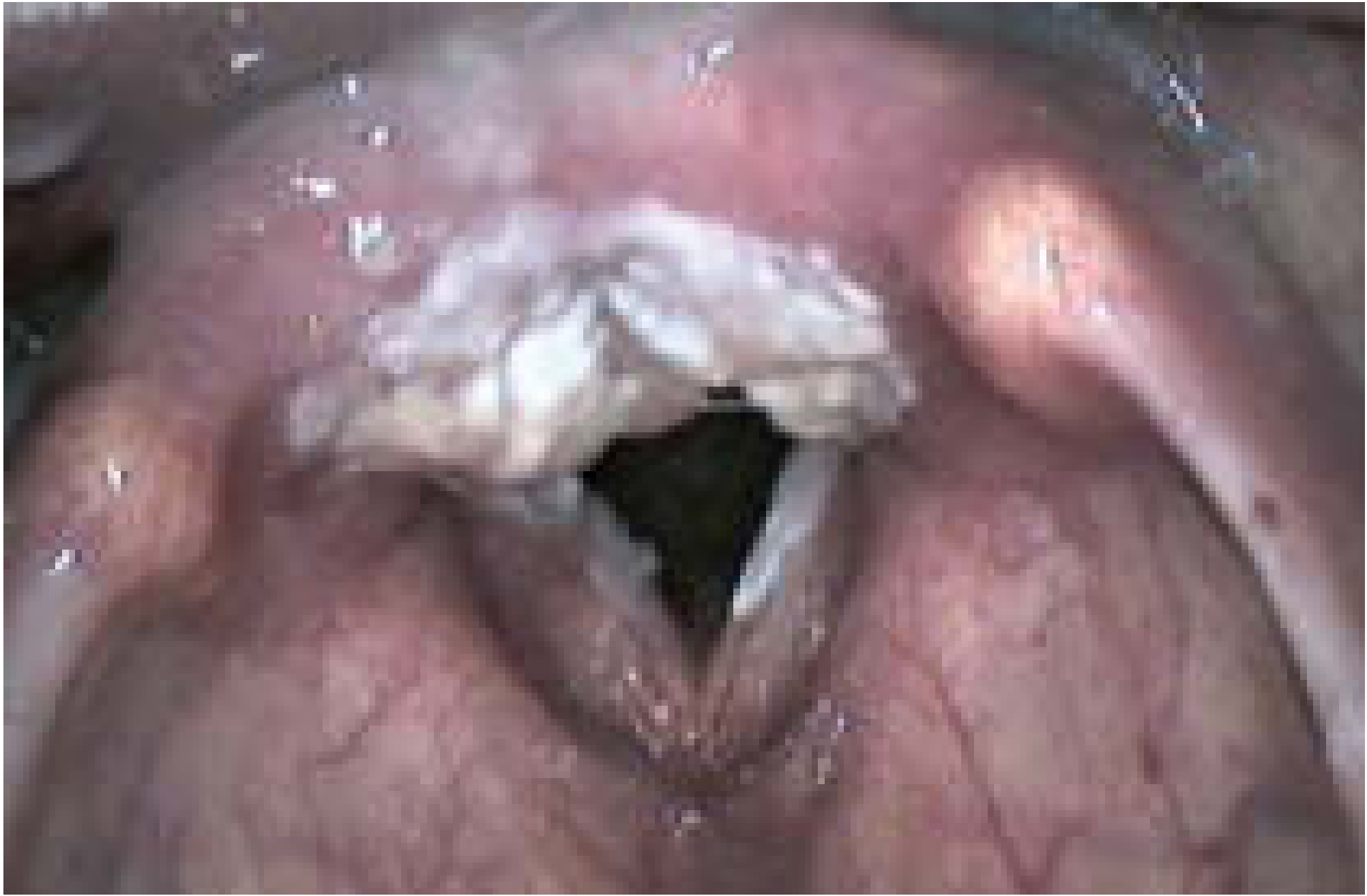
Figure 63.11 - Laryngeal hyperkeratosis (differential diagnosis):
Sites of Occurrence
- Most common: Oral cavity
- Head & neck: Larynx (1-3% of all laryngeal malignancies), hypopharynx, sinonasal tract, nasopharynx
- Also occurs at other sites outside the head and neck (e.g., plantar foot, genital mucosa)
Histopathology
Scott-Brown's emphasizes that incision biopsy diagnosis of VC is problematic because:
- Lacks significant cellular atypia
- Characterized by blunt incursions and an expansile advancing margin, sometimes eliciting a brisk lymphocytic response
- Bland morphology may be indistinguishable from benign squamoproliferative lesions on superficial or limited-volume material
- Multiple biopsies required - typically 3-4 biopsies, or even excision biopsy, before the overall architecture is appreciated and the diagnosis is seriously considered
- If adequately sampled, approximately 20% of VCs contain areas of conventional SCC (called hybrid carcinoma) - these elements determine overall prognosis
- A high index of pathological suspicion and clinical persistence are prerequisites for diagnosis
Treatment
Scott-Brown's outlines the following approach:
- Radical treatment (e.g., laryngectomy) is NOT necessary
- Complete endoscopic excision is recommended to prevent recurrence
- Less radiosensitive than other laryngeal tumours
- Extensive tumours may be treated with radiotherapy instead of radical surgery
- For hybrid carcinomas (those containing conventional SCC foci): managed as conventional SCC, which may metastasize
Key Points from Scott-Brown's (Summary Table)
| Feature | Detail |
|---|---|
| Nature | Low-grade, well-differentiated SCC variant |
| Metastasis | Does NOT metastasize (unless hybrid carcinoma) |
| Macroscopic appearance | Exophytic, warty, white, arises from broad base |
| Histology | Blunt incursions, expansile advancing margin, minimal atypia |
| Biopsies needed | 3-4 or excision biopsy |
| Hybrid carcinoma | ~20% - contain foci of conventional SCC |
| Treatment (larynx) | Complete endoscopic excision; NOT laryngectomy |
| Radiotherapy | Less radiosensitive; used only for extensive disease |
| Risk | Precancerous potential; biopsy always required |
| Recurrence | Notorious for local recurrence |
Differential Diagnosis (at the Larynx)
The main differential is laryngeal hyperkeratosis (Figure 63.11 above), from which it can be macroscopically indistinguishable. Management of hyperkeratosis is by suspension microlaryngoscopy with surgical excision for histology; it is precancerous and notorious for recurrence. Cold steel and laser therapy have been used, with anecdotal evidence that the angiolytic KTP laser offers longer-term cure.
Source: Scott-Brown's Otorhinolaryngology Head & Neck Surgery, Chapter 63 (Laryngology) and Chapter 26 (HNSCC variants)
Artificial intelligence in ent surgery short note
Finding Sources
Finding Sources
Searching the Web
artificial intelligence ENT surgery otolaryngology head neck applications 2024
Let me search Scott-Brown's specifically for AI content and also get the full medicine.net article.
Finding Sources
Finding Sources
Reading Web Page
https://medicine.net/news/MedicialBreakthroughs/Intelligent-…
Let me get more detail from Scott-Brown's on audiology AI and also search for recent PubMed evidence.
Reading File
Searching PubMed
"artificial intelligence" otolaryngology surgery
I have comprehensive material from Scott-Brown's, the latest web sources, and PubMed. I can now write a well-structured short note.
Artificial Intelligence in ENT Surgery - Short Note
Introduction
Artificial intelligence (AI) refers to computer systems that simulate human cognitive functions - learning, reasoning, pattern recognition, and decision-making. In ENT (otolaryngology - head and neck surgery), AI is emerging as a major force, enhancing diagnostic accuracy, surgical planning, intraoperative navigation, and postoperative monitoring. Despite compelling proof-of-concept studies, translation to routine clinical practice remains limited - a gap known as the "AI chasm." Currently, only a small number of AI tools are FDA-cleared specifically for ENT applications.
Types of AI Technologies Used
| Technology | Description |
|---|---|
| Machine Learning (ML) | Algorithms that learn from large datasets without explicit programming |
| Deep Learning (DL) | Subset of ML using neural networks with multiple layers; excels in image analysis |
| Natural Language Processing (NLP) | Processing and generating human language; used for documentation and patient triage |
| Computer Vision | Interpretation of surgical video and endoscopic images |
| Robotic AI | Integration of AI with surgical robotic systems |
Applications in ENT Surgery
1. Otology and Neurotology
- ML algorithms for automated audiometric testing - reducing test duration while maintaining accuracy comparable to conventional pure tone audiometry (Scott-Brown's Vol. 2)
- Automated audiometry systems using special headsets with insert earphones, capable of monitoring background noise without a soundproof booth - enabling teleaudiometry and remote hearing testing
- AI-driven cochlear implant optimization - adjusting fitting parameters
- Analysis of vestibular data - artificial neural networks used as diagnostic tools for disorders of stance and balance (referenced in Scott-Brown's)
- Detection of hearing loss in occupational surveillance programmes
2. Rhinology and Endoscopic Sinus Surgery
- AI-driven 3D reconstructions of the sinuses and skull base from CT/MRI for pre-surgical visualization
- Personalized surgical planning using patient-specific imaging
- Intraoperative navigation assistance during functional endoscopic sinus surgery (FESS) and skull base surgery
- Detection and segmentation of sinonasal pathology on imaging
3. Head and Neck Oncology
- Deep learning models for precise segmentation and volumetric assessment of head and neck tumours on CT and MRI - aiding staging and radiotherapy planning
- Digital pathology tools for rapid and accurate biopsy interpretation (thyroid, salivary gland tumours)
- Predictive modelling for survival outcomes and treatment response
- AI in head and neck cancer - a systematic review of systematic reviews confirms AI's role in improving diagnostic accuracy and prognosis (Mäkitie et al., 2023, PMID 37291378)
4. Laryngology and Voice Disorders
- Voice analysis algorithms for detection of vocal fold pathology, dysphonia, and laryngeal cancer
- AI-assisted analysis of laryngoscopic video
- Automated screening of obstructive sleep apnoea (OSA) through voice and polysomnographic data analysis
5. Robotic-Assisted Surgery
- Transoral Robotic Surgery (TORS) - AI-integrated robotic platforms enable minimally invasive access to the oropharynx, larynx, and hypopharynx
- Improved 3D visualization, tremor filtration, and motion scaling
- AI used for real-time tissue identification during robotic procedures
- Applications in oropharyngeal cancer resection, thyroid, and parathyroid surgery
6. Surgical Training and Skill Assessment
- AI-powered simulation platforms for ENT surgical training
- Automated assessment of trainee surgical performance using video analysis
- Digital twins for procedural rehearsal
Benefits of AI in ENT Surgery
- Improved diagnostic accuracy and earlier disease detection
- Reduced operator variability
- Enhanced surgical precision and safety
- Personalized treatment planning
- Faster and more accessible audiometric testing
- Improved documentation via NLP tools
Limitations and Challenges
- Data quality and bias - AI models trained on non-diverse populations may underperform in different demographic groups
- "Black box" problem - lack of interpretability/explainability of deep learning decisions
- Regulatory hurdles - very few ENT AI tools are FDA or CE cleared
- Validation gap - most studies are proof-of-concept; large-scale prospective clinical trials are lacking
- Integration barriers - existing hospital IT infrastructure may not support AI tools
- Ethical concerns - data privacy, patient consent, medicolegal responsibility
- Cost - implementation of AI-driven robotic platforms is expensive
Future Directions
- Autonomous or semi-autonomous surgical robots
- Real-time intraoperative AI guidance with augmented reality overlay
- AI-driven personalized oncology (precision medicine)
- Foundation models trained specifically for ENT surgical video
- Integrated AI surgery curriculum for ENT residency training
Key Points (Summary)
- AI in ENT spans diagnostics, surgical planning, intraoperative guidance, and postoperative care.
- In otology, ML-based automated audiometry and cochlear implant optimization are the most developed applications (Scott-Brown's Vol. 2).
- In rhinology and skull base surgery, AI-driven 3D imaging and navigation are actively used.
- In head and neck oncology, deep learning aids tumour segmentation, staging, and prognosis.
- TORS (robotic surgery) represents the most mature AI-surgical platform in ENT.
- The "AI chasm" - the gap between research and clinical implementation - remains the biggest challenge.
- AI should augment, not replace, the clinical judgement of the otolaryngologist (AAO-HNS position, 2024).
Sources: Scott-Brown's Otorhinolaryngology Head & Neck Surgery (Vol. 1 & 2); Mäkitie et al. 2023 systematic review; Ayoub & Glicksman, AI in Rhinology, 2024; Huang & Valdez, AI in Pediatric Otolaryngology, 2024; AAO-HNS AI position statement 2024
Artificial intelligence in Ent short note for pg examination
I'll search Scott-Brown's and current literature simultaneously for a PG exam-focused answer.
Finding Sources
Finding Sources
Searching PubMed
"artificial intelligence" otolaryngology
Searching the Web
artificial intelligence ENT otolaryngology PG exam short note 2024 2025 applications
I have all the material needed. Here is a concise, exam-focused short note:
Artificial Intelligence in ENT - Short Note (PG Exam Format)
Definition
Artificial Intelligence (AI) is the simulation of human cognitive functions - learning, pattern recognition, and decision-making - by computer systems. In ENT, it uses machine learning (ML), deep learning (DL), natural language processing (NLP), and computer vision to improve clinical care across all subspecialties.
AI Technologies Relevant to ENT
| Technology | Basis | ENT Use |
|---|---|---|
| Machine Learning | Learns from datasets | Audiometry, surgical outcomes |
| Deep Learning / CNN | Multi-layer neural networks | Image analysis, endoscopy |
| Natural Language Processing | Language analysis | Documentation, triage |
| Computer Vision | Video/image interpretation | Laryngoscopy, otoscopy |
| Robotic AI | AI + robotics | TORS, skull base surgery |
Applications by Subspecialty
Otology
- Automated audiometry using ML - reduces test duration, no soundproof booth needed; comparable accuracy to conventional pure tone audiometry (Scott-Brown's Vol. 2)
- Teleaudiometry - internet/cloud-based remote hearing testing
- AI for cochlear implant programming optimization
- Artificial neural networks for vestibular/balance disorders diagnosis
- Otitis media diagnosis via deep learning on otoscopic images (sensitivity/specificity comparable to specialist)
- Paediatric tympanostomy tube assessment via deep learning (2024)
Rhinology & Skull Base Surgery
- Sinus CT interpretation using convolutional neural networks (CNNs) - automated segmentation of anatomical landmarks for FESS planning
- 3D reconstruction of sinuses and skull base for personalized surgical planning
- Intraoperative navigation augmentation during FESS
- AI-based prediction of chronic rhinosinusitis outcomes
Head & Neck Oncology
- Deep learning for tumour segmentation and volumetric assessment on CT/MRI - aids staging and radiotherapy planning
- Digital pathology - AI-assisted biopsy interpretation for thyroid and salivary gland tumours
- Prognostic modelling for survival and treatment response prediction
- A systematic review of systematic reviews (Mäkitie et al., 2023) confirms AI improves diagnostic accuracy and prognosis in HN cancer
Laryngology & Voice
- Voice analysis algorithms for early detection of vocal fold pathology, dysphonia, laryngeal cancer
- AI analysis of laryngoscopic video - automated lesion detection
- Screening for obstructive sleep apnoea (OSA) via voice and polysomnography
- ChatGPT-3.5 tested at 70.8% diagnostic accuracy in ENT disorders - comparable to specialists, superior to GPs (2025)
Robotic Surgery (TORS)
- Transoral Robotic Surgery (TORS) - most mature AI-surgical platform in ENT
- Applications: oropharyngeal carcinoma resection, laryngeal/hypopharyngeal surgery, thyroid and parathyroid surgery
- Advantages: 3D magnified vision, tremor filtration, motion scaling, minimally invasive access
- AI enables real-time tissue identification intraoperatively
Surgical Education
- AI-powered simulation and skill assessment for trainees
- Automated scoring of surgical performance via video analysis
- Residency selection algorithms - processing applications and shortlisting candidates
Advantages
- Earlier and more accurate diagnosis
- Reduced inter-observer variability
- Personalized surgical planning
- Accessible audiometry without specialist infrastructure
- Improved documentation and workflow efficiency
- Enhanced trainee education and assessment
Limitations (Important for Exam)
- AI chasm - large gap between research and clinical implementation
- "Black box" problem - lack of interpretability of DL decisions
- Training data bias - poor performance in under-represented populations
- Validation deficit - most studies are proof-of-concept, not large RCTs
- Regulatory hurdles - very few ENT AI tools are FDA/CE cleared (as of 2025)
- Medicolegal ambiguity - unclear accountability when AI errors harm patients
- Cost - high implementation cost of robotic platforms
- Data privacy concerns
AAO-HNS Position (2025)
"AI should augment, not replace, the judgement of the otolaryngologist, who remains ultimately responsible for patient care."
High-Yield Points for PG Exam
- AI in ENT operates via ML, DL, NLP, CNNs, and robotic platforms
- Otology - ML-based automated audiometry (Scott-Brown's); cochlear implant optimization; otitis media detection
- Rhinology - CNN-based sinus CT analysis; AI-assisted FESS navigation
- HN Oncology - tumour segmentation, digital pathology, prognostic modelling
- Laryngology - voice analysis; laryngoscopy AI; OSA screening
- TORS - most advanced AI-surgical platform in ENT; used in oropharyngeal ca
- Major limitation = AI chasm (research-to-practice gap) and black box problem
- AI market in ENT projected at $1.3 billion by 2025
- AI augments but does NOT replace the clinician (AAO-HNS, 2025)
Sources: Scott-Brown's Otorhinolaryngology Head & Neck Surgery (Vol. 1 & 2); Mäkitie et al. Adv Ther 2023; Ayoub & Glicksman, AI in Rhinology, Otolaryngol Clin North Am 2024; Huang & Valdez, Otolaryngol Clin North Am 2024; AAO-HNS AI Position Statement 2025; UH ENT Institute, Winter 2025
This is a shared conversation. Sign in to Orris to start your own chat.