
How cimetidine cause antiandrogen effect
Cimetidine blocks androgen receptors directly and also inhibits dihydrotestosterone (DHT) binding, leading to effects like gynecomastia and reduced libido in men. It also inhibits cytochrome P450 enzymes involved in androgen metabolism.
Searching sources...
Reading File
Finding Sources
Searching the Web
cimetidine antiandrogen mechanism androgen receptor DHT
Reading File
Loading Image
Here is a detailed breakdown of how cimetidine causes its antiandrogenic effect:
Cimetidine: Mechanisms of Antiandrogen Effect
Cimetidine is a histamine H2 receptor antagonist used for peptic ulcer disease. Unlike other H2 blockers (ranitidine, famotidine, nizatidine), cimetidine has several unique endocrine side effects due to its structural properties.
1. Direct Competitive Antagonism of Androgen Receptors (AR)
This is the primary mechanism. Cimetidine directly and competitively binds to cytoplasmic androgen receptors, competing with dihydrotestosterone (DHT) and testosterone for the same binding site. It has been shown to:
- Competitively inhibit DHT binding to its cytoplasmic receptor
- Decrease specific nuclear uptake of [³H]-dihydrotestosterone in rat ventral prostate tissue
- Reduce the weight of androgen-sensitive organs (prostate, seminal vesicles) in testosterone-treated castrated rats
- Show no intrinsic androgen-like (agonist) activity - it is a pure antagonist at the receptor
The affinity of cimetidine for the AR is weak (Ki ~140 µM vs. 1.18 nM for metribolone), so the effect is most apparent at high doses or with prolonged use, as confirmed by clinical data (>1000 mg/day associated with >40x risk of gynecomastia).
2. Blockade of Androgen Receptors in Breast Tissue - Gynecomastia
By blocking ARs in breast tissue, cimetidine prevents the normal anti-proliferative effect of androgens on mammary glandular tissue. This leaves estrogen action unopposed, driving glandular breast tissue proliferation - resulting in gynecomastia and, rarely, galactorrhea.
In a UK database of >80,000 men, the relative risk of gynecomastia with cimetidine use was 7.2 (95% CI 4.5-11.3) compared to non-users.
3. Inhibition of Testosterone Biosynthesis
Cimetidine has been shown to inhibit enzymes involved in testosterone biosynthesis (via CYP450 pathways in the testes), reducing circulating testosterone levels and thereby compounding the antiandrogenic effect.
4. Reduced Estrogen Catabolism (CYP450 Inhibition)
Cimetidine is a broad inhibitor of hepatic cytochrome P450 isoenzymes. One important consequence is:
- Inhibition of 2-hydroxylation of estrogen - this normally converts estradiol to less active catechol estrogens
- When this pathway is blocked, serum estrogen levels rise
- Elevated estrogen further tips the androgen/estrogen balance in favor of feminizing effects
This is the same CYP450 inhibition responsible for cimetidine's many drug interactions (warfarin, phenytoin, diazepam, etc.), as shown in the diagram below:
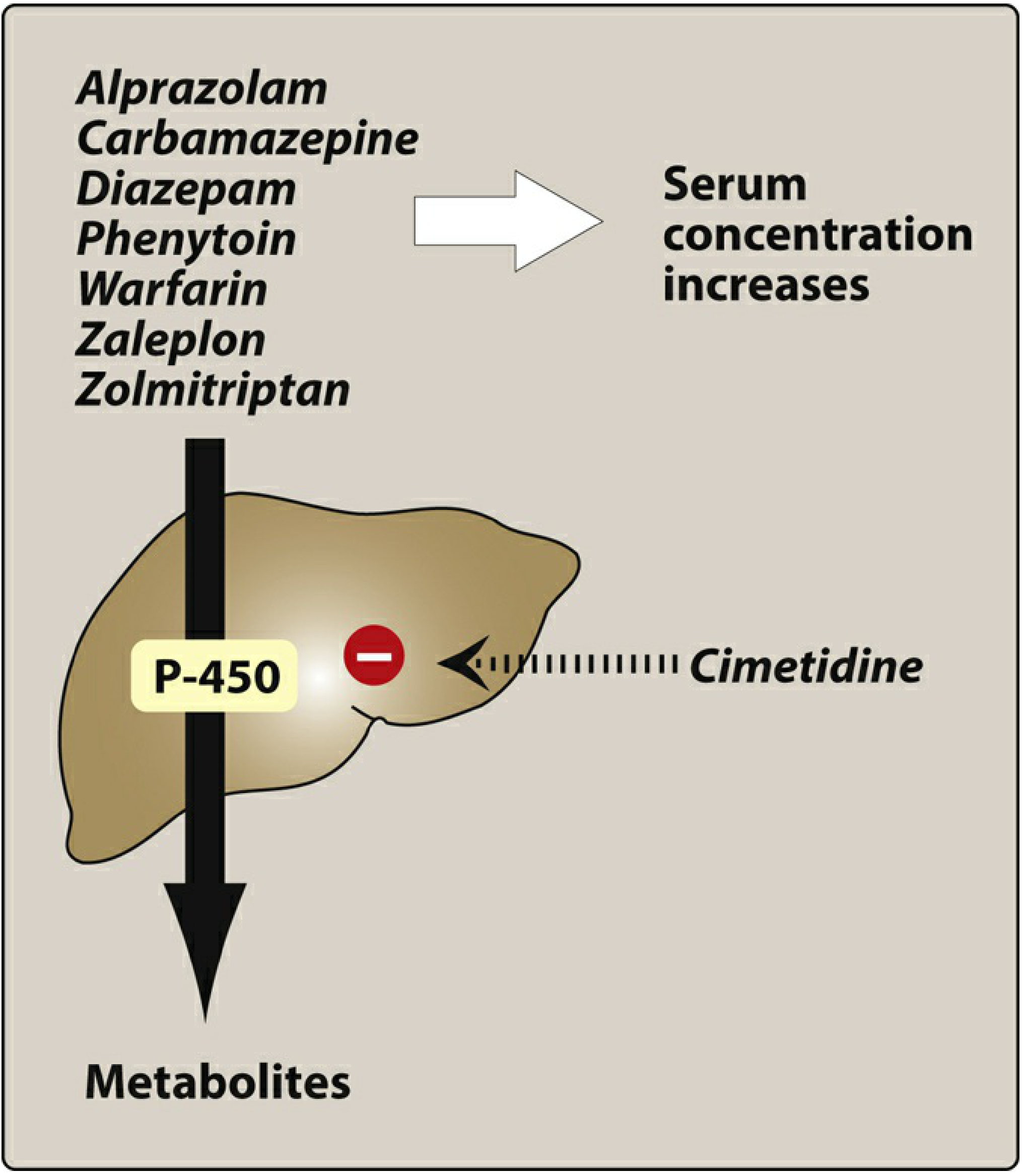
Figure: Cimetidine inhibits CYP P-450 in the liver - Lippincott Illustrated Reviews: Pharmacology
Clinical Consequences of Antiandrogen Effect
| Effect | Mechanism |
|---|---|
| Gynecomastia | AR blockade in breast + elevated estrogen (unopposed) |
| Galactorrhea | AR blockade + elevated prolactin |
| Reduced libido / erectile dysfunction | AR blockade at central and peripheral sites |
| Reduced prostate/seminal vesicle weight | AR antagonism at accessory sex organs |
Why Is This Unique to Cimetidine Among H2 Blockers?
Cimetidine has a imidazole ring in its structure. This imidazole moiety, despite being chemically unrelated to steroids, is able to fit into the androgen receptor binding pocket. Other H2 blockers (ranitidine, famotidine, nizatidine) lack this structural feature and do not have clinically significant antiandrogenic activity.
Summary: Cimetidine causes its antiandrogenic effect primarily through direct, competitive binding to androgen receptors (blocking DHT/testosterone action), secondarily through inhibition of testosterone biosynthesis, and through CYP450-mediated reduction in estrogen catabolism - all of which combine to produce a state of relative androgen deficiency and/or estrogen excess.
- Lippincott Illustrated Reviews: Pharmacology, p. 1421
- Funder & Mercer, 1979 - J Clin Endocrinol Metab: cimetidine competes for tritiated DHT-binding sites at androgen receptors
- PubMed PMID 428705: cimetidine is a nonsteroidal antiandrogen that competitively inhibits DHT binding
This is a shared conversation. Sign in to Orris to start your own chat.