
Iam an obg resident with 5.6 height and 76 kgs weight and . I have pimples on my face and pimple scars aswel and pimples most commonly seen at cheek and jawline area and i have blackness at my inner thigh area ,underarms, elbow and i got my periods on 22july so I want to do investigations for this so need a guidance
polycystic ovary syndrome diagnosis investigations hormonal workup
"polycystic ovary syndrome"[MeSH Terms] AND diagnosis
acanthosis nigricans insulin resistance skin darkening
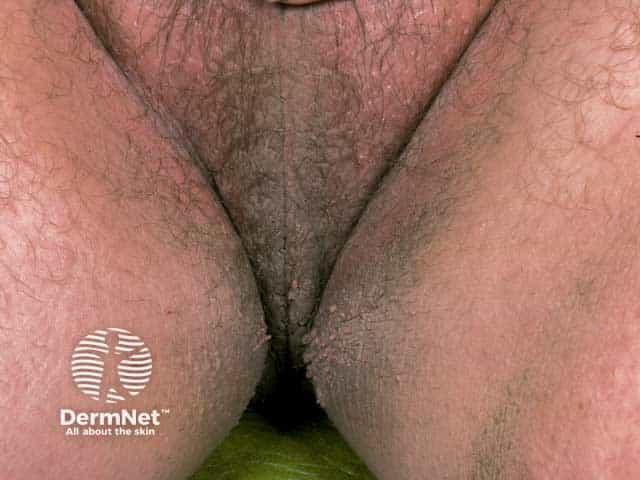
Clinical photograph of the inguinal-pubic intertriginous region showing obesity-associated acanthosis nigricans with multiple pedunculated skin tags (acrochordons). The image depicts symmetric, hyperpigmented, velvety plaques along skin folds in the groin and inner thighs, with coexisting small, soft, finger-like papillomas along the lesional margins. Skin tone darkening ranges from brown to charcoal-gray, with slight surface gloss and diffuse textural thickening. The surrounding skin is relatively unremarkable aside from mild creasing. Imaging modality: dermatologic clinical photography; technique: close-up, high-resolution color image with diffuse, even illumination to enhance contrast between pigmented, velvety epidermis and normal skin. Anatomical location: intertriginous groin region, including pubic creases and proximal thigh folds; laterality: bilateral; plane: frontal view. Pathophysiology: insulin resistance-driven keratinocyte and epidermal proliferation leading to thickened, hyperpigmented plaques; secondary acrochordons arise in skin folds. Notable features: acanthosis nigricans associated with obesity, metabolic syndrome, and diabetes risk; skin tags reflect friable, pedunculated papillomas. Diagnostic significance: strong indicator of impaired glucose tolerance; warrants metabolic workup (fasting glucose, HbA1c), obesity management, and surveillance for diabetes. Differential considerations include malignant acanthosis nigricans (paraneoplastic) and drug-induced variants. Clinical correlation: correlate BMI, family history, and endocrinologic evaluation; reinforce lifestyle modification. Useful for dermatology education and clinical teaching resources. Appropriate documentation supports patient counseling and referral.
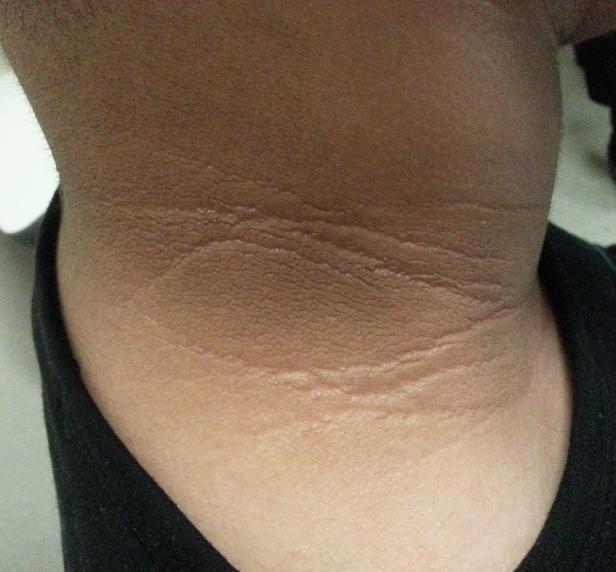
Clinical photograph of the posterior and lateral aspect of a patient's neck demonstrating classic features of acanthosis nigricans. The affected skin shows significant hyperpigmentation and symmetric, velvety thickening (lichenification) with prominent, exaggerated skin folds. The texture appears roughened and 'dirty' in appearance, with the most intense darkening occurring within the deeper cutaneous creases. The boundaries of the lesion are poorly defined, blending gradually into the surrounding normal skin. This dermatological manifestation is a key clinical marker often associated with systemic conditions such as insulin resistance, type 2 diabetes mellitus, and metabolic syndrome, or as part of specific genetic syndromes like Alström syndrome. The image serves as an educational example of metabolic-related skin changes and is essential for clinical recognition and diagnosis in endocrinology and dermatology.
Clinical Assessment & Investigation Plan
Your Symptom Triad Points Strongly to PCOS + Insulin Resistance
| Symptom | Clinical Significance |
|---|---|
| Acne on cheeks & jawline | Androgen-driven acne (hyperandrogenism) |
| Post-acne scars | Inflammatory acne, often hormonal |
| Dark skin at inner thighs, underarms, elbows | Acanthosis nigricans - hallmark of insulin resistance |
| Regular/irregular periods | Key to PCOS phenotyping |
| BMI ~24.9 kg/m² (5'6", 76 kg) | High-normal BMI - metabolic risk present |
Diagnosis of PCOS: Rotterdam 2023 Criteria (Harrison's 22E)
- Irregular menses (<8 cycles/year or cycles >35 days)
- Clinical or biochemical hyperandrogenism (elevated total/free testosterone, or Ferriman-Gallwey score ≥4-6)
- Polycystic ovarian morphology on ultrasound (≥20 antral follicles OR ovarian volume ≥10 cm³) OR elevated AMH
Investigations to Order (Timing Matters!)
Tier 1 - Essential (Order Now)
| Test | Purpose | Notes |
|---|---|---|
| Serum Total Testosterone | Biochemical hyperandrogenism | Ideally by LC-MS/MS; many labs use immunoassay |
| Free Testosterone (calculated or direct) | More sensitive than total T in women | |
| Serum Androstenedione | Better sensitivity (88.3%) vs testosterone (65.1%) for detecting androgen excess in PCOS | Tietz Lab Medicine |
| DHEA-S | Rules out adrenal source / androgen-secreting tumor | |
| LH and FSH | LH:FSH ratio often >2:1 in PCOS (not diagnostic alone, but supportive) | |
| Fasting Serum Insulin + Fasting Blood Glucose | Quantify insulin resistance | Drawn simultaneously for HOMA-IR calculation |
| HbA1c | Screens for prediabetes/diabetes | |
| TSH | Exclude hypothyroidism (causes anovulation + skin changes) | |
| Serum Prolactin | Exclude hyperprolactinemia | |
| AMH (Anti-Mullerian Hormone) | Elevated in PCOS; supports polycystic ovarian morphology | Cut-off >35 pmol/L (5 ng/mL) proposed but not standalone diagnostic |
Tier 2 - Metabolic Screening (Important Given Acanthosis Nigricans)
| Test | Purpose |
|---|---|
| 75g OGTT (2-hour glucose) | Recommended in PCOS with insulin resistance signs - acanthosis nigricans makes this mandatory |
| Fasting Lipid Profile | Dyslipidemia common in PCOS; especially check triglycerides and HDL |
| Liver function tests (ALT/AST) | Screen for metabolic dysfunction-associated steatotic liver disease (MDSLD), which Harrison's 22E notes is independently elevated in PCOS |
Tier 3 - To Exclude Differentials
| Test | Rules Out |
|---|---|
| 17-OH Progesterone (early morning, fasting) | Non-classical Congenital Adrenal Hyperplasia (CAH) - can mimic PCOS |
| Cortisol (morning serum) ± 24h urine free cortisol | Cushing's syndrome if you have other features |
Imaging
| Investigation | What to Look For |
|---|---|
| Pelvic Ultrasound (transvaginal preferred) | ≥20 antral follicles per ovary OR ovarian volume ≥10 cm³ in at least one ovary (Rotterdam 2023) |
Your HOMA-IR Calculation (After Getting Results)
HOMA-IR = (Fasting Insulin in µU/mL × Fasting Glucose in mmol/L) ÷ 22.5
Priority Order for You
- Draw all hormones today or by Day 10 at the latest (Day 2-10 window is acceptable)
- Fasting bloods (glucose, insulin, lipids, LFTs, HbA1c) - any morning, fasting 8-12 hours
- 75g OGTT - within the next week
- Pelvic USG - can be done any time, ideally within the first 10 days of cycle
What to Expect / Next Steps
- Combined oral contraceptive pills (COCPs) containing anti-androgenic progestins (e.g., cyproterone acetate or drospirenone-containing pills) are first-line for managing acne, regulating cycles, and protecting the endometrium (Harrison's 22E)
- Metformin should be considered given insulin resistance signs and metabolic risk (especially with acanthosis nigricans)
- Lifestyle modification - even 5% weight reduction improves ovarian function and androgen levels (Berek & Novak's Gynecology)
- Topical retinoids/azelaic acid for acne scars; dermatology referral for acanthosis nigricans (responds to insulin sensitization)
- Screen annually for depression, anxiety, hypertension, dyslipidemia - all independently elevated in PCOS
One Important Note on Acanthosis Nigricans at the Elbow
Disclaimer: This is educational guidance for a medical professional. Please work with your attending or a consultant endocrinologist/gynecologist for your personal management plan.