
55 year old man pain in 140 degree to 180 degree shoulder adduction and only at the end range both right and left side
Reading File
Pain specifically at 140-180 degrees of shoulder abduction (not adduction - likely a transcription note) at end range only, bilateral, in a 55-year-old male is a classic presentation. The painful arc typically ends around 180 degrees and involves structures being compressed at that range. Let me look this up properly.
Searching sources...
Finding Sources
Finding Sources
Searching the Web
shoulder pain 140 to 180 degrees abduction end range bilateral diagnosis
Finding Sources
Finding Sources
Reading Web Page
https://pmc.ncbi.nlm.nih.gov/articles/PMC9730981
Reading File
Finding Sources
This is a clear clinical picture. Here is a thorough answer:
Clinical Assessment: Bilateral Shoulder Pain at 140-180° of Abduction (End Range)
Key Clinical Finding: High Painful Arc
Pain that occurs only at the end range of shoulder abduction (140-180°), bilaterally, in a 55-year-old male is the classic presentation of Acromioclavicular Joint (ACJ) Pathology - most likely ACJ osteoarthritis.
This is distinct from the more common subacromial/rotator cuff impingement, which produces a painful arc from 60-120°.
"Pain after 120 degrees indicates AC joint pathology." - PMC Algorithmic Approach to Shoulder Pathology
Why ACJ Arthritis Fits
| Feature | This Patient | ACJ Arthritis |
|---|---|---|
| Age/Sex | 55M | Common in males 40-60+ |
| Pain arc | 140-180° only | "High painful arc - pain worst for last 20-30° of elevation" |
| Bilateral | Yes | Can be bilateral (degenerative) |
| End range only | Yes | Characteristic of ACJ |
From Bailey and Love's Short Practice of Surgery, 28th Ed.:
"There is a high painful arc, pain being worst for the last 20-30° of elevation. Flexing and adducting the arm to place the hand around the opposite shoulder reproduces pain."
Differential Diagnosis
Most Likely:
- Bilateral ACJ Osteoarthritis - degenerative wear, very common, often bilateral, produces exactly this high painful arc. Inferior osteophytes can also secondarily impinge on the rotator cuff.
Consider/Rule Out (especially given bilateral presentation):
2. Polymyalgia Rheumatica (PMR) - age >50, bilateral shoulder girdle pain, ESR/CRP elevated; though PMR typically causes more diffuse stiffness, not an isolated painful arc.
3. Rheumatoid Arthritis - bilateral joint involvement; check for systemic features, RF, anti-CCP.
4. ACJ secondary to old trauma - may be unilateral.
5. Subacromial impingement with osteophytes - if pain also present at 60-120°.
The Rheumatology Shoulder Assessment guide specifically notes: "Most shoulder pain is unilateral - if it is bilateral you should consider an inflammatory process, such as rheumatoid arthritis or polymyalgia rheumatica."
Clinical Tests to Perform
- Cross-body adduction test (scarf test): Flex arm to 90° and adduct across chest - reproduces ACJ pain if positive
- ACJ palpation: Direct tenderness over the ACJ
- Neer's / Hawkins-Kennedy: Typically negative or less prominent if pure ACJ pathology
- Drop arm test: To rule out rotator cuff tear
Investigations
- X-ray bilateral shoulders (AP + Zanca view of ACJ): Osteophytes, joint space narrowing at ACJ
- Bloods: ESR, CRP, RF, anti-CCP, full blood count - to rule out inflammatory/PMR cause given bilateral involvement
- USS or MRI shoulder: If rotator cuff involvement suspected (inferior ACJ osteophytes impinging on cuff)
Management
Conservative (first line):
- Activity modification (avoid overhead work)
- NSAIDs / analgesia
- Physiotherapy - scapular stabilization, periscapular strengthening
Injection:
- Intra-articular ACJ corticosteroid injection - diagnostic and therapeutic. A positive response confirms the ACJ as the pain source.
"An intra-articular corticosteroid injection will usually help; even if the effect is short-lived it localises the problem accurately." - Bailey and Love's
Surgical (if conservative fails):
- Arthroscopic or open excision of the lateral 0.5-1 cm of the clavicle - gives good long-term pain relief
- If inferior osteophytes causing secondary impingement: subacromial decompression with osteophyte removal
Summary
A 55-year-old male with bilateral pain only at 140-180° of shoulder abduction = high painful arc = ACJ pathology until proven otherwise. Given bilateral involvement, also screen for inflammatory/systemic causes (PMR, RA) with bloods. Confirm with cross-body adduction test, direct ACJ palpation, and X-rays. First-line treatment is an ACJ steroid injection, which is both diagnostic and therapeutic.
34 year old lady hand swelling and thumb pain , over evening happend without reason from one month not reduced types so much and hand swelling is present in dorsal forearm above hand joint and in thumb there is kind of pulling pain
A 34-year-old woman with dorsal wrist/forearm swelling + thumb "pulling pain" that started insidiously one month ago and hasn't resolved strongly points toward De Quervain's tenosynovitis - swelling over the first extensor compartment (dorsoradial wrist) with pain/tightness along the thumb tendons (APL + EPB). Let me confirm this from authoritative sources.
Searching sources...
Finding Sources
Finding Sources
Searching the Web
de quervain tenosynovitis 34 year old woman dorsal wrist swelling thumb pain diagnosis management
Reading File
Reading File
Reading File
Loading Image
Finding Sources
The textbook image and clinical data align perfectly. Here is the full clinical breakdown:
Clinical Assessment: 34-Year-Old Woman, Dorsal Wrist/Forearm Swelling + Thumb Pulling Pain x 1 Month
Most Likely Diagnosis: De Quervain's Tenosynovitis
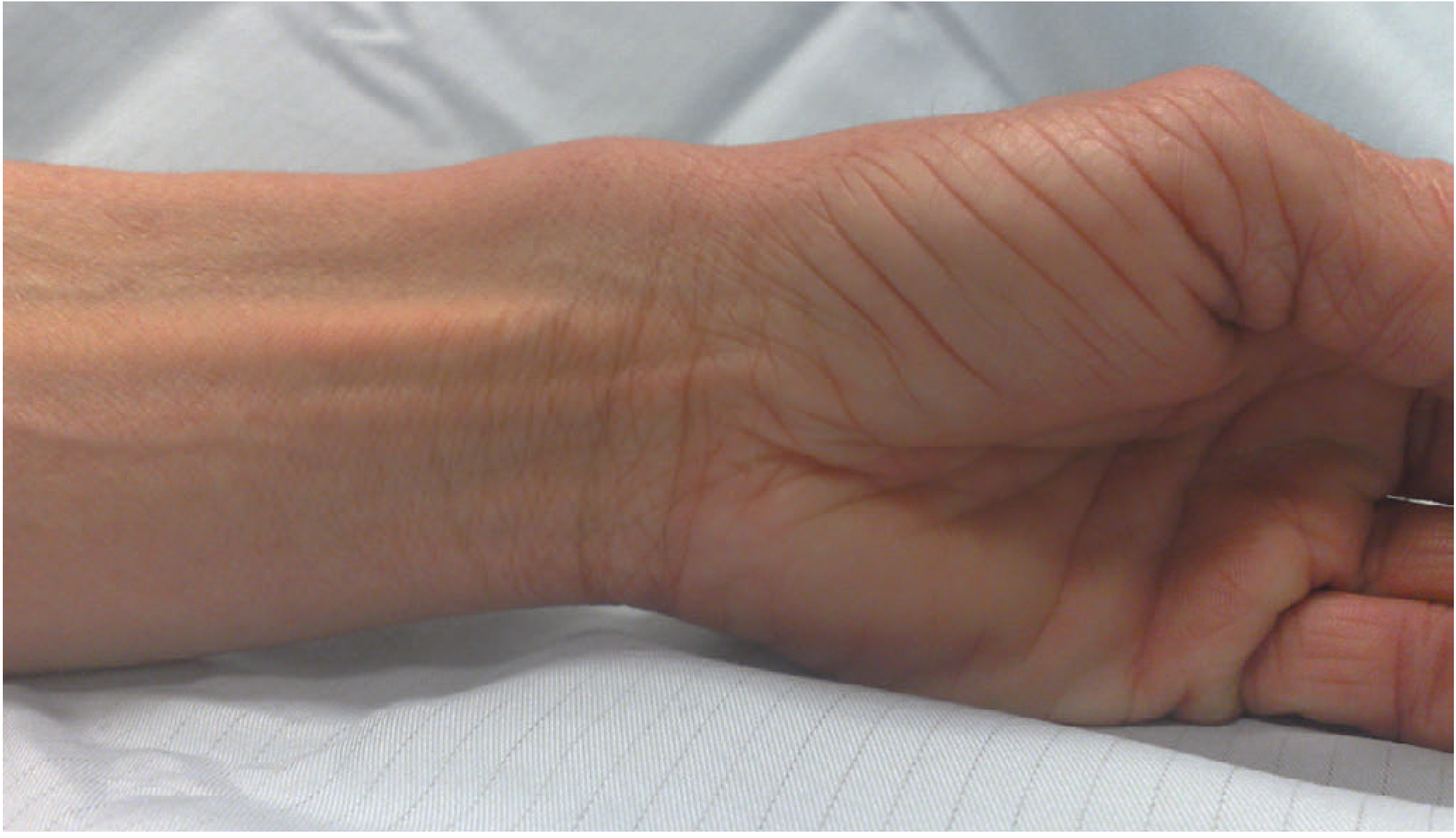
Why This Fits Perfectly
De Quervain's tenosynovitis is inflammation of the abductor pollicis longus (APL) and extensor pollicis brevis (EPB) tendons as they pass through the first dorsal extensor compartment at the radial side of the wrist.
| Patient Feature | Classic De Quervain's |
|---|---|
| 34-year-old female | Most common in women aged 30-50 |
| Dorsal forearm/wrist swelling | Swelling over 1st extensor compartment, 1-2 cm proximal to radial styloid |
| Thumb "pulling pain" | APL/EPB tendons under tension = pulling/tightening sensation |
| Gradual onset, no trauma | Typical - often insidious/overuse |
| Present for 1 month, not resolving | Chronic tenosynovitis without treatment will persist |
"Most common in women between 30 and 50 years of age... significant radial-sided wrist pain with focal swelling and tenderness and crepitus 1 to 2 cm proximal to the radial styloid over these tendons." - Rheumatology, 2-Volume Set (Elsevier 2022)
Ask About These Risk Factors
- New baby/breastfeeding (called "new mother's wrist" - very common postpartum)
- Repetitive pinching/gripping motions - typing, scrolling, crafts, cooking
- Recent increase in hand-intensive activity
- Pregnancy or postpartum state
Clinical Examination
Key Test - Finkelstein's Test (pathognomonic):
- Ask patient to place thumb inside a closed fist
- Examiner passively deviates the wrist toward the ulnar side
- Positive = sharp pain/pulling sensation over the radial wrist and thumb
- "The Finkelstein's test is the most pathognomonic physical sign of de Quervain's tenosynovitis" - Rosen's Emergency Medicine
On Examination look for:
- Focal tenderness and swelling over the radial styloid / dorsoradial wrist
- Crepitus on thumb movement
- Pain on resisted thumb extension and abduction
Important Differentials to Distinguish
| Condition | How to Distinguish |
|---|---|
| 1st CMC (basal thumb) osteoarthritis | Finkelstein also positive but tenderness at the base of thumb, not the radial styloid. Grind test positive. X-ray shows joint changes. |
| Intersection syndrome | Swelling is more proximal (~4 cm above wrist), not at radial styloid. Squeaking/crepitus on wrist motion. |
| Carpal tunnel syndrome | Palmar tingling/numbness in median nerve distribution, no dorsal swelling |
| Inflammatory arthritis (RA/Psoriatic) | Check for joint swelling, bilateral involvement, systemic features, RF/anti-CCP |
Investigations
- Usually clinical diagnosis - history + Finkelstein's test is sufficient
- X-ray wrist - to exclude 1st CMC arthritis or bony pathology
- USS wrist - confirms tendon sheath thickening, fluid around APL/EPB, rules out other causes
- Bloods (RF, anti-CCP, ESR, CRP) - only if inflammatory arthritis is suspected
Management
Step 1 - Conservative (6 weeks):
- Rest and activity modification - avoid repetitive thumb/wrist movements
- Thumb spica splint (long opponens splint, IP joint free) - immobilizes the 1st extensor compartment, worn full-time initially
- NSAIDs - ibuprofen or naproxen for 2-4 weeks
- Ice over the radial wrist for 10-15 min, 3-4x/day
Step 2 - Corticosteroid Injection (if no improvement in 4-6 weeks OR severe):
- Intra-sheath injection into the first dorsal compartment
- Methylprednisolone 40 mg/mL, 0.5 mL + local anaesthetic
- Achieves complete and lasting relief in ~70% of patients - Goldman-Cecil Medicine
- Can repeat once if partial response
Step 3 - Surgery (if two injections and conservative care fail):
- Surgical release of the first dorsal extensor compartment retinaculum
- Done as day case; excellent outcomes
- Important: release all APL sub-slips and any dividing septum (present in 60% of cases)
"Up to 76% of patients have more than one slip of the APL tendon, and 60% have a dividing septum in the compartment, which should be released if identified at surgery." - Rheumatology (Elsevier 2022)
Summary for This Patient
A 34-year-old woman with 1 month of dorsal forearm/wrist swelling and thumb "pulling pain" = De Quervain's tenosynovitis until proven otherwise. Confirm with Finkelstein's test. First-line: thumb spica splint + NSAIDs. If not improving in 4-6 weeks, proceed to intra-sheath corticosteroid injection (highly effective). Ask specifically about recent pregnancy, breastfeeding, or new repetitive activities.
This is a shared conversation. Sign in to Orris to start your own chat.