
Can kf ring seen with naked eye
Reading File
Finding Sources
Finding Sources
Loading Image
Yes — but only in advanced copper overload.
The Kayser-Fleischer (KF) ring is a golden to greenish-brown (or rusty-brown) discoloration at the periphery of the cornea (Descemet's membrane), caused by copper deposition in Wilson's disease.
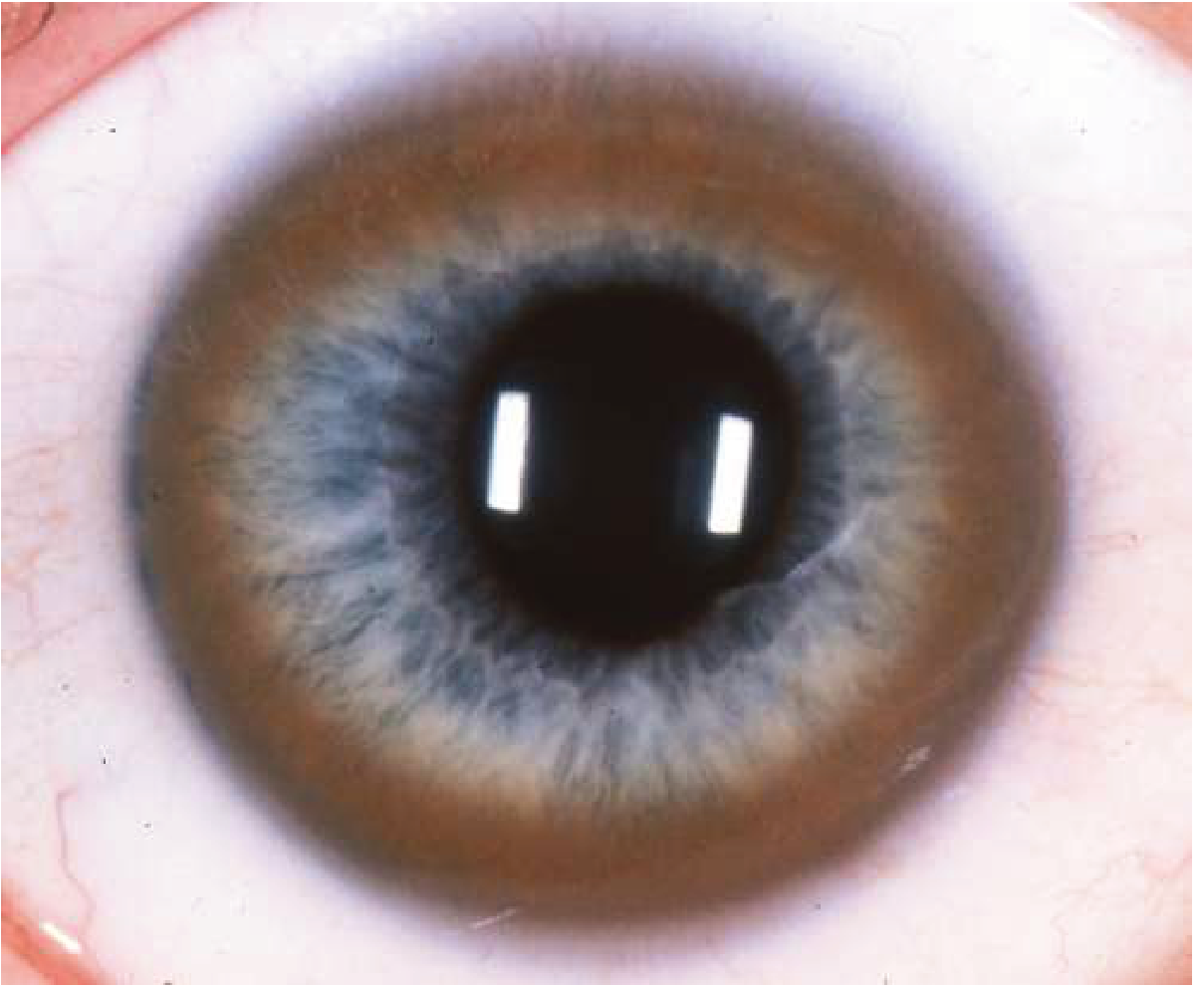
Visibility by naked eye — what the textbooks say:
| Stage | Visibility |
|---|---|
| Early / mild copper overload | Only detectable on slit-lamp examination |
| Advanced / significant copper overload | Can sometimes be seen by the naked eye |
Key quotes from authoritative sources:
"The latter [KF rings] can be seen initially only on slit lamp examination, but as copper overload progresses they can sometimes be seen by the naked eye." — Henry's Clinical Diagnosis and Management by Laboratory Methods
"With the progression of the neurologic disease, the Kayser-Fleischer rings become more evident." — Adams and Victor's Principles of Neurology, 12th Ed.
"Corneal deposition is visible in the form of Kayser-Fleischer rings, which are brown or gray-green rings that can be seen with slit-lamp examination or occasionally are grossly visible." — Fitzpatrick's Dermatology
Bottom line: The KF ring is not reliably visible to the naked eye. Slit-lamp examination is the standard for detection. In very advanced Wilson's disease, the ring may become grossly visible, but slit-lamp (and sometimes gonioscopy) remains mandatory for diagnosis — especially in early or neurologically asymptomatic patients.
This is a shared conversation. Sign in to Orris to start your own chat.