
Give me X-ray images of a patient with osteoporosis having femoral neck fracture.
osteoporosis femoral neck fracture X-ray radiograph image
Femoral Neck Fracture in Osteoporosis - X-ray Images
1. Annotated AP Pelvis - Femoral Neck Fracture vs. Normal Side

2. Displaced Subcapital Fracture (Textbook X-ray)
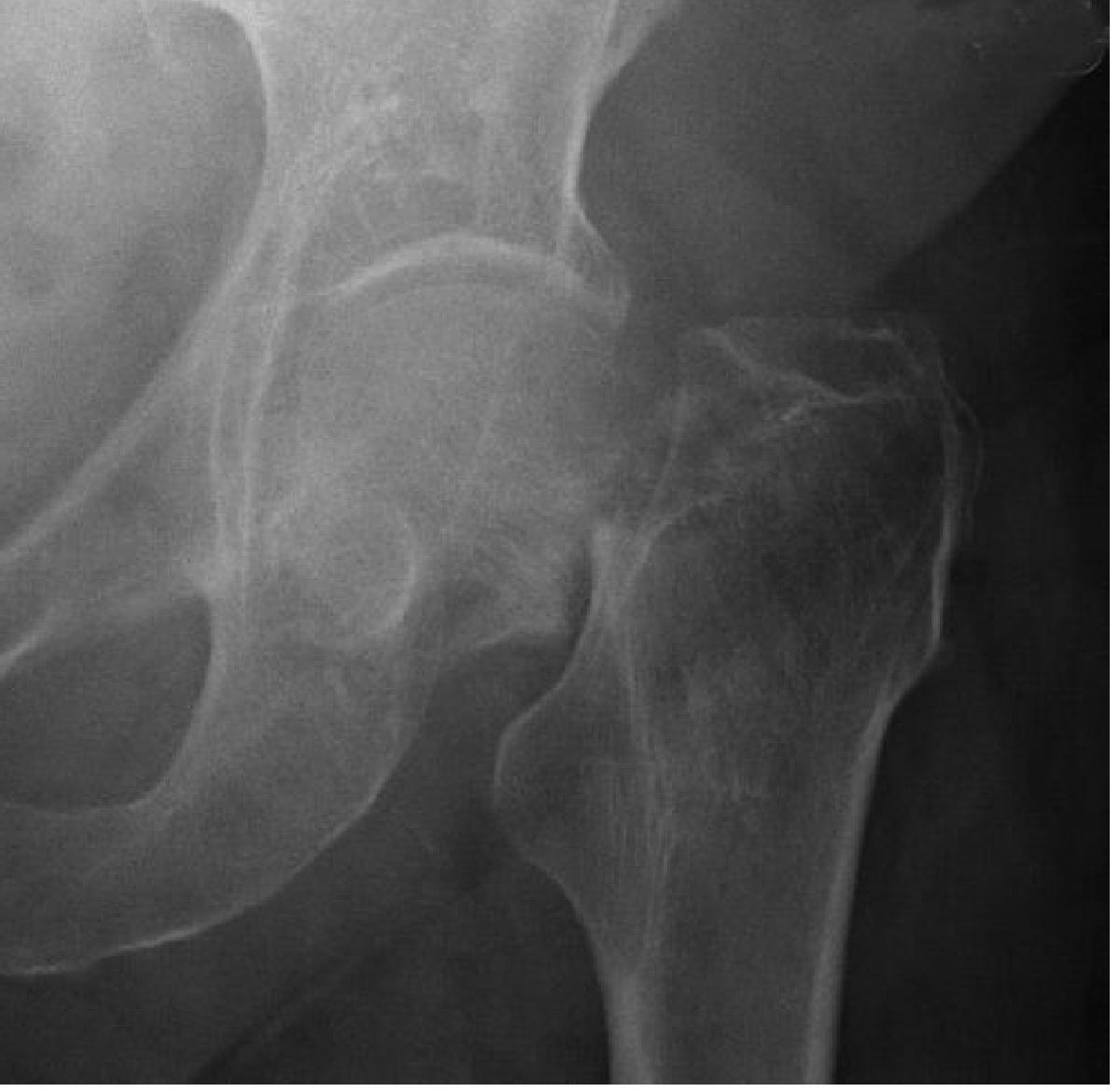
3. AP Hip - Displaced Femoral Neck Fracture (Radiopaedia)
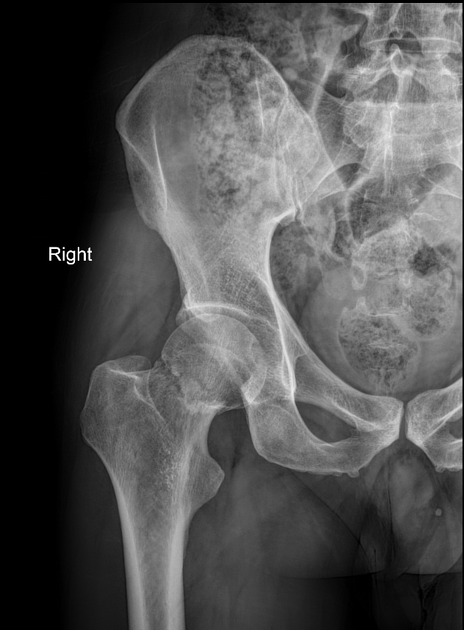
- Reduced bone density (osteoporotic pattern - sparse, coarse trabeculae)
- Loss of Shenton's line
- Varus angulation of the femoral head
- Upward displacement of the femoral shaft relative to the head
4. Fracture Classification Diagram - Sites of Proximal Femoral Fractures
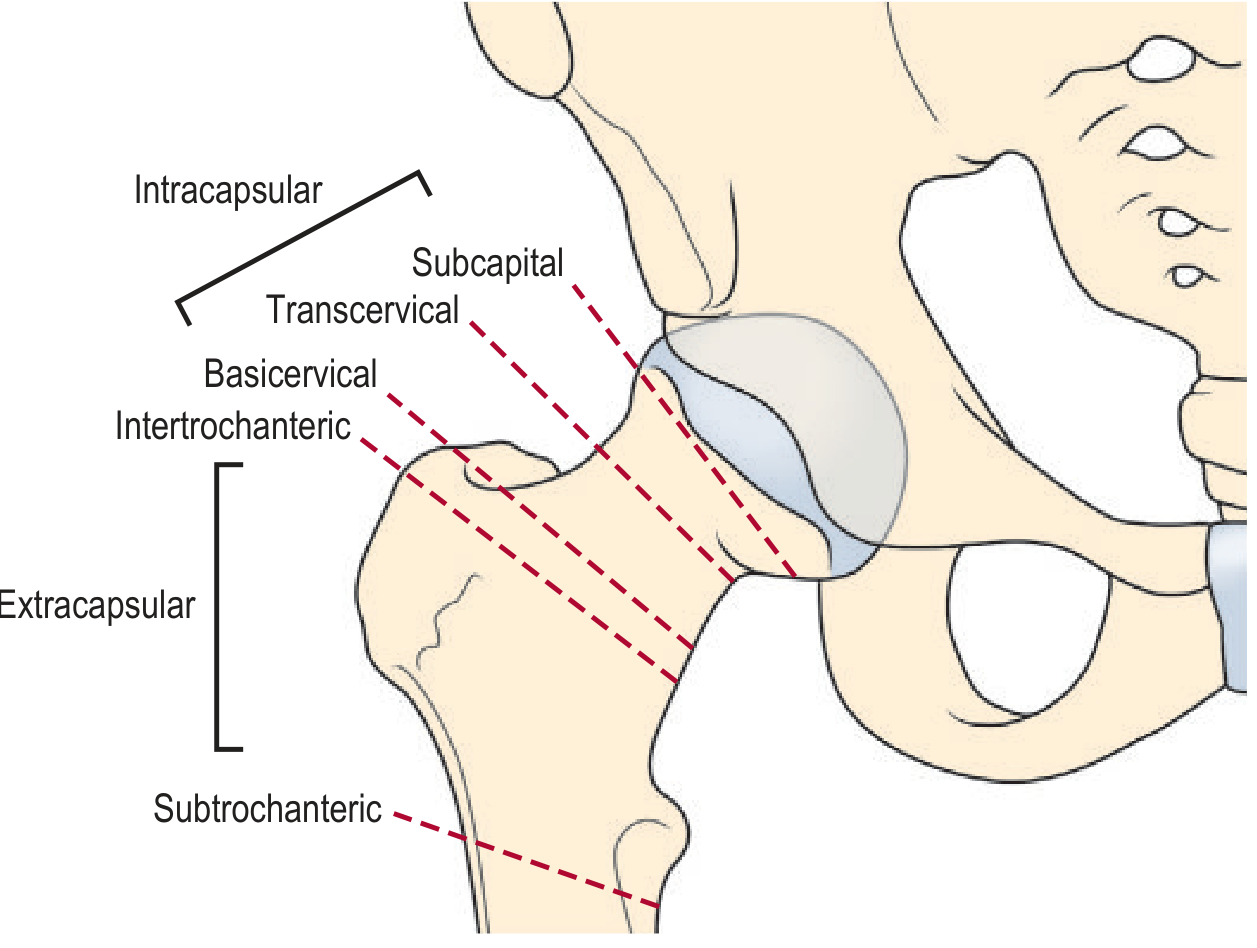
- Intracapsular (highest AVN risk): subcapital, transcervical, basicervical
- Extracapsular (lower AVN risk): intertrochanteric, subtrochanteric
5. Garden Classification of Intracapsular Femoral Neck Fractures
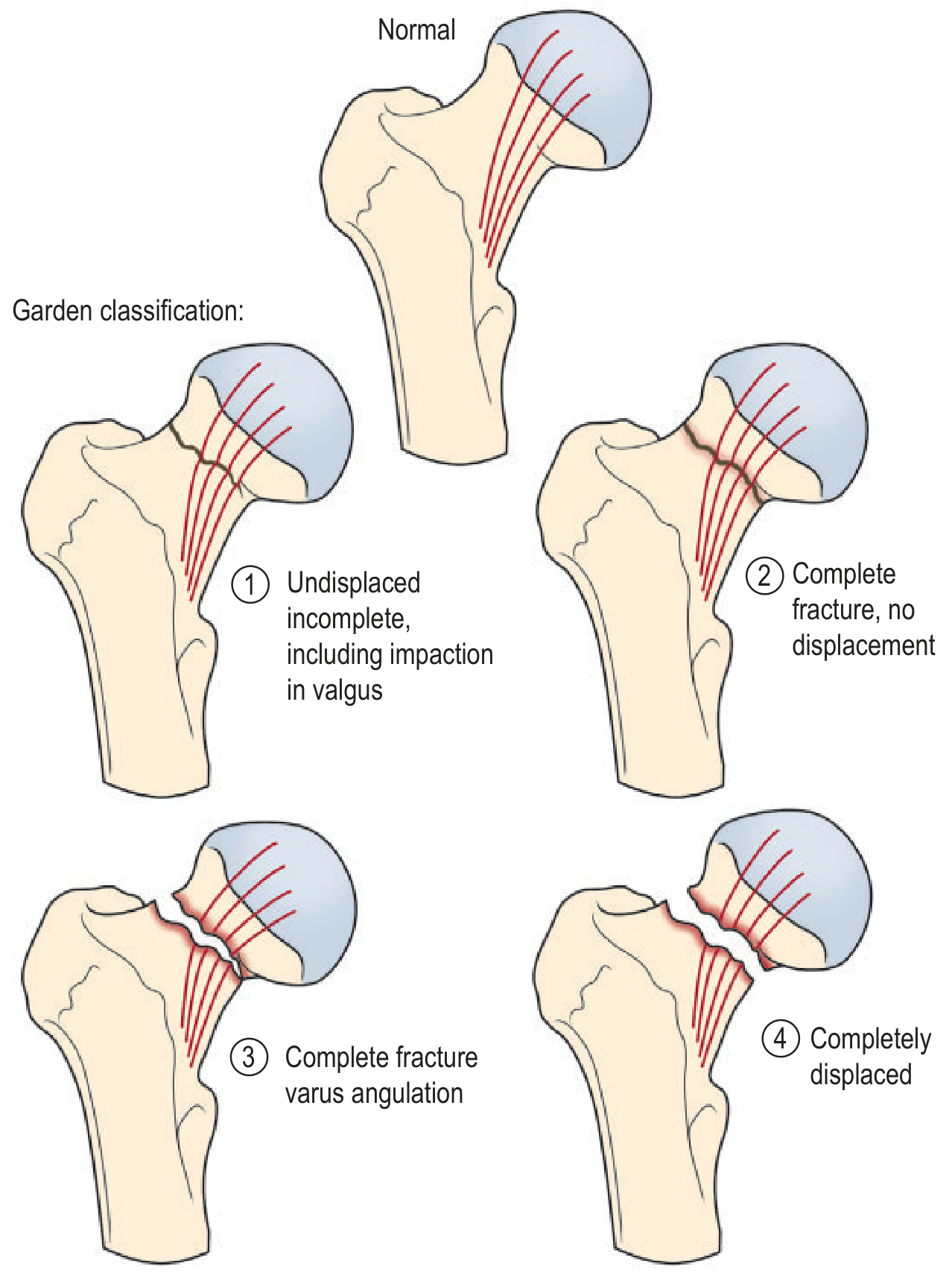
| Grade | Description | AVN Risk |
|---|---|---|
| 1 | Undisplaced/incomplete (valgus impaction) | Low |
| 2 | Complete fracture, no displacement | Low-moderate |
| 3 | Complete fracture, varus angulation | High |
| 4 | Completely displaced | Very high (15-35%) |
Key Radiological Features to Look For in Osteoporosis + Femoral Neck Fracture
- Reduced bone density - diffusely osteopenic appearance (more "see-through")
- Fracture line - may be subtle in undisplaced/impacted fractures; look for a sclerotic/lucent line across the neck
- Loss of Shenton's line - the smooth arc formed by the inferior femoral neck and superior obturator foramen is disrupted
- Shortening and external rotation - of the affected limb on clinical exam
- Trabecular disruption - interruption of the normal trabecular pattern is the key clue for subtle/impacted fractures
Note: Approximately 15% of femoral neck fractures are initially difficult to detect on plain X-ray. If clinical suspicion is high but the X-ray appears normal, CT or MRI is indicated to exclude an occult fracture. - Grainger & Allison's Diagnostic Radiology
operation for this
surgical management femoral neck fracture osteoporosis hemiarthroplasty total hip replacement internal fixation
Surgical Management of Femoral Neck Fracture in Osteoporosis
Decision Algorithm
Femoral Neck Fracture
│
├── Undisplaced (Garden 1 & 2)
│ └── Internal Fixation (cannulated screws / DHS)
│
└── Displaced (Garden 3 & 4)
├── Physiologically OLDER / less active
│ └── Hemiarthroplasty (or THA if community ambulatory)
└── Physiologically YOUNGER (<60 yrs)
└── Internal Fixation (attempt head preservation)
Option 1: Internal Fixation with Cannulated Screws
Technique (Campbell's Operative Orthopaedics, Technique 60.1)
- Patient supine on fracture table; closed reduction using Whitman technique
- Fluoroscopic assessment of reduction quality
- Three partially threaded cannulated screws (6.5, 7.0, or 7.3 mm) inserted in an inverted triangle configuration
- A fourth screw in a diamond configuration when significant comminution is present
- Guide pins placed under fluoroscopy in two planes; screws placed with cortical support in the femoral neck
Diagram - Cannulated Screw Fixation
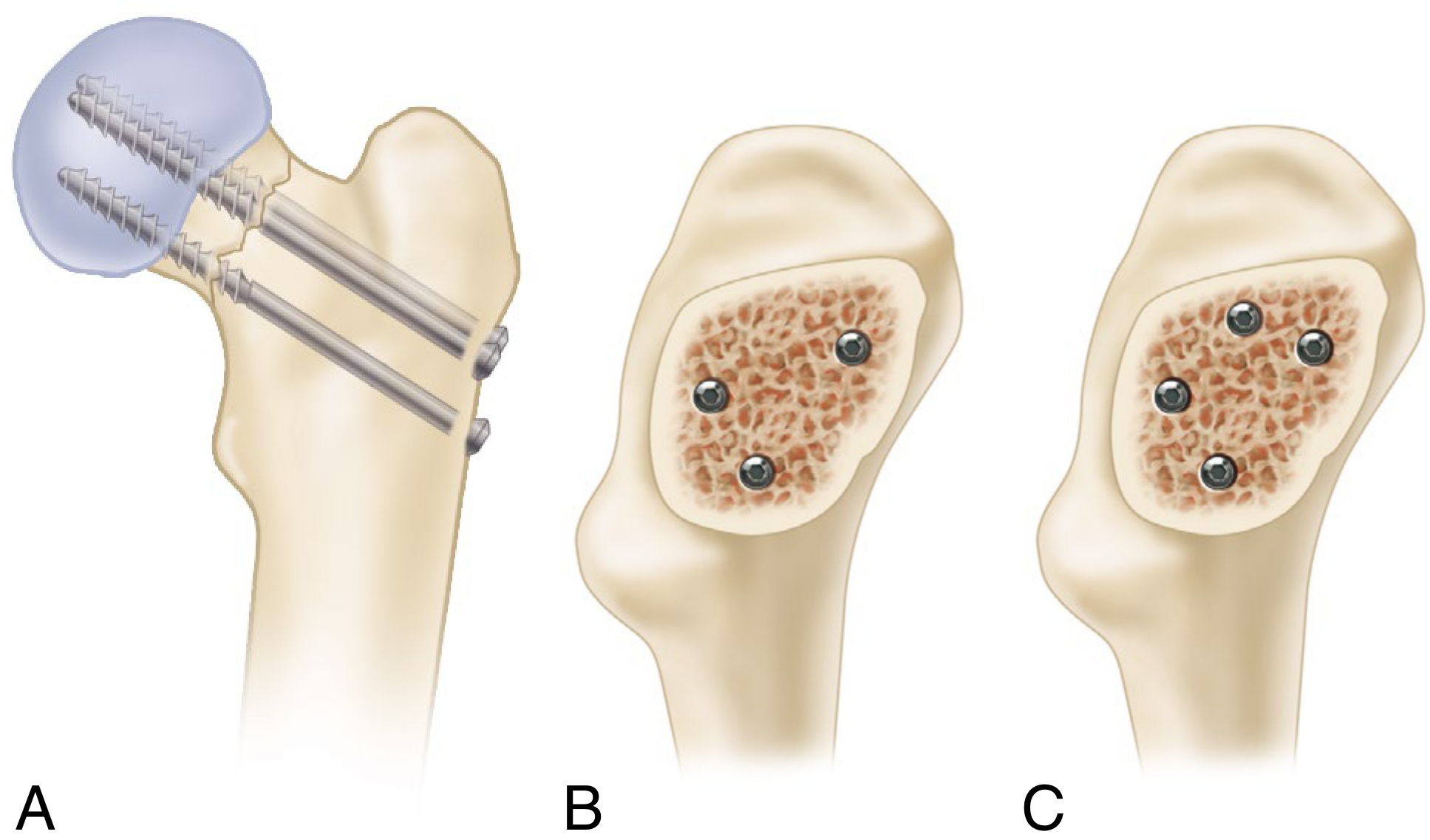
- (A) Side view: screws crossing the fracture line into the femoral head
- (B) Inverted triangle: standard 3-screw configuration (end-on view)
- (C) Diamond: 4-screw configuration for comminuted fractures
Option 2: Dynamic Hip Screw (DHS) / Sliding Hip Screw
Post-op X-rays showing various fixation devices:
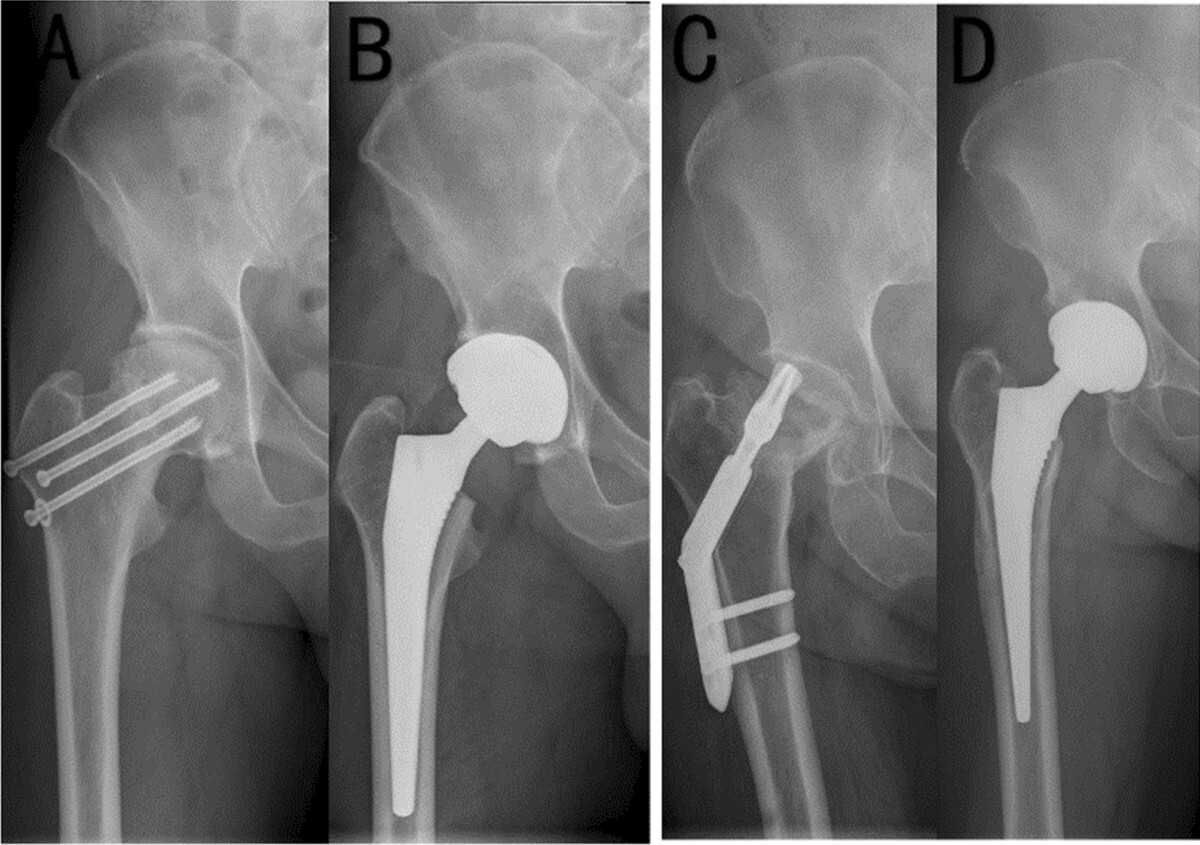
- (A) Cannulated screw fixation - parallel screws in femoral neck
- (B) Hemiarthroplasty - prosthetic femoral head replacing the fractured head
- (C) Dynamic hip screw + side plate
- (D) Total hip arthroplasty (THA)
Option 3: Hemiarthroplasty
Hemiarthroplasty vs THA:
| Feature | Hemiarthroplasty | Total Hip Arthroplasty (THA) |
|---|---|---|
| Acetabulum replaced? | No | Yes |
| Best for | Less active elderly | Active community ambulators |
| Dislocation risk | Lower | Higher (5-10%) |
| Complexity | Less | More |
| Cost | Lower | Higher |
| Revision rate | Similar long-term | Better function long-term |
Unipolar vs Bipolar:
- Unipolar - single fixed articulation; simpler and cheaper
- Bipolar - inner bearing between head and cup; theoretically reduces acetabular wear, though clinical benefit is debated
Cemented vs Cementless:
- Cemented stems are generally preferred in osteoporotic elderly patients - lower rates of periprosthetic fracture and better initial stability in poor-quality bone
Option 4: Total Hip Arthroplasty (THA)
Garden Alignment Index - Intraoperative Assessment
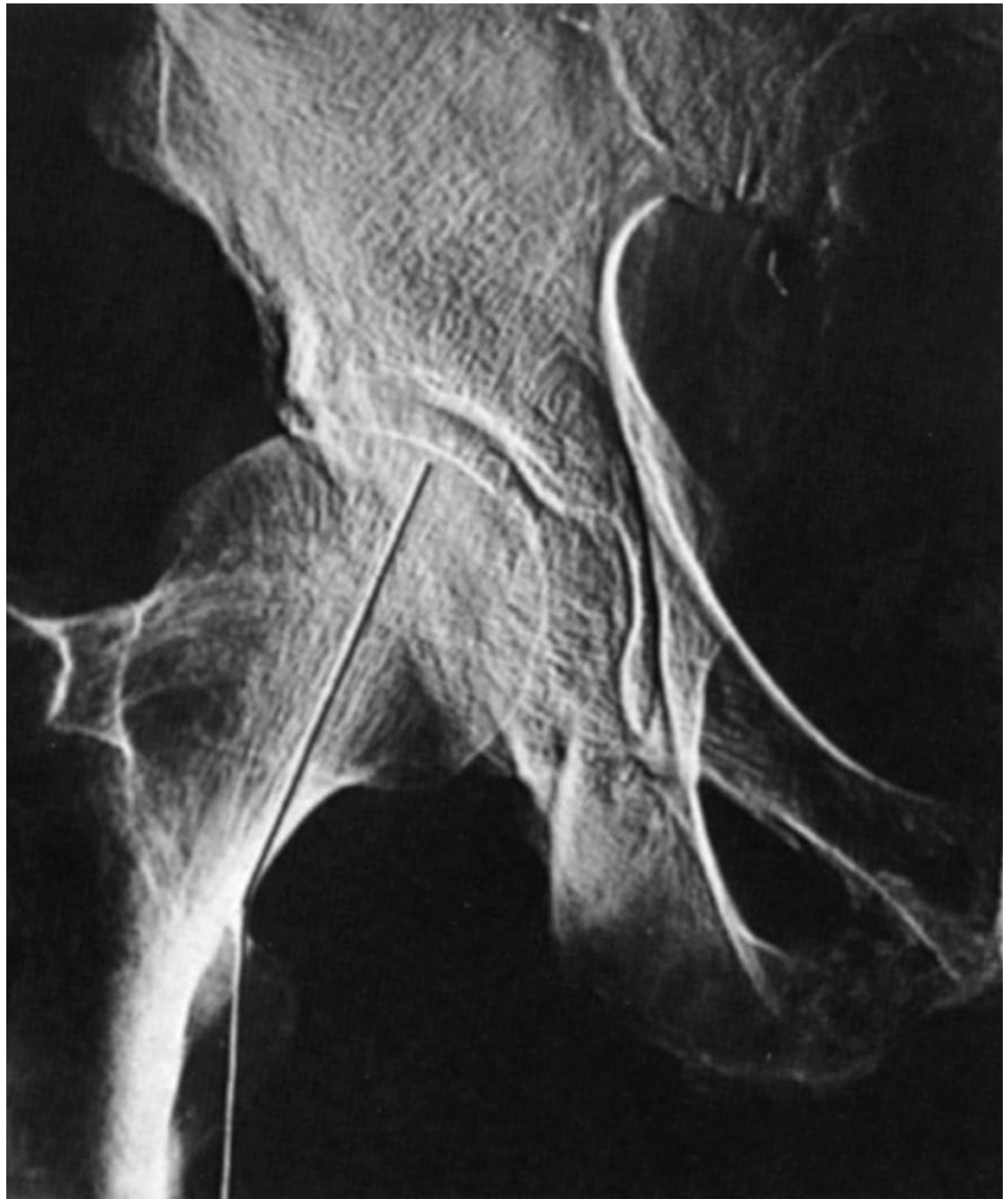
- AP view: angle between medial trabecular stream and femoral shaft should be 160-170°
- Lateral view: angle should be 180° (collinear)
- Angles outside these ranges indicate inadequate reduction and predict failure
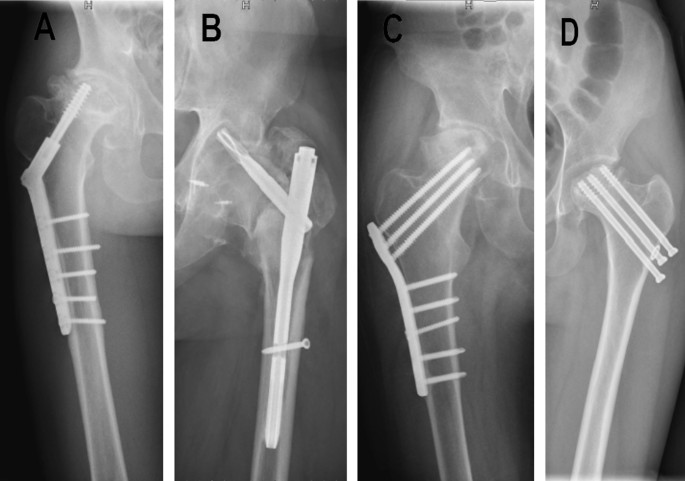
Post-op Implant X-rays (Various Fixation Devices)
Summary Table
| Fracture Type | Patient | Preferred Operation |
|---|---|---|
| Undisplaced (Garden 1-2) | Any age | Cannulated screws (3-screw inverted triangle) |
| Displaced (Garden 3-4) | Young (<60 yrs) | Closed reduction + internal fixation |
| Displaced (Garden 3-4) | Elderly, less active | Hemiarthroplasty (cemented) |
| Displaced (Garden 3-4) | Elderly, active ambulator | Total Hip Arthroplasty (THA) |
| Basicervical / Intertrochanteric | Any | Dynamic Hip Screw (DHS) |
Key point in osteoporosis: Bone quality is poor, so internal fixation has a higher failure rate (AVN 15-35%, non-union ~30% in displaced fractures). Arthroplasty is preferred in displaced fractures in elderly osteoporotic patients because it provides immediate stable fixation and allows early full weight-bearing, reducing the risk of prolonged immobility complications (DVT, pressure sores, pneumonia). - Campbell's Operative Orthopaedics, 15th Ed 2026
find recent research papers or guidelines for these operations
"femoral neck fracture"[MeSH Terms] AND "arthroplasty"[MeSH Terms]
"femoral neck fracture"[MeSH Terms] AND "internal fixation"[MeSH Terms]
"hip fracture"[MeSH Terms] AND "guideline"[pt]
femoral neck fracture hemiarthroplasty total hip arthroplasty
femoral neck fracture internal fixation cannulated screws outcome
hip fracture osteoporosis surgical management guidelines
PMID: 38324951
PMID: 40956324
PMID: 37678258
PMID: 40457366
PMID: 41198933
PMID: 39554300
PMID: 39007655
femoral neck fracture dynamic hip screw sliding hip screw outcome
Recent Research Papers & Guidelines: Femoral Neck Fracture Surgery
🏛️ GUIDELINES & POLICY (2024-2026)
1. WHO Benchmarks for Hip Fracture Care & Osteoporosis Treatment (2026)
Evidence Level: Authoritative WHO-linked Review
- ≥50% of patients receive surgery within 48 hours of fracture
- ≥50% of patients receive pharmacological osteoporosis treatment post-fracture
- Fracture Liaison Services (FLS) are evidence-based tools for secondary fracture prevention
- Orthogeriatric co-management models reduce mortality
- Health systems must close data gaps and variability in surgical pathways
- Urgently calls for new national policies tailored to geopolitical contexts
2. Osteosynthesis, Hemiarthroplasty, THA in Hip Fractures: All I Need to Know (2024)
Evidence Level: Practice Guideline / Narrative Review
- National surgical guidelines for hip fractures are established but THA implementation as primary treatment varies widely
- Reviews epidemiology, classification systems, and all three main treatment options
- Emphasizes that THA is increasingly used for active elderly patients but with caveats on dislocation risk
- Supports tailored implant selection based on patient physiology, not age alone
🔩 INTERNAL FIXATION PAPERS (2023-2025)
3. Femoral Neck System (FNS) vs. Cannulated Screws + Medial Plate - Prospective Multicenter RCT (2025)
Evidence Level: Randomized Controlled Trial (165 vs. 166 patients, 2-year follow-up)
| Outcome | FNS | CS + Medial Plate |
|---|---|---|
| Bone union rate | No significant difference | No significant difference |
| Harris Hip Score (3 months) | Higher ✓ | Lower |
| Operation time | Shorter ✓ | Longer |
| Intraoperative blood loss | Less ✓ | More |
| Fluoroscopy frequency | Less ✓ | More |
| Coxa vara incidence | Higher ✗ | Lower |
| 2-year function | No significant difference | No significant difference |
4. Optimal Fixation Strategies for Displaced FNF in Patients 18-59 Years - 26-Center Study (2024)
Evidence Level: Large multicenter comparative cohort (565 patients, 26 Level 1 trauma centers)
- Multiple cannulated screws (MCS): 55% failure rate
- Fixed-angle (FA) constructs: 36% failure rate (p<0.001)
- Best construct: Sliding hip screw + medial femoral neck buttress plate (FNBP) + antirotation screw = only 11% failure rate
Clinical implication: Traditional multiple cannulated screw fixation performs poorly for displaced fractures in young patients. Fixed-angle constructs with medial plate augmentation should be prioritized.
5. FNS vs. Cannulated Screws - Meta-Analysis & Systematic Review (2023)
Evidence Level: Review / Meta-Analysis
6. Systematic Review: Post-Op Outcomes of FNF Interventions (2024)
Evidence Level: Systematic Review (PRISMA) - 68,567 patients across 117 studies
- FNS groups had similar or lower complication rates, reoperations, and mortality vs. cannulated screws, cancellous screws, and DHS groups
- No significant safety difference between FNS and traditional devices
- Calls for more prospective controlled studies to firmly establish FNS superiority
🦴 HEMIARTHROPLASTY vs. THA PAPERS (2023-2025)
7. Hemiarthroplasty vs. THA in Elderly - Medicare Data Analysis (2023)
Evidence Level: Large population-based study (61,695 elderly Medicare patients, 2017-2019)
| Outcome (12 months) | THA | Hemiarthroplasty |
|---|---|---|
| Dislocation rate | 2.9% | 1.9% (p=0.001) |
| Revision/conversion | No significant difference | No significant difference |
- 83.4% received hemiarthroplasty, 16.6% received THA
- THA carries significantly higher dislocation risk at 12 months
- No difference in revision rates between the two
Clinical implication: THA's higher dislocation risk should be factored into patient selection, especially for less active elderly patients.
8. Conversion THA after Failed Internal Fixation - Systematic Review (2025)
Evidence Level: Systematic Review (1,260 patients, 12 retrospective studies)
| Prior Fixation | Dislocation | Periprosthetic Fracture | Aseptic Loosening | Infection | Reoperation |
|---|---|---|---|---|---|
| Intramedullary nail | 6.01% | 3.14% | 2.59% | 3.41% | 3.82% |
| Plate/screw system | Lower overall | 11.57% (highest) | - | - | - |
| Cannulated screws | 10.04% (highest dislocation) | Lower | - | - | - |
Key finding: Conversion THA carries elevated complications regardless of prior fixation method. Surgeons should counsel patients about this before choosing initial fixation strategy.
Summary Table: Best Evidence by Procedure
| Procedure | Best Recent Evidence | Key Message |
|---|---|---|
| Cannulated screws | Roser 2024 (PMID 39007655) | 55% failure in displaced FNF; supplement with medial buttress plate + AR screw to reduce to 11% |
| FNS (Femoral Neck System) | Wen 2025 RCT (PMID 40457366); Sheffels 2024 SR (PMID 39554300) | Faster, less blood loss, equivalent union; slightly more coxa vara |
| Hemiarthroplasty vs. THA | Edelstein 2023 (PMID 37678258) | THA has higher dislocation risk (2.9% vs. 1.9%); similar revision rates |
| Conversion THA after fixation failure | Di Martino 2025 SR (PMID 40956324) | High complication rates; worst dislocation risk after cannulated screw fixation |
| Global guidelines | WHO 2026 (PMID 41198933); Ridha 2024 guideline (PMID 38324951) | Surgery within 48h; start osteoporosis treatment post-fracture; orthogeriatric co-management |