
what is vojta therapy why it is demonstarte in child
Reading File
Finding Sources
Finding Sources
Finding Sources
Finding Sources
The library doesn't contain specific textbook entries on Vojta therapy. Here is a comprehensive answer based on established medical knowledge:
Vojta Therapy
What is Vojta Therapy?
Vojta therapy (also called Vojta Reflex Locomotion or Reflex Locomotion Therapy) is a neurophysiological therapeutic method developed by Czech neurologist Prof. Václav Vojta in the 1950s–70s. It is based on the principle that the human nervous system contains innate, genetically pre-programmed movement patterns — called reflex locomotion — that can be activated from specific body zones (trigger zones) regardless of the patient's voluntary control.
By pressing on defined zones of the body (on the trunk, limbs, and head) in a particular position, the therapist activates two fundamental movement complexes:
- Reflex Creeping (Reflexes Kriechen) — stimulated in the prone position
- Reflex Rolling (Reflexes Umdrehen) — stimulated in the side-lying position
These are not conscious movements but automatic, whole-body motor responses that include coordinated muscle activation patterns similar to those seen in normal locomotion (crawling, walking).
Why is it Demonstrated/Applied in Children?
Vojta therapy is especially applied in infants and young children for several important reasons:
1. Early Diagnosis of Motor Dysfunction
Vojta developed a neurological examination method (the "7 Vojta positions") to identify postural and motor abnormalities in infants as early as the first weeks of life — before structural damage becomes permanent. This is called Vojta's Kinesiological Analysis.
2. Brain Plasticity is Highest in Infancy
The infant brain has maximum neuroplasticity — the capacity to reorganize and form new neural connections. Activating correct movement patterns through Vojta therapy during this critical window can:
- Redirect abnormal motor development toward normal patterns
- Prevent the fixation of pathological movement compensations
- Support myelination and cortical motor pathway development
3. Conditions Treated in Children
Vojta therapy is indicated for a wide range of pediatric conditions:
| Condition | Examples |
|---|---|
| Central movement disorders | Cerebral palsy (CP), periventricular leukomalacia |
| Genetic/chromosomal disorders | Down syndrome, spinal muscular atrophy |
| Developmental delay | Hypotonia, motor milestone delays |
| Birth complications | Brachial plexus palsy (Erb's palsy), birth asphyxia |
| Orthopedic conditions | Congenital hip dysplasia, scoliosis, torticollis |
| Spinal cord disorders | Myelomeningocele, spina bifida |
4. How the Therapy is Performed in Children
- The therapist places the child in a specific starting position (prone, supine, or side-lying)
- Precise pressure is applied to trigger zones (e.g., chest, inner thigh, heel, shoulder blade) for seconds to a few minutes
- The child responds with whole-body muscle activation, even if they cannot voluntarily move
- Sessions are short (15–30 minutes) and parents are trained to perform exercises 3–4 times daily at home
5. Why the Child May Cry
Vojta therapy often causes the child to cry during treatment — this is expected and not due to pain but rather because:
- The activation of "dormant" motor pathways requires effort
- The child experiences unfamiliar sensory-motor stimulation
- Parents are counseled that the response is part of the activation process
Goals of Vojta Therapy
- Activate and reinforce normal movement patterns in the CNS
- Improve posture and muscle tone regulation
- Enhance breathing, swallowing, and sphincter function (as these are also activated)
- Prevent secondary musculoskeletal deformities
- Support cognitive and speech development (through improved orofacial muscle control)
Scientific Basis
Vojta therapy is grounded in the concept that locomotion is a phylogenetically ancient, hard-wired program stored in the spinal cord and brainstem. When the CNS is damaged or immature, these programs become inaccessible. By applying afferent input from peripheral trigger zones, the therapy attempts to reactivate subcortical and cortical circuits associated with coordinated movement.
Research evidence supports improvements in:
- Motor function in children with CP
- Postural control and trunk stability
- Gait patterns and muscle activation sequences
Summary
| Aspect | Detail |
|---|---|
| Developer | Prof. Václav Vojta (Czech Republic) |
| Core concept | Activation of innate reflex locomotion patterns |
| Best age to start | First months of life (early intervention) |
| Primary patient group | Infants and children with motor/neurological disorders |
| Mechanism | Afferent stimulation → subcortical motor activation |
| Applied by | Physiotherapists trained in Vojta method |
| Parental role | Home exercises 3–4×/day taught by therapist |
Vojta therapy is used in children because early nervous system intervention during peak neuroplasticity offers the greatest chance of normalizing motor development and preventing lifelong disability.
demonstarte
Searching Images
Vojta therapy reflex locomotion technique infant child
Searching Images
Vojta reflex creeping trigger zones demonstration
Loading Image
Loading Image
Loading Image
Here is a visual demonstration of Vojta therapy techniques:
Vojta Therapy — Visual Demonstration
1. Reflex Rolling (Reflex Turning) in an Infant
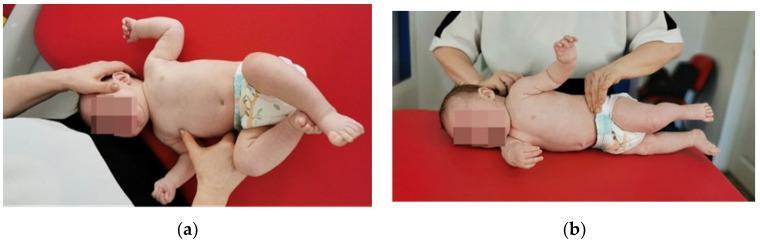
Panel (a) — Reflex Rolling Phase 1 (Supine position):
- Infant lies on their back
- Therapist applies digital pressure to the thoracic trigger zone (chest/intercostal area) with one hand
- Other hand stabilizes and controls the head position
- This initiates a diagonal whole-body motor response — the infant begins to roll
Panel (b) — Reflex Rolling Phase 2 (Side-lying position):
- Infant is in a side-lying posture
- Therapist applies pressure to trigger points on the scapula (shoulder blade) and pelvic girdle
- This facilitates a crawling-like rotation and trunk stability
2. Four Phases of Vojta Reflex Locomotion Therapy (Adult demonstration)
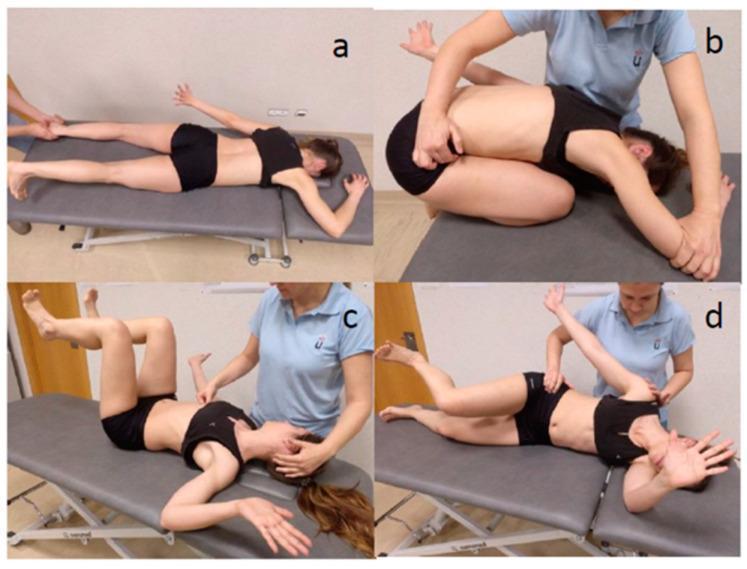
| Panel | Phase | Position | What Therapist Does |
|---|---|---|---|
| (a) | Reflex Crawling — Original position | Prone (face down), limbs extended | Applies pressure at the calcaneus (heel) |
| (b) | Reflex Crawling — First position | Modified prone/quadruped crouch | Stabilizes pelvis and upper extremity |
| (c) | Reflex Turning — Phase 1 | Supine, legs at 90°, head rotated | Stimulates intercostal zone, controls head rotation |
| (d) | Reflex Turning — Phase 2 | Side-lying | Stimulates scapula and iliac spine trigger points |
Key Points About the Technique
| Element | Detail |
|---|---|
| Starting positions | Prone, supine, or side-lying |
| Trigger zones | Chest, heel (calcaneus), medial epicondyle of humerus, scapula, iliac crest, inner thigh |
| Type of stimulus | Sustained manual pressure (not massage or stretching) |
| Child's response | Whole-body automatic muscle activation — arms, legs, trunk, face all respond together |
| Duration per zone | Pressure held for several seconds to minutes |
| Session frequency | 3–4 times per day, done at home by trained parents |
Why Done in Children (Visual Rationale)
As seen in the infant images:
- The whole body responds automatically — even a very young infant who cannot voluntarily move will activate multiple muscle groups
- The crying/effort response seen in infants reflects neural activation, not pain
- The earlier this is done (ideally first weeks/months of life), the more neuroplasticity exists to redirect abnormal motor patterns toward normal development
The adult images show the same fundamental positions — demonstrating that the same innate programs exist throughout life, though intervention is most effective in infancy.
This is a shared conversation. Sign in to Orris to start your own chat.