

IMG_20260808_195108.jpg
What are these black spots and cause
analyse_media
Reading File
The image shows dark brown to blackish-grey pigmentation on the inner lower lip (labial mucosa) and gum line. Now let me search the medical library and find a relevant image.
Finding Sources
Searching Images
oral mucosal melanotic pigmentation dark spots inner lip
Finding Sources
Searching the Web
black spots inner lower lip oral mucosa causes differential diagnosis
Reading File
Loading Image
Here is a thorough breakdown of what you are seeing:
Black/Dark Spots on the Inner Lip - What Are They?
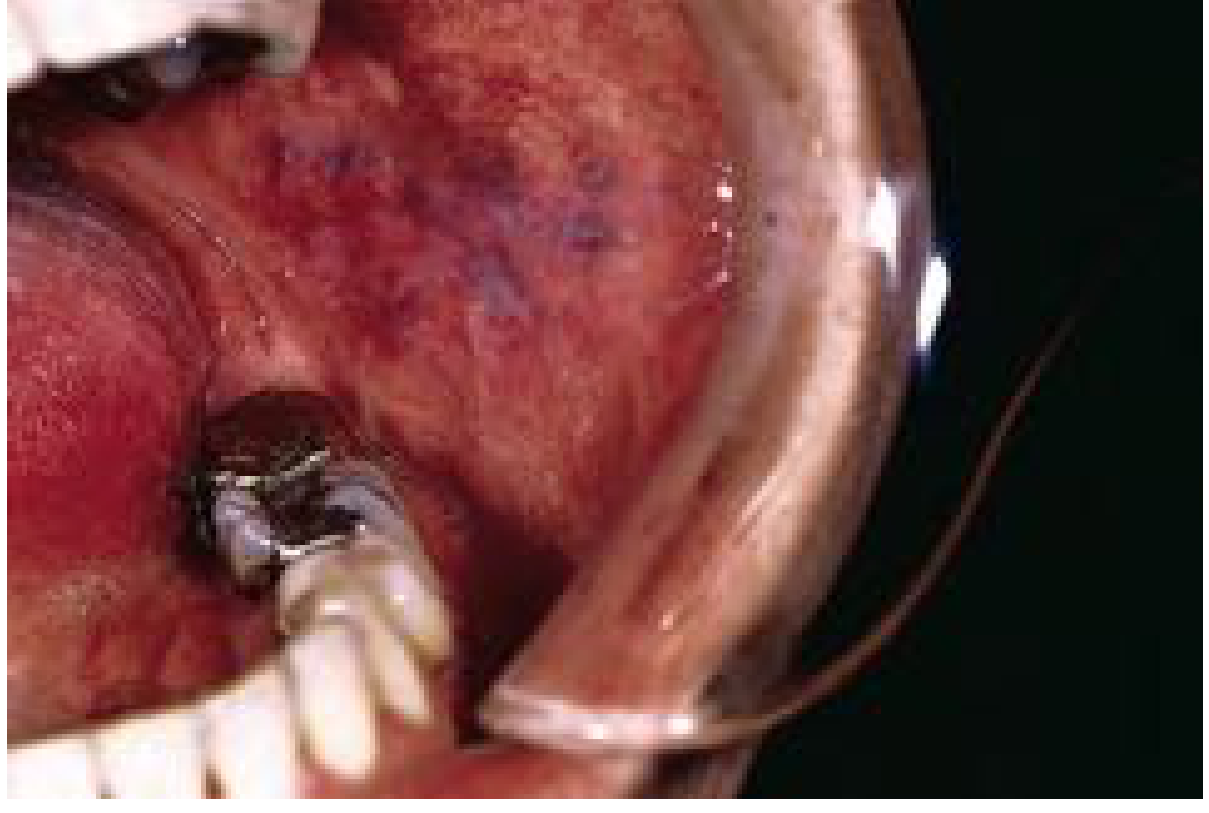
The image shows multiple flat, dark brown to blackish-grey macules (spots) on the inner lower lip (labial mucosa) and along the gum line. The spots are 1-3 mm, irregular in shape, some discrete and some clustered, with no ulceration or raised texture. This pattern is called oral mucosal pigmentation.
Here is a reference image from Cummings Otolaryngology showing a similar pattern of mucosal melanosis:
Most Likely Causes (Most to Least Common)
1. Physiologic (Racial) Melanosis - MOST LIKELY
- The single most common cause in people with darker skin tones
- Melanin-producing cells (melanocytes) are more active, depositing pigment in the gum and lip mucosa
- Completely benign - no treatment needed
- Often symmetrical, as seen here
2. Smoker's Melanosis
- Tobacco smoke stimulates melanin production in the oral mucosa
- Produces flat, scattered brown-black patches on the inner lip and front gums
- Very common pattern matches your image
- Improves or resolves if smoking is stopped
3. Oral Melanotic Macules (Labial Melanotic Macules)
- Essentially "oral freckles" - benign excess melanin deposits
- Most common on the lower lip - exactly as seen here
- Usually solitary but can be multiple
- No systemic significance; no treatment required
4. Drug-Induced Pigmentation
Certain medications can cause this:
- Antimalarials (chloroquine, hydroxychloroquine)
- Minocycline (antibiotic)
- Oral contraceptives
- Chemotherapy drugs
5. Systemic Conditions (Less Common - Requires Evaluation)
| Condition | Clue |
|---|---|
| Addison's Disease | Fatigue, weight loss, darkening skin all over body, low blood pressure |
| Peutz-Jeghers Syndrome | Spots around lips AND skin since childhood; abdominal polyps |
| Laugier-Hunziker Syndrome | Multiple dark spots on lips + nails (nail streaks) |
Red Flags - See a Doctor If:
- Spots are growing, changing shape, or becoming raised
- Uneven borders or multiple colors within one spot
- Ulceration or bleeding from a spot
- Spots associated with fatigue, weight loss, or abdominal symptoms (could suggest Addison's or Peutz-Jeghers)
- Spots appeared suddenly or rapidly multiplied
What To Do
For the pattern shown in your image (multiple flat, evenly pigmented spots with no ulceration or texture change):
- Most likely benign - racial/physiologic melanosis or smoker's melanosis given the distribution
- If you smoke, stopping tobacco will often reduce the pigmentation over months
- See a dentist or oral medicine specialist for a clinical exam - they can rule out anything requiring biopsy
- A lesion >5 mm with irregular features typically warrants a biopsy to confirm the diagnosis
Disclaimer: This is general information only and not a substitute for an in-person medical evaluation. Please consult a qualified healthcare provider for a definitive diagnosis.
Source: Cummings Otolaryngology Head and Neck Surgery, Table 87.2 - Oral Mucosal Pigmented Diseases and Conditions
These are in same size not growing and form after changing toothpaste and has ulcers over the mucosa
This is very helpful context. Stable spots + new toothpaste + oral ulcers strongly points toward an allergic/contact reaction.
Searching sources...
Finding Sources
Searching the Web
toothpaste change oral mucosal pigmentation dark spots ulcers contact allergy stomatitis
Finding Sources
Finding Sources
This new information significantly changes the picture. The combination of stable dark spots + appeared after changing toothpaste + oral ulcers is a classic presentation of a toothpaste contact reaction with post-inflammatory hyperpigmentation (PIH).
Revised Diagnosis: Toothpaste Contact Reaction
What Is Happening
When you changed your toothpaste, an ingredient in it triggered an allergic or irritant contact reaction in your oral mucosa. This caused:
- Ulcers/erosions - the direct inflammatory damage to the mucosal lining
- Dark spots - post-inflammatory hyperpigmentation (PIH) left behind as the ulcers heal. When inflamed or injured tissue heals in the mouth (especially in people with darker skin), melanocytes over-deposit pigment at the healing site. The spots are stable in size because the injury has already occurred and the inflammation has partially settled.
This is the oral equivalent of a dark mark left on skin after a pimple or wound heals.
Common Toothpaste Culprits
| Ingredient | Role in toothpaste | What it causes |
|---|---|---|
| Sodium Lauryl Sulphate (SLS) | Foaming agent | Most common irritant - strips the mucosal lining, causes ulcers and peeling |
| Cinnamate / Cinnamon flavoring | Flavoring | Allergic contact reaction, white patches, ulcers |
| Mint / Menthol | Flavoring | Burning, ulcers, contact cheilitis |
| Propylene glycol | Preservative/humectant | Stomatitis, diffuse redness |
| Cocamidopropyl betaine | Secondary surfactant | Allergic stomatitis |
| Peroxide / whitening agents | Whitening | Mucosal irritation, ulcers |
| Triclosan | Antibacterial | Contact allergy |
The DermNet NZ contact stomatitis guide confirms toothpaste flavourings are the #1 cause of oral contact reactions. SLS is the leading irritant.
What You Should Do
Step 1 - Stop using the new toothpaste immediately. Switch back to your old one, or use an SLS-free, fragrance-free toothpaste (e.g. Sensodyne Pronamel, Tom's of Maine fragrance-free, or any SLS-free brand).
Step 2 - Allow healing. Once the irritant is removed:
- Active ulcers typically heal within 7-14 days
- The dark spots (PIH) fade more slowly, over weeks to a few months
Step 3 - Symptom relief while healing:
- Rinse with warm salt water (1/2 tsp salt in a glass of water) 2-3x daily
- Avoid spicy, acidic, or hot foods that aggravate ulcers
- A chlorhexidine mouthwash (0.12-0.2%) helps prevent secondary infection of ulcers
Step 4 - See a dentist or oral medicine specialist if:
- Ulcers do not heal within 2 weeks after stopping the toothpaste
- New ulcers keep appearing
- The dark spots increase in size or number
- You have any other symptoms (fatigue, abdominal pain, skin changes elsewhere)
In Summary
| Feature | Your case | Meaning |
|---|---|---|
| Appeared after new toothpaste | YES | Contact reaction trigger identified |
| Stable size, not growing | YES | Benign PIH, not neoplastic |
| Ulcers present | YES | Active mucosal inflammation |
| Flat black spots | YES | Post-inflammatory pigment deposits |
Bottom line: Almost certainly a contact irritant/allergic reaction to your new toothpaste - benign and fully reversible once the offending product is stopped. No cancer risk indicated by this pattern.
Disclaimer: This is general medical information and not a substitute for professional evaluation. See a dentist or doctor if ulcers persist beyond 2 weeks.
This is a shared conversation. Sign in to Orris to start your own chat.