
Toxic goitre
Reading File
Now let me search the medical library in parallel for comprehensive coverage of toxic goitre.
Finding Sources
Searching PubMed
"toxic goiter" OR "Graves disease" management hyperthyroidism
Excellent results. Now let me read the key sections in parallel - Bailey & Love (surgery focus), Harrison's (internal medicine), and Katzung (pharmacology).
Reading File
Reading File
Reading File
Now let me get more clinical detail from Bailey & Love (treatment, clinical features) and Harrison's (treatment section), plus the Scott-Brown's section on toxic multinodular goitre.
Reading File
Reading File
Reading File
Good. Let me now read the treatment and radioiodine sections from Bailey & Love, and also fetch the Graves' disease clinical image.
Reading File
Loading Image
Loading Image
Perfect. Now let me read more on the preoperative and surgical management sections:
Reading File
Excellent. Now I have comprehensive information from the medical library. Let me compile the detailed answer.
Toxic Goitre: Classification, Pathophysiology, and Management
Toxic goitre is hyperthyroidism caused by an enlarged, overactive thyroid gland. There are three main types based on morphology and pathophysiology:
1. DIFFUSE TOXIC GOITRE (GRAVES' DISEASE)
Clinical Features:
- Vascular, diffuse goitre with hyperthyroidism occurring simultaneously
- Predominantly affects younger women (mean onset in 30s-50s)
- Frequently associated with Graves' ophthalmopathy (eye signs), as shown in the clinical image below
- 55% of patients have a family history of autoimmune endocrine diseases
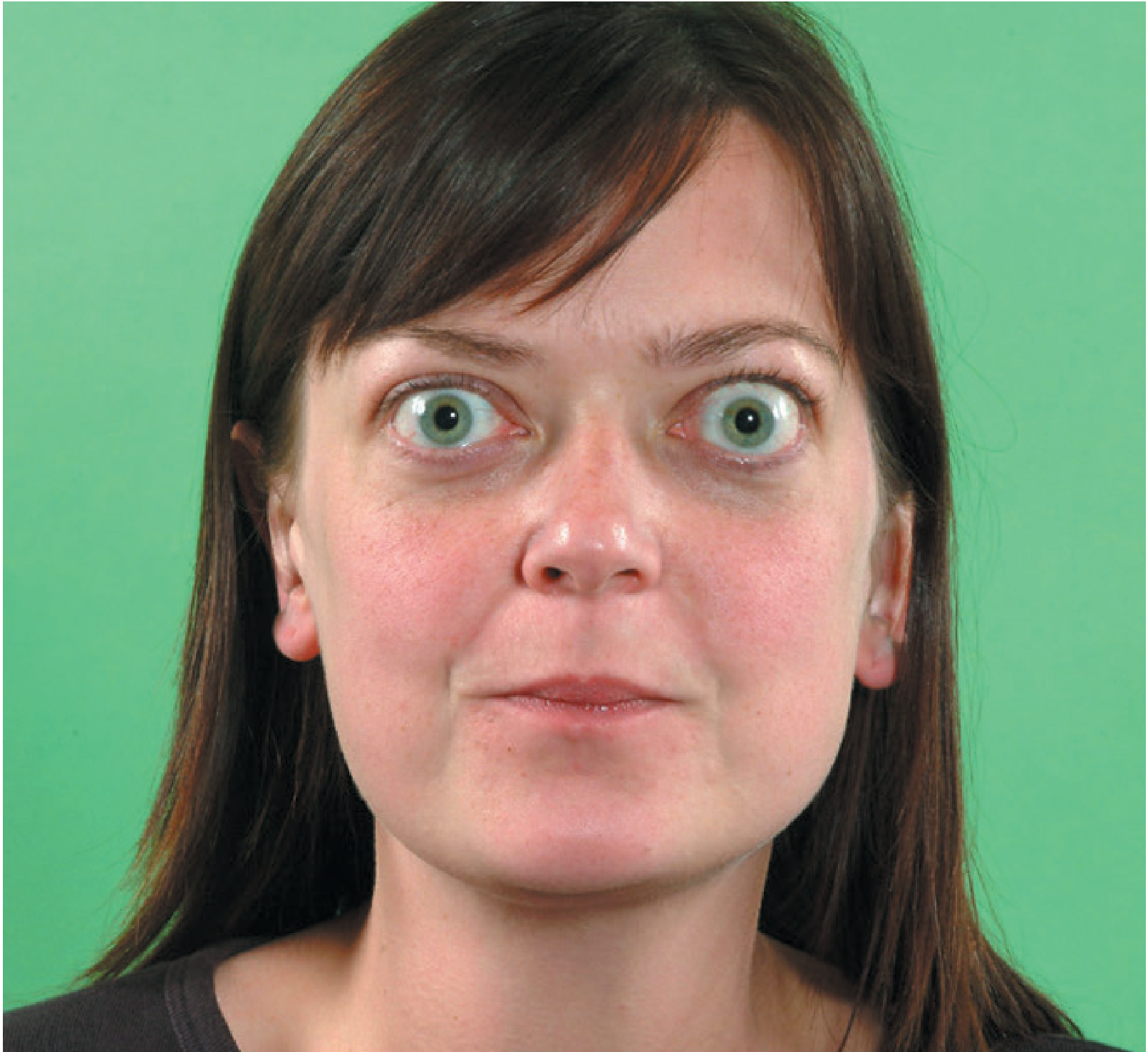
Pathophysiology:
Autoimmune disease where TSH-receptor antibodies (TSH-RAb) bind to thyroid TSH receptor sites and produce a prolonged, disproportionate stimulatory effect. All functioning thyroid tissue is involved, leading to hyperplasia and hypertrophy.
2. TOXIC NODULAR GOITRE (TOXIC MULTINODULAR GOITRE)
Clinical Features:
- Pre-existing nodular goitre for many years before thyroid function develops
- Typically affects middle-aged and elderly patients
- Rarely associated with eye signs
- Cardiovascular effects predominate: palpitations, atrial fibrillation, other tachyarrhythmias
- Compressive symptoms common: dysphagia to solids, dyspnoea (worse at night)
Pathophysiology:
- Autonomous functioning of specific nodules due to unknown genetic changes driving clonal expansion
- Nodules secrete excess thyroid hormone independent of TSH
- Many nodules are polyclonal; inactive nodules often coexist with overactive internodular tissue
- TSH-R mutations are less common than in toxic adenomas (found in only ~20-83% of cases)
Epidemiology:
- Surpasses Graves' disease as the most common cause of hyperthyroidism in iodine-replete areas in elderly patients
- Most common cause overall in iodine-deficient regions
- Jod-Basedow effect: exposure to pharmacological iodine doses (contrast media) may precipitate thyrotoxicosis
3. TOXIC NODULE (PLUMMER'S DISEASE)
A solitary overactive nodule (typically >3 cm) secreting excess hormone. Represents ~5% of thyrotoxicosis cases. Can be an autonomous adenoma or a nodule within a multinodular gland.
Histology
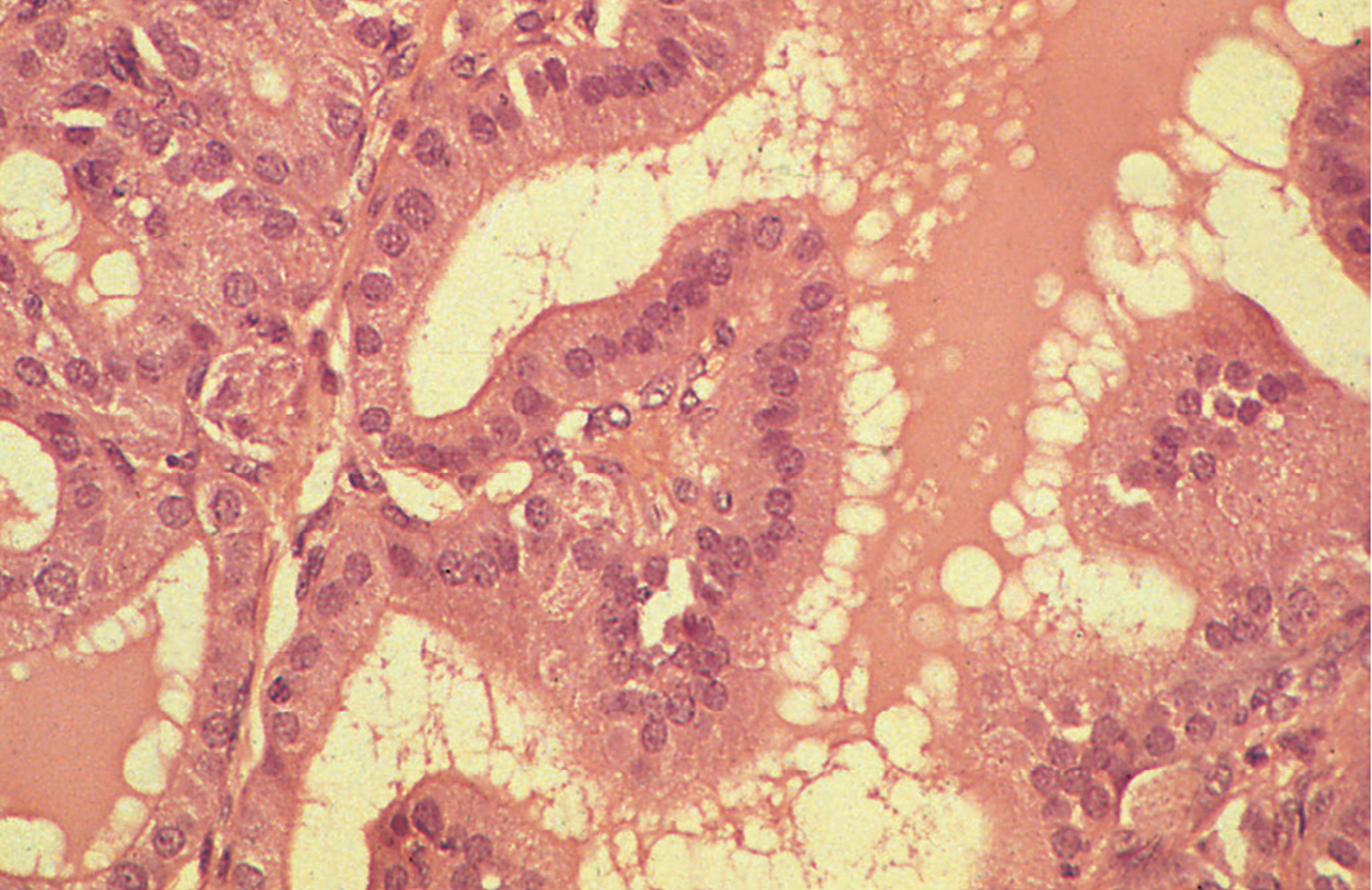
In toxic goitre, thyroid acini show hyperplasia with high columnar epithelium (versus normal flattened cuboidal). Many acini are depleted of colloid, reflecting active hormone secretion.
MANAGEMENT
Medical Therapy (Antithyroid Drugs)
Agents:
- Carbimazole (preferred in UK)
- Propylthiouracil (PTU)
Mechanism: Inhibit thyroid hormone synthesis.
Used for:
- Achieving euthyroid state before definitive treatment
- Prolonged remission attempt in Graves' disease (cannot cure toxic nodules)
Dosing:
- Carbimazole: 30-40 mg/day until euthyroid (8-12 weeks), then reduce to maintenance 5 mg 8-hourly
- PTU: 500-1000 mg loading dose, then 250 mg every 6-8 hours
Advantages: No surgery, no radioactive materials
Disadvantages: Prolonged treatment; failure rate >55%; toxic nodules recur when drug stopped
Duration: 6 months for mild cases; up to 2 years for severe cases
Sympathetic Blockade
Used during acute phase or preoperatively:
- Propranolol: 20-40 mg orally every 6 hours (also inhibits peripheral conversion of T4 to T3)
- Metoprolol: 25-50 mg every 6-8 hours
- Diltiazem: 90-120 mg daily (when beta-blockers contraindicated, e.g., asthma)
Controls tachycardia, hypertension, and arrhythmias. Withdrawn as thyroid levels normalize.
Surgical Treatment (Thyroidectomy)
Preoperative Preparation:
-
Carbimazole approach (Traditional):
- Carbimazole 30-40 mg/day until euthyroid (8-12 weeks)
- "Block and replace" regime: continue high-dose carbimazole + thyroxine 0.1-0.15 mg/day
- Last dose given evening before surgery
-
Beta-blocker approach (Rapid):
- Propranolol 40-80 mg three times daily (or higher if needed; up to 320 mg daily)
- Clinical response rapid (days); can operate within 1 week
- Continue 7 days postoperatively (does not inhibit hormone synthesis)
-
Iodine (Adjunctive):
- Potassium iodide solution for 10 days before surgery
- Reduces gland vascularity; transient remission
Extent of Resection:
Depends on age, gland size, surgeon experience, and whether recurrence risk or thyroid replacement is acceptable.
- Subtotal thyroidectomy: preserves some function; risk of 5% recurrence and late hypothyroidism
- Total/near-total thyroidectomy: requires lifelong thyroxine replacement; eliminates recurrence risk
Advantages:
- Rapid, definitive cure
- Goitre removed
- High cure rate with adequate surgery
Disadvantages:
- Surgical risk (though low with proper preparation)
- Recurrence in 5% of cases (subtotal only)
- Risk of permanent hypoparathyroidism and recurrent laryngeal nerve injury
- Cosmetic scar
Radioiodine Therapy
Destroys thyroid cells, reducing functioning mass below critical level.
Dosing:
- Toxic adenoma: 370-1110 MBq (10-29.9 mCi); corrects thyrotoxicosis in ~75% within 3 months
- Toxic multinodular goitre: larger doses required
Advantages:
- No surgery, no prolonged drug therapy
- Minimal risk of delayed thyroid insufficiency in toxic adenomas (suppressed normal tissue doesn't take up iodine)
Disadvantages:
- Requires isotope facilities and quarantine period
- Patients must avoid pregnancy and close contact with children
- May aggravate eye signs in Graves' disease
- Hypothyroidism in <10% over 5 years (toxic adenoma); higher in Graves' disease
CHOICE OF THERAPY BY TYPE
| Type | Preferred Approach |
|---|---|
| Diffuse toxic goitre (Graves') | Initial antithyroid drugs, with radioiodine for relapse. Exceptions: refuse radiation, large goitre, progressive eye signs, or pregnancy (→ surgery). |
| Toxic nodular goitre | Surgery (often large, uncomfortable, enlarges with antithyroid drugs; poor response to radioiodine/drugs). Large goitres respond poorly. |
| Toxic nodule | Surgery or radioiodine. Surgery: easy, certain, limited morbidity. Radioiodine: good for age >45 years (minimal risk of delayed insufficiency). |
Recent Evidence (Systematic Reviews 2024-2025)
Recent systematic reviews highlight management of perioperative thyrotoxicosis when standard therapy is contraindicated (PMID: 39722810), and circulating biomarkers in Graves' ophthalmopathy (PMID: 40580399), confirming traditional management principles remain standard of care. Bailey and Love's Short Practice of Surgery 28th Edition; Harrison's Principles of Internal Medicine 22E (2025)
This is a shared conversation. Sign in to Orris to start your own chat.