
Categorization of risk factors in neonates. 10 pages answer in detailed cbpt
- Maternal and antenatal risk factors
- Intrapartum and delivery-related risk factors
- Neonatal factors at birth
- Environmental, social, and health-system factors
- Risk-based categorization of the high-risk neonate, such as prematurity, low birth weight, birth asphyxia, sepsis, congenital anomalies, and neonatal jaundice
- Nursing assessment, monitoring, prevention, and referral
- High-risk neonate CBPT: full 10-page nursing answer
- Neonatal sepsis risks: focused categorization
- Neonatal mortality risks: public-health format
- General neonatal risks: concise exam note
Write the complete 10-page CBPT answer on neonatal risk factors
WHO newborn health risk factors preterm low birth weight maternal intrapartum neonatal care
neonatal risk factors
Categorization of Risk Factors in Neonates
Detailed CBPT Answer
Introduction
Objectives
- Define neonatal risk factors and high-risk neonate.
- Classify neonatal risk factors according to time and source.
- Identify maternal, fetal, intrapartum, neonatal, environmental, and health-system risk factors.
- Recognize newborns needing close observation, referral, or neonatal intensive care.
- Describe preventive measures and nursing responsibilities.
Definition of Important Terms
Neonate
High-risk neonate
Prematurity
Low birth weight (LBW)
Very low birth weight (VLBW)
Extremely low birth weight (ELBW)
Small for gestational age (SGA)
Birth asphyxia
Need for Categorization of Risk Factors
- Identify a high-risk pregnancy early.
- Ensure institutional delivery and skilled birth attendance.
- Arrange timely referral to a newborn care unit.
- Prepare for neonatal resuscitation.
- Prevent infection, hypothermia, hypoglycemia, and feeding problems.
- Counsel parents about danger signs and follow-up.
- Reduce neonatal mortality and long-term disability.
Classification of Neonatal Risk Factors
I. According to Time of Occurrence
- Preconceptional and maternal risk factors
- Antenatal risk factors
- Intranatal or intrapartum risk factors
- Immediate postnatal and neonatal risk factors
- Environmental, social, and health-system risk factors
II. According to Source
- Maternal factors
- Fetal factors
- Placental and cord factors
- Labour and delivery factors
- Neonatal factors
- Environmental and socioeconomic factors
- Health-service-related factors
III. According to Major Neonatal Outcomes
- Risk factors for prematurity and low birth weight
- Risk factors for birth asphyxia
- Risk factors for neonatal sepsis
- Risk factors for hypothermia
- Risk factors for hypoglycemia
- Risk factors for jaundice
- Risk factors for congenital anomalies
- Risk factors for developmental delay and disability
I. Preconceptional and Maternal Risk Factors
A. Maternal Age
1. Teenage pregnancy
- Maternal anemia and malnutrition
- Prematurity
- Low birth weight
- Intrauterine growth restriction
- Obstructed labour
- Birth asphyxia
- Poor utilization of antenatal care
2. Advanced maternal age
- Chromosomal abnormalities, especially Down syndrome
- Hypertension and pre-eclampsia
- Diabetes mellitus
- Placenta previa
- Malpresentation
- Operative delivery
- Preterm birth and fetal growth restriction
B. Maternal Nutritional Status
- Low birth weight
- SGA baby
- Intrauterine growth restriction
- Prematurity
- Reduced neonatal immunity
- Poor neonatal growth and development
- Low pre-pregnancy body weight
- Short maternal stature
- Inadequate weight gain during pregnancy
- Severe anemia
- Vitamin and micronutrient deficiencies
- Food insecurity
C. Maternal Anemia
- Prematurity
- Low birth weight
- Intrauterine growth restriction
- Fetal distress
- Birth asphyxia
- Increased neonatal morbidity
D. Maternal Medical Disorders
1. Hypertension, pre-eclampsia, and eclampsia
- Fetal growth restriction
- Prematurity
- Placental abruption
- Fetal distress
- Stillbirth
- Low birth weight
- Birth asphyxia
2. Diabetes mellitus
- Macrosomia
- Birth trauma
- Shoulder dystocia
- Congenital malformations, especially with poorly controlled pre-existing diabetes
- Polycythemia
- Neonatal hypoglycemia
- Respiratory distress
- Hypocalcemia
- Hyperbilirubinemia
3. Heart disease
- Poor uteroplacental circulation
- Fetal growth restriction
- Prematurity
- Fetal distress
- Low birth weight
4. Renal disease
5. Thyroid disorders
6. Epilepsy
E. Maternal Infections
- Urinary tract infection
- Chorioamnionitis
- Tuberculosis
- Malaria
- Hepatitis B
- HIV infection
- Syphilis
- Rubella
- Toxoplasmosis
- Cytomegalovirus
- Herpes simplex infection
- Varicella
- COVID-19, depending on maternal severity and obstetric complications
- Congenital infection
- Prematurity
- Low birth weight
- Sepsis
- Pneumonia
- Meningitis
- Hepatitis
- Congenital anomalies
- Growth restriction
- Stillbirth
F. Maternal Substance Use
1. Tobacco smoking and passive smoking
- Placental insufficiency
- Prematurity
- Low birth weight
- Intrauterine growth restriction
- Placental abruption
- Stillbirth
- Sudden infant death syndrome risk after birth
2. Alcohol use
- Fetal alcohol spectrum disorders
- Growth restriction
- Facial abnormalities
- Neurodevelopmental impairment
- Feeding difficulty
- Poor long-term learning and behavioural outcomes
3. Illicit drugs and misuse of medicines
- Prematurity
- Placental abruption
- Low birth weight
- Congenital malformations
- Neonatal abstinence syndrome
- Respiratory depression
- Seizures
- Poor neurodevelopmental outcome
G. Maternal Mental Health and Psychosocial Factors
- Poor nutrition
- Missed antenatal visits
- Substance use
- Prematurity
- Low birth weight
- Poor bonding and breastfeeding
- Delayed care-seeking for neonatal illness
H. Obstetric History
- Previous preterm birth
- Previous LBW baby
- Previous stillbirth or neonatal death
- Previous baby with congenital anomaly
- Previous cesarean section
- Recurrent abortions
- Previous postpartum hemorrhage
- Previous baby with severe neonatal jaundice
- Previous baby with hemolytic disease
- Previous baby with early-onset neonatal sepsis
II. Antenatal Risk Factors
A. Inadequate Antenatal Care
- Late registration of pregnancy
- Missed antenatal visits
- Failure to identify maternal illness
- Lack of screening for anemia, hypertension, diabetes, HIV, syphilis, and hepatitis B
- No birth preparedness plan
- Failure to recognize high-risk pregnancy
- Delayed referral to a higher centre
B. Multiple Pregnancy
- Preterm labour
- Low birth weight
- Growth discordance
- Malpresentation
- Cord prolapse
- Birth asphyxia
- Increased need for resuscitation
- Twin-to-twin transfusion syndrome in monochorionic twins
C. Antepartum Hemorrhage
- Prematurity
- Fetal hypoxia
- Birth asphyxia
- Anemia
- Shock
- Low birth weight
- Stillbirth
D. Premature Rupture of Membranes
PROM
PPROM
- Prematurity
- Oligohydramnios
- Cord prolapse
- Chorioamnionitis
- Early-onset neonatal sepsis
- Respiratory distress
E. Polyhydramnios and Oligohydramnios
Polyhydramnios
- Maternal diabetes
- Fetal gastrointestinal obstruction
- Neural tube defect
- Multiple pregnancy
- Malpresentation
- Cord prolapse
- Prematurity
Oligohydramnios
- Placental insufficiency
- Fetal growth restriction
- Renal anomalies
- Cord compression
- Fetal distress
- Meconium-stained liquor
- Birth asphyxia
F. Fetal Growth Restriction
- Birth asphyxia
- Hypothermia
- Hypoglycemia
- Polycythemia
- Meconium aspiration
- Feeding difficulty
- Poor weight gain
- Neurodevelopmental problems
G. Rh Isoimmunization and Blood Group Incompatibility
- Severe jaundice
- Hemolytic anemia
- Hydrops fetalis
- Heart failure
- Kernicterus if hyperbilirubinemia is untreated
H. Congenital Malformations Detected Antenatally
- Congenital heart disease
- Neural tube defects
- Diaphragmatic hernia
- Abdominal wall defects
- Tracheoesophageal fistula
- Renal anomalies
- Hydrocephalus
- Skeletal dysplasia
III. Intranatal or Intrapartum Risk Factors
A. Prolonged Labour
- Fetal distress
- Meconium-stained amniotic fluid
- Birth asphyxia
- Maternal exhaustion and infection
- Instrumental delivery
- Neonatal sepsis when membranes have been ruptured for a prolonged period
B. Obstructed Labour
- Severe birth asphyxia
- Birth trauma
- Intracranial hemorrhage
- Fractures
- Nerve injury
- Stillbirth
C. Fetal Distress
- Hypoxia
- Asphyxia
- Meconium aspiration syndrome
- Hypoxic ischemic encephalopathy
- Seizures
- Multi-organ dysfunction
D. Meconium-Stained Amniotic Fluid
- Meconium aspiration syndrome
- Respiratory distress
- Persistent pulmonary hypertension
- Pneumonia-like illness
- Need for resuscitation and intensive care
E. Malpresentation and Malposition
- Breech presentation
- Transverse lie
- Face presentation
- Brow presentation
- Compound presentation
- Birth trauma
- Asphyxia
- Cord prolapse
- Fractures
- Brachial plexus injury
- Intracranial hemorrhage
F. Cord-Related Complications
- Cord prolapse
- True knot
- Nuchal cord
- Cord compression
- Vasa previa
- Acute fetal hypoxia
- Bradycardia
- Birth asphyxia
- Need for emergency operative delivery
- Neonatal encephalopathy or death in severe cases
G. Instrumental and Operative Delivery
Forceps delivery
Vacuum extraction
Cesarean delivery
H. Maternal Fever and Intraamniotic Infection
- Early-onset sepsis
- Pneumonia
- Meningitis
- Shock
- Respiratory distress
- Death
IV. Risk Factors for Neonatal Sepsis
A. Risk Factors for Early-Onset Sepsis
- Prematurity
- Very low birth weight
- Prolonged rupture of membranes
- Maternal fever
- Chorioamnionitis
- Maternal GBS colonization
- GBS bacteriuria in pregnancy
- Previous infant with invasive GBS disease
- Inadequate intrapartum antibiotic prophylaxis when indicated
- Unclean vaginal examinations or unclean delivery practices
- Birth asphyxia
B. Risk Factors for Late-Onset Sepsis
- Prematurity and LBW
- NICU admission
- Prolonged hospitalization
- Mechanical ventilation
- Central venous catheter
- Parenteral nutrition
- Poor hand hygiene
- Invasive procedures
- Overcrowding
- Failure of exclusive breastfeeding
- Unclean cord care
- Poor sanitation
V. Neonatal Risk Factors Present at Birth
A. Prematurity
- Respiratory distress syndrome
- Apnea of prematurity
- Hypothermia
- Hypoglycemia
- Feeding difficulty
- Sepsis
- Intraventricular hemorrhage
- Necrotizing enterocolitis
- Patent ductus arteriosus
- Retinopathy of prematurity
- Jaundice
- Anemia of prematurity
- Developmental delay
B. Low Birth Weight
- Hypothermia
- Hypoglycemia
- Infection
- Poor feeding
- Respiratory distress
- Jaundice
- Growth failure
- Increased mortality
C. Small for Gestational Age and Intrauterine Growth Restriction
- Hypoglycemia
- Hypothermia
- Polycythemia
- Meconium aspiration
- Birth asphyxia
- Feeding intolerance
- Poor weight gain
- Neurodevelopmental impairment
D. Large for Gestational Age and Macrosomia
- Difficult delivery
- Shoulder dystocia
- Brachial plexus injury
- Clavicular fracture
- Birth asphyxia
- Hypoglycemia
- Polycythemia
- Hyperbilirubinemia
E. Low Apgar Score and Need for Resuscitation
- Hypoxic ischemic encephalopathy
- Seizures
- Respiratory failure
- Shock
- Renal injury
- Metabolic acidosis
- Feeding difficulty
- Developmental impairment
F. Congenital Anomalies
- Congenital heart disease
- Neural tube defects
- Cleft lip and palate
- Tracheoesophageal fistula
- Anorectal malformation
- Omphalocele and gastroschisis
- Diaphragmatic hernia
- Renal anomalies
- Down syndrome and other chromosomal abnormalities
VI. Postnatal and Environmental Risk Factors
A. Hypothermia
- Large body surface area in relation to weight
- Thin skin
- Little subcutaneous fat
- Immature temperature control
- Limited ability to generate heat
- Preterm babies
- LBW babies
- SGA babies
- Sick babies
- Babies who are wet after birth
- Babies exposed to cold rooms, delayed breastfeeding, or inadequate clothing
B. Delayed or Inadequate Breastfeeding
- Delayed initiation of breastfeeding
- Prelacteal feeds
- Poor attachment
- Infrequent feeding
- Maternal illness
- Prematurity
- Cleft palate
- Weak suck
- Lack of counselling
- Hypoglycemia
- Dehydration
- Hypernatremia
- Excessive weight loss
- Jaundice
- Infection
- Failure to thrive
C. Neonatal Hypoglycemia
- Preterm babies
- SGA or growth-restricted babies
- LBW babies
- Infants of diabetic mothers
- Large-for-gestational-age babies
- Sick babies with sepsis or respiratory distress
- Hypothermic babies
- Babies with poor feeding
- Babies with perinatal asphyxia
D. Neonatal Jaundice
- Prematurity
- Hemolytic disease due to Rh or ABO incompatibility
- G6PD deficiency
- Birth trauma and cephalohematoma
- Sepsis
- Poor feeding or dehydration
- Previous sibling needing phototherapy or exchange transfusion
- Polycythemia
E. Unclean Cord Care and Unsafe Practices
- Cutting the cord with an unsterile instrument
- Applying ash, oil, mud, ghee, herbal paste, or other harmful substances to the cord
- Poor handwashing
- Unclean delivery surface
- Delayed recognition of cord redness or discharge
F. Unsafe Sleep and Home Environment
- Unsafe sleeping surfaces
- Overheating or excessive wrapping
- Tobacco smoke exposure
- Household crowding
- Poor ventilation
- Unsafe water and sanitation
- Indoor air pollution
- Delayed transportation to a health facility
VII. Socioeconomic and Health-System Risk Factors
A. Socioeconomic Factors
- Poverty
- Low maternal education
- Rural residence and difficult transport
- Poor housing
- Food insecurity
- Early marriage
- Adolescent pregnancy
- Short birth interval
- Gender discrimination
- Lack of decision-making power for women
- Domestic violence
B. Health-System Factors
- Lack of antenatal screening
- Lack of skilled birth attendance
- Home delivery without trained assistance
- Poor emergency obstetric services
- Delay in referral
- Lack of newborn resuscitation equipment
- Lack of trained staff
- Poor infection control in facilities
- Non-availability of neonatal intensive care
- Inadequate postnatal home visits
- Lack of parent counselling
VIII. Practical Risk Categorization of Newborns
A. Babies Requiring Close Observation
- Prematurity, especially less than 37 weeks
- Birth weight below 2.5 kg
- SGA or LGA status
- Multiple birth
- Birth asphyxia or need for resuscitation
- Maternal diabetes, hypertension, infection, or fever
- Prolonged rupture of membranes
- Meconium-stained liquor
- Maternal HIV, hepatitis B, syphilis, or tuberculosis
- Congenital anomaly
- Poor suck or inability to feed
- Hypothermia
- Jaundice within the first 24 hours
- Seizures, lethargy, respiratory distress, or suspected sepsis
B. Babies Needing Urgent Referral or Intensive Care
- Apnea, gasping, or severe respiratory distress
- Central cyanosis
- Severe chest indrawing or grunting
- Temperature below 36.5°C or persistent fever
- Inability to feed
- Convulsions
- Persistent vomiting
- Severe jaundice
- Signs of sepsis
- Birth weight less than 1.5 kg
- Severe prematurity
- Major congenital anomaly
- Persistent hypoglycemia
- Birth asphyxia or encephalopathy
IX. Prevention of Neonatal Risk Factors
A. Before Pregnancy
- Prevent child marriage and adolescent pregnancy.
- Promote women’s education.
- Encourage planned pregnancy.
- Ensure birth spacing of at least 2 years.
- Improve maternal nutrition.
- Control chronic diseases before conception.
- Provide rubella immunization where appropriate.
- Counsel against tobacco, alcohol, and substance use.
- Offer genetic counselling to high-risk families.
B. During Pregnancy
- Early registration of pregnancy.
- Regular antenatal check-ups.
- Screening and treatment for anemia, hypertension, diabetes, HIV, syphilis, hepatitis B, and urinary infection.
- Nutritional supplementation and diet counselling.
- Tetanus immunization as per national schedule.
- Fetal growth monitoring.
- Identification of high-risk pregnancy.
- Timely referral.
- Birth preparedness and complication readiness.
- Treatment of maternal infections.
- Antenatal corticosteroids when preterm birth is imminent and clinically indicated.
- Management of PROM and preterm labour according to protocol.
C. During Labour and Delivery
- Skilled birth attendance.
- Use of partograph for monitoring labour.
- Timely recognition and management of fetal distress.
- Clean delivery practices.
- Availability of neonatal resuscitation equipment.
- Appropriate management of meconium-stained liquor.
- Timely operative delivery when indicated.
- Prevention of unnecessary trauma.
- Infection prevention and hand hygiene.
D. Immediate Newborn Care
- Immediate drying and stimulation.
- Maintaining warmth.
- Skin-to-skin contact.
- Delayed cord clamping when appropriate.
- Clean cord care.
- Early initiation of breastfeeding.
- Administration of vitamin K as per protocol.
- Identification of congenital anomalies and danger signs.
- Monitoring of temperature, breathing, activity, feeding, urine, and stool.
- Timely referral of sick newborns.
X. Nursing Responsibilities
A. Assessment
- Gestational age
- Birth weight
- Apgar score and resuscitation history
- Maternal history of diabetes, hypertension, infection, fever, PROM, bleeding, and substance use
- Mode of delivery
- Condition of liquor and meconium staining
- Presence of congenital anomalies
- Respiratory rate, effort, and oxygenation
- Temperature
- Blood glucose in at-risk babies
- Feeding ability and suck
- Jaundice
- Urination and passage of meconium
- Signs of sepsis
B. Prevention of Hypothermia
- Dry baby immediately after birth.
- Remove wet cloths.
- Provide skin-to-skin contact.
- Cover head with a cap.
- Keep baby with mother.
- Avoid early bathing.
- Use warm transport if referral is needed.
- Promote kangaroo mother care for stable LBW babies.
C. Feeding Support
- Initiate breastfeeding early.
- Observe attachment and suckling.
- Counsel mother on exclusive breastfeeding.
- Feed preterm and LBW babies frequently.
- Express breast milk when direct breastfeeding is not possible.
- Monitor weight, urine output, and signs of dehydration.
D. Infection Prevention
- Maintain hand hygiene.
- Follow aseptic technique.
- Ensure clean cord care.
- Limit unnecessary invasive procedures.
- Clean and disinfect equipment.
- Teach parents to identify cord infection and sepsis danger signs.
E. Parent Education
- Poor feeding or refusal to feed
- Fast breathing, grunting, chest indrawing, apnea, or blue colour
- Fever or low body temperature
- Lethargy or decreased activity
- Convulsions
- Yellow palms and soles or jaundice in first 24 hours
- Persistent vomiting
- Abdominal distension
- Diarrhea
- Umbilical redness, pus, or foul smell
- No urine or markedly reduced urine output
Conclusion
make it sure
- Maternal and antenatal risk factors
- Intrapartum and delivery-related risk factors
- Neonatal factors at birth
- Environmental, social, and health-system factors
- Risk-based categorization of the high-risk neonate, such as prematurity, low birth weight, birth asphyxia, sepsis, congenital anomalies, and neonatal jaundice
- Nursing assessment, monitoring, prevention, and referral
- High-risk neonate CBPT: full 10-page nursing answer
- Neonatal sepsis risks: focused categorization
- Neonatal mortality risks: public-health format
- General neonatal risks: concise exam note# Categorization of Risk Factors in Neonates
Detailed CBPT Answer
Introduction
Objectives
- Define neonatal risk factors and high-risk neonate.
- Classify neonatal risk factors according to time and source.
- Identify maternal, fetal, intrapartum, neonatal, environmental, and health-system risk factors.
- Recognize newborns needing close observation, referral, or neonatal intensive care.
- Describe preventive measures and nursing responsibilities.
Definition of Important Terms
Neonate
High-risk neonate
Prematurity
Low birth weight (LBW)
Very low birth weight (VLBW)
Extremely low birth weight (ELBW)
Small for gestational age (SGA)
Birth asphyxia
Need for Categorization of Risk Factors
- Identify a high-risk pregnancy early.
- Ensure institutional delivery and skilled birth attendance.
- Arrange timely referral to a newborn care unit.
- Prepare for neonatal resuscitation.
- Prevent infection, hypothermia, hypoglycemia, and feeding problems.
- Counsel parents about danger signs and follow-up.
- Reduce neonatal mortality and long-term disability.
Classification of Neonatal Risk Factors
I. According to Time of Occurrence
- Preconceptional and maternal risk factors
- Antenatal risk factors
- Intranatal or intrapartum risk factors
- Immediate postnatal and neonatal risk factors
- Environmental, social, and health-system risk factors
II. According to Source
- Maternal factors
- Fetal factors
- Placental and cord factors
- Labour and delivery factors
- Neonatal factors
- Environmental and socioeconomic factors
- Health-service-related factors
III. According to Major Neonatal Outcomes
- Risk factors for prematurity and low birth weight
- Risk factors for birth asphyxia
- Risk factors for neonatal sepsis
- Risk factors for hypothermia
- Risk factors for hypoglycemia
- Risk factors for jaundice
- Risk factors for congenital anomalies
- Risk factors for developmental delay and disability
I. Preconceptional and Maternal Risk Factors
A. Maternal Age
1. Teenage pregnancy
- Maternal anemia and malnutrition
- Prematurity
- Low birth weight
- Intrauterine growth restriction
- Obstructed labour
- Birth asphyxia
- Poor utilization of antenatal care
2. Advanced maternal age
- Chromosomal abnormalities, especially Down syndrome
- Hypertension and pre-eclampsia
- Diabetes mellitus
- Placenta previa
- Malpresentation
- Operative delivery
- Preterm birth and fetal growth restriction
B. Maternal Nutritional Status
- Low birth weight
- SGA baby
- Intrauterine growth restriction
- Prematurity
- Reduced neonatal immunity
- Poor neonatal growth and development
- Low pre-pregnancy body weight
- Short maternal stature
- Inadequate weight gain during pregnancy
- Severe anemia
- Vitamin and micronutrient deficiencies
- Food insecurity
C. Maternal Anemia
- Prematurity
- Low birth weight
- Intrauterine growth restriction
- Fetal distress
- Birth asphyxia
- Increased neonatal morbidity
D. Maternal Medical Disorders
1. Hypertension, pre-eclampsia, and eclampsia
- Fetal growth restriction
- Prematurity
- Placental abruption
- Fetal distress
- Stillbirth
- Low birth weight
- Birth asphyxia
2. Diabetes mellitus
- Macrosomia
- Birth trauma
- Shoulder dystocia
- Congenital malformations, especially with poorly controlled pre-existing diabetes
- Polycythemia
- Neonatal hypoglycemia
- Respiratory distress
- Hypocalcemia
- Hyperbilirubinemia
3. Heart disease
- Poor uteroplacental circulation
- Fetal growth restriction
- Prematurity
- Fetal distress
- Low birth weight
4. Renal disease
5. Thyroid disorders
6. Epilepsy
E. Maternal Infections
- Urinary tract infection
- Chorioamnionitis
- Tuberculosis
- Malaria
- Hepatitis B
- HIV infection
- Syphilis
- Rubella
- Toxoplasmosis
- Cytomegalovirus
- Herpes simplex infection
- Varicella
- COVID-19, depending on maternal severity and obstetric complications
- Congenital infection
- Prematurity
- Low birth weight
- Sepsis
- Pneumonia
- Meningitis
- Hepatitis
- Congenital anomalies
- Growth restriction
- Stillbirth
F. Maternal Substance Use
1. Tobacco smoking and passive smoking
- Placental insufficiency
- Prematurity
- Low birth weight
- Intrauterine growth restriction
- Placental abruption
- Stillbirth
- Sudden infant death syndrome risk after birth
2. Alcohol use
- Fetal alcohol spectrum disorders
- Growth restriction
- Facial abnormalities
- Neurodevelopmental impairment
- Feeding difficulty
- Poor long-term learning and behavioural outcomes
3. Illicit drugs and misuse of medicines
- Prematurity
- Placental abruption
- Low birth weight
- Congenital malformations
- Neonatal abstinence syndrome
- Respiratory depression
- Seizures
- Poor neurodevelopmental outcome
G. Maternal Mental Health and Psychosocial Factors
- Poor nutrition
- Missed antenatal visits
- Substance use
- Prematurity
- Low birth weight
- Poor bonding and breastfeeding
- Delayed care-seeking for neonatal illness
H. Obstetric History
- Previous preterm birth
- Previous LBW baby
- Previous stillbirth or neonatal death
- Previous baby with congenital anomaly
- Previous cesarean section
- Recurrent abortions
- Previous postpartum hemorrhage
- Previous baby with severe neonatal jaundice
- Previous baby with hemolytic disease
- Previous baby with early-onset neonatal sepsis
II. Antenatal Risk Factors
A. Inadequate Antenatal Care
- Late registration of pregnancy
- Missed antenatal visits
- Failure to identify maternal illness
- Lack of screening for anemia, hypertension, diabetes, HIV, syphilis, and hepatitis B
- No birth preparedness plan
- Failure to recognize high-risk pregnancy
- Delayed referral to a higher centre
B. Multiple Pregnancy
- Preterm labour
- Low birth weight
- Growth discordance
- Malpresentation
- Cord prolapse
- Birth asphyxia
- Increased need for resuscitation
- Twin-to-twin transfusion syndrome in monochorionic twins
C. Antepartum Hemorrhage
- Prematurity
- Fetal hypoxia
- Birth asphyxia
- Anemia
- Shock
- Low birth weight
- Stillbirth
D. Premature Rupture of Membranes
PROM
PPROM
- Prematurity
- Oligohydramnios
- Cord prolapse
- Chorioamnionitis
- Early-onset neonatal sepsis
- Respiratory distress
E. Polyhydramnios and Oligohydramnios
Polyhydramnios
- Maternal diabetes
- Fetal gastrointestinal obstruction
- Neural tube defect
- Multiple pregnancy
- Malpresentation
- Cord prolapse
- Prematurity
Oligohydramnios
- Placental insufficiency
- Fetal growth restriction
- Renal anomalies
- Cord compression
- Fetal distress
- Meconium-stained liquor
- Birth asphyxia
F. Fetal Growth Restriction
- Birth asphyxia
- Hypothermia
- Hypoglycemia
- Polycythemia
- Meconium aspiration
- Feeding difficulty
- Poor weight gain
- Neurodevelopmental problems
G. Rh Isoimmunization and Blood Group Incompatibility
- Severe jaundice
- Hemolytic anemia
- Hydrops fetalis
- Heart failure
- Kernicterus if hyperbilirubinemia is untreated
H. Congenital Malformations Detected Antenatally
- Congenital heart disease
- Neural tube defects
- Diaphragmatic hernia
- Abdominal wall defects
- Tracheoesophageal fistula
- Renal anomalies
- Hydrocephalus
- Skeletal dysplasia
III. Intranatal or Intrapartum Risk Factors
A. Prolonged Labour
- Fetal distress
- Meconium-stained amniotic fluid
- Birth asphyxia
- Maternal exhaustion and infection
- Instrumental delivery
- Neonatal sepsis when membranes have been ruptured for a prolonged period
B. Obstructed Labour
- Severe birth asphyxia
- Birth trauma
- Intracranial hemorrhage
- Fractures
- Nerve injury
- Stillbirth
C. Fetal Distress
- Hypoxia
- Asphyxia
- Meconium aspiration syndrome
- Hypoxic ischemic encephalopathy
- Seizures
- Multi-organ dysfunction
D. Meconium-Stained Amniotic Fluid
- Meconium aspiration syndrome
- Respiratory distress
- Persistent pulmonary hypertension
- Pneumonia-like illness
- Need for resuscitation and intensive care
E. Malpresentation and Malposition
- Breech presentation
- Transverse lie
- Face presentation
- Brow presentation
- Compound presentation
- Birth trauma
- Asphyxia
- Cord prolapse
- Fractures
- Brachial plexus injury
- Intracranial hemorrhage
F. Cord-Related Complications
- Cord prolapse
- True knot
- Nuchal cord
- Cord compression
- Vasa previa
- Acute fetal hypoxia
- Bradycardia
- Birth asphyxia
- Need for emergency operative delivery
- Neonatal encephalopathy or death in severe cases
G. Instrumental and Operative Delivery
Forceps delivery
Vacuum extraction
Cesarean delivery
H. Maternal Fever and Intraamniotic Infection
- Early-onset sepsis
- Pneumonia
- Meningitis
- Shock
- Respiratory distress
- Death
IV. Risk Factors for Neonatal Sepsis
A. Risk Factors for Early-Onset Sepsis
- Prematurity
- Very low birth weight
- Prolonged rupture of membranes
- Maternal fever
- Chorioamnionitis
- Maternal GBS colonization
- GBS bacteriuria in pregnancy
- Previous infant with invasive GBS disease
- Inadequate intrapartum antibiotic prophylaxis when indicated
- Unclean vaginal examinations or unclean delivery practices
- Birth asphyxia
B. Risk Factors for Late-Onset Sepsis
- Prematurity and LBW
- NICU admission
- Prolonged hospitalization
- Mechanical ventilation
- Central venous catheter
- Parenteral nutrition
- Poor hand hygiene
- Invasive procedures
- Overcrowding
- Failure of exclusive breastfeeding
- Unclean cord care
- Poor sanitation
V. Neonatal Risk Factors Present at Birth
A. Prematurity
- Respiratory distress syndrome
- Apnea of prematurity
- Hypothermia
- Hypoglycemia
- Feeding difficulty
- Sepsis
- Intraventricular hemorrhage
- Necrotizing enterocolitis
- Patent ductus arteriosus
- Retinopathy of prematurity
- Jaundice
- Anemia of prematurity
- Developmental delay
B. Low Birth Weight
- Hypothermia
- Hypoglycemia
- Infection
- Poor feeding
- Respiratory distress
- Jaundice
- Growth failure
- Increased mortality
C. Small for Gestational Age and Intrauterine Growth Restriction
- Hypoglycemia
- Hypothermia
- Polycythemia
- Meconium aspiration
- Birth asphyxia
- Feeding intolerance
- Poor weight gain
- Neurodevelopmental impairment
D. Large for Gestational Age and Macrosomia
- Difficult delivery
- Shoulder dystocia
- Brachial plexus injury
- Clavicular fracture
- Birth asphyxia
- Hypoglycemia
- Polycythemia
- Hyperbilirubinemia
E. Low Apgar Score and Need for Resuscitation
- Hypoxic ischemic encephalopathy
- Seizures
- Respiratory failure
- Shock
- Renal injury
- Metabolic acidosis
- Feeding difficulty
- Developmental impairment
F. Congenital Anomalies
- Congenital heart disease
- Neural tube defects
- Cleft lip and palate
- Tracheoesophageal fistula
- Anorectal malformation
- Omphalocele and gastroschisis
- Diaphragmatic hernia
- Renal anomalies
- Down syndrome and other chromosomal abnormalities
VI. Postnatal and Environmental Risk Factors
A. Hypothermia
- Large body surface area in relation to weight
- Thin skin
- Little subcutaneous fat
- Immature temperature control
- Limited ability to generate heat
- Preterm babies
- LBW babies
- SGA babies
- Sick babies
- Babies who are wet after birth
- Babies exposed to cold rooms, delayed breastfeeding, or inadequate clothing
B. Delayed or Inadequate Breastfeeding
- Delayed initiation of breastfeeding
- Prelacteal feeds
- Poor attachment
- Infrequent feeding
- Maternal illness
- Prematurity
- Cleft palate
- Weak suck
- Lack of counselling
- Hypoglycemia
- Dehydration
- Hypernatremia
- Excessive weight loss
- Jaundice
- Infection
- Failure to thrive
C. Neonatal Hypoglycemia
- Preterm babies
- SGA or growth-restricted babies
- LBW babies
- Infants of diabetic mothers
- Large-for-gestational-age babies
- Sick babies with sepsis or respiratory distress
- Hypothermic babies
- Babies with poor feeding
- Babies with perinatal asphyxia
D. Neonatal Jaundice
- Prematurity
- Hemolytic disease due to Rh or ABO incompatibility
- G6PD deficiency
- Birth trauma and cephalohematoma
- Sepsis
- Poor feeding or dehydration
- Previous sibling needing phototherapy or exchange transfusion
- Polycythemia
E. Unclean Cord Care and Unsafe Practices
- Cutting the cord with an unsterile instrument
- Applying ash, oil, mud, ghee, herbal paste, or other harmful substances to the cord
- Poor handwashing
- Unclean delivery surface
- Delayed recognition of cord redness or discharge
F. Unsafe Sleep and Home Environment
- Unsafe sleeping surfaces
- Overheating or excessive wrapping
- Tobacco smoke exposure
- Household crowding
- Poor ventilation
- Unsafe water and sanitation
- Indoor air pollution
- Delayed transportation to a health facility
VII. Socioeconomic and Health-System Risk Factors
A. Socioeconomic Factors
- Poverty
- Low maternal education
- Rural residence and difficult transport
- Poor housing
- Food insecurity
- Early marriage
- Adolescent pregnancy
- Short birth interval
- Gender discrimination
- Lack of decision-making power for women
- Domestic violence
B. Health-System Factors
- Lack of antenatal screening
- Lack of skilled birth attendance
- Home delivery without trained assistance
- Poor emergency obstetric services
- Delay in referral
- Lack of newborn resuscitation equipment
- Lack of trained staff
- Poor infection control in facilities
- Non-availability of neonatal intensive care
- Inadequate postnatal home visits
- Lack of parent counselling
VIII. Practical Risk Categorization of Newborns
A. Babies Requiring Close Observation
- Prematurity, especially less than 37 weeks
- Birth weight below 2.5 kg
- SGA or LGA status
- Multiple birth
- Birth asphyxia or need for resuscitation
- Maternal diabetes, hypertension, infection, or fever
- Prolonged rupture of membranes
- Meconium-stained liquor
- Maternal HIV, hepatitis B, syphilis, or tuberculosis
- Congenital anomaly
- Poor suck or inability to feed
- Hypothermia
- Jaundice within the first 24 hours
- Seizures, lethargy, respiratory distress, or suspected sepsis
B. Babies Needing Urgent Referral or Intensive Care
- Apnea, gasping, or severe respiratory distress
- Central cyanosis
- Severe chest indrawing or grunting
- Temperature below 36.5°C or persistent fever
- Inability to feed
- Convulsions
- Persistent vomiting
- Severe jaundice
- Signs of sepsis
- Birth weight less than 1.5 kg
- Severe prematurity
- Major congenital anomaly
- Persistent hypoglycemia
- Birth asphyxia or encephalopathy
IX. Prevention of Neonatal Risk Factors
A. Before Pregnancy
- Prevent child marriage and adolescent pregnancy.
- Promote women’s education.
- Encourage planned pregnancy.
- Ensure birth spacing of at least 2 years.
- Improve maternal nutrition.
- Control chronic diseases before conception.
- Provide rubella immunization where appropriate.
- Counsel against tobacco, alcohol, and substance use.
- Offer genetic counselling to high-risk families.
B. During Pregnancy
- Early registration of pregnancy.
- Regular antenatal check-ups.
- Screening and treatment for anemia, hypertension, diabetes, HIV, syphilis, hepatitis B, and urinary infection.
- Nutritional supplementation and diet counselling.
- Tetanus immunization as per national schedule.
- Fetal growth monitoring.
- Identification of high-risk pregnancy.
- Timely referral.
- Birth preparedness and complication readiness.
- Treatment of maternal infections.
- Antenatal corticosteroids when preterm birth is imminent and clinically indicated.
- Management of PROM and preterm labour according to protocol.
C. During Labour and Delivery
- Skilled birth attendance.
- Use of partograph for monitoring labour.
- Timely recognition and management of fetal distress.
- Clean delivery practices.
- Availability of neonatal resuscitation equipment.
- Appropriate management of meconium-stained liquor.
- Timely operative delivery when indicated.
- Prevention of unnecessary trauma.
- Infection prevention and hand hygiene.
D. Immediate Newborn Care
- Immediate drying and stimulation.
- Maintaining warmth.
- Skin-to-skin contact.
- Delayed cord clamping when appropriate.
- Clean cord care.
- Early initiation of breastfeeding.
- Administration of vitamin K as per protocol.
- Identification of congenital anomalies and danger signs.
- Monitoring of temperature, breathing, activity, feeding, urine, and stool.
- Timely referral of sick newborns.
X. Nursing Responsibilities
A. Assessment
- Gestational age
- Birth weight
- Apgar score and resuscitation history
- Maternal history of diabetes, hypertension, infection, fever, PROM, bleeding, and substance use
- Mode of delivery
- Condition of liquor and meconium staining
- Presence of congenital anomalies
- Respiratory rate, effort, and oxygenation
- Temperature
- Blood glucose in at-risk babies
- Feeding ability and suck
- Jaundice
- Urination and passage of meconium
- Signs of sepsis
B. Prevention of Hypothermia
- Dry baby immediately after birth.
- Remove wet cloths.
- Provide skin-to-skin contact.
- Cover head with a cap.
- Keep baby with mother.
- Avoid early bathing.
- Use warm transport if referral is needed.
- Promote kangaroo mother care for stable LBW babies.
C. Feeding Support
- Initiate breastfeeding early.
- Observe attachment and suckling.
- Counsel mother on exclusive breastfeeding.
- Feed preterm and LBW babies frequently.
- Express breast milk when direct breastfeeding is not possible.
- Monitor weight, urine output, and signs of dehydration.
D. Infection Prevention
- Maintain hand hygiene.
- Follow aseptic technique.
- Ensure clean cord care.
- Limit unnecessary invasive procedures.
- Clean and disinfect equipment.
- Teach parents to identify cord infection and sepsis danger signs.
E. Parent Education
- Poor feeding or refusal to feed
- Fast breathing, grunting, chest indrawing, apnea, or blue colour
- Fever or low body temperature
- Lethargy or decreased activity
- Convulsions
- Yellow palms and soles or jaundice in first 24 hours
- Persistent vomiting
- Abdominal distension
- Diarrhea
- Umbilical redness, pus, or foul smell
- No urine or markedly reduced urine output
Conclusion
short
Categorization of Risk Factors in Neonates
Definition
1. Maternal Risk Factors
- Maternal age below 18 years or above 35 years
- Poor maternal nutrition, anemia, obesity
- Diabetes mellitus, hypertension, heart disease, renal disease
- Maternal infections: HIV, syphilis, hepatitis B, malaria, urinary infection, chorioamnionitis
- Smoking, alcohol, drug abuse
- Previous preterm birth, stillbirth, neonatal death, or congenital anomaly
- Multiple pregnancy
- Short birth interval and inadequate antenatal care
2. Antenatal Risk Factors
- Premature rupture of membranes, especially prolonged rupture
- Antepartum hemorrhage: placenta previa or abruptio placentae
- Oligohydramnios or polyhydramnios
- Fetal growth restriction
- Rh incompatibility
- Maternal fever during pregnancy
- Congenital malformations detected antenatally
- Preterm labour
3. Intrapartum Risk Factors
- Prolonged or obstructed labour
- Fetal distress
- Meconium-stained liquor
- Malpresentation: breech, transverse lie, face presentation
- Cord prolapse or cord compression
- Instrumental delivery
- Cesarean delivery with respiratory transition problems
- Maternal fever or foul-smelling liquor
- Birth asphyxia or need for resuscitation
4. Neonatal Risk Factors
- Prematurity: less than 37 weeks
- Low birth weight: less than 2.5 kg
- Very low birth weight: less than 1.5 kg
- Small for gestational age or growth-restricted baby
- Large-for-gestational-age baby, especially infant of diabetic mother
- Multiple birth: twins or triplets
- Low Apgar score
- Congenital anomalies
- Respiratory distress
- Poor feeding or weak suck
- Hypothermia
- Hypoglycemia
- Jaundice
- Seizures or lethargy
5. Risk Factors for Neonatal Sepsis
- Prematurity and low birth weight
- Prolonged rupture of membranes
- Maternal fever or chorioamnionitis
- Maternal Group B streptococcus infection
- Unclean delivery practices
- Poor hand hygiene
- Unclean cord care
- NICU admission, invasive procedures, catheters, or prolonged hospitalization
6. Environmental and Social Risk Factors
- Home delivery without skilled birth attendant
- Poverty and poor maternal education
- Poor sanitation and overcrowding
- Delayed transport or referral
- Lack of exclusive breastfeeding
- Harmful cord applications
- Exposure to cold environment or delayed drying after birth
- Tobacco smoke exposure
Conclusion
mke a video and expalin me
Choose the video format for neonatal risk factors.
- Maternal and antenatal risk factors
- Intrapartum and delivery-related risk factors
- Neonatal factors at birth
- Environmental, social, and health-system factors
- Risk-based categorization of the high-risk neonate, such as prematurity, low birth weight, birth asphyxia, sepsis, congenital anomalies, and neonatal jaundice
- Nursing assessment, monitoring, prevention, and referral
- High-risk neonate CBPT: full 10-page nursing answer
- Neonatal sepsis risks: focused categorization
- Neonatal mortality risks: public-health format
- General neonatal risks: concise exam note# Categorization of Risk Factors in Neonates
Detailed CBPT Answer
Introduction
Objectives
- Define neonatal risk factors and high-risk neonate.
- Classify neonatal risk factors according to time and source.
- Identify maternal, fetal, intrapartum, neonatal, environmental, and health-system risk factors.
- Recognize newborns needing close observation, referral, or neonatal intensive care.
- Describe preventive measures and nursing responsibilities.
Definition of Important Terms
Neonate
High-risk neonate
Prematurity
Low birth weight (LBW)
Very low birth weight (VLBW)
Extremely low birth weight (ELBW)
Small for gestational age (SGA)
Birth asphyxia
Need for Categorization of Risk Factors
- Identify a high-risk pregnancy early.
- Ensure institutional delivery and skilled birth attendance.
- Arrange timely referral to a newborn care unit.
- Prepare for neonatal resuscitation.
- Prevent infection, hypothermia, hypoglycemia, and feeding problems.
- Counsel parents about danger signs and follow-up.
- Reduce neonatal mortality and long-term disability.
Classification of Neonatal Risk Factors
I. According to Time of Occurrence
- Preconceptional and maternal risk factors
- Antenatal risk factors
- Intranatal or intrapartum risk factors
- Immediate postnatal and neonatal risk factors
- Environmental, social, and health-system risk factors
II. According to Source
- Maternal factors
- Fetal factors
- Placental and cord factors
- Labour and delivery factors
- Neonatal factors
- Environmental and socioeconomic factors
- Health-service-related factors
III. According to Major Neonatal Outcomes
- Risk factors for prematurity and low birth weight
- Risk factors for birth asphyxia
- Risk factors for neonatal sepsis
- Risk factors for hypothermia
- Risk factors for hypoglycemia
- Risk factors for jaundice
- Risk factors for congenital anomalies
- Risk factors for developmental delay and disability
I. Preconceptional and Maternal Risk Factors
A. Maternal Age
1. Teenage pregnancy
- Maternal anemia and malnutrition
- Prematurity
- Low birth weight
- Intrauterine growth restriction
- Obstructed labour
- Birth asphyxia
- Poor utilization of antenatal care
2. Advanced maternal age
- Chromosomal abnormalities, especially Down syndrome
- Hypertension and pre-eclampsia
- Diabetes mellitus
- Placenta previa
- Malpresentation
- Operative delivery
- Preterm birth and fetal growth restriction
B. Maternal Nutritional Status
- Low birth weight
- SGA baby
- Intrauterine growth restriction
- Prematurity
- Reduced neonatal immunity
- Poor neonatal growth and development
- Low pre-pregnancy body weight
- Short maternal stature
- Inadequate weight gain during pregnancy
- Severe anemia
- Vitamin and micronutrient deficiencies
- Food insecurity
C. Maternal Anemia
- Prematurity
- Low birth weight
- Intrauterine growth restriction
- Fetal distress
- Birth asphyxia
- Increased neonatal morbidity
D. Maternal Medical Disorders
1. Hypertension, pre-eclampsia, and eclampsia
- Fetal growth restriction
- Prematurity
- Placental abruption
- Fetal distress
- Stillbirth
- Low birth weight
- Birth asphyxia
2. Diabetes mellitus
- Macrosomia
- Birth trauma
- Shoulder dystocia
- Congenital malformations, especially with poorly controlled pre-existing diabetes
- Polycythemia
- Neonatal hypoglycemia
- Respiratory distress
- Hypocalcemia
- Hyperbilirubinemia
3. Heart disease
- Poor uteroplacental circulation
- Fetal growth restriction
- Prematurity
- Fetal distress
- Low birth weight
4. Renal disease
5. Thyroid disorders
6. Epilepsy
E. Maternal Infections
- Urinary tract infection
- Chorioamnionitis
- Tuberculosis
- Malaria
- Hepatitis B
- HIV infection
- Syphilis
- Rubella
- Toxoplasmosis
- Cytomegalovirus
- Herpes simplex infection
- Varicella
- COVID-19, depending on maternal severity and obstetric complications
- Congenital infection
- Prematurity
- Low birth weight
- Sepsis
- Pneumonia
- Meningitis
- Hepatitis
- Congenital anomalies
- Growth restriction
- Stillbirth
F. Maternal Substance Use
1. Tobacco smoking and passive smoking
- Placental insufficiency
- Prematurity
- Low birth weight
- Intrauterine growth restriction
- Placental abruption
- Stillbirth
- Sudden infant death syndrome risk after birth
2. Alcohol use
- Fetal alcohol spectrum disorders
- Growth restriction
- Facial abnormalities
- Neurodevelopmental impairment
- Feeding difficulty
- Poor long-term learning and behavioural outcomes
3. Illicit drugs and misuse of medicines
- Prematurity
- Placental abruption
- Low birth weight
- Congenital malformations
- Neonatal abstinence syndrome
- Respiratory depression
- Seizures
- Poor neurodevelopmental outcome
G. Maternal Mental Health and Psychosocial Factors
- Poor nutrition
- Missed antenatal visits
- Substance use
- Prematurity
- Low birth weight
- Poor bonding and breastfeeding
- Delayed care-seeking for neonatal illness
H. Obstetric History
- Previous preterm birth
- Previous LBW baby
- Previous stillbirth or neonatal death
- Previous baby with congenital anomaly
- Previous cesarean section
- Recurrent abortions
- Previous postpartum hemorrhage
- Previous baby with severe neonatal jaundice
- Previous baby with hemolytic disease
- Previous baby with early-onset neonatal sepsis
II. Antenatal Risk Factors
A. Inadequate Antenatal Care
- Late registration of pregnancy
- Missed antenatal visits
- Failure to identify maternal illness
- Lack of screening for anemia, hypertension, diabetes, HIV, syphilis, and hepatitis B
- No birth preparedness plan
- Failure to recognize high-risk pregnancy
- Delayed referral to a higher centre
B. Multiple Pregnancy
- Preterm labour
- Low birth weight
- Growth discordance
- Malpresentation
- Cord prolapse
- Birth asphyxia
- Increased need for resuscitation
- Twin-to-twin transfusion syndrome in monochorionic twins
C. Antepartum Hemorrhage
- Prematurity
- Fetal hypoxia
- Birth asphyxia
- Anemia
- Shock
- Low birth weight
- Stillbirth
D. Premature Rupture of Membranes
PROM
PPROM
- Prematurity
- Oligohydramnios
- Cord prolapse
- Chorioamnionitis
- Early-onset neonatal sepsis
- Respiratory distress
E. Polyhydramnios and Oligohydramnios
Polyhydramnios
- Maternal diabetes
- Fetal gastrointestinal obstruction
- Neural tube defect
- Multiple pregnancy
- Malpresentation
- Cord prolapse
- Prematurity
Oligohydramnios
- Placental insufficiency
- Fetal growth restriction
- Renal anomalies
- Cord compression
- Fetal distress
- Meconium-stained liquor
- Birth asphyxia
F. Fetal Growth Restriction
- Birth asphyxia
- Hypothermia
- Hypoglycemia
- Polycythemia
- Meconium aspiration
- Feeding difficulty
- Poor weight gain
- Neurodevelopmental problems
G. Rh Isoimmunization and Blood Group Incompatibility
- Severe jaundice
- Hemolytic anemia
- Hydrops fetalis
- Heart failure
- Kernicterus if hyperbilirubinemia is untreated
H. Congenital Malformations Detected Antenatally
- Congenital heart disease
- Neural tube defects
- Diaphragmatic hernia
- Abdominal wall defects
- Tracheoesophageal fistula
- Renal anomalies
- Hydrocephalus
- Skeletal dysplasia
III. Intranatal or Intrapartum Risk Factors
A. Prolonged Labour
- Fetal distress
- Meconium-stained amniotic fluid
- Birth asphyxia
- Maternal exhaustion and infection
- Instrumental delivery
- Neonatal sepsis when membranes have been ruptured for a prolonged period
B. Obstructed Labour
- Severe birth asphyxia
- Birth trauma
- Intracranial hemorrhage
- Fractures
- Nerve injury
- Stillbirth
C. Fetal Distress
- Hypoxia
- Asphyxia
- Meconium aspiration syndrome
- Hypoxic ischemic encephalopathy
- Seizures
- Multi-organ dysfunction
D. Meconium-Stained Amniotic Fluid
- Meconium aspiration syndrome
- Respiratory distress
- Persistent pulmonary hypertension
- Pneumonia-like illness
- Need for resuscitation and intensive care
E. Malpresentation and Malposition
- Breech presentation
- Transverse lie
- Face presentation
- Brow presentation
- Compound presentation
- Birth trauma
- Asphyxia
- Cord prolapse
- Fractures
- Brachial plexus injury
- Intracranial hemorrhage
F. Cord-Related Complications
- Cord prolapse
- True knot
- Nuchal cord
- Cord compression
- Vasa previa
- Acute fetal hypoxia
- Bradycardia
- Birth asphyxia
- Need for emergency operative delivery
- Neonatal encephalopathy or death in severe cases
G. Instrumental and Operative Delivery
Forceps delivery
Vacuum extraction
Cesarean delivery
H. Maternal Fever and Intraamniotic Infection
- Early-onset sepsis
- Pneumonia
- Meningitis
- Shock
- Respiratory distress
- Death
IV. Risk Factors for Neonatal Sepsis
A. Risk Factors for Early-Onset Sepsis
- Prematurity
- Very low birth weight
- Prolonged rupture of membranes
- Maternal fever
- Chorioamnionitis
- Maternal GBS colonization
- GBS bacteriuria in pregnancy
- Previous infant with invasive GBS disease
- Inadequate intrapartum antibiotic prophylaxis when indicated
- Unclean vaginal examinations or unclean delivery practices
- Birth asphyxia
B. Risk Factors for Late-Onset Sepsis
- Prematurity and LBW
- NICU admission
- Prolonged hospitalization
- Mechanical ventilation
- Central venous catheter
- Parenteral nutrition
- Poor hand hygiene
- Invasive procedures
- Overcrowding
- Failure of exclusive breastfeeding
- Unclean cord care
- Poor sanitation
V. Neonatal Risk Factors Present at Birth
A. Prematurity
- Respiratory distress syndrome
- Apnea of prematurity
- Hypothermia
- Hypoglycemia
- Feeding difficulty
- Sepsis
- Intraventricular hemorrhage
- Necrotizing enterocolitis
- Patent ductus arteriosus
- Retinopathy of prematurity
- Jaundice
- Anemia of prematurity
- Developmental delay
B. Low Birth Weight
- Hypothermia
- Hypoglycemia
- Infection
- Poor feeding
- Respiratory distress
- Jaundice
- Growth failure
- Increased mortality
C. Small for Gestational Age and Intrauterine Growth Restriction
- Hypoglycemia
- Hypothermia
- Polycythemia
- Meconium aspiration
- Birth asphyxia
- Feeding intolerance
- Poor weight gain
- Neurodevelopmental impairment
D. Large for Gestational Age and Macrosomia
- Difficult delivery
- Shoulder dystocia
- Brachial plexus injury
- Clavicular fracture
- Birth asphyxia
- Hypoglycemia
- Polycythemia
- Hyperbilirubinemia
E. Low Apgar Score and Need for Resuscitation
- Hypoxic ischemic encephalopathy
- Seizures
- Respiratory failure
- Shock
- Renal injury
- Metabolic acidosis
- Feeding difficulty
- Developmental impairment
F. Congenital Anomalies
- Congenital heart disease
- Neural tube defects
- Cleft lip and palate
- Tracheoesophageal fistula
- Anorectal malformation
- Omphalocele and gastroschisis
- Diaphragmatic hernia
- Renal anomalies
- Down syndrome and other chromosomal abnormalities
VI. Postnatal and Environmental Risk Factors
A. Hypothermia
- Large body surface area in relation to weight
- Thin skin
- Little subcutaneous fat
- Immature temperature control
- Limited ability to generate heat
- Preterm babies
- LBW babies
- SGA babies
- Sick babies
- Babies who are wet after birth
- Babies exposed to cold rooms, delayed breastfeeding, or inadequate clothing
B. Delayed or Inadequate Breastfeeding
- Delayed initiation of breastfeeding
- Prelacteal feeds
- Poor attachment
- Infrequent feeding
- Maternal illness
- Prematurity
- Cleft palate
- Weak suck
- Lack of counselling
- Hypoglycemia
- Dehydration
- Hypernatremia
- Excessive weight loss
- Jaundice
- Infection
- Failure to thrive
C. Neonatal Hypoglycemia
- Preterm babies
- SGA or growth-restricted babies
- LBW babies
- Infants of diabetic mothers
- Large-for-gestational-age babies
- Sick babies with sepsis or respiratory distress
- Hypothermic babies
- Babies with poor feeding
- Babies with perinatal asphyxia
D. Neonatal Jaundice
- Prematurity
- Hemolytic disease due to Rh or ABO incompatibility
- G6PD deficiency
- Birth trauma and cephalohematoma
- Sepsis
- Poor feeding or dehydration
- Previous sibling needing phototherapy or exchange transfusion
- Polycythemia
E. Unclean Cord Care and Unsafe Practices
- Cutting the cord with an unsterile instrument
- Applying ash, oil, mud, ghee, herbal paste, or other harmful substances to the cord
- Poor handwashing
- Unclean delivery surface
- Delayed recognition of cord redness or discharge
F. Unsafe Sleep and Home Environment
- Unsafe sleeping surfaces
- Overheating or excessive wrapping
- Tobacco smoke exposure
- Household crowding
- Poor ventilation
- Unsafe water and sanitation
- Indoor air pollution
- Delayed transportation to a health facility
VII. Socioeconomic and Health-System Risk Factors
A. Socioeconomic Factors
- Poverty
- Low maternal education
- Rural residence and difficult transport
- Poor housing
- Food insecurity
- Early marriage
- Adolescent pregnancy
- Short birth interval
- Gender discrimination
- Lack of decision-making power for women
- Domestic violence
B. Health-System Factors
- Lack of antenatal screening
- Lack of skilled birth attendance
- Home delivery without trained assistance
- Poor emergency obstetric services
- Delay in referral
- Lack of newborn resuscitation equipment
- Lack of trained staff
- Poor infection control in facilities
- Non-availability of neonatal intensive care
- Inadequate postnatal home visits
- Lack of parent counselling
VIII. Practical Risk Categorization of Newborns
A. Babies Requiring Close Observation
- Prematurity, especially less than 37 weeks
- Birth weight below 2.5 kg
- SGA or LGA status
- Multiple birth
- Birth asphyxia or need for resuscitation
- Maternal diabetes, hypertension, infection, or fever
- Prolonged rupture of membranes
- Meconium-stained liquor
- Maternal HIV, hepatitis B, syphilis, or tuberculosis
- Congenital anomaly
- Poor suck or inability to feed
- Hypothermia
- Jaundice within the first 24 hours
- Seizures, lethargy, respiratory distress, or suspected sepsis
B. Babies Needing Urgent Referral or Intensive Care
- Apnea, gasping, or severe respiratory distress
- Central cyanosis
- Severe chest indrawing or grunting
- Temperature below 36.5°C or persistent fever
- Inability to feed
- Convulsions
- Persistent vomiting
- Severe jaundice
- Signs of sepsis
- Birth weight less than 1.5 kg
- Severe prematurity
- Major congenital anomaly
- Persistent hypoglycemia
- Birth asphyxia or encephalopathy
IX. Prevention of Neonatal Risk Factors
A. Before Pregnancy
- Prevent child marriage and adolescent pregnancy.
- Promote women’s education.
- Encourage planned pregnancy.
- Ensure birth spacing of at least 2 years.
- Improve maternal nutrition.
- Control chronic diseases before conception.
- Provide rubella immunization where appropriate.
- Counsel against tobacco, alcohol, and substance use.
- Offer genetic counselling to high-risk families.
B. During Pregnancy
- Early registration of pregnancy.
- Regular antenatal check-ups.
- Screening and treatment for anemia, hypertension, diabetes, HIV, syphilis, hepatitis B, and urinary infection.
- Nutritional supplementation and diet counselling.
- Tetanus immunization as per national schedule.
- Fetal growth monitoring.
- Identification of high-risk pregnancy.
- Timely referral.
- Birth preparedness and complication readiness.
- Treatment of maternal infections.
- Antenatal corticosteroids when preterm birth is imminent and clinically indicated.
- Management of PROM and preterm labour according to protocol.
C. During Labour and Delivery
- Skilled birth attendance.
- Use of partograph for monitoring labour.
- Timely recognition and management of fetal distress.
- Clean delivery practices.
- Availability of neonatal resuscitation equipment.
- Appropriate management of meconium-stained liquor.
- Timely operative delivery when indicated.
- Prevention of unnecessary trauma.
- Infection prevention and hand hygiene.
D. Immediate Newborn Care
- Immediate drying and stimulation.
- Maintaining warmth.
- Skin-to-skin contact.
- Delayed cord clamping when appropriate.
- Clean cord care.
- Early initiation of breastfeeding.
- Administration of vitamin K as per protocol.
- Identification of congenital anomalies and danger signs.
- Monitoring of temperature, breathing, activity, feeding, urine, and stool.
- Timely referral of sick newborns.
X. Nursing Responsibilities
A. Assessment
- Gestational age
- Birth weight
- Apgar score and resuscitation history
- Maternal history of diabetes, hypertension, infection, fever, PROM, bleeding, and substance use
- Mode of delivery
- Condition of liquor and meconium staining
- Presence of congenital anomalies
- Respiratory rate, effort, and oxygenation
- Temperature
- Blood glucose in at-risk babies
- Feeding ability and suck
- Jaundice
- Urination and passage of meconium
- Signs of sepsis
B. Prevention of Hypothermia
- Dry baby immediately after birth.
- Remove wet cloths.
- Provide skin-to-skin contact.
- Cover head with a cap.
- Keep baby with mother.
- Avoid early bathing.
- Use warm transport if referral is needed.
- Promote kangaroo mother care for stable LBW babies.
C. Feeding Support
- Initiate breastfeeding early.
- Observe attachment and suckling.
- Counsel mother on exclusive breastfeeding.
- Feed preterm and LBW babies frequently.
- Express breast milk when direct breastfeeding is not possible.
- Monitor weight, urine output, and signs of dehydration.
D. Infection Prevention
- Maintain hand hygiene.
- Follow aseptic technique.
- Ensure clean cord care.
- Limit unnecessary invasive procedures.
- Clean and disinfect equipment.
- Teach parents to identify cord infection and sepsis danger signs.
E. Parent Education
- Poor feeding or refusal to feed
- Fast breathing, grunting, chest indrawing, apnea, or blue colour
- Fever or low body temperature
- Lethargy or decreased activity
- Convulsions
- Yellow palms and soles or jaundice in first 24 hours
- Persistent vomiting
- Abdominal distension
- Diarrhea
- Umbilical redness, pus, or foul smell
- No urine or markedly reduced urine output
Conclusion
Definition
1. Maternal Risk Factors
- Maternal age below 18 years or above 35 years
- Poor maternal nutrition, anemia, obesity
- Diabetes mellitus, hypertension, heart disease, renal disease
- Maternal infections: HIV, syphilis, hepatitis B, malaria, urinary infection, chorioamnionitis
- Smoking, alcohol, drug abuse
- Previous preterm birth, stillbirth, neonatal death, or congenital anomaly
- Multiple pregnancy
- Short birth interval and inadequate antenatal care
2. Antenatal Risk Factors
- Premature rupture of membranes, especially prolonged rupture
- Antepartum hemorrhage: placenta previa or abruptio placentae
- Oligohydramnios or polyhydramnios
- Fetal growth restriction
- Rh incompatibility
- Maternal fever during pregnancy
- Congenital malformations detected antenatally
- Preterm labour
3. Intrapartum Risk Factors
- Prolonged or obstructed labour
- Fetal distress
- Meconium-stained liquor
- Malpresentation: breech, transverse lie, face presentation
- Cord prolapse or cord compression
- Instrumental delivery
- Cesarean delivery with respiratory transition problems
- Maternal fever or foul-smelling liquor
- Birth asphyxia or need for resuscitation
4. Neonatal Risk Factors
- Prematurity: less than 37 weeks
- Low birth weight: less than 2.5 kg
- Very low birth weight: less than 1.5 kg
- Small for gestational age or growth-restricted baby
- Large-for-gestational-age baby, especially infant of diabetic mother
- Multiple birth: twins or triplets
- Low Apgar score
- Congenital anomalies
- Respiratory distress
- Poor feeding or weak suck
- Hypothermia
- Hypoglycemia
- Jaundice
- Seizures or lethargy
5. Risk Factors for Neonatal Sepsis
- Prematurity and low birth weight
- Prolonged rupture of membranes
- Maternal fever or chorioamnionitis
- Maternal Group B streptococcus infection
- Unclean delivery practices
- Poor hand hygiene
- Unclean cord care
- NICU admission, invasive procedures, catheters, or prolonged hospitalization
6. Environmental and Social Risk Factors
- Home delivery without skilled birth attendant
- Poverty and poor maternal education
- Poor sanitation and overcrowding
- Delayed transport or referral
- Lack of exclusive breastfeeding
- Harmful cord applications
- Exposure to cold environment or delayed drying after birth
- Tobacco smoke exposure
Conclusion
~/
WHO essential newborn care preterm low birth weight infection hypothermia
mkdir -p "/tmp/workspace/neonatal-risk-video/src" "/tmp/workspace/neonatal-risk-video/output" "/tmp/workspace/neonatal-risk-video/assets" && which ffmpeg && which espeak || true && python -c "import PIL; print('Pillow OK')"
which convert || true; which magick || true; which festival || true; python -c "import imageio, moviepy; print('imageio/moviepy OK')"
~/neonatal-risk-video/src/create_video.py
from PIL import Image, ImageDraw, ImageFont
import imageio.v2 as imageio
from pathlib import Path

OUT = Path('/tmp/workspace/neonatal-risk-video/output/neonatal_risk_factors_explainer.mp4')
W,H=1280,720
FPS=24
DURATION=5
font_path='/usr/share/fonts/truetype/dejavu/DejaVuSans.ttf'
bold_path='/usr/share/fonts/truetype/dejavu/DejaVuSans-Bold.ttf'

def font(size,bold=False):
    return ImageFont.truetype(bold_path if bold else font_path,size)

def wrap(draw, text, f, max_width):
    words=text.split(); lines=[]; cur=''
    for word in words:
        trial=(cur+' '+word).strip()
        if draw.textbbox((0,0),trial,font=f)[2] <= max_width: cur=trial
        else: lines.append(cur); cur=word
    if cur: lines.append(cur)
    return lines

def slide(title, bullets, footer, accent=(58,180,192)):
    im=Image.new('RGB',(W,H),(10,25,45)); d=ImageDraw.Draw(im)
    d.rectangle((0,0,W,18),fill=accent)
    d.rounded_rectangle((70,65,1210,630),radius=26,fill=(22,48,76),outline=(75,120,150),width=2)
    d.text((110,105),title,font=font(47,True),fill=(245,250,255))
    y=200
    for b in bullets:
        lines=wrap(d,b,font(31),930)
        d.ellipse((115,y+9,132,y+26),fill=accent)
        d.text((155,y),lines[0],font=font(31),fill=(235,243,250))
        for line in lines[1:]:
            y += 40; d.text((155,y),line,font=font(31),fill=(235,243,250))
        y += 70
    d.text((110,665),footer,font=font(22),fill=(175,205,225))
    return im

slides=[
slide('Neonatal Risk Factors', ['A neonate is a baby from birth to 28 days.', 'A risk factor increases the chance of illness or death.', 'Remember: before birth, during birth, and after birth.'],'Quick nursing explanation'),
slide('1. Maternal and Antenatal Factors', ['Mother below 18 or above 35 years', 'Anemia, malnutrition, diabetes, hypertension, or infection', 'Smoking, alcohol, poor antenatal care, multiple pregnancy', 'Premature rupture of membranes or bleeding'], 'These can cause prematurity, low birth weight, or infection.'),
slide('2. Intrapartum Factors', ['Prolonged or obstructed labour', 'Fetal distress or meconium-stained liquor', 'Malpresentation, cord prolapse, maternal fever', 'Birth asphyxia or need for resuscitation'], 'Main danger: reduced oxygen to the baby.'),
slide('3. Neonatal Factors', ['Prematurity: born before 37 completed weeks', 'Low birth weight: less than 2.5 kg', 'Small or large for gestational age', 'Congenital anomaly, poor feeding, jaundice, or seizures'], 'Preterm and low-birth-weight babies need close observation.'),
slide('4. Postnatal and Environmental Factors', ['Hypothermia, hypoglycemia, and delayed breastfeeding', 'Unclean cord care and poor hand hygiene', 'Overcrowding, smoke exposure, delayed referral', 'NICU procedures can increase infection risk'], 'Keep baby warm, clean, fed, and closely observed.'),
slide('Key Danger Signs - Refer Urgently', ['Poor feeding, lethargy, convulsions', 'Fast breathing, grunting, chest indrawing, or blue colour', 'Fever or low temperature', 'Severe jaundice, persistent vomiting, or cord pus'], 'Early referral can save the newborn.'),
slide('Easy Summary', ['Maternal factors: illness, infection, poor nutrition', 'Birth factors: difficult labour and asphyxia', 'Baby factors: prematurity, low weight, anomalies', 'After birth: cold stress, infection, and feeding problems'], 'Prevent with antenatal care, skilled delivery, warmth, breastfeeding, and hygiene.')]

with imageio.get_writer(OUT, fps=FPS, codec='libx264', quality=8) as writer:
    for s in slides:
        frame = __import__('numpy').array(s)
        for _ in range(FPS*DURATION): writer.append_data(frame)
print(OUT)
python "/tmp/workspace/neonatal-risk-video/src/create_video.py" && ls -lh "/tmp/workspace/neonatal-risk-video/output/neonatal_risk_factors_explainer.mp4"
fc-list | sed -n '1,8p'
~/neonatal-risk-video/src/create_video.py
Successfully replaced 1 instance(s) of the string in '/tmp/workspace/neonatal-risk-video/src/create_video.py'
python "/tmp/workspace/neonatal-risk-video/src/create_video.py" && ls -lh "/tmp/workspace/neonatal-risk-video/output/neonatal_risk_factors_explainer.mp4"
python -c "import imageio.v2 as i; r=i.get_reader('/tmp/workspace/neonatal-risk-video/output/neonatal_risk_factors_explainer.mp4'); print('frames:', r.count_frames()); print('metadata:', r.get_meta_data()); r.close()"
- Before birth: maternal illness, anemia, infection, diabetes, hypertension, poor antenatal care, PROM.
- During birth: prolonged labour, fetal distress, meconium, cord problems, and birth asphyxia.
- After birth/baby factors: prematurity, low birth weight, hypothermia, hypoglycemia, poor feeding, jaundice, and sepsis.
mindmap for riskfactors for neonates
A clear educational mind map titled “Neonatal Risk Factors” with a central newborn icon and six color-coded branches: Maternal and antenatal factors (teenage or advanced age, anemia and poor nutrition, diabetes and hypertension, maternal infection, smoking or alcohol, inadequate antenatal care); Intrapartum factors (prolonged or obstructed labour, fetal distress, meconium-stained liquor, cord complications, maternal fever, birth asphyxia); Baby factors (prematurity under 37 weeks, low birth weight under 2.5 kg, SGA or LGA, congenital anomalies, multiple birth); Postnatal factors (hypothermia, hypoglycemia, poor feeding, jaundice, sepsis); Environmental factors (unclean cord care, poor hand hygiene, overcrowding, smoke exposure); Danger signs (poor feeding, difficult breathing, fever or low temperature, seizures, severe jaundice). High contrast, concise correct spelling, nursing exam revision style.
neonatal risk factors
WHO newborn health preterm low birth weight essential newborn care
Mind Map: Risk Factors in Neonates
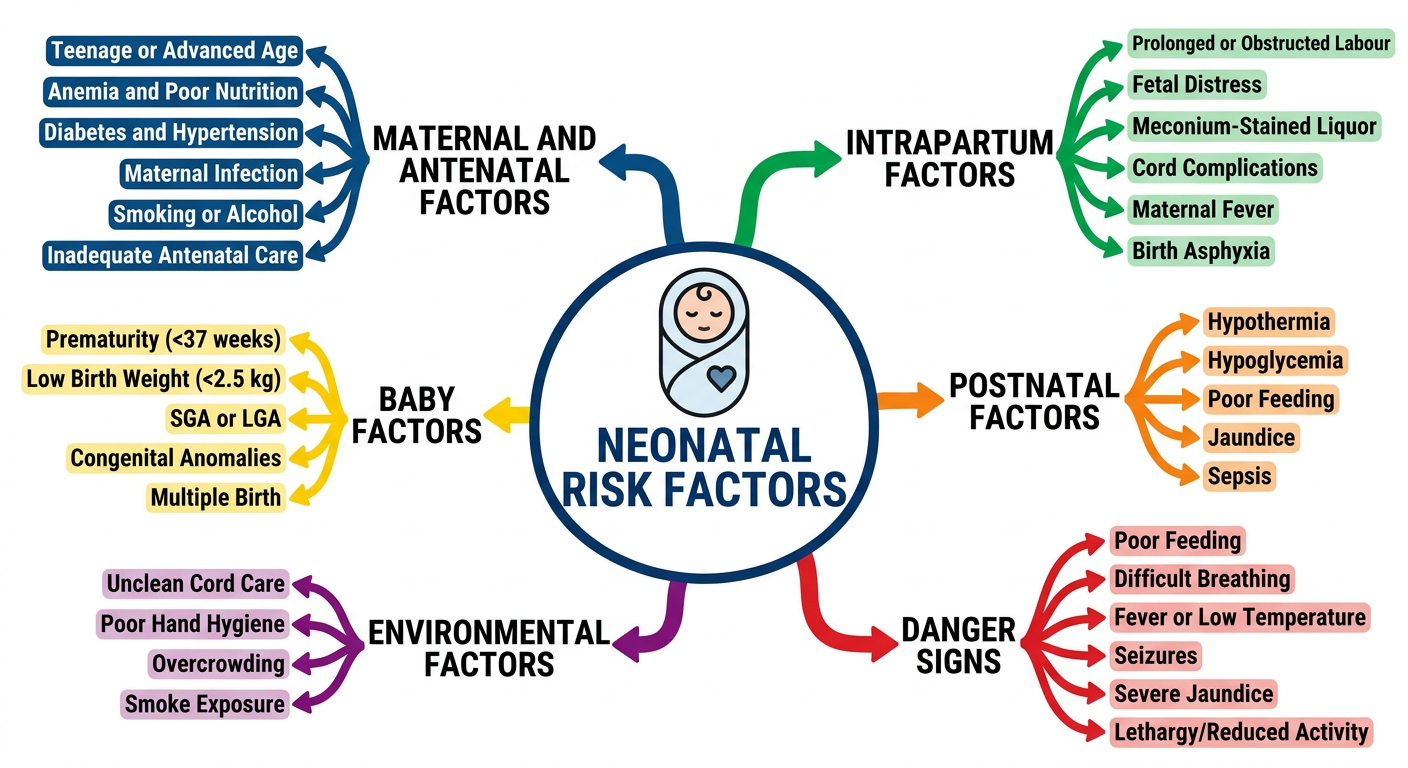
Easy memory method: Before birth - During birth - After birth
                         NEONATAL RISK FACTORS
                                   │
 ┌───────────────────┬─────────────┼──────────────┬──────────────────┐
 │                   │             │              │                  │
MATERNAL /        INTRAPARTUM     BABY         POSTNATAL /      ENVIRONMENT /
ANTENATAL           FACTORS      FACTORS       NEWBORN           HEALTH SYSTEM
 │                   │             │              │                  │
• Age <18 or >35   • Prolonged   • Prematurity  • Hypothermia     • Unclean delivery
• Anemia             labour        <37 weeks    • Hypoglycemia    • Poor hand hygiene
• Poor nutrition   • Obstructed  • LBW <2.5 kg  • Poor feeding    • Unsafe cord care
• Diabetes            labour     • SGA / LGA    • Jaundice        • Overcrowding
• Hypertension     • Fetal       • Twins        • Sepsis          • Smoke exposure
• Maternal infection  distress   • Congenital   • Dehydration     • Delayed referral
• Smoking/alcohol  • Meconium      anomalies
• PROM             • Cord prolapse
• Bleeding         • Maternal fever
                   • Birth asphyxia
Important danger signs
- Poor feeding or refusal to feed
- Fast breathing, grunting, chest indrawing, or blue colour
- Fever or low body temperature
- Lethargy or seizures
- Severe jaundice
- Umbilical redness, pus, or foul smell