
37 yeraars old female complaints of pain at calf muscle for 1 week. Pain while walking and resting phase also. After walking for a while presses at calf region pain Diagnoses and treatment
Reading File
Now let me search the medical library for relevant content on calf pain diagnosis and treatment in parallel.
Finding Sources
Finding Sources
Finding Sources
Searching PubMed
deep vein thrombosis calf diagnosis treatment
Now let me read the most relevant sections from Rosen's Emergency Medicine (DVT chapter) and Bailey & Love's Surgery (DVT), plus the differential diagnosis content.
Reading File
Reading File
Finding Sources
Let me read more of the Rosen's DVT chapter (Wells score, treatment) and also get the gastrocnemius muscle strain section from Tintinalli's.
Reading File
Reading File
Let me read the gastrocnemius muscle strain section and get more DVT treatment details.
Reading File
Reading File
I now have sufficient information for a comprehensive answer. Let me also fetch the leg vein anatomy image to include visually.
Loading Image
Now I have comprehensive information to provide a thorough clinical answer.
Calf Pain in a 37-Year-Old Female - Clinical Analysis
Symptom Analysis
The key features here are:
- Pain at rest AND on walking - this rules out pure intermittent claudication (arterial), which classically only occurs with exertion
- Pain reproduced on pressing/palpating the calf - tenderness on palpation of the deep venous system
- 1 week duration - subacute onset
- 37-year-old female - important demographic (OCP use? recent travel? pregnancy? thrombophilia?)
Primary Diagnosis: Deep Vein Thrombosis (DVT)
This presentation is highly suspicious for DVT and must be excluded first.
Pathophysiology
DVT results from Virchow's triad: venous stasis, endothelial injury, and hypercoagulability. In young women, risk factors include oral contraceptive pills, pregnancy/postpartum, prolonged immobility (long flights), thrombophilia (Factor V Leiden, antiphospholipid syndrome), and malignancy.
Clinical Features of DVT
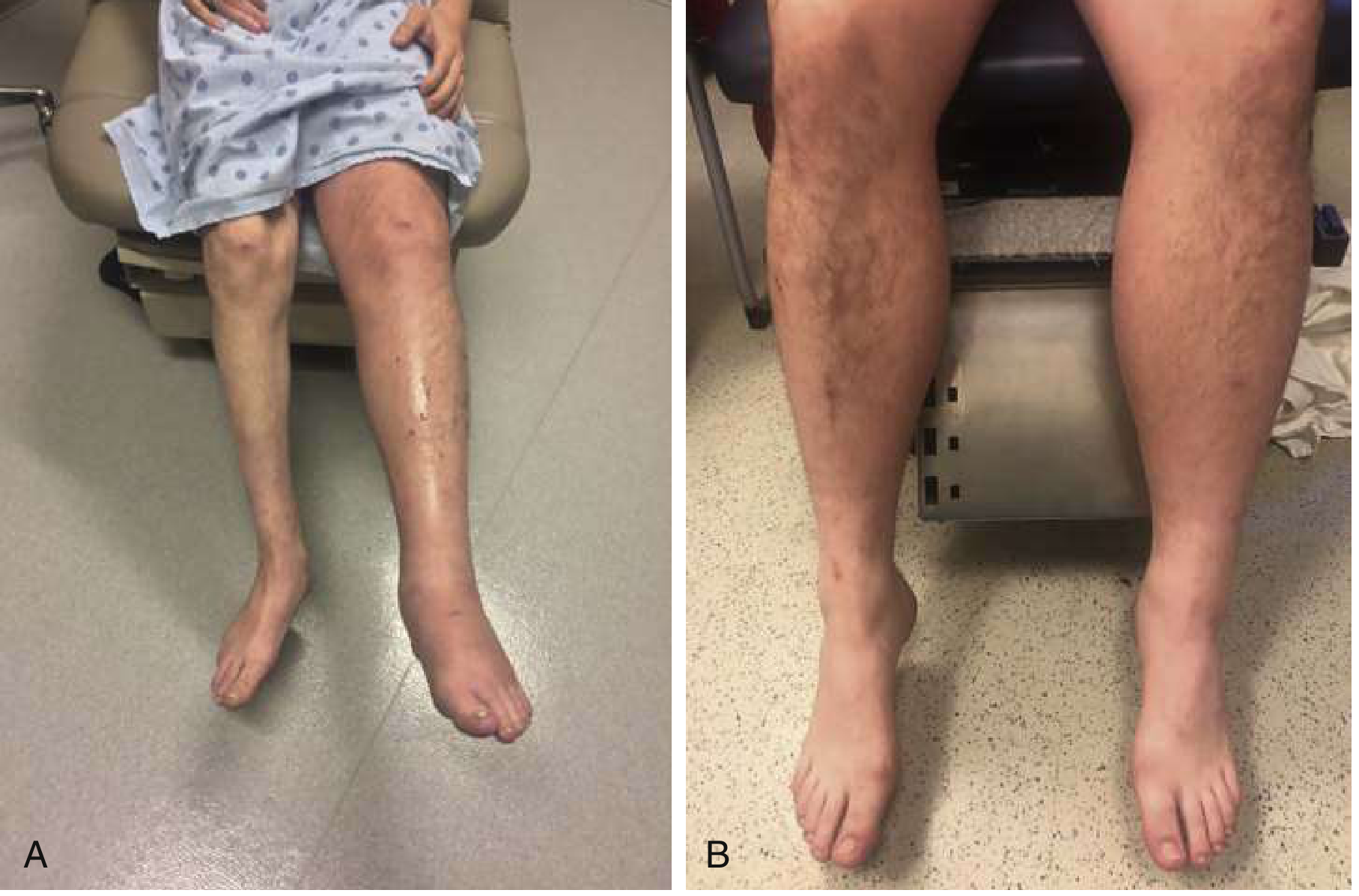
- Unilateral calf pain and swelling (may be mild cramping or "fullness")
- Tenderness along the deep venous system on palpation
- Edema, erythema, warmth
- Collateral superficial vein dilation
- Pain at both rest and with activity
Wells Score for DVT (Pretest Probability)
Apply this before ordering tests:
| Clinical Feature | Score |
|---|---|
| Active cancer | +1 |
| Paralysis/paresis/recent plaster cast | +1 |
| Bedridden ≥3 days or surgery within 12 weeks | +1 |
| Localized tenderness along deep venous system | +1 |
| Entire leg swollen | +1 |
| Calf swelling ≥3 cm larger than other side (measured 10 cm below tibial tuberosity) | +1 |
| Pitting edema confined to symptomatic leg | +1 |
| Collateral superficial veins (non-varicose) | +1 |
| Prior documented DVT | +1 |
| Alternative diagnosis at least as likely | -2 |
Interpretation:
- Score ≤ 0 = Low probability
- Score 1-2 = Moderate probability
- Score ≥ 3 = High probability
Differential Diagnosis
(Always consider these alongside DVT)
| Condition | Key Distinguishing Features |
|---|---|
| DVT | Rest + exertional pain, calf tenderness, risk factors |
| Superficial thrombophlebitis | Palpable cord along a vein, overlying erythema |
| Gastrocnemius muscle strain | Sudden onset ("tennis leg"), history of forceful plantarflexion, intact Achilles tendon, pain on passive dorsiflexion |
| Ruptured Baker's cyst | Popliteal mass/fullness beforehand, synovial fluid tracking down calf |
| Cellulitis | Fever, skin erythema, no cord, usually no pain at rest before skin changes |
| Venous insufficiency | Bilateral, varicosities, heaviness, worse at end of day |
| Calf muscle hematoma | Trauma history, bruising |
| Arterial claudication | Pain ONLY with walking (not rest), absent pulses, pallor on elevation |
Investigations
Step 1 - D-dimer
- If LOW pretest probability: negative D-dimer rules out DVT
- If HIGH pretest probability: D-dimer alone is insufficient; proceed to imaging regardless
Step 2 - Venous Duplex Ultrasound (gold standard)
- Non-compressibility of the vein = DVT
- Whole-leg ultrasound evaluates calf (posterior tibial, peroneal, gastrocnemius veins) in addition to proximal veins
- If proximal veins negative but high suspicion: repeat ultrasound in 1 week (15% of isolated calf DVTs propagate proximally if untreated)
Additional workup for a 37-year-old woman:
- CBC, coagulation screen
- Thrombophilia screen if no obvious provoking factor (Factor V Leiden, Protein C/S, antithrombin III, antiphospholipid antibodies - especially relevant in young women)
- Ask about: OCP/HRT use, pregnancy status, family history of clots, recent immobility
Treatment
Confirmed DVT
1. Anticoagulation - First-Line
Direct Oral Anticoagulants (DOACs) are now the first choice - equally effective as warfarin with less bleeding, no injections, no INR monitoring:
| Drug | Regimen |
|---|---|
| Rivaroxaban | 15 mg BD x 21 days, then 20 mg OD |
| Apixaban | 10 mg BD x 7 days, then 5 mg BD |
| Dabigatran | After 5-10 days of LMWH/UFH: 150 mg BD |
- Do NOT use rivaroxaban or apixaban in pregnancy - use LMWH
- Duration: minimum 3 months (longer if unprovoked, recurrent, or persistent risk factors)
2. If DOACs contraindicated:
- LMWH (e.g., enoxaparin 1 mg/kg BD subcutaneously)
- Then bridge to warfarin (target INR 2-3)
- Renal impairment: use unfractionated heparin IV
3. Isolated Calf Vein DVT (controversial):
- Anticoagulate if: ongoing risk, severe symptoms, clot >5 cm, near proximal veins, prior VTE
- Surveillance ultrasound in 1 week if NOT anticoagulated
- 15% propagate proximally if untreated
4. If anticoagulation contraindicated:
- Inferior vena cava (IVC) filter (temporary, retrievable)
5. Supportive measures:
- Compression stockings - reduce post-thrombotic syndrome
- Encourage ambulation (does NOT increase PE risk)
- Elevate limb
Important Red Flags (Urgent admission)
- Phlegmasia cerulea dolens (massive limb DVT with arterial compromise)
- Signs of pulmonary embolism: breathlessness, pleuritic chest pain, tachycardia, desaturation
- Bilateral DVT
Summary Plan for This Patient
- Assess Wells score - ask about risk factors (OCP? travel? surgery?)
- Order D-dimer immediately
- Urgent venous duplex ultrasound of the affected leg
- If DVT confirmed: start anticoagulation (rivaroxaban or apixaban preferred; avoid if pregnant)
- Thrombophilia workup given young age with no obvious provocation
- Minimum 3 months anticoagulation, reassess at end of treatment
- Prescribe compression stockings
Sources: Rosen's Emergency Medicine, 9e (Ch. 74); Bailey & Love's Surgery, 28e (Ch. 62); Tintinalli's Emergency Medicine, 9e (Ch. 275)
This is a shared conversation. Sign in to Orris to start your own chat.