
Git affecting organism
gut microbiota gastrointestinal organisms diagram
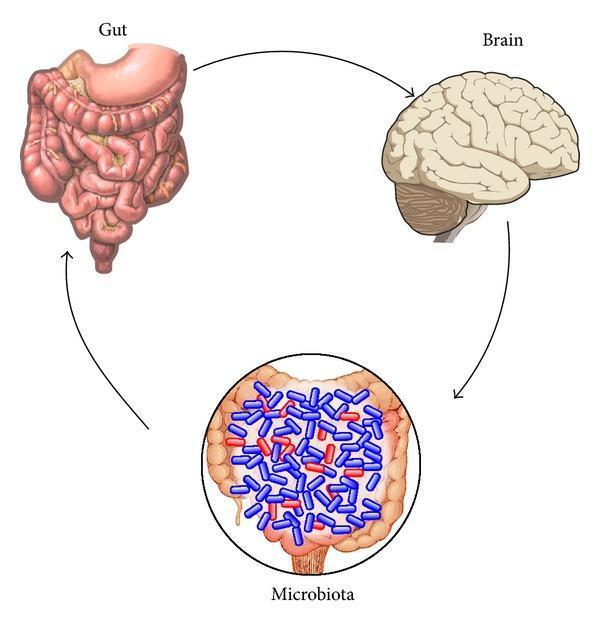
This medical illustration depicts the gut-brain-microbiota axis, a bidirectional communication system essential in pathophysiology and autoimmune disease research. The diagram is organized in a triangular, cyclical format featuring three primary components: 1) Gut: An anatomical illustration of the gastrointestinal tract, including the stomach and intestines. 2) Brain: A lateral view of the human brain highlighting the cerebral cortex and cerebellum. 3) Microbiota: A circular inset showing a cross-section of the intestinal lumen densely populated with blue and red rod-shaped microorganisms. Black curved arrows indicate the directionality of the relationship: from the gut to the brain (neural and endocrine signaling), from the brain to the microbiota (modulation of gut function), and from the microbiota back to the gut (influence on the enteric nervous system and mucosal barrier). This educational graphic summarizes how the central nervous system, gastrointestinal system, and commensal bacteria interact to maintain homeostasis or contribute to systemic inflammation and autoimmunity.
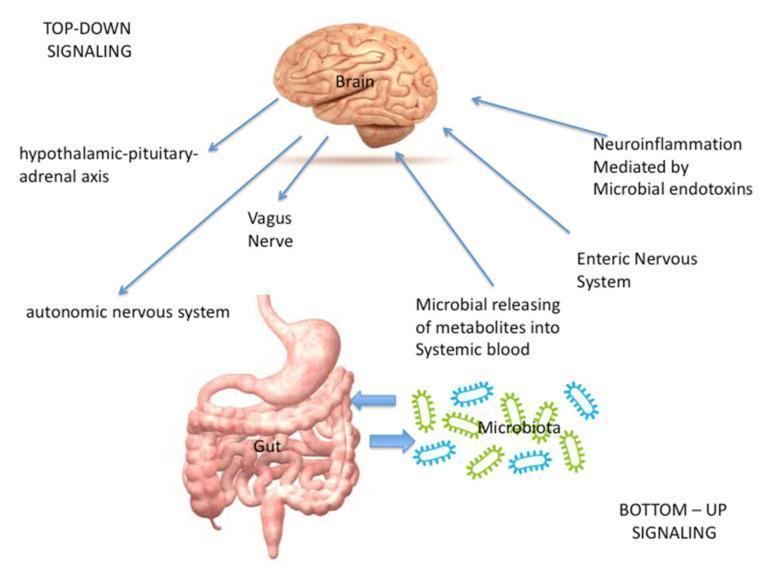
This pathophysiology diagram illustrates the bidirectional communication of the microbiota-brain-gut axis. The top of the diagram shows a lateral view of the human brain, while the bottom depicts the gastrointestinal tract (stomach and intestines) alongside a representation of the gut microbiota. The system is divided into 'Top-Down Signaling' and 'Bottom-Up Signaling' pathways. Top-down mechanisms from the brain to the gut include the hypothalamic-pituitary-adrenal (HPA) axis, the vagus nerve, and the autonomic nervous system. Bottom-up mechanisms from the gut/microbiota to the brain include the enteric nervous system, neuroinflammation mediated by microbial endotoxins, and microbial releasing of metabolites into systemic blood. The diagram also shows direct bidirectional interaction between the gut and the microbiota. This visual summary is essential for understanding neuro-gastroenterology, the impact of dysbiosis on neurological health (such as ischemic stroke or neuroinflammation), and the systemic pathways through which gut health influences central nervous system function.
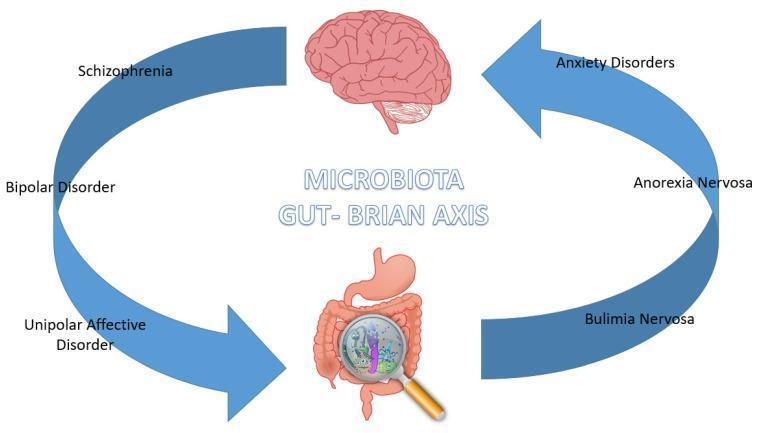
A pathophysiology diagram illustrating the bidirectional communication within the Microbiota-Gut-Brain Axis and its association with psychiatric disorders. The visual features a sagittal view of a human brain at the top and a schematic of the gastrointestinal tract (stomach and intestines) at the bottom, with a magnifying glass over the distal small intestine/colon highlighting various bacterial species of the gut microbiota. Two large, curved blue arrows form a cyclical pathway connecting the organs. The left descending arrow represents brain-to-gut communication and is labeled with Schizophrenia, Bipolar Disorder, and Unipolar Affective Disorder. The right ascending arrow represents gut-to-brain communication and is labeled with Anxiety Disorders, Anorexia Nervosa, and Bulimia Nervosa. The central text identifies the 'MICROBIOTA GUT-BRAIN AXIS,' emphasizing the educational focus on how dysbiosis and neural, endocrine, or immune signaling between these systems relate to mental health pathology.
Organisms Affecting the GIT (Gastrointestinal Tract)
1. Normal GIT Microbiota - Overview
- Mode of delivery (vaginal vs. caesarean)
- Diet (breast milk vs. formula)
- Antibiotic use
Distribution Along the GIT (Guyton & Hall, p. 785)
| GIT Segment | Bacterial Load (per gram of contents) |
|---|---|
| Stomach & Duodenum | 10¹ - 10³ |
| Jejunum & Ileum | 10⁴ - 10⁷ |
| Colon | 10¹¹ - 10¹² |
2. Types of Organisms in the GIT
A. Bacteria
| Phylum | Key Genera | Role |
|---|---|---|
| Firmicutes | Lactobacillus, Clostridium, Enterococcus, Ruminococcus | Fermentation, SCFA production, immune modulation |
| Bacteroidetes | Bacteroides, Prevotella | Polysaccharide degradation, immune tolerance |
| Proteobacteria | E. coli, Helicobacter pylori | Usually minor; pathogenic when overgrown |
| Actinobacteria | Bifidobacterium | Probiotic, immune regulation |
B. Fungi (Mycobiome)
C. Viruses (Virome)
D. Protozoa
3. Functions of GIT Microbiota in the Host
A. Immune System Development (Yamada's Gastroenterology, p. 335)
- Germ-free rodent models show that without microbiota: villi are thinner, crypts are shallower, fewer lymphocytes and macrophages in the mucosa, smaller Peyer's patches, decreased IgA-producing plasma cells, and compromised IgM-to-IgA isotype switching.
- "Conventionalization" (introducing normal microbiota) restores all these abnormalities.
- Bacteroides fragilis produces polysaccharide A → induces Foxp3⁺ Treg cells → produces IL-10 → suppresses inflammation
- Clostridia clusters IV and XIVa → enhance TGF-β1 → generate IL-10-expressing Treg cells
- Segmented filamentous bacteria → Th17 polarization via serum amyloid A → confers resistance to enteric pathogens
- Short-chain fatty acids (SCFAs) from Lactobacillus and Clostridia → anti-inflammatory effects via G-protein-coupled receptors
B. Protection Against Pathogens (Guyton & Hall, p. 785)
- Commensal bacteria produce antimicrobial compounds and compete for nutrients and attachment sites, preventing pathogen colonization
- The intestinal immune system maintains protection via:
- Mucus layer production
- Antimicrobial proteins
- Immunoglobulin A secretion
- DCs continuously probe the intestinal lumen, sensing LPS, LTA, flagella, and other bacterial components to calibrate immune responses (Medical Microbiology 9e)
C. Digestion and Metabolism
- Fermentation of indigestible polysaccharides → short-chain fatty acids (acetate, propionate, butyrate) - major energy source for colonocytes
- Vitamin synthesis: Vitamin K, Vitamin B12, biotin, folate
- Nutrient extraction from food
- Bile acid metabolism
D. Systemic Effects
- Hormonal regulation: Gut bacteria influence systemic hormonal signaling
- Bone density: Regulation via SCFAs and estrogen-related pathways
- Drug metabolism: Modification and elimination of specific drugs and toxins
- Brain function (Gut-Brain Axis): Microbiota communicates with the CNS via the vagus nerve, enteric nervous system, HPA axis, and metabolite release into systemic circulation
4. Dysbiosis - When the Balance is Disrupted
| System | Associated Disorders |
|---|---|
| GIT | IBD (Crohn's disease, ulcerative colitis), IBS, colorectal cancer, C. difficile infection |
| Immune | Autoimmune diseases, allergies |
| Metabolic | Obesity, type 2 diabetes, NAFLD |
| Neurological | Anxiety, depression (via gut-brain axis) |
| Other | Increased risk of pathogen overgrowth |
5. Key Pathogens Affecting the GIT
| Organism | Disease |
|---|---|
| Helicobacter pylori | Peptic ulcer disease, gastric cancer |
| Clostridioides difficile | Pseudomembranous colitis (especially post-antibiotic) |
| Salmonella, Shigella, Campylobacter | Bacterial gastroenteritis |
| Vibrio cholerae | Cholera (secretory diarrhea) |
| Rotavirus, Norovirus | Viral gastroenteritis |
| Giardia lamblia | Malabsorption, diarrhea |
| Entamoeba histolytica | Amoebic dysentery, liver abscess |
Summary
Sources: Guyton and Hall Textbook of Medical Physiology (p. 785); Yamada's Textbook of Gastroenterology (p. 335); Medical Microbiology 9e; Sleisenger and Fordtran's Gastrointestinal and Liver Disease
For which organism symptoms start after 12 hours of infection and the symptoms are fever headache body ache diarrhoea and stomach pain
The Organism: Salmonella (Non-typhoidal)
Key Identification Features
| Feature | Details |
|---|---|
| Organism | Salmonella species (non-typhoidal; e.g. S. enteritidis, S. typhimurium) |
| Incubation Period | Usually 12-36 hours (can be as early as 3 hours) |
| Type | Gram-negative rod; facultative anaerobe |
| Toxin | Enterotoxin (exotoxin); produced in the intestinal wall after ingestion |
Classic Symptoms (matching your question exactly)
- Crampy abdominal (stomach) pain
- Diarrhea - loose stools, often blood-stained
- Vomiting
- Fever
- Headache and body ache - seen in >50% of cases
- Difficulty in urination (less commonly noted)
Sources of Infection
- Raw or partially cooked eggs
- Milk and milk products (even pasteurized milk is not 100% safe)
- Sesame seed products
- Household pets (chicks, turtles, cats)
Why NOT other organisms?
| Organism | Incubation | Key Difference |
|---|---|---|
| S. aureus | 1-8 hours | Mainly vomiting, NO fever, toxin pre-formed in food |
| B. cereus (emetic) | 1-5 hours | Mainly nausea/vomiting |
| B. cereus (diarrheal) | 8-16 hours | No fever, headache, or body ache |
| Clostridium perfringens | 8-16 hours | No fever, watery diarrhea only |
| Vibrio parahaemolyticus | 12-24 hours | Explosive watery diarrhea, from seafood - but less systemic (fever/headache/body ache are less prominent) |
| Shigella | ~48 hours (1-7 days) | Dysentery; longer incubation |
| Typhoid (S. typhi) | 10-14 days | Much longer incubation; stepwise fever; constipation early |
Treatment
- IV fluid therapy for persistent vomiting/diarrhea
- Antibiotics only in high-risk cases (HIV+, elderly, sickle cell anemia, immunocompromised):
- Chloramphenicol, Fluoroquinolones, Ampicillin, Ceftriaxone, or Trimethoprim-sulfamethoxazole
- Most cases are self-limiting
Sources: The Essentials of Forensic Medicine and Toxicology, 36th ed.; Jawetz Melnick & Adelberg's Medical Microbiology, 28th ed.
Is Diclo + co Amoxyclav is effective for the condition
Diclofenac + Co-Amoxiclav for Salmonella Gastroenteritis
Short Answer: No - this combination is NOT appropriate
1. Diclofenac (NSAID)
- NSAIDs irritate the gastric mucosa and worsen abdominal pain and diarrhea
- They can mask severity of the infection by suppressing fever
- In a patient already losing fluids through diarrhea and vomiting, NSAIDs carry a risk of renal impairment
- Paracetamol (acetaminophen) is a safer alternative for fever and body ache in GIT infections
2. Co-Amoxiclav (Amoxicillin + Clavulanate) - The Bigger Problem
A. Antibiotics are NOT recommended for uncomplicated Salmonella enteritis
"Empirical antibiotic therapy is NOT recommended for otherwise healthy patients with suspected Salmonella enteritis. Antibiotic therapy does NOT shorten the duration of the disease and may PROLONG the duration of the carrier state."
- Rosen's Emergency Medicine
"Antibiotic treatment not recommended for enteritis because this may prolong the duration of disease"
- Medical Microbiology 9e
"Antibiotic treatments can prolong the shedding of Salmonella non-typhi organisms and therefore are NOT indicated in most GIT infections"
- Rosen's Emergency Medicine (Key Concepts)
B. Co-Amoxiclav is NOT the right antibiotic even when antibiotics ARE needed
| Drug | Route | Dose |
|---|---|---|
| Ciprofloxacin (Fluoroquinolone) | Oral | 500 mg twice daily for 5-7 days |
| Azithromycin | Oral | 1g then 500 mg/day x 6 days |
| Ceftriaxone (IV) | IV | For hospitalised patients |
| Chloramphenicol | Oral | Alternative |
| Trimethoprim-Sulfamethoxazole | Oral | Alternative |
3. When ARE Antibiotics Indicated for Salmonella?
| High-Risk Group | Reason |
|---|---|
| Infants < 3 months | Immature immunity |
| Adults > 50 years | Increased bacteremia risk |
| Immunocompromised (HIV+, chemotherapy) | Dissemination risk |
| Sickle cell disease | Bacteremia and osteomyelitis risk |
| Prosthetic grafts/valves | Seeding of prosthetics |
| Severe colitis | Systemic spread |
4. What IS the Correct Management?
| Priority | Treatment |
|---|---|
| First and most important | Oral Rehydration Therapy (ORS) / IV fluids if severe |
| Fever/body ache | Paracetamol (safer than Diclofenac) |
| Antibiotic (only if high-risk) | Ciprofloxacin or Azithromycin |
| Avoid | Antimotility drugs (loperamide alone) - prolong fever, increase bacteremia risk |
| Avoid | Antibiotics in uncomplicated cases - prolong carrier state |
Summary
- Diclofenac: Partially addresses symptoms but is not ideal - paracetamol is safer
- Co-Amoxiclav: Not effective, not indicated, and potentially harmful (prolongs carrier state; wrong drug class)
- The correct antibiotic when needed is Ciprofloxacin or Azithromycin, and most uncomplicated cases need no antibiotic at all - only rehydration
Sources: Rosen's Emergency Medicine; Medical Microbiology 9e; Jawetz Melnick & Adelberg's Medical Microbiology 28e
Suggest any better drug combination for me
Recommended Drug Combination for Salmonella Gastroenteritis
Important disclaimer: This is educational information. Always consult a doctor before starting any medication, especially antibiotics.
Step 1 - First determine: Do you need antibiotics at all?
| Are you in this group? | Needs antibiotics? |
|---|---|
| Healthy adult (18-50 yrs), no underlying disease | ❌ No - self-limiting in 3-7 days |
| Age < 3 months or > 50 years | ✅ Yes |
| HIV+, cancer, immunosuppressed | ✅ Yes |
| Sickle cell disease | ✅ Yes |
| Prosthetic heart valve / vascular graft | ✅ Yes |
| Severe colitis, high fever, bloody diarrhea | ✅ Yes |
The Recommended Combination
For a Healthy Adult (Outpatient, Uncomplicated)
| Drug | Purpose | Dose | Notes |
|---|---|---|---|
| ORS (Oral Rehydration Salts) | Rehydration - THE most important treatment | 200-400 mL after every loose stool | Available as Electral, Pedialyte, etc. |
| Paracetamol (Acetaminophen) | Fever + body ache + headache | 500-1000 mg every 6-8 hours | Safer than Diclofenac in GIT infection |
| Ondansetron (4 mg) | Controls nausea and vomiting | 4 mg every 8 hours if needed | Helps you keep fluids down |
No antibiotic needed for uncomplicated cases. The disease is self-limiting.
If Antibiotics ARE Required (High-Risk Patient)
| Drug | Dose | Duration | Role |
|---|---|---|---|
| Ciprofloxacin 500 mg | Twice daily (PO) | 5-7 days | First-line antibiotic for Salmonella |
| OR Azithromycin 1g (day 1) then 500 mg | Once daily (PO) | 7 days total | Alternative - better for resistant strains |
| Paracetamol 500-1000 mg | Every 6-8 hrs | As needed | Fever and body ache |
| ORS | After every loose stool | Until diarrhea stops | Rehydration |
| Loperamide 2 mg | After each loose stool (max 16 mg/day) | Only with antibiotic | Safe only when given WITH antibiotic - NOT alone |
If hospitalised: IV Ceftriaxone until sensitivity results are available.
Why This is Better Than Diclo + Co-Amoxiclav
| Feature | Diclo + Co-Amoxiclav | Recommended Combination |
|---|---|---|
| Antibiotic covers Salmonella? | ❌ Co-Amoxiclav has poor activity | ✅ Ciprofloxacin is specifically effective |
| Prolongs carrier state? | ✅ Risk (wrong antibiotic) | ❌ Correct antibiotic avoids this |
| Safe for GI mucosa? | ❌ Diclofenac irritates gut | ✅ Paracetamol is gentle |
| Renal safe with dehydration? | ❌ NSAIDs dangerous when dehydrated | ✅ Paracetamol safe |
| Addresses root cause? | ❌ | ✅ ORS addresses dehydration which is the main killer |
What to Avoid
| Drug | Why to Avoid |
|---|---|
| Diclofenac / Ibuprofen | GI irritation + renal risk when dehydrated |
| Loperamide alone (without antibiotic) | Prolongs fever and diarrhea, increases bacteremia risk |
| Co-Amoxiclav | Not effective against Salmonella, prolongs carrier state |
| Metronidazole | Not effective - Salmonella is not anaerobic |
Practical Home Care Checklist
- ✅ Drink ORS constantly - 1 sachet per glass of water
- ✅ Eat soft, bland food (rice, banana, toast, yogurt)
- ✅ Take Paracetamol for fever and pain
- ✅ Rest and avoid dehydration
- ⚠️ See a doctor immediately if: fever > 39°C persists beyond 3 days, blood in stool, severe vomiting preventing fluids, signs of dehydration (dry mouth, no urine, dizziness)
Sources: Rosen's Emergency Medicine; Medical Microbiology 9e; The Harriet Lane Handbook, 23rd ed.