
Dorsocervical fat pad hypertrophy
dorsocervical fat pad hypertrophy
dorsocervical fat pad hypertrophy causes evaluation Cushing syndrome NIH
- Long-term corticosteroid exposure, such as prednisone, dexamethasone, hydrocortisone, and sometimes high-dose inhaled, injected, or topical steroids
- Cushing syndrome, due to excess cortisol made by the body
- Generalized obesity, where fat deposition is more widespread
- HIV-associated lipodystrophy, especially with some older antiretroviral regimens
- Less often, inherited lipodystrophy syndromes
Give a full sign symptom investigation and clincal examination and treatment
Cushing syndrome diagnosis treatment
Endocrine Society diagnosis treatment Cushing syndrome guideline patient evaluation
Cushing syndrome dorsocervical fat pad buffalo hump clinical photograph
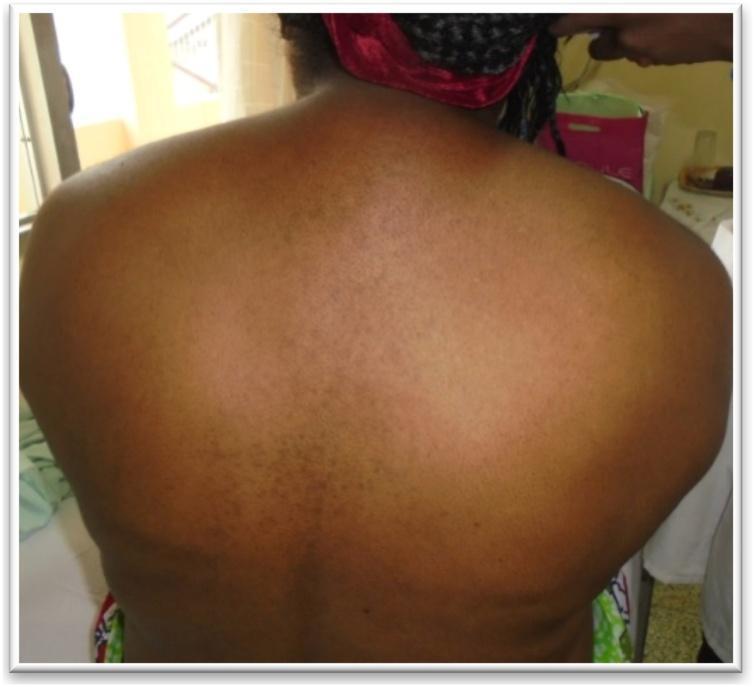
A clinical photograph of the posterior aspect of a patient's upper back and neck region, demonstrating a 'buffalo hump' (dorsocervical fat pad). The image shows a prominent, localized accumulation of subcutaneous adipose tissue in the upper thoracic and lower cervical region, creating a rounded, convex deformity between the shoulder blades and at the base of the neck. The skin overlying the fat pad appears stretched but otherwise intact, with subtle hyperpigmentation and scattered small macules. This physical finding is a classic clinical manifestation of hypercortisolism (Cushing's syndrome), characterized by centripetal fat redistribution. The photograph is taken from a posterior-superior perspective, highlighting the anatomical prominence relative to the scapulae and spine, which is useful for medical students and clinicians in identifying physical signs of endocrine dysfunction.
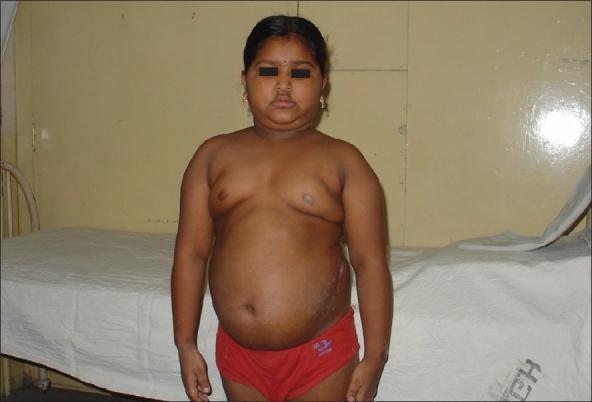
This clinical photograph shows a pediatric patient presenting with characteristic physical features of Cushing syndrome. The face exhibits a rounded, 'moon facies' appearance with associated submental fat deposition (double chin). There is evidence of central adiposity with a protuberant abdomen and fullness in the supraclavicular and upper chest regions, consistent with truncal obesity. A visible dorsocervical fat pad, or 'buffalo hump', is present at the base of the neck. On the patient's left flank, a linear surgical scar is visible, indicating a prior operative intervention. These findings are visually representative of hypercortisolism, which in this case is associated with an ACTH-secreting ganglioneuroma. The image serves as an educational example for identifying the systemic manifestations of glucocorticoid excess in children.
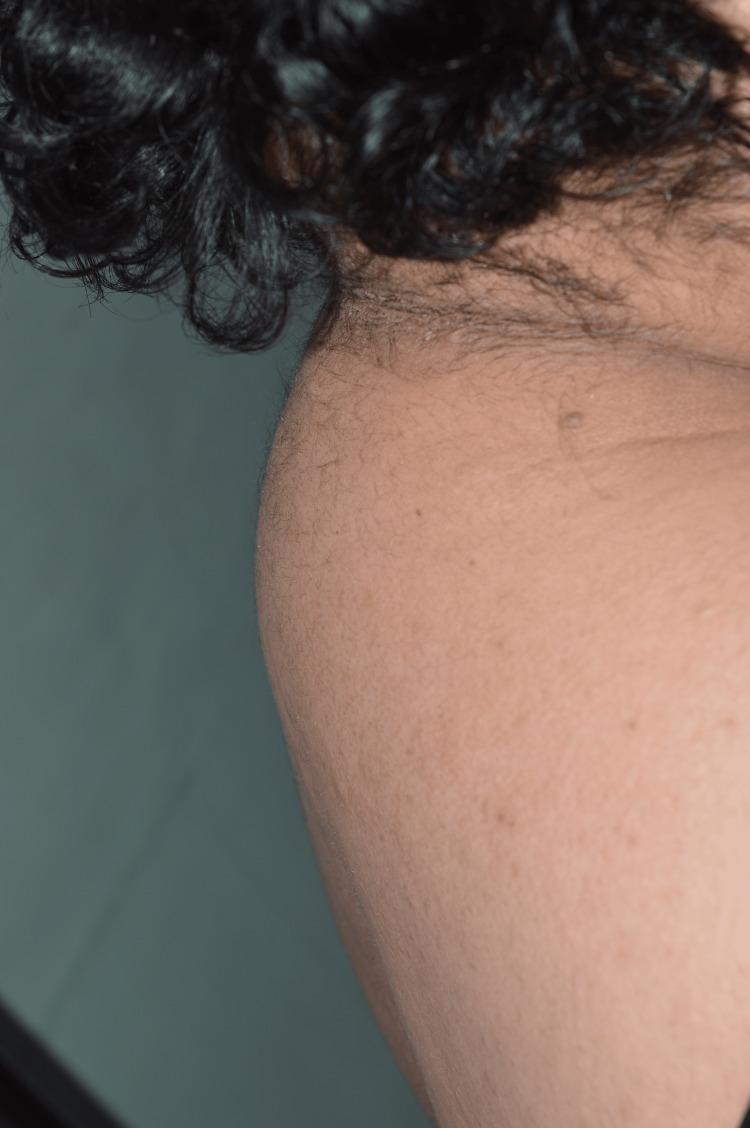
This clinical photograph shows a lateral view of the posterior neck and upper back of a patient, demonstrating a prominent dorsocervical fat pad, commonly referred to as a 'buffalo hump.' The anatomical region involved is the posterior cervicothoracic junction, specifically overlying the C7-T1 vertebrae. The growth is characterized by a rounded, localized accumulation of adipose tissue that protrudes posteriorly, altering the natural contour of the neck and upper spine. The overlying skin appears intact with visible fine terminal hairs and follicular orifices, typical of the nuchal region. No acute inflammatory signs, ulceration, or primary skin lesions are visible on the surface of the fat pad. This clinical finding is frequently associated with metabolic disturbances, hypercortisolism (Cushing's syndrome), or certain pharmacological side effects, such as those seen in antiretroviral therapy for HIV. The image serves as an educational example of abnormal fat distribution (lipodystrophy) in a clinical diagnostic context.
Dorsocervical fat pad hypertrophy
Causes
-
Exogenous glucocorticoid exposure, the commonest cause of Cushingoid fat redistribution
- Oral prednisone/prednisolone, dexamethasone, hydrocortisone
- Repeated steroid injections
- High-dose inhaled or intranasal steroids
- Potent topical steroids, especially if used extensively or under occlusion
- Important interactions, for example ritonavir or cobicistat with inhaled/intranasal fluticasone.
-
Endogenous Cushing syndrome
- Pituitary ACTH-producing adenoma, called Cushing disease
- Ectopic ACTH secretion, for example from neuroendocrine tumors
- Adrenal cortisol-producing adenoma, carcinoma, or nodular adrenal disease
-
Obesity
- Usually causes more generalized fat deposition rather than the characteristic Cushing phenotype.
-
HIV-associated lipodystrophy
- May cause dorsocervical, truncal, breast, and visceral fat accumulation, particularly with some antiretroviral regimens.
-
Other differential diagnoses
- Kyphosis or kyphoscoliosis due to osteoporosis, vertebral compression fractures, or postural deformity. This changes the contour but is not primarily a fat pad.
- Lipoma or other localized soft-tissue mass.
- Rare inherited lipodystrophy syndromes.
Clinical history
Presenting history
- Onset, duration, rate of increase, and whether it is painful or tender
- Neck stiffness, restricted movement, sleep difficulty, pressure symptoms, or cosmetic distress
- Recent or progressive weight gain
- Change in body-fat distribution: face, abdomen, supraclavicular area, breasts
- Symptoms suggesting a mass: rapid growth, firmness, fixation, neurological symptoms, fever, or unexplained weight loss
Drug history: essential
- Oral steroids
- Steroid inhalers and nasal sprays
- Topical creams
- Intra-articular, epidural, or intramuscular steroid injections
- Eye drops containing steroids
- Antiretroviral treatment, especially ritonavir/cobicistat
- Anticonvulsants and medicines affecting dexamethasone metabolism if testing for Cushing syndrome is planned
Symptoms of hypercortisolism/Cushing syndrome
- Progressive central weight gain with relatively thin arms and legs
- Increased appetite
- Fatigue
- Glucose intolerance or diabetes
- Hypertension
- Fluid retention/edema
- Recurrent infections and poor wound healing
- Easy bruising
- Thin, fragile skin
- Broad reddish-purple abdominal striae, usually >1 cm wide
- Acne
- Facial redness/plethora
- Slow healing
- Increased hair growth in women
- Proximal muscle weakness: difficulty rising from a chair, climbing stairs, or lifting the arms
- Muscle wasting
- Back pain or height loss from vertebral compression fractures
- Osteoporosis
- Depression, anxiety, irritability
- Sleep disturbance
- Cognitive difficulty
- Rarely mania or psychosis
- Irregular or absent menstruation
- Reduced libido, erectile dysfunction, reduced fertility
- Headache or visual symptoms: possible pituitary lesion
- New severe hypokalemia, marked weakness, rapid onset hypercortisolism, weight loss, or smoking history: consider ectopic ACTH secretion
- HIV history and antiretroviral exposure: consider lipodystrophy
Clinical examination
General examination
- Measure height, weight, BMI, waist circumference, and blood pressure.
- Assess glucose status if possible.
- Observe gait and ability to rise from a chair without using the arms.
- Look for signs of infection, bruising, edema, and poor wound healing.
Inspection
- Dorsocervical fat pad
- Rounded “moon” face
- Facial plethora
- Supraclavicular fullness
- Central/truncal obesity with relatively slender limbs
- Abdominal apron/pannus
- Wide violaceous striae, especially abdomen, thighs, breasts, and axillae
- Easy bruising/ecchymoses
- Thin skin
- Acne
- Hirsutism
- Hyperpigmentation may occur in ACTH-dependent disease but is not universal.
Examination of the neck and upper back
- Inspect from posterior and lateral views.
- Palpate to decide if the prominence is diffuse, soft, and fatty versus a discrete encapsulated mobile mass suggesting lipoma.
- Check skin for inflammation, ulceration, scars, or focal lesions.
- Assess cervical range of motion.
- Palpate the spine and look for thoracic kyphosis or scoliosis.
- Perform a basic neurological examination if pain, radiculopathy, weakness, or sensory symptoms are present.
Musculoskeletal examination
- Test proximal muscle power, particularly shoulder abduction and hip flexion.
- Look for muscle wasting.
- Check for vertebral tenderness, loss of height, and kyphosis suggesting osteoporosis or vertebral fracture.
Focused endocrine examination
- Blood pressure and cardiovascular risk assessment
- Signs of diabetes
- Evidence of hypogonadism or menstrual disturbance
- Visual fields if a pituitary macroadenoma is possible, though most ACTH pituitary adenomas are small
Investigations
1. Initial assessment
Routine baseline tests
- Fasting plasma glucose or HbA1c
- Lipid profile
- Urea, creatinine, electrolytes, especially potassium and bicarbonate
- Liver function tests
- Full blood count
- Urinalysis
- Pregnancy test where relevant
- Bone mineral density by DXA if prolonged glucocorticoid exposure, fracture, or suspected Cushing syndrome
- Spine radiograph if vertebral compression fracture or kyphosis is suspected
If a local mass is suspected
2. Testing for Cushing syndrome
- Late-night salivary cortisol, usually collected on two separate nights
- 24-hour urinary free cortisol, usually at least two collections
- 1-mg overnight dexamethasone suppression test
- Dexamethasone is taken at night and serum cortisol is measured the next morning.
Important interpretation issues
- Severe obesity
- Depression or alcohol-use disorder
- Acute illness, stress, pain, or poor sleep
- Pregnancy
- Shift work
- Poorly controlled diabetes
- Some medicines, including drugs that alter dexamethasone metabolism
3. Determining the cause after Cushing syndrome is confirmed
-
Plasma ACTH
- Low or suppressed ACTH: ACTH-independent disease, typically adrenal source
- Normal or high ACTH: ACTH-dependent disease, pituitary or ectopic source
-
If ACTH-independent
- CT or MRI of adrenal glands
-
If ACTH-dependent
- Pituitary MRI
- If pituitary MRI is non-diagnostic or equivocal: inferior petrosal sinus sampling in an expert center may distinguish pituitary from ectopic ACTH secretion.
- CT chest and other targeted imaging may be needed to search for ectopic ACTH-producing tumor.
Treatment
Principles
A. Steroid-induced dorsocervical fat pad
- Review the indication, dose, duration, route, and interaction risks for glucocorticoids.
- Use the minimum effective dose and consider a steroid-sparing regimen where clinically appropriate.
- Taper slowly only under medical supervision if systemic steroid use has been prolonged.
- Address drug interactions, particularly boosted antiretrovirals combined with fluticasone.
- Treat associated hypertension, diabetes, dyslipidemia, osteoporosis, and infection risk.
B. Obesity-related fat accumulation
- Individualized calorie deficit and nutritional support
- Regular aerobic activity plus resistance training
- Management of sleep apnea, diabetes, hypertension, and dyslipidemia
- Consider evidence-based anti-obesity medication or bariatric referral when indicated
- Reassess if the distribution is highly localized or accompanied by Cushing features
C. HIV-associated lipodystrophy
- Refer to an HIV specialist.
- Review and, when suitable, modify the antiretroviral regimen.
- Manage cardiometabolic risks: diabetes, dyslipidemia, fatty liver disease, and hypertension.
- Consider reconstructive treatment only after systemic causes and regimen issues are addressed.
D. Confirmed endogenous Cushing syndrome
Definitive treatment
- Pituitary Cushing disease: transsphenoidal pituitary surgery is first-line.
- Cortisol-producing adrenal tumor: adrenalectomy.
- Ectopic ACTH-producing tumor: resection if localized and operable.
- Adrenocortical carcinoma: specialist cancer care, typically surgery with additional therapy as appropriate.
If surgery is delayed, contraindicated, unsuccessful, or disease persists
- Osilodrostat
- Metyrapone
- Ketoconazole/levoketoconazole, depending on country and availability
- Etomidate intravenously for severe hypercortisolism in critically ill patients
- Mifepristone in selected patients, particularly where hyperglycemia is significant
- Pituitary-directed therapy in selected Cushing disease: pasireotide or cabergoline
Other options
- Pituitary radiotherapy for persistent/recurrent pituitary disease when surgery is not curative
- Bilateral adrenalectomy in selected refractory cases, requiring lifelong glucocorticoid and mineralocorticoid replacement and long-term surveillance
E. Treatment of the residual dorsocervical pad
- Weight management and exercise may reduce diffuse fat accumulation.
- Persistent, large, symptomatic, or cosmetically distressing pads can be assessed by a plastic/reconstructive surgeon.
- Options may include liposuction or surgical excision, but recurrence is possible if cortisol excess or the causative medication exposure persists.
Urgent referral or early specialist review
- Rapidly enlarging, hard, painful, fixed, or asymmetric mass
- Fever, redness, ulceration, or signs of infection
- Arm/leg weakness, numbness, severe neck or back pain, or bowel/bladder symptoms
- New severe hypertension, diabetes, hypokalemia, edema, or recurrent infections
- Easy bruising, wide purple striae, marked proximal weakness, or rapid progressive Cushingoid features
- Long-term steroid use with signs of adrenal suppression or concern about stopping medication