
Physiological changes in Pregnancy
Reading File
Finding Sources
Finding Sources
Finding Sources
Reading File
Reading File
Reading File
Reading File
Reading File
Reading File
Physiological Changes in Pregnancy
Pregnancy induces widespread adaptive changes across nearly every organ system, driven by hormonal shifts (progesterone, estrogen, human placental lactogen, relaxin), the mechanical effects of the enlarging uterus, and the need to support fetoplacental growth. Below is a system-by-system summary.
Cardiovascular System
- Cardiac output increases up to 40-50% by term, driven by both increased heart rate (+15-20 bpm above baseline) and increased stroke volume (~30%). The rise begins as early as 6 weeks' gestation.
- Peripheral vascular resistance falls early in pregnancy (nadir mid-second trimester), causing a drop in blood pressure of 5-15 mm Hg (diastolic falls more than systolic) until BP returns toward baseline in the third trimester.
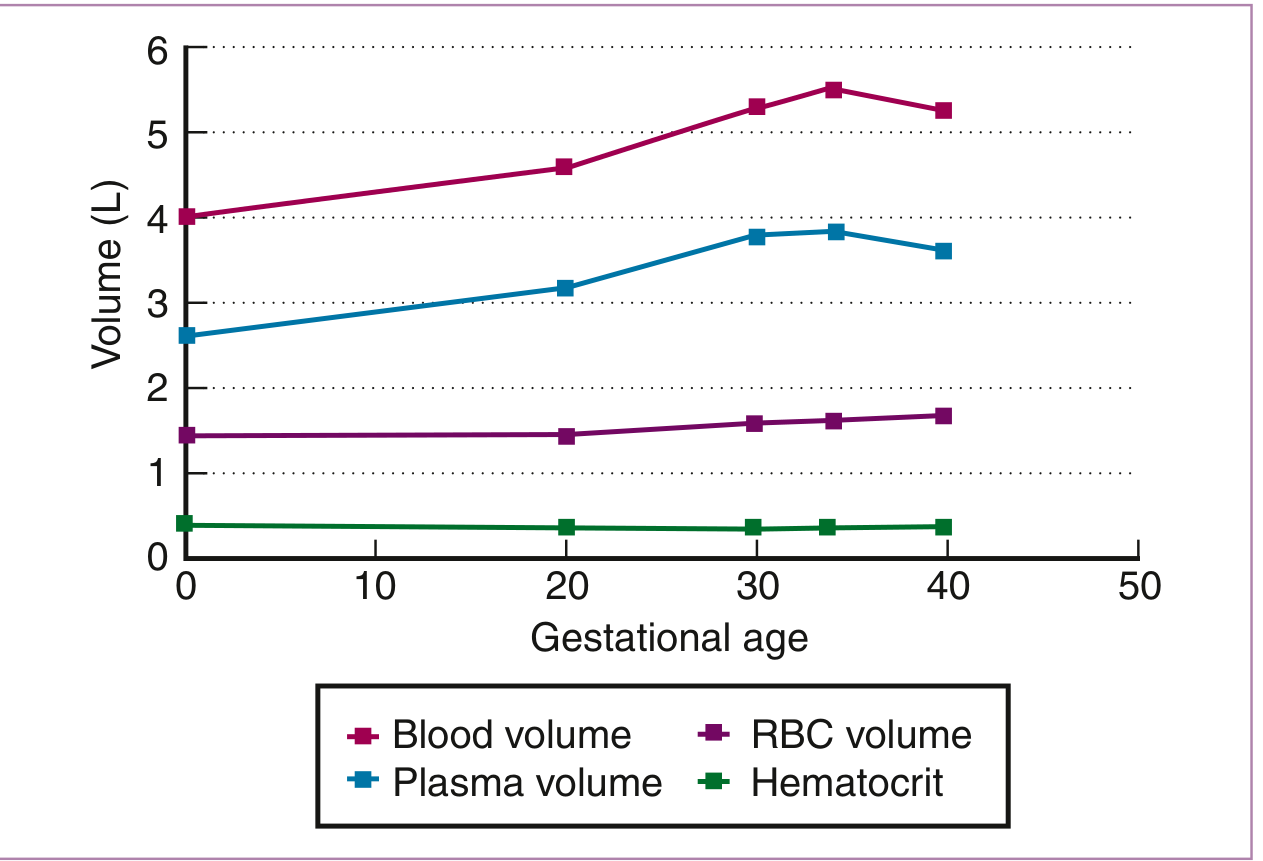
- Blood volume expands by 35-45%, reaching maximum around 32-34 weeks.
- Cardiac chambers enlarge with mild myocardial hypertrophy; exam findings can mimic heart disease - collapsing pulses, laterally displaced apex, systolic ejection murmur, exaggerated S1 splitting, audible S3, and occasionally a small pericardial effusion.
- Aortocaval compression: after ~20 weeks, the gravid uterus can compress the IVC and aorta in the supine position, causing "supine hypotension syndrome" (~5% of women at term) - hypotension with pallor, sweating, nausea. Left lateral tilt relieves this.
- Cardiac output rises further during labor and immediately postpartum (60-80% above pre-labor values) due to catecholamines, autotransfusion from uterine contractions, and relief of caval compression. Full hemodynamic resolution can take up to 6 months postpartum.
(Braunwald's Heart Disease, p. 1061-1062; Morgan & Mikhail's Clinical Anesthesiology, p. 1575-1576)
Respiratory System
- Minute ventilation increases up to 50% (mainly via increased tidal volume, +40%), driven by progesterone-mediated respiratory center stimulation.
- PaCO2 falls to 28-32 mm Hg with a compensatory decrease in plasma bicarbonate, preventing significant alkalosis; this facilitates CO2 transfer from fetus to mother.
- Functional residual capacity (FRC) decreases ~20% at term (mainly reduced expiratory reserve volume) due to diaphragmatic elevation, while vital capacity is largely preserved.
- Oxygen consumption rises 20-50%. Combined with reduced FRC, this predisposes pregnant patients to rapid desaturation during apnea - hence the importance of preoxygenation before anesthesia.
- Airway resistance decreases (progesterone-mediated bronchodilation); capillary engorgement of the airway mucosa can cause nasal congestion and increase intubation difficulty.
(Morgan & Mikhail's Clinical Anesthesiology, p. 1573-1574)
Hematologic System
- Plasma volume increases more (~45-55%) than RBC mass (~17-45%), producing a physiologic dilutional ("physiologic") anemia, maximal between 28-34 weeks. Hemoglobin usually stays above 11 g/dL. MCV/MCHC remain unchanged in dilutional anemia (unlike true iron-deficiency anemia, where indices fall progressively).
- Hypercoagulable state: fibrinogen and factors VII, VIII, IX, X, and XII all rise (factor XI may fall slightly); this limits blood loss at delivery but raises venous thromboembolism risk.
- Mild leukocytosis (up to 21,000/uL, especially in labor) and a ~10% fall in platelet count by the third trimester are common.
- Iron and folate requirements rise substantially for fetal use; deficiency anemias readily develop without supplementation.
(Creasy & Resnik's Maternal-Fetal Medicine, p. ~1112; Morgan & Mikhail's Clinical Anesthesiology, p. 1577)
Below is a graph illustrating these hematologic trends across gestation:
Renal System
- Renal plasma flow and glomerular filtration rate (GFR) increase by roughly 50%, so serum creatinine and BUN normally fall (creatinine as low as ~0.5 mg/dL, BUN ~9 mg/dL) - values considered "normal" outside pregnancy may indicate renal impairment in pregnant patients.
- A reduced renal tubular threshold for glucose and amino acids commonly causes mild glycosuria and proteinuria (<300 mg/day) even without pathology.
- Plasma osmolality decreases by 8-10 mOsm/kg, and the ureters/renal pelvis dilate (more on the right) due to progesterone effects and mechanical compression.
Gastrointestinal & Hepatic System
- Gastric motility slows and the gastroesophageal sphincter becomes less competent as the enlarging uterus displaces the stomach, promoting reflux and esophagitis and increasing aspiration risk (though gastric acidity/volume themselves aren't significantly altered).
- Overall hepatic blood flow is unchanged; mild rises in transaminases and LDH can occur in the third trimester. Alkaline phosphatase rises due to placental secretion.
- Serum albumin falls (diluted by expanded plasma volume), reducing colloid oncotic pressure.
- Pseudocholinesterase activity drops 25-30% at term (clinically usually insignificant for succinylcholine duration).
- Reduced gallbladder emptying (progesterone inhibits cholecystokinin release) plus altered bile composition predispose to cholesterol gallstones.
Metabolic / Endocrine System
- Pregnancy is a diabetogenic state: insulin resistance rises progressively (mediated by human placental lactogen/human chorionic somatomammotropin, cortisol, and progesterone), while fasting glucose and amino acids trend low and free fatty acids, ketones, and triglycerides rise - a pattern resembling accelerated starvation that spares glucose/amino acids for the fetus.
- Thyroid-binding globulin increases (estrogen-driven), raising total T4/T3, though free hormone levels remain largely stable in normal pregnancy.
Central Nervous System
- Minimum alveolar concentration (MAC) for general anesthetics falls progressively, by up to 40% at term (returning to normal by day 3 postpartum), attributed to markedly elevated progesterone and a labor-related beta-endorphin surge.
- Sensitivity to local anesthetics is enhanced, and neural blockade occurs at lower doses (epidural local anesthetic requirements may fall up to 30%), partly hormonal and partly due to epidural venous engorgement from IVC compression, which also increases cephalad spread of spinal/epidural anesthetics.
Summary Table (approximate maximum changes at term)
| System | Parameter | Change |
|---|---|---|
| CNS | Anesthetic MAC | -40% |
| Respiratory | Minute ventilation | +50% |
| Respiratory | Tidal volume | +40% |
| Respiratory | FRC | -20% |
| Respiratory | PaCO2 | -15% |
| Cardiovascular | Cardiac output | +40% |
| Cardiovascular | Blood volume | +35% |
| Cardiovascular | Plasma volume | +55% |
| Cardiovascular | Systemic vascular resistance | -15% |
| Hematologic | Hemoglobin | -20% (dilutional) |
| Hematologic | Platelets | -10% |
| Hematologic | Clotting factors | +30 to +250% |
| Renal | GFR | +50% |
(Morgan and Mikhail's Clinical Anesthesiology, 7e, Table 40-1, p. 1572)
These changes are largely adaptive, preparing the mother to meet fetal metabolic demands and tolerate the hemodynamic stresses of labor, delivery, and postpartum blood loss. Most parameters normalize within 1-2 weeks postpartum, though some (e.g., cardiac remodeling) may take up to 6 months to fully resolve.
Stay restricted with respect to MBBS 1st year
Finding Sources
Finding Sources
Finding Sources
Finding Sources
This is exactly the Guyton & Hall section I need. Let me read the full "Response of the Mother's Body to Pregnancy" section.
Reading File
Reading File
Reading File
Here's the physiology of pregnancy at MBBS 1st-year level, based on Guyton and Hall's Textbook of Medical Physiology, the standard reference for this stage.
Response of the Mother's Body to Pregnancy
Under the influence of pregnancy hormones (mainly estrogen and progesterone), the mother's reproductive organs enlarge and general body changes occur:
- Uterus: grows from ~50 g to ~1100 g
- Breasts: double in size, preparing for lactation
- Vagina: enlarges, introitus widens
- Some women develop edema, acne, or mild masculinizing/acromegalic features due to hormonal effects
Weight Gain
- Average gain: 25-35 lb (about 11-16 kg), mostly in the last two trimesters
- Fetus: ~8 lb
- Amniotic fluid, placenta, membranes: ~4 lb
- Uterus: ~3 lb; Breasts: ~2 lb
- Extra blood/extracellular fluid: ~5 lb
- Maternal fat stores: ~3-13 lb
- The extra fluid is excreted as urine in the first few days postpartum once placental fluid-retaining hormones are lost.
Metabolism During Pregnancy
- Basal metabolic rate (BMR) rises ~15% in the latter half of pregnancy due to increased thyroxine, adrenocortical hormones, and sex hormone secretion, plus the added fetal/placental tissue mass.
- This is why pregnant women often feel overheated, and they need extra energy for the added muscular load of carrying the fetus.
Nutrition During Pregnancy
- Fetal growth is fastest in the last trimester (weight nearly doubles in last 2 months), so maternal stores of protein, calcium, phosphate, and iron built up earlier in pregnancy are drawn upon.
- Iron: fetus needs ~375 mg, mother needs an extra ~600 mg for her own expanded blood volume - inadequate dietary iron causes hypochromic anemia.
- Vitamin D is needed for calcium absorption; Vitamin K is often supplemented near term to ensure adequate fetal prothrombin and prevent hemorrhage (especially intracranial) during birth.
Changes in the Maternal Circulatory System
- Cardiac output rises 30-40% above normal by the 27th week (due to increased placental blood flow, ~625 mL/min through the placenta by the last month, plus the general rise in metabolism), then falls back to only slightly above normal in the last 8 weeks.
- Maternal blood volume increases ~30% by term, mainly in the second half of pregnancy - attributed to increased aldosterone and estrogen causing renal fluid retention, plus increased bone marrow activity producing more RBCs. This gives the mother a "safety reserve" of 1-2 liters of extra blood, of which only about a quarter is typically lost during delivery.
Maternal Respiration
- Oxygen consumption rises ~20% (due to higher BMR and larger body mass), with proportional CO2 production.
- Minute ventilation increases ~50% - more than needed just for the extra oxygen use, because progesterone increases the sensitivity of the respiratory center to CO2.
- Net result: arterial PCO2 falls a few mm Hg below non-pregnant levels.
- The growing uterus pushes the diaphragm upward, reducing its excursion, so respiratory rate increases to compensate and maintain the higher ventilation.
Maternal Kidney Function
- Urine formation increases slightly (higher fluid intake and excretory load).
- Tubular reabsorption of sodium, chloride, and water increases up to 50%, driven by increased placental and adrenocortical steroid hormones (salt- and water-retaining).
- Renal blood flow and GFR increase up to 50% due to renal vasodilation (exact mechanism still not fully clear).
Hormonal Factors in Pregnancy
The placenta secretes four key hormones essential for normal pregnancy:
-
Human Chorionic Gonadotropin (hCG)
- Secreted by syncytial trophoblast cells; detectable in blood 8-9 days after ovulation
- Peaks at 10-12 weeks, declines by 16-20 weeks, then plateaus
- Function: maintains the corpus luteum, preventing menstruation and keeping progesterone/estrogen secretion going until the placenta itself takes over (~7th-12th week); if the corpus luteum is removed before week 7, abortion usually occurs
- Also stimulates the fetal testes to secrete testosterone, driving male sexual differentiation
-
Estrogens - promote growth of maternal reproductive organs and breast tissue
-
Progesterone - maintains the decidual endometrium, suppresses uterine contractility, and prepares breasts for lactation
-
Human Chorionic Somatomammotropin (human placental lactogen) - contributes to breast development and has metabolic effects (mobilizing maternal fat for energy, sparing glucose for the fetus)
This covers the core physiological adaptations (reproductive organ growth, weight gain, metabolism, nutrition, circulatory, respiratory, renal, and hormonal changes) as taught in first-year MBBS physiology, without extending into clinical/anesthetic or advanced pathological detail.
This is a shared conversation. Sign in to Orris to start your own chat.