
Reason of leg heel pain
Heel pain is most commonly caused by plantar fasciitis (inflammation of the tissue along the bottom of the foot), but other causes include Achilles tendinitis, heel spurs, bursitis, stress fractures, and nerve entrapment. The location of pain (bottom vs. back of heel) helps narrow the cause.
Searching sources...
Reading File
Searching the Web
causes of heel pain diagnosis treatment 2025
Searching Images
heel pain anatomy plantar fasciitis diagram
Finding Sources
Reading File
Reading File
Reading File
Loading Image
Here is a thorough breakdown of heel pain causes, drawn from Miller's Review of Orthopaedics, Roberts and Hedges' Clinical Procedures in Emergency Medicine, and current clinical sources.
Causes of Heel (Talalgia) Pain
The heel contains multiple structures - bone, tendons, bursae, nerves, and fascia - any of which can be the pain source. The location of pain is the most useful guide to diagnosis.
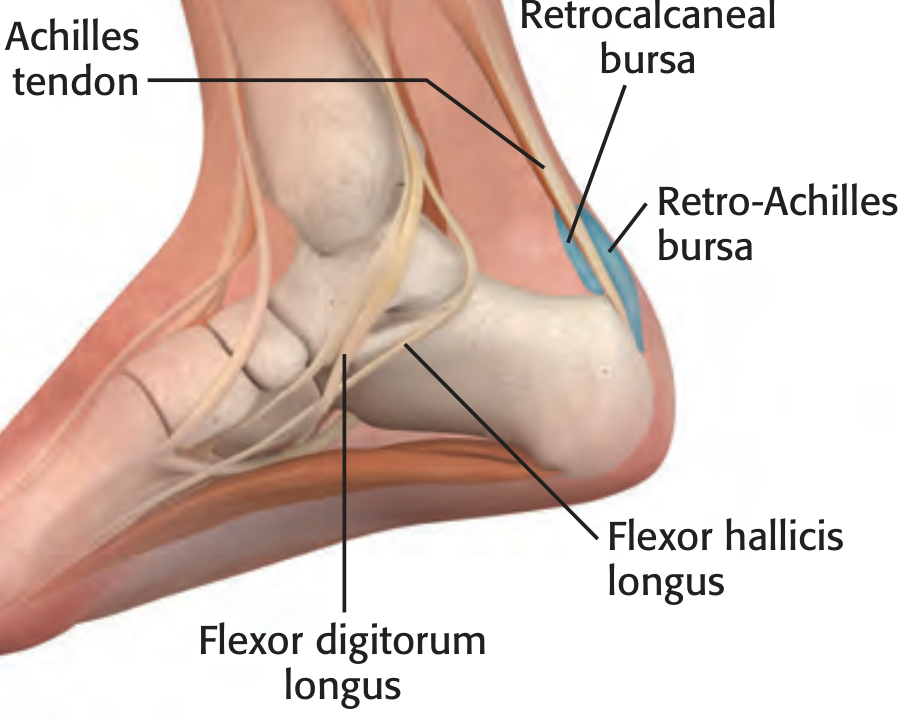
1. Pain Under the Heel (Plantar Heel Pain)
Plantar Fasciitis - Most Common Cause
- What it is: Microtears at the origin of the plantar fascia (the thick band of tissue connecting the heel bone to the toes), leading to inflammation and a traction osteophyte (heel spur).
- Who gets it: Both sedentary and active adults. BMI over 30 kg/m² is the biggest risk factor. Also associated with gastrocnemius-soleus tightness.
- Classic symptoms:
- Intense stabbing pain with the first step in the morning
- Pain after prolonged sitting, then standing up
- Tenderness at the plantar medial tuberosity of the calcaneus (inside bottom of heel)
- Diagnosis: Weight-bearing X-ray (rules out stress fracture, arthritis); MRI shows thickening of plantar fascia.
- Outcome: 90-95% of cases resolve within a year regardless of specific treatment.
Calcaneal Stress Fracture
- Pain that progressively worsens after a sudden increase in activity or a change to a harder walking surface (e.g., starting a new running program, military training).
- Tenderness with "heel squeeze" (squeezing both sides of the calcaneus).
- X-ray may be initially normal; MRI or bone scan confirms.
Heel Pad (Fat Pad) Atrophy
- The thick cushion of fat under the heel thins with age, steroid injections, or repeated trauma.
- Pain directly under the central heel, worse on hard surfaces.
Tarsal Tunnel Syndrome (Nerve Entrapment)
- Compression of the posterior tibial nerve as it passes behind the medial ankle into the foot.
- Causes burning, tingling, or numbness on the bottom of the heel and foot.
- Pain often worse at night or after prolonged standing.
- A small subset of plantar fasciitis cases actually involve entrapment of the first branch of the lateral plantar nerve (Baxter's nerve).
2. Pain at the Back of the Heel (Posterior Heel Pain)
Achilles Tendinitis
- Inflammation of the Achilles tendon where it inserts into the heel (insertional) or in its mid-substance (non-insertional).
- Pain and stiffness at the back of the heel, worse in the morning and with activity.
- Fluoroquinolone antibiotics (e.g., ciprofloxacin) are a known cause of Achilles tendinopathy - important drug history to ask.
- Do not inject steroids into the Achilles tendon - tendon rupture risk.
Retrocalcaneal Bursitis
- Inflammation of the bursa sitting between the Achilles tendon and the calcaneus bone.
- Often associated with Haglund deformity - a bony prominence on the back-upper part of the heel bone.
- Localized swelling and tenderness just above and behind the heel, proximal to the Achilles insertion.
- May be part of systemic disease (rheumatoid arthritis, gout, seronegative spondyloarthropathy).
Retro-Achilles Bursitis
- Inflammation of the bursa between the skin and the Achilles tendon.
- Often from shoe friction ("pump bump").
3. Systemic and Other Causes
| Cause | Key Features |
|---|---|
| Rheumatoid arthritis | Bilateral, symmetric; enthesitis at Achilles insertion |
| Seronegative spondyloarthropathy (e.g., ankylosing spondylitis, psoriatic arthritis, reactive arthritis) | Enthesitis (inflammation at tendon/ligament insertion into bone); often younger males |
| Gout | Acute severe pain, swelling, redness; elevated uric acid |
| Paget's disease | Bone pain in older adults; elevated alkaline phosphatase |
| Calcaneal tumor or cyst | Rare; persistent unexplained pain; bone destruction on X-ray |
| Plantar warts | Raised skin lesion from HPV; tender to palpation; visible on inspection |
Location-Based Summary
| Pain Location | Most Likely Cause |
|---|---|
| Bottom of heel (worse in morning) | Plantar fasciitis |
| Bottom of heel (after new exercise) | Calcaneal stress fracture |
| Bottom of heel (burning/tingling) | Tarsal tunnel syndrome / nerve entrapment |
| Back of heel (above insertion) | Retrocalcaneal bursitis, Haglund deformity |
| Back of heel (at tendon) | Achilles tendinitis |
| Back of heel (skin surface) | Retro-Achilles bursitis |
| Heel + other joints | Systemic arthritis (RA, gout, spondyloarthropathy) |
When to See a Doctor
Seek medical evaluation if:
- Pain lasts more than 2 weeks
- There is severe swelling or bruising
- Numbness, tingling, or fever accompanies the pain
- You cannot walk normally or stand on tiptoe
- Pain occurs even at rest
Sources: Miller's Review of Orthopaedics, 9th Ed. | Roberts and Hedges' Clinical Procedures in Emergency Medicine | AAFP heel pain review | Medical News Today (updated April 2025)
What is treatment
Treatment for heel pain depends on the cause, but most cases (especially plantar fasciitis) respond well to conservative measures: rest, stretching, ice, NSAIDs, and supportive footwear. Surgery is rarely needed.
Searching sources...
Reading File
Searching the Web
heel pain treatment guidelines 2024 2025 plantar fasciitis Achilles
Reading File
Finding Sources
Reading File
Here is a complete treatment guide for heel pain, organized by condition and treatment level.
Treatment of Heel Pain
Step 1 - First-Line Conservative Treatment (Works for Most Cases)
These apply broadly to plantar fasciitis and most heel conditions, and should be tried for at least 6-8 weeks before moving to advanced options.
| Treatment | How It Helps |
|---|---|
| Rest & activity modification | Reduces repetitive stress on the heel |
| Ice | Apply 15-20 min, 2-3x/day to reduce inflammation |
| NSAIDs (ibuprofen, naproxen) | Reduce pain and swelling |
| Stretching (most important step) | Plantar fascia-specific stretches + Achilles/calf stretching are the key to recovery |
| Cushioned heel inserts / orthotics | Prefabricated insoles reduce load; used with other treatments, not alone |
| Supportive footwear | Avoid flat shoes, flip-flops, or walking barefoot on hard floors |
| Weight management | BMI >30 is the biggest risk factor for plantar fasciitis |
Key Stretches to Do Every Day
- Plantar fascia stretch: While seated, pull your toes back toward your shin and hold for 30 seconds. Do this before your first step in the morning.
- Calf/Achilles stretch: Stand facing a wall, back leg straight, front knee bent, hold for 30 seconds each side.
- Towel stretch: Sit on the floor, loop a towel around the ball of your foot, gently pull toward you.
Step 2 - If Pain Persists Beyond 6 Weeks
Night Splints
- Worn during sleep to keep the foot dorsiflexed, preventing the plantar fascia from tightening overnight.
- Particularly helpful if your first morning step is very painful.
- Recommended for 1-3 months per current guidelines (AOPT/AASPT 2023).
Physical Therapy
- Manual therapy, deep friction massage, tendon mobilization.
- Eccentric strengthening exercises.
- Low-Dye taping for arch support.
- Evidence shows PT outcomes equal to or better than steroid injections at 3-6 months.
Corticosteroid Injection
- Provides short-term pain relief (~1 month) for plantar fasciitis.
- Best performed with ultrasound guidance.
- Risks: Fat pad atrophy, plantar fascia atrophy/rupture. The number of injections that can lead to rupture has been found to average 2.67 - so limit to 1-2 injections maximum.
- Not recommended for Achilles tendinopathy - risk of tendon rupture is too high.
Step 3 - Advanced / Specialist Treatments
Extracorporeal Shock Wave Therapy (ESWT)
- Non-invasive; uses sound waves to stimulate healing.
- Recommended for chronic plantar fasciitis (symptoms >6 months) and non-insertional Achilles tendinopathy that has not responded to conservative care.
- Evidence rating: B (AAFP guidelines).
Platelet-Rich Plasma (PRP) Injection
- Shows success in limited studies for plantar fasciitis.
- Not effective for Achilles tendinopathy - AAFP guidelines rate this as ineffective for Achilles.
Walking Boot / CAM Walker
- Used for calcaneal stress fractures and severe cases to allow protected weight bearing.
Treatment by Specific Condition
| Condition | Treatment |
|---|---|
| Plantar fasciitis | Stretching, orthotics, NSAIDs, night splints, PT; injection if needed; ESWT if chronic |
| Calcaneal stress fracture | Rest, protected weight bearing (cast or CAM walker), no impact activity |
| Achilles tendinitis | Rest, NSAIDs, eccentric exercises, heel lifts, PT; NO steroid injections |
| Retrocalcaneal bursitis / Haglund deformity | NSAIDs, heel-lift orthotics, ice, external padding, shoe modification; avoid steroid injection (rupture risk) |
| Insertional Achilles tendinopathy | Activity/footwear modification, heel lifts, stretching, heavy-load PT |
| Sever's disease (children) | Activity modification, gastrocnemius stretching, cushioned heel orthotics (not custom) |
| Tarsal tunnel syndrome | NSAIDs, orthotics, PT, corticosteroid injection; surgery if refractory |
| Gout | Colchicine, NSAIDs, allopurinol long-term; reduce purine diet |
Step 4 - Surgery (Rarely Needed)
Surgery is indicated in fewer than 5% of plantar fasciitis cases, only after 6-12 months of failed conservative treatment.
- Plantar fascia release (medial half only - full release risks arch collapse and metatarsal stress fractures)
- Gastrocnemius recession - for patients with a clear gastrocnemius contracture
- Haglund deformity excision + retrocalcaneal bursa debridement
- Baxter nerve (lateral plantar nerve) release - for nerve entrapment not responding to treatment
Important Warnings
- Never inject steroids into the Achilles tendon - tendon rupture can occur.
- Fluoroquinolone antibiotics (ciprofloxacin, levofloxacin) can cause Achilles tendinopathy - mention this to your doctor if you are on these.
- If pain is severe, involves swelling, or occurs at rest/night, seek medical review promptly to rule out fracture or inflammatory arthritis.
Sources: Miller's Review of Orthopaedics, 9th Ed. | Roberts and Hedges' Clinical Procedures in Emergency Medicine | AAFP Heel Pain Guidelines | NICE Clinical Summary: Plantar Fasciitis 2024
This is a shared conversation. Sign in to Orris to start your own chat.