I now have a thorough set of content from multiple authoritative sources. Let me compile the comprehensive answer.
The Gut-Brain Axis
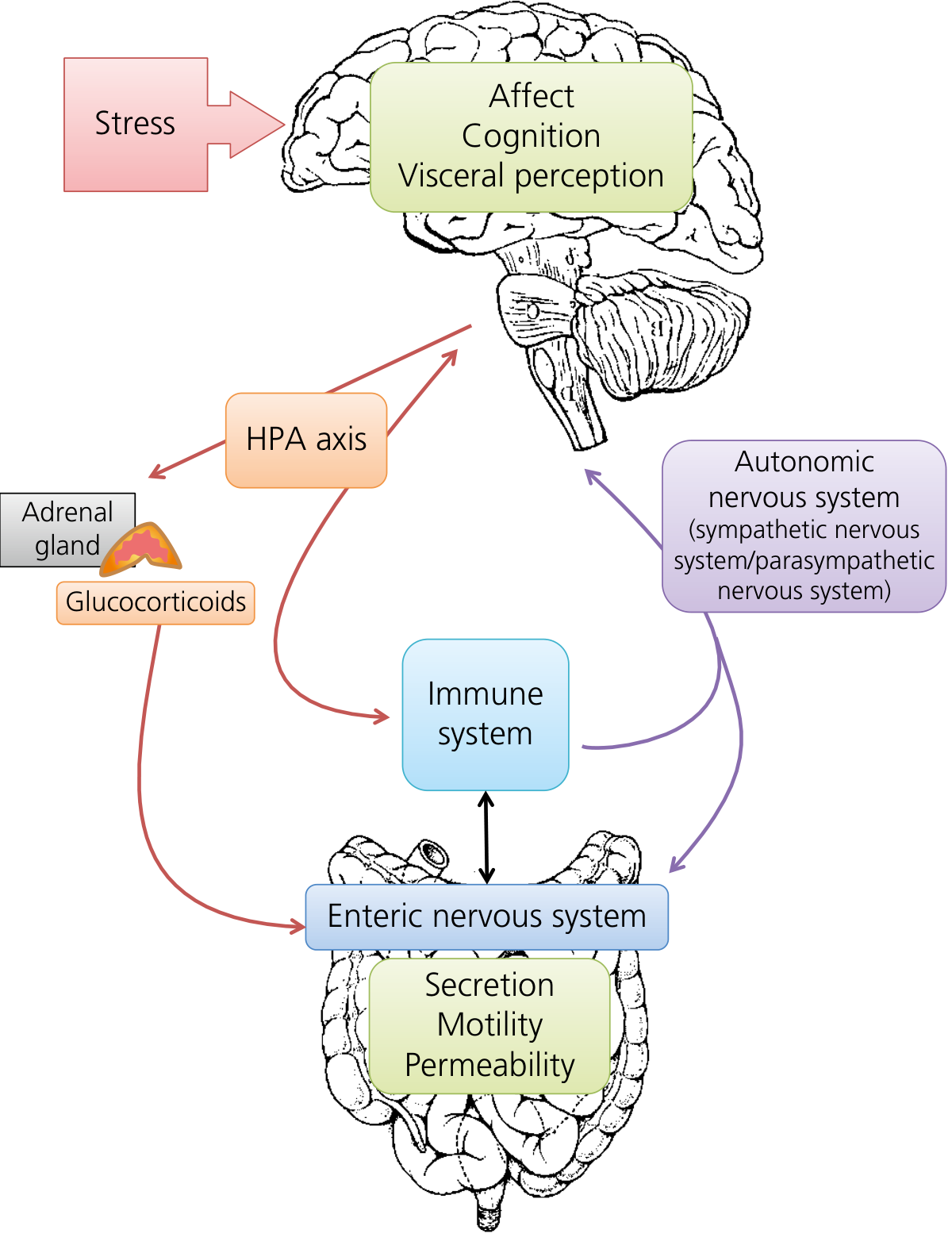
The gut-brain axis (GBA) is the bidirectional communication network linking the central nervous system (CNS), the enteric nervous system (ENS), the autonomic nervous system (ANS), the hypothalamic-pituitary-adrenal (HPA) axis, the immune system, and the intestinal microbiota. It integrates psychological, neuroendocrine, immune, and microbial signals to regulate GI function - and conversely, gut-derived signals shape brain function, mood, behavior, and disease. - Sleisenger & Fordtran's GI and Liver Disease
1. Structural Anatomy of the Axis
The Enteric Nervous System - "The Second Brain"
The ENS is the anatomical foundation of the gut-brain axis. It contains ~500 million neurons organized into two main plexuses:
- Myenteric (Auerbach's) plexus - between the longitudinal and circular muscle layers; primarily controls motility
- Submucosal (Meissner's) plexus - in the submucosa; controls secretion and local blood flow
The ENS possesses marked independence: it can regulate peristalsis, secretion, and blood flow even after complete dissection from the brain and spinal cord. Yet it receives modulatory input from the CNS via the vagus nerve (parasympathetic) and sympathetic fibers from prevertebral ganglia. - Yamada's Textbook of Gastroenterology 7e
The Vagus Nerve - The Highway
The vagus nerve is the principal communication route between gut and brain:
-
Afferent (gut → brain): ~80% of vagal fibers are sensory, carrying information from chemoreceptors, osmoreceptors, and mechanoreceptors in the gut mucosa to autonomic centers in the medulla. These form vagovagal reflexes - loops that integrate gut sensory input at the brainstem and send efferent motor output back to the ENS.
-
Efferent (brain → gut): Preganglionic parasympathetic fibers from the dorsal motor nucleus of the vagus synapse on ENS neurons. Parasympathetic stimulation (overall) increases secretion and motility.
-
The vagus nerve innervates the gut from the pharynx to the distal colon; the remaining distal colon and rectum receive parasympathetic innervation from pelvic nerves (S2-S4).
-
Medical Physiology (Boron & Boulpaep), p. 1279-1280
Sympathetic Innervation
Preganglionic sympathetic fibers synapse in prevertebral ganglia (celiac, superior/inferior mesenteric), releasing ACh. Postganglionic fibers synapse either in the ENS or directly on effector cells (gut smooth muscle, secretory cells, blood vessels). Sympathetic activation generally inhibits GI motility and secretion and reduces blood flow to the gut (e.g., fight-or-flight response). - Medical Physiology (Boron & Boulpaep)
Hierarchical Reflex Loops
The ANS operates in hierarchical levels:
- ENS (lowest level) - independent reflexes
- Autonomic ganglia - control ENS and other organs
- Spinal cord - integrates across levels
- Brainstem - coordinates all visceral control
- Forebrain (hypothalamus, limbic system, cortex) - top-down modulation of all lower centers
2. Communication Pathways
A. Neural Pathways
| Direction | Route | Key Signals |
|---|
| Bottom-up (gut → brain) | Vagal afferents, spinal afferents | Mechanosensory, chemosensory, nociceptive, hormonal |
| Top-down (brain → gut) | Vagal efferents, sympathetic efferents | ACh, norepinephrine, neuropeptides |
B. Neuroendocrine / HPA Axis Pathway
The HPA axis is the primary neuroendocrine limb of the stress response:
- Stress → hypothalamus releases corticotropin-releasing factor (CRF)
- CRF → anterior pituitary releases ACTH
- ACTH → adrenal cortex releases cortisol
- Cortisol feeds back to hypothalamus/pituitary (negative feedback) AND acts directly on gut:
- Increases colonic motility
- Increases visceral sensitivity
- Promotes mast cell degranulation
- Increases intestinal permeability
- Modulates the local gut immune response
CRF also acts as a neurotransmitter, directly activating the ANS and modulating ENS function independently of cortisol. - Yamada's Textbook of Gastroenterology 7e, p. 1459
C. Immune Pathway
The intestinal immune system communicates bidirectionally with the nervous system:
- Activated mast cells and mucosal immune cells release cytokines (IL-1β, IL-6, TNF-α) that activate afferent sensory neurons
- The vagus nerve has anti-inflammatory properties: vagal efferent activity suppresses peripheral cytokine release via the cholinergic anti-inflammatory pathway (ACh acting on α7-nicotinic receptors on macrophages)
- Post-infectious IBS is associated with persistently increased gut lymphocytes, enterochromaffin cells, and IL-1β expression, linking prior immune activation to chronic gut-brain dysregulation - Yamada's 7e, p. 1461
D. Enteroendocrine / Humoral Signaling
Enteroendocrine cells (EECs), which constitute the largest endocrine organ in the body, release hormones that act on the ENS, vagal afferents, and the brain:
| Hormone | Cell type | Key action |
|---|
| Serotonin (5-HT) | Enterochromaffin (EC) cells | ~90% of body's 5-HT; stimulates vagal afferents → brain; regulates motility via 5-HT3/5-HT4 receptors on ENS |
| Cholecystokinin (CCK) | I cells (duodenum/jejunum) | Vagal afferent activation → satiety signaling in brain |
| Ghrelin | Gastric X/A cells | Hunger signal; crosses blood-brain barrier |
| GLP-1, PYY | L cells (ileum/colon) | Satiety, insulin secretion, gut motility |
Serotonin deserves special emphasis: EC cells sense luminal contents (pressure, pH, nutrients) and release 5-HT, which activates 5-HT3 receptors on vagal afferent nerve terminals. These carry signals to the brainstem (nodose ganglia → NTS). Within the gut, 5-HT coordinates peristalsis via both ascending excitatory and descending inhibitory interneurons of the ENS. - Sleisenger & Fordtran's, p. 67
3. The Microbiota-Gut-Brain Axis
The gut microbiome (trillions of microorganisms) adds a critical third dimension to the gut-brain axis, creating the microbiota-gut-brain (MGB) axis. Communication is bidirectional:
Top-down (Brain → Microbiota)
- Stress, psychological states, and experiences alter intestinal microbiota composition in animal models
- Mechanism: ANS-mediated changes in gut motility, secretion, mucus, and permeability change the gut environment, which selects for different microbial populations
- Norepinephrine released under stress can directly stimulate bacterial growth
Bottom-up (Microbiota → Brain)
Gut microbes influence the brain through at least four routes:
-
ENS activation - Microbes alter ENS function; ENS signals are relayed to CNS via the vagus nerve. Ingestion of Lactobacillus rhamnosus changed GABA receptor expression in limbic brain regions and reduced anxiety/depression - an effect blocked by vagotomy, proving vagal dependence. - Harrison's Principles of Internal Medicine 22e, p. 3442
-
HPA axis programming - Microbial metabolites (especially SCFAs) target areas not protected by the blood-brain barrier (BBB), including the hypothalamus. Neonatal microbiota program HPA axis stress reactivity across the lifespan - germ-free animals show exaggerated HPA responses that are normalized by microbial colonization. - Sleisenger & Fordtran's
-
Bloodborne microbial metabolites crossing the BBB
- Short-chain fatty acids (SCFAs) - butyrate, propionate, acetate; produced by bacterial fermentation of dietary fiber; regulate BDNF production, microglial development, and epigenetic changes in brain cells
- Tryptophan metabolites - serotonin precursors and kynurenine pathway products; influence serotonergic signaling
- Secondary bile acids - affect neuroinflammation via TGR5 and FXR receptors
- Bacterial neurotransmitters - gut bacteria produce GABA, serotonin, dopamine precursors, and neuroactive peptides
-
Immune modulation - Microbiota are required for normal development and function of brain microglia (CNS-resident immune cells); dysbiosis → immune dysregulation → neuroinflammation
- Harrison's Principles 22e; Sleisenger & Fordtran's GI and Liver Disease
4. Stress and the Gut-Brain Axis
The gut-brain axis is the neuroanatomic substrate of the biopsychosocial model of GI disease. Stress has well-documented effects on GI function:
- Cannon (1915): Observed cessation of bowel activity in cats exposed to a growling dog
- Pavlov: Demonstrated that psychic stimuli alter gastric acid secretion via the vagus
- Beaumont & Wolf: Observed direct mucosal changes (hyperemia, altered motility/secretion) in response to emotions (anger, anxiety)
Stress effects on the gut:
-
Increased colonic motility (CRF-mediated)
-
Increased visceral sensitivity (central and peripheral sensitization)
-
Increased intestinal permeability ("leaky gut") - allowing translocation of bacterial products and antigens
-
Mast cell degranulation → histamine and cytokine release → sensitization of afferent neurons
-
Altered microbiota composition
-
Sleisenger & Fordtran's, pp. 350-351; Yamada's 7e, pp. 1459-1461
5. Clinical Relevance - Disorders of Gut-Brain Interaction (DGBIs)
The gut-brain axis is central to the pathophysiology of functional GI disorders, now renamed DGBIs (Rome IV classification):
Irritable Bowel Syndrome (IBS)
IBS is the prototype DGBI. Key gut-brain mechanisms:
- Visceral hypersensitivity - lowered pain thresholds in the gut, partly from central sensitization (altered pain processing in brain) and peripheral sensitization (sensitized mucosal afferents)
- Altered motility - exaggerated motility response to stress
- HPA dysregulation - chronic stress is the strongest predictor of IBS symptom intensity over time
- Post-infectious IBS - acute gut infection → persistent immune activation → altered ENS → IBS; predicted by psychological stress and anxiety at time of infection
- Dysbiosis - altered microbiome composition contributes to both gut and central symptoms
Treatment: Central neuromodulators - TCAs (e.g., amitriptyline 10-25 mg at bedtime) and SSRIs act on the gut-brain axis to reduce visceral hypersensitivity, not just mood; 5-HT3 antagonists (e.g., alosetron) reduce diarrhea; 5-HT4 agonists (e.g., prucalopride) treat constipation. - Goldman-Cecil Medicine, p. 1419
Neurodegenerative Diseases
A striking recent insight is the gut-to-brain propagation of pathological proteins:
In Parkinson's disease (PD), the Braak staging hypothesis proposes that α-synuclein aggregates originate in the ENS (and olfactory bulb), then propagate retrogradely via the vagus nerve to the brainstem, substantia nigra, limbic system, and cortex. This matches the clinical sequence: constipation and anosmia (nonmotor symptoms, years before diagnosis) → anxiety/depression → parkinsonism → dementia. - Harrison's Principles 22e, p. 3536
Other neurological diseases with gut-brain connections:
-
Autism Spectrum Disorder (ASD) - children with ASD have documented dysbiosis; severity of dysbiosis correlates with autism severity; murine models show microbiome manipulation can ameliorate ASD behaviors (IL-17 implicated)
-
Multiple sclerosis - A. muciniphila peptides may drive cross-reactive immune responses via molecular mimicry (HLA-related)
-
Alzheimer's disease - gut dysbiosis → neuroinflammation → amyloid processing (active research area)
-
Guillain-Barré syndrome - Campylobacter jejuni molecular mimicry of GM1 ganglioside
-
Hepatic encephalopathy - gut bacterial metabolites (ammonia, etc.) directly worsen brain function; treated with rifaximin/lactulose
-
Harrison's Principles of Internal Medicine 22e
Psychiatric Disorders
- Depression and anxiety - gut dysbiosis and altered 5-HT production are implicated; gut microbiota influence BDNF levels, GABA receptor expression, and HPA reactivity
- Anorexia nervosa / eating disorders - gut hormones (ghrelin, CCK, GLP-1) modulate satiety circuits
- Germ-free mice display reduced anxiety, less stress reactivity, more exploratory behavior, and impaired memory - all reversible with microbial colonization
6. Microbiome as a Therapeutic Target
| Target | Approach |
|---|
| Dysbiosis | Probiotics, prebiotics, fecal microbiota transplant (FMT) |
| Visceral hypersensitivity | Central neuromodulators (TCAs, SSRIs, SNRIs) |
| Airway smooth muscle (asthma) | β₂ agonists (albuterol) |
| Gut motility | 5-HT3 antagonists, 5-HT4 agonists |
| Hepatic encephalopathy | Rifaximin, lactulose (reduce gut-derived toxins) |
| Depression/anxiety | Psychobiotics (probiotic strains targeting mood) |
| Obesity | Microbiome manipulation (FMT from lean donors improves insulin sensitivity) |
Summary
BRAIN (affect, cognition, visceral perception)
        ↕  (vagal afferents/efferents)
HPA AXIS (CRF → ACTH → cortisol)
        ↕
AUTONOMIC NERVOUS SYSTEM (sympathetic + parasympathetic)
        ↕
ENTERIC NERVOUS SYSTEM (myenteric + submucosal plexus)
        ↕  (immune system)
GUT EPITHELIUM & MICROBIOTA
(serotonin, SCFAs, bile acids, neurotransmitters, cytokines)
The axis is not simply a "gut-to-brain" or "brain-to-gut" pathway - it is a genuinely bidirectional, multi-channel system where disruption at any level (dysbiosis, mucosal inflammation, psychological trauma, altered ENS wiring) propagates throughout the entire network.
Recent literature: Reviews in 2023-2025 continue to expand this field - the
diet-microbiota-gut-brain axis (Schneider et al.,
Nature Metabolism 2024, PMID 39174768) and the
gut microbiota-immune-brain axis with therapeutic implications (O'Riordan et al.,
Cell Reports Medicine 2025, PMID 40054458) are particularly relevant for clinical translation.