
HAV igM antibodies are
Reading File
Finding Sources
Searching the Web
HAV IgM antibodies hepatitis A serology diagnosis
Reading File
Reading File
Reading File
Here is a complete, textbook-sourced summary of HAV IgM antibodies:
HAV IgM Antibodies (Anti-HAV IgM)
Definition
IgM class antibody directed against the Hepatitis A virus (HAV). It is composed mainly of antibodies against capsid proteins of the virus.
Key Diagnostic Role
- Primary marker of ACUTE HAV infection - detection of IgM anti-HAV is the definitive serological diagnosis of acute hepatitis A.
- Diagnosis is confirmed in the clinical setting of known exposure + appropriate symptoms + elevated serum aminotransferases (ALT/AST) + positive anti-HAV IgM + absence of other viral markers.
Timing
| Event | Timeframe |
|---|---|
| First detectable in serum | 5-10 days into the incubation period (before or at onset of symptoms) |
| Develops | At onset of symptoms |
| Remains positive | Up to 4-6 months after infection (some sources say up to 1 year) |
| Replaced by | IgG antibody, which rises to high titer and persists for life |
Interpretation
| Result | Meaning |
|---|---|
| IgM anti-HAV positive | Recent/acute HAV infection |
| IgG anti-HAV positive + IgM negative | Past infection OR past vaccination - patient is immune |
| Total anti-HAV positive (IgG + IgM) | Does NOT distinguish acute from past infection; not useful alone |
| IgM positive without clinical symptoms | Could indicate prolonged IgM persistence from prior infection, recent HAV vaccination, or a false-positive |
IgG vs. IgM - Summary
- IgM anti-HAV: marker of recent/acute infection. Positive for up to 4-6 months.
- IgG anti-HAV: marker of past infection or vaccination. Appears 1-2 weeks after IgM and persists for life, conferring immunity. There is no chronic carrier state for HAV.
Clinical Pearls
- Commercial assays for total anti-HAV measure both IgG and IgM together - a positive result does NOT help distinguish acute from resolved infection.
- HAV RNA can also be detected in serum and stool during the incubation phase, but this is primarily a research tool, not routine clinical use.
- HAV never causes chronic hepatitis - once IgG appears, the patient is immune for life.
Sources:
- Yamada's Textbook of Gastroenterology, 7th ed., p. 1895
- Jawetz Melnick & Adelberg's Medical Microbiology, 28th ed.
- Textbook of Family Medicine, 9th ed., p. 1134
- Rosen's Emergency Medicine, Diagnostic Testing table
Is it curable
Finding Sources
Finding Sources
Finding Sources
Reading File
Is Hepatitis A Curable?
Yes - Hepatitis A is a self-limited illness that resolves completely on its own in the vast majority of patients. There is no specific antiviral drug needed; treatment is entirely supportive.
Key Points
Self-limiting nature:
- Hepatitis A never progresses to chronic hepatitis - this is a defining feature that distinguishes it from Hepatitis B and C.
- There is no chronic carrier state.
- Both Hepatitis A and E are the only hepatotrophic viruses that are self-limited and do not cause chronic hepatitis.
Treatment is supportive only:
- Rest and adequate nutrition/hydration
- Avoid alcohol until liver function normalizes
- Avoid hepatotoxic drugs until recovery
- Corticosteroids are not recommended (no evidence of benefit)
- Complications like nausea/vomiting are managed symptomatically
Prognosis:
- The vast majority recover completely and permanently within a few weeks
- After recovery, IgG anti-HAV persists for life - conferring lifelong immunity; reinfection does not occur
- Fulminant liver failure is a rare but serious complication (more common in patients with underlying liver disease or the elderly)
Contagiousness:
- Patients remain contagious during the incubation period and for up to 1 week after jaundice appears - isolation/hygiene precautions are important
Prevention:
- A safe and effective HAV vaccine is available (highly effective, ~95% protective after full series)
- Post-exposure: Hepatitis A immune globulin can be given to high-risk, non-immune individuals (e.g., immunocompromised, chronic liver disease, infants <6 months)
Summary Table
| Feature | Hepatitis A |
|---|---|
| Chronic state? | Never |
| Specific antiviral needed? | No |
| Treatment | Supportive only |
| Recovery | Complete in most cases |
| Lifelong immunity after infection? | Yes (IgG anti-HAV) |
| Vaccine available? | Yes |
Sources: Rosen's Emergency Medicine; Harrison's Principles of Internal Medicine, 22nd ed.; Barash Clinical Anesthesia, 9th ed.
Pt la restrain karaycha notes takaychet tr kashe takayche
Finding Sources
Searching the Web
patient restraint nursing documentation notes what to write clinical
Finding Sources
Finding Sources
Patient Restraint साठी Nursing Notes मध्ये काय लिहायचं - त्याचं complete format खाली दिलंय:
Patient Restraint - Nursing Notes Format
1. Restraint का लावली - Justification (कारण)
"Patient is agitated / confused / pulling out IV line / NGT / Foley's catheter / endotracheal tube. Patient is at risk of self-harm / fall."
उदाहरण:
"Patient found to be restless and attempting to remove IV cannula and NGT. Verbal redirection attempted but patient non-compliant. To ensure patient safety, soft wrist restraints applied."
2. Note मध्ये हे Points लिहायचे:
| मुद्दा | काय लिहायचं |
|---|---|
| Date & Time | Restraint कधी लावली |
| Type of restraint | Soft wrist restraint / limb restraint |
| Reason / Indication | Patient pulling lines, agitated, confused, fall risk |
| Alternatives tried | Verbal counselling, family attendant सांगितलं, siderails वर केल्या |
| Doctor's order | Dr. [Name] च्या verbal/written order नुसार |
| Consent | Patient/relative ला सांगितलं - consent घेतला |
| Circulation check | Restraint site वर circulation intact - color, warmth, pulse check |
| Patient's response | Patient calm झाला / still agitated |
| Re-assessment | Every 2 hours reassess करणार |
3. Sample Note (English मध्ये - standard format)
Date/Time: ___ Patient noted to be restless, confused and pulling IV line repeatedly. Verbal redirection done but ineffective. Side rails raised. Attendant counselled. Dr. [Name] informed and order obtained for soft wrist restraints. Bilateral soft wrist restraints applied. Circulation assessed - bilateral radial pulse palpable, skin warm and pink. Patient's family explained the need for restraint and consent obtained. Patient to be reassessed every 2 hours. Restraint to be removed at the earliest when patient is calm and cooperative.Nurse Signature: ___
4. महत्त्वाचे मुद्दे लक्षात ठेवा
- Doctor's order आवश्यक आहे - restraint लावण्यापूर्वी किंवा लगेच नंतर order घ्यायचा
- Least restrictive पद्धत वापरायची - सर्वात कमी restrictive option आधी try करायचा
- Every 2 hours reassessment mandatory - circulation, skin integrity, position
- Restraint काढणे शक्य तितक्या लवकर - जेव्हा patient safe असेल
- Family/Attendant ला नेहमी explain करायचं आणि consent घ्यायचं
- Restraint = punishment नाही - हे documentation मध्ये स्पष्ट व्हायला हवं
थोडक्यात: Notes मध्ये कारण + alternatives tried + doctor order + consent + circulation check + reassessment plan - हे सर्व असायला हवं.
O2 apan nasal pronx sobtach detto na
Finding Sources
Reading File
Reading File
Loading Image
हो, बरोबर! Nasal prongs = Nasal cannula - हेच device आहे. वरच्या image मध्ये A दिसतंय ते simple nasal cannula/prongs आहे.
O2 Delivery Devices - Complete माहिती
Nasal Prongs (Nasal Cannula) - सर्वात जास्त वापरतो
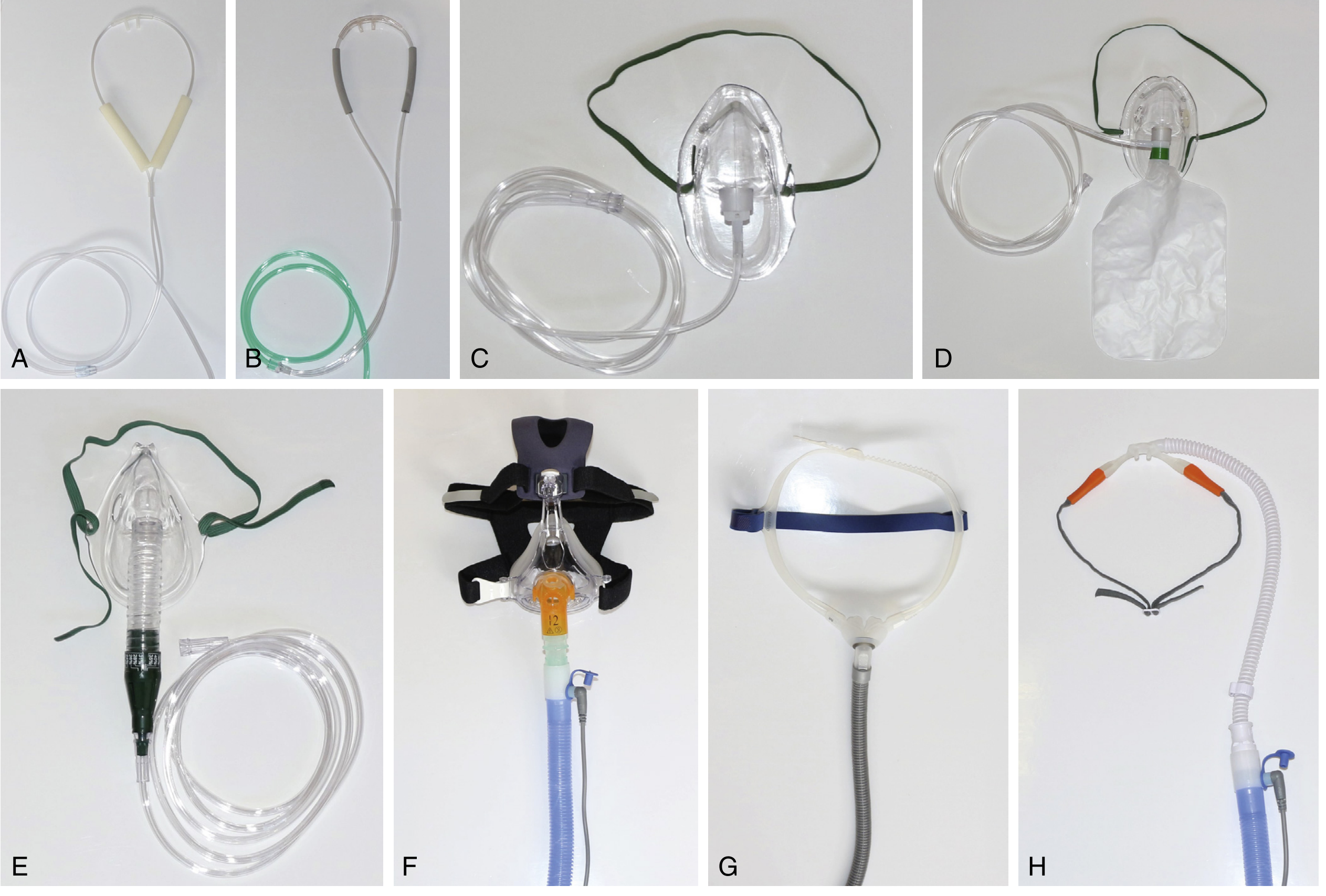
(A = Simple nasal cannula/prongs, B = Enhanced nasal cannula, C = Simple face mask, D = Non-rebreathing mask, E = Venturi mask, H = High-flow nasal cannula)
Flow Rate आणि FiO2 - Table
| Device | Flow (L/min) | FiO2 (%) |
|---|---|---|
| Nasal Prongs (साधे) | 2 | 28% |
| 4 | 35% | |
| 6 | 40-45% | |
| Enhanced nasal cannula | 10 | 50-60% |
| 15 | 60-70% | |
| Simple face mask | 5 | 35-40% |
| 10 | 50-60% | |
| Non-rebreathing mask | 15 | 95% |
Nasal Prongs बद्दल महत्त्वाचे
- Flow range: 1 to 6 L/min - comfortable आणि well tolerated
- प्रत्येक 1 L/min वाढवला की FiO2 3-4% वाढतो
- 6 L/min पेक्षा जास्त flow दिला तर mucosal dryness, epistaxis होऊ शकतो - त्यामुळे humidification द्यायला हवं
- Patient mouth ने श्वास घेत असला तरी - nasopharyngeal reservoir मुळे O2-enriched air मिळतो
- COPD patients मध्ये मात्र cautiously द्यायचं - hypoxic drive suppress होऊ शकतो
कधी कोणता device वापरायचा?
| SpO2 / Condition | Device |
|---|---|
| SpO2 92-95%, mild hypoxia | Nasal prongs 2-4 L/min |
| SpO2 88-92% | Simple face mask / 6 L/min prongs |
| Severe hypoxia | Non-rebreathing mask (NRM) 15 L/min |
| COPD, controlled O2 needed | Venturi mask |
| Acute respiratory failure | High Flow Nasal Cannula (HFNC) |
थोडक्यात: Nasal prongs हा सर्वात comfortable, low-cost आणि routine वापरला जाणारा device आहे - mild to moderate hypoxia साठी first choice!
Source: Murray & Nadel's Textbook of Respiratory Medicine; Fishman's Pulmonary Diseases
This is a shared conversation. Sign in to Orris to start your own chat.