
I have external ears (pinna) dry and it feels slightly rough to touch and its itching a little bit. What could be the possibilities
Reading File
Now I'll search the medical library for relevant content on dry, rough, itchy pinna/external ear conditions.
Finding Sources
Finding Sources
Finding Sources
Finding Sources
Good results. Let me now read the most relevant sections for detail.
Reading File
Reading File
I have solid information now. Let me fetch the ear eczema image and compile the answer.
Loading Image
Here is a comprehensive breakdown of the likely causes for dry, slightly rough, and itchy external ears (pinna):
Dry, Rough & Itchy Pinna — Possible Causes
Your symptoms — dry skin, rough texture, and mild itching on the outer ear — point to a group of dermatological conditions that commonly affect the external ear. Here are the most likely possibilities, from most to least common:
1. Eczema (Atopic or Seborrheic Dermatitis) — Most Likely
Eczema of the ear can involve the helix (outer rim), post-auricular fold, and external canal. Classic symptoms include:
- Itching
- Dry, scaly, fissured skin
- Crusting and flaking
- Roughness to touch
Seborrheic dermatitis is particularly common here and is often linked to dandruff. Scratching and rubbing worsen the condition and can invite secondary bacterial infection (commonly Staphylococcus, Streptococcus, or Pseudomonas).
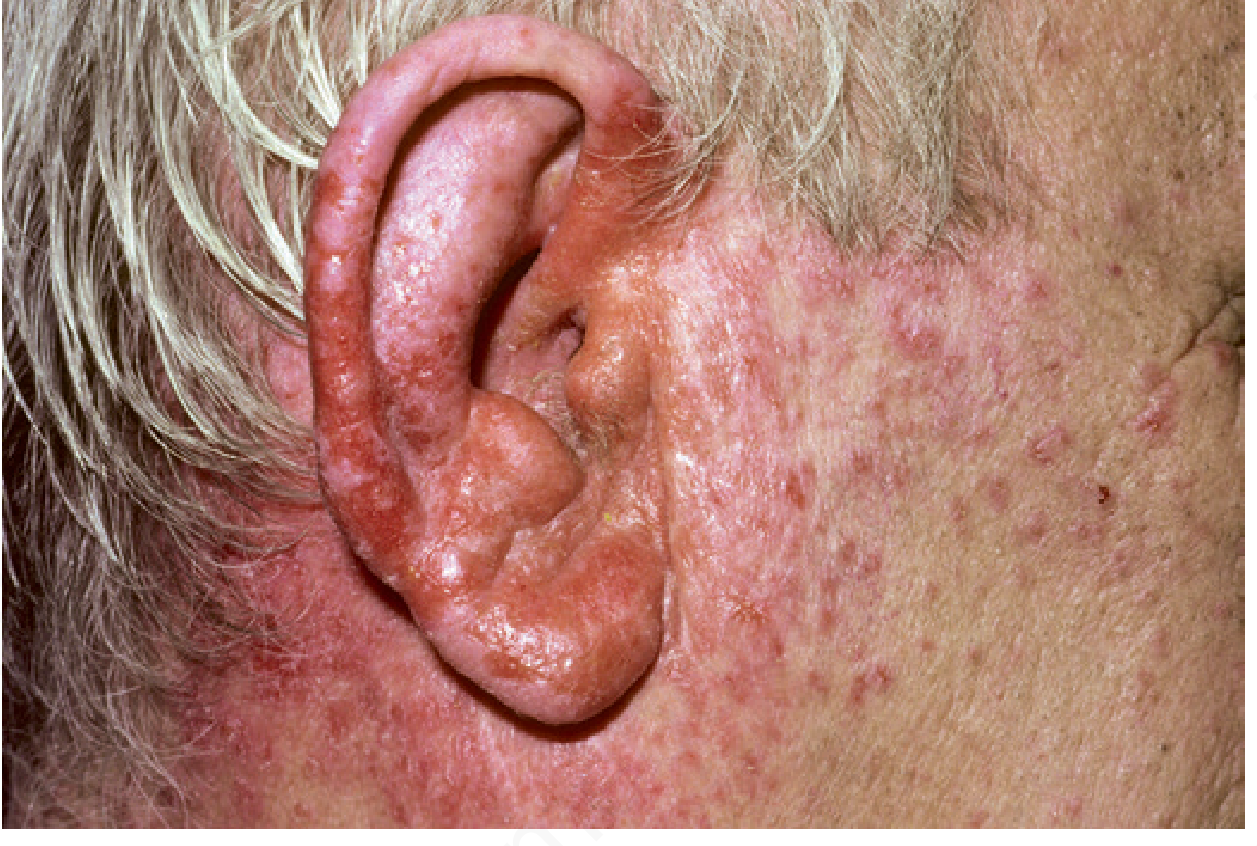
2. Allergic Contact Dermatitis
A very common cause, especially from:
- Earphones/earbuds (rubber/plastic material)
- Hearing aids
- Topical ear medications (especially neomycin, benzocaine, preservatives)
- Nickel in earrings (if ears are pierced)
- Shampoos, hair sprays, or cosmetics that contact the ear
Symptoms mirror eczema: dryness, roughness, itching, and possible weeping or crusting.
3. Psoriasis
- Affects the ear in about 18% of people with systemic psoriasis
- Typically involves the scalp and postauricular sulcus (behind the ear), and can spread to the pinna
- Causes thickened, dry, silvery-scaly plaques with itching
- Look for similar plaques elsewhere (scalp, elbows, knees)
4. Simple Dry Skin (Xerosis) / Environmental Causes
- Cold, dry weather or low humidity can cause the pinna to become dry and rough
- Excessive washing/cleansing of the ear area strips natural oils
- Usually mild and diffuse, without significant redness
5. Irritant Contact Dermatitis
- From soaps, shampoos, or other products repeatedly contacting the outer ear
- Milder than allergic contact dermatitis, no prior sensitization needed
- Produces dryness, roughness, and mild itch
6. Fungal Infection (Otomycosis — less likely on pinna alone)
- More common inside the ear canal
- Can occasionally involve the pinna skin
- May present with itching, flaking, and a slightly rough appearance
Key Distinguishing Clues
| Feature | Suggests |
|---|---|
| Itching + dry flaking + dandruff | Seborrheic dermatitis |
| Itching after new earphones/products | Contact dermatitis |
| Silvery scaling + scalp involvement | Psoriasis |
| Both ears dry, cold weather | Simple xerosis |
| Weeping, crusting, very itchy | Eczema / infected eczema |
What You Can Do
- Avoid scratching — this worsens inflammation and risks infection
- Moisturize with a gentle, fragrance-free emollient on the outer ear
- Identify and remove triggers — new earphones, earrings, hair products, or ear drops
- A mild 1% hydrocortisone cream (OTC) applied sparingly can relieve itching in uncomplicated cases
- If symptoms persist, worsen, or spread into the ear canal, see a dermatologist or ENT — they may recommend patch testing (to identify allergens), topical steroids, or antifungals depending on the diagnosis
— K.J. Lee's Essential Otolaryngology, p. 472; Andrews' Diseases of the Skin, Ear Eczema section; Rosen's Emergency Medicine, Differential Diagnosis of Otitis Externa
Disclaimer: This information is educational and not a substitute for a clinical examination. If your symptoms are persistent, worsening, or associated with pain, discharge, or hearing changes, please consult a healthcare professional.
I have been using minoxidil solution (alcohol based) in hair for quite some time, can that be a reason?
Finding Sources
Finding Sources
Finding Sources
Finding Sources
Reading File
Finding Sources
Yes, absolutely — your alcohol-based minoxidil solution is a very plausible reason.
Here's why:
How Minoxidil Solution Can Cause Dry, Rough, Itchy Ears
1. Direct Irritant Effect (Most Likely)
Topical minoxidil solutions use ethanol (alcohol) and propylene glycol as vehicle/carrier solvents. When you apply the solution to your scalp and hairline, it naturally runs or drips down toward the ears and postauricular area. Alcohol is a well-known skin irritant and desiccant — it strips the natural lipid barrier of the skin, leading to:
- Dryness
- Roughness
- Flaking
- Itching
This is essentially irritant contact dermatitis, and the outer ear / pinna skin is thin and sensitive, making it particularly susceptible.
"Irritant and contact dermatitis may occur" — Katzung's Basic & Clinical Pharmacology, 16th Ed., Minoxidil section
2. Allergic Contact Dermatitis (Also Possible)
Apart from pure irritation, you can develop a true allergic sensitization to one of the ingredients in the solution over time:
- Propylene glycol — a recognized contact allergen, especially with prolonged exposure
- Minoxidil itself — though less common
- Fragrance or preservatives in the formulation
Allergic contact dermatitis tends to develop after a period of repeated exposure (weeks to months), which fits your "quite some time" history. It causes itching, dryness, and roughness — identical to what you're describing.
3. Why the Pinna Specifically?
The outer ear catches runoff from the scalp and temples very easily. Many people using minoxidil notice skin changes on:
- The hairline
- The forehead
- Behind and around the ears
- The back of the neck
This is a well-recognized downstream effect of topical scalp solutions.
What You Can Do
| Step | Action |
|---|---|
| Reduce drip | Apply minoxidil with a dropper carefully, only to the scalp — avoid excess solution pooling near ears |
| Wash off runoff | Rinse the outer ear and periauricular skin with plain water after applying |
| Moisturize | Apply a gentle, fragrance-free emollient (e.g. petroleum jelly/Vaseline) to the pinna skin |
| Consider switching | Minoxidil foam formulations contain no propylene glycol and less alcohol — often better tolerated |
| If symptoms persist | See a dermatologist — patch testing can confirm if you have true allergic sensitization to propylene glycol or minoxidil |
Bottom line: Your alcohol-based minoxidil solution is a strong candidate for the cause. The combination of alcohol (drying/stripping) and propylene glycol (potential allergen) dripping onto the pinna skin over a long period is a classic setup for either irritant or allergic contact dermatitis of the outer ear.
This is a shared conversation. Sign in to Orris to start your own chat.