
Refraction surgery from opthalmology books
Reading File
Now let me search the library for refractive surgery content in ophthalmology books.
Finding Sources
Finding Sources
I have two ophthalmology books. Let me read the Kanski chapter on corneal and refractive surgery, and also get the Wills Eye Manual sections.
Finding Sources
Finding Sources
Reading File
Reading File
I have a great start from both books. Now let me read the Kanski refractive procedures section and get more of the Wills complications table.
Finding Sources
Reading File
Now let me read the Kanski refractive procedures section:
Reading File
Reading File
I have rich content from both books. Let me also fetch a few key images and get the Laser refractive procedures section from Kanski:
Reading File
Reading File
I now have comprehensive content from both books. Let me compile the full response.
Refractive Surgery
Based on Kanski's Clinical Ophthalmology (10th ed.) and The Wills Eye Manual
1. Introduction
Refractive surgery encompasses procedures aimed at changing the refraction of the eye by altering the cornea or lens - the principal refracting components. Myopia, hypermetropia, and astigmatism can all be addressed, though consistent correction of presbyopia remains elusive.
The basic principle of corneal refractive surgery is to induce a change in corneal curvature to correct a pre-existing refractive error. The patient population consists of people with stable refractive error who desire improved uncorrected vision.
2. Preoperative Assessment & Patient Selection
A thorough preoperative assessment is mandatory. Not all candidates are suitable.
Contraindications:
- Unacceptably high expectations
- Dry eye syndrome
- Non-stable refractive error
- Systemic disease: SLE, rheumatoid arthritis, immunocompromise
- Ocular disease: chronic blepharitis, previous herpes simplex, glaucoma, macular degeneration
Special counselling is required for those needing high-quality vision due to occupation or hobbies (pilots, air traffic controllers, truck drivers, contact sport athletes, marksmen). Common adverse effects to discuss include under/over-correction, dry eye, and eventual presbyopia.
Preoperative workup for LASIK specifically:
- Complete ocular examination
- Tear film osmolarity (to exclude dry eye)
- Corneal pachymetry (for residual stromal bed thickness; exclude mild keratoconus)
- Corneal topography (to exclude irregular astigmatism, keratoconus, forme fruste keratoconus)
- Corneal OCT (epithelial map)
- Corneal and whole-eye wavefront aberrometry
- Contact lens wearers: discontinue soft lenses for 2 weeks, hard/RGP lenses for at least 3 weeks before definitive keratometry
3. Categories of Refractive Procedures
3A. Laser Corneal Procedures
LASIK (Laser In Situ Keratomileusis)
The most common refractive procedure. An excimer laser ablates corneal stroma exposed by a superficial flap (created by a microkeratome or femtosecond laser). The flap remains attached by a hinge.
- Myopia correction: Central ablative flattening
- Hypermetropia correction: Mid-peripheral ablation (steepens centre)
Range: Hypermetropia up to 3-4 D, astigmatism up to 5 D, myopia up to 6-8 D (limited by corneal thickness). A residual stromal bed of at least 250 μm must remain to prevent ectasia.
Advantages over surface ablation:
- Greater postoperative comfort
- Faster visual rehabilitation
- More rapid refraction stabilization
- Milder stromal haze
Major disadvantage: Potential for flap-related complications.
PRK (Photorefractive Keratectomy) - Surface Ablation
Excimer laser ablates corneal stroma after epithelial removal (no flap). Epithelium removed by blade, spatula, brush, excimer laser, or dilute alcohol.
- Corrects myopia up to 6 D, astigmatism up to ~3 D, low-moderate hypermetropia
- Preferred in patients at higher risk of eye trauma (no flap to dislocate)
- Suitable for thin corneas
- Depth of stromal exposure: Bowman membrane
Disadvantages vs LASIK: Lower degrees correctable; slower healing; unpredictable postoperative discomfort; more subepithelial haze.
LASEK (Laser Subepithelial Keratomileusis)
Epithelium is chemically separated from Bowman layer using 20% absolute alcohol confined by a marker well, pushed to the side, stromal ablation performed, epithelium then replaced. Same refractive range as PRK (~8.0 D to +3.0 D, cylinder up to 3.0 D).
Epi-LASIK (Epithelial LASIK)
Epithelium is mechanically separated from Bowman layer using a blunt epi-keratome, moved aside for ablation, then replaced (epi-on) or discarded (epi-off). Same refractive range as PRK.
SMILE (Small Incision Lenticule Extraction)
A flapless technique. A femtosecond laser creates a thin disc of intrastromal tissue (lenticule), which is then mechanically extracted through a small stromal incision.
- No flap whatsoever
- Corrects myopia and myopic astigmatism
- Range: spherical ~10.0 D to ~1.0 D, cylinder up to 3.0 D
- Transient light sensitivity syndrome incidence ~1% (vs 5-9% for LASIK)
Comparison Table (from Wills Eye Manual)
| Feature | PRK | LASEK | Epi-LASIK | LASIK | SMILE |
|---|---|---|---|---|---|
| Stromal exposure | No flap; epithelium removed | Epithelial flap (alcohol) | Epithelial flap (epi-keratome) | Epithelial + stromal flap | No flap; lenticule extracted |
| Depth | Bowman membrane | Bowman membrane | Bowman membrane | Anterior stroma | Anterior stroma |
| Myopia range | up to ~8.0 D | up to ~8.0 D | up to ~8.0 D | up to ~10.0 D | up to ~10.0 D |
| Key advantage | Good for thin corneas; no flap | Similar to PRK | Similar to PRK | Wider range; faster recovery | Flapless; less dry eye |
3B. Intraocular Refractive Procedures (for high refractive errors)
Phakic Intraocular Lenses (IOLs)
Used when refractive error exceeds limits for laser surgery. Two types:
-
Iris clip ("lobster claw") implant - attached to iris (Artisan/Verisyse)
- Complications: subluxation, dislocation, oval pupil, progressive endothelial cell loss, cataract, raised IOP, angle-closure glaucoma
-
Posterior chamber phakic IOL (e.g., ICL - implantable collamer lens) - placed between iris and crystalline lens
- Complications: pupil block glaucoma, cataract formation, incorrect power
Retinal detachment and endophthalmitis occur at ~3% per patient year.
Clear Lens Exchange (Refractive Lens Exchange)
Removal of the crystalline lens and insertion of an IOL. Gives excellent visual results but carries risk of cataract surgery complications, particularly retinal detachment in high myopia.
3C. Presbyopia Correction
Intracorneal Inlays
Two main types:
- Refractive inlay - alters corneal curvature
- Small aperture inlay - uses the pinhole effect for extended depth of focus
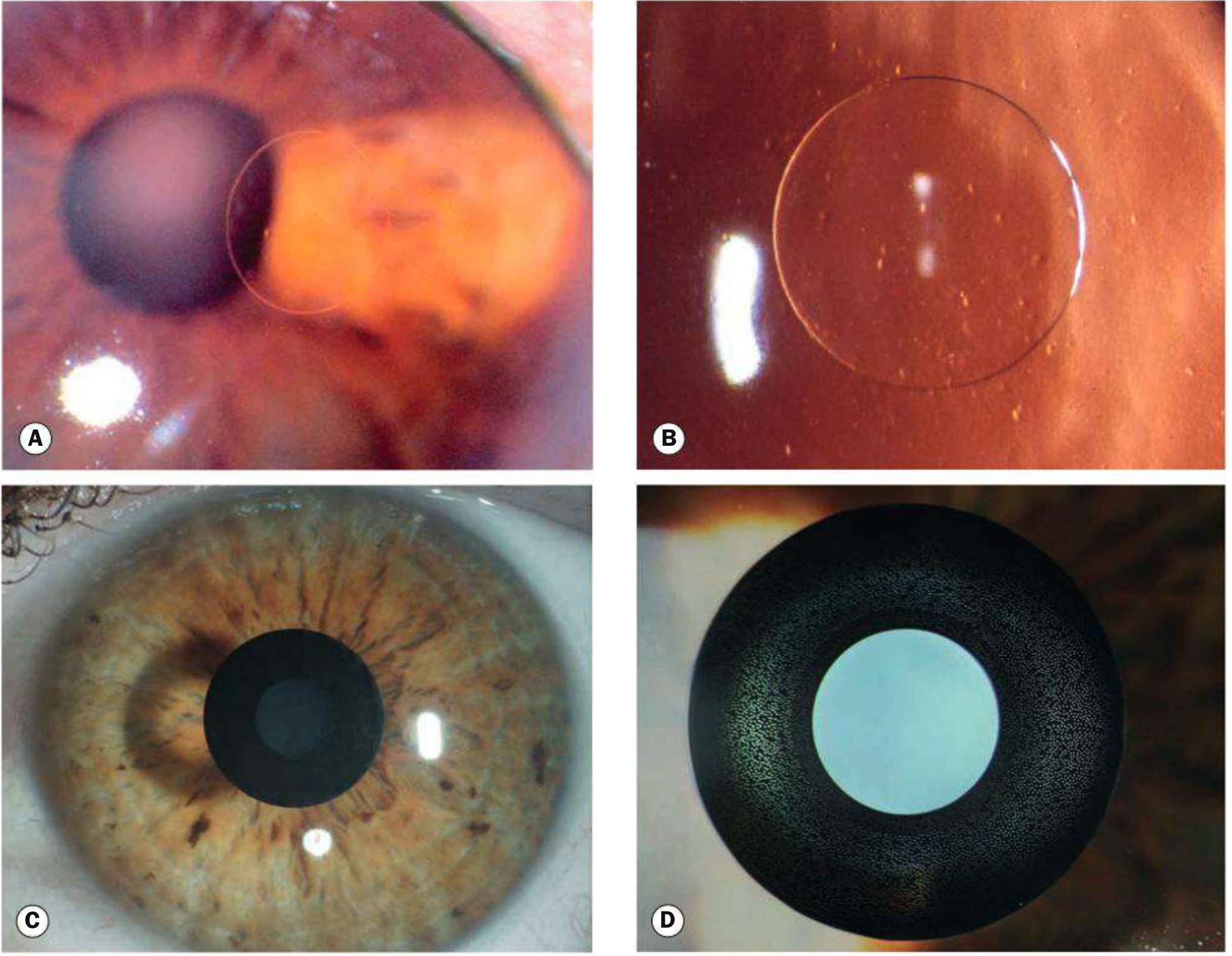
4. Correction by Refractive Error
| Refractive Error | Suitable Procedures |
|---|---|
| Low-moderate myopia | PRK, LASEK, Epi-LASIK, LASIK, SMILE |
| Moderate-high myopia | LASIK, SMILE |
| Very high myopia | Phakic IOL, Clear lens exchange |
| Hypermetropia (up to 3-4 D) | LASIK (PRK for lower degrees) |
| Astigmatism (up to 5 D) | LASIK, surface ablation (up to 3 D) |
| Presbyopia | Intracorneal inlays, multifocal IOLs, monovision |
5. Complications
Complications of Surface Ablation (PRK / LASEK / Epi-LASIK)
Early (days to weeks):
- Epithelial defect (usual - takes days to heal; bandage contact lens used)
- Pain (from induced epithelial defect)
- Dislocated or poorly fitting bandage lens
- Non-healing epithelial defect
- Bacterial keratitis / corneal ulcer
- HSV reactivation
Late (weeks to months):
- Corneal haze (scarring in anterior stroma) - causing decreased vision, glare, monocular diplopia
- Treatment: increase steroid frequency; severe cases - excimer PTK with mitomycin C
- Undercorrection or overcorrection
- Irregular astigmatism (central island, decentered ablation)
- Regression of refractive error
- Steroid-induced glaucoma / ocular hypertension
Complications of LASIK
Early (days to 1 week):
- Dry eye / neurotrophic keratopathy - by far the most common early complication; reduced corneal sensation for at least 3 months (returns to normal in 6-12 months)
- Folding, dislocation, or loss of corneal flap
- Large epithelial defect
- Diffuse lamellar keratitis (DLK) - "sands of the Sahara" - multiple fine inflammatory infiltrates at the flap interface within 5 days; treat with intensive topical antibiotic + steroids
- Infection in flap interface (bacterial keratitis)
- Central toxic keratopathy (CTK) - central stromal opacification/consolidation of unknown etiology; tends to improve over 6-12 months
Late:
- Epithelial ingrowth under flap (1-2%) - treat by lifting flap and scraping cells; ethanol or mitomycin C application possible
- Corneal haze (less common than after surface ablation)
- Irregular astigmatism (decentered ablation, flap irregularity, ectasia)
- Regression/progression of refractive error
- Chronic dry eye syndrome
- Pressure-induced stromal keratitis (PISK) - high IOP (often steroid-induced) causes fluid in the interface; IOP falsely low on central measurement, so measure peripheral to flap edge with Tono-Pen
- Corneal ectasia (0.2-0.6%) - most devastating complication
- Risk factors: abnormal preoperative topography (forme fruste keratoconus, pellucid marginal degeneration), low preoperative corneal thickness, low residual stromal bed, high myopia, young age, high percentage of corneal tissue altered
Transient light sensitivity syndrome: Occurs 2-8 weeks post-op; more common after hyperopic LASIK (9%) than myopic LASIK (5%) or SMILE (1%); responds to topical steroids.
Dry eye and tear film instability: Up to 70% of patients; usually improves spontaneously.
Workup for Post-Refractive Surgery Problems
- Complete slit lamp examination with fluorescein staining + IOP (Tono-Pen + applanation)
- Note: IOP may be underestimated due to reduced corneal thickness after ablation
- Refraction - hard contact lens overrefraction corrects irregular astigmatism
- Corneal topography/tomography if irregular astigmatism suspected
- Corneal OCT for epithelial thickness mapping
6. Key Tips (Kanski)
- LASIK may cause transient dry eye and glare from subepithelial haze
- Patients at occupational/recreational risk of eye trauma should be counselled for surface ablation (PRK) over LASIK
- Residual stromal bed must be ≥250 μm after ablation to prevent ectasia
- Refractive stability should be present for at least 1 year before LASIK
Sources: Kanski's Clinical Ophthalmology: A Systematic Approach, 10th ed., Chapter 8 (Corneal and Refractive Surgery) | The Wills Eye Manual, Section 4.29 (Corneal Refractive Surgery Complications)
Eyelid
Asking for Preferences
Which aspect of eyelid would you like covered from the ophthalmology textbooks?
Searching all eyelid topics across the ophthalmology textbooks now.
Searching sources...
Finding Sources
Finding Sources
Finding Sources
Finding Sources
Now let me read the key sections in parallel - Kanski anatomy/introduction, ptosis, blepharitis, and entropion/ectropion:
Reading File
Reading File
Reading File
Reading File
Reading File
Finding Sources
Reading File
Reading File
Reading File
Reading File
Reading File
Reading File
Reading File
Reading File
I now have comprehensive content from both textbooks. Let me compile the full structured response.---
The Eyelid - Comprehensive Ophthalmology Review
Kanski's Clinical Ophthalmology 10th ed. & The Wills Eye Manual
Contents Overview (from Kanski Chapter 2)
| Topic | Subtopics |
|---|---|
| Blepharitis | Chronic (anterior/posterior), Demodex, Angular, Childhood |
| Ptosis | Classification, Clinical evaluation, Congenital, Involutional, Surgery |
| Ectropion | Involutional, Cicatricial, Paralytic, Mechanical |
| Entropion | Involutional, Cicatricial, Congenital |
| Miscellaneous acquired | Dermatochalasis, Floppy eyelid, Blepharochalasis, Lid retraction |
| Eyelid tumors | BCC, SCC, SGC, Melanoma, Chalazion/Hordeolum |
| Congenital malformations | Epicanthic folds, Blepharophimosis-ptosis-epicanthus inversus, Coloboma |
| Cosmetic surgery | Blepharoplasty |
1. Blepharitis
Introduction
Chronic blepharitis (chronic marginal blepharitis) is a very common cause of ocular discomfort and irritation. The poor correlation between symptoms and signs and uncertain aetiology make management difficult. It is subdivided into anterior and posterior forms, though mixed blepharitis (both) is common.
Anterior Blepharitis
Affects the area surrounding the bases of the eyelashes. Two subtypes:
- Staphylococcal: Abnormal cell-mediated response to S. aureus cell wall components. More common in atopic dermatitis. Associated with peripheral corneal infiltrates and red eyes.
- Seborrhoeic: Strongly associated with generalized seborrhoeic dermatitis (scalp, nasolabial folds, behind ears, sternum).
Posterior Blepharitis (Meibomian Gland Dysfunction - MGD)
- Caused by meibomian gland dysfunction and altered secretions
- Bacterial lipases produce free fatty acids → raised melting point of meibum → gland obstruction, tear film instability
- Loss of tear film phospholipids (surfactants) → increased tear evaporation and osmolarity
- Associated with acne rosacea
Demodex Blepharitis
- Demodex folliculorum longus - anterior blepharitis
- Demodex folliculorum brevis - posterior blepharitis
- Collarettes (partially digested epithelial cells, keratin, mite waste/eggs at lash bases) - pathognomonic sign of Demodex infestation
Symptoms & Diagnosis
- Bilateral, symmetrical; no visual disturbance
- Burning, grittiness, mild photophobia, crusting (more common in anterior), stinging (more common in posterior)
- Poor correlation between symptom severity and clinical signs
Treatment
- Lid hygiene (warm compresses + lid scrubs) - cornerstone of treatment
- Topical antibiotics (for staphylococcal component)
- Topical/systemic steroids (short course for severe inflammation)
- Oral tetracyclines (doxycycline) - for MGD/rosacea-associated disease
- Tea tree oil - for Demodex (off-label)
- Artificial tears for associated dry eye
2. Ptosis
Classification
| Type | Cause | Example |
|---|---|---|
| Neurogenic | Innervational defect | 3rd nerve paresis, Horner syndrome |
| Myogenic | Levator myopathy or NMJ impairment | Myasthenia gravis, myotonic dystrophy, CPEO |
| Aponeurotic (involutional) | Levator aponeurosis defect/dehiscence | Age-related; most common acquired type |
| Mechanical | Gravitational mass or scarring | Tumour, oedema, dermatochalasis |
| Congenital | Levator dysgenesis | Simple congenital, Marcus Gunn jaw-winking |
Pseudoptosis
False impression of ptosis, caused by:
- Lack of globe support (artificial eye, microphthalmos, phthisis bulbi, enophthalmos)
- Contralateral lid retraction (compare lid levels; normal upper lid covers superior 2 mm of cornea)
- Ipsilateral hypotropia (upper lid follows globe downwards; disappears on covering the normal eye)
- Brow ptosis (seventh nerve palsy or dermatochalasis - diagnose by manually elevating the brow)
Clinical Evaluation
Margin-reflex distance (MRD): Distance from corneal light reflex to upper lid margin (normal ~4-5 mm).
Grading of ptosis:
- Mild: up to 2 mm
- Moderate: 3 mm
- Severe: 4 mm or more
Palpebral fissure height: Distance between upper and lower lid margins in the pupillary plane.
- Males: 7-10 mm | Females: 8-12 mm
- Upper lid normally rests ~2 mm below upper limbus; lower lid ~1 mm above lower limbus
Levator function (upper lid excursion):
- Normal: ≥15 mm | Good: 12-14 mm | Fair: 5-11 mm | Poor: ≤4 mm
- Measured by blocking frontalis action with thumb, then measuring excursion from full downgaze to full upgaze
Upper lid crease:
- Males: ~8 mm | Females: ~10 mm
- Absent crease → poor levator function (congenital)
- High crease → aponeurotic defect (involutional)
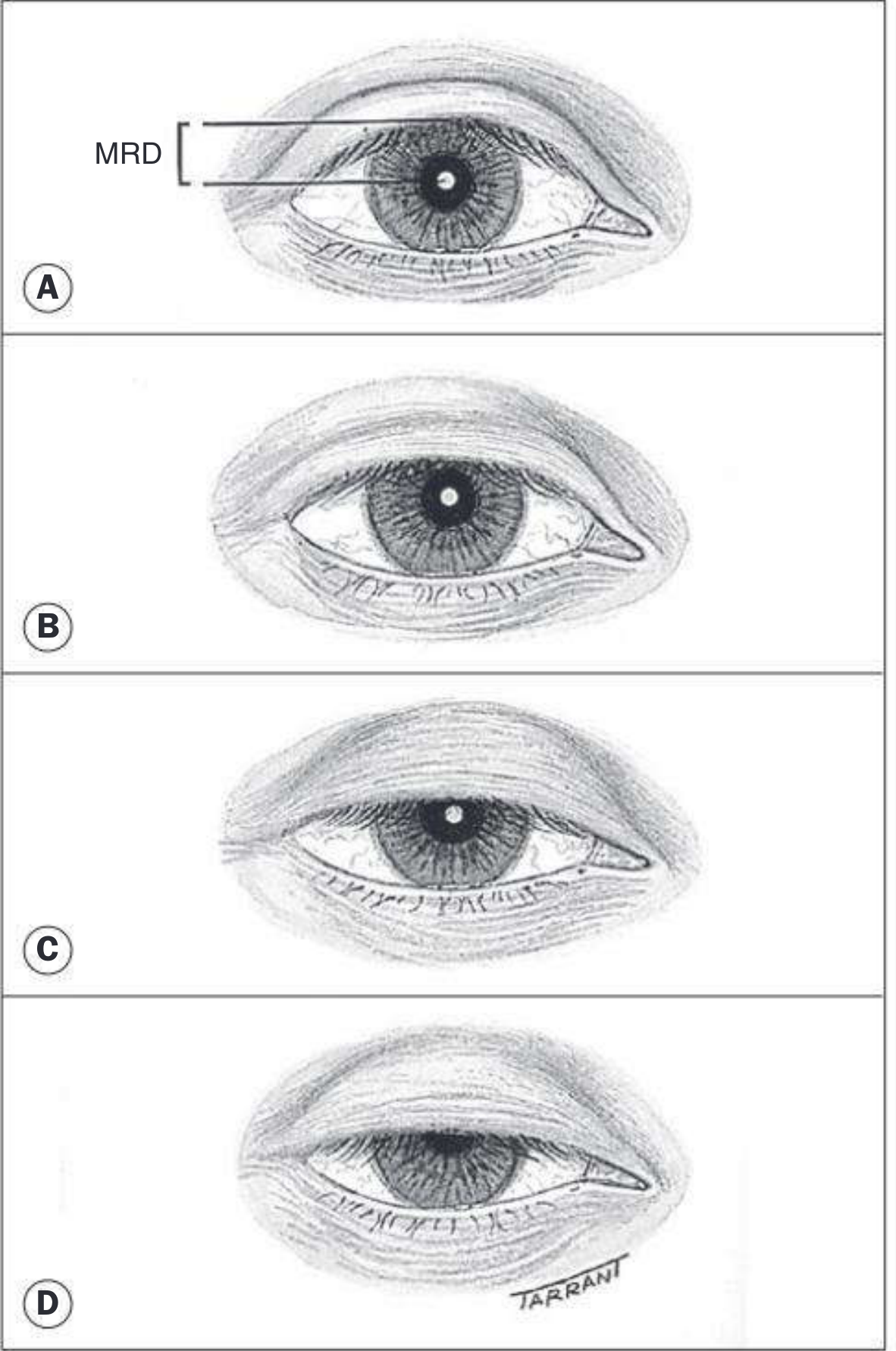
Associated signs to look for:
- Pupils - exclude Horner syndrome (miosis + ptosis) and third nerve palsy (mydriasis + EOM defect)
- Chin-up head posture or brow elevation (compensatory)
- Amblyopia assessment in children
Important Causes to Exclude (Wills Eye Manual)
- Horner syndrome
- Third cranial nerve palsy (complete, partial, or aberrant regeneration)
- Myasthenia gravis
- Orbital tumour
- Eyelid/conjunctival tumour
- Chronic progressive external ophthalmoplegia (CPEO; especially Kearns-Sayre syndrome)
Ptosis Surgery
- Levator resection - for myogenic/congenital ptosis with fair-good levator function
- Levator aponeurosis repair/advancement - for aponeurotic (involutional) ptosis
- Fasanella-Servat (tarso-Müller's resection) - for mild Horner ptosis or small aponeurotic ptosis
- Brow suspension (frontalis sling) - for severe ptosis with poor levator function (poor levator function <4 mm)
3. Ectropion
Outward turning of the lid margin. Most commonly affects the lower lid.
Types
Involutional (Age-Related) - Most Common
Affects elderly individuals. Causes epiphora, ocular surface disease, conjunctival keratinization in chronic cases.
Aetiological factors:
- Horizontal lid laxity - lid can be pulled ≥8 mm from globe and fails to snap back without blinking
- Lateral canthal tendon laxity - rounded lateral canthus; lower lid can be pulled medially >2 mm
- Medial canthal tendon laxity - inferior punctum displaced laterally; if severe, may reach the pupil
Treatment:
- Generalized ectropion → lateral tarsal strip procedure (shortens and reattaches lower canthal tendon to lateral orbital rim)
- Medial ectropion → medial spindle (conjunctival diamond excision), often combined with tarsal strip
- Pentagon excision is an alternative for focal disease
Cicatricial Ectropion
Due to vertical shortening of the anterior lamella (skin). Causes include burns, trauma, skin disease. Treatment involves skin grafting or Z-plasty.
Paralytic (Facial Nerve Palsy) Ectropion
Orbicularis weakness → inadequate lid closure → epiphora and exposure keratopathy. Management includes:
- Lubricants, taping at night
- Lateral tarsorrhaphy (temporary or permanent)
- Eyelid weighting (gold/platinum implant in upper lid) for lagophthalmos
Mechanical Ectropion
Due to mass lesion pulling lid away from the globe.
Symptoms of ectropion (Wills): Tearing, irritation, redness, mucous discharge. May be asymptomatic.
4. Entropion
Inward turning of the lid margin, causing lash-to-cornea contact.
Involutional (Age-Related) Entropion - Most Common
Affects mainly the lower lid. Constant lash rubbing causes:
- Irritation
- Punctate epithelial erosions
- In severe/long-standing cases: pannus formation and ulceration
Aetiological factors:
- Horizontal lid laxity (stretched canthal tendons + tarsal plate)
- Vertical lid instability - attenuation/dehiscence of lower lid retractors (reduced lower lid excursion in downgaze)
- Over-riding of pre-tarsal by preseptal orbicularis on lid closure → tips lid margin inwards
- Orbital septum laxity with fat prolapse
Treatment:
Temporary:
- Lubricants, taping, bandage contact lens
- Orbicularis chemodenervation with botulinum toxin
Surgical (definitive):
- Transverse everting sutures - quick, lasts months; useful in frail/confused patients
- Wies procedure - full-thickness horizontal lid splitting + everting sutures; durable correction
- Lower lid retractor reinsertion - direct advancement of retractors; reserved for recurrence
- Lateral canthal sling (tarsal strip) - addresses co-existing horizontal laxity
Cicatricial Entropion
Palpebral conjunctival scarring rotates lid margin toward globe. Affects upper or lower lid. Causes:
- Cicatrizing conjunctivitis
- Trachoma (most common worldwide cause)
- Chemical burns
- Stevens-Johnson syndrome / mucous membrane pemphigoid
Treatment: Posterior lamellar lengthening with mucous membrane graft or hard palate graft.
Congenital Entropion
- Epiblepharon (most common in Asian children) - extra skin fold pushes lashes toward cornea; usually resolves spontaneously; surgery if causing persistent corneal staining
Trichiasis
Misdirected lashes in an otherwise normally positioned lid. Treated by:
- Epilation (temporary)
- Electrolysis, cryotherapy, or argon laser (for permanent ablation)
5. Chalazion and Hordeolum (Wills Eye Manual, 6.2)
Definitions
- Chalazion: Focal sterile chronic granulomatous lipogranuloma of the meibomian gland (or Zeis gland), caused by retained sebaceous secretions. Obstruction leads to lipid leakage → giant cell reaction.
- Hordeolum (stye):
- External (stye proper): acute infection/abscess of the glands of Zeis (or Moll) on the lid margin
- Internal: acute infection/abscess of the meibomian gland
- Both usually caused by Staphylococcus species
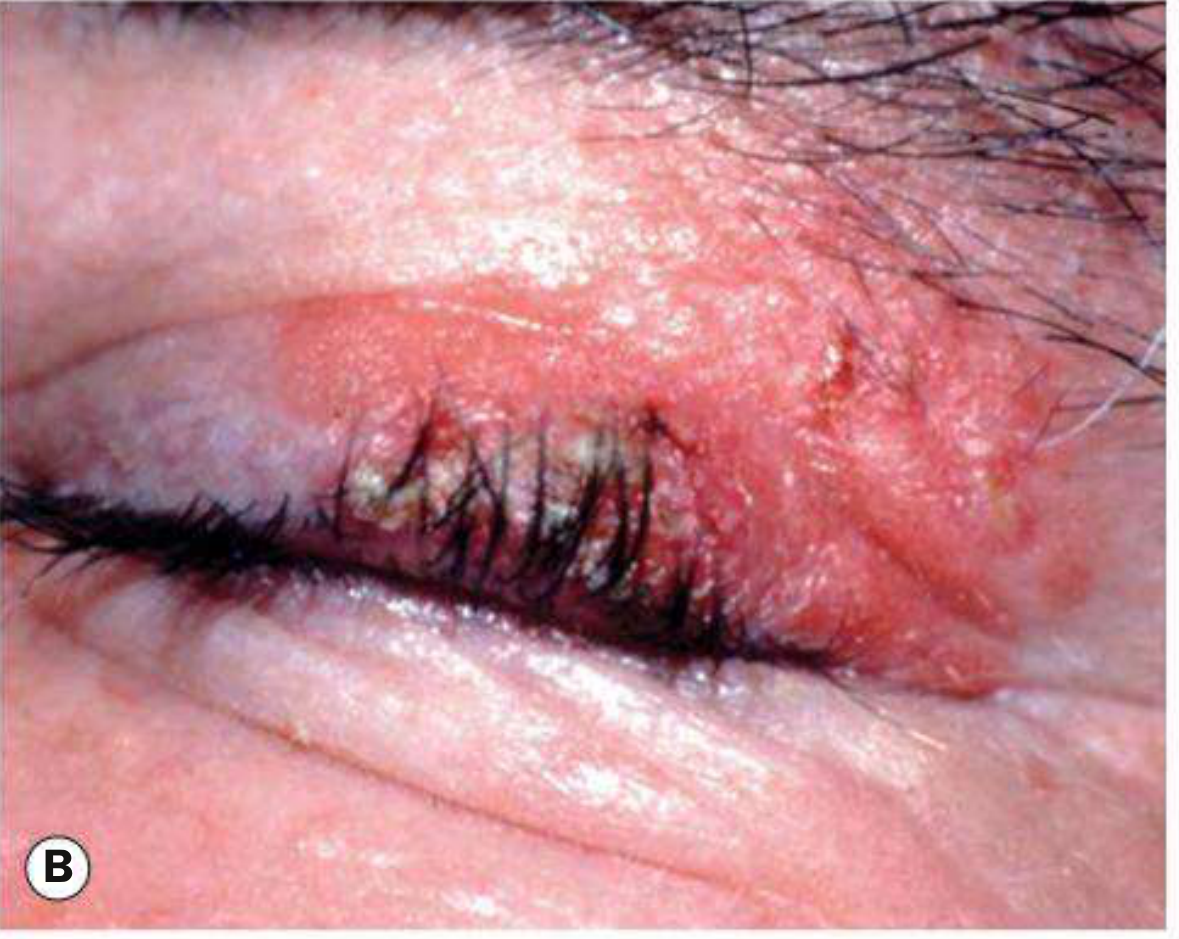
Chalazion Histopathology (Kanski)
Lipogranulomatous inflammation with:
- Extracellular fat deposits
- Lipid-laden epithelioid cells
- Multinucleated giant cells
- Lymphocytes
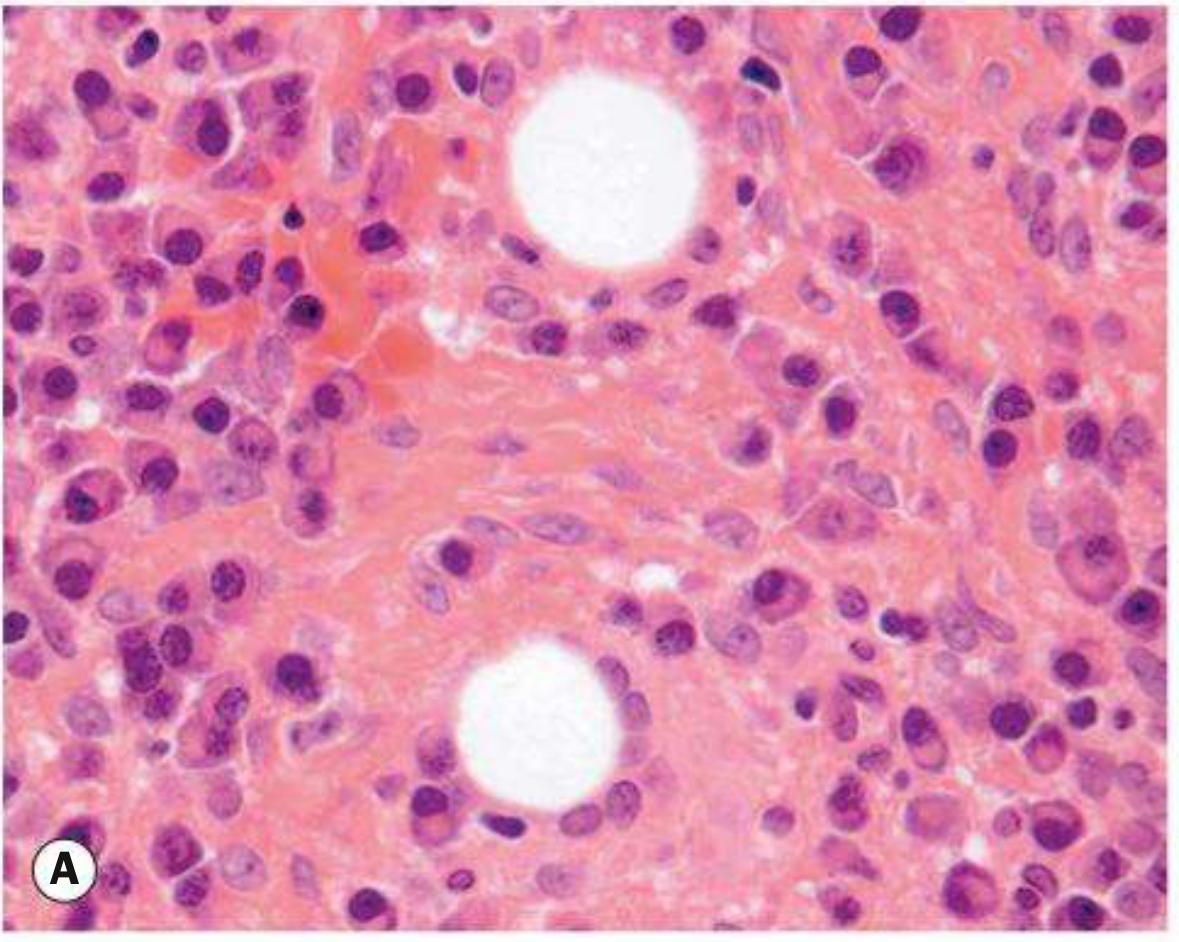
Associations
- Blepharitis (very common)
- Acne rosacea (multiple/recurrent chalazia)
- Bortezomib therapy (within 3 months of starting)
Clinical tip: A recurrent chalazion at the same site in an older patient should be biopsied to exclude malignancy (sebaceous gland carcinoma masquerading as chalazion).
Treatment
| Step | Measure |
|---|---|
| 1 | Warm compresses 10 min QID + gentle massage |
| 2 | Topical antibiotic (hordeolum) or antibiotic-steroid (chalazion) ointment BID x 1-2 weeks |
| 3 | Oral doxycycline 20-50 mg daily-BID for recurrent/multiple chalazia or rosacea |
| 4 | If persistent after 3-4 weeks: incision and curettage (I&C) via conjunctival approach, or intralesional triamcinolone 40 mg/mL (0.2-1.0 mL, mixed 1:1 with 2% lidocaine with epi) |
| 5 | Send all excised tissue for histopathology |
Caution: Intralesional steroid can cause permanent skin depigmentation/atrophy (especially in dark-skinned individuals). Rare risk of retrograde intra-arterial injection causing central retinal artery occlusion.
6. Miscellaneous Acquired Eyelid Disorders
Dermatochalasis
Excess lid skin (and occasionally fat) due to age-related changes. Causes visual field loss (superior) and cosmetic concerns. Treated by blepharoplasty.
Floppy Eyelid Syndrome
- Extremely lax upper eyelids that evert spontaneously during sleep
- Strong association with obstructive sleep apnoea and obesity
- Causes papillary conjunctivitis from mechanical trauma against pillow
- Treatment: protective eye shield, lateral tarsorrhaphy, or horizontal lid tightening
Blepharochalasis
Recurrent episodic eyelid oedema (usually in young women) → eventual atrophy, redundant thin skin, and ptosis. Distinct from dermatochalasis.
Upper Lid Retraction
Abnormally elevated upper lid - upper lid margin above the superior limbus. Causes:
- Thyroid eye disease (most common) - fibrosis/overaction of Müller's muscle
- Contralateral ptosis (Hering's law)
- Aberrant 3rd nerve regeneration
- Parinaud syndrome (dorsal midbrain - bilateral upper lid retraction + upgaze palsy)
- Local anaesthetic injection
7. Eyelid Tumors
Benign Tumors
| Tumor | Features |
|---|---|
| Squamous papilloma | Most common benign lid tumor; pedunculated or sessile; no malignant potential |
| Seborrhoeic keratosis | Waxy, "stuck-on" pigmented lesion; elderly |
| Naevus (mole) | Junctional, compound, or intradermal; may have fine hairs |
| Xanthelasma | Yellowish plaques; medial canthal area; associated with hyperlipidaemia (50%) |
| Capillary haemangioma | Children; can cause amblyopia from mechanical ptosis |
| Port wine stain (naevus flammeus) | Associated with Sturge-Weber syndrome |
| Molluscum contagiosum | Umbilicated pearly nodule; causes follicular conjunctivitis if near lid margin |
Malignant Tumors
Basal Cell Carcinoma (BCC)
- Most common malignant eyelid tumor - 90% of all cases
- Most common in elderly, fair-skinned individuals; chronic sun exposure is the main risk factor
- Lower eyelid most common site, followed by medial canthus, upper eyelid, lateral canthus
- Medial canthal BCCs are most dangerous - prone to orbital/sinus invasion and higher recurrence
- Slow-growing, locally invasive, non-metastasizing
- Madarosis (lash loss) commonly seen
Morphological patterns:
| Pattern | Features |
|---|---|
| Nodular | Shiny, firm, pearly nodule with surface telangiectasia; slow-growing |
| Nodulo-ulcerative (rodent ulcer) | Central ulceration + pearly rolled edges + telangiectasia; may erode extensively |
| Morphoeic (sclerosing) | Flat, indurated, waxy plaque; ill-defined margins; most aggressive and difficult to treat |
| Pigmented | Pigmented variant; may mimic melanoma |
Histopathology: Basophilic cells proliferating downwards from the epidermal basal layer with peripheral palisading of cells at the tumour lobule margin.
Treatment: Complete surgical excision with histologically confirmed clear margins. Mohs micrographic surgery for high-risk cases (medial canthal, morphoeic, recurrent).
Sebaceous Gland Carcinoma (SGC)
- Rare, slow-growing, potentially lethal
- Mostly elderly women; upper eyelid predominance (meibomian glands more numerous in upper lid)
- Arises from meibomian glands (most common), glands of Zeis, or caruncle
Key features:
- Yellowish material within tumour - highly suggestive
- Nodular SGC: Hard nodule in upper tarsal plate with yellow discolouration → often mistaken for chalazion
- Spreading SGC: Diffuse lid margin thickening + lash loss → often mistaken for blepharitis
- Pagetoid spread (intraepithelial extension) - not uncommon; difficult to clear
- Madarosis common
Histopathology: Lobules of cells with pale, foamy vacuolated lipid-containing cytoplasm + large hyperchromatic nuclei.
Mortality: 5-10%. Adverse prognostic factors:
- Upper lid involvement
- Tumour size ≥10 mm
- Symptoms duration >6 months
Clinical tip: SGC can be confused with chronic/recurrent localized meibomian gland inflammation. Always suspect in recurrent "chalazion" or unilateral "blepharitis" in an older patient.
Squamous Cell Carcinoma (SCC)
- Second most common malignant eyelid tumor (~5%)
- Locally invasive; may metastasise to regional lymph nodes and beyond
- Lower lid and medial canthus most common sites
- Arise from actinic keratoses or de novo
- Predispositions: xeroderma pigmentosum, immunosuppression
Melanoma
- Rare on the eyelids but potentially lethal
- Half of lid melanomas are non-pigmented (amelanotic) - may be missed
- Features suggesting melanoma: recent onset, change in pigmented lesion, irregular margins, asymmetric shape, color change, multiple colors, diameter >6 mm
- Lentigo maligna = melanoma in situ in sun-damaged skin (Hutchinson's freckle); malignant transformation in 3-10%
8. Congenital Malformations
| Condition | Description |
|---|---|
| Epicanthic folds | Skin folds crossing medial canthal area; may simulate esotropia (pseudostrabismus) |
| Blepharophimosis-ptosis-epicanthus inversus (BPES) | Autosomal dominant; small horizontal fissure + bilateral ptosis + telecanthus + epicanthus inversus; FOXL2 gene |
| Telecanthus | Increased distance between medial canthi with normal interpupillary distance |
| Epiblepharon | Horizontal skin fold pushes lashes toward cornea; common in Asian children; usually resolves spontaneously |
| Congenital entropion | Rare; treat if causing corneal damage |
| Coloboma | Full-thickness eyelid defect, usually upper lid; associated with Goldenhar syndrome |
| Cryptophthalmos | Skin covers eyeball without differentiation; no eyelid structures |
Summary: Eyelid Malignancy Red Flags
| Finding | Think |
|---|---|
| Recurrent chalazion at same site in elderly | Sebaceous gland carcinoma |
| Unilateral chronic "blepharitis" not responding to treatment | Sebaceous gland carcinoma |
| Lash loss (madarosis) with lid lesion | Malignancy (BCC, SGC, SCC) |
| Pearly nodule with rolled edges / central ulcer | BCC (rodent ulcer) |
| New/changing pigmented lid lesion >6 mm | Melanoma |
| Upper lid thickening with yellow tinge | SGC |
*Sources: Kanski's Clinical Ophthalmology: A Systematic Approach, 10th ed., Chapter 2 (Eyelids) | The Wills Eye Manual, Sections 6.1 (Ptosis), 6.2 (Chalazion/Hordeolum), 6.3 (Ectropion)*Here is the complete eyelid chapter summary from Kanski's Clinical Ophthalmology (10th ed.) and The Wills Eye Manual, organized by topic:
The Eyelid - Comprehensive Ophthalmology Review
1. Blepharitis
Chronic marginal blepharitis is extremely common. Divided into anterior and posterior forms (mixed is most frequent).
Anterior blepharitis affects lash bases:
- Staphylococcal - abnormal immune response to S. aureus; associated with atopic dermatitis; causes peripheral corneal infiltrates
- Seborrhoeic - linked to generalized seborrhoeic dermatitis (scalp, nasolabial folds)
Posterior blepharitis (MGD):
- Meibomian gland dysfunction → bacterial lipases produce free fatty acids → raised meibum melting point → gland obstruction → increased tear evaporation and instability
- Strongly associated with acne rosacea
Demodex blepharitis:
- D. folliculorum longus (anterior) and D. folliculorum brevis (posterior)
- Collarettes at lash bases = pathognomonic of Demodex infestation
Symptoms: Burning, grittiness, photophobia, crusting (poor symptom-sign correlation)
Treatment: Lid hygiene (warm compresses + lid scrubs), topical antibiotics, oral doxycycline for MGD/rosacea, tea tree oil for Demodex, artificial tears.
2. Ptosis
Classification
| Type | Mechanism | Examples |
|---|---|---|
| Neurogenic | Innervational defect | 3rd nerve palsy, Horner syndrome |
| Myogenic | Levator myopathy or NMJ defect | Myasthenia gravis, myotonic dystrophy, CPEO |
| Aponeurotic (involutional) | Levator aponeurosis dehiscence | Most common acquired type; age-related |
| Mechanical | Mass or scarring | Tumour, oedema, dermatochalasis |
| Congenital | Levator dysgenesis | Simple congenital, Marcus Gunn jaw-winking |
Pseudoptosis - Causes
- Lack of globe support (artificial eye, enophthalmos, microphthalmos)
- Contralateral lid retraction (upper lid normally covers superior 2 mm of cornea)
- Ipsilateral hypotropia (lid follows globe downward; disappears on covering fellow eye)
- Brow ptosis (VII nerve palsy - diagnose by manually lifting brow)
Clinical Measurements
- MRD (margin-reflex distance): Normal ~4-5 mm; reduced in ptosis
- Ptosis grading: Mild ≤2 mm, Moderate 3 mm, Severe ≥4 mm
- Palpebral fissure height: Males 7-10 mm, Females 8-12 mm
- Levator function: Normal ≥15 mm | Good 12-14 mm | Fair 5-11 mm | Poor ≤4 mm
- Lid crease height: Males ~8 mm, Females ~10 mm
- Absent crease → poor levator function (congenital)
- High crease → aponeurotic defect
Causes to Always Exclude (Wills Eye Manual)
- Horner syndrome | 2. CN III palsy | 3. Myasthenia gravis | 4. Orbital tumour | 5. Lid/conjunctival tumour | 6. CPEO (Kearns-Sayre)
Ptosis Surgery
- Levator resection - for myogenic/congenital with fair-good levator function
- Levator aponeurosis advancement - for involutional/aponeurotic ptosis
- Fasanella-Servat - for mild Horner or small aponeurotic ptosis
- Frontalis sling - for severe ptosis with poor levator function (≤4 mm)
3. Ectropion (Lid turned outward)
Most commonly affects the lower lid in the elderly. Causes epiphora, conjunctival keratinization.
Types & Treatment
Involutional (most common):
- Horizontal lid laxity (>8 mm pull-distraction; no snap-back)
- Lateral canthal laxity (rounded canthus; lid moves >2 mm medially)
- Medial canthal laxity (punctum displaced; severe = reaches pupil)
- Treatment: Lateral tarsal strip procedure; medial spindle for medial ectropion
Cicatricial: Vertical anterior lamellar shortening (burns, skin disease) → skin graft / Z-plasty
Paralytic (VII nerve palsy): Orbicularis weakness → lagophthalmos, exposure keratopathy → lubricants, taping, lateral tarsorrhaphy, eyelid weighting (gold/platinum implant)
Mechanical: Mass effect pulling lid from globe
4. Entropion (Lid turned inward)
Lash-to-cornea contact → irritation, punctate erosions, pannus, ulceration.
Types
Involutional (most common - lower lid):
Mechanisms:
- Horizontal lid laxity
- Lower lid retractor attenuation (reduced lid excursion in downgaze)
- Over-riding of pre-tarsal by preseptal orbicularis → tips lid inward
- Orbital septum laxity + fat prolapse
Treatment:
- Temporary: lubricants, taping, bandage lens, botulinum toxin to orbicularis
- Surgical: Everting sutures, Wies procedure (full-thickness lid split + sutures), lower lid retractor reinsertion, tarsal strip for laxity
Cicatricial (upper or lower lid):
- Causes: trachoma, cicatrizing conjunctivitis, chemical burns, Stevens-Johnson syndrome, MMP
- Treatment: posterior lamellar lengthening with mucous membrane or hard palate graft
Congenital - Epiblepharon:
- Common in Asian children
- Extra skin fold pushes lashes toward cornea
- Usually resolves spontaneously; surgery if persistent corneal staining
Trichiasis (misdirected lashes from otherwise normal lid): Treated by epilation, electrolysis, cryotherapy, or argon laser ablation.
5. Chalazion & Hordeolum
Chalazion: Sterile chronic lipogranuloma of meibomian (or Zeis) gland; caused by retained sebaceous secretions → giant cell reaction.
- Histopathology: lipid-laden epithelioid cells, multinucleated giant cells, lymphocytes
Hordeolum: Acute staphylococcal infection
- External (stye) = glands of Zeis/Moll on lid margin
- Internal = meibomian gland abscess
Associations: Blepharitis, acne rosacea, bortezomib therapy
Treatment:
- Warm compresses QID + massage
- Topical antibiotic (hordeolum) or antibiotic-steroid ointment (chalazion)
- Oral doxycycline 20-50 mg daily-BID for recurrent/rosacea
- After 3-4 weeks if persistent: incision and curettage or intralesional triamcinolone (0.2-1.0 mL of 40 mg/mL mixed 1:1 with lidocaine/epi)
- Send all excised tissue for histopathology
KEY: Recurrent chalazion at the same site in an older patient = biopsy to exclude sebaceous gland carcinoma.
6. Eyelid Tumors
Benign
| Tumor | Notes |
|---|---|
| Squamous papilloma | Most common benign lid tumor |
| Seborrhoeic keratosis | Waxy, stuck-on; elderly |
| Xanthelasma | Yellow medial canthal plaques; ~50% have hyperlipidaemia |
| Capillary haemangioma | Children; causes amblyopia from ptosis |
| Molluscum contagiosum | Umbilicated; causes follicular conjunctivitis near lid margin |
Malignant
Basal Cell Carcinoma (BCC) - 90% of all eyelid malignancies
- Lower lid > medial canthus > upper lid > lateral canthus
- Medial canthal BCC = most dangerous (orbital/sinus invasion; highest recurrence)
- Locally invasive, never metastasizes
- Features: madarosis, telangiectasia, slow growth
| Pattern | Description |
|---|---|
| Nodular | Pearly, shiny nodule with telangiectasia |
| Nodulo-ulcerative (rodent ulcer) | Central ulcer + pearly rolled edges |
| Morphoeic (sclerosing) | Flat, waxy, indurated; ill-defined; most aggressive |
| Pigmented | May mimic melanoma |
Histology: Basophilic cells with peripheral palisading of nuclei at lobule edges
Treatment: Complete excision with clear margins; Mohs surgery for high-risk (medial canthal, morphoeic, recurrent).
Sebaceous Gland Carcinoma (SGC)
- Upper eyelid predominant (more meibomian glands)
- Masquerades as chalazion (nodular type) or blepharitis (spreading type)
- Yellow discolouration within tumour is highly suggestive
- Pagetoid spread (intraepithelial extension) - may be extensive
- Mortality 5-10%; worse prognosis: upper lid, size ≥10 mm, symptoms >6 months
- Histology: foamy vacuolated lipid-containing cytoplasm + hyperchromatic nuclei
SCC: Second most common (~5%); can metastasize; may arise from actinic keratoses.
Melanoma: Rare but lethal; 50% amelanotic (no pigment); suspect any changing/irregular lid lesion >6 mm.
7. Miscellaneous & Congenital
Dermatochalasis: Excess skin from ageing → visual field loss → treat by blepharoplasty.
Floppy Eyelid Syndrome: Lax lids evert during sleep; associated with obstructive sleep apnoea and obesity; causes papillary conjunctivitis.
Blepharochalasis: Recurrent episodic eyelid oedema (young women) → atrophic thin skin + ptosis.
Upper lid retraction: Lid margin above superior limbus; most common cause = thyroid eye disease (Dalrymple's sign).
Blepharophimosis-Ptosis-Epicanthus Inversus (BPES): Autosomal dominant (FOXL2 gene); small horizontal fissure + bilateral ptosis + telecanthus + epicanthus inversus.
Epiblepharon: Common in Asian children; extra skin fold pushes lashes toward cornea; usually resolves spontaneously.
Coloboma: Full-thickness lid defect; upper lid; associated with Goldenhar syndrome.
Eyelid Malignancy Red Flags
| Finding | Suspect |
|---|---|
| Recurrent chalazion at same site (elderly) | Sebaceous gland carcinoma |
| Unilateral chronic "blepharitis" not responding to treatment | Sebaceous gland carcinoma |
| Madarosis (lash loss) with lid lesion | Malignancy (BCC, SGC, SCC) |
| Pearly nodule + rolled edges + central ulcer | BCC (rodent ulcer) |
| New/changing pigmented lid lesion >6 mm | Melanoma |
| Upper lid thickening with yellow tinge | SGC |
Sources: Kanski's Clinical Ophthalmology: A Systematic Approach, 10th ed., Chapter 2 | The Wills Eye Manual, Sections 6.1-6.3
Orbit opthalmology
Searching sources...
Finding Sources
Finding Sources
Finding Sources
Finding Sources
Good. Now let me read the key sections in parallel - proptosis/orbital intro, thyroid eye disease, orbital cellulitis, and orbital tumors.
Reading File
Reading File
Reading File
Reading File
Reading File
Reading File
Reading File
Reading File
Reading File
Reading File
Reading File
Reading File
Reading File
Reading File
Reading File
I now have comprehensive content across all orbital topics. Let me compile the full response.
The Orbit - Ophthalmology
Kanski's Clinical Ophthalmology 10th ed. & The Wills Eye Manual
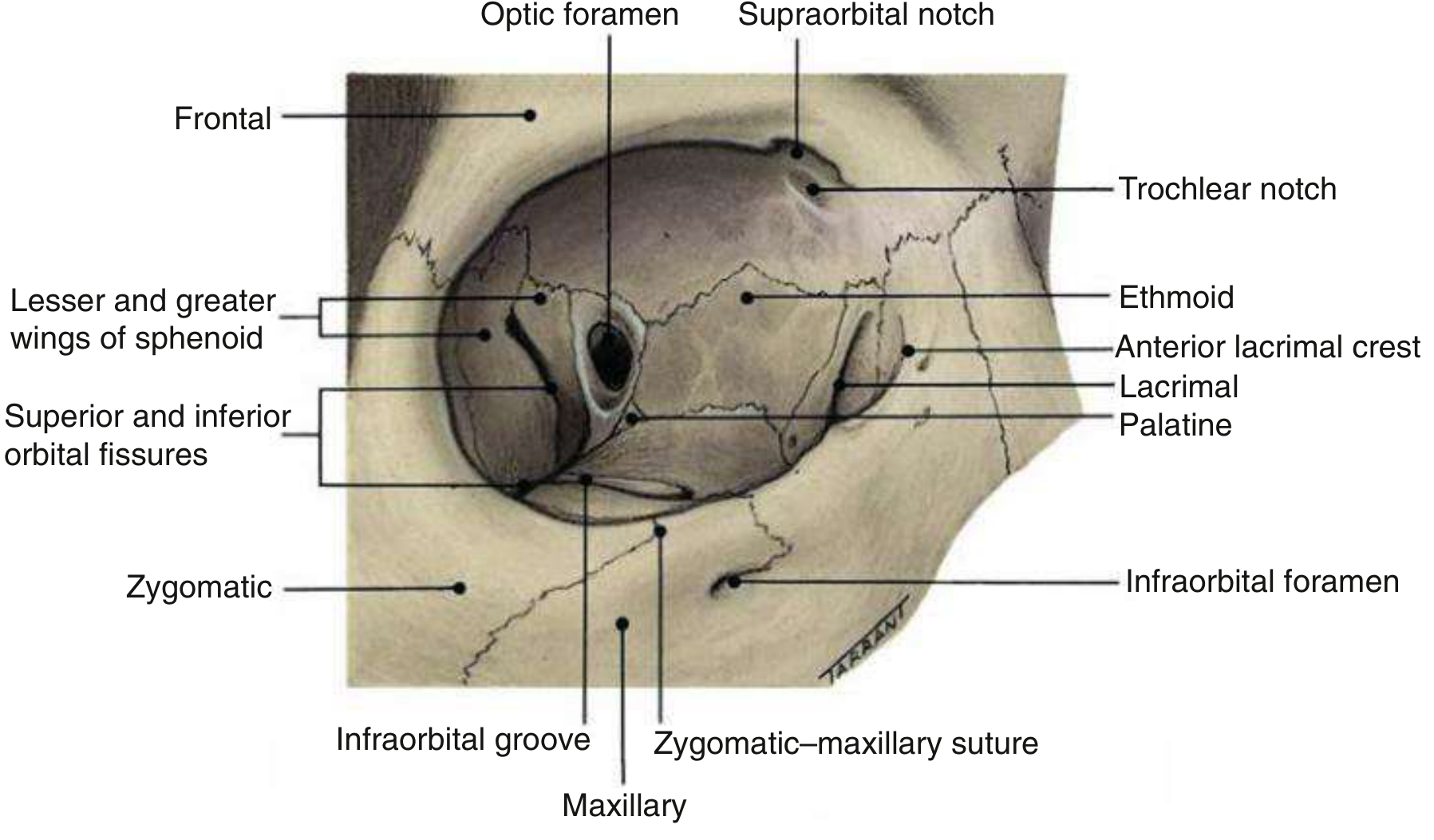
1. Orbital Anatomy
The orbit is a pear-shaped bony cavity containing the eyeball, extraocular muscles, lacrimal gland, blood vessels, nerves, and fat. Key anatomical facts:
- The intraorbital optic nerve is 25 mm long, while the distance from the back of the globe to the optic canal is only 18 mm - this slack allows forward displacement of the globe (proptosis) without excessive nerve stretch
- Walls: roof (frontal bone/lesser sphenoid wing), lateral wall (zygomatic/greater sphenoid wing), floor (maxilla/zygoma/palatine), medial wall (ethmoid/lacrimal/maxilla/sphenoid) - the medial wall and floor are thinnest, most prone to fracture
2. Approach to the Orbit: Proptosis
Proptosis = abnormal protrusion of the globe. Exophthalmos = proptosis specific to the eyeball. Measured by Hertel exophthalmometry.
Assessment of Proptosis
Direction of displacement:
- Axial (straight forward) → intraconal mass (within the muscle cone), e.g. cavernous haemangioma, optic nerve tumour, TED
- Non-axial (dystopia/eccentric) → extraconal mass, e.g. lacrimal gland tumour (inferomedial displacement), dermoid (superolateral), rhabdomyosarcoma (superior)
Key examination steps:
- Asymmetrical proptosis - best detected by looking down at the patient from above and behind
- Resistance to retropulsion (pushback of globe) - indicates firm/infiltrative mass
- Pulsatile proptosis - suggests carotico-cavernous fistula or orbital encephalocele
- Fundoscopy - look for optic disc swelling, choroidal folds, optociliary vessels
Differential diagnosis of proptosis (from Wills Eye Manual):
| Category | Examples |
|---|---|
| Thyroid | TED (most common adult cause - bilateral AND unilateral) |
| Vascular | Carotico-cavernous fistula, varix, orbital haemorrhage |
| Inflammatory | Orbital pseudotumour (IOID), orbital myositis, sarcoidosis, GPA |
| Infectious | Bacterial/fungal cellulitis, mucormycosis |
| Benign tumour | Cavernous haemangioma (most common adult orbital tumour), lacrimal gland adenoma, dermoid |
| Malignant tumour | Rhabdomyosarcoma (children), lymphoma, metastasis, lacrimal gland carcinoma |
| Bony | Fibrous dysplasia, Paget's disease, sphenoid wing meningioma |
| Congenital | Encephalocele, dermoid, capillary haemangioma |
Enophthalmos (posterior displacement of globe): causes include orbital floor fracture (blowout), silent sinus syndrome, scirrhous metastasis (breast), phthisis bulbi, Horner syndrome (mild), post-enucleation.
3. Thyroid Eye Disease (TED)
Also called thyroid-associated orbitopathy (TAO) or Graves' ophthalmopathy.
Key Facts
- Most common cause of both unilateral and bilateral proptosis in adults
- 5x more common in women (reflects Graves' disease prevalence)
- Smoking is the major modifiable risk factor - dose-dependent; cessation reduces risk
- Radioiodine therapy for hyperthyroidism can worsen TED (give oral steroids prophylactically)
- Can occur in euthyroid and hypothyroid patients
Pathogenesis
Anti-thyrotropin receptor antibodies (TRAb) react against thyroid cells AND orbital fibroblasts. IGF-1R and TSHR are upregulated on orbital fibroblasts → inflammation, glycosaminoglycan deposition → osmotic water imbibition → muscles swell up to 8× normal size → secondary lipogenesis (orbital fat enlargement) → raised intraorbital pressure → optic nerve compression. Eventual fibrosis → restrictive myopathy.
Clinical Course
- Congestive (inflammatory) stage: Red, painful eyes; lasts 1-3 years
- Fibrotic (quiescent) stage: White eyes, fixed motility defect
Only ~10% develop serious long-term ocular problems.
Clinical Features
EUGOGO (2021) Activity Score (1 point each):
- Spontaneous retrobulbar pain
- Pain on attempted upgaze or downgaze
- Redness of eyelids
- Redness of conjunctiva
- Swelling of conjunctiva or plica
- Swelling of eyelid
- Chemosis
Score ≥3/7 = active disease → consider immunosuppression
EUGOGO Severity:
- Mild: Minor impact on daily life
- Moderate-severe: ≥1 of: moderate-severe soft tissue involvement, lid retraction ≥2 mm, diplopia, proptosis ≥3 mm above normal
- Sight-threatening: Optic neuropathy or corneal breakdown
Five Clinical Categories
(1) Soft Tissue Involvement
- Grittiness, red eyes, lacrimation, photophobia, puffy lids, retrobulbar discomfort
- Epibulbar hyperaemia (especially over horizontal rectus insertions) - sensitive activity marker
- Periorbital oedema + chemosis + retroseptal fat prolapse into lids
- Tear insufficiency and instability
(2) Lid Retraction
Affects ~50% of Graves' disease patients.
- Upper lid: Müller muscle overaction (sympathetic overstimulation from high thyroid hormones); levator fibrosis
- Lower lid: Inferior rectus fibrosis pulls lower lid down
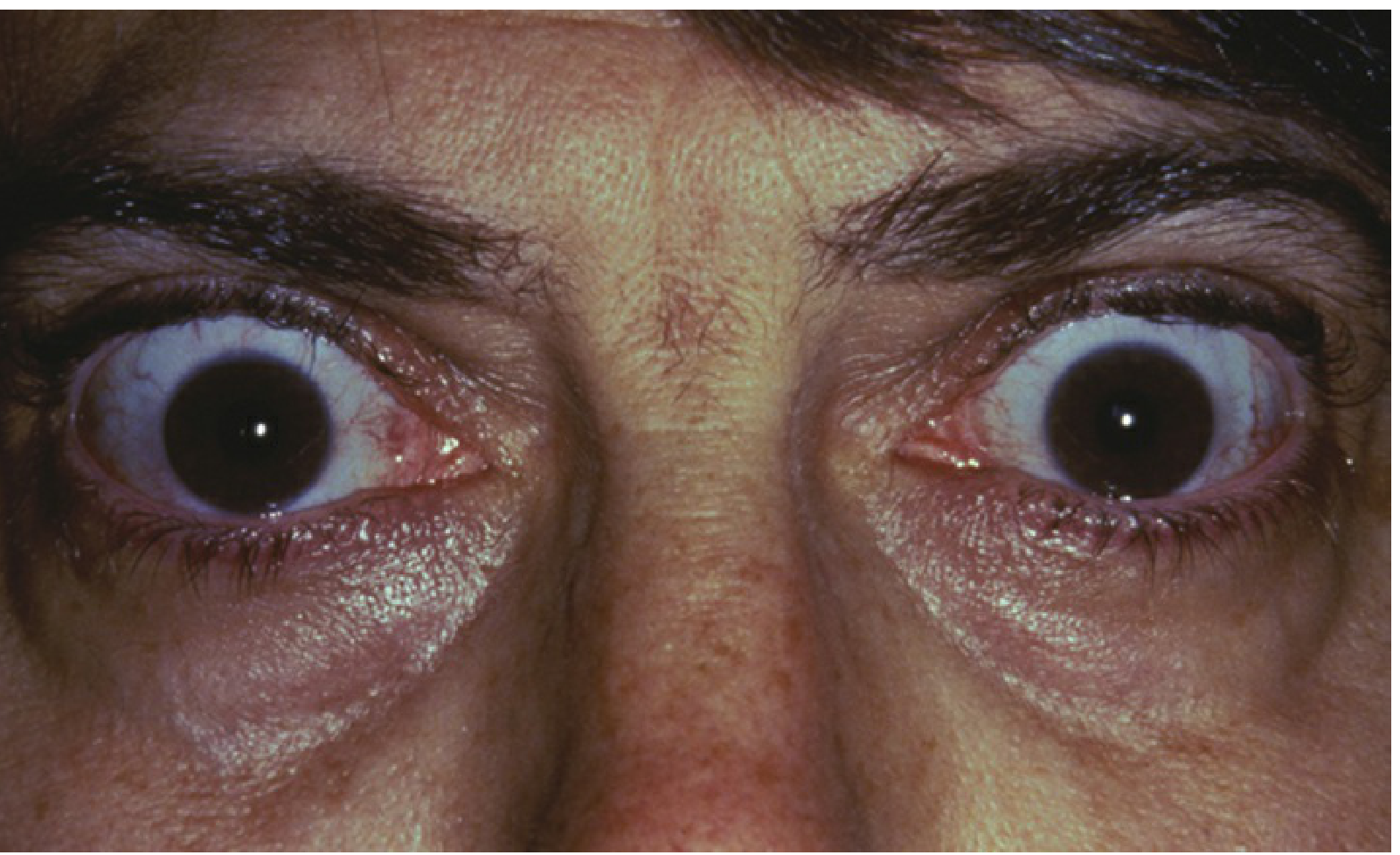
- Signs: Dalrymple's sign (upper lid retraction - above superior limbus), von Graefe's sign (lid lag on downgaze), lagophthalmos
- Lateral flare of upper lid retraction is highly specific for TED
(3) Proptosis
- Axial, bilateral (but often asymmetric) or unilateral
- Resistance to retropulsion is characteristic
- Caused by enlarged extraocular muscles + increased orbital fat volume
(4) Restrictive Myopathy (Ophthalmoplegia)
Occurs in 30-50% of TED patients. May be permanent.
| Muscle affected (fibrosis) | Resulting deficit | Mimics |
|---|---|---|
| Inferior rectus (most common) | Defective elevation | Superior rectus palsy |
| Medial rectus (2nd most common) | Defective abduction | VI nerve palsy |
| Superior rectus | Defective depression | - |
| Lateral rectus | Defective adduction | - |
Diagnosis confirmed by forced duction testing (resistance to passive globe movement).
IOP significantly elevated in upgaze is characteristic of TED.
EOM imaging pattern: Thickening of muscle bellies with sparing of tendons (contrast to myositis, where tendons are involved). Order of frequency: inferior > medial > superior > lateral rectus (mnemonic: "I'M SLow").
Isolated lateral rectus enlargement = atypical for TED → requires biopsy.
(5) Optic Neuropathy
Occurs in ~5-7% of TED patients - caused by apical compression of the optic nerve by congested/enlarged rectus muscles.
Key pearl: Compressive optic neuropathy in TED often occurs without significant proptosis - enlarged muscles compress the apex without pushing the globe forward.
Signs: Reduced VA, reduced color vision (dyschromatopsia), RAPD, visual field loss, optic disc swelling or pallor.
Investigation: MRI/CT orbital apex views (apical crowding); this is a sight-threatening emergency.
Treatment of TED
All patients:
- Stop smoking (first measure)
- Optimize thyroid function
- If radioiodine therapy planned: give concurrent oral steroids
Mild active disease:
- Lubricants, topical anti-inflammatories
- Selenium 200 μg/day for 6 months (in selenium-deficient areas)
- Head elevation to reduce periorbital oedema
- Eyelid taping for mild exposure
Moderate-severe active disease (CAS ≥3):
- IV methylprednisolone - regimen: 0.5 g weekly ×6 weeks, then 0.25 g weekly ×6 weeks. Superior outcomes and better tolerability than oral. Avoid in significant hepatic, cardiovascular, hypertensive, or diabetic disease.
- IV corticosteroids + mycophenolate sodium 0.72 g/day ×24 weeks = superior to IV steroid monotherapy (preferred at specialist centres)
- Low-dose fractionated orbital radiotherapy - second-line; maximal response by 4 months; ~40% non-responders; avoid in young patients and diabetics
- Teprotumumab (IGF-1R monoclonal antibody) - highly effective; reduces proptosis and CAS
Sight-threatening disease (optic neuropathy):
- Urgent IV methylprednisolone (1 g/day ×3 days)
- If no response in 1-2 weeks → emergency orbital decompression surgery
- Canthotomy/cantholysis for acute pressure rise
Surgical rehabilitation (quiescent disease, in order):
- Orbital decompression (for proptosis/corneal exposure) - removes orbital wall and/or fat
- Squint surgery (for diplopia from restrictive myopathy) - after proptosis stable
- Eyelid surgery (for retraction/lagophthalmos) - last step
4. Orbital Cellulitis
Key Distinction: Preseptal vs Orbital (Postseptal)
| Feature | Preseptal (periorbital) | Orbital (postseptal) |
|---|---|---|
| Septum involvement | Anterior to septum | Posterior to orbital septum |
| Proptosis | Absent | Present |
| Ophthalmoplegia | Absent | Present (painful) |
| Vision | Normal | May be reduced |
| RAPD | Absent | May be present |
| CT | No orbital fat involvement | Orbital fat stranding ± abscess |
Orbital Cellulitis
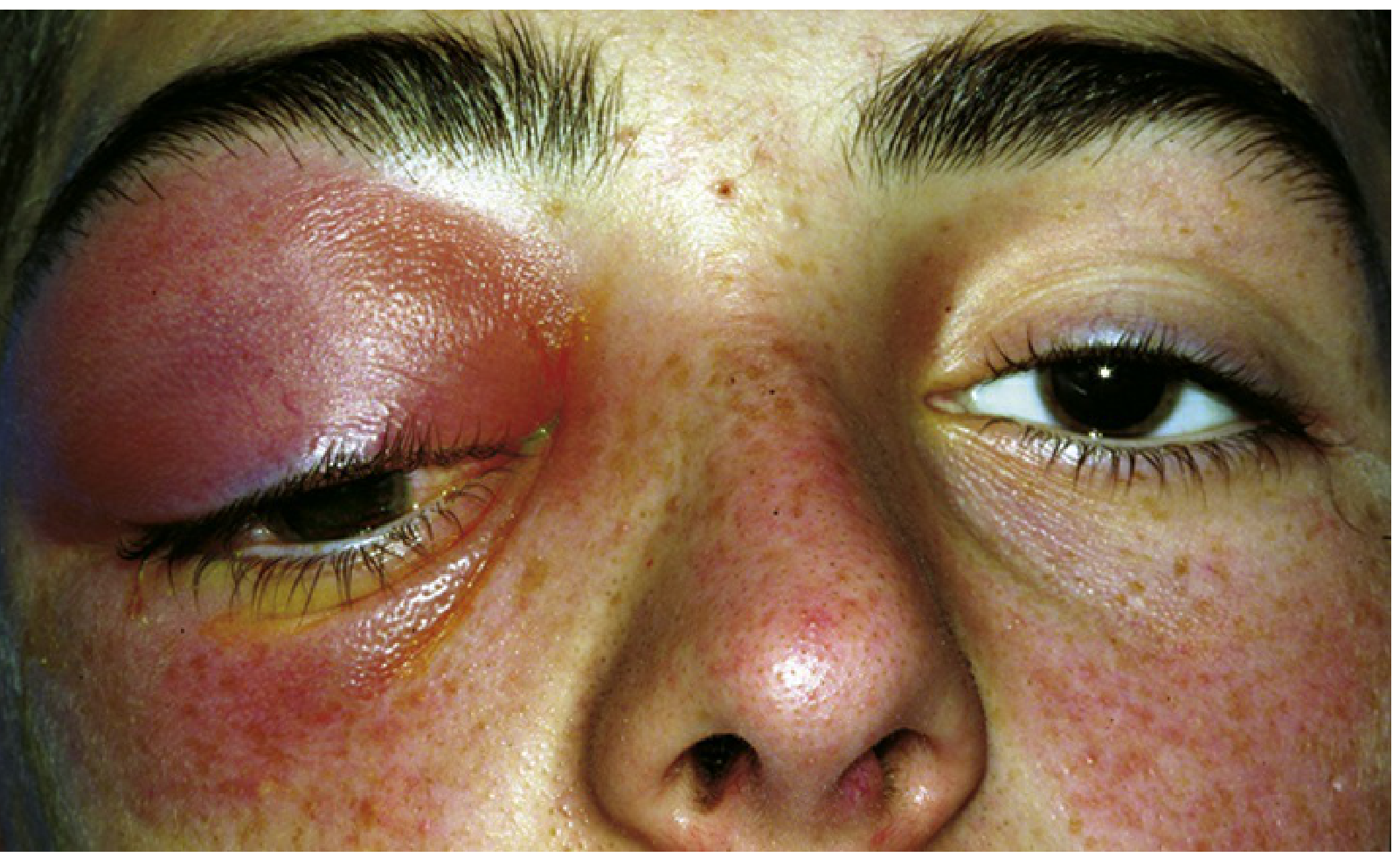
A serious, sight- and life-threatening infection. More common in children.
Common organisms:
- Adults: S. aureus, Streptococcus spp., anaerobes
- Children: S. pneumoniae, S. aureus, S. pyogenes, H. influenzae (rare if vaccinated)
- Post-trauma: Gram-negative rods
- Dental source: mixed aggressive aerobes + anaerobes
- Immunocompromised (diabetics, HIV, chemo): Mucor/Rhizopus (zygomycosis/mucormycosis), Aspergillus
Source: Most commonly ethmoid sinusitis (paranasal sinuses in children). Other sources: dacryocystitis, dacryoadenitis, dental infection, trauma, orbital surgery.
Chandler-Hubert Classification
| Stage | Description |
|---|---|
| I | Inflammatory oedema (preseptal) |
| II | Orbital cellulitis (fat stranding, no abscess) |
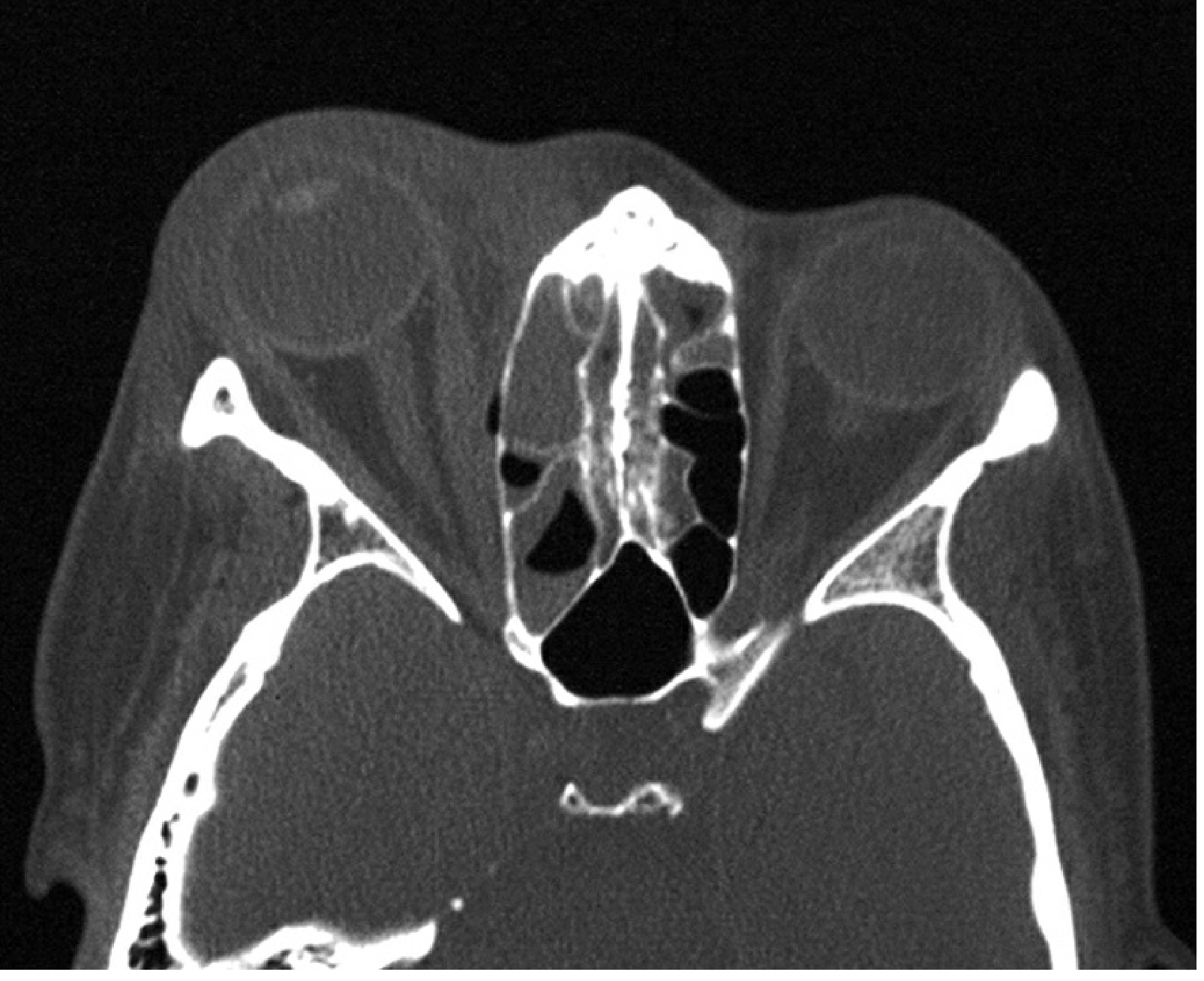
| III | Subperiosteal abscess (most common: medial wall) |
| IV | Orbital abscess |
| V | Cavernous sinus thrombosis |
Clinical Features
- Rapid onset: pain exacerbated by eye movement, lid swelling, proptosis, malaise
- Pyrexia (often marked)
- Painful ophthalmoplegia
- Conjunctival chemosis and injection
- Proptosis (often non-axial if abscess present)
- Reduced VA, colour vision, RAPD → suggests optic nerve compression (emergency)
- History of recent nasal/sinus/respiratory illness
Complications
- Ocular: Optic neuropathy, exposure keratopathy, raised IOP, CRAO/CRVO, endophthalmitis
- Subperiosteal abscess (medial wall most common)
- Intracranial (3-4%): Meningitis, brain abscess, cavernous sinus thrombosis
Investigation & Management
Investigations:
- CT orbits + paranasal sinuses + brain (with contrast) - mandatory
- CBC with differential, blood cultures, culture of nasal discharge
- Check tetanus status in trauma
Treatment:
- Hospital admission mandatory
- IV antibiotics until apyrexial for 4 days, then 1-3 weeks oral
- Community: ampicillin-sulbactam (adults); supplement with metronidazole for anaerobic cover
- Hospital/MRSA risk: add vancomycin
- Monitor optic nerve function every 4 hours (VA, colour vision, brightness comparison, pupil reactions)
- ORL (ENT) assessment for sinus drainage
- Surgical drainage of orbital/subperiosteal abscess at early stage if identified
- Deteriorating optic nerve → emergency canthotomy/cantholysis
Mucormycosis (Zygomycosis):
- Occurs in diabetics (especially in DKA) and immunocompromised
- Severe pain, external ophthalmoplegia, black eschar on nasal turbinates
- Profound visual loss may occur rapidly
- Treatment: aggressive surgical debridement + IV amphotericin B (urgent)
5. Idiopathic Orbital Inflammatory Disease (IOID / Orbital Pseudotumour)
Non-neoplastic, non-infective space-occupying orbital infiltration. Any orbital soft tissue may be involved; the process may be targeted (dacryoadenitis, myositis, anterior, posterior) or diffuse.
Histopathology: Pleomorphic inflammatory cellular infiltration → reactive fibrosis.
Epidemiology: Unilateral in adults; bilateral involvement may occur in children.
Clinical features:
- Acute or subacute ocular and periorbital redness, swelling, and pain
- Proptosis (congestive)
- Ophthalmoplegia (mild to severe)
- Optic nerve dysfunction (posterior orbit involvement)
- Choroidal folds
- Pyrexia in up to 50% of children (rare in adults)
Natural history:
- Spontaneous remission after a few weeks (best case)
- Intermittent episodes with eventual remission
- Severe prolonged disease → progressive fibrosis → "frozen orbit" (fixed ophthalmoplegia + ptosis + optic nerve involvement)
Subtypes:
- Orbital myositis - targets one or more extraocular muscles (unlike TED: tendons are also enlarged)
- Dacryoadenitis - lacrimal gland involvement
- Tolosa-Hunt syndrome - painful ophthalmoplegia from granulomatous inflammation at superior orbital fissure/cavernous sinus
Investigation:
- CT: ill-defined orbital opacification, loss of definition of contents
- MRI: better soft tissue characterization
- Biopsy: required in persistent cases to exclude lymphoma, sarcoidosis, GPA, infection
Treatment:
- Observation for mild disease
- NSAIDs alone (ibuprofen) - mild disease; add PPI
- Oral prednisolone 1.0-1.5 mg/kg/day - hallmark rapid dramatic response within 24-48 hrs (if no response, reconsider diagnosis)
- Orbital depot steroid injection - selected cases
- Radiotherapy - if no improvement after 2 weeks of adequate steroids
6. Orbital Tumours
Benign
Cavernous Haemangioma (Cavernous Venous Malformation)
- Most common primary orbital tumour in adults
- Female preponderance (70%); middle-aged; growth accelerated by pregnancy
- Vascular malformation (not a true neoplasm); low-flow AVM
- Located within the muscle cone, lateral to optic nerve
- Histology: Endothelial-lined vascular channels of varying size separated by fibrous septa
- Presentation: Slowly progressive axial proptosis, diplopia; often incidental
- Imaging: Well-defined, hyperdense on CT; "progressive fill" on dynamic contrast MRI
- Treatment: Observation if asymptomatic. Surgical excision if symptomatic - well-encapsulated, relatively easy to remove
Capillary Haemangioma
- Most common orbital tumour in children/infants
- Appears shortly after birth; grows rapidly in the first year; involutes by age 5-7
- Strawberry-red, compressible; increases with crying (Valsalva)
- Can cause amblyopia (from ptosis, astigmatism, or anisometropia)
- Treatment: Oral/topical propranolol (first line); systemic steroids if propranolol contraindicated; intralesional steroid injection
Dermoid Cyst
- Choristoma derived from trapped ectoderm along embryonic fusion lines
- Superolateral orbit (frontozygomatic suture) most common site
- Smooth, non-tender, non-pulsatile; may be anchored to bone
- CT: well-defined cyst with fat density; bone remodelling
- Treatment: surgical excision (rupture causes severe granulomatous inflammation)
Pleomorphic Lacrimal Gland Adenoma (Benign Mixed-Cell Tumour)
- Most common epithelial lacrimal gland tumour
- Young to middle-aged adults; painless slow progressive proptosis (>1 year)
- Superolateral orbit → inferomedial globe displacement
- CT: well-defined mass in lacrimal gland fossa + smooth bony remodelling (not erosion)
- Treatment: Complete excision with intact pseudocapsule (biopsy/incomplete excision risks malignant transformation → adenoid cystic carcinoma)
Malignant
Rhabdomyosarcoma (RMS) - Most Common Primary Orbital Malignancy in Children
- Most common soft tissue sarcoma of childhood; 40% in head and neck
- Mean age of onset: 7 years; 90% in children under 16
- Derived from undifferentiated mesenchymal cells
- Subtypes: Embryonal (85% of orbital RMS - best prognosis), Alveolar (worse prognosis, characteristic chromosomal translocations), Botyroid (4%), Pleomorphic
Key tip: RMS can mimic orbital cellulitis in a child - skin redness and swelling but skin is not warm.
Clinical features:
- Rapidly progressive unilateral proptosis (days to weeks)
- Most common location: superonasal or superior orbit
- Diplopia common; pain less common; no fever
- Swelling and redness of overlying skin (not warm)
Imaging:
- CT: poorly-defined homogeneous mass, often with adjacent bony destruction
- MRI: poorly-defined mass
Investigation:
- Incisional biopsy to confirm diagnosis + histological subtype + cytogenetic analysis
- Systemic staging: chest (lung metastases), bone scan (bone metastases are common)
Treatment: Combined radiotherapy + chemotherapy ± surgical debulking (IRSG staging guidelines). Good prognosis for orbital embryonal RMS when localized.
Orbital Lymphoma
- Most common orbital malignancy in adults (>60 years)
- MALT-type (extranodal marginal zone) B-cell lymphoma most common
- Salmon-pink "fish-flesh" conjunctival lesion
- Painless proptosis, diplopia
- Treatment: orbital radiotherapy for localized disease; systemic chemotherapy for disseminated
Lacrimal Gland Carcinoma (Adenoid Cystic Carcinoma - ACC)
- Most common malignant lacrimal gland tumour
- Pain is a key distinguishing feature from benign adenoma (perineural invasion)
- Bone erosion on CT (not smooth remodelling as in adenoma)
- Treatment: radical surgery + radiotherapy; poor prognosis
Orbital Metastases
- Adults: breast (most common, may cause enophthalmos from scirrhous reaction), lung, prostate, melanoma
- Children: neuroblastoma (bilateral orbital metastases with ecchymosis = "raccoon eyes"), Ewing's sarcoma, Wilms' tumour
7. Orbital Trauma
Orbital Floor Fracture (Blowout Fracture)
- Mechanism: blunt trauma to orbit → sudden rise in intraorbital pressure → thin orbital floor fractures (trapdoor or open book)
- Features:
- Enophthalmos (fat herniation into maxillary sinus)
- Diplopia (especially on upward gaze - inferior rectus/oblique entrapment)
- Infraorbital hypoesthesia (infraorbital nerve damage)
- Restricted upgaze (positive forced duction)
- Globe may appear sunken
- CT: best imaging - shows floor defect, soft tissue herniation, haemosinus
- Treatment: surgical repair if enophthalmos >2 mm, diplopia in primary or reading gaze, or large defect (>50% floor); wait 2 weeks for oedema to resolve before deciding
Orbital Haemorrhage
- Can be retrobulbar (sight-threatening); causes rapid rise in intraorbital pressure
- Presents with pain, proptosis, restricted EOM, raised IOP, visual loss, RAPD
- Emergency treatment: Lateral canthotomy + cantholysis to decompress the orbit
Summary: Key "Most Common" Facts in Orbital Disease
| Statement | Answer |
|---|---|
| Most common cause of bilateral and unilateral proptosis in adults | Thyroid Eye Disease |
| Most common primary orbital tumour in adults | Cavernous haemangioma |
| Most common primary orbital malignancy in children | Rhabdomyosarcoma |
| Most common orbital malignancy in adults | Lymphoma |
| Most common source of orbital cellulitis (from sinus) | Ethmoid sinus |
| Most common site of subperiosteal abscess | Medial orbital wall |
| Most common malignant lacrimal gland tumour | Adenoid cystic carcinoma |
| Most common benign lacrimal gland tumour | Pleomorphic adenoma |
| EOM most commonly affected in TED | Inferior rectus (defective elevation) |
| Restricted myopathy causing defective abduction - mimics | Fibrosis of medial rectus (mimics VI nerve palsy) |
Sources: Kanski's Clinical Ophthalmology: A Systematic Approach, 10th ed., Chapter 4 (Orbit) | The Wills Eye Manual, Sections 7.1, 7.2.1 (TED), 7.3.1 (Orbital Cellulitis)
Cunjuctiva opthalmology
Searching sources...
Finding Sources
Finding Sources
Finding Sources
Reading File
Reading File
Reading File
Reading File
Reading File
Reading File
Reading File
Reading File
Reading File
Reading File
Reading File
Reading File
Reading File
Reading File
I have rich content. Let me compile the comprehensive conjunctiva review now.
The Conjunctiva - Comprehensive Ophthalmology Review
Kanski's Clinical Ophthalmology 10th ed. & The Wills Eye Manual
1. Anatomy & Histology
The conjunctiva is a transparent mucous membrane lining the inner surface of the eyelids and the anterior globe surface, terminating at the corneoscleral limbus. Richly vascular, supplied by the anterior ciliary and palpebral arteries. Dense lymphatic network drains to preauricular and submandibular nodes.
Anatomical Divisions
| Region | Description |
|---|---|
| Palpebral conjunctiva | Starts at mucocutaneous junction of lid margins; firmly attached to posterior tarsal plates; vessels are vertically orientated |
| Fornical conjunctiva | Loose and redundant; allows free globe movement |
| Bulbar conjunctiva | Covers anterior sclera; continuous with corneal epithelium at limbus; loosely attached to Tenon capsule (except at limbus, where they fuse) |
Special structures:
- Palisades of Vogt - radial ridges at the limbus; reservoir of corneal stem cells (limbal stem cells)
- Plica semilunaris - semilunar fold nasally; vestigial third eyelid
- Caruncle - fleshy nodule medial to plica; modified cutaneous tissue
Histology
- Epithelium: Non-keratinizing, ~5 cell layers deep; basal cuboidal → superficial polyhedral cells
- Goblet cells (mucus-secreting): within epithelium; most dense inferotemporally and in the fornices; secrete mucin (innermost layer of tear film)
- Stroma (substantia propria): Richly vascularized loose connective tissue; contains accessory lacrimal glands of Krause (fornices) and Wolfring (near superior tarsal border) - provide basal tear secretion
- CALT (Conjunctiva-Associated Lymphoid Tissue): lymphocytes, lymphatics, and follicular aggregates; mediates ocular surface immunity
2. Clinical Signs of Conjunctival Inflammation
Symptoms
- Lacrimation, grittiness, stinging, burning
- Itching = hallmark of allergic disease
- Significant pain, photophobia, or marked foreign body sensation → suggests corneal involvement
- VA not usually affected in pure conjunctivitis
Discharge Types
| Type | Significance |
|---|---|
| Watery | Viral or acute allergic conjunctivitis |
| Mucoid | Chronic allergic conjunctivitis or dry eye |
| Mucopurulent | Bacterial conjunctivitis |
| Hyperacute purulent | Gonococcal or meningococcal (emergency) |
Conjunctival Reaction Patterns
Follicles:
- Discrete, slightly elevated, translucent, rice-grain lesions
- Most prominent in the fornices
- Blood vessels run around or across the lesion (not within)
- Contain germinal centres of lymphocytes (reactive lymphoid tissue)
- Causes: viral (adenovirus, EBV, HSV), chlamydial, molluscum contagiosum, toxic (topical medications - especially brimonidine, apraclonidine, idoxuridine)
Papillae:
- Raised, red, polygonal lesions with a central vascular core (blood vessels run through the centre)
- Non-specific response to inflammation
- Large (>1 mm) = "giant papillae"; found on upper tarsal conjunctiva in VKC and GPC
- Causes: bacterial, allergic, chlamydial, giant papillary conjunctivitis
Membranes and pseudomembranes:
- True membrane - involves superficial epithelial layers; removal causes bleeding; leaves scarring
- Pseudomembrane - loosely adherent fibrinous exudate; removal is easy, no bleeding
- Both can cause scarring
- Causes: severe adenoviral EKC, gonococcal, Streptococcus, Corynebacterium diphtheriae, Stevens-Johnson syndrome, ligneous conjunctivitis
Subconjunctival cicatrization (scarring): Trachoma, MMP, SJS, chemical burns, chronic conjunctivitis → loss of goblet cells/accessory lacrimal glands → dry eye, cicatricial entropion.
Symblepharon: Adhesion between bulbar and palpebral conjunctiva. Causes: MMP, SJS, chemical injury, severe adenoviral EKC, atopic conjunctivitis.
3. Bacterial Conjunctivitis
Acute Bacterial Conjunctivitis
Common organisms: S. pneumoniae, S. aureus, H. influenzae, Moraxella catarrhalis
Clinical features:
- Common, usually self-limiting
- Bilateral (one eye 1-2 days before the other)
- Lids stuck together on waking (mucopurulent discharge)
- Conjunctival injection; discharge initially watery, rapidly becomes mucopurulent
- Corneal punctate epithelial erosions common
- Lymphadenopathy usually absent (except with gonococcal/meningococcal)
Treatment: Usually self-limiting. Topical antibiotics (chloramphenicol, fusidic acid, or fluoroquinolone) speed resolution.
Gonococcal Conjunctivitis
Organism: Neisseria gonorrhoeae
Key feature: Hyperacute purulent discharge - copious, profuse, starts within hours.
Critical: N. gonorrhoeae can penetrate intact corneal epithelium → rapid corneal ulceration and perforation within 24-48 hrs.
Signs:
- Hyperacute purulent discharge (gross, "taps open")
- Marked lid oedema and erythema
- Conjunctival chemosis
- Preauricular lymphadenopathy (present, unlike simple bacterial conjunctivitis)
Treatment:
- Ceftriaxone 1 g IM single dose (adults) + saline irrigation
- Treat sexual contacts
- Screen for other STIs
- Neonates: ceftriaxone 25-50 mg/kg IV/IM
Adult Chlamydial (Inclusion) Conjunctivitis
Organism: C. trachomatis serovars D-K (oculogenital; distinct from trachoma serovars A-C)
Transmission: Autoinoculation from genital secretions (90%); eye-to-eye (10%). Incubation ~1 week.
Systemic associations:
- Males: non-gonococcal urethritis (NGU); trigger for Reiter syndrome
- Females: urethritis, PID, infertility; Fitz-Hugh-Curtis syndrome (perihepatitis) in 5-10% with PID
Signs:
- Subacute onset, unilateral or bilateral
- Watery or mucopurulent discharge
- Tender preauricular lymphadenopathy (characteristic)
- Large follicles prominent in inferior fornix and upper tarsal plate
- Superficial punctate keratitis
- Perilimbal subepithelial corneal infiltrates (2-3 weeks)
- Superior corneal pannus (chronic cases)
Investigations:
- Giemsa staining of conjunctival scrapings: basophilic intracytoplasmic inclusion bodies
- PCR (nucleic acid amplification) - most sensitive
- Direct immunofluorescence (~90% sensitivity)
Treatment: Systemic antibiotics mandatory
- Azithromycin 1 g single oral dose, OR
- Doxycycline 100 mg BD × 7 days
- Treat sexual partners
Trachoma
World's leading cause of preventable irreversible blindness. Associated with poverty, overcrowding, poor hygiene.
Organism: C. trachomatis serovars A, B, Ba, C
Pathogenesis: Single episode = relatively innocuous. Recurrent infections → chronic cell-mediated (type IV hypersensitivity) immune response → progressive conjunctival scarring → entropion → trichiasis → corneal scarring → blindness.
WHO SAFE Strategy:
- Surgery (for trichiasis/entropion - bilamellar tarsal rotation)
- Antibiotics (active disease and family members)
- Facial hygiene
- Environmental improvement
WHO Grading:
| Grade | Name | Description |
|---|---|---|
| TF | Trachomatous follicular inflammation | ≥5 follicles ≥0.5 mm in upper tarsal conjunctiva |
| TI | Trachomatous intense inflammation | Pronounced upper tarsal inflammation obscuring >50% of deep tarsal vessels |
| TS | Trachomatous scarring | Scarring of upper tarsal conjunctiva (white bands/lines) |
| TT | Trachomatous trichiasis | ≥1 eyelash rubbing the eyeball |
| CO | Corneal opacity | Corneal opacity over pupil |
Active trachoma signs:
- Mixed follicular/papillary conjunctivitis
- Mucopurulent discharge
- Herbert's pits - limbal follicles that scar → depressions at superior limbus (pathognomonic)
- Superior corneal pannus
Cicatricial trachoma signs:
- Arlt's line - horizontal scar in upper tarsal plate
- Trichiasis, entropion → corneal ulceration → opacity → blindness
Treatment:
- Azithromycin 20 mg/kg (max 1 g) single dose - treatment of choice
- Alternatives: erythromycin 500 mg BD × 14 days; doxycycline 100 mg BD × 10 days (not in pregnancy or children <12)
- Topical tetracycline 1% ointment - less effective than oral
Neonatal Conjunctivitis (Ophthalmia Neonatorum)
Definition: Conjunctival inflammation in the first month of life. Most common neonatal infection (up to 10%).
Timing of onset by organism:
| Timing | Cause |
|---|---|
| First 1-2 days | Chemical (silver nitrate, topical prophylaxis) |
| First week | Gonococcal (N. gonorrhoeae) |
| Days 3-10 | General bacteria (Staph, Strep, H. influenzae) |
| 5-14 days | Chlamydial (C. trachomatis - most common cause of moderate-severe) |
| Within days-2 weeks | HSV-2 (may have skin vesicles; systemic involvement) |
Most dangerous: Gonococcal (corneal perforation risk) and HSV (systemic dissemination).
Treatment:
- Gonococcal: ceftriaxone IM/IV + saline irrigation
- Chlamydial: systemic erythromycin (oral) × 14 days (topical alone inadequate; prevents chlamydial pneumonia)
- HSV: IV aciclovir
Prophylaxis: Topical antibiotic at delivery (erythromycin ointment most widely used; povidone-iodine also used)
4. Viral Conjunctivitis
Adenoviral Conjunctivitis (most common = 90% of viral conjunctivitis)
Highly contagious. Spreads by respiratory/ocular secretions and fomites; viral particles survive on dry surfaces for weeks. Viral shedding may precede symptoms.
Three main clinical forms:
Non-specific Acute Follicular Conjunctivitis
- Most common form; mild; various adenoviral serotypes
- Unilateral watery discharge, redness, irritation; fellow eye affected 1-2 days later
- Mild systemic symptoms (sore throat, common cold)
Pharyngoconjunctival Fever (PCF)
- Adenovirus serovars 3, 4, 7
- Spread by droplets; family outbreaks
- Prominent sore throat + conjunctivitis + fever
- Keratitis in ~30% but seldom severe
Epidemic Keratoconjunctivitis (EKC) - most severe
- Adenovirus serovars 8, 19, 37
- Keratitis in ~80% of cases - may be severe with marked photophobia
- Subepithelial infiltrates (SEI) develop weeks after onset - represent immune reaction - can persist months-years and impair vision
- May cause pseudomembranes, symblepharon, and long-term dry eye
Signs of adenoviral conjunctivitis:
- Follicular conjunctival reaction
- Preauricular lymphadenopathy
- Subconjunctival haemorrhages (especially EKC)
- Pseudomembrane formation (EKC)
- Subepithelial corneal infiltrates
Treatment:
- Supportive: cool compresses, lubricants
- Topical steroids/NSAIDs for severe cases (SEI, significant keratitis) - but steroids can prolong viral shedding
- Topical povidone-iodine (off-label) may shorten course
- Hand hygiene / isolate to prevent spread
Other Viral Causes
- HSV: Follicular conjunctivitis in primary infection; often unilateral; associated eyelid vesicles; treat with topical/oral aciclovir
- Molluscum contagiosum: Umbilicated lid margin lesions shed viral particles → chronic follicular conjunctivitis - treat by excision of lid lesion
- Acute haemorrhagic conjunctivitis: Enterovirus / Coxsackievirus; rapid onset; prominent subconjunctival haemorrhage; resolves in 1-2 weeks; tropical regions
- SARS-CoV-2 (COVID-19): Viral RNA in tears in ~25% of moderate-severe cases; mild follicular conjunctivitis; usually benign
5. Allergic Conjunctivitis
All forms are type I hypersensitivity (IgE-mediated mast cell degranulation); some have element of type IV as well.
Acute Allergic Conjunctivitis
- Usually in children after playing outdoors in spring/summer
- Trigger: pollen
- Acute itching + watering + dramatic chemosis (hallmark)
- Self-limiting; resolves within hours
- Treatment: cool compresses; single drop adrenaline 0.1% for extreme chemosis
Seasonal (SAC) and Perennial Allergic Conjunctivitis (PAC)
- SAC (hay fever eyes): spring/summer; tree and grass pollens
- PAC: year-round; house dust mites, animal dander, fungal allergens; milder than SAC
- Symptoms: redness, watering, itching + sneezing, nasal discharge
- Signs: conjunctival hyperaemia, mild papillary reaction, mild chemosis
Treatment stepladder:
- Artificial tears (dilutes allergen)
- Mast cell stabilizers (sodium cromoglicate, nedocromil, lodoxamide) - preventive; need days to take effect
- Topical antihistamines (emedastine, epinastine, levocabastine) - for exacerbations
- Dual-action agents (antihistamine + mast cell stabilizer): azelastine, ketotifen, olopatadine - rapid-acting, very effective
- Short course topical steroids for severe acute episodes
- Allergen immunotherapy for refractory cases
Vernal Keratoconjunctivitis (VKC)
Demographics: Young males (boys <10 years), atopic individuals; predominantly in warm, dry climates (Mediterranean, Middle East, sub-Saharan Africa). Tends to improve after puberty.
Intense itching is the cardinal symptom; also lacrimation, photophobia, thick mucoid discharge.
Two main types:
- Palpebral VKC (upper tarsal plate predominant)
- Limbal VKC (more common in tropical/dark-skinned individuals)
Palpebral Disease Signs:
- Diffuse velvety papillary hypertrophy on superior tarsal plate
- Macropapillae (<1 mm) - flat-topped, polygonal "cobblestones"
- Giant papillae (>1 mm) - adjacent papillae amalgamate; most characteristic
- Mucus deposition between papillae
- Whitish inflammatory infiltrates in intense disease
Limbal Disease Signs:
- Gelatinous limbal conjunctival papillae
- Horner-Trantas dots - transient white cellular collections at apices of limbal papillae (eosinophil/degenerate cell aggregates) - pathognomonic
Corneal Complications (more common with palpebral VKC):
- Superior punctate epithelial erosions with overlying mucus
- Epithelial macroerosions
- Shield ulcer - exposed Bowman membrane coated with calcium phosphate and mucus; serious; resists re-epithelialization → risk of secondary infection
- Subepithelial grey-oval scars
- Pseudogerontoxon - paralimbal band of superficial scarring resembling arcus senilis (after recurrent limbal disease)
- Keratoconus - more common in VKC; partly due to eye rubbing
Treatment:
- Mast cell stabilizers + antihistamines (as for SAC/PAC)
- Topical steroids (short, intensive course; rapid taper) - for acute exacerbations
- Topical ciclosporin A 0.5-2% - steroid-sparing; effective for moderate-severe disease
- Shield ulcer: mechanical debridement, therapeutic soft contact lens, topical steroids, mitomycin C; prompt treatment to prevent bacterial superinfection
- Tacrolimus ointment for lid disease
Atopic Keratoconjunctivitis (AKC)
Demographics: Adults, peak 30-50 years; severe atopic dermatitis. Bilateral. More chronic and severe than VKC.
Hallmarks: Intense itching + severe eyelid skin disease (eczematous lichenified eyelids).
Differences from VKC:
- More severe corneal involvement; may lead to corneal vascularization, opacity, and blindness
- Eyelid disease prominent (in contrast to VKC where lid skin is usually spared)
- Staph blepharitis commonly coexists
- Cataracts (anterior subcapsular - "shield cataract") and keratoconus more common
- Herpes simplex keratitis more common (can be bilateral)
- Progression to corneal scarring, limbal stem cell deficiency
Treatment: As for VKC + aggressive lid hygiene; systemic immunosuppression (ciclosporin, azathioprine, mycophenolate) for severe cases.
Giant Papillary Conjunctivitis (GPC) / Mechanically-Induced Papillary Conjunctivitis
Caused by mechanical trauma from a foreign surface on the upper tarsal plate.
Causes: Contact lenses (most common), ocular prostheses, exposed sutures, filtering blebs.
Signs: Giant papillae (>1 mm) on upper tarsal conjunctiva, mucoid discharge, itching, lens intolerance.
Treatment: Remove/modify the offending surface; mast cell stabilizers; reduce contact lens wear; switch to daily disposable lenses.
6. Cicatrising (Scarring) Conjunctivitides
Mucous Membrane Pemphigoid (MMP) / Ocular Cicatricial Pemphigoid (OCP)
Chronic, progressive, potentially blinding autoimmune blistering disease affecting mucous membranes (and skin in 25%).
Pathogenesis: IgG (± IgA) autoantibodies against basement membrane zone components → subepithelial blistering → scarring.
Ocular Signs (progressive):
- Papillary conjunctivitis, diffuse hyperaemia, subtle fibrosis
- Inferior fornix shortening (forniceal depth measurement important for monitoring)
- Symblepharon - adhesion between palpebral and bulbar conjunctiva
- Ankyloblepharon - adhesion at outer canthus between upper and lower lids
- Goblet cell and accessory lacrimal gland destruction → severe dry eye
- Trichiasis, aberrant lashes, lid margin keratinization
- End-stage: total symblepharon, corneal opacification (limbal stem cell failure)
Systemic features:
- Mucosal involvement: oral blisters most common; oesophageal/laryngeal strictures
- Skin lesions (25%): tense blisters/erosions on head, neck, groin, extremities
Treatment (systemic - mainstay):
- Dapsone - useful first-line for mild-moderate disease (~70% respond); contraindicated in G6PD deficiency
- Methotrexate - for moderate disease
- Cyclophosphamide (with systemic steroids) - for severe/rapidly progressive disease
- Biologic agents (rituximab, IVIg) for refractory cases
- Local: preservative-free lubricants; treat trichiasis/entropion; symblepharon lysis with amniotic membrane transplantation; ultimately limbal stem cell transplantation for corneal opacification
Stevens-Johnson Syndrome (SJS) / Toxic Epidermal Necrolysis (TEN)
Severe mucocutaneous reaction (usually drug-induced; rarely post-infection).
Common drug triggers: Sulfonamides, penicillins, anticonvulsants (carbamazepine, phenytoin), allopurinol, NSAIDs.
Ocular features (acute):
- Pseudomembranous or membranous conjunctivitis
- Corneal epithelial defects, ulceration
- Iritis, episcleritis
Chronic/cicatricial:
- Similar to OCP: symblepharon, trichiasis, dry eye, corneal vascularization and opacity
- Limbal stem cell deficiency
Management: Stop causative drug; systemic steroids (controversial); amniotic membrane transplantation (acute phase) to reduce scarring; long-term cicatricial management as in MMP.
7. Miscellaneous Conjunctival Conditions
Superior Limbic Keratoconjunctivitis (SLK)
Associated with thyroid disease (check thyroid function in all patients).
Signs:
- Hyperaemia of superior bulbar conjunctiva (radial band) - stains with rose Bengal
- Limbal papillary hypertrophy and loss of palisades superiorly
- Redundant superior bulbar conjunctiva folding across the superior limbus
- Superior punctate epithelial erosions + superior filamentary keratitis (1/3 of cases)
- Mild superior pannus
- KCS in ~50%
Treatment: Lubricants (frequent), acetylcysteine 5-10% (for filaments), mast cell stabilizers/steroids, topical ciclosporin, soft contact lens, retinoic acid; surgical (conjunctival resection or cautery) for refractory cases.
Subconjunctival Haemorrhage
- Bleeding under the bulbar conjunctiva; appears bright red
- Usually spontaneous (Valsalva, coughing, hypertension, anticoagulants, trauma)
- Alarming appearance but almost always benign; resolves spontaneously in 2-3 weeks
- Recurrent: check blood pressure, coagulation screen, blood glucose
Conjunctivochalasis
Redundant, loose bulbar conjunctiva (usually inferior) that overrides the lower lid margin → epiphora, foreign body sensation, instability of tear meniscus. More common in elderly. Treatment: lubricants; conjunctival resection/cauterization for severe cases.
Pinguecula
- Yellowish-white amorphous deposit on bulbar conjunctiva, nasal > temporal; does not extend onto the cornea
- UV-related elastotic degenerative change in subepithelial stromal collagen
- Usually asymptomatic; "pingueculitis" if inflamed (treat with topical lubricants/short steroid course)
8. Pterygium
A triangular fibrovascular subepithelial ingrowth of degenerative bulbar conjunctival tissue from the limbus onto the cornea. UV-related. Familial tendency.
Histology: Elastotic degenerative changes in vascularized subepithelial stromal collagen (same as pinguecula). Invades Bowman layer.
Anatomy of a pterygium:
- Cap - avascular halo-like zone at the advancing edge
- Head - apex on cornea
- Body - vascularized triangular base on the bulbar conjunctiva
- Stocker line - linear iron deposition in corneal epithelium anterior to the head (indicates slow growth)
Symptoms:
- Small lesions - often asymptomatic
- Irritation/grittiness (dellen effect at advancing edge)
- Contact lens intolerance
- Astigmatism or visual axis obstruction (advanced lesion)
- Intermittent inflammation
Pseudopterygium: Band of conjunctiva adhering to compromised cornea at its apex. Caused by chemical burns, marginal corneal ulcer, cicatrising conjunctivitis. A probe can pass beneath the apex (distinguishes from true pterygium).
Treatment:
- Observation if small and asymptomatic
- Lubricants, sunglasses (UV protection)
- Surgery: excision + conjunctival autograft (gold standard; lowest recurrence ~5%) or amniotic membrane transplantation
- Adjuvants to reduce recurrence: mitomycin C (intraoperative or postoperative drops); beta-irradiation
- Recurrence is the main problem (bare sclera excision alone = >50% recurrence)
Summary: Key Diagnostic Differentiators
| Feature | Bacterial | Viral | Chlamydial | Allergic |
|---|---|---|---|---|
| Discharge | Mucopurulent | Watery | Mucopurulent | Watery/mucoid |
| Itching | Absent | Mild | Absent | Hallmark |
| Follicles | No | Yes | Yes (inferior fornix) | No (papillae) |
| Papillae | Mild | Mild | Mild | Giant papillae (VKC/GPC) |
| Lymphadenopathy | Absent (except GC) | Present | Present | Absent |
| Corneal signs | PEE (gonococcal: ulcer) | SEI (EKC) | Pannus, infiltrates | Shield ulcer (VKC) |
| Onset | Acute bilateral | Acute, unilateral → bilateral | Subacute | Seasonal/perennial |
Itching = allergy. Follicles = viral or chlamydial. Preauricular node = viral or chlamydial. Hyperacute purulent = gonococcal (emergency).
Sources: Kanski's Clinical Ophthalmology: A Systematic Approach, 10th ed., Chapter 6 (Conjunctiva) | The Wills Eye Manual, Sections 5.1, 5.2, 5.8, 6.3, Differential Diagnosis Tables
Cornea opthalmology
Searching sources...
Finding Sources
Finding Sources
Finding Sources
Reading File
Now I have a clear map of the chapter. Let me read all the key sections in parallel.
Reading File
Reading File
Reading File
Reading File
Reading File
Reading File
Reading File
Reading File
Reading File
Reading File
Reading File
Reading File
Reading File
Reading File
Reading File
I now have comprehensive content across all corneal topics. Let me compile the full review.
The Cornea - Comprehensive Ophthalmology Review
Kanski's Clinical Ophthalmology 10th ed. & The Wills Eye Manual
1. Anatomy & Physiology
The cornea is the transparent, avascular anterior window of the eye. It provides approximately 2/3 of the eye's total refractive power (~43 D of the ~60 D total). Its clarity depends on:
- Regular lamellar arrangement of collagen fibrils (spacing maintained by proteoglycans)
- Relative dehydration (maintained by endothelial pump)
- Avascularity
- Intact epithelial barrier
Layers (anterior to posterior)
| Layer | Details |
|---|---|
| Epithelium | Non-keratinizing stratified squamous; 5-6 cell layers; renewed every 7-10 days from limbal stem cells (palisades of Vogt) |
| Bowman membrane | Acellular; can't regenerate (scars if damaged) |
| Stroma | ~90% of corneal thickness; collagen lamellae + keratocytes + proteoglycans (keratan/chondroitin sulfate) |
| Descemet membrane | Basement membrane of endothelium; thickens with age; guttata = abnormal excrescences |
| Endothelium | Single layer; ~2500 cells/mm² at birth; cannot regenerate; drives fluid out of stroma (ionic pump); critical for corneal clarity |
Normal central corneal thickness: ~540 μm
Corneal sensation: V1 (ophthalmic branch of trigeminal) via nasociliary nerve → long ciliary nerves. Most sensitive tissue in the body. Reduced in herpes keratitis, neurotrophic disease, contact lens wearers.
2. Signs of Corneal Disease
Staining
- Fluorescein: Stains areas of epithelial defect (fills gaps in tight junctions; stains intercellular spaces)
- Rose Bengal: Stains devitalized/dead cells and mucus; better for filaments, dendrites, and keratoconjunctivitis sicca
Slit-lamp signs
- Keratic precipitates (KP): Inflammatory cells on endothelium
- Fine/stellate (non-granulomatous uveitis), mutton-fat/large/greasy (granulomatous - sarcoid, TB, HSV)
- Corneal oedema: Stromal haze/thickening; epithelial bullae (advanced)
- Vascularization: Superficial (pannus - anterior stroma) or deep (interstitial keratitis)
- Infiltrate: Cellular recruitment to stroma; loss of normal lamellar clarity
- Descemetocoele: Herniation of Descemet membrane through stromal thinning; surgical emergency (risk of perforation)
3. Dry Eye Syndrome (Keratoconjunctivitis Sicca - KCS)
Types
- Aqueous-deficient dry eye: Reduced tear production (Sjögren's syndrome, lacrimal gland disease, Riley-Day syndrome)
- Evaporative dry eye: Meibomian gland dysfunction (most common), blepharitis, lid abnormalities, contact lens wear, low blink rate
Symptoms
Burning, grittiness, foreign body sensation, paradoxical tearing, worse at end of day, worse in wind/low humidity.
Corneal Signs
- Punctate epithelial erosions (PEE) - stain with fluorescein (interpalpebral distribution)
- Filaments - strands of mucus + shed epithelial cells, attached at one end; stain well with rose Bengal
- Mucous plaques - semi-transparent grey-white elevated lesions
- Thin/absent marginal tear meniscus
- Severe complications: epithelial breakdown, stromal melting, perforation, bacterial keratitis
Investigations
- Tear break-up time (BUT): Normal >10 sec; <5 sec = abnormal (measure with fluorescein)
- Schirmer's test: Filter paper strip placed at lower lid lateral fornix
- Type I (no anaesthetic): measures basal + reflex; ≥10 mm in 5 min = normal; <5 mm = abnormal
- Type II (with topical anaesthetic): basal secretion only
- Tear osmolarity (most sensitive/specific): >308 mOsm/L in one eye, or >8 mOsm/L difference between eyes = abnormal
- Rose Bengal / lissamine green staining - interpalpebral staining pattern (Van Bijsterveld score)
- MMP-9 point-of-care test - elevated in dry eye inflammation
Treatment
- Artificial tears (preservative-free if using >4×/day)
- Lubricating gels/ointment (nighttime)
- Treat underlying blepharitis/MGD (warm compresses, lid hygiene, doxycycline)
- Topical ciclosporin 0.05-0.1% (Restasis/Cequa) - reduces inflammation; improves tear production
- Lifitegrast (LFA-1 integrin antagonist) - anti-inflammatory
- Punctal occlusion (plugs or cautery) - retains tears
- Bandage contact lens for filamentary keratitis
- Autologous serum drops for severe/refractory cases
- Moisture chamber spectacles, humidifiers
4. Bacterial Keratitis (Corneal Ulcer)
Pathogenesis & Risk Factors
Bacterial keratitis requires compromise of ocular defences. Exception: N. gonorrhoeae, N. meningitidis, C. diphtheriae, H. influenzae can penetrate intact epithelium.
Common organisms:
| Organism | Features |
|---|---|
| Pseudomonas aeruginosa | Gram-negative rod; most aggressive; >60% of contact lens-related keratitis; rapid melting |
| Staphylococcus aureus | Gram-positive; focal, well-defined, yellow-white infiltrate |
| Streptococcus spp. | Gram-positive; often aggressive |
| Moraxella | Gram-negative; indolent; inferior cornea; malnourished/alcoholic patients |
Risk factors:
- Contact lens wear (most important, especially extended-wear soft lenses)
- Trauma (including LASIK)
- Ocular surface disease (dry eye, lid disease, bullous keratopathy)
- Previous corneal disease
- Topical steroid use
- Immunocompromise
- Exposure keratopathy
Clinical Features
Symptoms: Acute pain, photophobia, redness, discharge, decreased VA. Rapid onset.
Signs:
- Epithelial defect (ulcer) overlying a stromal infiltrate
- Dense white-yellow stromal infiltrate with surrounding haze
- Stromal oedema, Descemet folds
- Anterior uveitis ± hypopyon (sterile pus in anterior chamber)
- Plaque-like KPs
- Chemosis and eyelid swelling (moderate-severe)
- Descemetocoele formation and perforation (especially Pseudomonas)
- Scleritis (severe perilimbal infection)
Investigations
Corneal scraping is indicated for ulcers that are:
-
2 mm in size
- Middle to deep stroma involvement
- Within visual axis
- Chronic or atypical appearance
- Non-responsive to initial treatment
Scraping technique:
- Non-preserved topical anaesthetic (proxymetacaine 0.5%)
- Sterile No. 11 blade, 20-21G needle tip, or Kimura spatula
- Scrape margins and base
- Plate directly onto culture media
- Send smears for Gram stain, Giemsa stain, KOH (fungal), Ziehl-Neelsen (acid-fast)
- Gram stain - most rapid guide to initial therapy
Culture media: Blood and chocolate agars (bacterial), Sabouraud dextrose agar (fungal), non-nutrient agar with E. coli overlay (Acanthamoeba), thioglycolate broth (anaerobic).
Treatment
Topical antibiotic therapy (high frequency, reducing as improvement noted):
- Initial: hourly day and night for 24-48 hours, then taper
- Fluoroquinolone monotherapy (ciprofloxacin, ofloxacin, moxifloxacin, gatifloxacin) - preferred empirical treatment
- Duotherapy (cephalosporin + aminoglycoside) for aggressive disease
Antibiotic table:
| Organism | Agent | Concentration |
|---|---|---|
| Empirical | Fluoroquinolone monotherapy | varies |
| Empirical (aggressive) | Cefuroxime + fortified gentamicin | 5% + 1.5% |
| Gram-positive cocci | Cefuroxime / vancomycin | 0.3% / 5% |
| Gram-negative rods | Fortified gentamicin / fluoroquinolone | 1.5% |
| Gram-negative cocci | Ceftriaxone | 5% |
| Mycobacteria | Amikacin + clarithromycin | 2% + 1% |
| Nocardia | Amikacin + trimethoprim-sulfamethoxazole | 2% |
Note: Ciprofloxacin drops cause white corneal precipitates (drug crystallization) that can delay epithelial healing.
Adjunctive measures:
- Cycloplegia (atropine) for pain + prevent posterior synechiae
- IOP control if raised
- Bandage contact lens or tissue glue for imminent perforation
- Tarsorrhaphy for exposure keratopathy
- Amniotic membrane graft for persistent epithelial defect
- Steroids are generally contraindicated initially (may worsen bacterial keratitis); may be considered once infection controlled to reduce scarring
5. Herpes Simplex Keratitis (HSK)
Most common infectious cause of corneal blindness in developed countries. ~10% of those with any history of HSK will eventually have VA <6/60.
HSV Biology
- Enveloped double-stranded DNA virus; two subtypes
- HSV-1: Above the waist (face, lips, eyes)
- HSV-2: Venereally acquired (genital); rarely ocular (neonatal transmission)
- Latency in trigeminal ganglion (for ocular HSV)
- Reactivation triggered by: fever, UV, trauma, immunosuppression, menstruation, emotional stress
Primary HSV Infection
- Usually childhood; subclinical (or mild fever + URTI)
- May cause unilateral follicular conjunctivitis + blepharitis + vesicular lid lesions
- Dendritic corneal ulcers can occur even in the presence of maternal antibodies
Recurrent HSK - Forms
(A) Epithelial (Dendritic) Keratitis
The classic presentation.
Signs in chronological order:
- Reduced VA
- Swollen opaque epithelial cells in coarse punctate or stellate pattern
- Central desquamation → linear-branching (dendritic) ulcer with characteristic terminal buds
- Ulcer bed stains with fluorescein; margin cells (virus-laden) stain with rose Bengal
- Reduced corneal sensation (highly characteristic)
- Mild subepithelial haze
- Steroids (inadvertent): enlargement to geographic/"amoeboid" ulcer
Key: Geographic ulcer = HSK treated with steroids alone without antiviral cover.
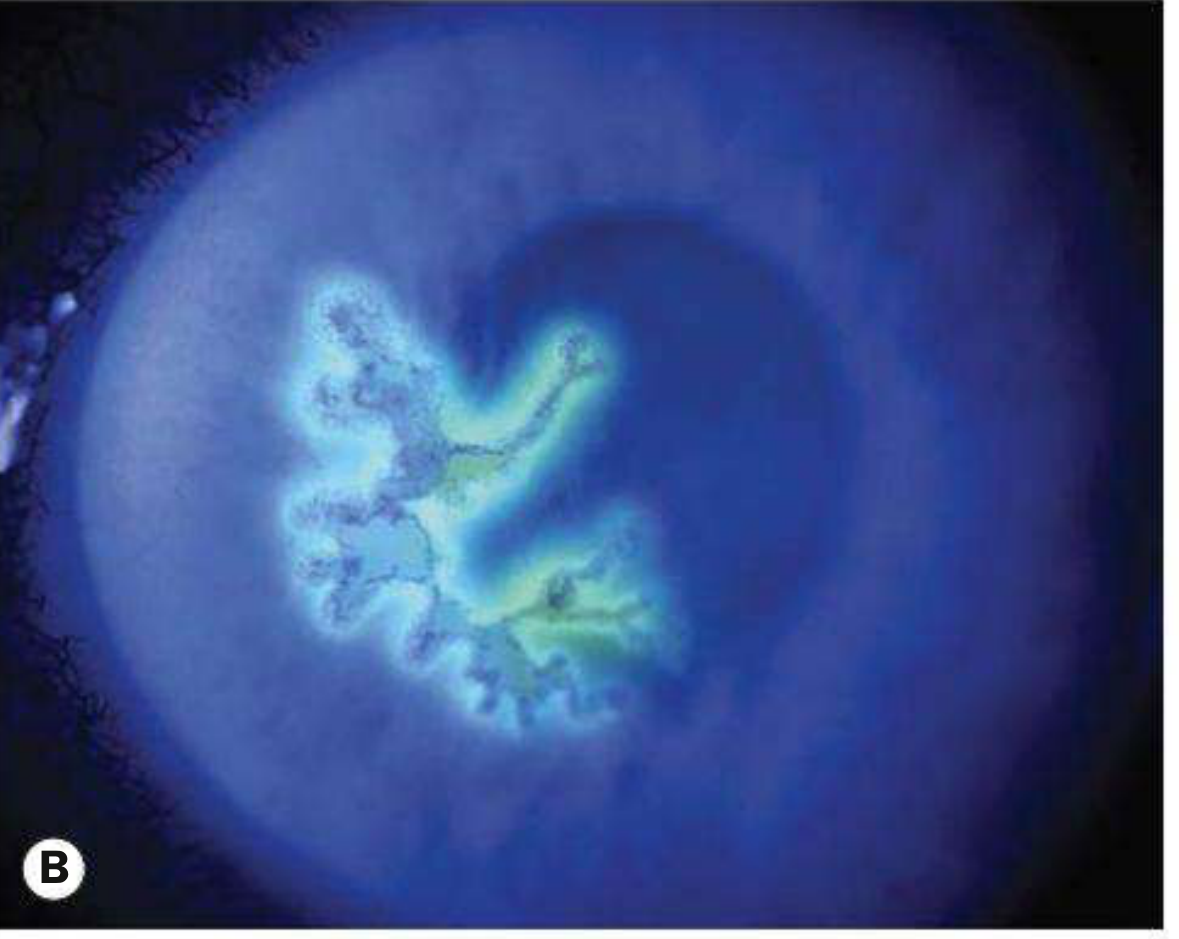
Treatment:
- Topical aciclovir 3% ointment 5× daily for 10-14 days, OR
- Ganciclovir 0.15% gel 5× daily (better tolerated)
- Do NOT use steroids alone (will enlarge ulcer)
- Debridement of infected epithelium (historical; less used now)
(B) Disciform (Endothelial/Stromal) Keratitis
Immune-mediated reaction to viral antigen in the stroma. Not active viral replication.
Signs:
- Central disc of epithelial + stromal oedema (disciform appearance)
- Descemet membrane folds (Vogt's striae)
- Wessely immune ring - deep stromal haze ring surrounding the disc (viral antigen + antibody immune complex)
- KPs on endothelium beneath the disc
- Reduced corneal sensation
- Raised IOP (not uncommon)
- Healed lesions: faint ring of stromal/subepithelial opacification + thinning
Treatment:
- Topical steroids (prednisolone 1% or dexamethasone 0.1%) + antiviral cover (topical aciclovir or oral aciclovir)
- Monitor IOP carefully
- Steroid intensity kept to minimum - taper over ≥4 weeks
- Long-term low-dose steroid (prednisolone 0.5% once daily) often needed to maintain remission
- Oral aciclovir (400 mg twice daily) or valaciclovir (500 mg once daily) for prophylaxis of recurrence
(C) Necrotising Stromal Keratitis
Rare; active viral replication in stroma → white necrotic infiltrate; severe inflammation; scarring + vascularization. High risk of perforation. Needs aggressive topical + systemic antivirals.
(D) Neurotrophic Keratopathy
Result of corneal denervation from repeated HSV episodes.
- Impaired blink reflex + reduced tear production → epithelial breakdown
- Persistent oval epithelial defect with smooth rolled edges (typically inferior third of cornea)
- Treatment: aggressive lubrication, bandage contact lens, amniotic membrane, tarsorrhaphy, cenegermin (recombinant nerve growth factor drops)
(E) Meta-herpetic (Post-herpetic) Keratopathy
Non-infectious stromal scarring + vascularization after recurrent disease. Worsens with each episode.
HEDS Study - Key Evidence
- Oral aciclovir prophylaxis (400 mg twice daily) reduces recurrent HSK by 45%
- Topical steroids (with antiviral cover) benefit stromal (immune) keratitis
- Topical steroids do NOT benefit epithelial (active viral) keratitis
6. Fungal Keratitis
Risk Factors
- Trauma with vegetable/organic matter (filamentous fungi - Fusarium, Aspergillus)
- Contact lens wear (Fusarium, Candida)
- Topical steroids or antibiotics (disrupts flora)
- Immunocompromise (Candida - more common in endogenous/systemic spread)
- Tropical/agricultural regions (filamentous fungi more common)
Organisms
- Filamentous (moulds): Fusarium spp., Aspergillus spp. - associated with trauma
- Yeast: Candida spp. - associated with immunocompromise, chronic disease, contact lenses
Signs
- Typically slower onset than bacterial keratitis
- Feathery/hyphate margins (filamentous fungi)
- Satellite lesions (hyphal extensions)
- Dry, rough, raised infiltrate (unlike bacterial - which is smoother)
- Endothelial plaque
- Immune ring may develop
- Hypopyon
Investigations
- Corneal scrapings: KOH preparation (dissolves tissue; hyphae visible); Calcofluor white (fluoresces hyphae); Gram stain; Giemsa stain; cultures on Sabouraud dextrose agar (fungal media)
- Confocal microscopy (in vivo - non-invasive)
- PCR
Treatment
- Natamycin 5% (first-line for filamentous, especially Fusarium)
- Voriconazole 1% topical (excellent filamentous and Candida coverage; better corneal penetration; first-line in many centres)
- Amphotericin B 0.15% (first-line for Candida)
- Oral voriconazole for deep/severe keratitis or scleritis
- Steroids are contraindicated in active fungal keratitis
- Treatment duration typically 6-12 weeks (much longer than bacterial)
7. Acanthamoeba Keratitis
A protozoal infection with particularly devastating potential. Strongly associated with contact lens wear (especially swimming in lenses).
Organism: Acanthamoeba spp. - free-living amoeba found in soil, water, air; two forms: active trophozoite and resistant cyst (can withstand disinfectants).
Signs
- Severe, disproportionate pain (often out of proportion to clinical signs) - classic feature
- Slow insidious onset
- Perineural infiltrate (radial keratoneuritis) - pathognomonic; linear infiltrates tracking along corneal nerves
- Ring infiltrate (immune ring) - characteristic late sign
- Pseudodendrites (can mimic HSK dendrites but no terminal buds; stain poorly)
- Uveitis, scleritis in severe cases
Diagnosis
- Confocal microscopy - can identify cysts in vivo (doubles/trefoils of bright round structures)
- Corneal scrapings plated on non-nutrient agar with E. coli overlay (amoeba feed on bacteria)
- PCR
Treatment
- Polyhexamethylene biguanide (PHMB) 0.02% + propamidine isethionate (Brolene) 0.1% - cornerstone; hourly initially
- Or chlorhexidine 0.02% (alternative biguanide)
- Treatment for at least 12 months (to eliminate cysts)
- Steroids generally avoided initially; may be used cautiously for severe inflammation after antiamoebics started
- Corneal graft if medical treatment fails
8. Keratoconus
Key Facts
- Progressive central/paracentral corneal stromal thinning + apical protrusion + irregular astigmatism
- Prevalence: 0.1-0.2%
- Onset: teens/twenties
- Males slightly more affected
- Bilateral (eventually in almost all; initially may present as unilateral)
- ~50% of normal fellow eyes progress to KC within 16 years
- Only ~10% have a positive family history; proposed AD with incomplete penetrance
Associations
- Systemic: Down syndrome, Ehlers-Danlos syndrome, Marfan syndrome, osteogenesis imperfecta
- Ocular: Atopy (VKC, eczema), asthma - persistent eye rubbing is a key risk factor; blue sclera, aniridia, Leber congenital amaurosis, retinitis pigmentosa
Diagnosis
Symptoms: Progressive unilateral (early) myopia + irregular astigmatism; monocular diplopia.
Clinical signs:
- Oil-droplet reflex on direct ophthalmoscopy at arm's length (or ~50 cm)
- Scissor reflex on retinoscopy
- Vogt's striae - fine vertical lines in deep stroma (Descemet folds from stress)
- Fleischer ring - epithelial iron deposition at base of cone (best seen with cobalt blue filter)
- Munson's sign - V-shaped deformity of lower lid on downgaze (advanced)
- Rizzuti's sign - conical reflection on nasal cornea from temporal penlight
- Corneal thinning and protrusion on slit lamp
- Corneal sensation reduced
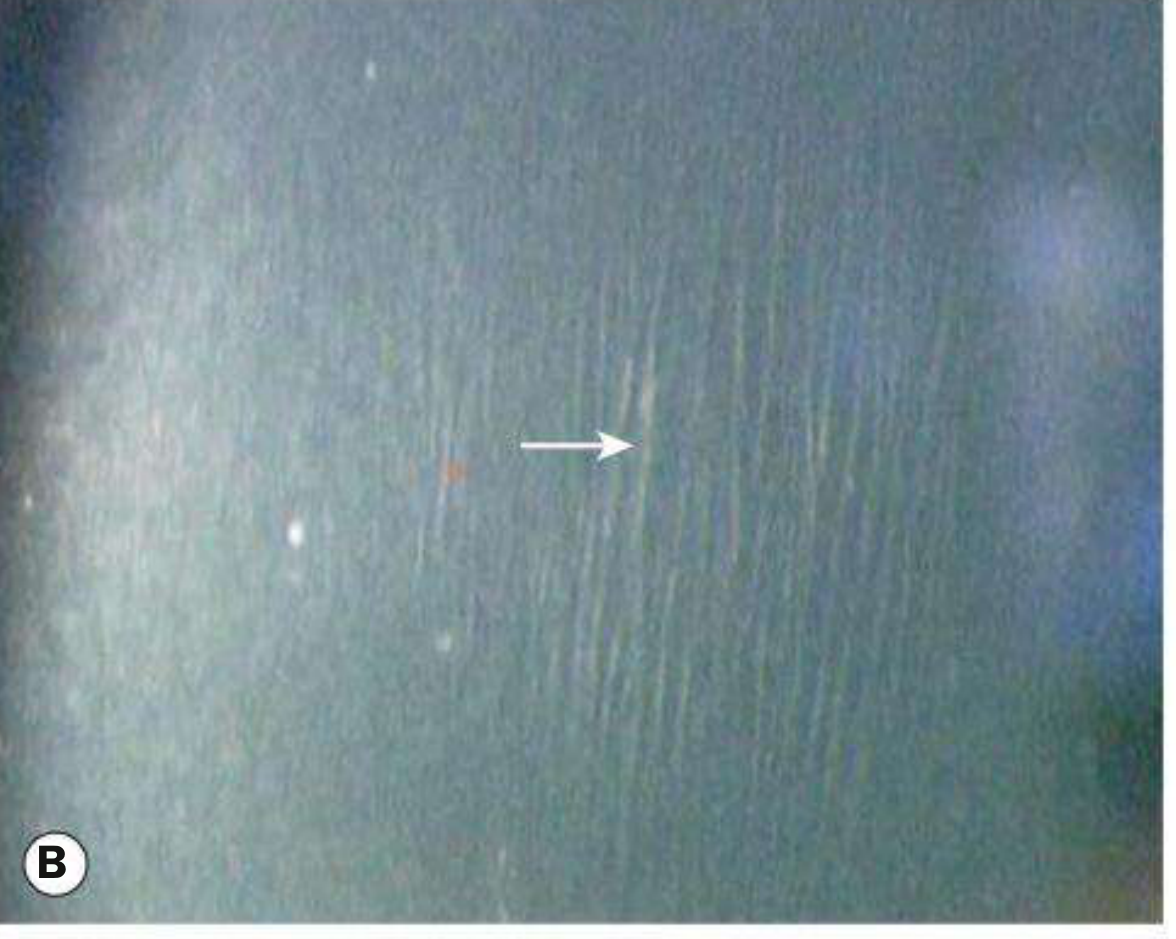
Imaging:
- Corneal topography/tomography (Pentacam Scheimpflug) - shows inferior steepening, asymmetric bowtie pattern; essential for diagnosis and monitoring
- Keratometry grading: Mild (<48 D), Moderate (48-54 D), Severe (>54 D)
- Pachymetry: thinning at apex
Acute Hydrops
Rupture of Descemet membrane → aqueous floods stroma → acute severe corneal oedema.
Signs: Sudden dramatic decrease in vision + pain; dense white opaque area of localised corneal oedema (may be diffuse in severe cases). Munson's sign prominent.
Management: Conservative (hypertonic saline 5%, bandage contact lens, cycloplegia); resolves over months with variable residual scarring. DALK contraindicated after hydrops (Descemet membrane discontinuity).
Treatment
| Stage | Management |
|---|---|
| Mild | Spectacle correction; contact lenses (rigid gas permeable lenses) |
| Progressive | Corneal collagen cross-linking (CXL) - riboflavin (B2) + UV-A irradiation; halts/reverses ectasia; performed when progression documented |
| Moderate | Intracorneal ring segment implants (ICRS/Intacs) - improve contact lens tolerance; can be combined with CXL |
| Severe | Deep anterior lamellar keratoplasty (DALK) or penetrating keratoplasty (PK) |
LASIK is absolutely contraindicated in keratoconus. Screen all refractive surgery candidates for KC first.
Pellucid Marginal Degeneration (PMD)
- Inferior crescentic corneal thinning (4-8 o'clock position) with protrusion above the thinning
- "Against-the-rule" astigmatism; "crab claw" or "butterfly" topography pattern
- Non-inflammatory; similar associations to KC
- Treatment: contact lenses; surgery for advanced cases
9. Corneal Dystrophies
General principles:
- Usually bilateral
- Primarily affect one layer of the cornea
- Slowly progressive
- Most have identified genetic mutations
- Classified by anatomical layer (IC3D classification)
Epithelial Dystrophies
Cogan (Epithelial Basement Membrane / Map-Dot-Fingerprint) Dystrophy
- Most commonly sporadic (degenerative); rare AD familial form (TGFBI gene)
- Hallmark: recurrent corneal erosions (painful, typically on waking)
- Signs on retroillumination:
- Dot-like/microcystic lesions
- Subepithelial map-like patterns surrounded by faint haze
- Fingerprint-like whorled lines
- Bleb-like/pebbled glass pattern
- Treatment: artificial tears, hypertonic saline, lubricating ointment at bedtime; epithelial debridement; anterior stromal micropuncture; excimer laser PTK
Meesmann Epithelial Dystrophy
- Rare; AD; mutations in corneal epithelial keratins (KRT3, KRT12)
- Myriad tiny uniform intraepithelial cysts centrally (sparing limbus)
- Usually asymptomatic; mild recurrent erosions in some
Bowman Layer Dystrophies
Reis-Bücklers Dystrophy (GCD type 3)
- AD; TGFBI gene
- Histology: replacement of Bowman layer by connective tissue bands
- Severe recurrent erosions in childhood; visual impairment
- Signs: grey-white geographic subepithelial opacities, dense centrally; reticular pattern with age
- Treatment: excimer PTK; keratoplasty if severe
Thiel-Behnke Dystrophy (CBD2 / Honeycomb dystrophy)
- AD; TGFBI gene; "curly fibres" on electron microscopy
- Milder than Reis-Bücklers; honeycomb/ring network of subepithelial opacities
Stromal Dystrophies
| Dystrophy | Gene | Inheritance | Histology (Stain) | Key Features |
|---|---|---|---|---|
| Lattice (TGFB1 type) | TGFB1 | AD | Amyloid (Congo red +; green birefringence) | Fine refractile lattice lines; peripheral sparing; recurrent erosions (1st decade) |
| Lattice type 2 (Meretoja/gelsolin) | GSN | AD | Amyloid | Systemic: cranial nerve palsies, skin laxity, renal; sparse lattice lines spreading from periphery |
| Granular type 1 (classic) | TGFB1 | AD | Hyaline (Masson trichrome - bright red) | Discrete white crumb-like/sugar-granule central deposits; clear stroma between; glare + photophobia |
| Granular type 2 (Avellino) | TGFB1 | AD | Hyaline + amyloid (combined) | Stellate/annular lesions; refractive surgery contraindicated (worsens) |
| Macular | CHST6 | AR | Glycosaminoglycans (Alcian blue; colloidal iron) | Dense ill-defined grey-white spots; extend to limbus; early visual loss; early erosions; corneal thinning |
| Schnyder (crystalline) | UBIAD1 | AD | Phospholipid + cholesterol deposits | Central haze + crystals; associated systemic dyslipidaemia; arcus; genu valgum |
Descemet Membrane & Endothelial Dystrophies
Fuchs Endothelial Corneal Dystrophy (FECD)
- Most important endothelial dystrophy
- Bilateral accelerated endothelial cell loss
- More common in women; associated with slightly increased glaucoma prevalence
- Genetic: mostly sporadic; AD; TCF4 gene (most cases); COL8A2 (early-onset variant)
Signs (progressive):
- Cornea guttata - irregular warts/excrescences on Descemet membrane secreted by abnormal endothelial cells
- Specular microscopy: tiny dark spots → "beaten metal" appearance of endothelium
- Blurred vision, worse in the morning (nocturnal corneal oedema; dries during waking hours)
- Central stromal oedema (thickening on pachymetry)
- Epithelial bullae → bullous keratopathy (painful blisters; rupture = acute severe pain)
- Subepithelial scarring + peripheral vascularization (end-stage)
Treatment:
- Conservative: hypertonic NaCl 5% drops/ointment; reduce IOP; hair dryer (corneal dehydration)
- Ruptured bullae: bandage contact lens, cycloplegia, antibiotic ointment, anterior stromal puncture
- Definitive: DMEK (Descemet Membrane Endothelial Keratoplasty) or DSAEK (DSAEK = Descemet Stripping Automated Endothelial Keratoplasty) - posterior lamellar transplantation; or PKP (penetrating keratoplasty)
- Promising: topical Rho-kinase inhibitor + prior transcorneal cryotherapy → stimulates endothelial proliferation
- If cataract surgery needed: consider triple procedure (phaco + IOL + DSAEK) to avoid repeated surgery
Posterior Polymorphous Corneal Dystrophy (PPCD)
- AD; usually asymptomatic
- Vesicular/band lesions on posterior Descemet; some develop corneal oedema
- Association with glaucoma; may have iris-angle abnormalities
10. Corneal Degenerations (Non-dystrophic)
Arcus Senilis (Corneal Arcus)
- Peripheral stromal lipid deposition; separated from limbus by clear zone (lucid interval)
- In elderly: normal (arcus senilis); in young patients (<50): arcus juvenilis → screen for hyperlipidaemia (familial hypercholesterolaemia)
Band Keratopathy
- Calcium deposition in Bowman layer and superficial stroma within interpalpebral fissure
- Grey-white horizontal band with peripheral "Swiss cheese" holes (corneal nerves pass through)
- Causes: chronic uveitis (especially juvenile idiopathic arthritis), hyperparathyroidism, hypercalcaemia, chronic corneal disease, renal failure, sarcoidosis
- Treatment: EDTA chelation (topical 0.35-1.7% disodium EDTA with epithelial debridement); excimer laser PTK
Corneal Deposits
| Deposit | Location | Cause |
|---|---|---|
| Amiodarone (vortex keratopathy) | Epithelium - whorl (verticillata) pattern | Amiodarone, chloroquine, hydroxychloroquine, tamoxifen |
| Kayser-Fleischer ring | Descemet membrane (periphery); brown/green ring | Wilson's disease (copper deposition) |
| Cystine crystals | Stroma | Cystinosis |
| Hudson-Stähli line | Junction of lower and middle thirds (interpalpebral) | Normal aging; iron deposition |
| Fleischer ring | Around base of keratoconus cone | KC (iron) |
| Stocker line | Anterior to pterygium head | Iron |
| Ferry's line | Around filtering bleb | Iron |
11. Peripheral Corneal Disorders
Peripheral Ulcerative Keratitis (PUK)
- Crescentic peripheral stromal thinning with overlying epithelial defect
- Associated with systemic vasculitis (rheumatoid arthritis most common - Mooren's ulcer is idiopathic; also GPA, SLE, PAN)
- Treat systemic disease; immunosuppression (systemic steroids, methotrexate, cyclophosphamide, rituximab)
Marginal Keratitis (Catarrhal Ulcer)
- Peripheral infiltrates/ulcers at 2, 4, 8, 10 o'clock with clear interval between lesion and limbus
- Immune-mediated (staphylococcal hypersensitivity) - not infectious
- Treat underlying blepharitis + short course topical steroid-antibiotic combination
Summary: Key Differentiating Points
| Condition | Key Sign | Reduced Sensation? | Staining |
|---|---|---|---|
| Bacterial keratitis | Hypopyon, mucopurulent | Mild | Fluorescein (ulcer) |
| HSV epithelial | Dendritic ulcer with terminal buds | Yes | Fluorescein (bed), Rose Bengal (margins) |
| HSV disciform | Disc oedema + Wessely ring | Yes | No ulcer |
| Acanthamoeba | Radial keratoneuritis; severe pain | Variable | Pseudodendrites |
| Fungal | Feathery margins; satellite lesions | No | - |
| Keratoconus | Oil droplet reflex; Fleischer ring | No | - |
| Fuchs dystrophy | Cornea guttata; worse mornings | No | - |
| Band keratopathy | Horizontal grey band with holes | No | - |
Sources: Kanski's Clinical Ophthalmology: A Systematic Approach, 10th ed., Chapter 7 (Cornea) | The Wills Eye Manual, Sections 4.11-4.15 (Keratitis), Chapter 5 (Corneal/Conjunctival Findings)
Iris anatomy opthalmology
Searching sources...
Finding Sources
Finding Sources
Finding Sources
Reading File
Reading File
Reading File
Finding Sources
Reading File
Reading File
Reading File
Reading File
Reading File
Reading File
Reading File
Reading File
Reading File
I now have comprehensive content. Let me compile the full iris anatomy and pathology review.
The Iris - Anatomy, Physiology & Ophthalmology
Kanski's Clinical Ophthalmology 10th ed. & The Wills Eye Manual
1. Anatomy of the Iris
Overview
The iris is the most anterior part of the uveal tract (uvea = iris + ciliary body + choroid). It is a thin circular disc perforated centrally by the pupil, suspended in the aqueous humour between the cornea and lens.
Macroscopic Structure
The iris is divided into two zones by the collarette - a slightly raised sinuous ridged line ~1.5 mm from the pupillary margin:
- Pupillary zone - inner zone (between pupil and collarette); contains the pupillary sphincter muscle
- Ciliary (peripheral) zone - outer zone (between collarette and iris root); contains the dilator muscle
The iris has a rich trabecular meshwork of crypts and folds visible on slit-lamp examination, especially in lighter-coloured irides.
Layers (anterior to posterior)
| Layer | Description |
|---|---|
| Anterior border layer | Thin; discontinuous; fibroblasts and melanocytes; no true epithelium (iris faces directly onto aqueous) |
| Stroma | Loose connective tissue; collagen fibers, fibroblasts, melanocytes, clump cells, smooth muscle; contains blood vessels and nerves |
| Pupillary dilator muscle | Radially oriented smooth muscle; derived from neuroectoderm (posterior iris pigment epithelium); innervated by sympathetic nerves (long ciliary nerves) |
| Posterior pigmented epithelium (IPE) | Two layers of heavily pigmented cuboidal epithelial cells; responsible for the dense pigmentation of the posterior iris; neuroectodermal origin; pupillary sphincter embedded in the anterior of these two layers |
Pupillary Sphincter Muscle
- Circular smooth muscle at the pupillary margin (2-3 mm width)
- Innervated by parasympathetic fibers (CN III → ciliary ganglion → short ciliary nerves)
- Constricts the pupil (miosis)
- Pharmacology: constricted by pilocarpine, echothiophate; blocked by atropine, tropicamide
Pupillary Dilator Muscle
- Radially arranged in ciliary zone
- Innervated by sympathetic fibers (superior cervical ganglion → long ciliary nerves via nasociliary branch of V1)
- Dilates the pupil (mydriasis)
- Pharmacology: stimulated by phenylephrine, cocaine; blocked in Horner syndrome
Blood Supply
- Major arterial circle of the iris - at the root of the iris (formed by the long posterior and anterior ciliary arteries)
- Minor arterial circle - near the collarette (formed from branches of the major circle)
- Radially oriented blood vessels between the two circles
Nerve Supply
- Sensory: Nasociliary nerve (V1) via long and short ciliary nerves
- Motor (sphincter): Short ciliary nerves (CN III parasympathetic)
- Motor (dilator): Long ciliary nerves (sympathetic)
Colour
Iris colour depends on melanin content in the stroma:
- Blue eyes: little stromal melanin (posterior pigment epithelium is dark in all irides - gives blue appearance by Tyndall scattering)
- Brown/dark eyes: abundant stromal melanin
- Neonates: blue at birth (stromal melanocytes not yet activated); final colour develops over first year
2. Iris-Related Structures
The Anterior Chamber Angle
Key anatomical landmark for aqueous outflow and glaucoma. Gonioscopic landmarks (from posterior to anterior):
| Structure | Description |
|---|---|
| Ciliary body band | Grey/dark brown band; width proportional to anterior iris insertion |
| Scleral spur | White/pale structure; attachment of longitudinal ciliary muscle; anterior limit of ciliary body |
| Trabecular meshwork | Brownish; main aqueous outflow pathway; pigmented posteriorly (Schlemm's canal area) |
| Schwalbe's line | White/translucent line; anterior termination of Descemet membrane; junction of corneal endothelium and trabecular meshwork |
| Sampaolesi's line | Pigment line anterior to or on Schwalbe's line; seen in pseudoexfoliation and pigment dispersion syndrome |
Aqueous Humour Dynamics
- Produced by ciliary body epithelium (active secretion + ultrafiltration)
- Flows from posterior chamber → through pupil → into anterior chamber
- Drainage: trabecular route (80%; Schlemm's canal → collector channels → episcleral veins) and uveoscleral route (20%; through ciliary body and suprachoroidal space)
3. Pupil - Clinical Assessment
Normal Pupil Reflexes
Light reflex (direct): Light → retina → optic nerve → optic chiasm → optic tract → pretectal nucleus (midbrain) → Edinger-Westphal nucleus → CN III → ciliary ganglion → short ciliary nerves → sphincter pupillae.
Consensual reflex: Same pathway but crossing at the posterior commissure to the contralateral Edinger-Westphal nucleus - both pupils constrict when one eye is illuminated.
Near (accommodation) reflex: Convergence + accommodation + miosis (the "triple response"). Pathway: visual cortex → midbrain → bilaterally to Edinger-Westphal → CN III.
Relative Afferent Pupillary Defect (RAPD / Marcus Gunn Pupil)
- Swinging flashlight test: Both pupils dilate when light moved to the affected eye (reduced afferent input from that eye)
- Indicates asymmetric afferent pathway disease (optic nerve, retina, chiasm/tract)
- Does NOT occur with pure media opacity (cataract, vitreous) unless very dense
- Causes: optic neuritis, AION, severe retinal disease, optic nerve compression
Abnormal Pupils
| Condition | Pupil Size | Reactivity | Other |
|---|---|---|---|
| Horner syndrome | Miosis | Reactive | Ptosis, anhidrosis; dilation lag in dark |
| CN III palsy | Mydriasis | Unreactive to light + near | Ptosis + complete EOM palsy |
| Argyll Robertson pupil | Small, irregular | Unreactive to light; REACTS to near | "Prostitute's pupil"; syphilis (dorsal midbrain) |
| Holmes-Adie (tonic) pupil | Large | Slow, tonic, sector-like constriction to light; REACTS to near | Denervation hypersensitivity to 0.1% pilocarpine |
| Pharmacological mydriasis | Mydriasis | Unreactive | Atropine, tropicamide, cyclopentolate |
| Traumatic mydriasis | Mydriasis | Sluggish or absent | Sphincter tears at pupillary margin; Vossius ring |
| Pilocarpine miosis | Miosis | Reactive | Pharmacological |
| Anterior uveitis | Miosis | Reactive (sluggish) | Posterior synechiae may form |
| Relative miosis | Miosis | Reactive | Horner, opioids, Argyll Robertson, pontine hemorrhage |
4. Anterior Uveitis (Iritis/Iridocyclitis)
Classification
Anatomical location:
- Iritis = iris inflammation only
- Iridocyclitis = iris + anterior ciliary body (clinically the same)
- Anterior uveitis = encompassing term (most common form of uveitis overall)
Course:
- Acute: Rapid onset, symptomatic; resolves within 3 months
- Chronic: Persistent >3 months; often asymptomatic (insidious)
- Recurrent: Repeated episodes with intervals of quiet
Symptoms
Acute:
- Pain, photophobia, consensual photophobia (pain in the affected eye when light shone in the FELLOW eye)
- Redness, tearing, decreased vision
Chronic:
- Decreased vision (from cataract, CME, vitreous debris, ERM)
- Floaters; may be nearly asymptomatic (especially JIA)
Signs - Slit-Lamp Examination
Ciliary/perilimbal flush - injected deep perilimbal vessels (circumcorneal injection); distinct from conjunctival injection (which is maximal in the fornices).
Anterior Chamber Cells (SUN Working Group grading, 1×1 mm slit beam):
| Grade | Cells in field |
|---|---|
| 0 | <1 |
| 0.5+ | 1-5 |
| 1+ | 6-15 |
| 2+ | 16-25 |
| 3+ | 26-50 |
| 4+ | >50 |
Flare (protein leakage from damaged blood-aqueous barrier):
| Grade | Description |
|---|---|
| 0 | None |
| 1+ | Faint |
| 2+ | Moderate (iris/lens details clear) |
| 3+ | Marked (iris/lens details hazy) |
| 4+ | Intense (fibrin/plastic aqueous - "hypopyon-like") |
Keratic Precipitates (KP): Inflammatory cell clusters on corneal endothelium.
| KP Type | Distribution | Associated Conditions |
|---|---|---|
| Fine/stellate | Diffuse | HSV, VZV, Fuchs heterochromic iridocyclitis (FHC) |
| "Coin-shaped" | Central | CMV uveitis (characteristic) |
| Small non-granulomatous | Inferior cornea | HLA-B27, trauma, JIA, Posner-Schlossman |
| Large "mutton-fat" (greasy) | Inferior cornea (Arlt's triangle) | Granulomatous: sarcoidosis, TB, syphilis, VKH, sympathetic ophthalmia |
| Old pigmented | Inferior | Previous granulomatous disease |
Hypopyon: Sterile layered pus in the inferior anterior chamber; seen in severe acute uveitis (especially HLA-B27, Behçet disease, endophthalmitis).
Iris Nodules:
- Koeppe nodules - at pupillary margin; seen in both granulomatous and non-granulomatous uveitis
- Busacca nodules - in the iris stroma (mid-iris); granulomatous disease only (sarcoid, TB, leprosy)
Fibrinous exudate - protein coagulum in anterior chamber; severe inflammation.
Posterior synechiae - adhesions between the posterior iris surface and the anterior lens capsule. Can lead to "bound-down pupil" (seclusio pupillae) → pupil block → iris bombé → angle-closure glaucoma.
Iris bombé - forward bowing of the peripheral iris from pupil block by posterior synechiae → 360° seclusion → angle closure.
IOP: May be reduced initially (impaired aqueous secretion by inflamed ciliary body) or elevated (trabecular inflammation/debris, steroid response, angle closure).
Heterochromia (difference in iris colour): In uveitis context - Fuchs heterochromic iridocyclitis (affected eye lighter).
Rubeosis iridis (iris neovascularization): New vessels on iris stroma. Causes:
- Ischemic: diabetic retinopathy (most common), CRVO, CRAO, ocular ischemic syndrome
- Inflammatory: chronic uveitis, Fuchs
- Tumours: retinoblastoma, melanoma
Systemic Associations of Anterior Uveitis
| Category | Examples |
|---|---|
| Idiopathic | ~50% of acute anterior uveitis |
| HLA-B27-associated | ~20% of AAU; ankylosing spondylitis, reactive arthritis (Reiter), psoriatic arthritis, IBD |
| Infectious | VZV (ophthalmic zoster), HSV, TB, syphilis, Lyme disease |
| Juvenile idiopathic arthritis (JIA) | Chronic bilateral uveitis (especially oligoarticular ANA+); asymptomatic; high risk of band keratopathy + cataract |
| Sarcoidosis | Granulomatous; bilateral; mutton-fat KP; Busacca nodules; multisystem involvement |
| Behçet disease | Recurrent hypopyon; bilateral; oral/genital ulcers; HLA-B51 |
| Tubulointerstitial nephritis + uveitis (TINU) | Young women; bilateral; renal disease |
| SLE, MS | Rare |
Key pearl: Bilateral acute recurrent alternating anterior uveitis = highly characteristic of HLA-B27 disease.
Treatment of Anterior Uveitis
Topical steroids:
- Prednisolone 1% / dexamethasone 0.1% - most effective; hourly initially, taper over 4-6 weeks
- Monitor IOP (steroid response glaucoma)
Cycloplegia:
- Atropine 1% (for severe/chronic) - prevents posterior synechiae; reduces pain (ciliary spasm)
- Cyclopentolate 1% (less severe acute uveitis)
Subconjunctival / periocular steroids: For severe/recurrent disease.
Systemic steroids: For bilateral severe disease or when systemic disease needs treatment.
Steroid-sparing immunosuppressives (for chronic/recurrent):
- Methotrexate (especially JIA), mycophenolate mofetil, azathioprine
- Anti-TNF biologic agents (infliximab, adalimumab) - highly effective for refractory disease
Break posterior synechiae: Intensive mydriatics (atropine + phenylephrine); subconjunctival mydricaine injection.
Iris bombé: Laser peripheral iridotomy (LPI) to relieve pupil block.
5. Iris Abnormalities - Signs & Differential Diagnoses
Iris Heterochromia
Lighter affected iris:
- Congenital Horner syndrome
- Fuchs heterochromic iridocyclitis
- Chronic uveitis
- Juvenile xanthogranuloma
- Waardenburg syndrome
Darker affected iris:
- Ocular melanocytosis / naevus of Ota
- Hemosiderosis / siderosis (iron from retained foreign body)
- Iris melanoma
- Diffuse iris naevus
- Retinoblastoma, leukaemia, lymphoma
- ICE syndrome
- Some cases of Fuchs heterochromic iridocyclitis
Iris Transillumination Defects
Light passes through areas of iris lacking pigment:
- Spoke-wheel / peripheral radial defects: Pigment dispersion syndrome (PDS)
- Patchy mid-peripheral defects: HSV/VZV anterior uveitis
- Sector defects: Trauma, focal ischemia
- Diffuse defects: Albinism, aniridia
Rubeosis Iridis (Iris Neovascularization)
Causes:
- Diabetic retinopathy (most common)
- CRVO, CRAO
- Ocular ischemic syndrome
- Chronic uveitis
- Intraocular tumour (retinoblastoma, melanoma)
- Chronic retinal detachment
Complication: Neovascular (haemorrhagic) glaucoma - new vessels grow into angle → fibrovascular membrane → synechial angle closure.
6. Congenital Iris Anomalies
Aniridia
- Rare bilateral condition - absence of iris (actually a hypoplastic iris remnant present gonioscopically)
- Gene: PAX6 mutation (chromosome 11p13)
- PAX6 is adjacent to WT1 gene (Wilms tumour suppressor)
Three forms:
| Form | Inheritance | Systemic Associations |
|---|---|---|
| Autosomal dominant (~2/3) | AD (complete penetrance) | None |
| Sporadic/WAGR syndrome (~1/3) | Sporadic (11p13 deletion) | Wilms tumour (~30%), mental retardation, genitourinary abnormalities, obesity |
| Gillespie syndrome (~1%) | AR (not PAX6) | Cerebellar ataxia, learning disabilities |
Screening: Sporadic aniridia → abdominal USS every 3 months until age 5, every 6 months until 10, annually until 16 (or until WT1 mutation excluded by genetics).
Ocular features:
- Nystagmus and photophobia at birth (presentation)
- Variable severity of iris absence (from subtle to total)
- Foveal and/or optic nerve hypoplasia → poor vision
- Limbal stem cell deficiency → corneal vascularization + opacification ("aniridic keratopathy")
- Dry eye, tear film instability
- Cataract, lens subluxation
- Glaucoma (75%) - late childhood/adolescence; synechial angle closure; difficult to treat
Iris Coloboma
- Keyhole-shaped defect of the iris at the 6 o'clock position (inferior)
- Results from failure of embryonic fissure to close (5th-7th week)
- May involve the choroid, retina, optic nerve (complete uveal coloboma)
- Associated syndromes: CHARGE, cat-eye syndrome, trisomy 13
Persistent Pupillary Membrane
- Remnants of fetal pupillary membrane attached to the anterior lens surface or iris
- Usually regresses by birth but may persist
- Rarely affects vision; no treatment usually needed
Brushfield Spots
- Whitish/greyish spots in the peripheral iris stroma (areas of relative stromal condensation)
- Normal iris stroma surrounding = relatively thinner
- Associated with Down syndrome (trisomy 21) but can be seen in normal individuals
- Distinguish from Lisch nodules (below)
7. Iris Lesions
Benign Iris Lesions
Iris freckle (ephelis):
- Flat, small (<3 mm), discrete surface melanin deposits
- No architectural distortion of underlying stroma
- No malignant potential
Iris naevus:
- Circumscribed, flat or variably elevated pigmented lesion
- Disrupts normal iris architecture (distinguishes from freckle)
- Malignant transformation rate: up to 8% over 15 years
- Risk factors for transformation: young age (<40), inferior location, bleeding, diffuse involvement, feathery margins, ectropion uveae
- Management: lifelong observation + slit-lamp photography
Lisch nodules:
- Small dome-shaped melanocytic hamartomas of iris stroma
- Bilateral; multiple; tan-coloured
- Pathognomonic of Neurofibromatosis type 1 (NF-1)
- Present in >95% of adult NF-1 patients; increases with age
- No malignant potential
Iris cysts:
- Primary (from iris pigment epithelium or iris stroma)
- Secondary (from implanted epithelium - post-trauma or surgery, or from intraocular medications such as miotics)
- Most are benign; monitoring required
- UBM (ultrasound biomicroscopy) used for diagnosis and monitoring
Juvenile Xanthogranuloma (JXG):
- Rare idiopathic granulomatous disease of early childhood
- Iris involvement → recurrent spontaneous hyphaema (highly characteristic)
- Yellowish-orange nodules on iris
- Can also cause glaucoma
- Treatment: topical/systemic steroids; subconjunctival steroid; rarely radiation
Malignant Iris Lesions
Iris Melanoma
- ~8% of uveal melanomas arise in the iris
- Best prognosis of all uveal melanomas: only ~5% develop metastasis within 10 years
- Risk factors: fair skin, light iris colour, ocular/oculodermal melanocytosis, cutaneous dysplastic naevi, chronic sun exposure, arc welding
- Presents typically in middle age (a decade earlier than ciliary body/choroidal melanoma)
Histology: Diffusely infiltrating spindle cells (low-grade); minority have epithelioid component (more aggressive).
Signs:
- Pigmented nodule ≥3 mm diameter, ≥1 mm thick (typically inferior iris)
- Surface blood vessels (prominent)
- Ectropion uveae (pigment epithelium pulled around the pupillary margin anteriorly)
- Pupillary distortion
- Localized cataract
- Angle infiltration → glaucoma
- Extrascleral extension (rare)
Complications: Hyphaema, cataract, secondary glaucoma.
Investigation:
- UBM - to exclude ciliary body involvement
- Fine-needle aspiration biopsy (FNAB) - before major surgery
- Systemic metastatic workup (liver function, LDH, imaging)
Treatment:
- Small: sector iridectomy
- Angle/ciliary body involvement: iridocyclectomy
- Radiotherapy: brachytherapy (radioactive plaque) or proton beam irradiation
- Enucleation: diffuse tumours not amenable to radiotherapy
Iris Metastasis
- Rare; fast-growing
- White, pink, or yellow mass(es)
- Most common primary: breast carcinoma (most common); lung
- Rapidly progressive hyphaema + raised IOP
- Treatment: systemic (chemotherapy/hormone therapy) ± local radiation
8. Iridocorneal Endothelial (ICE) Syndrome
A rare unilateral condition in young to middle-aged women characterized by abnormal corneal endothelial proliferation that can spread across the angle and iris.
Three clinical variants:
- Progressive iris atrophy - iris holes, ectropion uveae, pseudo-polycoria
- Chandler syndrome - corneal oedema predominates; relatively mild iris changes
- Iris naevus (Cogan-Reese) syndrome - diffuse iris naevus with pedunculated nodules
Common features:
- Unilateral, non-hereditary
- ICE (hammered silver) endothelial appearance on specular microscopy
- Peripheral anterior synechiae
- Secondary glaucoma (difficult to control)
Summary: Key Iris Associations
| Finding | Condition |
|---|---|
| Lisch nodules | Neurofibromatosis type 1 |
| Brushfield spots | Down syndrome (normal in ~25% of general population) |
| Kayser-Fleischer ring | Wilson's disease (Descemet membrane) |
| Koeppe nodules | Granulomatous AND non-granulomatous uveitis |
| Busacca nodules | Granulomatous uveitis only (sarcoid, TB, leprosy) |
| Mutton-fat KP | Granulomatous uveitis (sarcoid, TB, syphilis, VKH) |
| Rubeosis iridis | Diabetic retinopathy, CRVO, ischemia, tumour |
| Lighter iris (uveitis) | Fuchs heterochromic iridocyclitis, Horner (congenital) |
| Hypopyon | Behçet, HLA-B27, endophthalmitis, severe infectious keratitis |
| Transillumination defects (peripheral radial) | Pigment dispersion syndrome |
| Aniridia + Wilms tumour risk | Sporadic PAX6 mutation (WAGR syndrome) |
| Juvenile iris hyphaema | Juvenile xanthogranuloma |
| Iris bombé | Posterior synechiae → seclusio pupillae → pupil block |
Sources: Kanski's Clinical Ophthalmology: A Systematic Approach, 10th ed., Chapters 11-12, 20 | The Wills Eye Manual, Sections 12.1 (Anterior Uveitis), IRIS differential diagnosis tables
Uvea ant uveitis int uveitis all uveitis
Uvea anatomy all pathology opthalmology
Searching sources...
Finding Sources
Finding Sources
Reading File
Reading File
Reading File
Reading File
Reading File
Reading File
Reading File
Reading File
Finding Sources
Reading File
Reading File
Reading File
Reading File
Reading File
Reading File
Reading File
Reading File
Finding Sources
Reading File
Reading File
The Uvea - Anatomy, Uveitis: Complete Review
Kanski's Clinical Ophthalmology 10th ed. & The Wills Eye Manual
1. Uveal Tract - Anatomy Overview
The uveal tract is the middle vascular coat of the eye, lying between the sclera (outer) and retina/vitreous (inner). It consists of three continuous parts:
| Component | Location | Key Functions |
|---|---|---|
| Iris | Most anterior; in front of lens | Controls pupil size; light regulation |
| Ciliary body | Between iris and choroid | Aqueous production; lens accommodation |
| Choroid | Posterior; between sclera and RPE | Supplies outer retina with nutrition |
Choroid
- Highly vascular layer (the most vascular tissue in the body per unit area)
- Layers (outer to inner): Haller's layer (large vessels), Sattler's layer (medium vessels), choriocapillaris (single layer of fenestrated capillaries supplying the outer retina), Bruch's membrane (innermost; separates choriocapillaris from RPE)
- Bruch's membrane = 5 layers: RPE basement membrane / inner collagenous zone / elastin layer / outer collagenous zone / choriocapillaris endothelium basement membrane
- Blood supply: short posterior ciliary arteries (posterior choroid) and long posterior ciliary arteries (anterior choroid, iris, ciliary body)
- Venous drainage: vortex veins (4-5 exiting through sclera)
Ciliary Body
- Extends from the ora serrata to the scleral spur
- Pars plana (posterior flat portion, 3-4 mm) - surgical approach zone (pars plana vitrectomy)
- Pars plicata (anterior ridged portion, 2 mm) - contains ciliary processes (70 processes) that produce aqueous humour
- Contains ciliary muscle (3 parts: longitudinal/Brücke's, radial/oblique, circular/Müller's) - accommodation by relaxing/tightening zonular fibers
- Innervated by parasympathetics (CN III → ciliary ganglion → short ciliary nerves) and sympathetics
2. Uveitis - Classification Framework
SUN Working Group Classification (Anatomical)
| Type | Primary Site | Definition |
|---|---|---|
| Anterior uveitis | Anterior chamber | Cells limited to AC (iritis) or with some anterior vitreous (iridocyclitis). AC cells > vitreous cells |
| Intermediate uveitis | Vitreous | Cells in vitreous cavity (vitritis) ± AC cells. Vitreous cells > AC cells. No chorioretinal disease |
| Posterior uveitis | Retina/choroid | Retinitis, choroiditis, or retinal vasculitis in isolation |
| Panuveitis | All segments | Anterior + posterior involvement simultaneously |
IMPORTANT (Wills): "Isolated anterior uveitis should NEVER be diagnosed without assessment of the retina."
Course Classification
- Acute: Sudden onset + limited duration (<3 months)
- Chronic: Persistent, or flaring ≤3 months after stopping therapy
- Recurrent: Repeated episodes with intervals of quiet >3 months after stopping therapy
- Uveitis controlled with medication = "suppressed" not "in remission"
Granulomatous vs. Non-Granulomatous
| Feature | Granulomatous | Non-Granulomatous |
|---|---|---|
| KP type | Large "mutton-fat" | Small, fine |
| Iris nodules | Busacca + Koeppe | Koeppe only |
| Onset | Usually insidious | Usually acute |
| Causes | Sarcoid, TB, syphilis, VKH, SO, leprosy | HLA-B27, trauma, JIA, Fuchs, Reiter |
Key HLA Associations with Uveitis
| HLA Type | Associated Disease |
|---|---|
| HLA-B27 | Recurrent acute anterior uveitis (AS, Reiter, psoriatic, IBD) |
| HLA-A29 | Birdshot retinochoroidopathy |
| HLA-B51 / B5 | Behçet disease |
| HLA-B7 / DR2 | Presumed ocular histoplasmosis syndrome (POHS) |
| HLA-DR4 | Sympathetic ophthalmia AND VKH syndrome |
3. Anterior Uveitis (Iritis / Iridocyclitis)
Epidemiology
- Most common form of uveitis overall
- AAU most common: HLA-B27-related + idiopathic = largest proportion (~50% idiopathic, ~20% HLA-B27)
Symptoms
- Acute: Sudden-onset unilateral pain, photophobia, consensual photophobia (pain in the affected eye when light shone in the fellow eye), redness, tearing, decreased vision
- Chronic: Often asymptomatic or only mild; decreased vision from complications (cataract, CME, vitreous cells); floaters; common in JIA
Signs at the Slit Lamp
Ciliary/perilimbal flush - deep circumcorneal injection (maximal at limbus, fades towards fornix).
Anterior Chamber Cells (SUN Grading, 1×1 mm slit beam):
| Grade | Cells |
|---|---|
| 0 | <1 |
| 0.5+ | 1-5 |
| 1+ | 6-15 |
| 2+ | 16-25 |
| 3+ | 26-50 |
| 4+ | >50 |
Flare (protein leakage - blood-aqueous barrier breakdown):
| Grade | Description |
|---|---|
| 0 | None |
| 1+ | Faint |
| 2+ | Moderate (iris/lens details clear) |
| 3+ | Marked (iris/lens details hazy) |
| 4+ | Intense (fibrinous/plastic aqueous) |
Keratic Precipitates (KP) - on corneal endothelium:
| KP Type | Description | Conditions |
|---|---|---|
| Fine/stellate | Diffuse over endothelium | HSV, VZV, Fuchs uveitis syndrome |
| "Coin-shaped" | Central/mid-cornea | CMV uveitis (characteristic) |
| Small non-granulomatous | Inferior cornea | HLA-B27, trauma, JIA, Posner-Schlossman |
| Large "mutton-fat" | Arlt's triangle (inferior) | Sarcoidosis, TB, syphilis, VKH, sympathetic ophthalmia, leprosy |
| Old pigmented | Inferior | Resolved prior granulomatous disease |
Iris nodules:
- Koeppe nodules = at pupillary margin; granulomatous AND non-granulomatous disease
- Busacca nodules = in iris stroma (mid-iris); granulomatous disease only (sarcoid, TB, leprosy)
Posterior synechiae - iris-to-lens adhesions; lead to bound-down pupil (seclusio pupillae) → iris bombé → angle-closure glaucoma.
Hypopyon - sterile layered pus in inferior AC; Behçet, HLA-B27, severe infectious.
IOP: May be low (ciliary shutdown) or elevated (trabeculitis, steroid response, pupil block).
Complications: Band keratopathy, posterior synechiae, iris bombé, cataract (posterior subcapsular), CME, secondary glaucoma.
Systemic Associations of Anterior Uveitis
| Category | Conditions |
|---|---|
| Idiopathic | ~50% (no identifiable cause) |
| HLA-B27 | Ankylosing spondylitis, reactive arthritis (Reiter), psoriatic arthritis, IBD (Crohn, UC) |
| Infectious | VZV (ophthalmic zoster), HSV, TB, syphilis, Lyme disease |
| JIA | Most common systemic disease in childhood uveitis |
| Sarcoidosis | Granulomatous; bilateral; mutton-fat KP; Busacca nodules |
| Behçet | Recurrent hypopyon; panuveitis |
| TINU | Tubulointerstitial nephritis + uveitis; young females |
| Drug-induced | Rifabutin, cidofovir, bisphosphonates, checkpoint inhibitors, moxifloxacin |
4. HLA-B27-Associated Uveitis
Key Features
- Recurrent, unilateral (alternating) acute non-granulomatous anterior uveitis
- Most common cause of unilateral hypopyon (Wills)
- Severe AC reaction with cell, flare, fibrin; early posterior synechiae
- More common in men
Clinical Pearl (Wills): "Over half of patients with HLA-B27-positive AAU have an underlying seronegative spondyloarthropathy, and of those, over half are diagnosed only after the onset of uveitis."
Clinical Pearl (Kanski): "Bilateral acute recurrent alternating anterior uveitis is very characteristic of HLA-B27 disease."
Associated Seronegative Spondyloarthropathies
| Condition | Key Features |
|---|---|
| Ankylosing spondylitis | Young-middle-aged males; lower back stiffness/pain; sacroiliac joint sclerosis on X-ray; "bamboo spine"; uveitis in 25% |
| Reactive arthritis (Reiter syndrome) | Triad: urethritis + conjunctivitis + arthritis; follows GI/GU infection; lower limb arthritis; young men |
| Psoriatic arthritis | Skin + nail changes; upper limb arthritis |
| IBD-associated | Crohn disease / ulcerative colitis; HLA-B27-negative patients more likely to get PUK than uveitis |
| Undifferentiated spondyloarthropathy | Features without meeting full criteria for others |
Workup
- HLA-B27 typing
- Sacroiliac joint X-rays or CT
- ESR, CRP
- Rheumatology referral
- Swab for Chlamydia (if reactive arthritis suspected)
Treatment
- Topical prednisolone + cyclopentolate (acute episodes)
- Systemic NSAIDs for joint disease
- Anti-TNF (adalimumab, infliximab) for recurrent/vision-threatening disease
5. Juvenile Idiopathic Arthritis (JIA) - Uveitis
JIA Classification (ILAR)
| Subtype | Joint Involvement | Gender | ANA | Uveitis Risk |
|---|---|---|---|---|
| Oligoarticular | ≤4 joints; knees/ankles | Girls >> boys; peak age ~2y | +75% | ~20% - HIGHEST |
| Polyarticular RF-negative | ≥5 joints; symmetric | Girls >> boys | +40% | 5-10% |
| Polyarticular RF-positive | ≥5 joints; resembles adult RA | Girls | ANA rare | Very low |
| Systemic (Still's disease) | Any joint + systemic features | Equal M:F | ANA negative | Rare |
| Enthesitis-related | Entheses + joints | Boys | Negative | Moderate |
| Psoriatic | Any; nail changes | Variable | Variable | Moderate |
JIA Uveitis - Clinical Features
- Asymptomatic - this is the critical danger. Even 4+ cells causes no pain/redness
- Chronic bilateral non-granulomatous anterior uveitis
- White eye despite active inflammation
- Must be detected by screening slit lamp examination
- Often diagnosed late - by complications (band keratopathy, cataract, amblyopia, strabismus)
JIA Uveitis Complications
Band keratopathy (calcium deposits in Bowman's layer), posterior synechiae, cataract (posterior subcapsular), CME, secondary glaucoma, phthisis bulbi.
JIA Screening Protocol (RCOPHTH/BAP guidelines)
Based on subtype, ANA status, and age of onset - typically every 3-6 months slit lamp exams.
JIA Uveitis Treatment
- Topical steroids + cycloplegics (acute control)
- Methotrexate - first-line systemic agent
- Anti-TNF (adalimumab) - approved for refractory JIA uveitis; significantly improves outcomes
- Cyclosporin, mycophenolate as alternatives
6. Fuchs Uveitis Syndrome (FUS / FHC)
Epidemiology
- Chronic non-granulomatous condition; average diagnosis age ~40 years; no gender/racial predilection
- Aetiology uncertain; rubella virus most implicated; T. gondii also suspected
- Unilateral in 90-95%
Clinical Features - The 6 Signs of FUS
| Sign | Detail |
|---|---|
| Heterochromia | Affected eye is lighter (hypochromic); best seen in daylight; may be absent in dark eyes |
| Stellate KP | Grey-white, diffusely spread over entire endothelium (NOT just inferior); characteristic appearance |
| Iris atrophy | Diffuse; loss of crypts; smooth appearance; prominent sphincter pupillae |
| No posterior synechiae | Absent (except post-cataract surgery) - KEY distinguishing feature |
| White eye | No ciliary injection even during exacerbations |
| Vitritis | Anterior vitreous opacities often dense |
Iris Features
- Fine irregular iris surface vessels (common)
- Iris nodules (30%) on pupillary border (Koeppe nodules)
- Russell bodies (tiny crystals on iris surface)
- Retroillumination shows pigment epithelial atrophy
Complications
- Cataract (PSC) - extremely common
- Glaucoma - up to 60% of involved eyes; multifactorial
- On incision into the anterior chamber → haemorrhage (Amsler sign) from angle vessels - pathognomonic
Treatment
- Steroids used sparingly (minimal benefit; poor response; steroid-induced IOP rise frequent)
- Cataract surgery - safe and effective (results good despite anterior chamber bleed)
- Glaucoma treatment as required
7. Intermediate Uveitis (Pars Planitis / Hyalitis)
Definition & Terminology
- Primary site = vitreous; vitreous cells > AC cells; no chorioretinal disease defining it
- Pars planitis (PP) = subset of IU with snowbanking/snowballs, only if idiopathic (no systemic disease identified)
- If systemic disease found → simply "intermediate uveitis associated with [condition]"
- ~15% of all uveitis; ~20% of paediatric uveitis
Epidemiology
- Insidious onset; ages 15-40 years; bilateral (though asymmetric); minimal external inflammation
- Idiopathic (pars planitis) = >70%
Symptoms
- Painless floaters + blurred vision (no redness/photophobia)
- Younger patients may present with vitreous haemorrhage
Signs
Vitreous haze grading:
| Haze Severity | Grade |
|---|---|
| Good view of NFL | 0 |
| Slight haze, disc/vessels visible | Trace |
| Moderate haze, disc/vessels hazy | 1+ |
| Marked haze, disc barely visible | 2+ |
| Severe haze, disc not visible | 3+ |
Key Features:
- Snowballs - whitish focal inflammatory cell aggregates in inferior vitreous; highly characteristic
- Snowbanking - grey-white fibrovascular/exudative plaque over the inferior ora serrata and pars plana; seen only with indirect ophthalmoscopy + scleral depression (Wills)
- Peripheral retinal periphlebitis (common, especially in MS)
- Mild anterior uveitis (few cells, small KP)
- Posterior subcapsular cataract (common)
- Band keratopathy, posterior synechiae uncommon in PP
Aetiology of Intermediate Uveitis
| Cause | Notes |
|---|---|
| Pars planitis (idiopathic >70%) | Autoimmune; young adults; bilateral; CME = main cause of visual loss |
| Sarcoidosis | Anterior chamber granulomatous signs + snowballs |
| Multiple sclerosis | Peripheral periphlebitis a clue; snowbanking less common |
| Lyme disease | Tick exposure history; serological testing |
| Syphilis | Any ocular structure; RPR/FTA-ABS |
| TINU | Tubulointerstitial nephritis; young females; renal disease usually precedes |
| Primary intraocular lymphoma | Older patients; neurological symptoms; low threshold for CNS imaging + vitrectomy |
Complications
- Cystoid macular oedema (CME) - most common cause of visual loss
- Vitreous haemorrhage (especially in children; from peripheral neovascularization)
- Epiretinal membrane (ERM)
- Tractional/exudative retinal detachment
- Secondary glaucoma, band keratopathy
Treatment
- 1st line: Periocular (sub-Tenon's) corticosteroid injection ± topical steroids
- 2nd line: Systemic corticosteroids (oral prednisone)
- Steroid-sparing: Methotrexate, mycophenolate mofetil, azathioprine
- Biologics: Anti-TNF (adalimumab/infliximab) for refractory disease
- Laser photocoagulation to peripheral neovascularization
- Pars plana vitrectomy: For severe vitreous opacities, non-clearing haemorrhage, or diagnostic purposes (lymphoma)
8. Posterior Uveitis
Clinical Presentations
Retinitis (inflammatory foci in the retina):
- Active lesion: whitish opacity with indistinct borders (surrounding oedema)
- Resolving lesion: borders become better defined, pigmentation
- May be focal, multifocal, geographic, or diffuse
Choroiditis (inflammatory foci in the choroid):
- Active lesion: round yellow nodule
- Does NOT typically induce vitritis unless retina simultaneously involved
Retinal Vasculitis:
- Periphlebitis (venous = more common) or periarteritis
- Active: yellowish/grey-white perivascular cuffing ± haemorrhage
- Quiescent: perivascular scarring (do not mistake for active disease)
Common Causes of Posterior Uveitis
| Cause | Characteristic Finding |
|---|---|
| Toxoplasmosis | Most common; focal necrotizing retinitis adjacent to old scar; dense focal vitritis |
| Toxocariasis | Children; unilateral peripheral granuloma or posterior pole abscess |
| CMV retinitis | Immunocompromised; "pizza pie" appearance; haemorrhagic necrosis; low vitritis |
| ARN (Acute Retinal Necrosis) | Herpes virus; peripheral full-thickness retinitis + vasculitis; rapid spread |
| PORN (Progressive Outer Retinal Necrosis) | Severely immunocompromised; outer retina; minimal inflammation |
| Syphilis | "Can mimic anything"; placoid chorioretinitis near-pathognomonic |
| TB | Multifocal choroidal lesions; "sticky" synechiae; bilateral |
| POHS | Peripapillary atrophy + peripheral punched-out scars + CNV; no vitritis |
| Sarcoidosis | Periphlebitis ("candle wax drippings"); bilateral |
| Birdshot | HLA-A29; bilateral; multiple cream-coloured oval spots; retinal vasculitis |
Investigations for Posterior Uveitis
- Multimodal imaging: OCT, FA/ICGA, FAF, B-scan USS
- Tailored serology: toxoplasma IgG/IgM, RPR+FTA-ABS (syphilis), IGRA/Quantiferon (TB), ACE/lysozyme (sarcoid), HIV
- Vitreous/aqueous sampling (PCR, cytology) for infections and lymphoma
- NOT a "shotgun" approach - investigations directed by clinical features
9. Toxoplasmosis - The Most Important Posterior Uveitis
Pathogenesis
- Causative organism: Toxoplasma gondii (obligate intracellular protozoan)
- Definitive host: cat (sexual cycle in intestinal epithelium; oocysts shed in faeces)
- Intermediate hosts: mice, livestock, birds, humans
- Human infection routes: ingestion of oocysts (cat litter/contaminated water), eating undercooked meat (bradyzoite cysts in tissue), transplacental (congenital)
- Bradyzoites = dormant cysts in tissues (eye, brain, muscle); can rupture → tachyzoites → inflammation
- Most common identifiable cause of focal necrotizing retinitis (accounts for ~90%)
Clinical Features
Classic sign: New white retinal lesion adjacent to an old pigmented chorioretinal scar ("satellite lesion"). Dense focal vitritis ("headlight in the fog") directly overlying the lesion.
| Feature | Detail |
|---|---|
| Scar may be absent | In newly acquired toxoplasmosis (primary infection) |
| Anterior spillover | Mild AC cells; elevated IOP in 10-20% |
| Optic disc involvement | Peripapillary lesions → disc oedema; neuroretinitis; significant vitritis |
| Kyrieleis arteritis | Periarterial exudate near retinitis or elsewhere; no vascular occlusion on FA |
| CME | May occur |
| Congenital form | Retinochoroidal scars in >75%; often bilateral; neurological involvement |
Treatment of Toxoplasma Retinochoroiditis
Indications for treatment: Vision-threatening lesion (posterior pole, near disc/vessels/macula), severe vitritis, immunocompromised host, lesion >2 disc diameters.
Classic regimen:
- Pyrimethamine 75 mg loading dose, then 25 mg daily PLUS
- Sulfadiazine 4 g/day PLUS
- Folinic acid (leucovorin) 15 mg/day (prevents bone marrow suppression)
- Prednisolone 20-40 mg/day (started 24-48h after antiparasitic)
- Duration: 4-6 weeks
Alternative regimens (Wills):
- TMP-SMX (trimethoprim-sulfamethoxazole) + folinic acid - simpler, preferred by many
- Clindamycin 300 mg QID + sulfadiazine + folinic acid
- Azithromycin, atovaquone as alternatives
10. Panuveitis - Key Syndromes
Vogt-Koyanagi-Harada (VKH) Syndrome
Pathogenesis: Autoimmune disease against melanocyte antigens; inflammation in melanocyte-containing tissues: uvea, inner ear, meninges, skin/hair. HLA-DR4; affects Hispanic, Japanese, heavily pigmented individuals.
Four Phases:
| Phase | Features |
|---|---|
| Prodromal (days) | Meningismus, headache, fever, tinnitus, vertigo, dysacusis; sometimes encephalopathy |
| Acute uveitic (weeks) | Bilateral granulomatous panuveitis; vitritis; exudative retinal detachments; Dalen-Fuchs nodules; papillitis; choroidal thickening |
| Convalescent (months) | Alopecia, poliosis (white hair/lashes), vitiligo, depigmentation; "sunset glow" fundus; Sugiura sign (limbal depigmentation in Japanese) |
| Chronic recurrent | Smouldering anterior uveitis; recurrent exacerbations; risk of subretinal fibrosis, CNV, secondary glaucoma |
Dalen-Fuchs nodules = granulomas between Bruch's membrane and RPE; seen in both VKH and sympathetic ophthalmia.
Investigation:
- Lumbar puncture if uncertain: CSF lymphocytic pleocytosis + melanin-containing macrophages
- FA: multiple foci of RPE leakage + subretinal pooling
- FAF: hyperautofluorescence in areas of serous detachment
- ICGA: hypofluorescent spots
Treatment:
- High-dose systemic corticosteroids (IV methylprednisolone in acute phase)
- Long-term steroid taper + steroid-sparing agents (methotrexate, azathioprine, cyclosporin)
- Anti-VEGF for CNV complications
Sympathetic Ophthalmia (SO)
Definition: Bilateral granulomatous panuveitis after penetrating ocular trauma (or multiple vitreoretinal surgeries), involving the uveal tract of BOTH eyes.
- Exciting eye = the injured eye
- Sympathizing eye = the fellow (non-traumatized) eye that develops inflammation
- Incidence: ~0.2-0.5% after open globe injury; 0.01% after intraocular surgery
- Onset: 65% present 2 weeks to 3 months after injury; can be years later
- HLA-DR4 associated
Histopathology:
- Diffuse lymphocytic infiltration of choroid
- Dalen-Fuchs nodules (granulomas between Bruch's and RPE)
- Melanin-containing epithelioid cells
Clinical Features:
- Exciting eye: red, irritable
- Sympathizing eye: photophobia, blurred vision, loss of accommodation
- Bilateral granulomatous anterior uveitis (mutton-fat KP)
- Multifocal choroidal infiltrates mid-periphery
- Exudative retinal detachment, vasculitis, disc swelling
- "Sunset glow" fundus (after resolution, like VKH)
- Systemic features (alopecia, vitiligo, meningismus) can occur but are uncommon
Investigation:
- OCT (quantify subretinal fluid)
- B-scan USS (choroidal thickening)
- FA: multiple RPE foci of leakage; subretinal pooling
- ICGA: hypofluorescent spots (active disease)
- FAF: monitor progression objectively
Prevention:
- Enucleation of a severely injured eye within 10-14 days historically considered protective; controversial now
- Evisceration vs enucleation debate; some prefer enucleation to prevent SO risk
Treatment:
- High-dose systemic steroids (main therapy)
- Steroid-sparing immunosuppressives for long-term control
- With aggressive therapy: 75% of sympathizing eyes retain VA >6/60
- Relapses in 50% of cases; long-term follow-up mandatory
Behçet Disease
Pathogenesis: Idiopathic multisystem vasculitis; HLA-B51; "Silk Road" distribution (Turkey, Middle East, Far East); peak onset 3rd decade; affects both genders.
ISGBD Diagnostic Criteria (1990):
- Required: Recurrent oral ulcers (≥3 episodes in 12 months)
- Plus ≥2 of: Genital ulcers / ocular inflammation / skin lesions (erythema nodosum, pseudofolliculitis, acneiform nodules) / positive pathergy test (pustule 24-48h after sterile needle prick)
Additional features: Vascular aneurysms (pulmonary, coronary); venous thrombophlebitis; arthritis (30%); CNS involvement (5%; meningoencephalitis, brainstem); GI inflammation (ileocecal); dermatographia.
Ocular Features:
- Ocular inflammation in ~70%; more severe in men; nearly always bilateral eventually
- Classical pattern: Relapsing/remitting acute panuveitis + retinal vasculitis; may resolve spontaneously
| Sign | Detail |
|---|---|
| AAU + hypopyon | Transient, mobile hypopyon in a relatively white eye (characteristic) |
| Vitritis | Universal in posterior disease |
| Retinitis | Transient superficial white infiltrates (may resolve within days) |
| Retinal vasculitis | Periphlebitis AND periarteritis; vascular occlusions → visual loss |
| Disc swelling | Common in posterior disease |
| CME | Frequent cause of chronic visual impairment |
Tip (Kanski): "A transient hypopyon in a relatively white eye is typical of Behçet disease and JIA-associated uveitis."
Retinal vascular disease = main cause of visual impairment in Behçet.
Treatment:
- Acute: Topical + systemic corticosteroids
- Posterior disease: High-dose steroids + azathioprine (first-line)
- Refractory: Anti-TNF (infliximab - excellent evidence), adalimumab
- Interferon-alpha (effective, especially in Europe)
Sarcoidosis - Ocular
Pathogenesis: Chronic idiopathic granulomatous disease (non-caseating granulomas); lungs + lymph nodes predominantly; black patients 10× more common than white; uveitis in 25-50% of sarcoid patients.
Systemic Features:
- Respiratory: cough, dyspnoea
- Löfgren syndrome = triad: erythema nodosum + bilateral hilar lymphadenopathy + polyarthralgia (good prognosis; seen in women)
- Skin: erythema nodosum, lupus pernio (violaceous indurated lesions on nose/cheeks/ears), granulomatous papules
- Systemic: fever, malaise, arthralgia, hepatosplenomegaly, hypercalcaemia, renal disease
Ocular Features:
| Location | Features |
|---|---|
| Anterior uveitis | Granulomatous (mutton-fat KP); Busacca + Koeppe nodules; band keratopathy; glaucoma |
| Intermediate uveitis | Snowballs; periphlebitis |
| Posterior uveitis | "Candle wax drippings" (taches de bougie) = periphlebitis; multifocal choroidal infiltrates; disc granulomas ("Grand Candle" appearance) |
| Other | Lacrimal gland involvement; conjunctival granulomas (biopsy target); optic nerve granuloma |
Investigations:
- Chest X-ray (bilateral hilar lymphadenopathy in stage I; parenchymal infiltrates in stage II)
- ACE (serum angiotensin-converting enzyme) - elevated in ~80% of active disease
- Serum lysozyme - less sensitive/specific than ACE; combined use improves accuracy
- PPD/IGRA (to exclude TB)
- CT chest (superior to CXR)
- Conjunctival biopsy (high yield if granulomas visible)
- Tissue biopsy (lymph node, skin, lacrimal gland) for definitive diagnosis (non-caseating granuloma)
11. Uveitis Investigations - Tailored Approach
Investigations NOT Usually Required When:
- Single episode of unilateral mild/moderate non-granulomatous AAU with no systemic features
- Systemic diagnosis already compatible with clinical features
Suggested Workup Table (Wills Eye Manual)
| Suspected Condition | Tests |
|---|---|
| Ankylosing spondylitis | HLA-B27, SI joint films, ESR, rheumatology consult |
| Reactive arthritis | HLA-B27, SI joint films (if symptomatic), Chlamydia swab |
| Psoriatic arthritis | HLA-B27, rheumatology + dermatology consult |
| JIA | RF, ANA, HLA-B27, joint X-rays, UA + renal function, rheumatology consult |
| Sarcoidosis | CXR ± chest CT, PPD/IGRA, ACE, lysozyme |
| Syphilis | RPR/VDRL + FTA-ABS (both needed); HIV testing if positive |
| TB | CXR, IGRA/Quantiferon, PPD, urine culture |
| HSV/VZV | Clinical; Goldmann-Witmer coefficient (GWC); anterior chamber PCR |
| CMV | AC tap for CMV PCR (especially if "coin-shaped" KP) |
| Toxoplasmosis | Serum IgG/IgM; AC PCR for difficult cases |
| Lyme | Lyme ELISA |
Serological Tests Summary
| Test | Significance |
|---|---|
| ACE | Elevated in ~80% active sarcoidosis; also elevated in TB, leprosy, berylliosis; normal in children |
| Lysozyme | Similar to ACE but slightly less sensitive; both together improve accuracy |
| HLA-B27 | 90% of AS; ~20% of AAU overall |
| ANA | JIA (especially oligoarticular) |
| RPR + FTA-ABS | Syphilis (both non-treponemal + treponemal needed) |
| IGRA (QuantiFERON) | Latent TB; more specific than PPD |
12. Uveitis Treatment Summary
Topical
| Drug | Use |
|---|---|
| Prednisolone 1% / Dexamethasone 0.1% | Anterior uveitis; hourly in acute; taper over 4-6 weeks |
| Atropine 1% | Severe/chronic uveitis; breaks/prevents posterior synechiae; cycloplegia for pain relief |
| Cyclopentolate 1% | Moderate anterior uveitis; shorter-acting cycloplegic |
| Homatropine 2% | Alternative cycloplegic |
Periocular Steroids
- Sub-Tenon's triamcinolone (40 mg/mL) - anterior/intermediate/posterior uveitis; unilateral; risk of IOP rise, cataract
- Posterior sub-Tenon's or posterior juxtascleral for posterior segment
Systemic
| Drug | Indication |
|---|---|
| Prednisolone (oral) | Bilateral/severe/posterior uveitis |
| IV methylprednisolone | Severe acute bilateral (VKH, SO acute phase) |
| Methotrexate | JIA (first-line); intermediate uveitis; sarcoid |
| Mycophenolate mofetil | Scleritis, VKH, panuveitis; well tolerated |
| Azathioprine | Behçet, VKH, sarcoid |
| Cyclosporin | Behçet (especially posterior); VKH |
| Infliximab | Behçet refractory disease; JIA; HLA-B27 refractory |
| Adalimumab | JIA-associated uveitis (SYCAMORE trial - FDA approved); HLA-B27 |
| Interferon-alpha | Behçet (especially European centres) |
Sustained-Release Implants
- Ozurdex (dexamethasone intravitreal implant) - 0.7 mg; 6-month duration; intermediate/posterior uveitis
- Yutiq (fluocinolone acetonide 0.18 mg) - 3-year duration
- Iluvien (fluocinolone 0.19 mg) - 36-month duration
13. White Dot Syndromes - Brief Overview
Idiopathic inflammatory choriocapillaropathies typically affecting young healthy adults:
| Syndrome | Key Features |
|---|---|
| MEWDS | Young women; unilateral; multiple small white dots at RPE/photoreceptor level; enlarged blind spot; FAF = hyperautofluorescent dots; self-limiting |
| APMPPE | Bilateral; creamy yellow placoid subretinal lesions; follows viral illness; early FA blockage / late staining; associated with CNS vasculitis (rare) |
| Serpiginous choroidopathy | Bilateral asymmetric; grey-white serpiginous lesions from disc; chronic progressive; high recurrence; must rule out TB |
| Birdshot retinochoroidopathy | HLA-A29 (99%); bilateral; cream-coloured perivascular spots; significant retinal vasculitis; CME; ERG abnormal; long-term immunosuppression needed |
| Multifocal choroiditis (MFC) | Young myopic women; bilateral; multiple punched-out lesions + vitritis; CNV common; similar to POHS but WITH vitritis |
| Punctate inner choroidopathy (PIC) | Young myopic women; NO vitritis; yellow-white spots at RPE; CNV in 40%; unilateral |
| DUSN | Children/young adults; larvae migrating subretinally; unilateral; see larvae if caught early; treat with laser |
Summary: Uveitis Diagnosis at a Glance
| Condition | Laterality | Granulomatous | Key Clue |
|---|---|---|---|
| HLA-B27 (idiopathic) | Unilateral/alternating | No | Recurrent acute; hypopyon; young male |
| JIA | Bilateral | No | Asymptomatic; child; ANA+; white eye |
| Fuchs uveitis | Unilateral | No | Heterochromia; stellate KP; no PS; cataract |
| Sarcoidosis | Bilateral | Yes | Mutton-fat KP; Busacca nodules; "candle wax" periphlebitis |
| Behçet | Bilateral | No | Hypopyon in white eye; retinal vasculitis; Silk Road origin |
| VKH | Bilateral | Yes | Exudative RD; sunset glow; poliosis/vitiligo; 4 phases |
| Sympathetic ophthalmia | Bilateral | Yes | History of penetrating trauma/surgery; Dalen-Fuchs nodules |
| Toxoplasmosis | Unilateral | No | White lesion adjacent to old scar; focal vitritis |
| TB | Bilateral | Yes | "Sticky" synechiae; choroidal granulomas; positive IGRA |
| Syphilis | Variable | Variable | "The great masquerader"; placoid chorioretinitis |
| Pars planitis | Bilateral (asymm) | No | Snowballs/snowbanking; young adults; no systemic disease |
Sources: Kanski's Clinical Ophthalmology 10th ed., Chapter 12 (Uveitis - full chapter including spondyloarthropathies, JIA, Fuchs, intermediate uveitis, toxoplasmosis, VKH, sympathetic ophthalmia, sarcoidosis, Behçet) | The Wills Eye Manual, Sections 12.1-12.5 (Anterior, Intermediate, Posterior/Panuveitis, HLA-B27, Toxoplasmosis)
This is a shared conversation. Sign in to Orris to start your own chat.