
Att
It looks like your message got cut off! Could you finish your thought? What did you want to ask or share?
Att anti tubercular therrpy
The user is asking about ATT (Anti-Tubercular Therapy). This is a medical question, so I must invoke the medical-library skill first.
Reading File
Now let me search the medical library and PubMed simultaneously for ATT (anti-tubercular therapy).
Finding Sources
Searching PubMed
"tuberculosis" AND "anti-tubercular therapy" AND "treatment"
Finding Sources
Searching PubMed
"tuberculosis"[MeSH Terms] AND "drug therapy"[MeSH Terms]
Good. Now let me read the most relevant textbook sections on tuberculosis treatment, specifically from the Respiratory Medicine textbook.
Finding Sources
Excellent. Now let me read the detailed ATT drug table and the treatment sections from the textbooks:
Reading File
Reading File
Now let me also search for more on second-line drugs and drug side effects, plus grab the family medicine TB treatment section:
Finding Sources
Reading File
Now let me read the Harrison's and Lippincott sections on ATT for more detail:
Reading File
Reading File
There's a great Lippincott drug image. Let me fetch it and continue reading the Lippincott ATT chapter, plus the Harrison's drug monitoring table:
Loading Image
Reading File
Let me fetch the TB treatment timeline chart and continue reading about first-line drug details:
Loading Image
Reading File
I now have very rich material. Let me compile the comprehensive ATT answer.
Anti-Tubercular Therapy (ATT)
Anti-tubercular therapy involves using combinations of drugs to treat Mycobacterium tuberculosis infection. Because mycobacteria multiply slowly and contain small naturally resistant subpopulations, multidrug therapy is always required to prevent the emergence of resistance and to eradicate "persister" organisms. - Lippincott Illustrated Reviews: Pharmacology
The First-Line Drugs (RIPE)
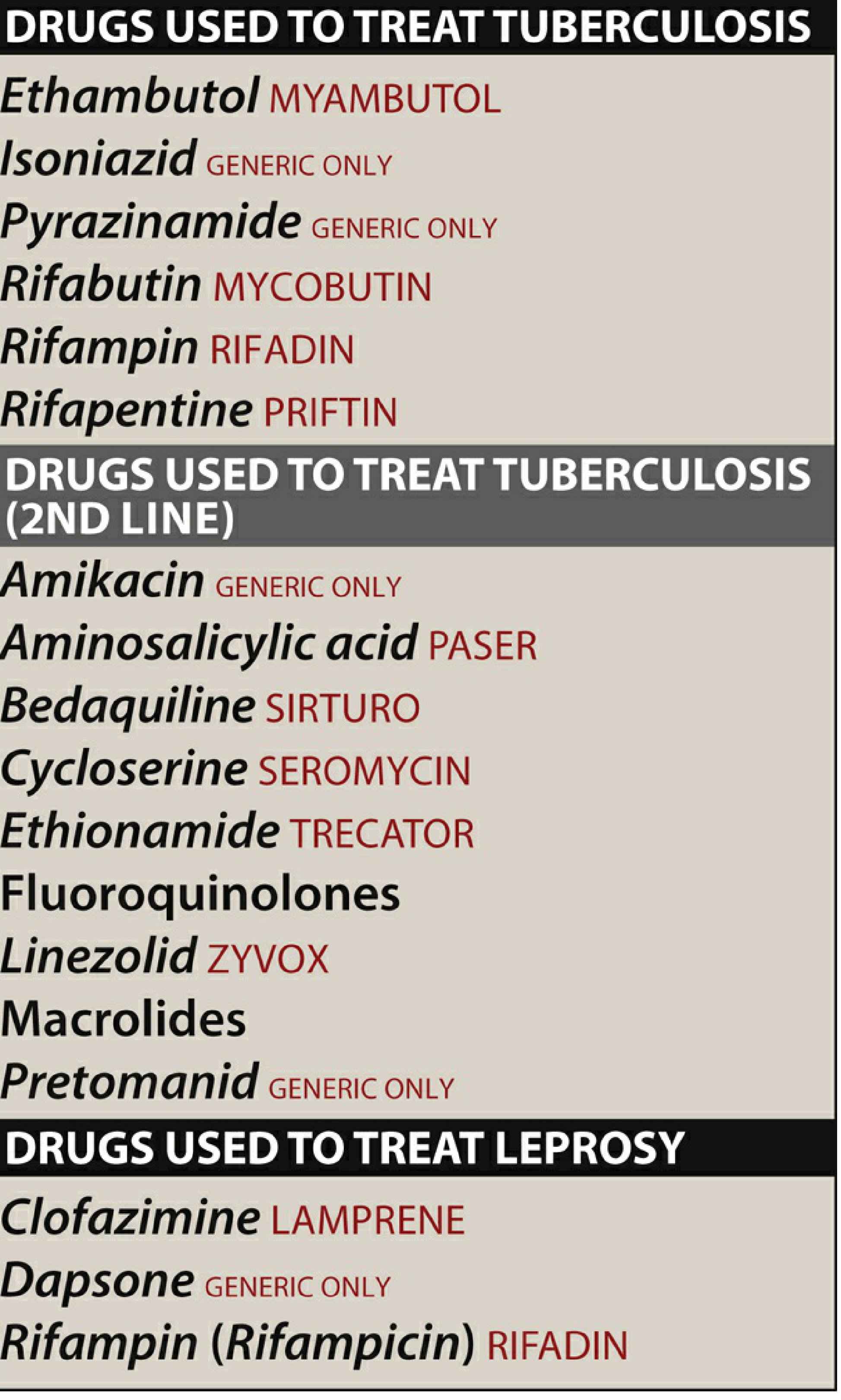
| Drug | Dose (Adult) | Mechanism | Key Adverse Effects |
|---|---|---|---|
| Isoniazid (H/INH) | 5 mg/kg/day PO (max 300 mg/day) | Prodrug activated by KatG; inhibits mycolic acid synthesis (InhA, KasA) - bactericidal | Peripheral neuropathy (give pyridoxine 50 mg/day), hepatitis, hypersensitivity |
| Rifampicin (R) | 10 mg/kg/day PO (max 600 mg/day) | Inhibits RNA polymerase - bactericidal for Groups I, II & III | Hepatitis, febrile reactions, acute interstitial nephritis, drug interactions (CYP450 inducer - affects OCP, anticoagulants, antiretrovirals) |
| Pyrazinamide (Z) | 25 mg/kg/day PO (max 2 g/day) | Bactericidal in acidic intracellular environment; disrupts membrane potential | Hyperuricemia/gout, hepatotoxicity, photosensitivity |
| Ethambutol (E) | 15-25 mg/kg/day PO (max 2.5 g/day) | Bacteriostatic (bactericidal at high doses); inhibits cell wall (arabinosyl transferase) synthesis | Optic neuritis - monitor color vision regularly |
- Comprehensive Clinical Nephrology 7e (Table 54.3); Lippincott Pharmacology
Standard Treatment Regimen - Drug-Susceptible TB
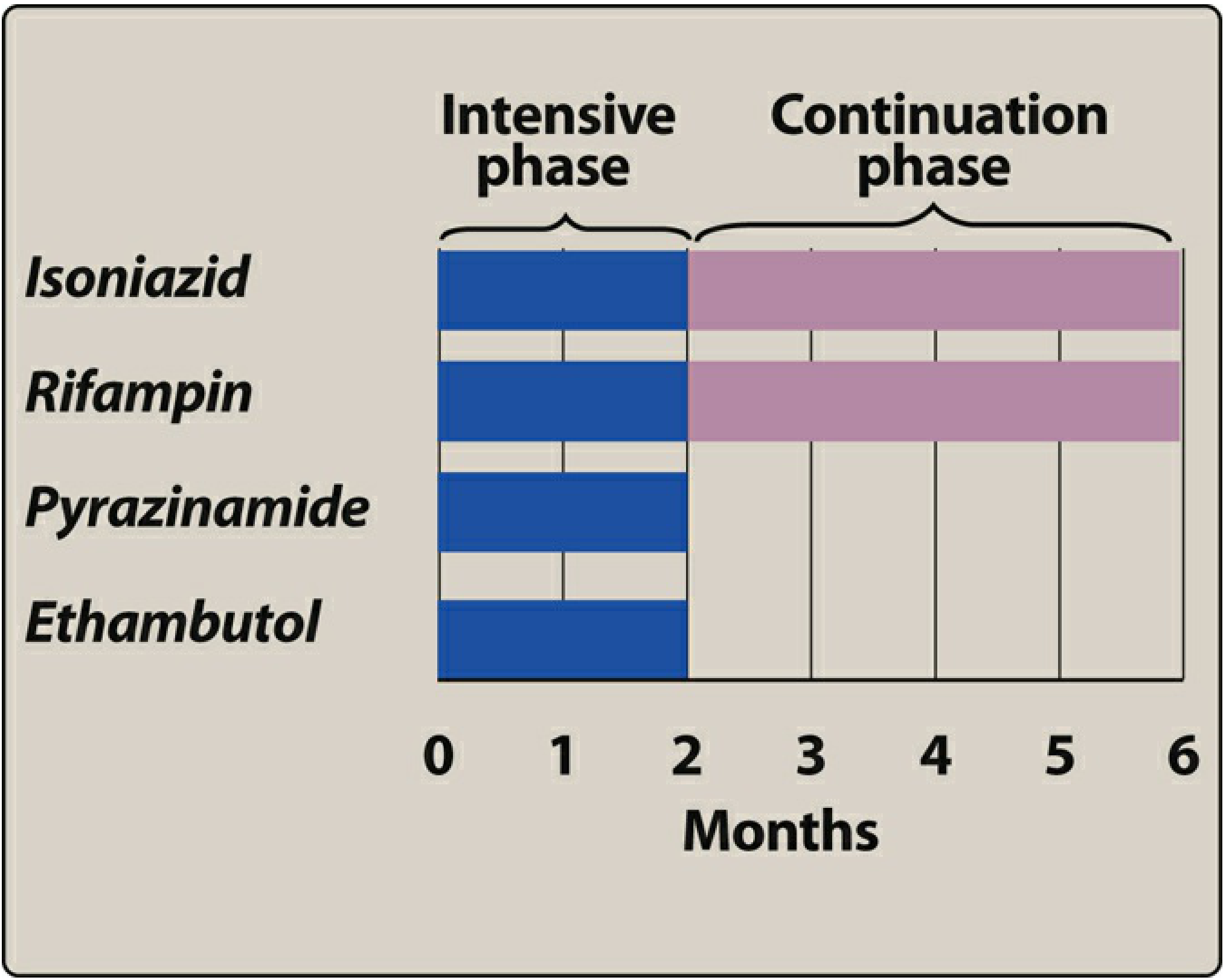
Total duration: 6 months
| Phase | Drugs | Duration |
|---|---|---|
| Intensive phase | Isoniazid + Rifampicin + Pyrazinamide + Ethambutol (HRZE) | 2 months |
| Continuation phase | Isoniazid + Rifampicin (HR) | 4 months |
The intensive phase rapidly reduces the bacterial burden. The continuation phase eliminates persister organisms and prevents relapse. - Bailey & Love's Short Practice of Surgery 28e; Lippincott Pharmacology
Key Points for Each Drug
Isoniazid (INH)
- Most important TB drug alongside rifampicin
- Highly specific for M. tuberculosis (most NTM are resistant)
- Diffuses into all body fluids including CSF - excellent for TB meningitis
- Acetylation pharmacogenetics: Fast acetylators (half-life ~90 min) vs. slow acetylators (half-life 3-4 h) - slow acetylators have more drug exposure and more toxicity risk
- Always co-prescribe pyridoxine (Vitamin B6) 50 mg/day to prevent peripheral neuropathy
Rifampicin
- Potent inducer of CYP450 - significant drug interactions with oral contraceptives, anticonvulsants, anticoagulants, and antiretroviral therapy
- In HIV/TB co-infection, rifabutin is preferred over rifampicin as it is a weaker CYP3A inducer
- Causes orange-red discoloration of urine, sweat, and tears (warn patients)
Ethambutol
- Monitor visual acuity and red-green color vision before and during treatment
- Dose reduction required in renal impairment (GFR <50: use 75%; avoid or 50% if GFR <10)
Pyrazinamide
- Monitor liver function tests and uric acid levels during treatment
Latent TB Infection (LTBI) Treatment Options
| Regimen | Duration |
|---|---|
| Isoniazid + Rifapentine (once weekly) | 12 weeks |
| Rifampin alone | 4 months |
| Rifampin + Isoniazid | 3 months |
| Isoniazid alone | 6 or 9 months |
- Lippincott Illustrated Reviews: Pharmacology
Drug-Resistant TB
MDR-TB (resistant to at least INH + Rifampicin)
- WHO 2022 recommendations: all-oral bedaquiline-containing regimen
- Preferred: Group A drugs - fluoroquinolone (levofloxacin/moxifloxacin) + bedaquiline + linezolid
- Add Group B: clofazimine ± cycloserine/terizidone
- Add Group C as needed: amikacin, ethionamide, PAS
- Duration: traditionally ~18-24 months; newer BPaL-based regimens aim for 6-9 months
XDR-TB (MDR-TB + resistance to any fluoroquinolone + at least one Group A drug)
- BPaL regimen: Bedaquiline + Pretomanid + Linezolid
- 2025 systematic review confirms bedaquiline+linezolid regimens are effective for MDR-TB (PMID 40172415)
- 2025 meta-analysis in BMJ Global Health supports all-oral bedaquiline-based shorter regimens (PMID 40194835)
HIV/TB Co-infection
-
Start ART within 2 weeks of TB treatment if CD4 count ≤50/μL
-
Start ART within 8-12 weeks of TB treatment if CD4 count ≥50/μL (exception: TB meningitis - delay ART)
-
Use rifabutin instead of rifampicin in patients on protease inhibitors
-
Avoid intermittent twice-weekly dosing in HIV co-infected patients (higher failure/relapse rates)
-
Watch for TB-IRIS (immune reconstitution inflammatory syndrome) - paradoxical worsening after starting ART; treat severe cases with prednisone
-
Harrison's Principles of Internal Medicine 22e
Monitoring During ATT
| Parameter | When | Why |
|---|---|---|
| Liver function tests (ALT, bilirubin) | Baseline + monthly | INH, RIF, PZA hepatotoxicity |
| Uric acid | Baseline + monitoring | Pyrazinamide - hyperuricemia |
| Color vision / visual acuity | Before + during treatment | Ethambutol optic neuritis |
| Hearing | If injectable agents used | Aminoglycosides - ototoxicity |
| Renal function | Baseline | Dose adjustments (especially ethambutol, aminoglycosides) |
| Sputum cultures | Monthly | Confirm clearance of organisms |
Hepatotoxicity warning signs: nausea, vomiting, abdominal discomfort, unexplained fatigue, jaundice, dark urine, light stools, pruritus. If present, provisionally stop hepatotoxic agents immediately. - Harrison's 22e
Directly Observed Therapy (DOT)
DOT - supervised drug administration by trained staff (clinic or home) - is the cornerstone of TB control. It ensures adherence, prevents resistance, and allows clinical monitoring. Video DOT and digital adherence tools are increasingly used. - Harrison's Principles of Internal Medicine 22e
Second-Line Drugs (Summary)
| Drug | Class | Use |
|---|---|---|
| Streptomycin | Aminoglycoside | Older first-line injectable; now second-line |
| Amikacin | Aminoglycoside | MDR-TB injectable |
| Levofloxacin / Moxifloxacin | Fluoroquinolone | MDR-TB Group A |
| Bedaquiline | Diarylquinoline | MDR/XDR-TB; inhibits ATP synthase |
| Linezolid | Oxazolidinone | MDR/XDR-TB; BPaL regimen |
| Pretomanid | Nitroimidazo-oxazine | XDR-TB (BPaL regimen) |
| Cycloserine | Amino acid analog | MDR-TB Group B; CNS side effects |
| Ethionamide | Thioamide | MDR-TB Group C |
| PAS (para-aminosalicylic acid) | Salicylate | MDR-TB Group C |
| Clofazimine | Riminophenazine | MDR/XDR-TB; also used in leprosy |
Quick Mnemonic: RIPE (first-line drugs)
- R - Rifampicin
- I - Isoniazid
- P - Pyrazinamide
- E - Ethambutol
Side effects mnemonic RIPE:
- R - Red-orange urine (rifampicin); Rash
- I - Isoniazid - neuropathy (give B6) + hepatitis
- P - Pyrazinamide - gout (hyperuricemia) + hepatotoxicity
- E - Ethambutol - Eye (optic neuritis)
New ATT guidlines New 2025 guidlines
The 2025 WHO and national ATT guidelines have brought significant updates, particularly around shorter regimens for drug-susceptible TB, new MDR-TB all-oral regimens, and pediatric dosing. Let me search current sources now.
Searching sources...
Searching the Web
WHO 2025 tuberculosis treatment guidelines new ATT regimen updates
Searching PubMed
"tuberculosis"[MeSH Terms] AND "treatment guidelines" AND "2025"
Good results. Let me extract the detailed ATS/CDC 2025 guideline page and search for more specifics:
Reading Web Page
https://www.wikidoc.org/index.php/Treatment_of_Drug-Suscepti…
Searching PubMed
"tuberculosis"[MeSH Terms] AND "rifapentine" AND "moxifloxacin" AND "4-month"
Searching the Web
ATS CDC ERS IDSA 2025 tuberculosis treatment guideline BPaLM MDR XDR drug susceptible 4 month regimen recommendations
Reading Article
PMID: 40023788
Excellent - very detailed data from official sources. Let me extract more detail from the IDSA guideline page:
Reading Web Page
https://www.idsociety.org/practice-guideline/treatment-of-dr…
I now have comprehensive data from official sources. Here is the full, structured answer:
2025 Anti-Tubercular Therapy (ATT) - Updated Guidelines
Issuing Bodies: ATS (American Thoracic Society) / CDC / ERS (European Respiratory Society) / IDSA - Published December 30, 2024 / February 2025. WHO 2025 guidelines are aligned with these updates.
THE BIG CHANGES AT A GLANCE
| What Changed | Old (Pre-2025) | New (2025) |
|---|---|---|
| DS-TB adults/adolescents | 2HRZE / 4HR (6 months) | 2HPZM / 2HPM (4 months) - conditional |
| DS-TB children (nonsevere) | 2HRZE / 4HR (6 months) | 2HRZ(E) / 2HR (4 months) - strong rec |
| MDR/RR-TB adults | 15-20+ month regimens | BPaLM - 6 months - strong rec |
| XDR-TB | Individualized, very long | BPaL - 6 months (or BPaLM) |
1. DRUG-SUSCEPTIBLE (DS) TB - ADULTS & ADOLESCENTS (≥12 years)
NEW 4-Month Regimen: 2HPZM / 2HPM (Conditional recommendation)
| Phase | Drugs | Duration |
|---|---|---|
| Intensive | H (isoniazid) + P (rifaPentine) + Z (pyrazinamide) + M (Moxifloxacin) | 2 months |
| Continuation | H (isoniazid) + P (rifaPentine) + M (Moxifloxacin) | 2 months |
Key changes from the classic HRZE regimen:
- Rifampicin replaced by Rifapentine (longer half-life, allows once-daily dosing)
- Ethambutol replaced by Moxifloxacin (more potent, avoids optic neuritis risk)
- Total duration cut from 6 months to 4 months
The IDSA/ATS 2025 guideline conditionally recommends this for patients with isoniazid-susceptible, rifampin-susceptible pulmonary TB aged 12+.
A 2025 RCT in Emerging Infectious Diseases (PMID 40023788) confirmed the 4-month rifapentine/moxifloxacin regimen is also safe and effective in patients with diabetes, which was a previous concern.
Classic 6-month regimen (2HRZE/4HR) - STILL VALID
The 6-month regimen remains recommended and is the preferred option in:
- HIV co-infected patients with CD4 <100 cells/mm³
- Extrapulmonary TB (the 4-month regimen was NOT studied in extrapulmonary TB)
- TB meningitis (12-month regimen required)
- Where rifapentine is not available
2. DRUG-SUSCEPTIBLE TB - CHILDREN (3 months to 16 years, nonsevere TB)
NEW 4-Month Regimen: 2HRZ(E) / 2HR (Strong recommendation, moderate certainty)
| Phase | Drugs | Duration |
|---|---|---|
| Intensive | H + R + Z ± E (ethambutol optional) | 2 months |
| Continuation | H + R | 2 months |
This replaces the 6-month 2HRZ(E)/4HR for nonsevere TB in children and adolescents. Ethambutol is optional in the intensive phase for children who are HIV-uninfected, treatment-naive, and live in low DR-TB prevalence areas. Most experts still include it.
Not applicable to:
- Severe TB in children
- TB meningitis in children (remains 12 months: 2HRZE/10HR)
- Children with suspected/confirmed MDR/RR-TB
3. DRUG-RESISTANT TB - MDR/RR-TB (Rifampin-resistant, fluoroquinolone-susceptible)
BPaLM Regimen - 6 months (Strong recommendation, very low certainty)
For: Adults and adolescents ≥14 years with RR/MDR-TB without fluoroquinolone resistance
| Drug | Dose | Duration |
|---|---|---|
| B - Bedaquiline | 400 mg daily × 2 weeks, then 200 mg 3× weekly × 24 weeks | 26 weeks |
| Pa - Pretomanid | 200 mg daily | 26 weeks |
| L - Linezolid | 600 mg daily (preferred dose) | 26 weeks |
| M - Moxifloxacin | 400 mg daily | 26 weeks |
Key points:
- Reduces treatment from 15-20 months → 6 months - major adherence benefit
- BPaLM is preferred over BPaL alone (moxifloxacin adds protection against resistance)
- All oral - no injectable agents needed
- Can be used in HIV co-infected patients
- Can be used in patients with rifampin intolerance
- Linezolid therapeutic drug monitoring: aim for trough <2 μg/ml to minimize toxicity
- Mandatory ECG monitoring (baseline + monthly QTc) due to bedaquiline's QT prolongation risk
BPaL (without Moxifloxacin) - Alternative
Used when moxifloxacin resistance or intolerance is present.
4. XDR-TB / Pre-XDR-TB
- Individualized treatment based on resistance profile
- BPaLM or BPaL as backbone
- Add Group C drugs as needed based on DST results
- Consult MDR-TB experts
5. LATENT TB INFECTION (LTBI) - Unchanged Core Options
| Regimen | Duration | Notes |
|---|---|---|
| 3HP (isoniazid + rifapentine once weekly) | 3 months | Preferred - high completion rates |
| 4R (rifampin daily) | 4 months | Preferred in HIV+ on ART |
| 1HP (isoniazid + rifapentine daily) | 1 month | New shorter option |
| 6H or 9H (isoniazid daily) | 6 or 9 months | Older standard, still acceptable |
6. HIV/TB CO-INFECTION - 2025 Updates
- ART should now be initiated in ALL TB-HIV patients regardless of CD4 count (expanded from previous CD4-based criteria per WHO 2025)
- The 4-month 2HPZM/2HPM regimen has been shown to perform well even in HIV-positive patients
- 6-month regimen still preferred if CD4 <100 cells/mm³
- TB meningitis exception: delay ART; do not use the 4-month regimen
- BPaLM/BPaL regimens are applicable to people with HIV
7. KEY MONITORING UPDATES (2025)
| Parameter | Frequency | Special note |
|---|---|---|
| LFTs (ALT, bilirubin) | Baseline + monthly | All hepatotoxic regimens |
| ECG/QTc | Baseline + monthly | Mandatory for BPaLM/BPaL (bedaquiline) |
| Visual acuity + color vision | Only if ethambutol used | Less relevant with new 4-month regimen |
| Sputum cultures | Monthly | Confirm clearance |
| Linezolid trough level (TDM) | As needed | Target <2 μg/ml |
| Post-treatment follow-up | 1-2 years | Identify recurrence |
| Hearing | If aminoglycosides used | Now rarely needed with BPaLM |
SUMMARY: What's NEW in 2025?
- 4-month regimen (2HPZM/2HPM) for adult DS pulmonary TB - moxifloxacin replaces ethambutol, rifapentine replaces rifampicin (conditional)
- 4-month regimen (2HRZ±E/2HR) for children with nonsevere DS-TB (strong)
- BPaLM (6 months) replaces 15-20 month regimens for MDR/RR-TB (strong)
- All-oral regimens - injectable aminoglycosides largely phased out for MDR-TB
- ART in all TB-HIV patients regardless of CD4 count (WHO 2025)
- Post-treatment monitoring extended to 1-2 years
The YouTube video by Pulmonology Read Aloud gives an excellent walkthrough:
This is a shared conversation. Sign in to Orris to start your own chat.