
Act as a senior university professor and top-tier exam evaluator in ANAESTHESIA Generate a comprehensive, high-scoring model answer for a university examination question worth 30 Marks " FINAL MD/DNB (ANAESTHESIA) EXAMINATION Long Answer Question (LAQ) – 30 Marks Write on anatomy and mechanism of function of neuromuscular junction (NMJ) with diagram. Discuss difference between depolarising and non-depolarising muscle relaxants. Discuss on periphéral nerve stimulator and its role in MONITORING during general anaesthesia Generate a pdf in the end
neuromuscular junction anatomy diagram motor end plate acetylcholine receptor
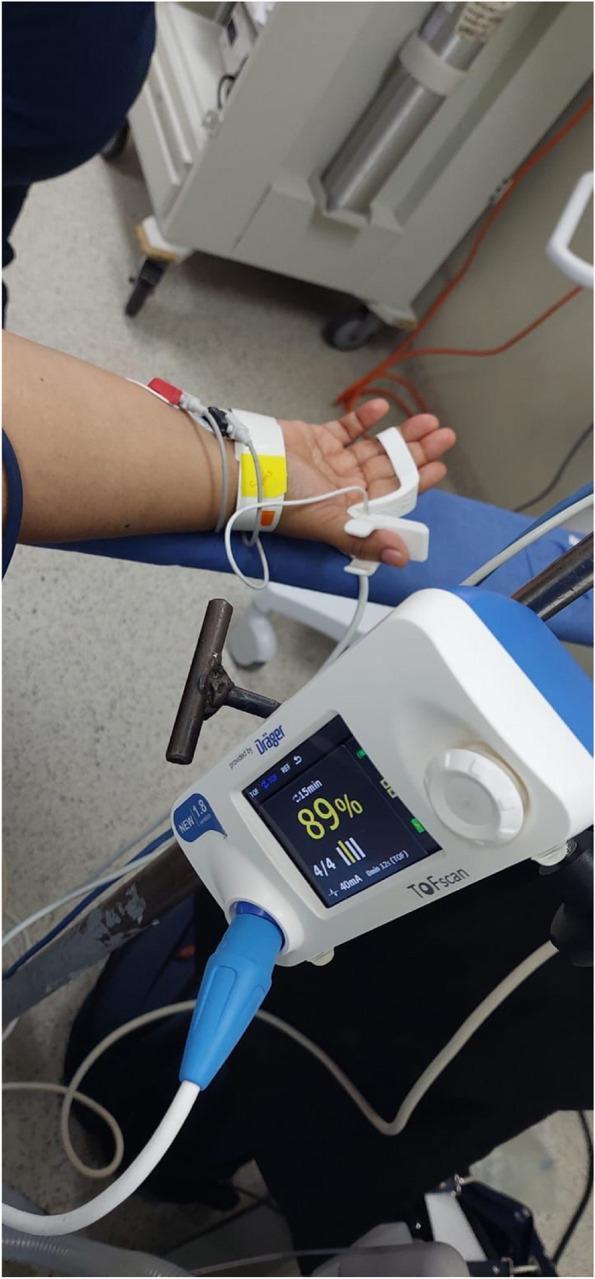
neuromuscular monitoring AND train-of-four
Labeled anatomical diagram of the neuromuscular junction showing motor nerve terminal with synaptic vesicles containing acetylcholine, voltage-gated calcium channels, the synaptic cleft, acetylcholinesterase enzyme, and the muscle motor end plate with junctional folds containing nicotinic acetylcholine receptors and sodium channels
Diagram comparing train-of-four peripheral nerve stimulator responses: normal unblocked muscle showing four equal twitches, non-depolarizing neuromuscular block showing four twitches with progressive fade/decrement, and depolarizing block showing four equal but reduced twitches with no fade
mkdir -p /tmp/workspace/nmj-exam-answer/assets && cd /tmp/workspace/nmj-exam-answer/assets && curl -s -o nmj_diagram.png "https://cdn.orris.care/image-gen/e3464a5c01574366aa4c4ac5f2aa9bb9.png" && curl -s -o tof_diagram.png "https://cdn.orris.care/image-gen/29dbe3ec85314e859cd208bdfa22a937.png" && ls -la
~/nmj-exam-answer/build_pdf.py
# -*- coding: utf-8 -*-
from reportlab.lib.pagesizes import A4
from reportlab.lib.units import cm
from reportlab.lib import colors
from reportlab.platypus import (SimpleDocTemplate, Paragraph, Spacer, Image, Table, TableStyle,
PageBreak, ListFlowable, ListItem, KeepTogether, HRFlowable)
from reportlab.lib.styles import getSampleStyleSheet, ParagraphStyle
from reportlab.lib.enums import TA_CENTER, TA_JUSTIFY, TA_LEFT
import os
BASE = "/tmp/workspace/nmj-exam-answer"
ASSETS = os.path.join(BASE, "assets")
styles = getSampleStyleSheet()
styles.add(ParagraphStyle(name="TitleMain", fontSize=16, leading=20, alignment=TA_CENTER,
spaceAfter=4, fontName="Helvetica-Bold", textColor=colors.HexColor("#1a3c6e")))
styles.add(ParagraphStyle(name="SubTitle", fontSize=11, leading=14, alignment=TA_CENTER,
spaceAfter=14, fontName="Helvetica-Oblique", textColor=colors.HexColor("#444444")))
styles.add(ParagraphStyle(name="H1", fontSize=13.5, leading=17, spaceBefore=14, spaceAfter=6,
fontName="Helvetica-Bold", textColor=colors.HexColor("#1a3c6e")))
styles.add(ParagraphStyle(name="H2", fontSize=11.5, leading=15, spaceBefore=8, spaceAfter=4,
fontName="Helvetica-Bold", textColor=colors.HexColor("#8a1c1c")))
styles.add(ParagraphStyle(name="BodyJ", fontSize=10.3, leading=14.5, alignment=TA_JUSTIFY, spaceAfter=6,
fontName="Helvetica"))
styles.add(ParagraphStyle(name="BulletJ", fontSize=10.3, leading=14, alignment=TA_JUSTIFY,
fontName="Helvetica", leftIndent=4))
styles.add(ParagraphStyle(name="Caption", fontSize=9, leading=12, alignment=TA_CENTER,
fontName="Helvetica-Oblique", textColor=colors.HexColor("#555555"), spaceAfter=10))
styles.add(ParagraphStyle(name="MarkNote", fontSize=9.3, leading=12, alignment=TA_LEFT,
fontName="Helvetica-Oblique", textColor=colors.HexColor("#1a6e3c"), spaceAfter=4))
styles.add(ParagraphStyle(name="RefStyle", fontSize=9, leading=12.5, fontName="Helvetica", spaceAfter=3))
def P(text, style="BodyJ"):
return Paragraph(text, styles[style])
def bullets(items, style="BulletJ", bullet_char="\u2022"):
return ListFlowable(
[ListItem(Paragraph(i, styles[style]), leftIndent=6, bulletColor=colors.HexColor("#1a3c6e")) for i in items],
bulletType="bullet", bulletChar=bullet_char, start=None, leftIndent=14, spaceBefore=2, spaceAfter=8
)
story = []
# ---------- TITLE ----------
story.append(P("FINAL MD / DNB (ANAESTHESIA) EXAMINATION", "TitleMain"))
story.append(P("Long Answer Question — 30 Marks | Model Answer", "SubTitle"))
story.append(P("<b>Q.</b> Write on the anatomy and mechanism of function of the neuromuscular junction (NMJ) with a diagram. "
"Discuss the difference between depolarising and non-depolarising muscle relaxants. Discuss the peripheral "
"nerve stimulator and its role in monitoring during general anaesthesia.", "BodyJ"))
story.append(HRFlowable(width="100%", thickness=1, color=colors.HexColor("#1a3c6e"), spaceAfter=10))
# Marks distribution note
story.append(P("<b>Suggested mark distribution:</b> Anatomy of NMJ (5) + Mechanism of neurotransmission (5) + Diagram (2) "
" | Depolarising vs non-depolarising relaxants (8) | Peripheral nerve stimulator "
"– principle, patterns, monitoring role (8) | Clinical relevance / conclusion (2)", "MarkNote"))
story.append(Spacer(1, 6))
# ================= SECTION 1: NMJ ANATOMY =================
story.append(P("1. ANATOMY OF THE NEUROMUSCULAR JUNCTION (NMJ)", "H1"))
story.append(P(
"The neuromuscular junction is a specialised chemical synapse between the terminal branch of a motor "
"nerve axon (alpha motor neuron) and the muscle fibre it innervates. Each skeletal muscle fibre typically has a "
"single NMJ located near the mid-point of the fibre, referred to as the <b>motor end-plate</b>. Anatomically the "
"NMJ has three components:", "BodyJ"))
story.append(P("A. Presynaptic (Nerve terminal) component", "H2"))
story.append(bullets([
"As the myelinated motor axon approaches the muscle, it loses its myelin sheath and divides into several "
"unmyelinated terminal branches, each ending in an expanded <b>axon terminal (bouton)</b> that sits in a "
"depression on the muscle surface called the <b>synaptic trough/gutter</b>.",
"The nerve terminal contains numerous mitochondria (for ATP) and thousands of membrane-bound "
"<b>synaptic vesicles</b>, each containing about 5,000–10,000 molecules of <b>acetylcholine (ACh)</b>, "
"synthesised locally from choline and acetyl-CoA by the enzyme <b>choline acetyltransferase</b>.",
"Vesicles cluster near specialised release sites called <b>active zones</b>, aligned with the postsynaptic "
"junctional folds. <b>Voltage-gated calcium channels (VGCC)</b> are concentrated in the presynaptic membrane "
"adjacent to the active zones.",
"Vesicle-associated proteins (synaptobrevin/VAMP, synaptotagmin, SNAP-25, syntaxin - the SNARE complex) "
"mediate calcium-triggered docking, fusion and exocytosis of ACh."
]))
story.append(P("B. Synaptic cleft", "H2"))
story.append(bullets([
"A 20–50 nm gap separating nerve terminal from muscle membrane, filled with a basement membrane "
"(basal lamina) containing the enzyme <b>acetylcholinesterase (AChE)</b>, which rapidly hydrolyses ACh into "
"choline and acetate, terminating its action within about 1 millisecond.",
"Choline is taken back into the nerve terminal by a high-affinity choline transporter for resynthesis of ACh."
]))
story.append(P("C. Postsynaptic (Muscle end-plate) component", "H2"))
story.append(bullets([
"The muscle membrane (sarcolemma) at the junction is thrown into deep folds called <b>junctional folds</b>, "
"which increase surface area.",
"The crests (shoulders) of the junctional folds are densely packed with <b>nicotinic acetylcholine receptors "
"(nAChR)</b> - about 5 million per end-plate - while <b>voltage-gated sodium channels</b> are concentrated in "
"the depths (troughs) of the folds, ideally placed to initiate the muscle action potential.",
"Each mature nAChR is a pentameric ligand-gated cation channel composed of five subunits arranged around a "
"central pore: <b>two alpha, one beta, one delta and one epsilon</b> subunit (the fetal/immature/extrajunctional "
"receptor has a gamma subunit instead of epsilon). ACh must bind to <b>both alpha subunits</b> simultaneously "
"to open the channel."
]))
# ---- NMJ Diagram ----
story.append(Spacer(1, 4))
img_nmj = os.path.join(ASSETS, "nmj_diagram.png")
story.append(Image(img_nmj, width=13*cm, height=13*cm*0.62, hAlign="CENTER"))
story.append(P("<b>Fig. 1:</b> Schematic anatomy of the neuromuscular junction showing the presynaptic nerve terminal "
"(synaptic vesicles, voltage-gated Ca2+ channels), the synaptic cleft (acetylcholinesterase), and the "
"postsynaptic motor end-plate with junctional folds bearing nicotinic ACh receptors and voltage-gated "
"Na+ channels.", "Caption"))
# ================= SECTION 2: MECHANISM =================
story.append(P("2. MECHANISM OF NEUROMUSCULAR TRANSMISSION", "H1"))
story.append(P("Normal transmission at the NMJ occurs in a sequential, calcium-dependent manner:", "BodyJ"))
story.append(bullets([
"<b>1. Nerve action potential:</b> Depolarisation of the motor axon propagates to the nerve terminal.",
"<b>2. Calcium influx:</b> Depolarisation opens presynaptic voltage-gated calcium channels; Ca2+ flows into the "
"nerve terminal down its concentration gradient.",
"<b>3. ACh release (exocytosis):</b> Rising intracellular Ca2+ triggers fusion of ACh-containing vesicles with the "
"presynaptic membrane and quantal release of ACh into the synaptic cleft (Ca2+ concentration and quantal release "
"are related exponentially - doubling extracellular Ca2+ produces roughly a 16-fold increase in quantal content).",
"<b>4. Diffusion and receptor binding:</b> ACh diffuses across the cleft and binds to nicotinic receptors on the "
"crests of the junctional folds. Binding of ACh to both alpha-subunits causes a conformational change that opens "
"the central cation channel.",
"<b>5. End-plate potential (EPP):</b> The open channel allows Na+ influx (and some K+ efflux), producing a local, "
"graded depolarisation of the end-plate - the EPP. Under normal conditions the EPP is several times larger than "
"the threshold required (large safety margin/margin of safety of transmission).",
"<b>6. Muscle action potential:</b> When the EPP exceeds threshold, voltage-gated Na+ channels in the depths of "
"the junctional folds and adjacent sarcolemma open, generating a propagated muscle action potential that spreads "
"along the muscle fibre and down the T-tubules.",
"<b>7. Excitation-contraction coupling:</b> The action potential triggers Ca2+ release from the sarcoplasmic "
"reticulum via ryanodine receptors, allowing actin-myosin cross-bridge cycling and muscle contraction.",
"<b>8. Termination of signal:</b> ACh is rapidly hydrolysed by acetylcholinesterase in the synaptic cleft into "
"choline and acetate within about 1 ms, terminating the signal, allowing repolarisation of the end-plate, and "
"permitting choline reuptake for resynthesis of ACh. This rapid termination is essential for the fidelity of "
"repeated transmission (one nerve impulse - one muscle twitch)."
]))
story.append(P("Neuromuscular blocking drugs act at exactly this junction, either by mimicking ACh (depolarising "
"agents) or by competitively occupying the receptor without activating it (non-depolarising agents).",
"BodyJ"))
story.append(PageBreak())
# ================= SECTION 3: DEPOL VS NONDEPOL =================
story.append(P("3. DEPOLARISING vs NON-DEPOLARISING MUSCLE RELAXANTS", "H1"))
story.append(P(
"Neuromuscular blocking agents (NMBAs) are quaternary ammonium compounds that resemble ACh structurally and "
"act at the nicotinic ACh receptor of the motor end-plate. They are classified into two pharmacologically "
"distinct groups:", "BodyJ"))
story.append(P("Mechanism of action", "H2"))
story.append(P(
"<b>Depolarising agents</b> (e.g., <b>succinylcholine/suxamethonium</b> - the only clinically used agent) closely "
"resemble ACh and act as <b>agonists</b> at the nicotinic receptor: they bind and open the ion channel, producing "
"an initial depolarisation of the end-plate (seen clinically as generalised fasciculations). Unlike ACh, they are "
"not hydrolysed by acetylcholinesterase (only slowly hydrolysed in plasma by pseudocholinesterase/plasma "
"cholinesterase), so they persist in the synaptic cleft and maintain the end-plate in a continuously depolarised "
"state. Because perijunctional voltage-gated Na+ channels inactivate with sustained depolarisation and cannot "
"reopen until the end-plate repolarises, the muscle becomes unresponsive to further stimulation - this is a "
"<b>Phase I block</b>. Prolonged exposure (e.g., infusion or overdose) can produce a <b>Phase II block</b>, which "
"resembles a non-depolarising block with fade and is not reliably antagonised by anticholinesterases.<br/><br/>"
"<b>Non-depolarising agents</b> (e.g., <b>rocuronium, vecuronium, atracurium, cisatracurium, pancuronium, "
"mivacurium</b>) act as <b>competitive antagonists</b> - they bind reversibly to the alpha-subunits of the "
"nicotinic receptor but do not produce the conformational change needed to open the channel. Occupation of "
"even one alpha-subunit prevents ACh from activating that receptor. No end-plate depolarisation occurs; instead "
"transmission fails because insufficient receptors remain free for ACh to generate an adequate EPP. Their effect "
"is overcome by increasing the concentration of ACh at the synapse (competitive antagonism) - hence they are "
"reversible with acetylcholinesterase inhibitors (neostigmine) or, for aminosteroid relaxants, with sugammadex.",
"BodyJ"))
# Table: comparison
data = [
["Feature", "Depolarising (Succinylcholine)", "Non-depolarising (e.g. Rocuronium, Vecuronium, Atracurium)"],
["Mechanism", "ACh receptor AGONIST - mimics ACh, opens channel", "Competitive ANTAGONIST - occupies receptor, blocks ACh"],
["Onset", "Very rapid (30-60 sec)", "Slower (except rocuronium ~60-90 sec at intubating dose)"],
["Fasciculations", "Present (initial depolarisation)", "Absent"],
["Muscle response to single stimulus", "Transient contraction then flaccid paralysis", "Flaccid paralysis without initial contraction"],
["Response to Train-of-Four (TOF)", "No fade; TOF ratio remains ~1.0 (sustained/equal twitches, all reduced equally)", "Fade present; TOF ratio decreases progressively with deepening block"],
["Response to tetanic stimulation", "No fade, no post-tetanic facilitation", "Fade present; post-tetanic potentiation (PTP) seen"],
["Effect of anticholinesterase (neostigmine)", "Potentiates/prolongs block (Phase I); unpredictable in Phase II", "Antagonises and reverses block"],
["Reversal agent", "No specific reversal (recovery depends on hydrolysis by plasma cholinesterase)", "Neostigmine + glycopyrrolate; sugammadex (for rocuronium/vecuronium)"],
["Metabolism", "Plasma (pseudo)cholinesterase - very rapid", "Hofmann elimination/ester hydrolysis (atracurium, cisatracurium); hepatic/renal (steroidal agents)"],
["Effect of repeat/continuous dosing", "Phase I -> may progress to Phase II block resembling non-depolarising block", "Pure competitive block throughout; may show cumulative effect with repeated dosing"],
["Genetic variation", "Prolonged block in atypical plasma cholinesterase / pseudocholinesterase deficiency", "Not affected by cholinesterase genotype"],
["Effect in denervation / burns / upper motor neuron injury (receptor up-regulation)", "Exaggerated response - risk of severe hyperkalaemia and cardiac arrest", "Resistance - larger doses required"],
["Effect in myasthenia gravis (receptor down-regulation)", "Relative resistance", "Increased sensitivity"],
["Adverse effects unique to the class", "Hyperkalaemia, malignant hyperthermia trigger, bradycardia, myalgia, raised IOP/ICP/intragastric pressure, trismus/masseter spasm", "Histamine release (some benzylisoquinoliniums), anaphylaxis, minimal cardiovascular effects (steroidal agents), no hyperkalaemia risk"],
]
tbl = Table(data, colWidths=[3.6*cm, 6.3*cm, 6.8*cm], repeatRows=1)
tbl.setStyle(TableStyle([
("BACKGROUND", (0,0), (-1,0), colors.HexColor("#1a3c6e")),
("TEXTCOLOR", (0,0), (-1,0), colors.white),
("FONTNAME", (0,0), (-1,0), "Helvetica-Bold"),
("FONTSIZE", (0,0), (-1,-1), 8.0),
("GRID", (0,0), (-1,-1), 0.5, colors.HexColor("#999999")),
("VALIGN", (0,0), (-1,-1), "TOP"),
("ROWBACKGROUNDS", (0,1), (-1,-1), [colors.white, colors.HexColor("#eef2f8")]),
("LEFTPADDING", (0,0), (-1,-1), 4),
("RIGHTPADDING", (0,0), (-1,-1), 4),
("TOPPADDING", (0,0), (-1,-1), 3),
("BOTTOMPADDING", (0,0), (-1,-1), 3),
]))
story.append(Spacer(1,4))
story.append(P("Table 1: Key differences between depolarising and non-depolarising muscle relaxants", "H2"))
story.append(tbl)
story.append(Spacer(1, 8))
story.append(P("Clinical note (high-yield): The absence of fade with a depolarising block and its presence with a "
"non-depolarising block is the single most important electrophysiological distinguishing feature used "
"at the bedside with a peripheral nerve stimulator (discussed below). Development of TOF fade after "
"succinylcholine indicates transition to a Phase II block.", "MarkNote"))
story.append(PageBreak())
# ================= SECTION 4: PNS =================
story.append(P("4. PERIPHERAL NERVE STIMULATOR (PNS) AND NEUROMUSCULAR MONITORING", "H1"))
story.append(P("Principle", "H2"))
story.append(P(
"A peripheral nerve stimulator delivers a supramaximal square-wave electrical stimulus (current sufficient to "
"depolarise all axons of the nerve, usually 40-60 mA, pulse width 0.2-0.3 ms) via surface or needle electrodes "
"placed over a peripheral motor nerve. The evoked muscle twitch is assessed either qualitatively (visually/by "
"palpation) or quantitatively (acceleromyography, electromyography, kinemyography, mechanomyography) to determine "
"the depth of neuromuscular blockade. Commonly monitored nerve-muscle pairs include the <b>ulnar nerve - adductor "
"pollicis</b> (most standard and validated site), <b>facial (temporal branch) nerve - orbicularis oculi/corrugator "
"supercilii</b> (mimics laryngeal muscle response, useful when arms are inaccessible), and <b>posterior tibial "
"nerve - flexor hallucis brevis</b>.", "BodyJ"))
story.append(P("Patterns of nerve stimulation", "H2"))
story.append(bullets([
"<b>Single-twitch stimulation:</b> A single supramaximal stimulus (0.1-1 Hz); requires a pre-relaxant control "
"twitch for comparison; rarely used clinically alone.",
"<b>Train-of-Four (TOF) stimulation:</b> Four supramaximal stimuli at 2 Hz (0.5 sec apart) every 10-20 seconds. "
"In a non-depolarising block, successive twitches fade (T4 diminishes more than T1) because of prejunctional "
"autoinhibition of ACh mobilisation/release; the <b>TOF ratio (T4/T1)</b> quantifies recovery, and the "
"<b>TOF count</b> (number of palpable responses, 0-4) is used to guide intraoperative relaxation. In a "
"depolarising block there is no fade (TOF ratio stays ~1.0) until a Phase II block develops.",
"<b>Tetanic stimulation:</b> Sustained stimulation at 50-100 Hz for 5 seconds; fade during tetany indicates "
"non-depolarising block; used to assess deep block and produces post-tetanic potentiation.",
"<b>Post-Tetanic Count (PTC):</b> A 50 Hz tetanic stimulus for 5 seconds followed after 3 seconds by single "
"twitches at 1 Hz; used to quantify very deep (intense) block when TOF count is zero - counts correlate with time "
"to spontaneous recovery of the first TOF response.",
"<b>Double-Burst Stimulation (DBS):</b> Two short bursts of tetanic stimulation (commonly DBS 3,3) separated by "
"750 ms; fade is easier to detect manually/visually than TOF fade and is used to assess adequacy of recovery at "
"the bedside without a quantitative monitor."
]))
# TOF diagram
img_tof = os.path.join(ASSETS, "tof_diagram.png")
story.append(Image(img_tof, width=13*cm, height=13*cm*0.6, hAlign="CENTER"))
story.append(P("<b>Fig. 2:</b> Train-of-four responses - normal (no block, TOF ratio 1.0), non-depolarising block "
"(progressive fade, TOF ratio <0.9) and depolarising block (equal but reduced twitches, no fade).",
"Caption"))
story.append(P("Role in monitoring during general anaesthesia", "H2"))
story.append(bullets([
"<b>Confirming adequate relaxation for intubation:</b> Loss of TOF count (TOF count = 0-1) after induction dose "
"confirms adequate paralysis before laryngoscopy, reducing risk of vocal cord trauma and improving intubating "
"conditions.",
"<b>Guiding intraoperative maintenance:</b> Titration of intermittent boluses or infusion of NMBA to maintain a "
"desired TOF count (typically 1-2/4) appropriate to surgical requirement (e.g., deeper block with PTC monitoring "
"for laparoscopic/microsurgical procedures requiring immobility, lighter block for routine surgery), avoiding "
"under- or over-relaxation.",
"<b>Individualising dose requirement:</b> Detects inter-patient variability in NMBA sensitivity (e.g., "
"myasthenia gravis, hepatic/renal impairment, hypothermia, electrolyte disturbance, drug interactions with "
"volatile agents, aminoglycosides, magnesium) so dosing can be adjusted rather than fixed by body weight alone.",
"<b>Timing and confirming reversal:</b> A TOF count of at least 2 (ideally 4) is generally required before "
"neostigmine reversal is attempted to ensure reliable antagonism; PNS/quantitative monitors confirm that reversal "
"has actually been effective.",
"<b>Preventing residual neuromuscular block (a major patient-safety application):</b> Objective, quantitative "
"monitoring (acceleromyography) at the end of surgery confirms a <b>TOF ratio ≥0.9</b> before extubation. This "
"is critical because clinical bedside tests (5-second head lift, hand grip, tongue depressor test) and even "
"tactile/visual TOF assessment are unreliable for detecting residual block once the TOF ratio exceeds 0.4 - "
"residual curarisation is a well-documented cause of postoperative hypoxaemia, upper airway obstruction, "
"impaired pharyngeal function with aspiration risk, and reintubation in the PACU.",
"<b>Diagnosing prolonged block:</b> Helps differentiate prolonged block due to overdose, drug interaction, "
"pseudocholinesterase deficiency (after succinylcholine), or a Phase II block, guiding further management "
"(e.g., ventilatory support, sedation, avoiding repeated neostigmine).",
"<b>Distinguishing type of block clinically:</b> Presence or absence of fade on TOF/tetanic stimulation helps "
"differentiate depolarising from non-depolarising block, and detects transition of a depolarising block to a "
"Phase II block.",
"<b>Site selection consideration:</b> Adductor pollicis (ulnar nerve) may recover faster than laryngeal "
"and diaphragmatic muscles, so a TOF ratio of 0.9 at the thumb corresponds to adequate but not necessarily "
"maximal recovery of airway-protective muscles; the corrugator supercilii/orbicularis oculi (facial nerve) more "
"closely reflects laryngeal adductor and diaphragmatic recovery and mimics onset for intubation timing."
]))
story.append(P("Qualitative vs Quantitative monitoring", "H2"))
story.append(P(
"Simple nerve stimulators with visual/tactile assessment (qualitative) are useful intraoperatively for gauging "
"depth of block but cannot reliably detect fade once TOF ratio is between 0.4 and 0.9, and therefore cannot "
"exclude clinically important residual paralysis. <b>Quantitative</b> neuromuscular monitors (acceleromyography "
"e.g., TOF-Watch, electromyography, kinemyography) measure the actual TOF ratio numerically and are now "
"recommended by professional bodies as best practice to confirm TOF ratio ≥0.9 prior to extubation, "
"particularly after use of non-depolarising agents, to minimise postoperative residual curarisation and its "
"pulmonary complications.", "BodyJ"))
story.append(P("Evidence update: A recent single-centre prospective study with systematic review "
"(Bijkerk V. et al., Br J Anaesth 2025, PMID 39443187) confirms that residual neuromuscular block "
"remains common in the PACU despite reversal, and quantitative monitoring materially reduces this "
"risk compared with qualitative/clinical assessment alone - reinforcing the recommendation for "
"routine objective TOF monitoring whenever a non-depolarising relaxant is used.", "MarkNote"))
story.append(P("5. CONCLUSION", "H1"))
story.append(P(
"The neuromuscular junction is the final common pathway through which motor nerve impulses are translated into "
"muscle contraction via ACh release, receptor activation, and end-plate depolarisation. Depolarising and "
"non-depolarising muscle relaxants interrupt this transmission by fundamentally different mechanisms - agonism "
"versus competitive antagonism at the nicotinic receptor - producing distinct clinical, electrophysiological and "
"pharmacological profiles. The peripheral nerve stimulator, by exploiting the characteristic TOF/tetanic response "
"patterns of these blocks, is an indispensable intraoperative monitor that guides safe dosing, appropriate timing "
"of intubation and reversal, and - most importantly - exclusion of residual paralysis before extubation, thereby "
"directly improving perioperative patient safety.", "BodyJ"))
story.append(Spacer(1, 10))
story.append(P("References", "H2"))
refs = [
"Miller's Anesthesia, 10th Edition - Chapter on Neuromuscular Junction; Chapter 39 (Neuromuscular Monitoring / Train-of-Four Stimulation / Peripheral Nerve Stimulator).",
"Morgan & Mikhail's Clinical Anesthesiology, 7th Edition - Chapter 11, Neuromuscular Blocking Agents (Table 11-1: Depolarizing and Nondepolarizing Muscle Relaxants).",
"Barash, Cullen and Stoelting's Clinical Anesthesia, 9th Edition - Neuromuscular Junction and Neuromuscular Blocking Drugs.",
"Katzung's Basic and Clinical Pharmacology, 16th Edition - Cholinoceptor-Activating and Cholinesterase-Inhibiting Drugs; Skeletal Muscle Relaxants.",
"Bijkerk V, Krijtenburg P, Verweijen T, et al. Residual neuromuscular block in the postanaesthesia care unit: a single-centre prospective observational study and systematic review. Br J Anaesth. 2025. PMID: 39443187.",
]
for r in refs:
story.append(P("• " + r, "RefStyle"))
doc = SimpleDocTemplate(os.path.join(BASE, "NMJ_Muscle_Relaxants_PNS_Model_Answer.pdf"),
pagesize=A4, topMargin=1.6*cm, bottomMargin=1.6*cm,
leftMargin=1.7*cm, rightMargin=1.7*cm,
title="NMJ, Muscle Relaxants and Peripheral Nerve Stimulator - Model Answer")
doc.build(story)
print("PDF built successfully")