
Aetiology symptoms and dietary management fever typhoid and tb
Reading File
Now let me search the medical library for all three conditions in parallel.
Finding Sources
Finding Sources
Finding Sources
Now let me read the key sections in parallel - typhoid from Park's (preventive medicine), Harrison's, Robbins, and TB from Family Medicine + Respiratory:
Reading File
Reading File
Reading File
Good content found. Now let me get more detailed typhoid content (pathogenesis, symptoms) and TB aetiology/symptoms, plus dietary management sections:
Reading File
Finding Sources
Finding Sources
Excellent data from Harrison's. Let me now get TB details from Robbins/Murray and dietary management content:
Finding Sources
Finding Sources
Finding Sources
Reading File
Reading File
Now let me search for TB aetiology/symptoms from Park's and get dietary management info:
Finding Sources
Searching the Web
dietary management typhoid fever tuberculosis fever nutrition guidelines
I now have comprehensive information from Harrison's, Park's, Family Medicine, and web sources. Let me compile the full detailed answer.
Loading Image
I now have all the information needed to write a comprehensive answer. Here is the full detailed response:
Aetiology, Symptoms, and Dietary Management of Fever, Typhoid, and Tuberculosis
PART 1 - FEVER (General)
Aetiology
Fever is not a disease but a physiological response - a rise in body temperature above 37.2°C (oral) or 37.7°C (rectal). Common causes include:
- Infections - bacterial (most common), viral, fungal, parasitic
- Inflammatory conditions - autoimmune disease, rheumatoid arthritis, inflammatory bowel disease
- Malignancies - lymphoma, leukaemia ("fever of unknown origin")
- Drugs - drug fever, vaccine reactions
- Heat stroke - non-infectious hyperthermia
Metabolic Changes with Fever
- Basal metabolic rate (BMR) rises approximately 7% for every 1°F rise in temperature
- Increased protein catabolism and negative nitrogen balance
- Dehydration from sweating and increased insensible loss
- Glycogen stores depleted; gluconeogenesis increases
- Loss of electrolytes (sodium, potassium, chloride)
Symptoms
- Elevated temperature, chills, rigors
- Headache, malaise, fatigue
- Tachycardia, flushed skin
- Anorexia, nausea
- Sweating during defervescence
Dietary Management of Fever (General)
| Goal | Recommendation |
|---|---|
| Energy | High-calorie diet (2500-3000 kcal/day) to offset increased BMR |
| Fluids | 3-4 litres/day - water, ORS, fruit juices, coconut water, broths |
| Protein | Adequate protein to offset catabolism - eggs, milk, fish, chicken |
| Carbohydrates | Easily digestible carbohydrates - rice, khichdi, porridge, bread |
| Fat | Low to moderate; avoid fried or heavy foods |
| Electrolytes | Replace sodium, potassium - include ORS, soups, banana |
| Texture | Soft, semi-liquid, or liquid during acute phase |
| Frequency | Small, frequent meals (5-6 times/day) |
| Avoid | Spicy foods, raw vegetables, high-fibre foods, alcohol, caffeine |
PART 2 - TYPHOID FEVER (Enteric Fever)
Aetiology
- Causative organism: Salmonella enterica serotype Typhi (S. Typhi) - a gram-negative, motile, non-spore-forming rod
- Paratyphoid fever is caused by S. Paratyphi serotypes A, B, and C
- Humans are the only known reservoir - there is no animal host
- Transmission: Feco-oral route - contaminated water and food; less commonly, sexual transmission between male partners
- Risk factors: Contaminated drinking water/ice, street food, raw fruit and vegetables grown in sewage-fertilized fields, lack of hand washing, prior Helicobacter pylori infection, travel to endemic areas
- Incubation period: Mean 10-14 days (range 5-21 days), depending on inoculum size and host immunity
(Source: Harrison's Principles of Internal Medicine 22E, Park's Textbook of Preventive and Social Medicine)
Pathogenesis
After ingestion, S. Typhi penetrates the intestinal mucosa, survives within macrophages, and disseminates via lymphatics and bloodstream. The bacteria multiply in the reticuloendothelial system (liver, spleen, bone marrow) and re-enter the blood, causing sustained bacteraemia. Hyperplasia, ulceration, and necrosis of Peyer's patches in the ileum are the hallmark pathological features.
Symptoms (Clinical Course)
Week 1:
- Step-ladder fever rising to 38.8-40.5°C (101.8-104.9°F)
- Headache (80% of cases), chills (35-45%), cough (30%)
- Myalgias, malaise, arthralgia
- Relative bradycardia (pulse-temperature dissociation, in <50%)
Week 2:
- Sustained continuous high fever
- Coated tongue (51-56%)
- Anorexia (55%), abdominal pain (30-40%)
- Nausea (18-24%), vomiting (18%), diarrhoea (22-28%) or constipation (13-16%)
- Rose spots - faint salmon-coloured, blanching, maculopapular rash on trunk and chest (~30% of patients)
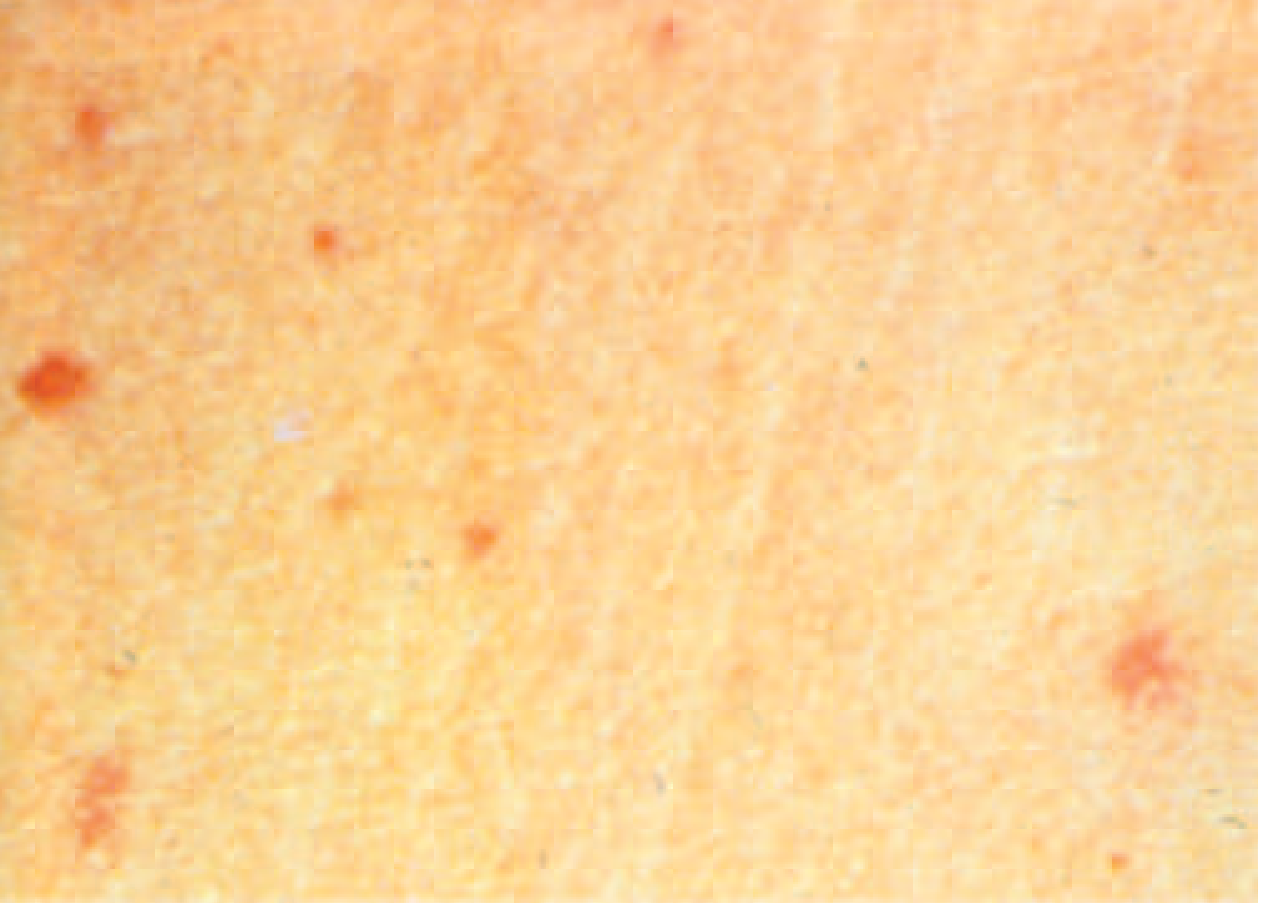
- Splenomegaly (5-6%), hepatosplenomegaly (3-6%)
- Epistaxis
Week 3-4 (Complications, ~27% of hospitalised patients):
- Intestinal perforation (1%) and GI bleeding (6%) - life-threatening, require surgery
- Neurological: meningitis, Guillain-Barré syndrome, "muttering delirium" (2-40%)
- DIC, pancreatitis, hepatitis, myocarditis, orchitis, pneumonia
Carrier State: Up to 2-5% become chronic asymptomatic carriers (shedding S. Typhi for >1 year), more common in women and those with biliary abnormalities.
(Source: Harrison's Principles of Internal Medicine 22E)
Dietary Management of Typhoid Fever
The primary dietary goals are to maintain nutrition, correct fluid and electrolyte losses, rest the gut, and prevent intestinal complications (especially perforation).
Acute Phase (High Fever, Active Disease):
- Energy: High calorie - 2500-3500 kcal/day to offset increased BMR and protein catabolism
- Fluids: Liberal - 3-4 litres/day; ORS, coconut water, fruit juices, clear broths, barley water, rice water
- Diet texture: Liquid to semi-liquid; progress to soft diet as fever subsides
- Foods to include:
- Cooked, easily digestible carbohydrates: white rice, khichdi, porridge (daliya), white bread, plain pasta, boiled potatoes, crackers
- Soft proteins: eggs (boiled/poached), boiled chicken, fish, tofu, soft paneer
- Ripe soft fruits: banana, melon, applesauce, canned fruit (no seeds or skins)
- Cooked vegetables: carrots, potatoes, squash, beets, green beans
- Dairy: low-fat milk, yoghurt, cheese (if tolerated)
- Beverages: herbal tea, coconut water, oral rehydration solution, clear fruit juice, broth
Foods to Avoid:
- High-fibre foods: raw vegetables (broccoli, cauliflower, cabbage, kale, onions), whole grains (brown rice, barley, quinoa), nuts, seeds, legumes
- Spicy, fried, or fatty foods - increase GI irritation
- Raw or undercooked meats
- Dried fruits, berries with seeds, pineapple, kiwi
- Carbonated drinks, alcohol, caffeine
Recovery Phase:
- Gradually transition to a normal balanced diet
- Continue high-protein foods to rebuild tissue
- Ensure adequate Vitamin C and Zinc for wound healing
- Small, frequent meals (5-6 per day) to reduce GI load
PART 3 - TUBERCULOSIS (TB)
Aetiology
-
Causative organism: Mycobacterium tuberculosis - an obligate aerobe, acid-fast bacillus (AFB), non-motile, non-spore-forming
-
Transmission: Airborne droplet nuclei (1-5 microns) containing viable bacilli, released when an infectious person coughs, sneezes, or speaks. A single cough can release thousands of droplet nuclei.
-
Primary risk factors for infection:
- Close contact with an infectious TB case
- Overcrowding, poor ventilation
- HIV infection (most important immunosuppressive risk factor)
- Malnutrition and underweight
- Diabetes mellitus, silicosis, chronic renal failure
- Immunosuppressive therapy (steroids, TNF inhibitors)
- Poverty, homelessness, prison environments
-
Progression from infection to disease: Only ~5-10% of immunocompetent infected persons develop active TB in their lifetime. In HIV-infected persons, the risk rises to 10-16% per year without antiretroviral therapy (ART).
(Source: Murray & Nadel's Textbook of Respiratory Medicine; Textbook of Family Medicine 9e)
Types
- Primary TB - initial infection, commonly in lower lobes; often asymptomatic
- Reactivation (Post-primary) TB - upper lobe cavitary disease; most common clinical form
- Latent TB Infection (LTBI) - positive tuberculin skin test or IGRA, no active disease
- Miliary TB - haematogenous dissemination; millet-seed granulomas throughout lungs and other organs; more common in children and immunosuppressed
- Extrapulmonary TB - occurs in 10-25% of patients; affects pleura (most common), lymph nodes, bones (Pott's disease), kidneys, meninges, pericardium, peritoneum
Symptoms
Pulmonary TB:
- Constitutional (B symptoms): Fever (low-grade, often afternoon), drenching night sweats, anorexia, significant weight loss, fatigue and malaise
- Respiratory: Chronic productive cough (>3 weeks) - initially dry, then mucopurulent; haemoptysis (blood-streaked or frank); dyspnoea; chest pain
Miliary/Disseminated TB:
- Insidious onset, often subtle
- High fever, severe malaise, weight loss
- Hepatosplenomegaly, lymphadenopathy
- Meningism if CNS involved
Extrapulmonary TB (features by site):
| Site | Features |
|---|---|
| Pleura | Pleuritic chest pain, effusion, dyspnoea |
| Lymph nodes | Painless lymphadenopathy, "cold abscess," sinus tract formation |
| Spine (Pott's) | Back pain, gibbus deformity, neurological deficit |
| Meninges | Headache, vomiting, neck stiffness, altered consciousness |
| Kidneys | Sterile pyuria, haematuria, dysuria |
| Pericardium | Pericardial effusion, constrictive pericarditis |
(Source: Textbook of Family Medicine 9e; Murray & Nadel's Respiratory Medicine)
Dietary Management of Tuberculosis
TB causes profound wasting, malnutrition, and micronutrient deficiencies due to increased metabolic demand, anorexia, malabsorption, and the catabolic effects of chronic infection. Nutritional support is an integral part of TB management. WHO guidelines on nutritional care for TB patients provide the following framework:
Macronutrient Requirements:
- Energy: Increased caloric intake (2500-3500 kcal/day) to support tissue repair and recovery
- Protein: High protein (1.2-1.5 g/kg body weight/day) to rebuild muscle mass
- Good sources: meat, fish, eggs, milk, yoghurt, dried peas, beans, lentils, soy
- Carbohydrates: 45-65% of total energy; focus on complex carbohydrates and whole grains (unlike typhoid, high fibre is not restricted in TB unless there is GI TB)
- Fats: 25-35% of total energy; include healthy fats (olive oil, nuts) for energy density
Micronutrient Focus (especially important in TB):
| Nutrient | Role | Food Sources |
|---|---|---|
| Vitamin B6 (Pyridoxine) | Prevents isoniazid-induced peripheral neuropathy | Liver, chicken, fish, chickpeas, bananas, whole grain cereals, walnuts |
| Vitamin C | Supports immune function, collagen synthesis | Citrus fruits, tomatoes, potatoes, broccoli, sweet peppers, strawberries |
| Vitamin D | Supports immune response against M. tuberculosis | Fortified milk, fatty fish, sunlight exposure |
| Iron | Corrects anaemia of chronic disease | Red meat, legumes, fortified cereals, leafy greens |
| Zinc | Immune function, wound healing | Meat, shellfish, legumes, seeds |
| Calcium | Bone health (especially Pott's disease) | Milk, yoghurt, cheese, tofu, enriched soy beverages |
Practical Dietary Advice for TB Patients:
- Eat more than usual - the body needs extra energy and protein for healing
- Choose a variety of foods from all food groups
- Eat small, frequent meals if appetite is poor
- Increase caloric density by adding milk powder to soups, porridge, or smoothies
- Avoid alcohol - strongly contraindicated as it is hepatotoxic and interacts with isoniazid (INH), pyrazinamide (PZA), and rifampin (RMP)
- Take INH with food if nausea occurs, but avoid taking it with high-carbohydrate meals (reduces absorption)
- Ensure adequate Vitamin B6 intake when on isoniazid therapy (supplements often prescribed concurrently)
- Address food insecurity - food assistance programmes improve treatment adherence and outcomes
(Sources: WHO Nutritional Care for TB Patients; Ottawa Public Health TB Nutrition Fact Sheet; Murray & Nadel's Respiratory Medicine)
Summary Comparison Table
| Feature | Fever (General) | Typhoid Fever | Tuberculosis |
|---|---|---|---|
| Cause | Many (infection, inflammation) | S. Typhi (bacteria) | M. tuberculosis (bacteria) |
| Transmission | Varies | Feco-oral (contaminated food/water) | Airborne droplet nuclei |
| Type | Acute | Acute systemic | Chronic |
| Key Symptom | Raised temperature | Step-ladder fever, rose spots | Chronic cough, night sweats, weight loss |
| Diet Texture | Soft, liquid | Liquid to soft, low fibre | Normal to high calorie, high protein |
| Key Nutrient Need | Fluids, electrolytes | Fluids, easily digestible carbs | Protein, Vitamin B6, Vitamin C, Vitamin D |
| Key Avoidance | Spicy, fried, raw foods | High-fibre, raw, spicy foods | Alcohol (hepatotoxic with anti-TB drugs) |
This is a shared conversation. Sign in to Orris to start your own chat.