
Lipoma
Reading File
Now let me search the medical library and web in parallel for comprehensive lipoma coverage.
Finding Sources
Searching the Web
lipoma definition pathology clinical features treatment
Searching PubMed
lipoma
Good. Now let me pull the key textbook content from multiple sources in parallel.
Reading File
Reading File
Finding Sources
Excellent content retrieved. Let me pull more detail from the clinical surgery and dermatology sources in parallel.
Reading File
Reading File
Let me get the rest of the Fitzpatrick content and the clinical surgery lipoma section for full detail.
Reading File
Reading File
I now have comprehensive information. Let me also fetch a clinical image and get the histology/treatment section from Fitzpatrick.
Reading File
Loading Image
I now have rich, comprehensive data from multiple authoritative textbooks. Here is a thorough, well-organized answer:
Lipoma
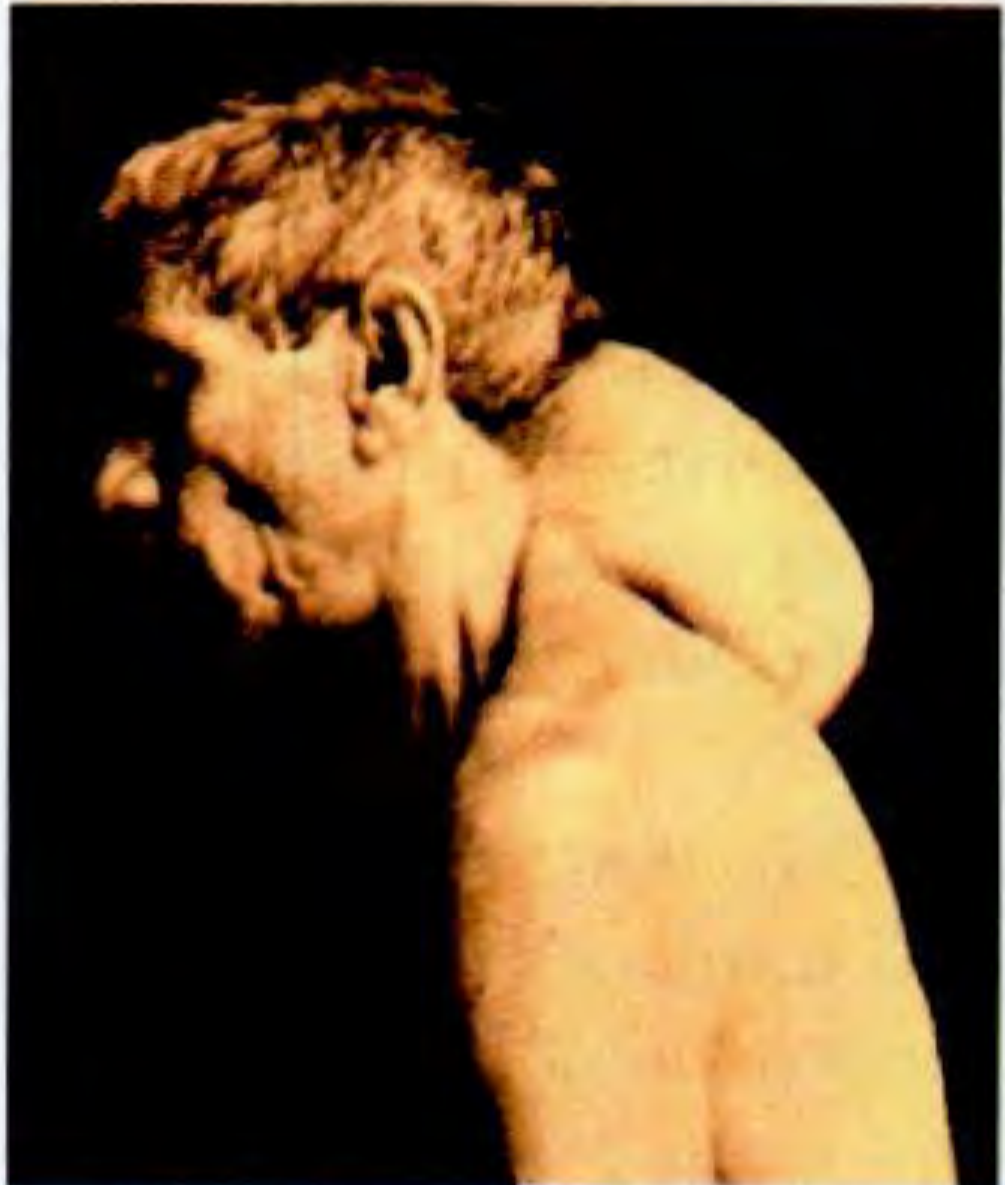
Definition
A lipoma is the most common benign soft-tissue tumor in adults. It is a cluster of mature adipocytes (fat cells) that become overactive, distend with fat, and form a palpable mass. It arises from mesenchymal tissue and can develop anywhere normal fat cells exist in the body.
- Robbins & Kumar Basic Pathology, p. 153
- S Das, Manual on Clinical Surgery, p. 52
Epidemiology
- Most common benign mesenchymal neoplasm
- Occurs predominantly in adults, with no strong gender predilection for classical lipoma
- Rarely seen in children
- Peak incidence in middle adulthood
- Multiple lipomas are uncommon and may signal an underlying syndrome
Sites / Classification
Lipomas can be classified by location:
| Type | Location | Key Feature |
|---|---|---|
| Encapsulated subcutaneous | Most common; trunk, neck, shoulder, upper limbs | Well-capsulated, mobile, lobulated |
| Intramuscular | Within muscle belly | Poorly circumscribed; higher recurrence rate (up to 20%) |
| Intermuscular | Between muscle groups | May reach considerable size |
| Subfascial | Below fascia | May be deeper than expected clinically |
| Parosteal | On bone surface | |
| Subserous / Submucous | GI tract | Can cause obstruction or intussusception |
| Intra-articular / Subsynovial | Joints | "Lipoma arborescens" - villous synovial proliferation |
| Subdural / Extradural | Spine | Can cause neurological symptoms |
| Diffuse (Pseudolipoma) | Neck/face, subcutaneous/intermuscular | No capsule; associated with alcohol excess |
| Multiple (Lipomatosis) | Limbs and trunk | May be painful (neurolipomatosis); see Dercum's disease |
The back of the neck, shoulder, and upper back are the most common overall sites.
Clinical Features
Symptoms:
- Painless, soft, slowly growing swelling (the classic presentation)
- Usually small (<5 cm for superficial types); deep-seated ones may grow very large
- Overlying skin is normally colored
- In very large lipomas: stretched skin with dilated veins may be visible (more characteristic of naevolipoma)
On examination:
- Surface: Smooth and lobulated
- Consistency: Soft, "semifluctuant" (fat is in near-liquid state at body temperature; does not truly fluctuate)
- Transillumination: A large lipoma may transilluminate (does NOT contain fluid)
- Mobility: Freely mobile over deeper structures (muscle, fascia)
- "Slip sign": The edge of a lipoma slips away under the palpating finger - this distinguishes it from a cyst, where the edge yields rather than slips
- Movement test: Can be moved over a taut underlying muscle both along its long axis and at right angles to it
- A trapezius maneuver (shrugging shoulder against resistance) can help distinguish lipoma from the underlying muscle
Pathology
Gross: Yellow, lobulated, encapsulated mass of fatty tissue indistinguishable from normal fat.
Histology:
- Well-circumscribed, encapsulated, lobulated lesion
- Composed of mature adipocytes with only mild variation in size and shape
- No nuclear atypia
- Thin, hypocellular fibrous septa with thin-walled capillaries
- Immunohistochemistry: Negative for p16, MDM2, and CDK4 (positive staining would suggest atypical lipomatous tumor/well-differentiated liposarcoma)
Variants:
- Fibrolipoma - abundant fibrous tissue
- Chondrolipoma - contains cartilage
- Osteolipoma - contains bone
- Adenolipoma - contains sweat glands/ducts (in purely dermal lipomas)
- Angiolipoma - increased vascularity with fibrin thrombi; often painful and multiple
- Spindle cell/Pleomorphic lipoma - distinct cytogenetic entity, mainly posterior neck/shoulder in elderly males; benign
- Naevolipoma - contains dilated blood vessels
- Hibernoma - brown fat tumor (synonym: lipoma of embryonic/immature fat)
Genetics / Pathogenesis
Lipomas are cytogenetically heterogeneous. Key abnormalities include:
- Aberrations at 12q13-15 (including HMGA2 gene at 12q14.3, involved in pathogenesis)
- Rearrangements at 6p21-23
- Deletions at 13q
These are distinct from liposarcoma (which involves MDM2 amplification at 12q13-15 and other changes).
Varieties of Multiple Lipomas
| Condition | Features |
|---|---|
| Lipomatosis | Multiple small-to-moderate lipomas; trunk and limbs |
| Neurolipomatosis | Multiple painful lipomas containing nerve tissue |
| Dercum's disease (Adiposis dolorosa) | Tender lipomatous swellings mainly on trunk; more common in women |
| Madelung disease (Symmetric lipomatosis) | Middle-aged Mediterranean men; neck/shoulder/proximal upper limbs; associated peripheral neuropathy |
Associated Syndromes
| Syndrome | Associated Features |
|---|---|
| Gardner syndrome | FAP, desmoid fibromatosis, lipomas, osteomas, cysts |
| Bannayan-Riley-Ruvalcaba | Macrocephaly, lipomas, lymphangiomas, hamartomas, intestinal polyposis |
| Cowden syndrome | Hamartomas, trichilemmomas, lipomas, oral papillomas |
| CLOVE syndrome | Congenital lipomatous overgrowth, vascular malformations, epidermal nevi |
| Goldenhar-Gorlin syndrome | Intracranial lipomas, hydrocephalus |
| MERRF syndrome | Symmetric lipomas, myoclonus epilepsy, ragged-red fibers |
Differential Diagnosis
- Sebaceous cyst - edge yields under palpation (no "slip sign"), has a punctum
- Dermoid cyst - not mobile over deeper tissues
- Angiolipoma - painful, multiple; contains fibrin thrombi on histology
- Liposarcoma - atypical cells, MDM2/CDK4 positive on IHC; suspect if large, deep, or rapidly growing
- Ganglion - related to joint/tendon, contains synovial fluid
- Lymph node - regional location, firm
- Abscess - fluctuant, signs of infection
For any lipoma in an atypical location, large size, or rapid growth - consider imaging (US, CT, or MRI) and biopsy to exclude liposarcoma.
Complications
- Cosmetic disfigurement
- Pressure effects (nerve compression - e.g., posterior interosseous nerve, brachial plexus)
- Calcification
- Infection
- Ulceration (from repeated trauma)
- Malignant transformation to liposarcoma - disputed; many authorities believe lipoma never undergoes malignant change and that liposarcoma arises de novo. However, this possibility (particularly for retroperitoneal lipomas) must always be kept in mind.
Investigations
- Clinical diagnosis is sufficient for most superficial lipomas
- Ultrasound: First-line if imaging needed - shows echogenic lesion with thin capsule
- MRI: Best for deep, large, intramuscular lipomas; shows uniform fat signal (T1 bright, suppressed on fat-sat)
- CT: Useful for retroperitoneal/intra-abdominal lipomas
- Plasma D-dimer may help distinguish lipoma from well-differentiated liposarcoma (elevated in the latter)
- Biopsy/histology: For atypical lesions; IHC negativity for MDM2 and CDK4 confirms benign lipoma
Treatment
Surgical excision is the treatment of choice:
- Small superficial lipoma: squeeze tissue to make it bulge, incise, and enucleate ("shell out")
- For large/multilobular lesions: establish a plane of cleavage, use blunt and sharp dissection
- Ensure meticulous haemostasis; close dead space or insert a small suction drain
- Intramuscular lipomas: simple excision, but counsel patient that local recurrence occurs in up to 20%
- GI lipomas: endoscopic removal may be possible
Non-surgical options:
- Observation for small asymptomatic lesions
- Steroid injection (triamcinolone) can reduce size but does not eliminate the lipoma
- Liposuction/aspiration - less effective for fibrous variants; higher recurrence
Key surgical principle: Benign lipomas are "shelled out" completely. This is INADEQUATE and inappropriate for liposarcoma, which requires wide excision.
Prognosis
- Classical subcutaneous lipoma: excellent prognosis; very rarely recurs after complete excision
- Intramuscular/intermuscular lipoma: recurrence rate up to 20%
- Transition of a pre-existing lipoma to atypical lipomatous tumor: exceedingly rare
Sources:
- Robbins & Kumar Basic Pathology, p. 153
- Fitzpatrick's Dermatology, Vol. 1-2, pp. 2201-2204
- S Das, A Manual on Clinical Surgery 13th Ed., pp. 52-54
- Pye's Surgical Handicraft 22nd Ed., p. 65
This is a shared conversation. Sign in to Orris to start your own chat.